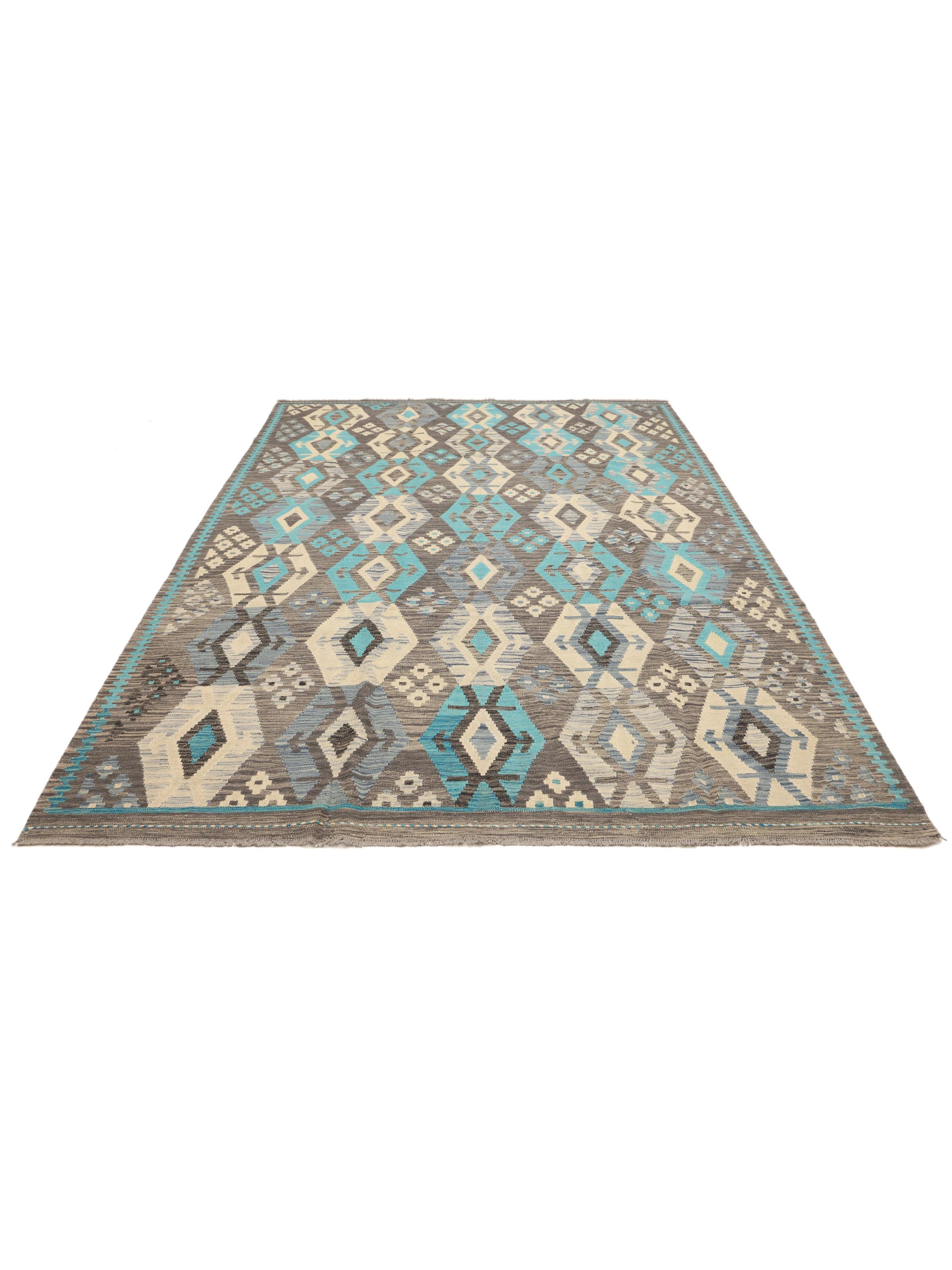
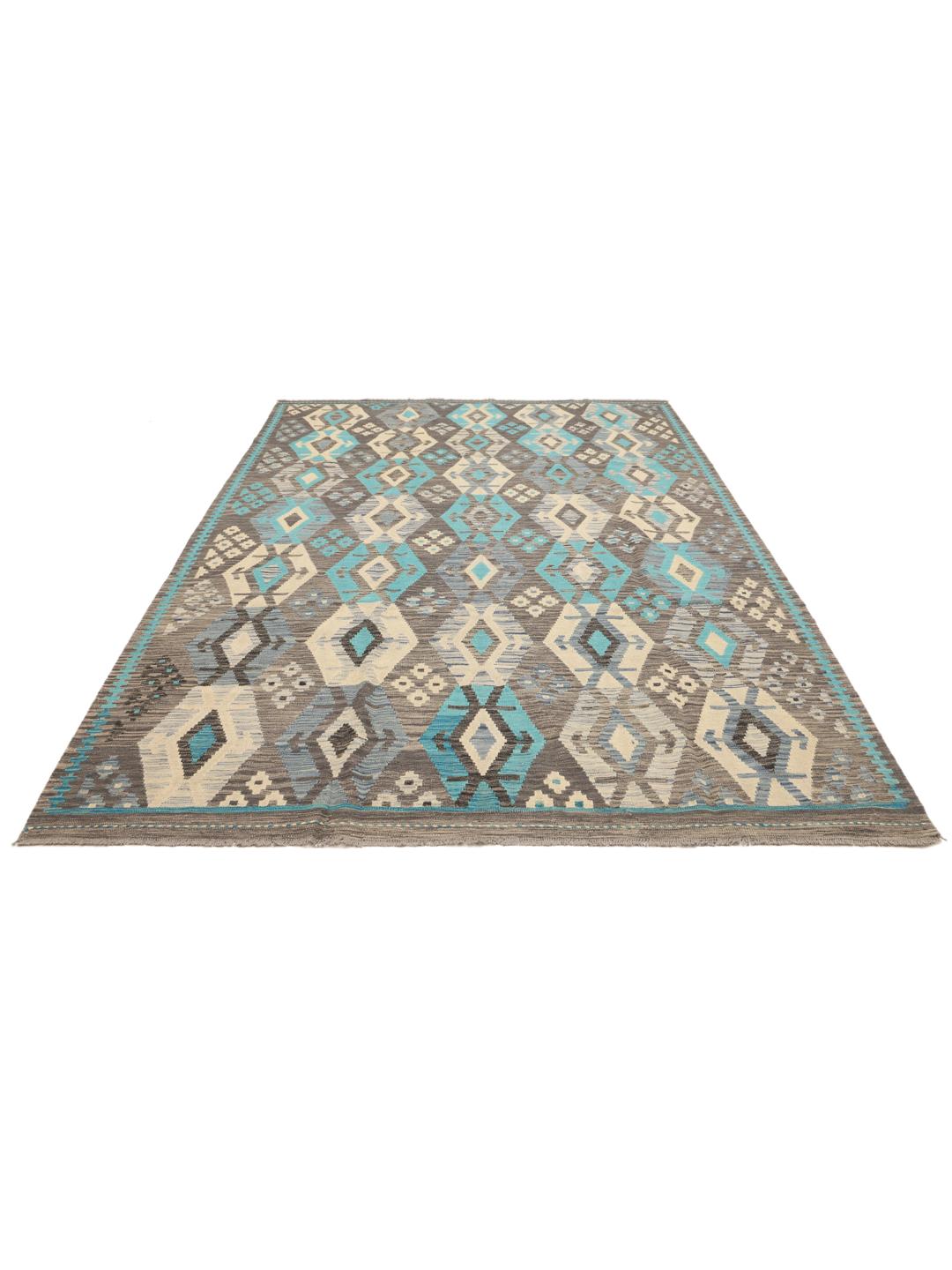
The Kelim tradition finds its roots in the nomadic cultures of the Middle East and Central Asia. These flat-woven rugs have been produced for centuries, historically serving as essential, portable items for life on the move, used as floor coverings, blankets, or wall hangings within traditional dwellings.
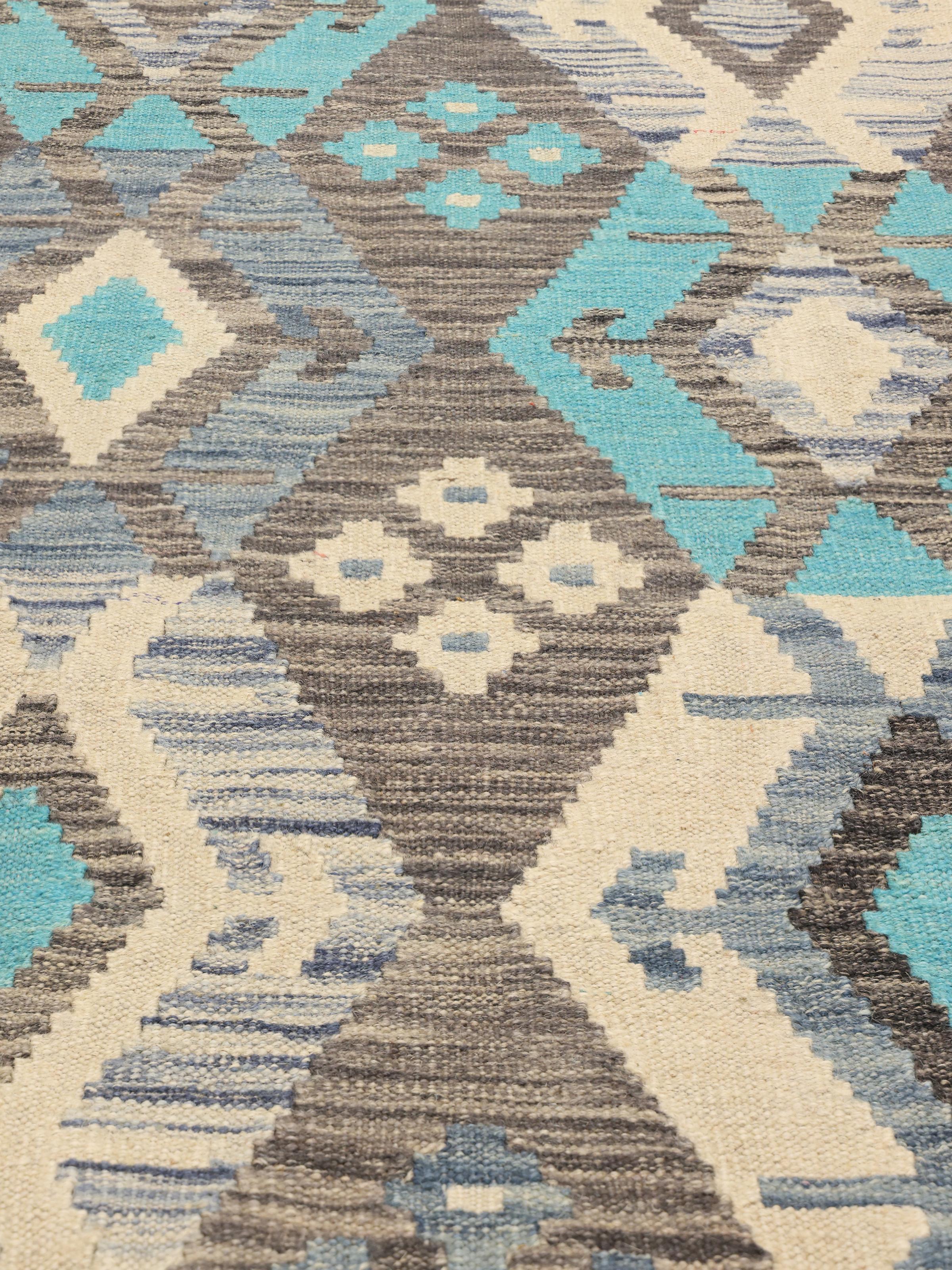
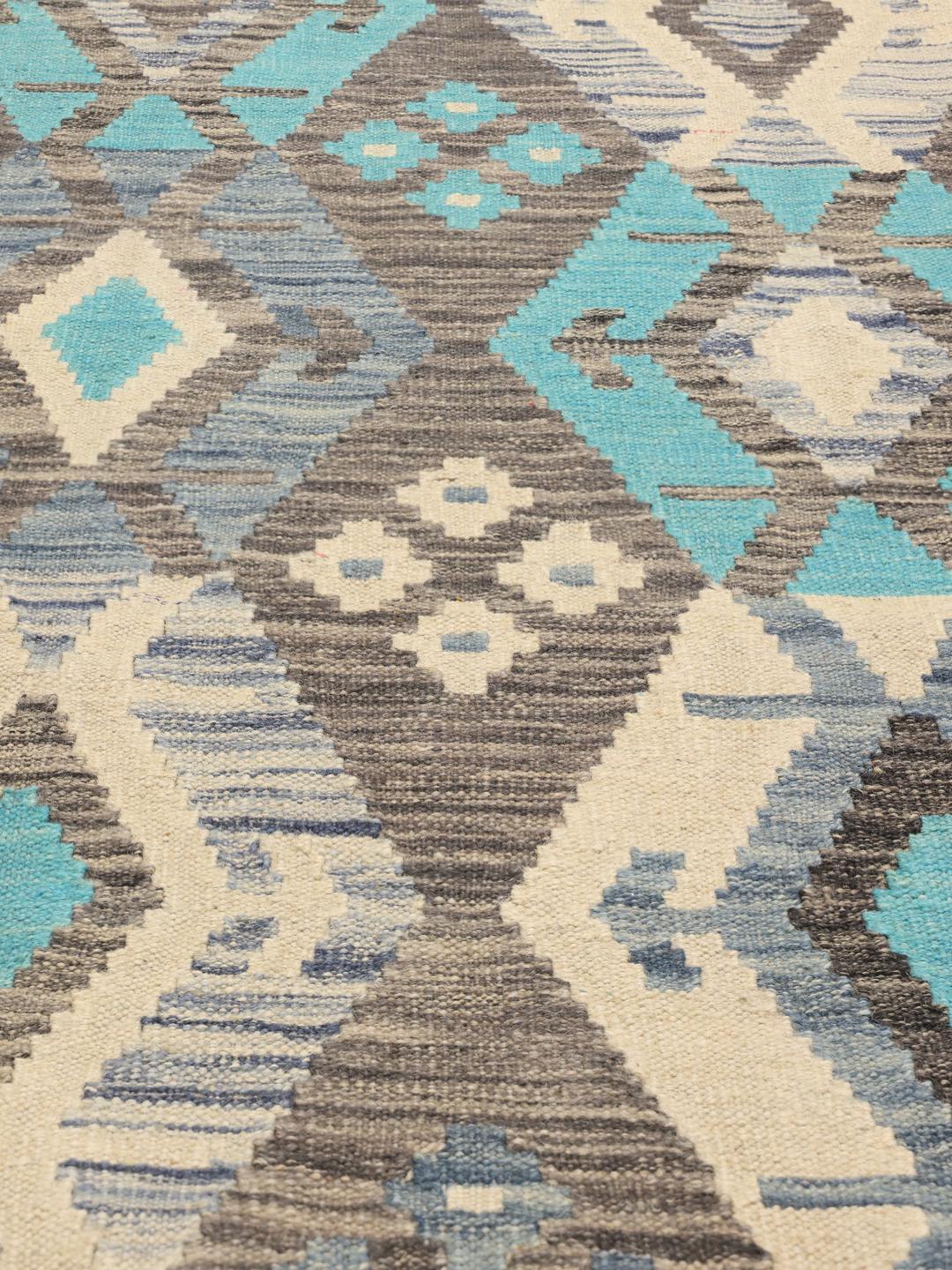
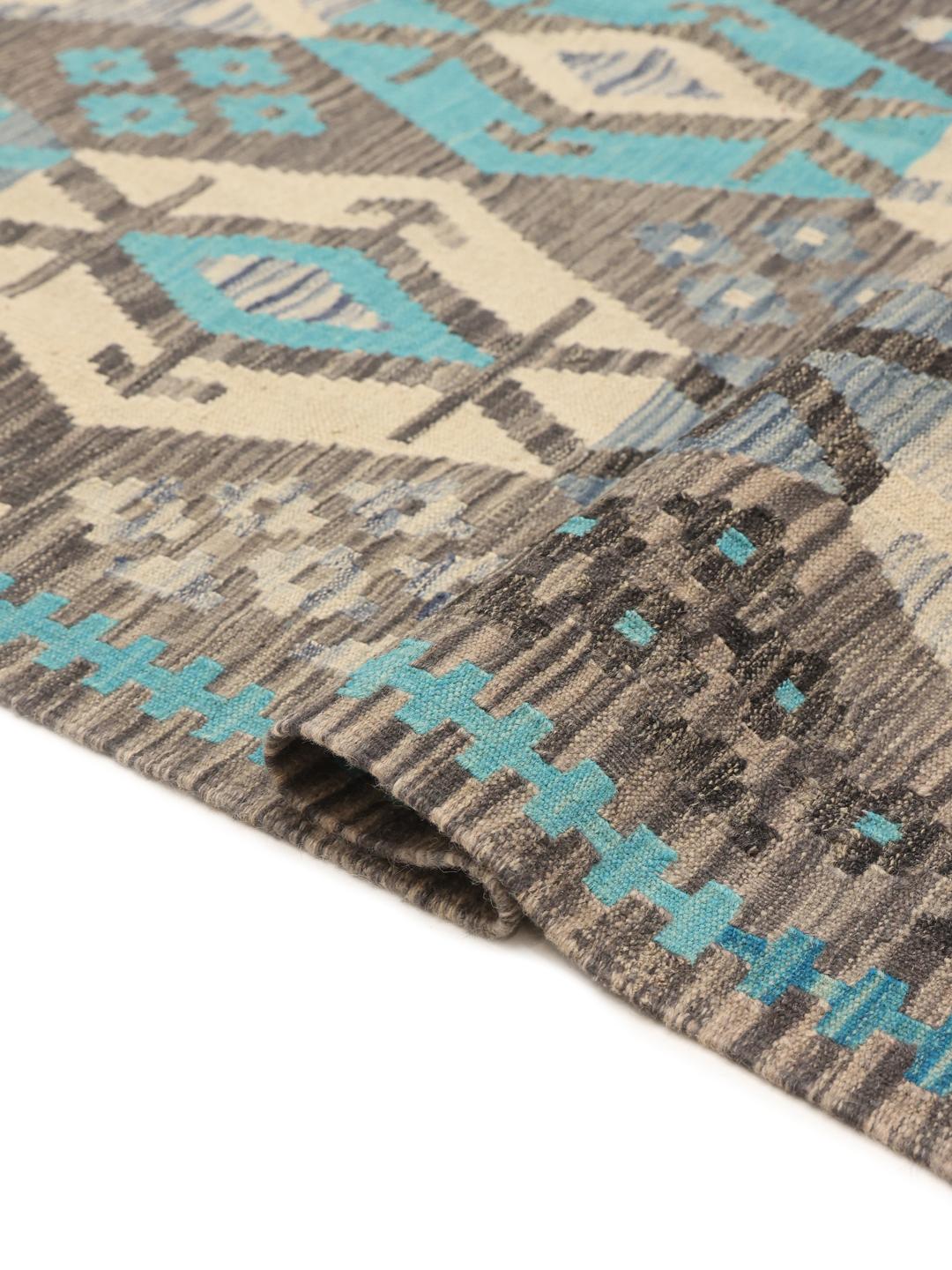
The term 'Kelim' refers to the specific tapestry-weave technique where the weft threads are passed through the warp to create a smooth, pileless surface. This method allows for the creation of sharp, clean geometric designs, as the weaver is able to change colours cleanly at the boundary of each pattern block, resulting in a reversible rug that is lightweight yet incredibly tough.
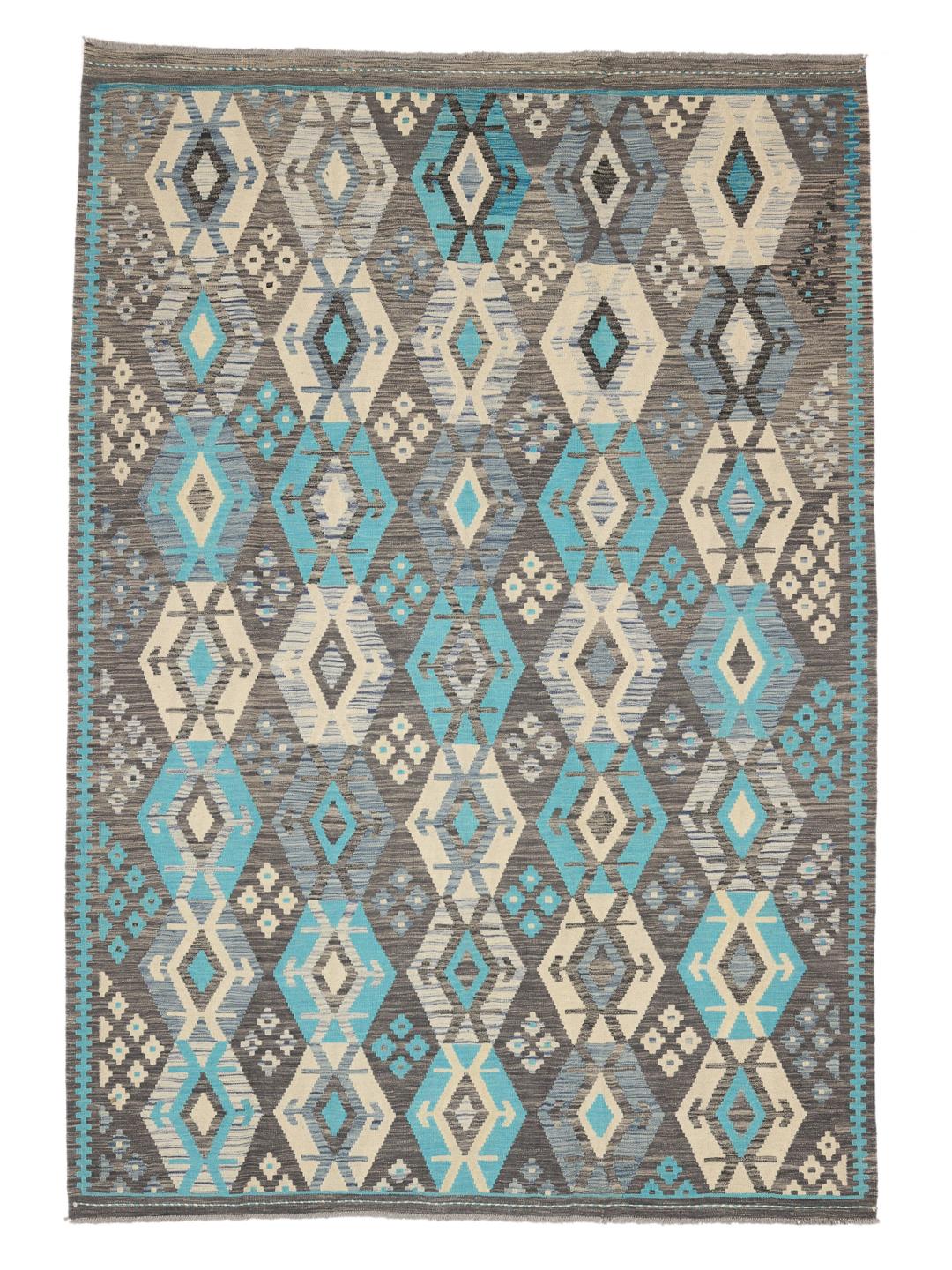
Design elements in these rugs are deeply symbolic, often featuring geometric shapes like diamonds, triangles, and hooks that have been passed down through generations of weavers. The use of repeating motifs creates a sense of harmony and rhythm, while the colour palettes are historically derived from regional natural dyes found in the local flora and minerals of the Afghan landscape.
Owning a Kelim is an appreciation of a craft that has survived the pressures of industrialisation. These rugs are valued by collectors for their authenticity and the human story behind every thread. By choosing a piece from this tradition, you are continuing a long lineage of artistry and bringing a genuine piece of cultural history into your living environment.