Kelim rugs have long been a cornerstone of the weaving cultures across the Middle East and Central Asia. Historically, these flat-woven textiles were essential functional items for nomadic tribes, serving as floor coverings, wall hangings, and storage bags. The tradition of weaving in Afghanistan is deeply embedded in the cultural identity of the region, where patterns and techniques are often passed down through generations, reflecting the environment and lifestyle of the weaving communities.
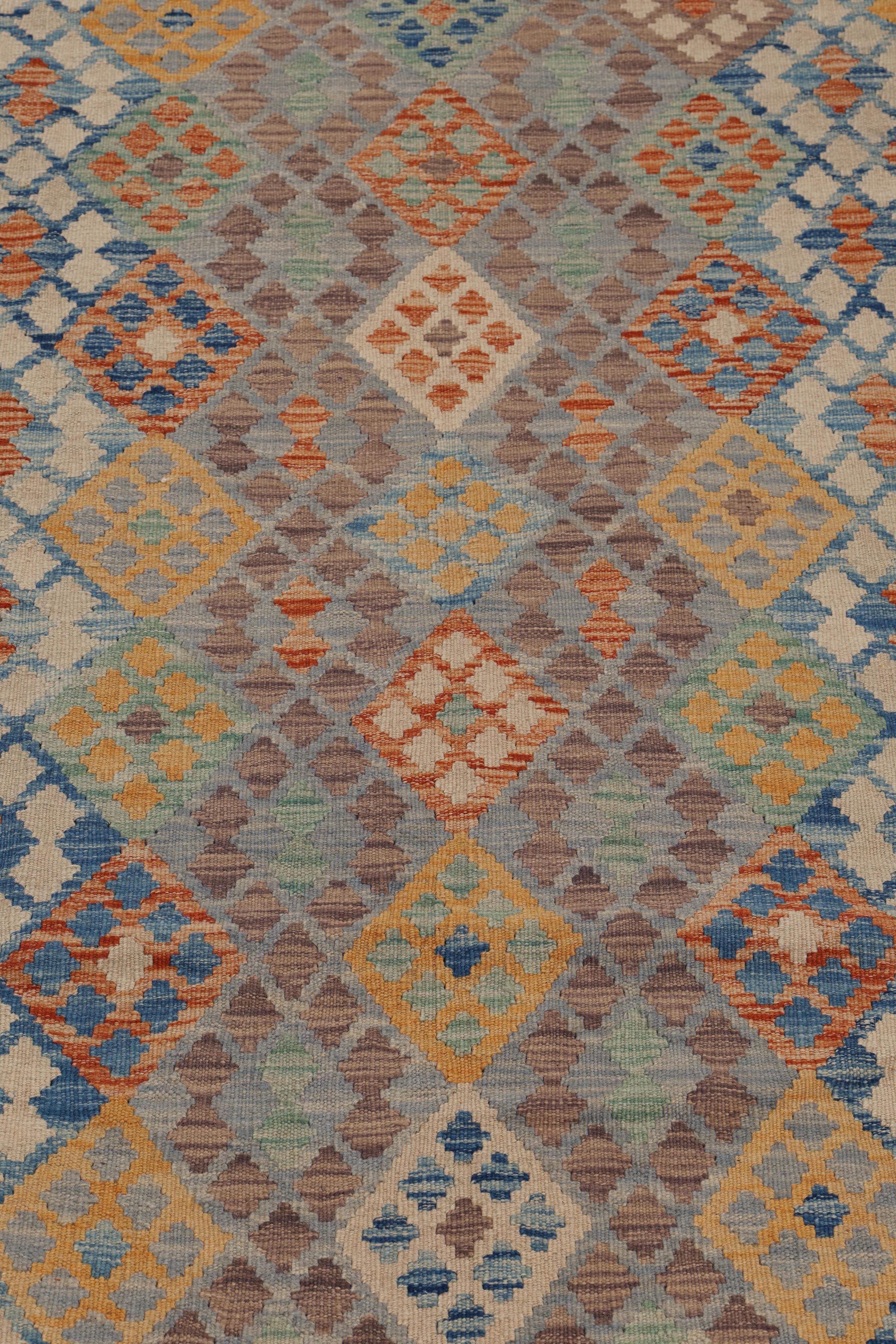
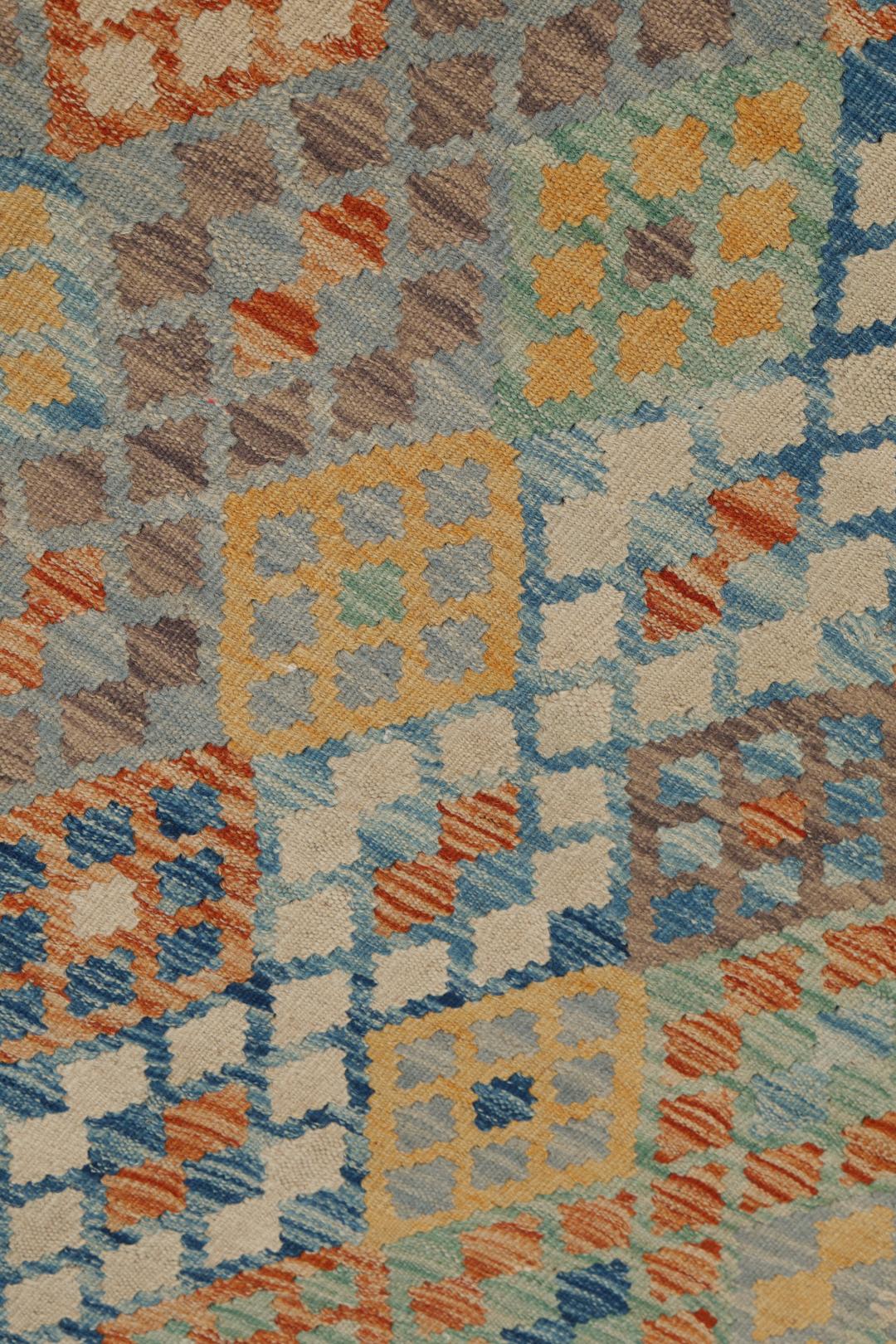
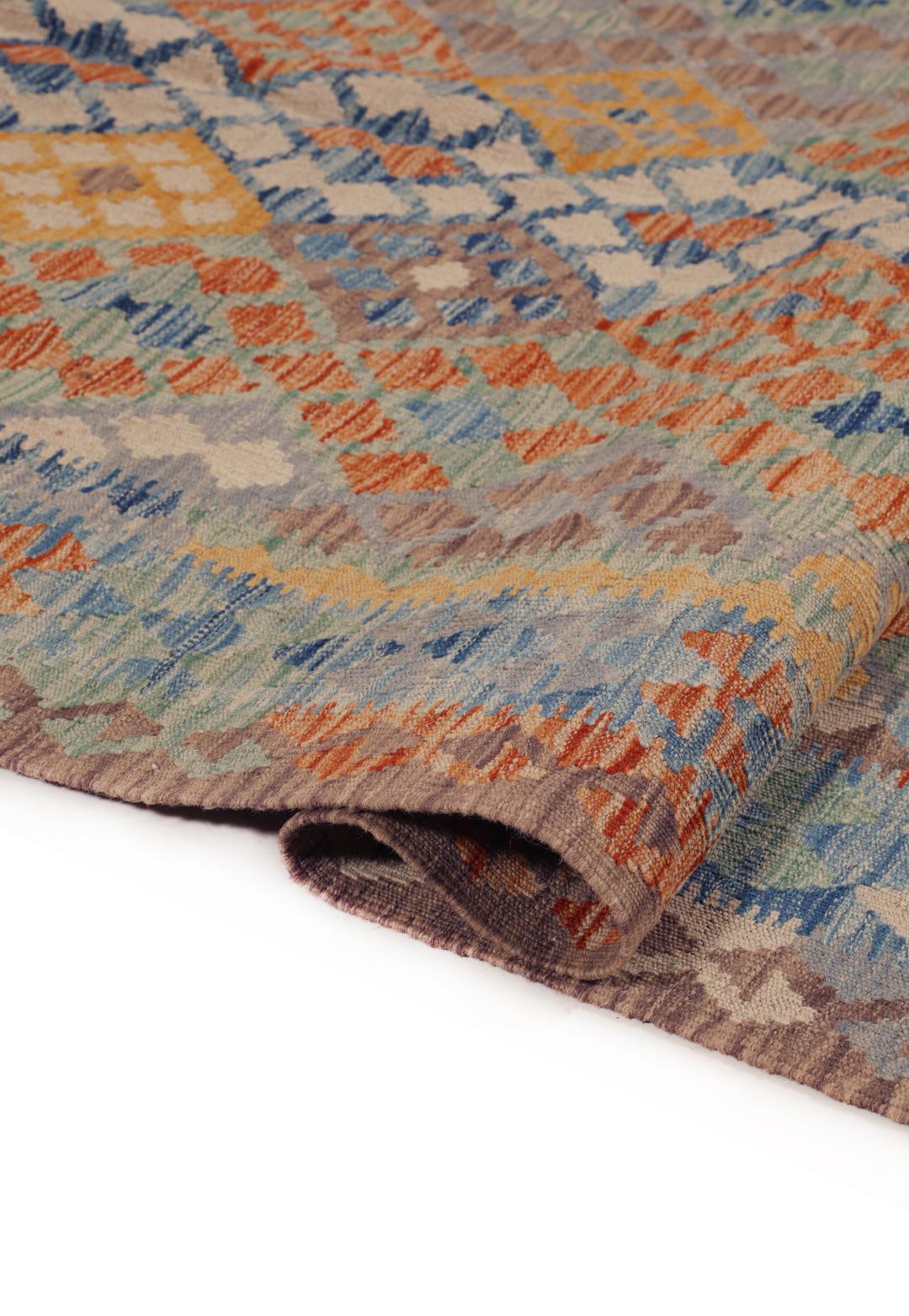
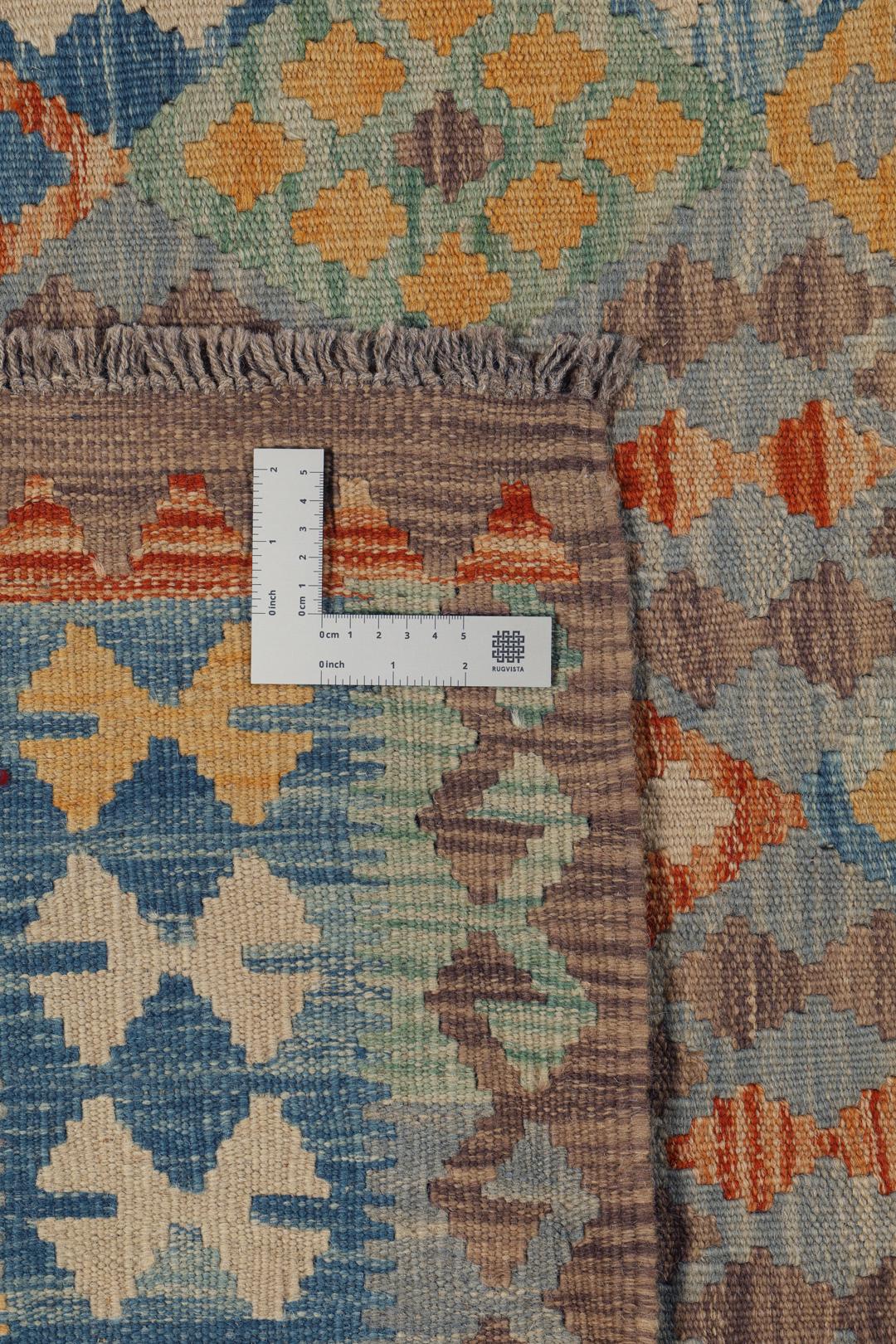
The term 'Kelim' specifically refers to the flat-weaving technique where the weft and warp threads are interlaced to create the pattern. Unlike knotted rugs, Kelims lack a pile, which creates a lightweight yet remarkably sturdy fabric. This technique requires the weaver to manage complex colour transitions directly on the loom, a skill that demands precision and a deep understanding of textile geometry to ensure the finished piece is balanced and durable.
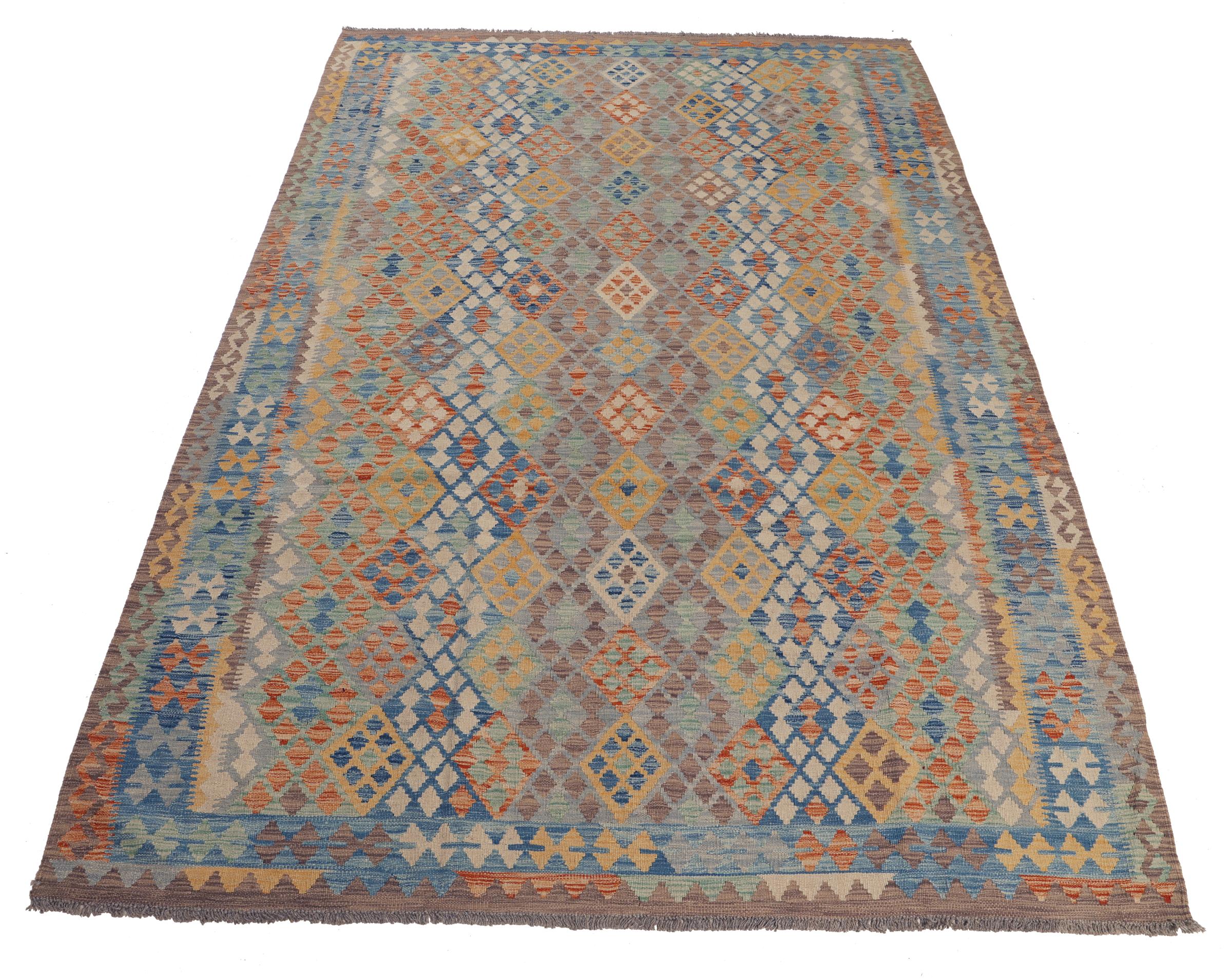
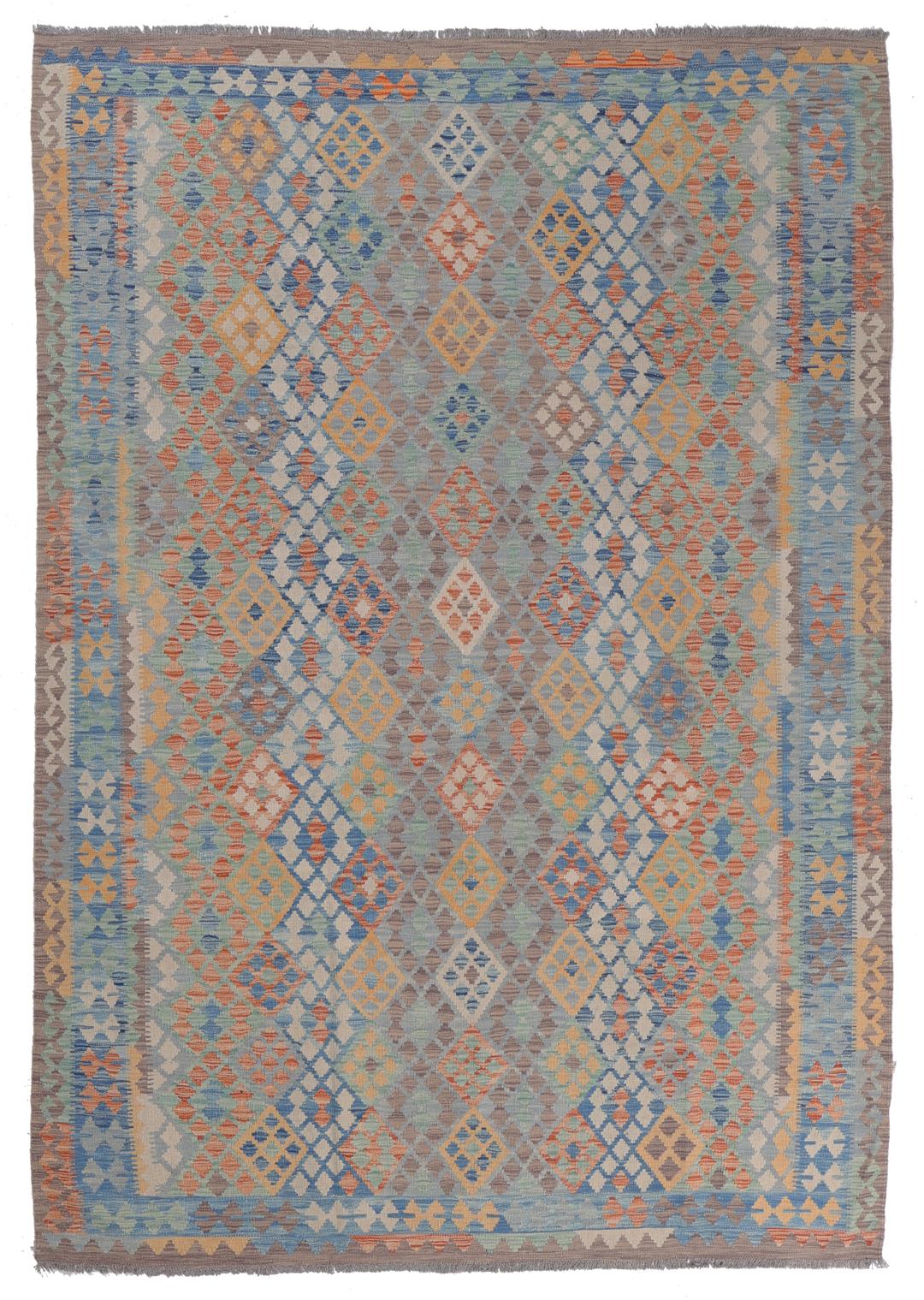
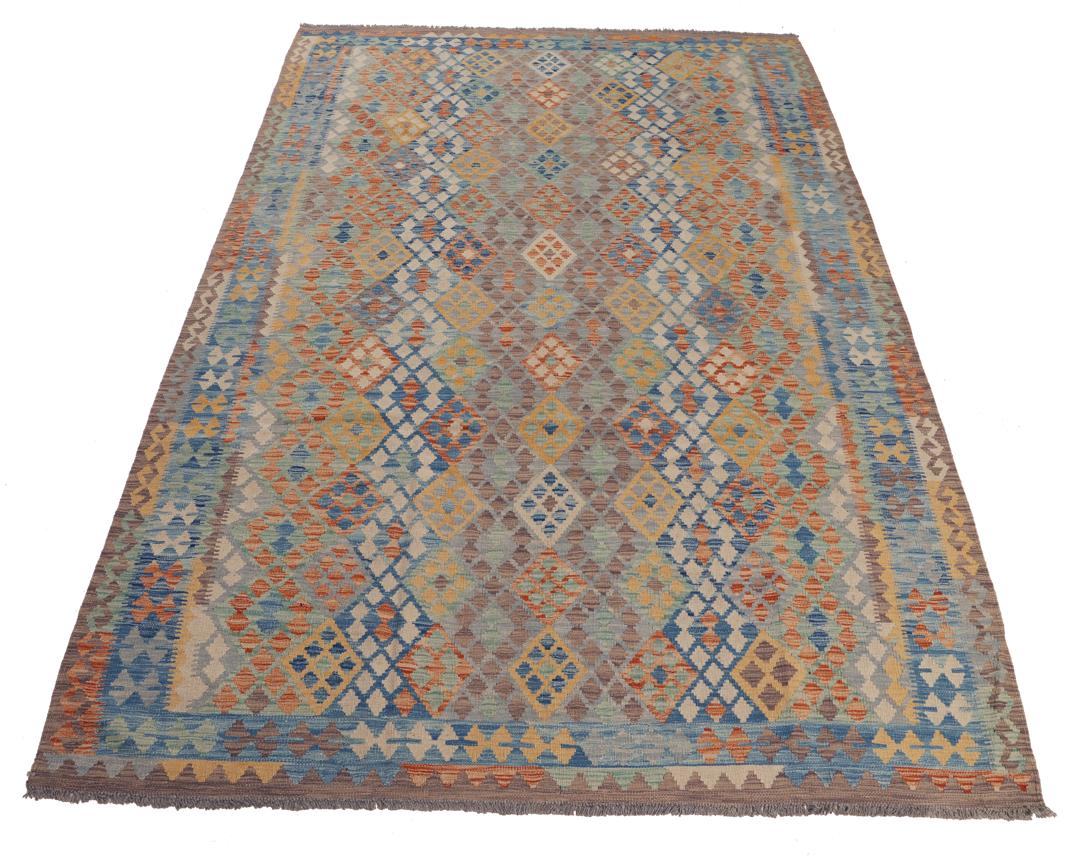
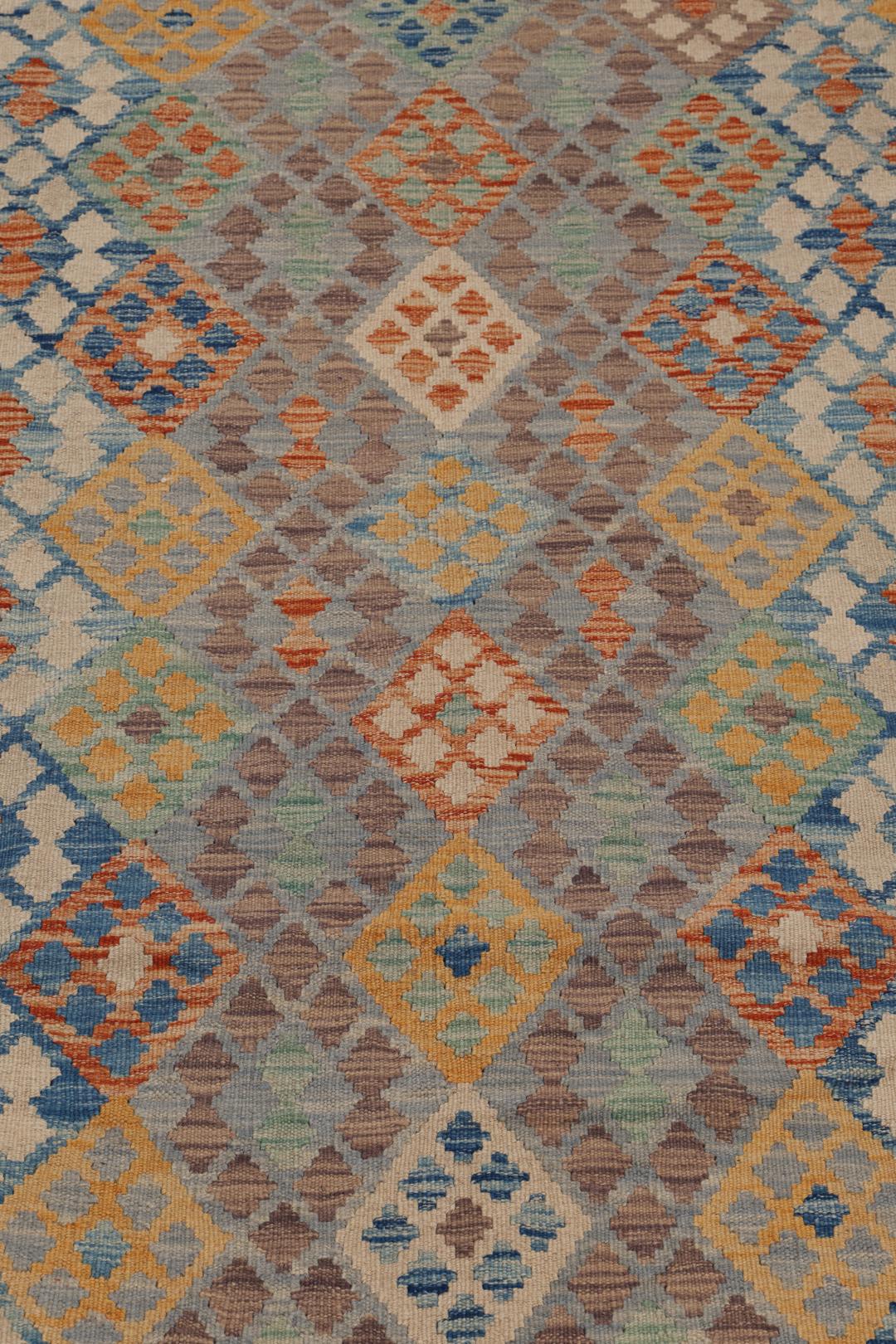
Visually, this rug is defined by its bold geometric language, particularly the diamond motifs that are central to Afghan design. These shapes are often arranged in repeating patterns that symbolise protection or local tribal identity. The use of a vibrant, varied colour palette is a signature of this tradition, utilising natural dyes that develop a beautiful, muted patina over time, making each piece feel like a living record of its cultural origins.
Owning an Afghan Kelim is an investment in a storied craft that bridges the gap between historical utility and modern design. These rugs are highly prized by collectors for their authenticity and the human effort required to produce them. By bringing one into your home, you are not just acquiring a floor covering, but a piece of cultural heritage that honours the dedication of the artisans who keep these ancient techniques alive today.