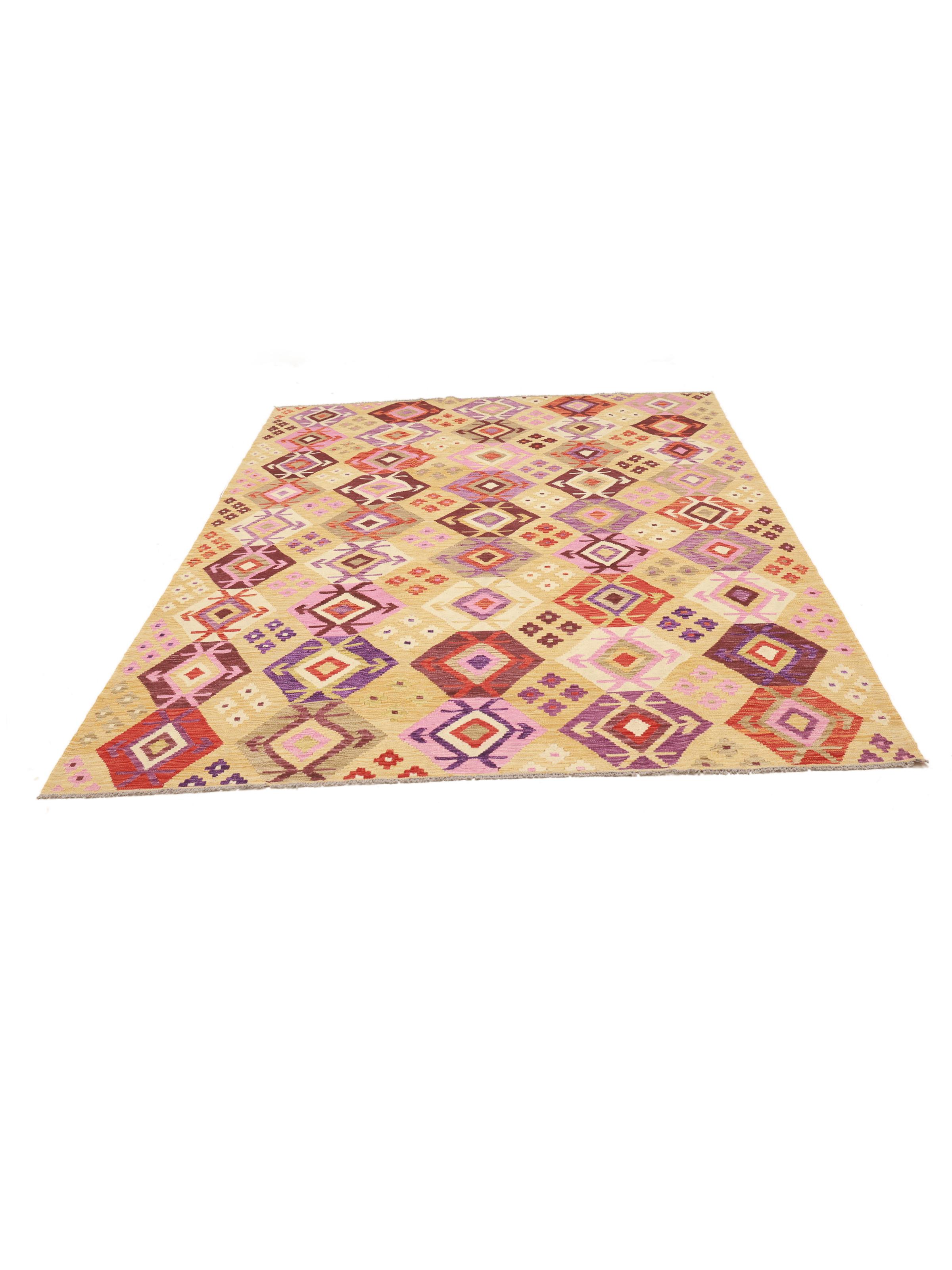
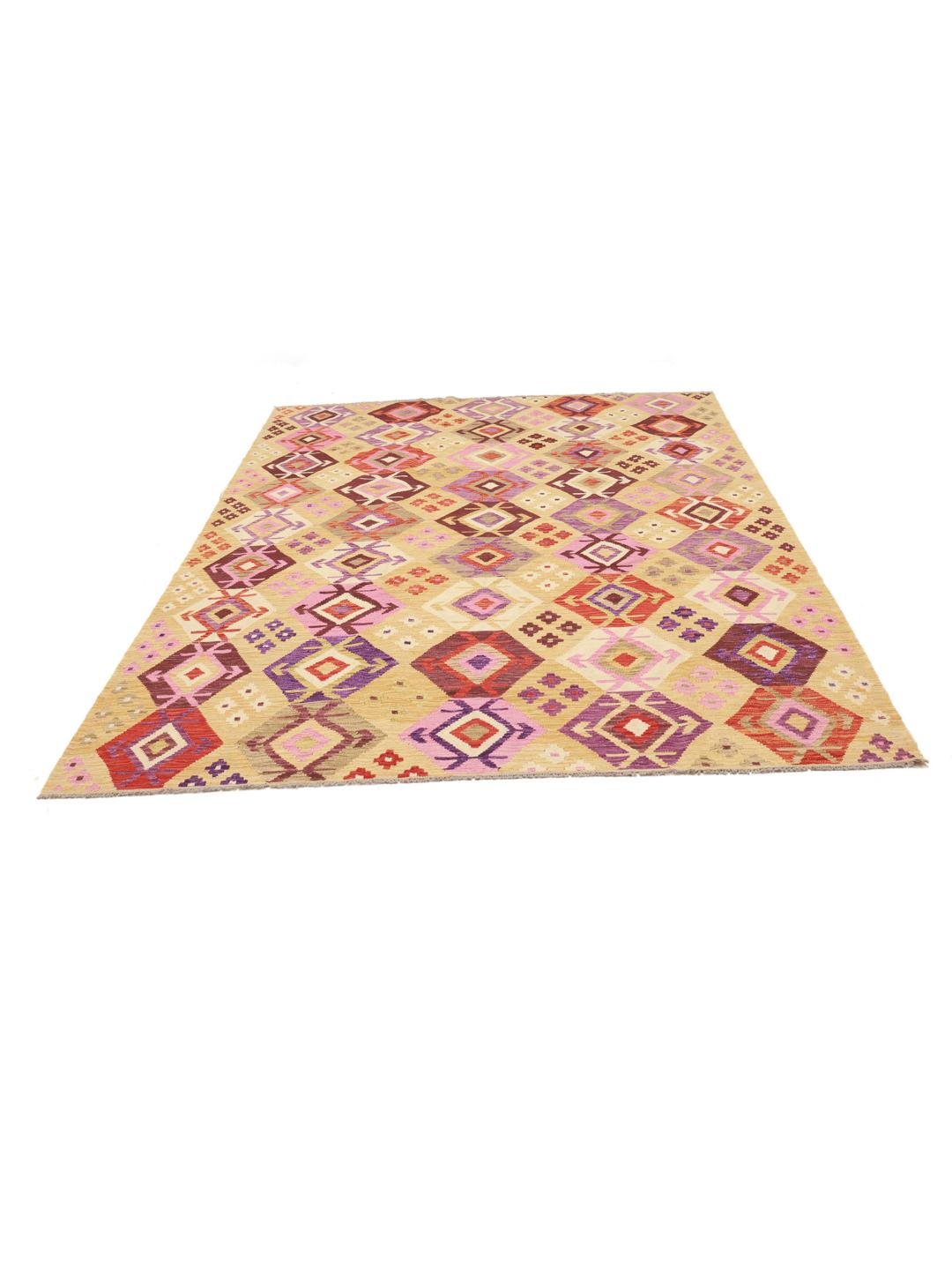
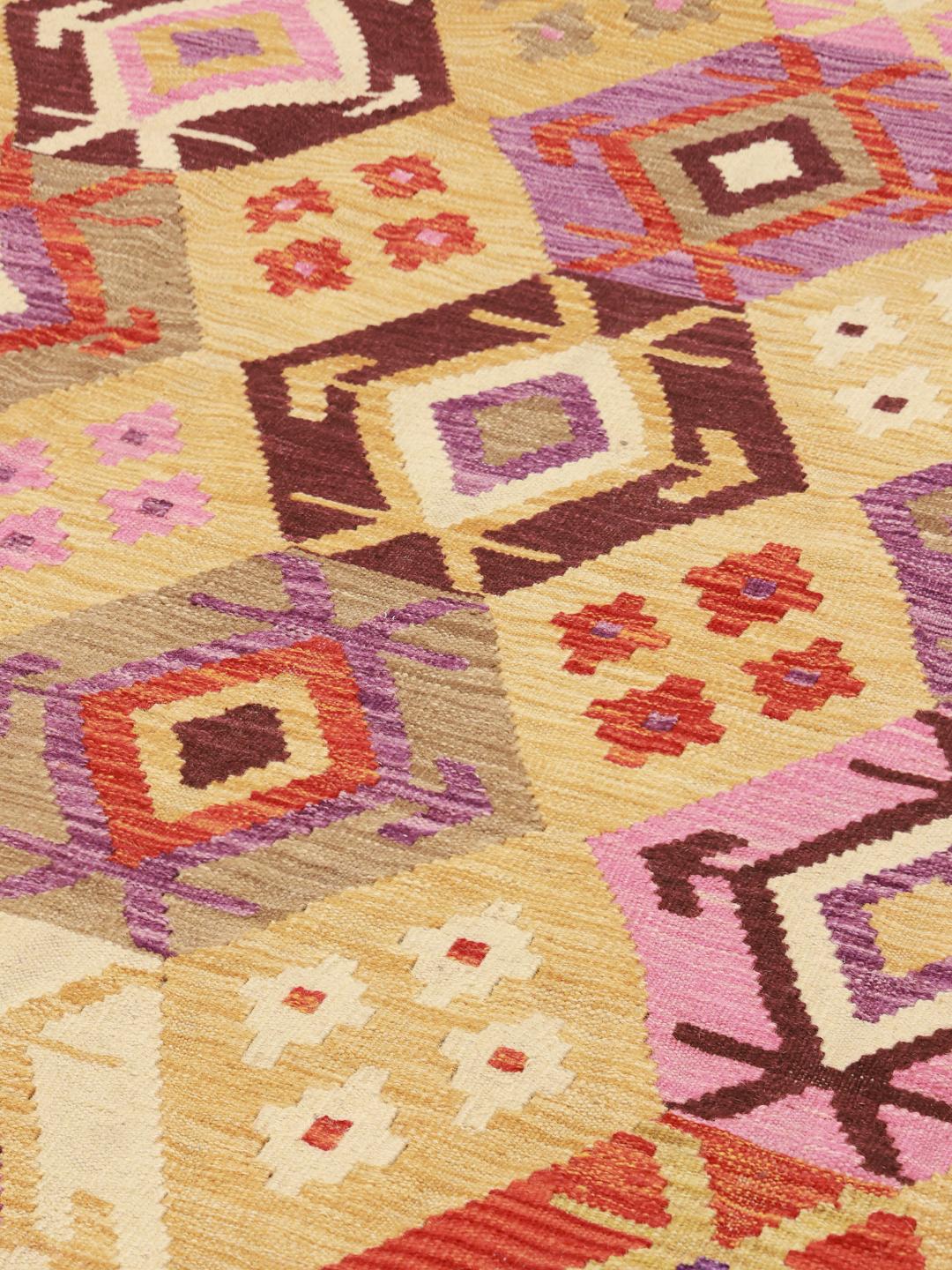
Kelim rugs have a long and storied history across the Middle East and Central Asia, serving as both functional floor coverings and expressions of cultural identity. The Afghan Kelim, in particular, is celebrated for its earthy tones and bold, geometric vocabulary, which often draws inspiration from the nomadic traditions of the region.
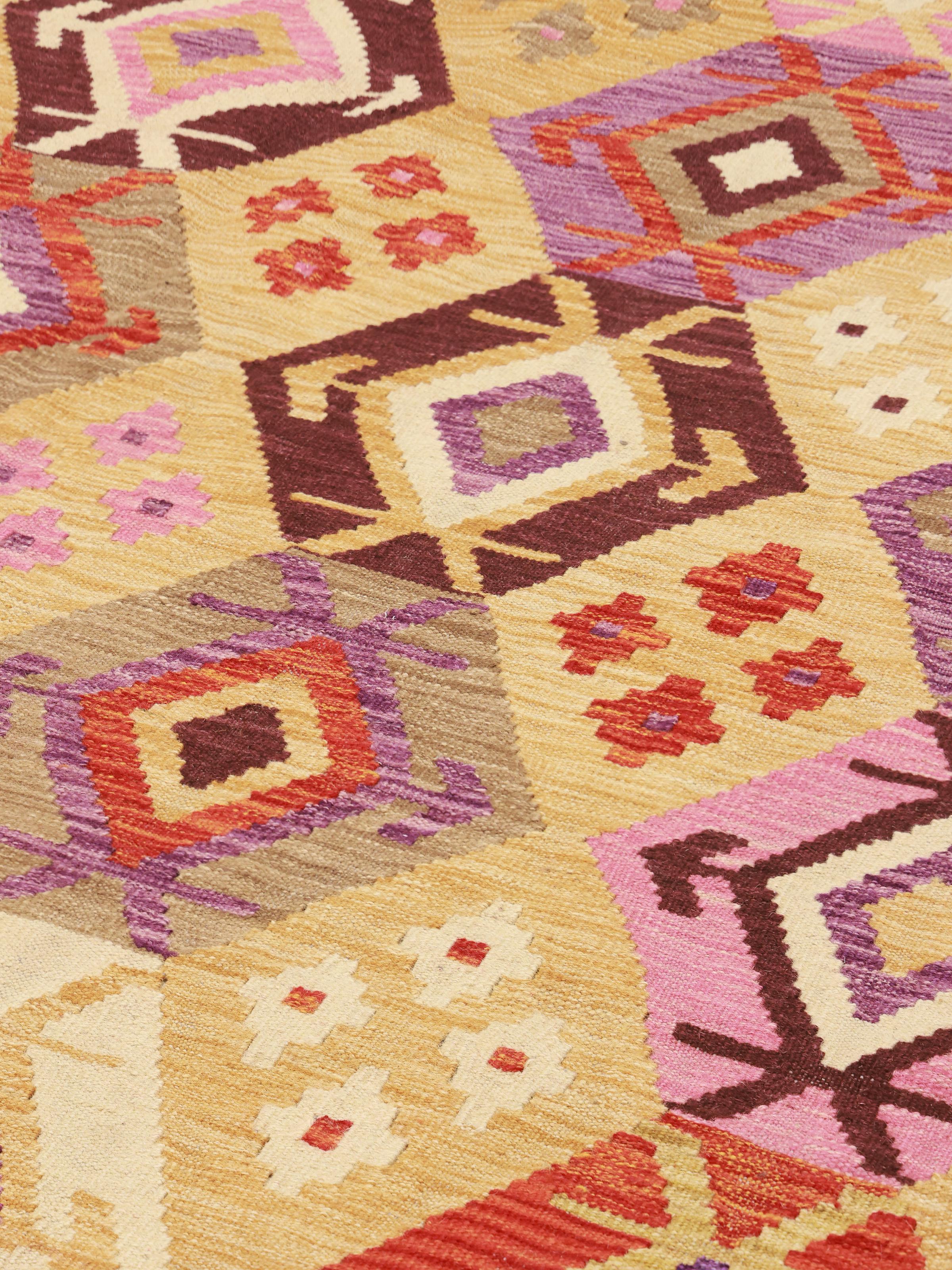
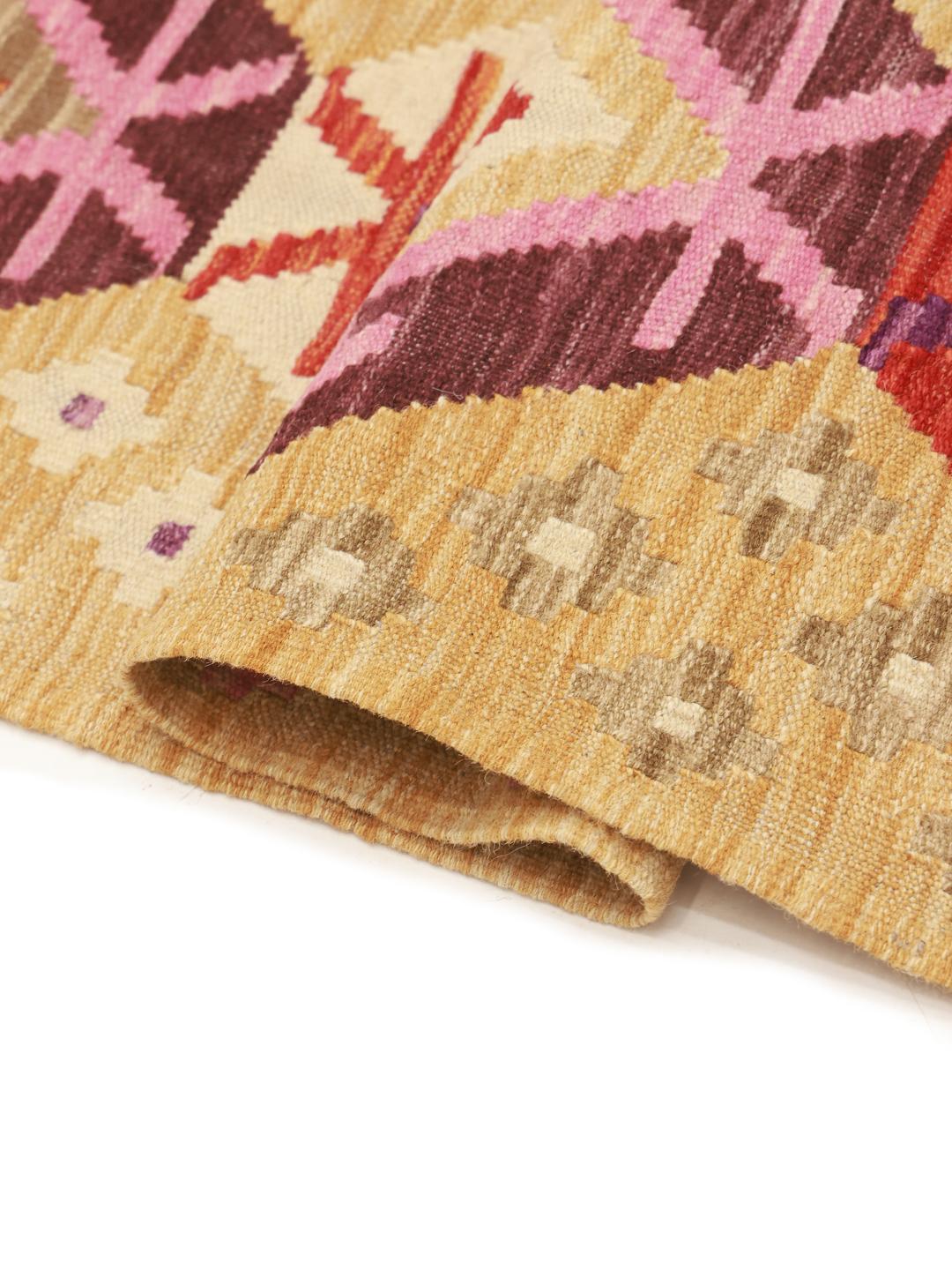
The term 'Kelim' refers to a specific flat-weaving technique where the weft threads are passed through the warp threads to create the pattern, resulting in a rug that has no pile. This method is highly valued for its ability to produce intricate, graphic designs that are identical on both sides, making the rugs incredibly versatile and durable for daily use.
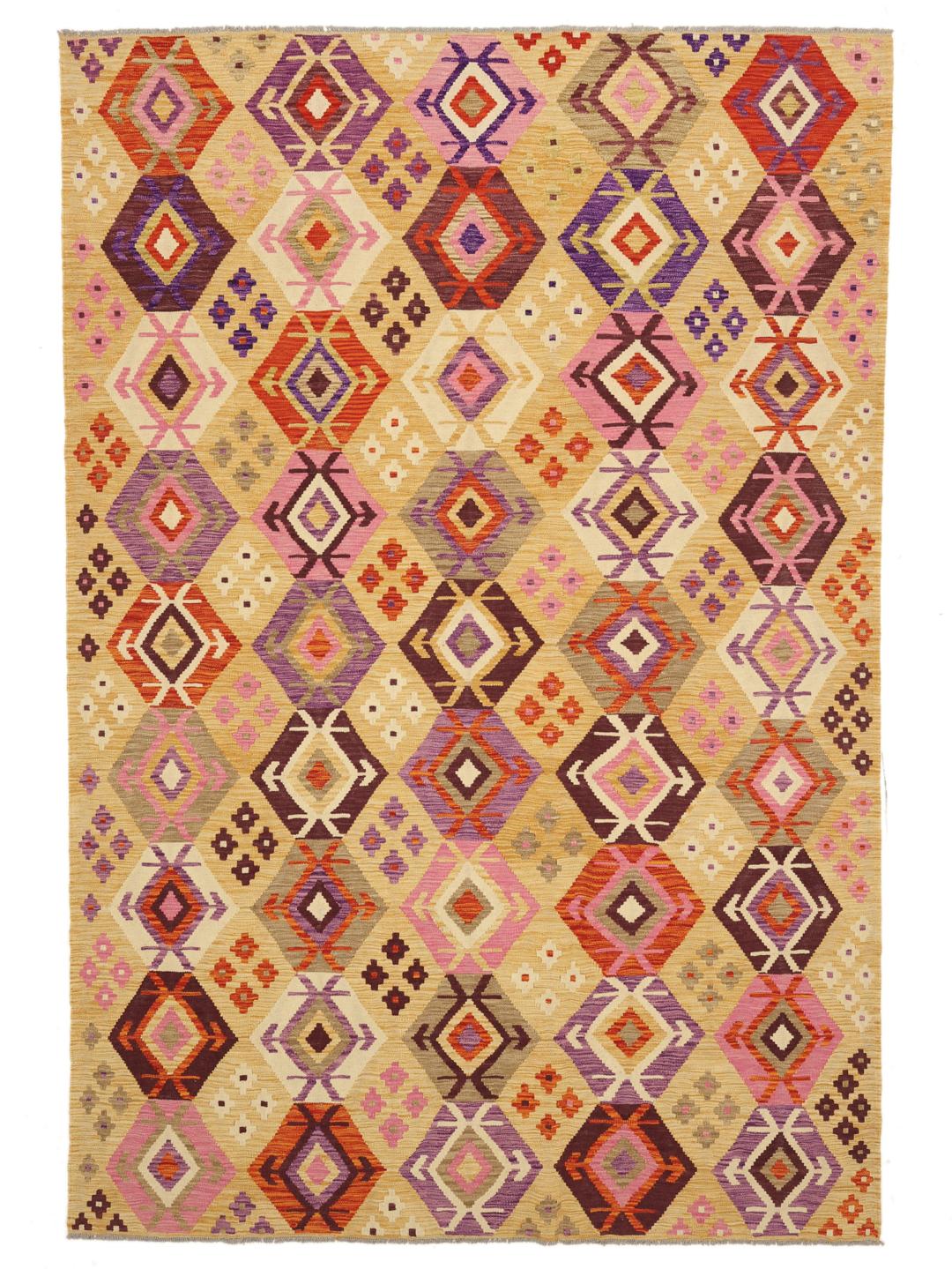
The signature design elements of these rugs often include repeating medallions, diamonds, and tribal motifs that carry symbolic meaning. The use of natural, warm colours is a hallmark of the Afghan tradition, often achieved through traditional dyeing methods that produce rich, enduring hues. In this specific piece, the geometric arrangement creates a balanced field that is characteristic of the finest local weaving styles.
Collectors value these rugs not only for their aesthetic appeal but also for the cultural heritage they represent. Owning a Kelim is a way to connect with a centuries-old craft that has survived through generations of nomadic migration and regional change. It is a testament to the skill of the weavers and the lasting quality of their hand-woven work.