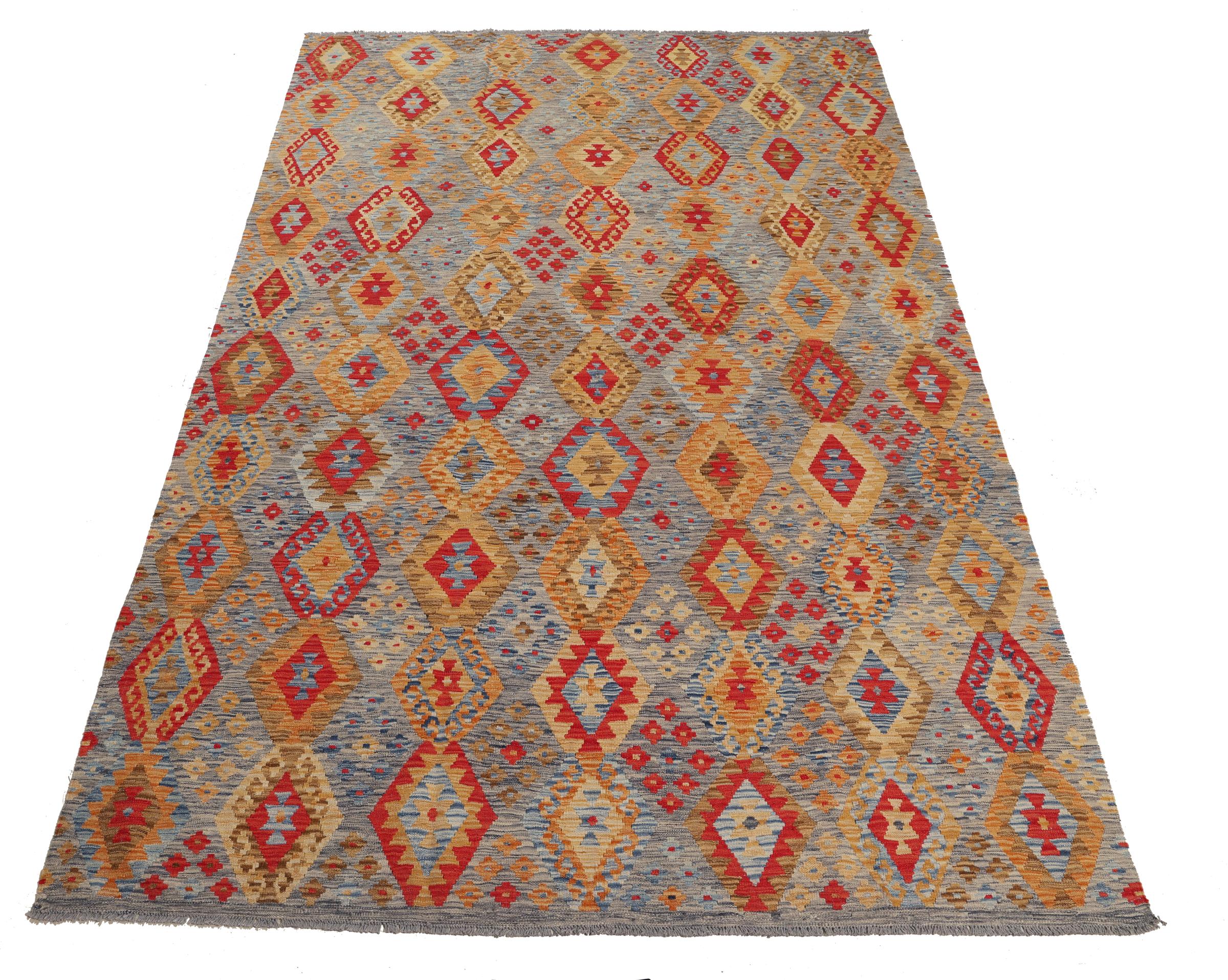
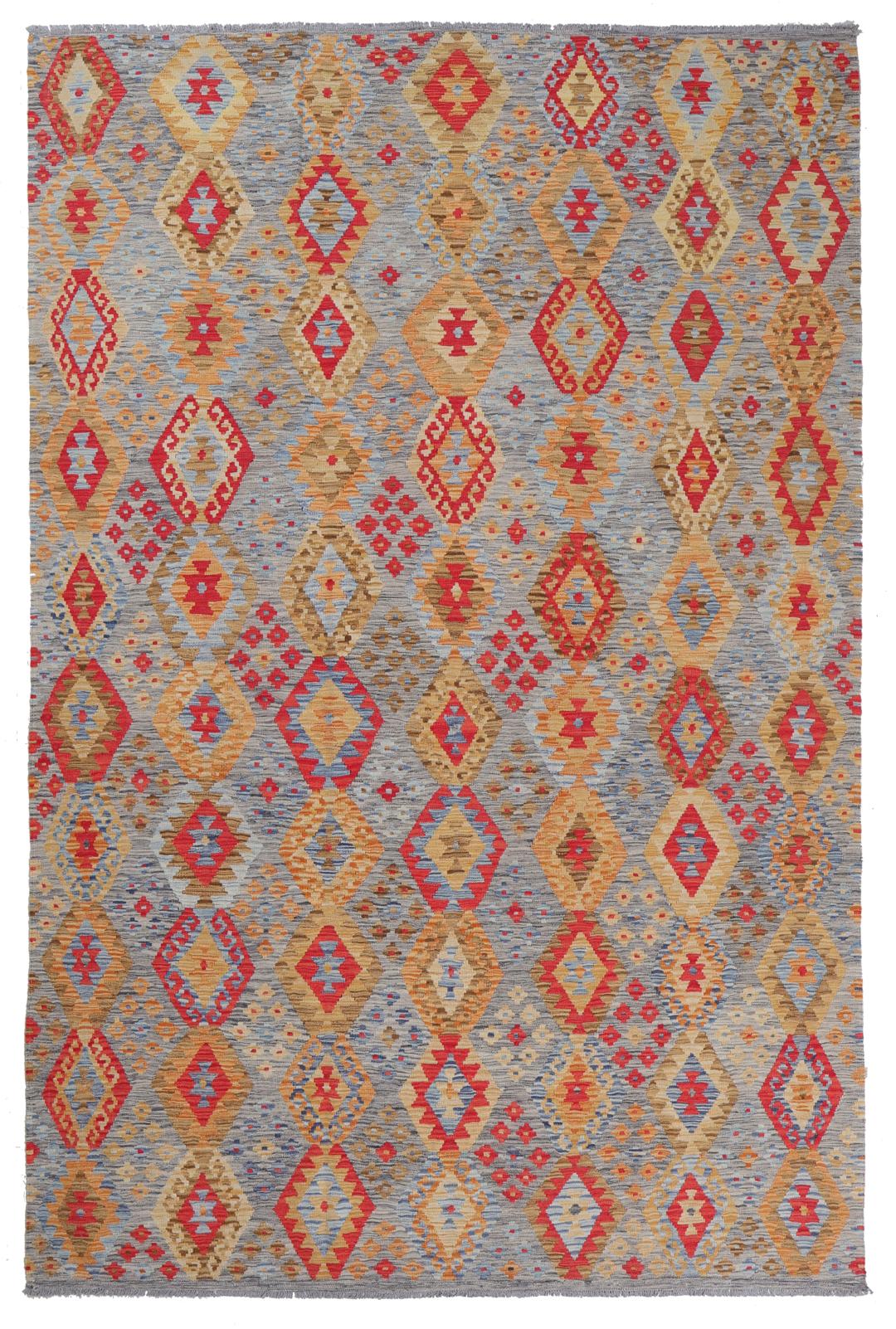
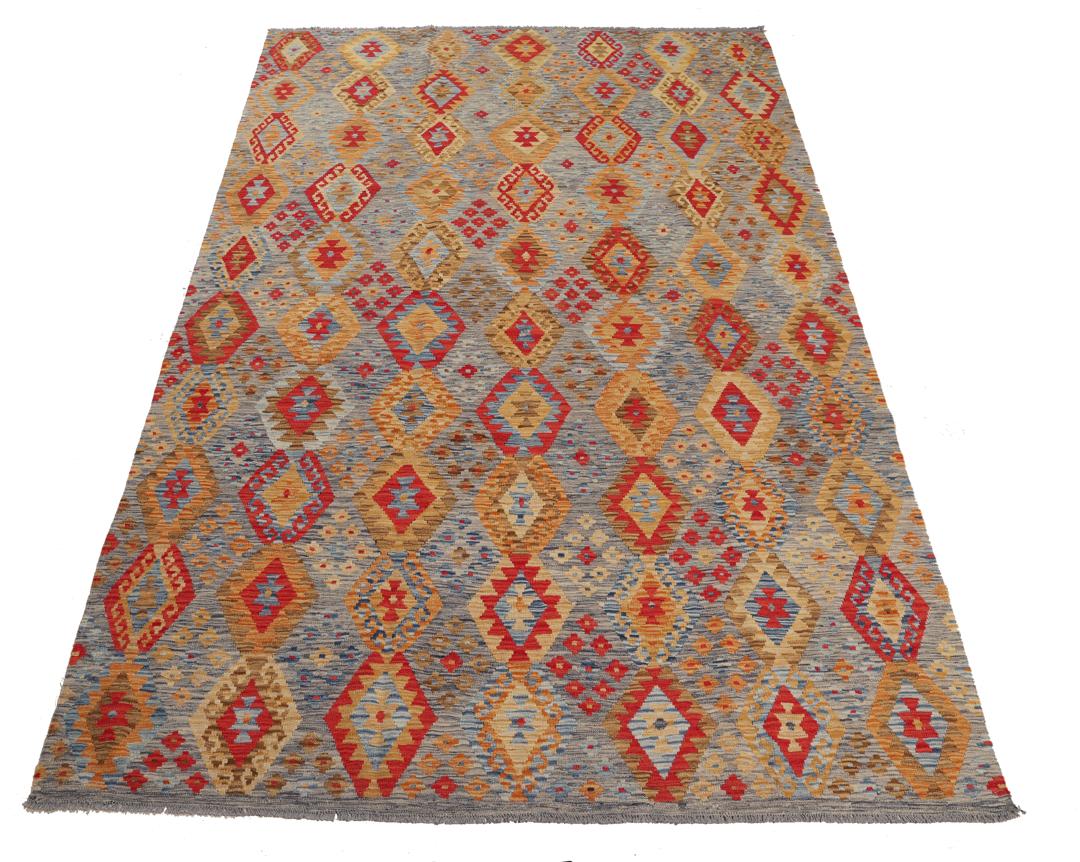
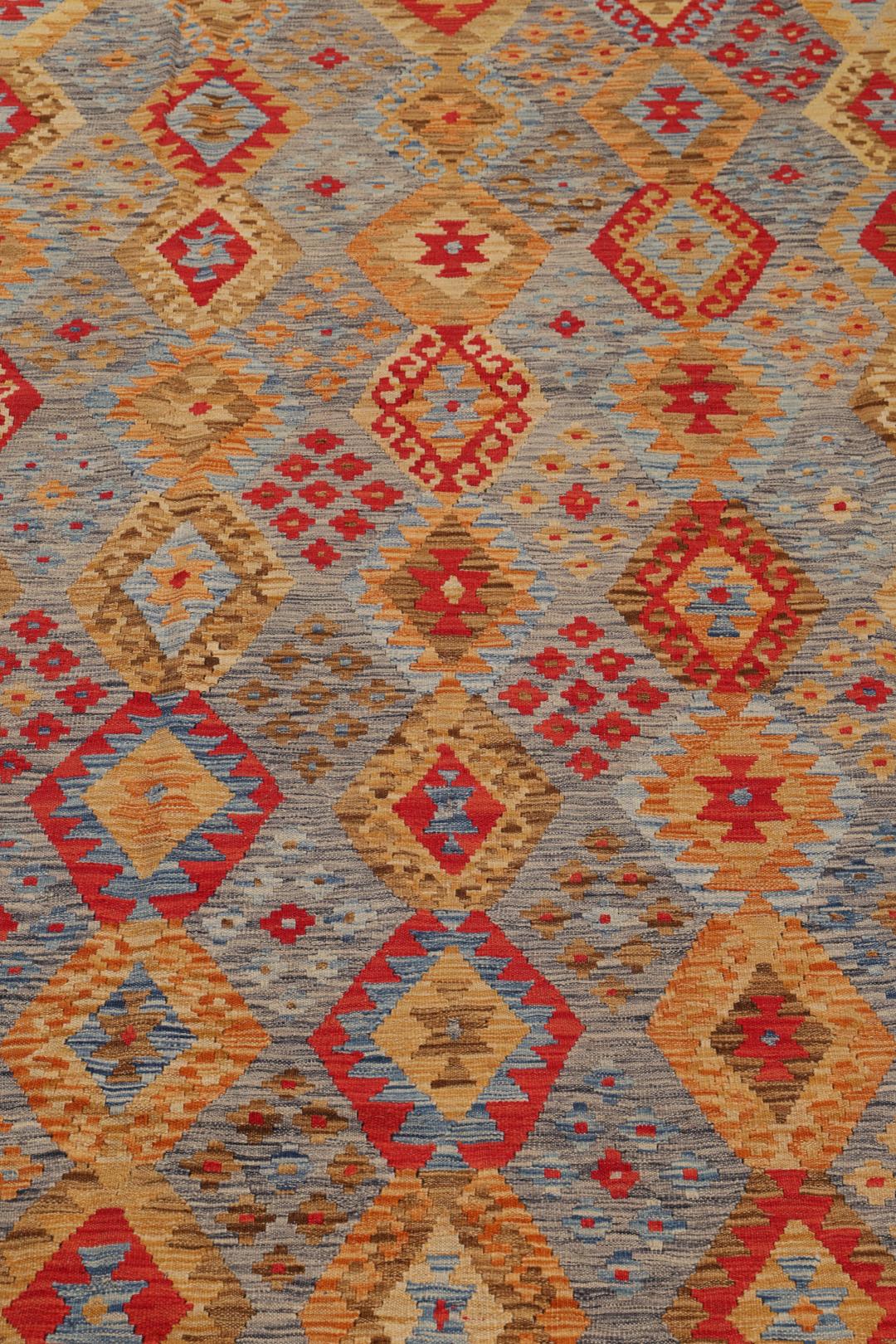
The Kelim tradition in Afghanistan is deeply rooted in the nomadic and semi-nomadic cultures of the Middle East, where flat-woven rugs have served as essential, portable, and durable household items for centuries. These rugs are not just floor coverings but are cultural artefacts, often passed down through generations. The evolution of these designs reflects the intersection of ancient tribal customs and the unique environmental conditions of the Afghan landscape.
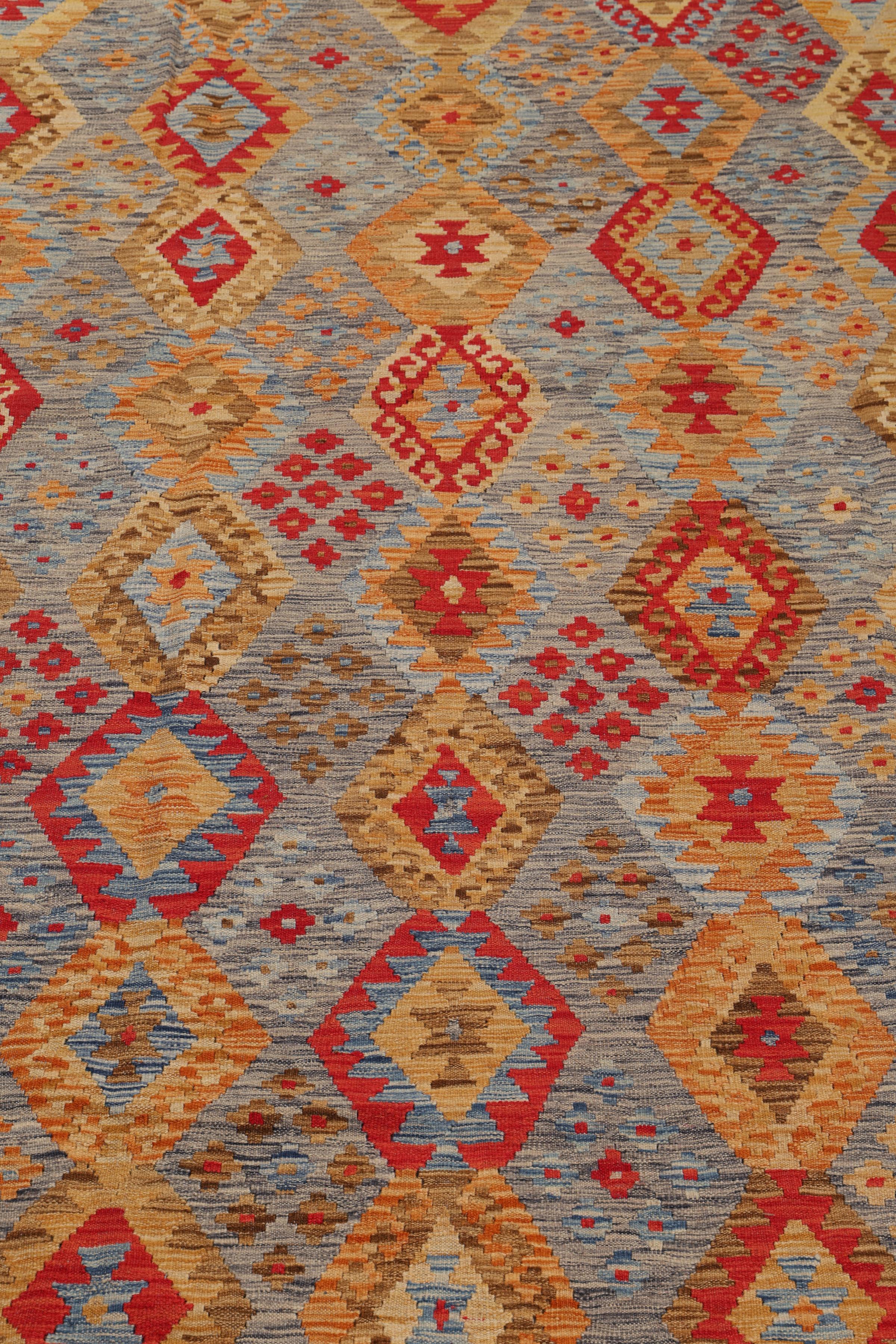
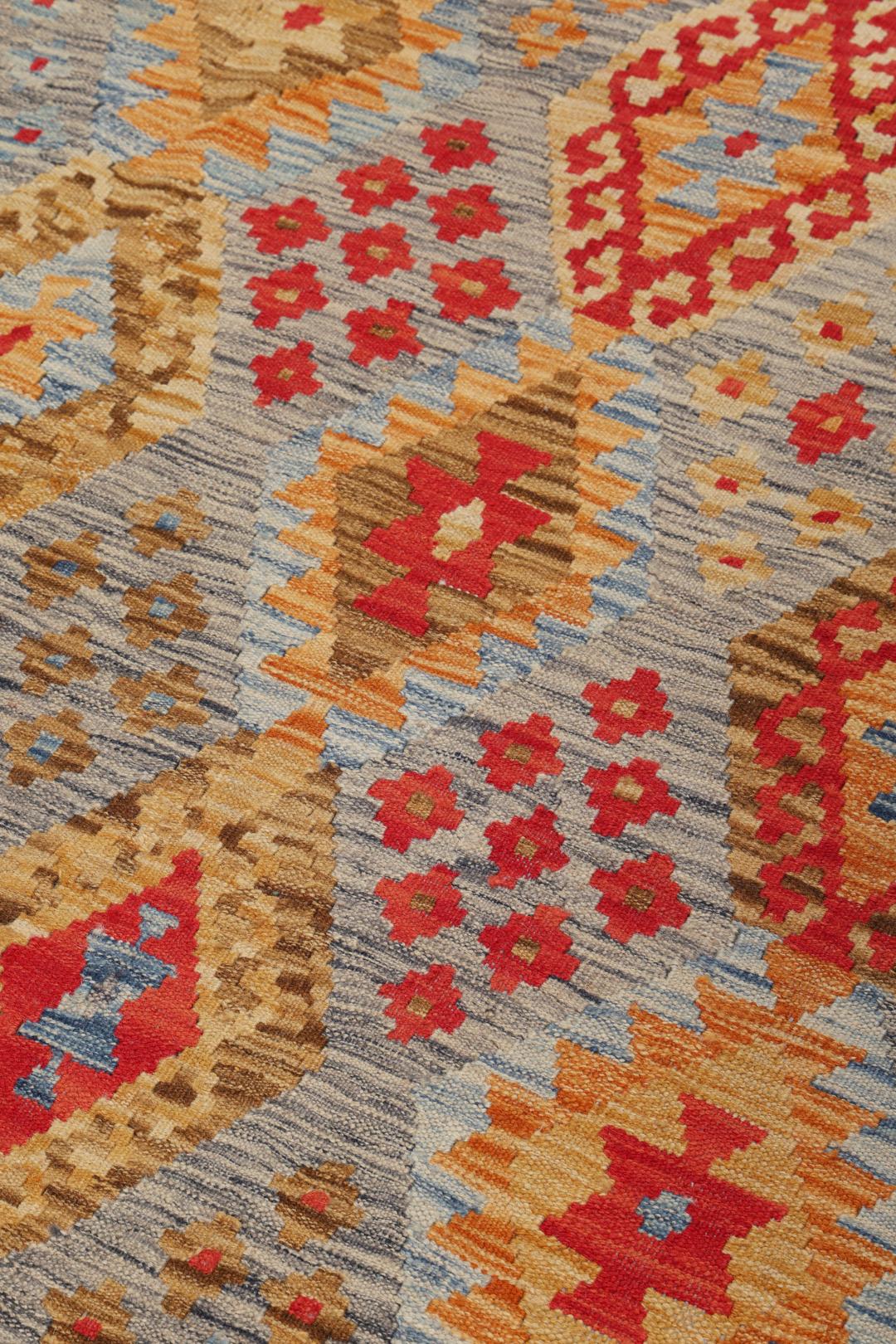
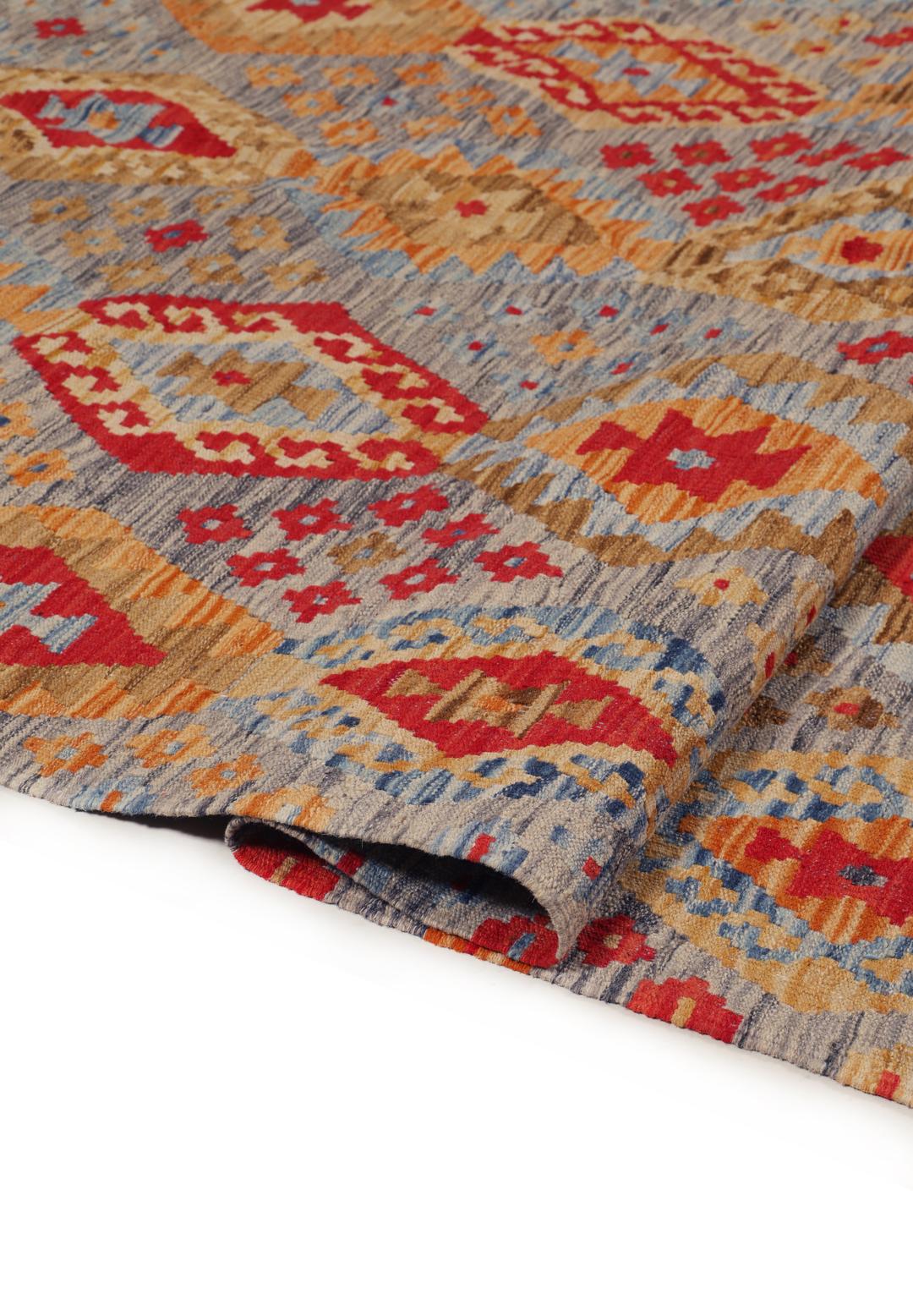
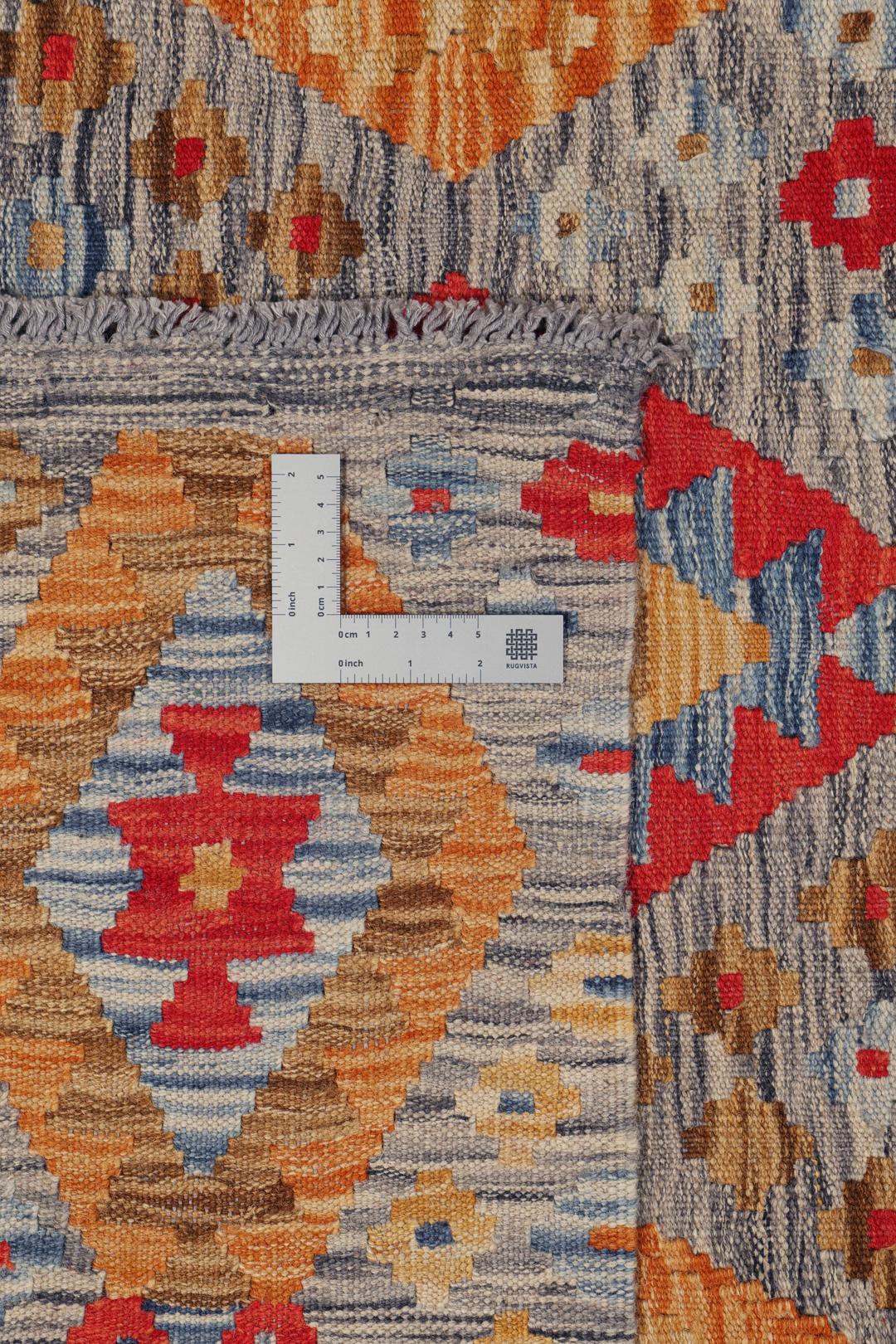
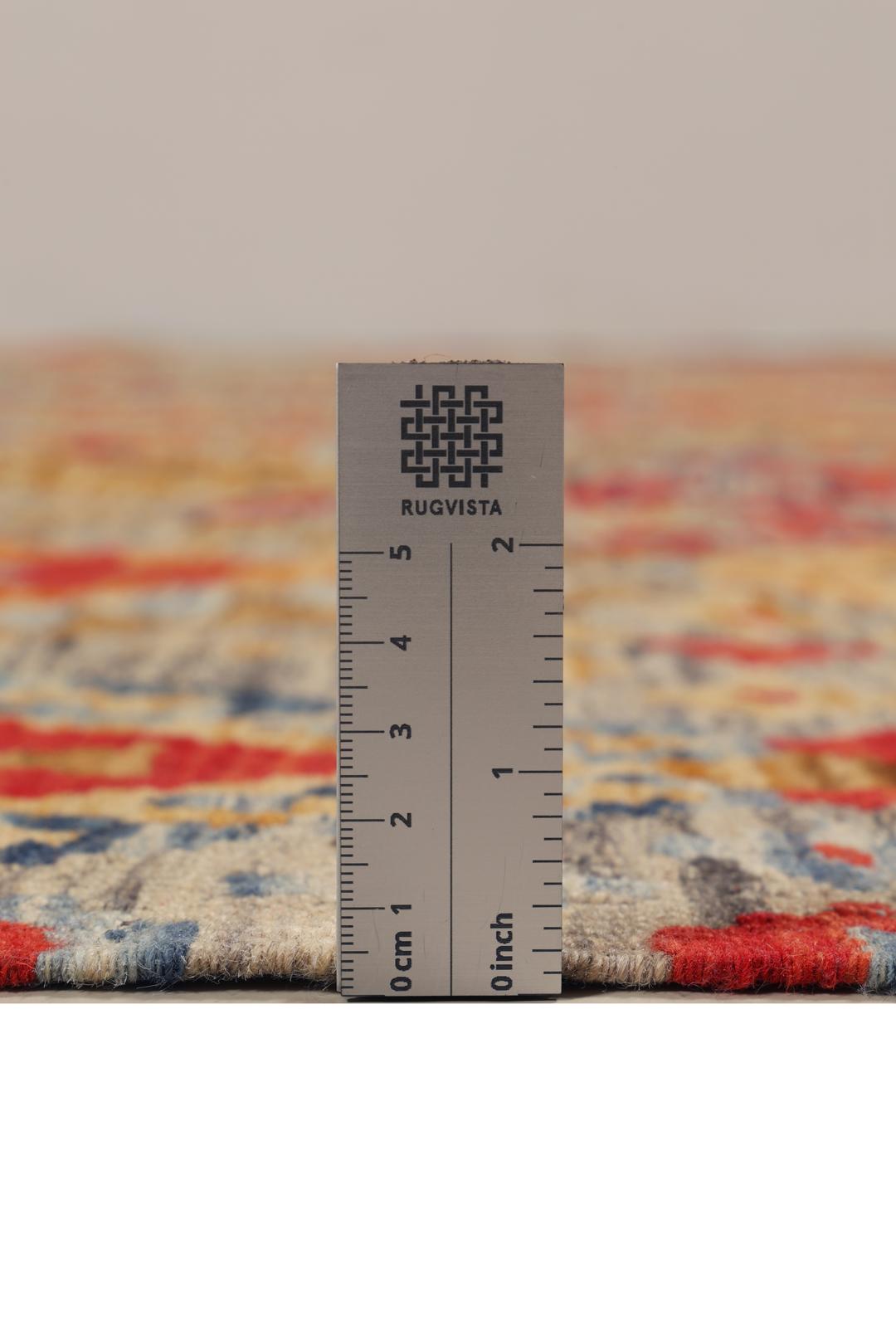
The term 'Kelim' refers specifically to the flat-weaving technique where there is no pile. This method involves interlacing the warp and weft strands tightly to create a durable, reversible textile. Because the construction is so focused on the tension and alignment of these threads, the resulting fabric is exceptionally stable and resistant to wear. This technical approach allows for the sharp, clean lines in the geometric patterns that define the style.
Signature design elements in these rugs typically feature a series of repeating geometric motifs, such as diamonds, triangles, and stylized floral shapes, often arranged in formal rows. The use of traditional dyes and earthy palettes provides a timeless aesthetic that bridges the gap between old-world artistry and modern interior needs. The specific layout of these motifs often tells a story of the region's history, with each pattern representing a connection to ancestral design languages.
Collectors value these pieces for their authenticity and the sheer human effort required to complete each one. Owning a Kelim is a way to preserve a piece of living history, as the skill and patience required to weave these patterns are inherited through generations. These rugs are celebrated not only for their visual impact but for the cultural weight they bring into a home, offering a connection to a craft tradition that remains as relevant today as it was in the past.