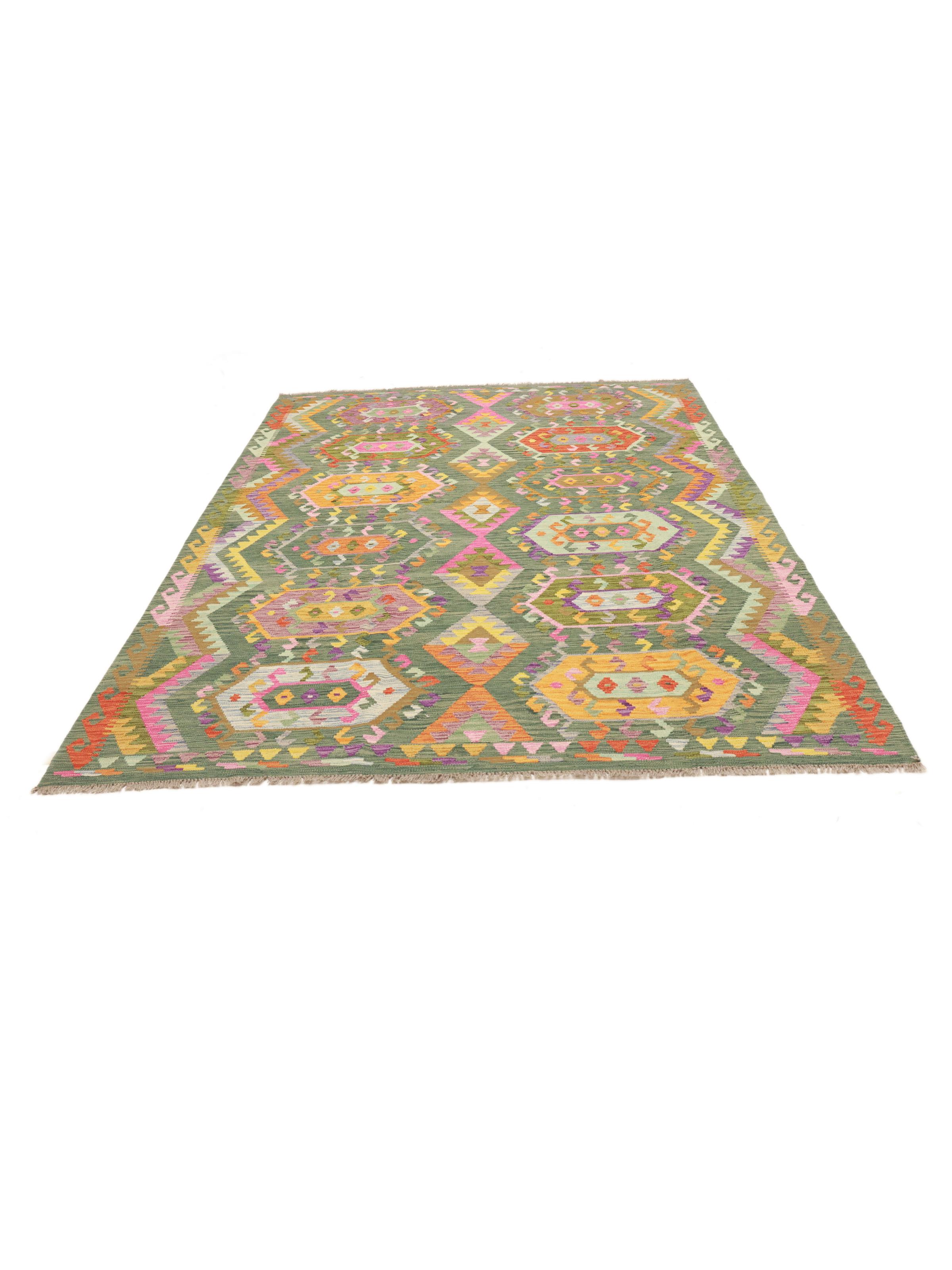
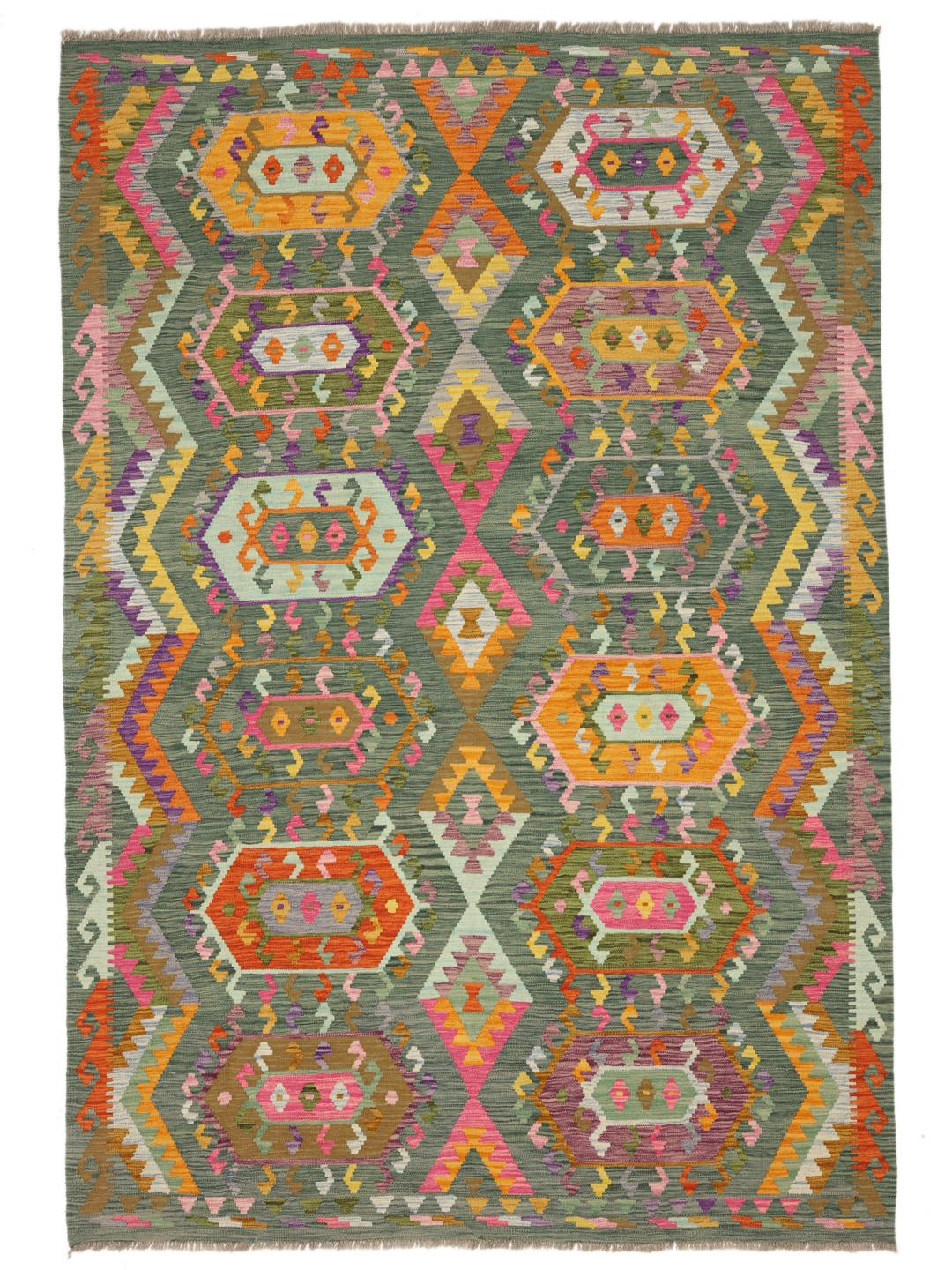
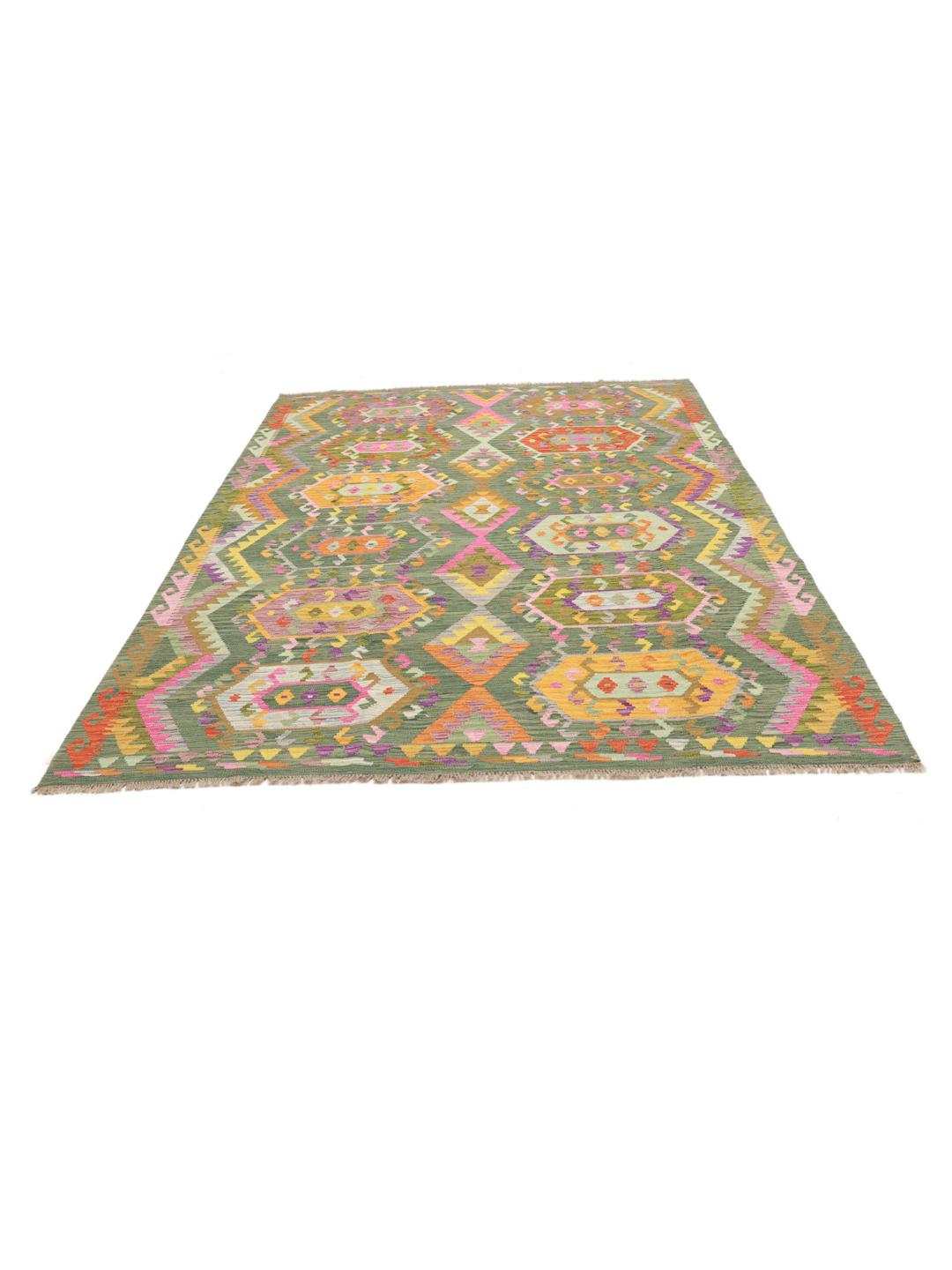
The Afghan kelim is deeply rooted in the nomadic and village traditions of the Middle East. These rugs are traditionally created as functional items for daily life, serving as floor coverings, tent hangings, or storage bags. Over generations, the art of weaving these flat-weave textiles has been passed down through families, with each region developing its own distinct visual language and technical approach.
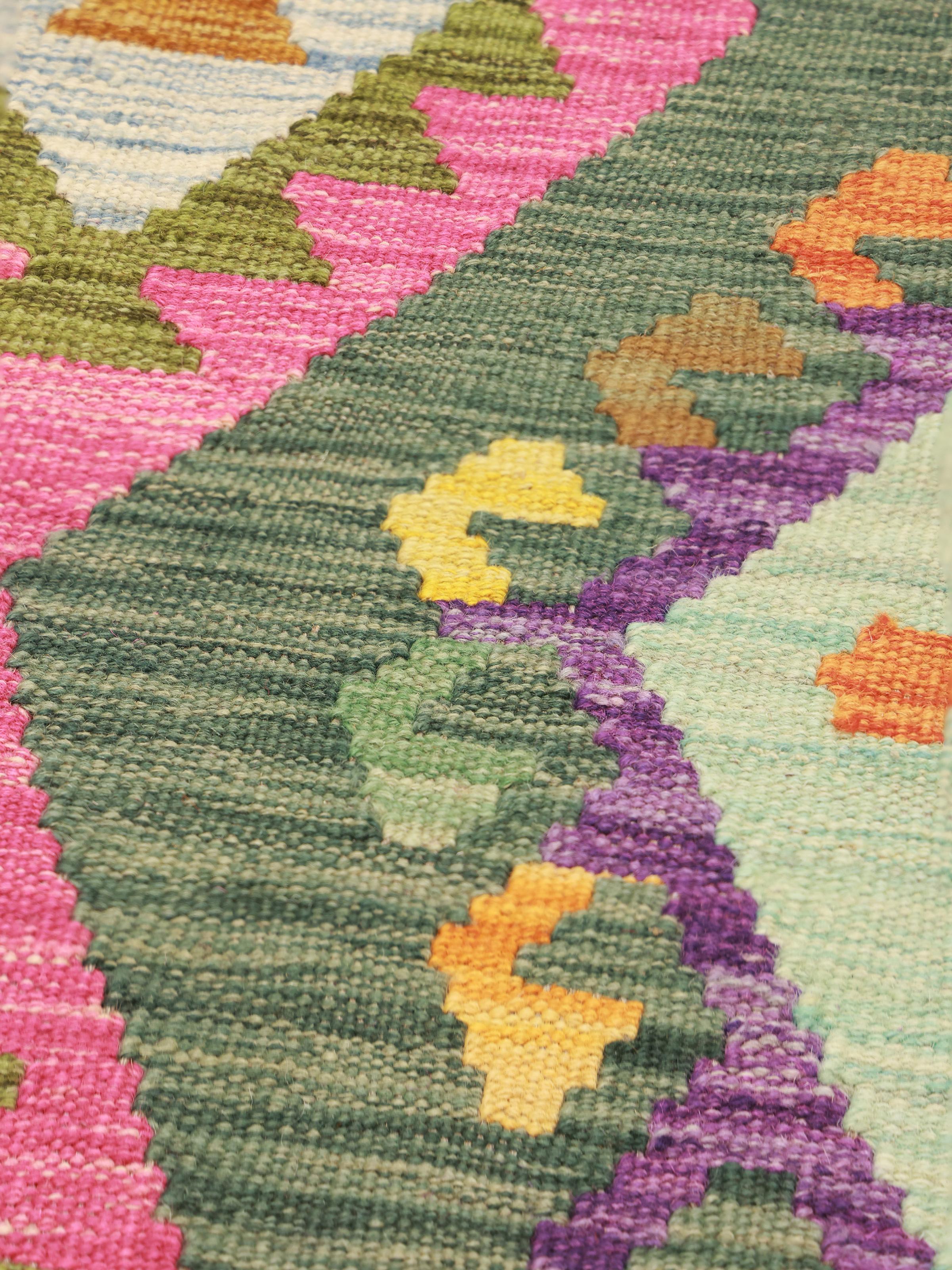
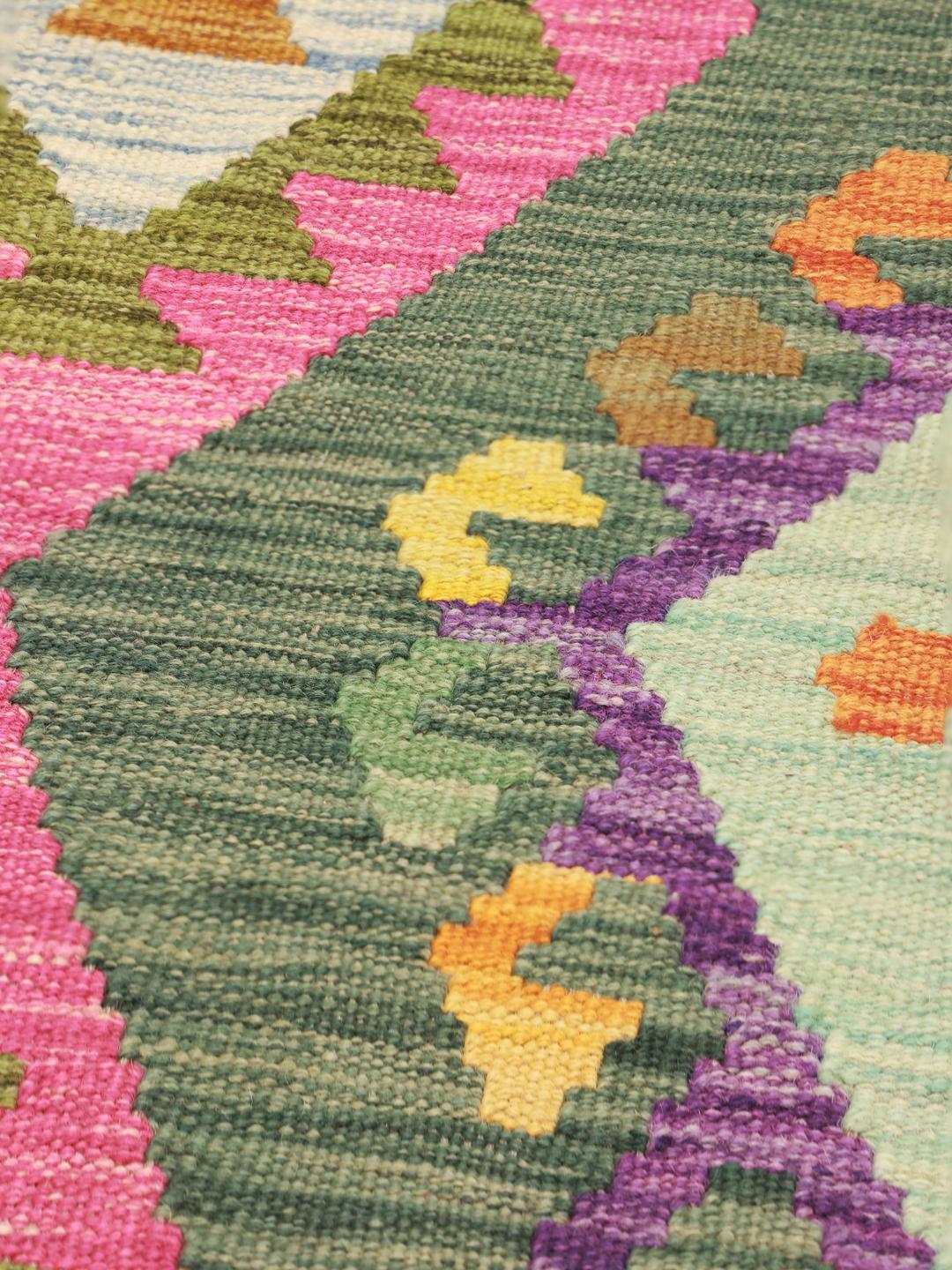
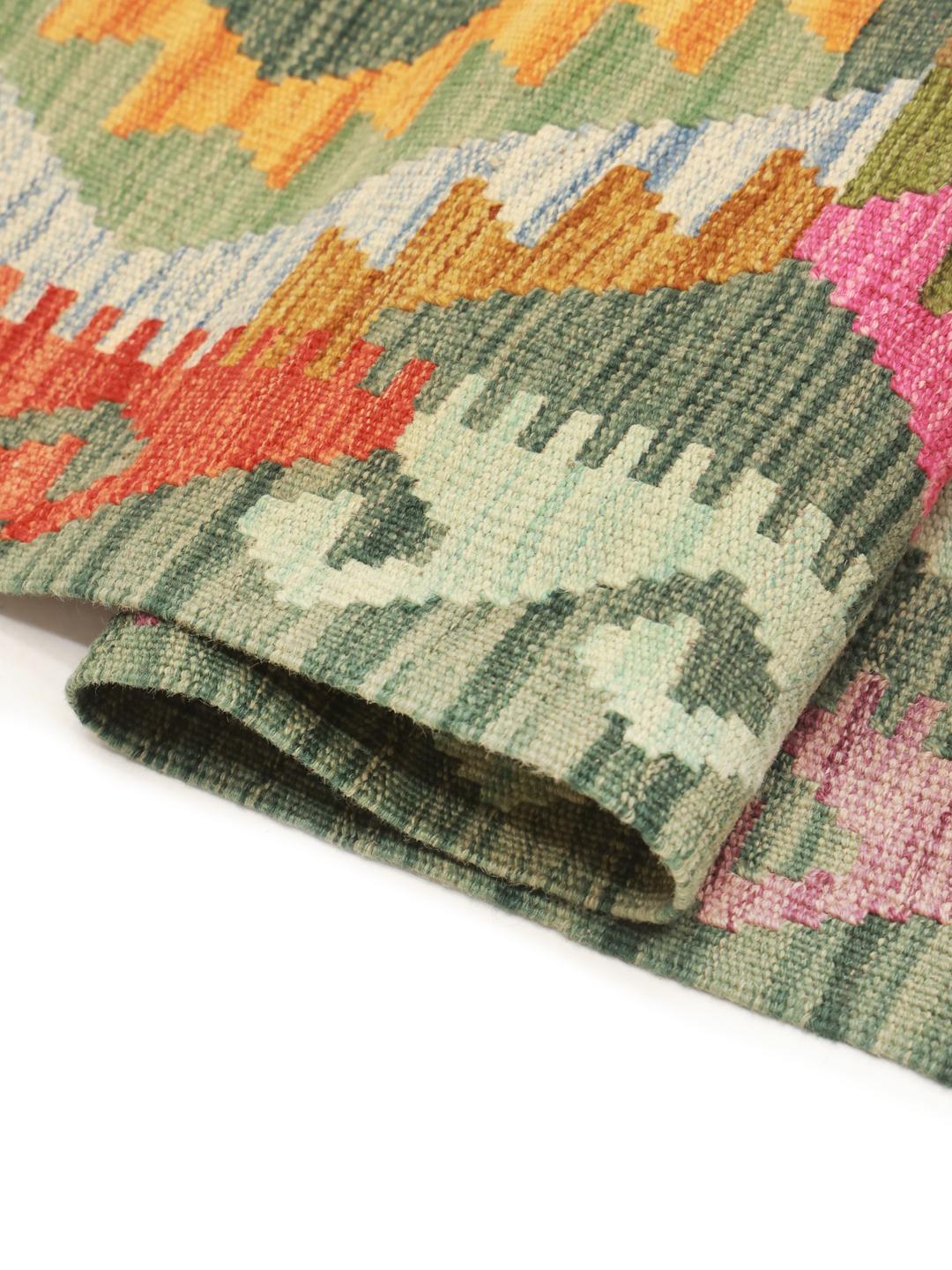
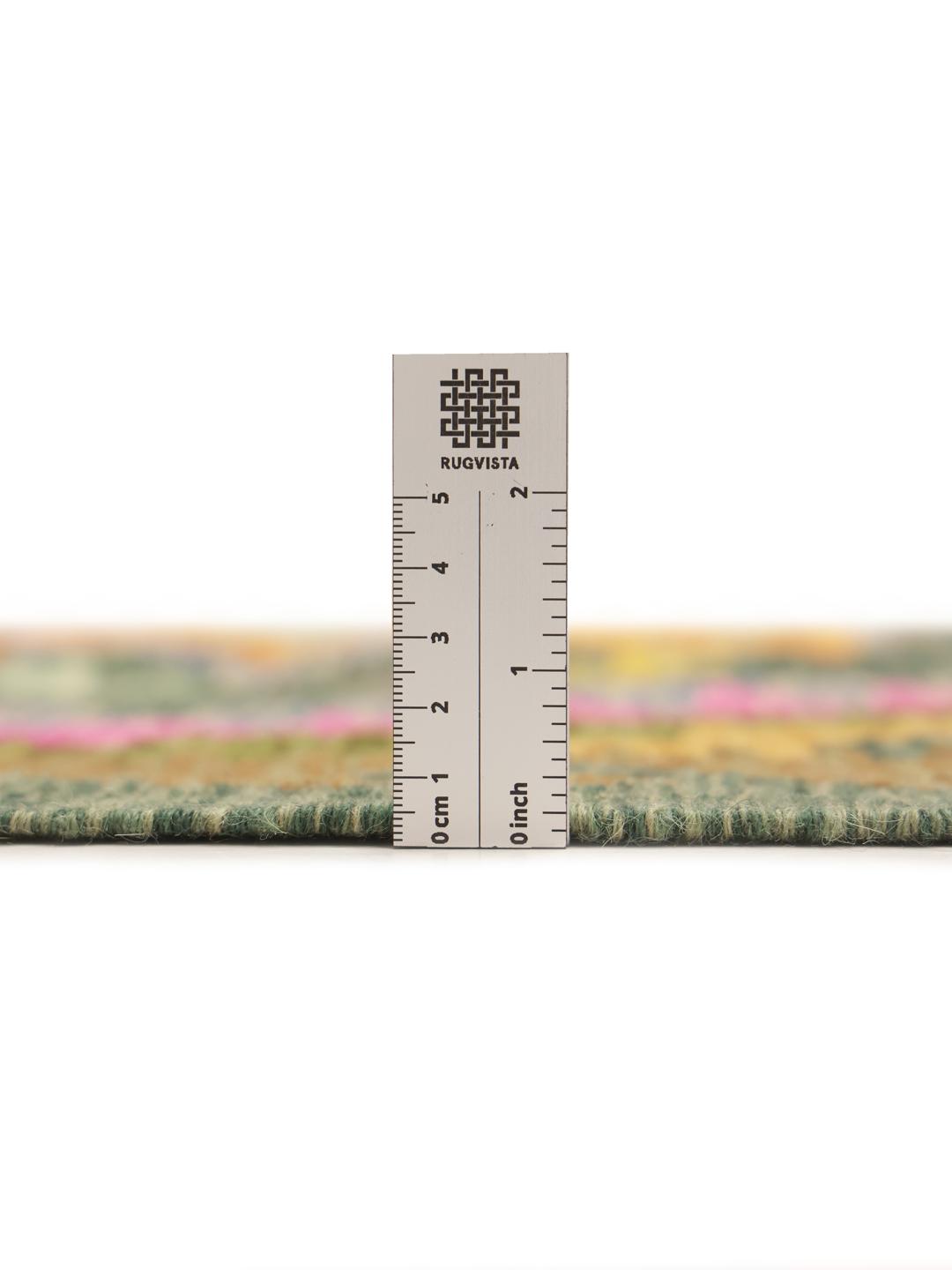
A kelim is defined by its flat-weave construction, which lacks a pile. This technique is achieved by interweaving the warp and weft threads to create a durable, reversible fabric. The lack of pile gives these rugs a unique, lightweight feel that is distinctly different from knotted rugs. This method allows for crisp, sharp geometric lines that are characteristic of the style, making them both highly durable and visually dynamic.
The signature design elements of an Afghan kelim often include bold, geometric medallions, tribal motifs, and intricate borders. These designs are frequently inspired by the natural surroundings and cultural symbolism of the weaving communities. The use of vibrant, natural dyes creates a striking contrast against the more muted base colours, resulting in a lively and expressive aesthetic that defines the tradition.
Collectors value these rugs for their authenticity and the sheer skill required to produce them without the aid of modern machinery. Owning a piece from this tradition is more than just a purchase; it is an acquisition of cultural heritage. These rugs bring a sense of history and human connection to a home, serving as a testament to the endurance of traditional craftsmanship in a modern world.