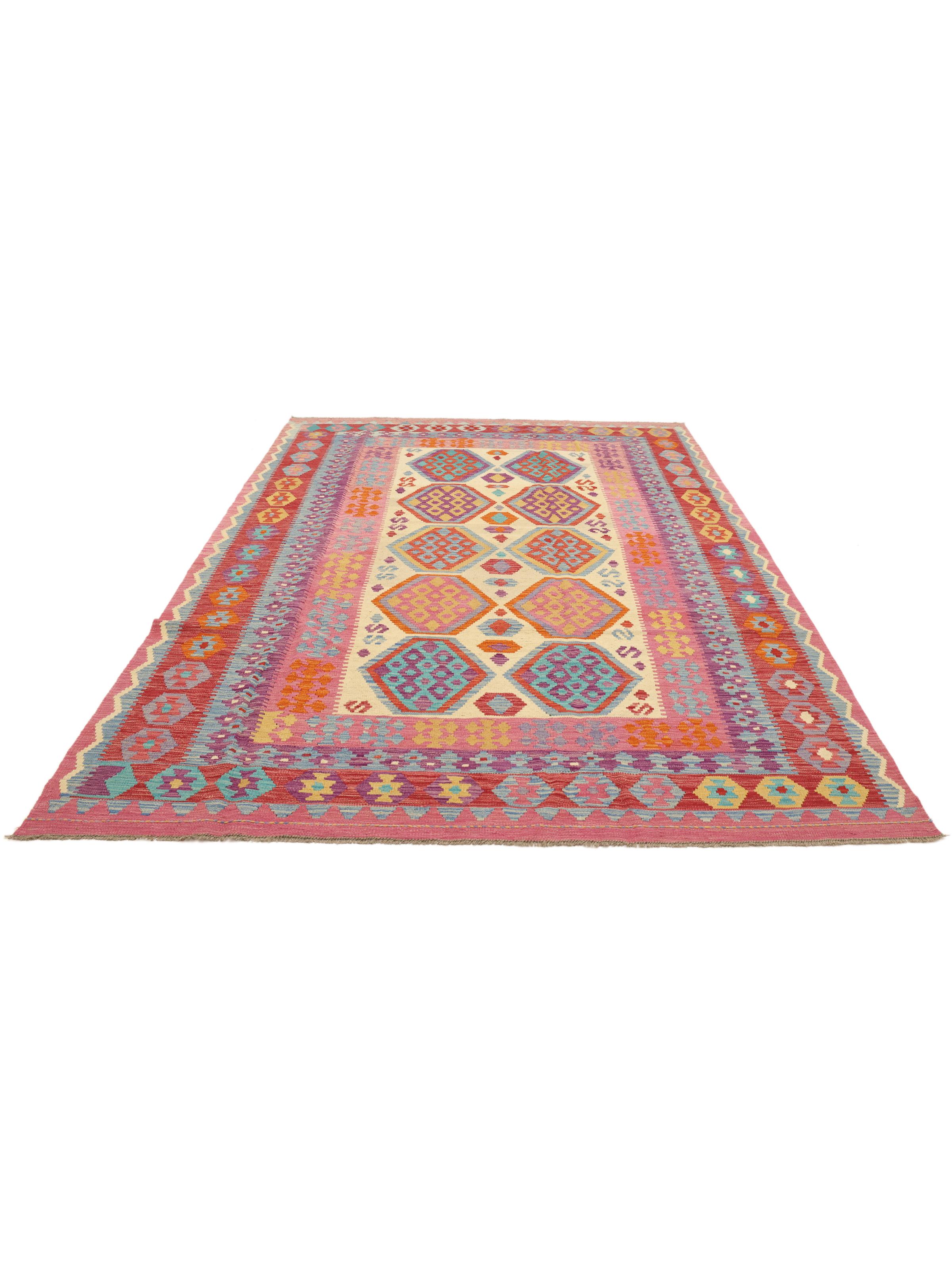
Kelim rugs have been a cornerstone of life across the Middle East and Central Asia for centuries. These flat-woven textiles were historically created by nomadic and semi-nomadic tribes, serving a range of practical purposes from floor coverings and wall hangings to saddlebags and storage sacks. The name Kelim itself refers to this specific flat-weaving technique, which is distinct from the knotted-pile methods used in more formal carpets.
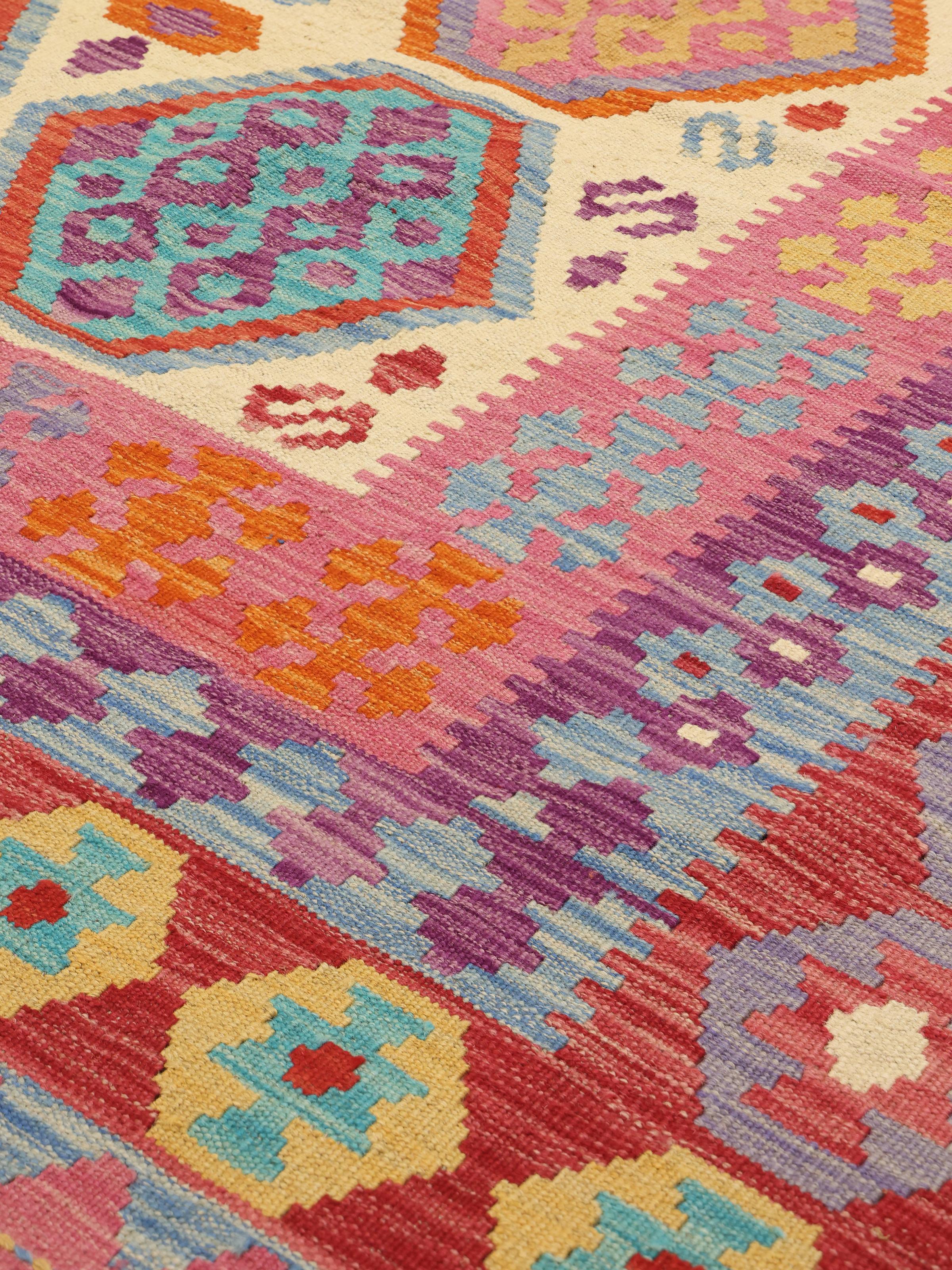
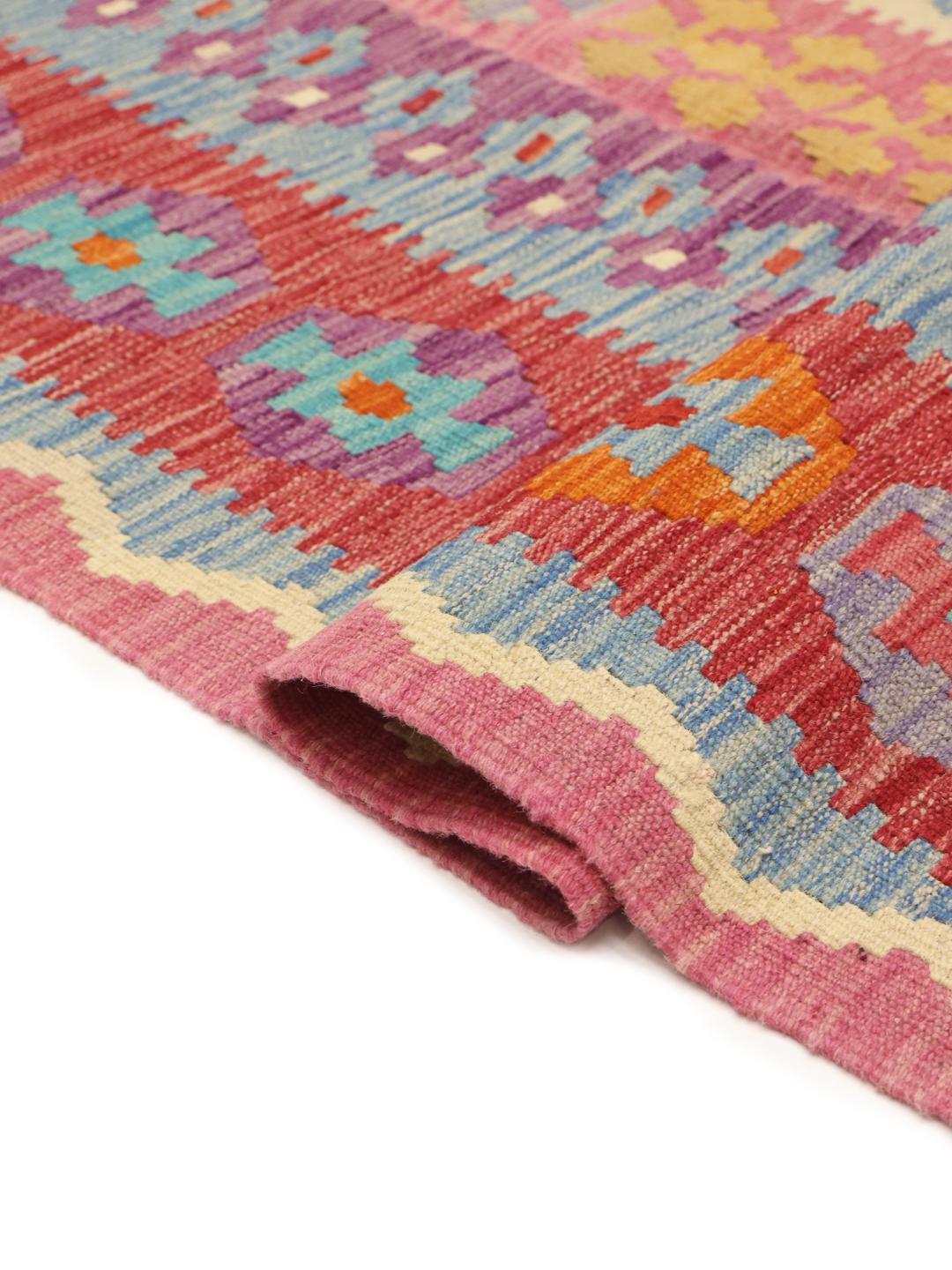
The technical beauty of a Kelim lies in its simplicity and the skill required to execute clean, straight lines without a pile foundation. Because the design is created by the warp and weft yarns themselves, the weaver must be exceptionally precise. This creates a reversible or near-reversible textile that is remarkably lightweight yet durable, making it ideal for the mobile lifestyles of the historical weavers who developed these traditions.
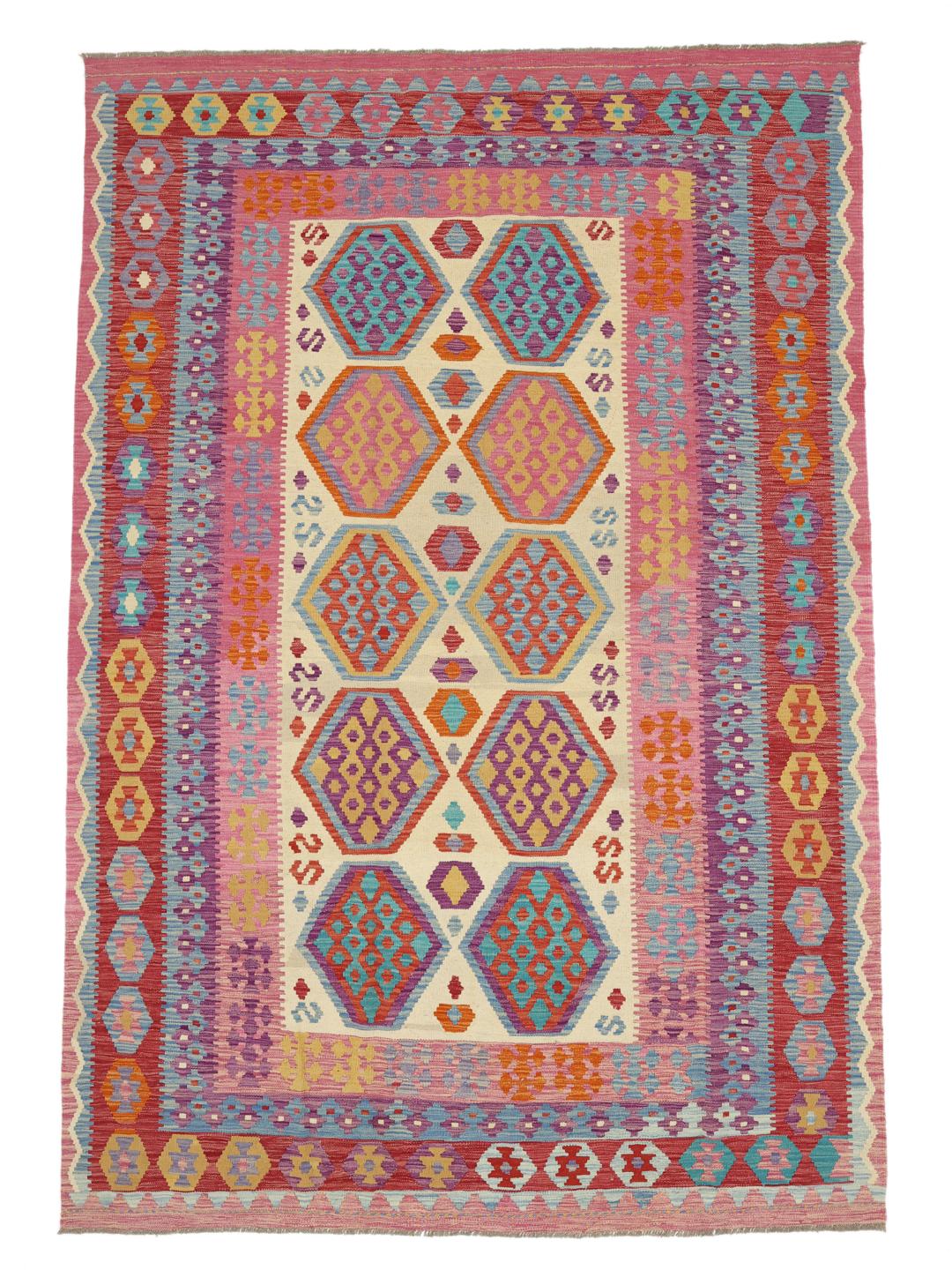
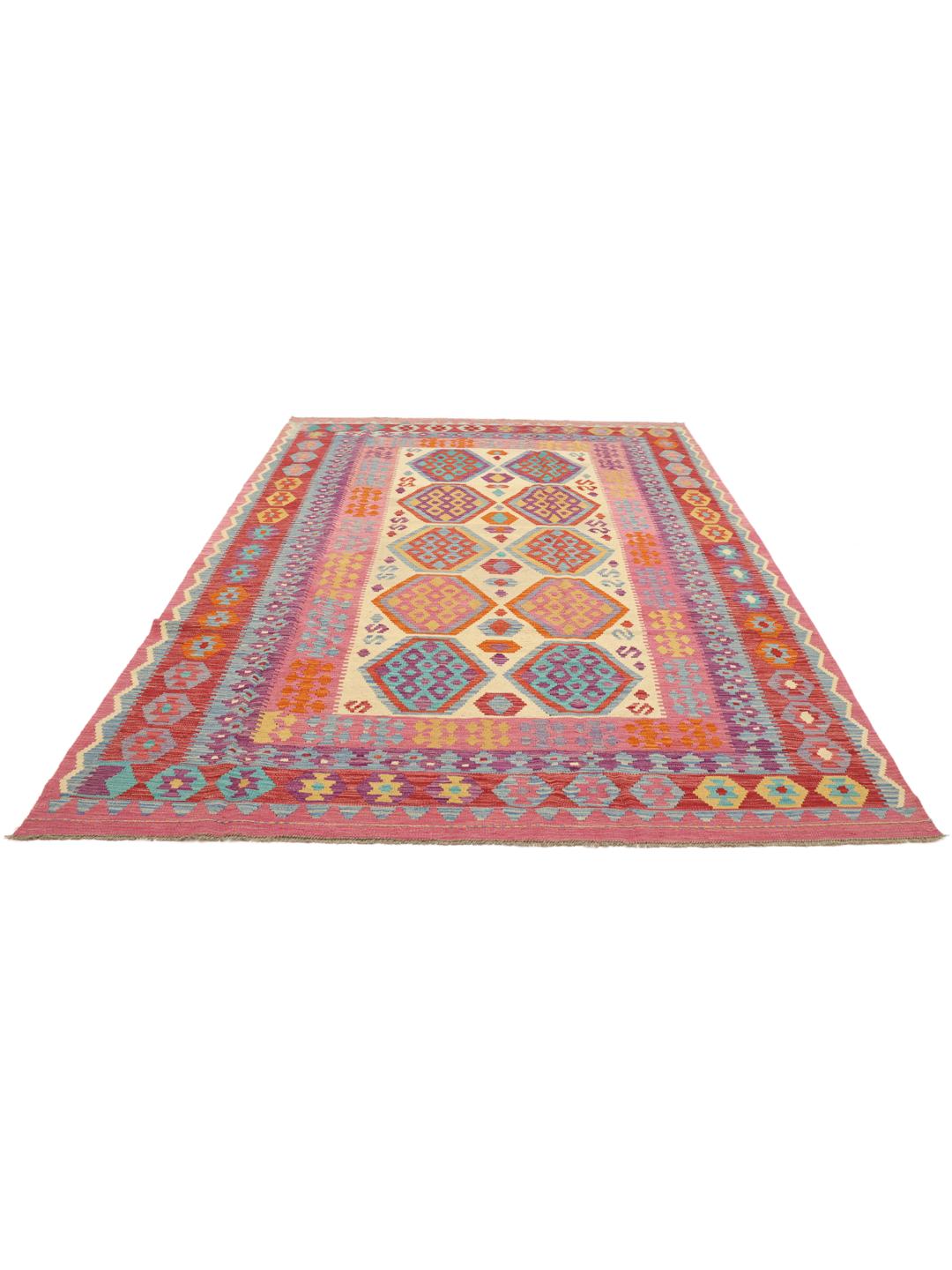
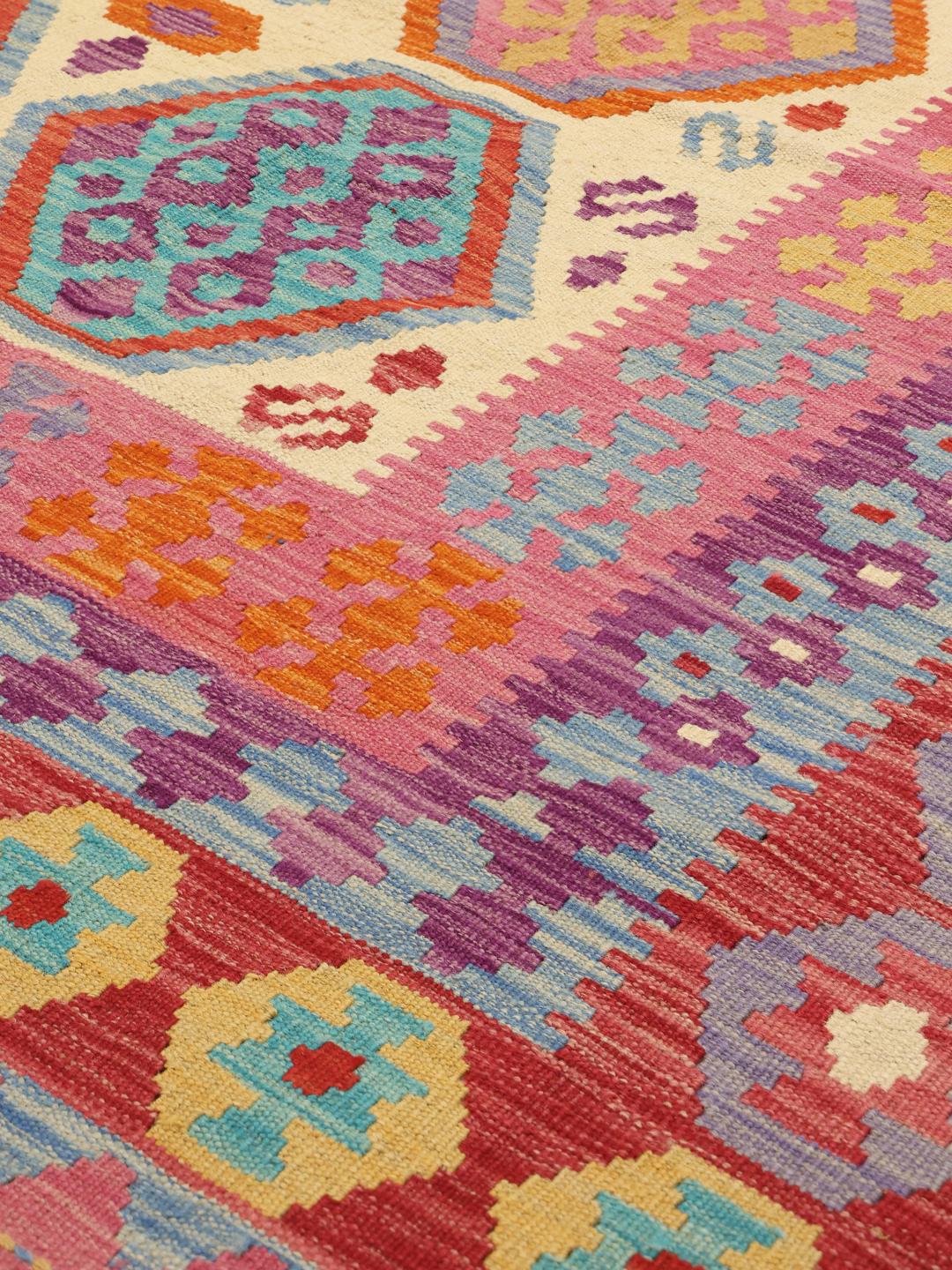
Visually, these rugs are defined by their bold, geometric language. Motifs such as diamonds, triangles, and stylized floral elements are often arranged in repeating patterns or central medallions, enclosed by intricate, decorative borders. In this particular piece, the colour palette is particularly expressive, utilising shades that reflect the natural dyes traditionally available in the region, adapted into a vibrant, modern aesthetic.
Collecting a Kelim is an investment in a living tradition. These rugs are valued not only for their aesthetic appeal but for the way they preserve the heritage of the communities that create them. Owning one is a way to connect with a history of craftsmanship that has been passed down through generations, ensuring that these skills and the stories they tell continue to thrive in contemporary homes.