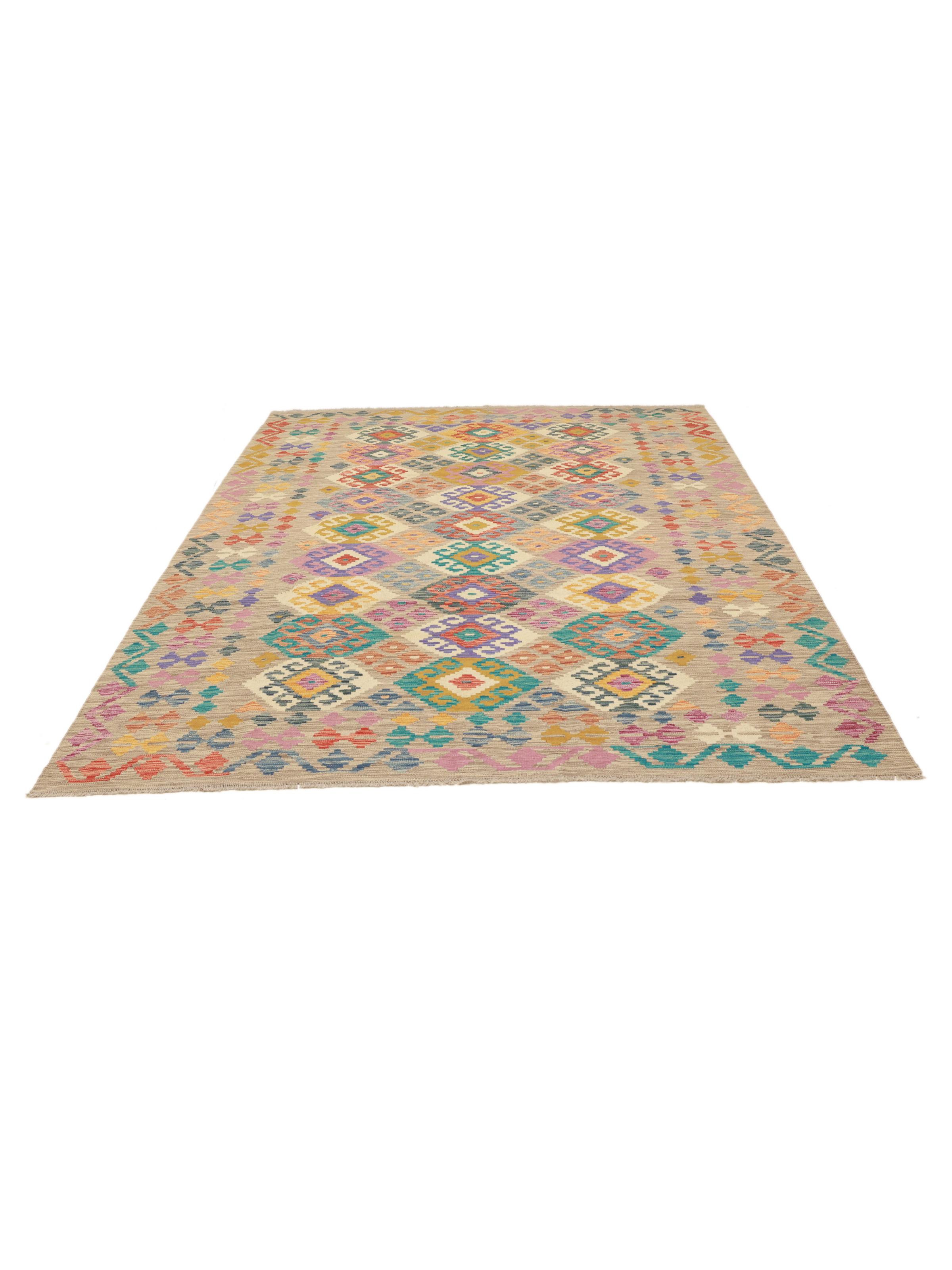
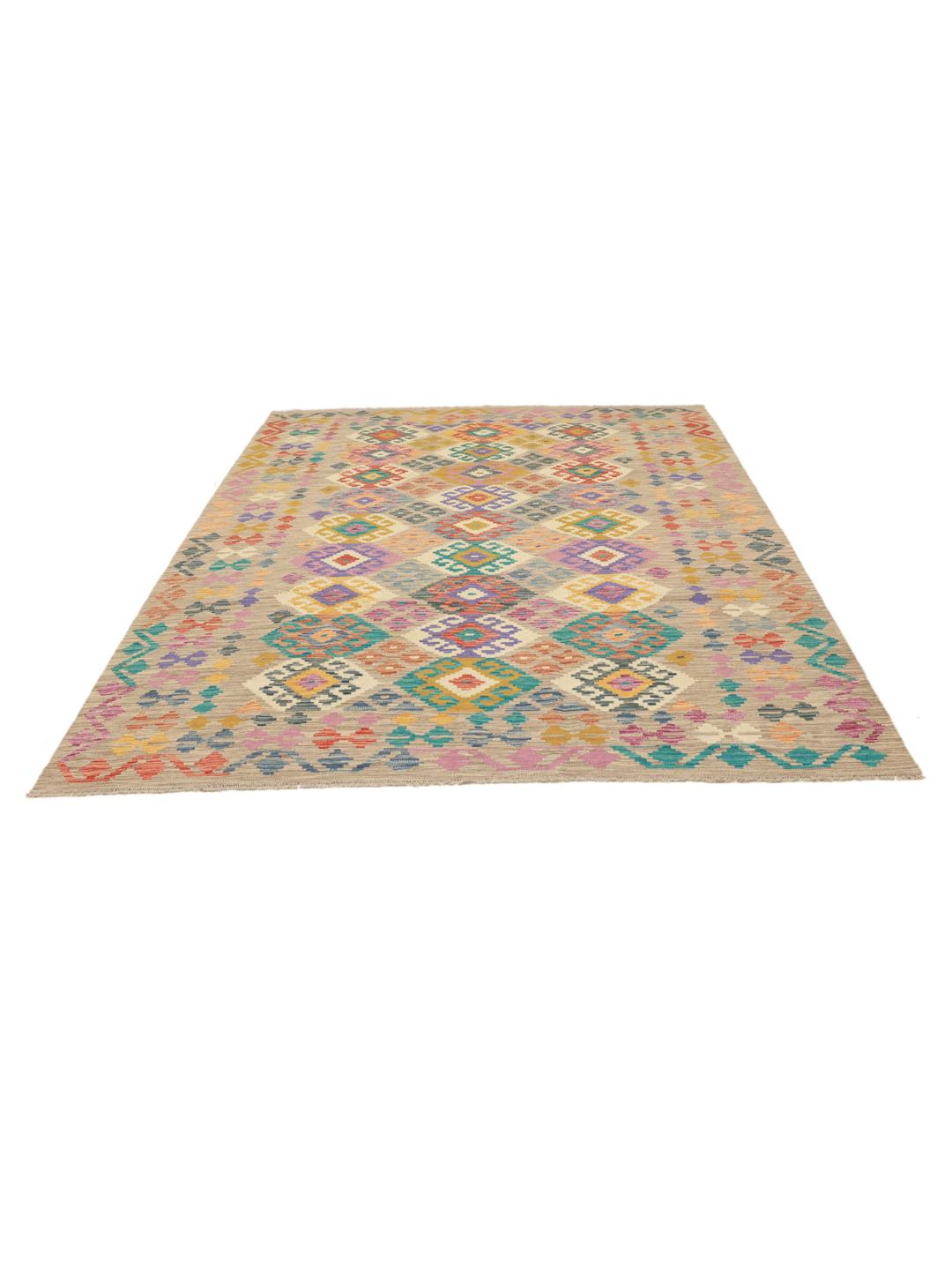
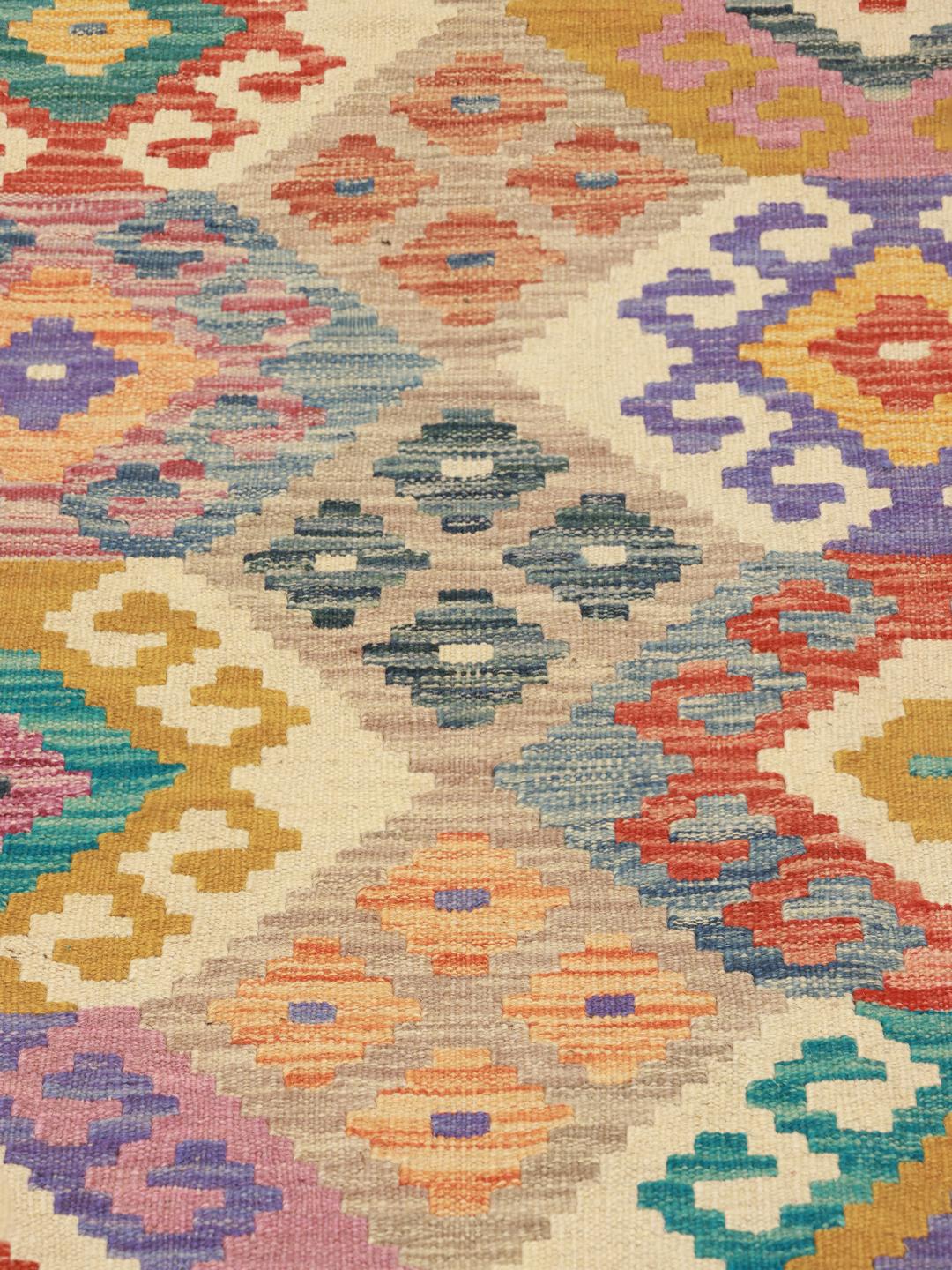
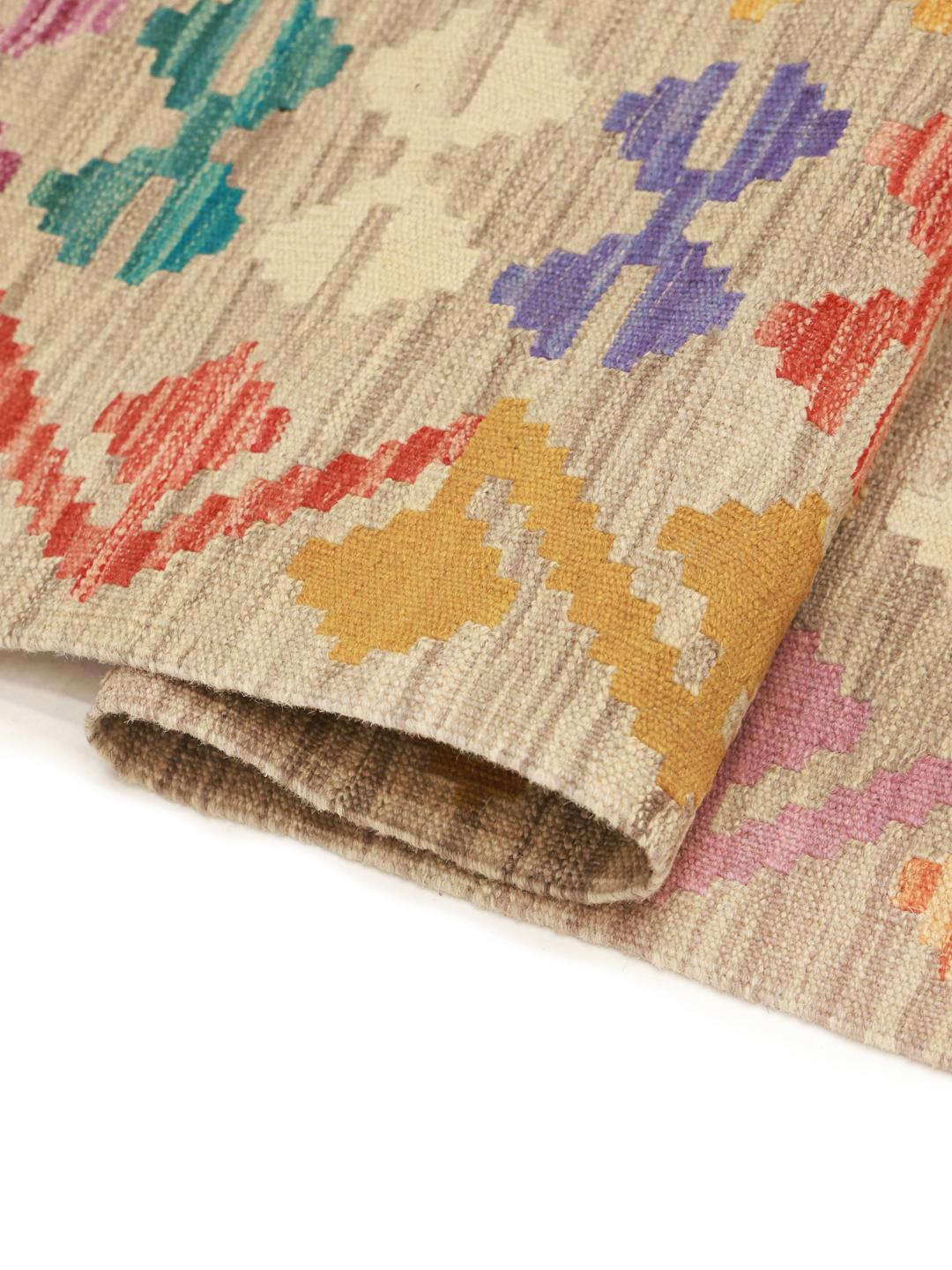
Kelim rugs have long been a cornerstone of nomadic and village life across the Middle East and Central Asia. Historically, these flat-woven textiles were crafted for their utility and portability, serving as floor coverings, wall hangings, and even saddle bags for travelling tribes, which necessitated a construction that was both sturdy and lightweight.
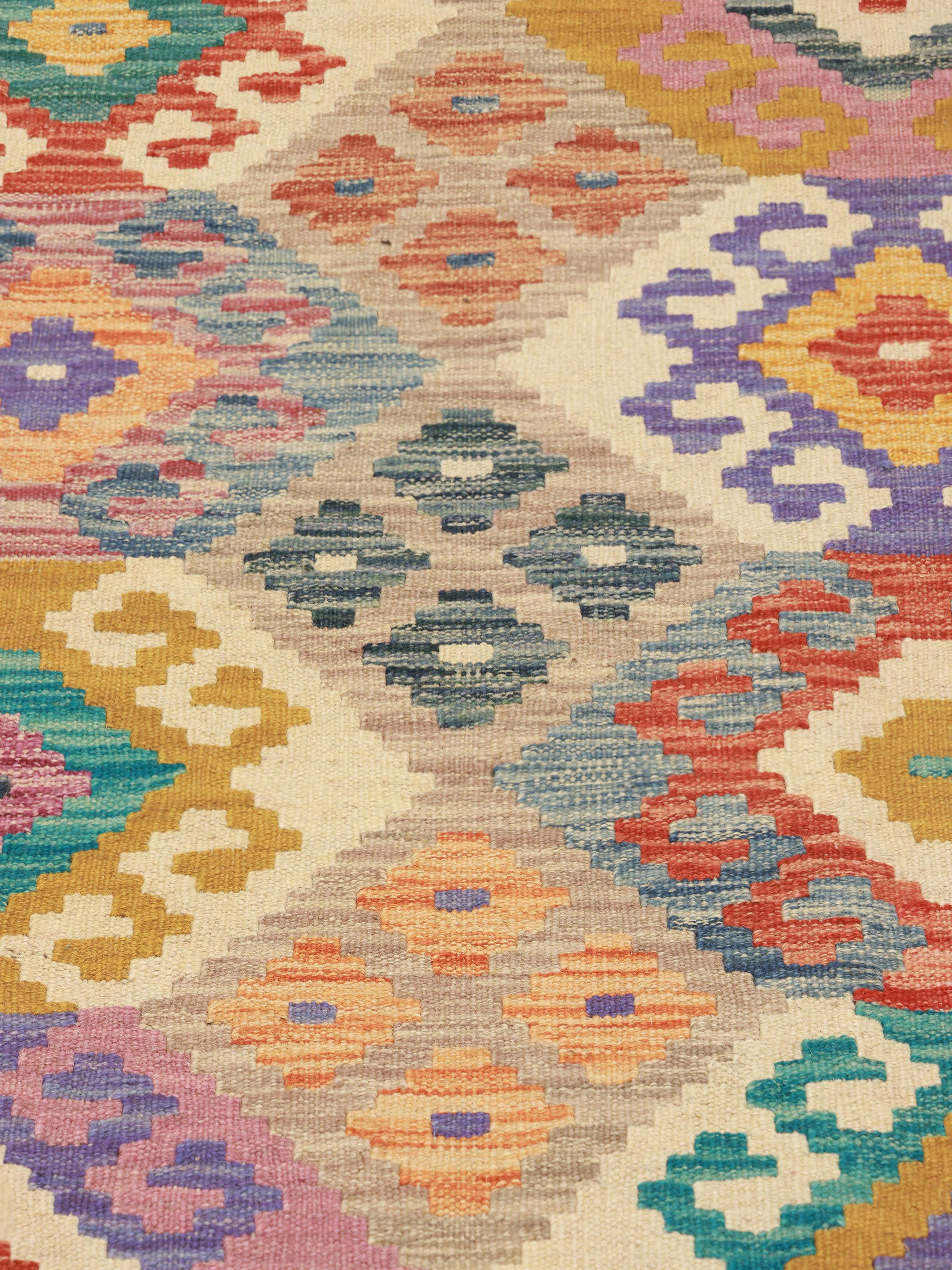
The term Kelim refers to the specific flat-weaving technique used to create these rugs, where the weft threads are passed back and forth through the warp threads. This method creates a thin, reversible rug without a pile, resulting in a crisp, clean geometric look that highlights the precision of the weaver's work and the quality of the Wool.
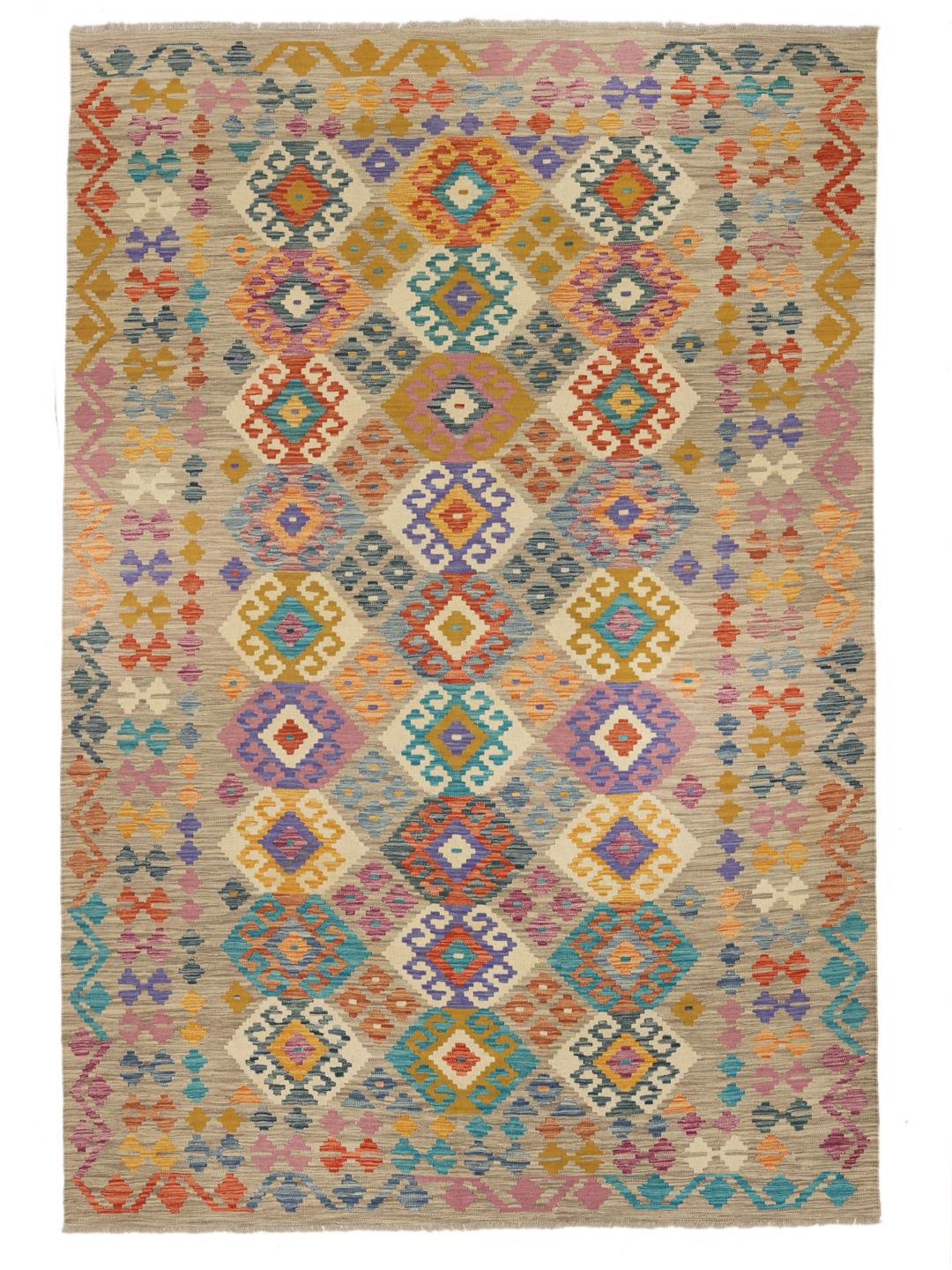
Visually, these rugs are defined by a language of geometric motifs, often featuring diamonds, triangles, and intricate borders. The designs are not merely decorative but often carry symbolic meaning, reflecting the weaver's environment and cultural heritage. The vibrant colours are traditionally derived from natural dyes, which develop a unique, soft patina over time.
Today, these rugs are highly valued by collectors for their authenticity and the skill required to produce them. Owning a Kelim is a way to connect with a centuries-old tradition of craftsmanship, bringing a piece of cultural history into the modern home that stands as a testament to human creativity and patience.