The Kelim, or Kilim, tradition is deeply rooted in the history of the Middle East and Central Asia. These rugs are traditionally flat-woven, meaning they lack a pile, which historically made them versatile and portable for the nomadic tribes of the region. Today, Afghan Kelims are celebrated for their mastery of natural dyes and geometric complexity, reflecting a heritage of weaving that has evolved over centuries.
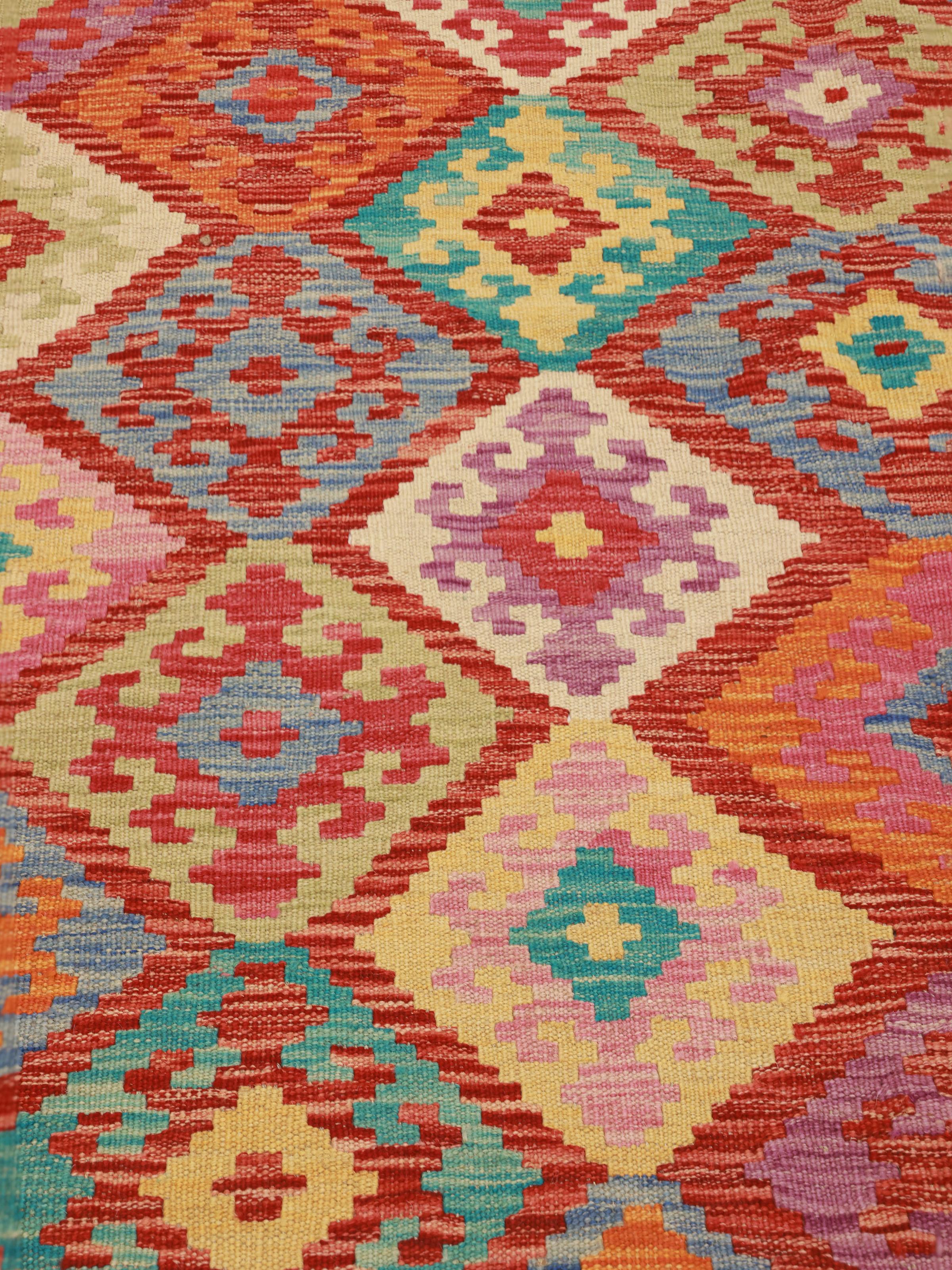
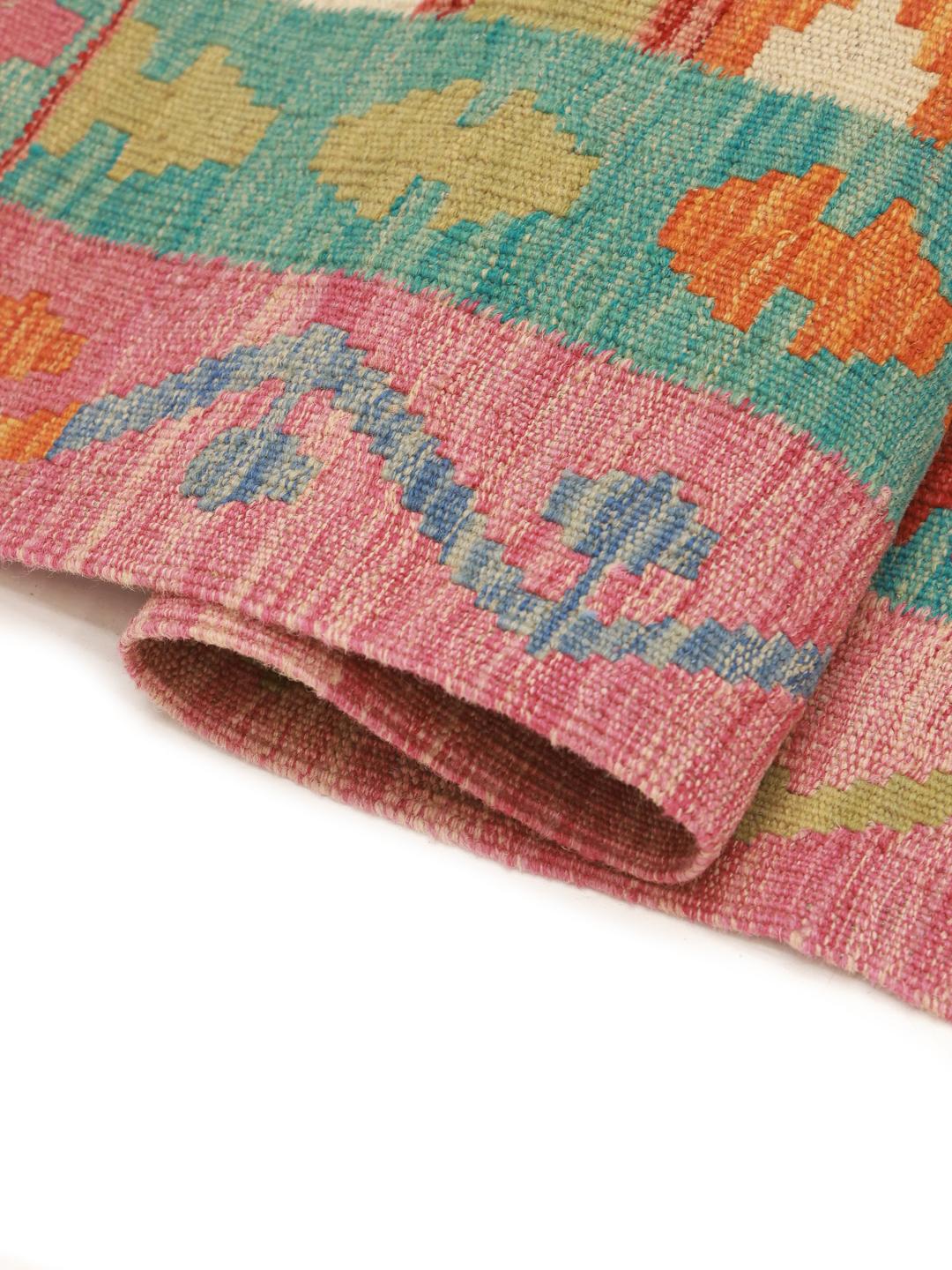
The term 'Kelim' refers specifically to the weaving technique where the weft threads are pulled tightly over the warp threads, effectively hiding the foundation. This method creates a thin, reversible rug that is incredibly sturdy despite its light weight. Understanding this technique helps one appreciate the precision required to produce such intricate patterns without the use of a knotted pile, as every colour transition must be managed manually by the weaver.
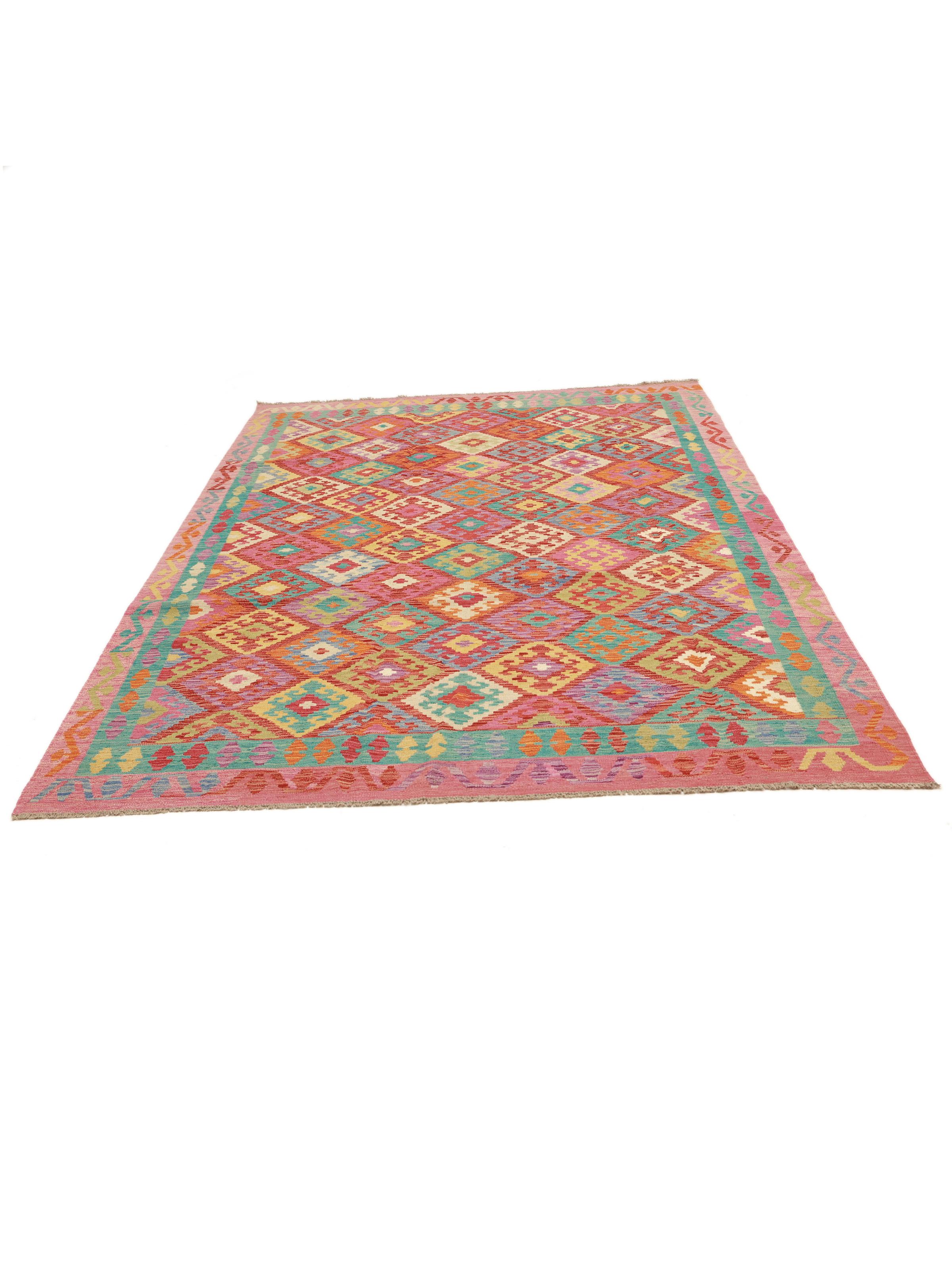
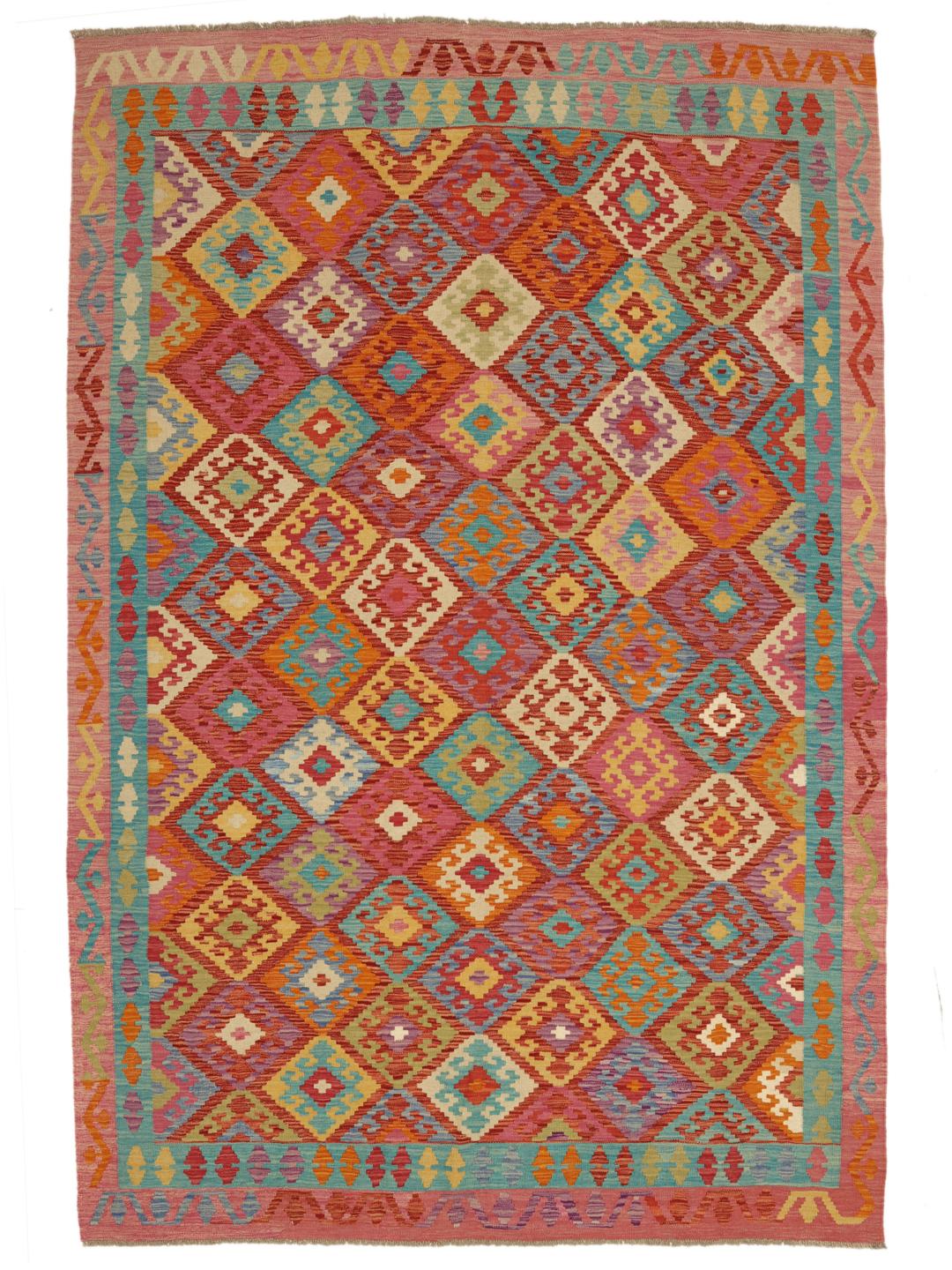
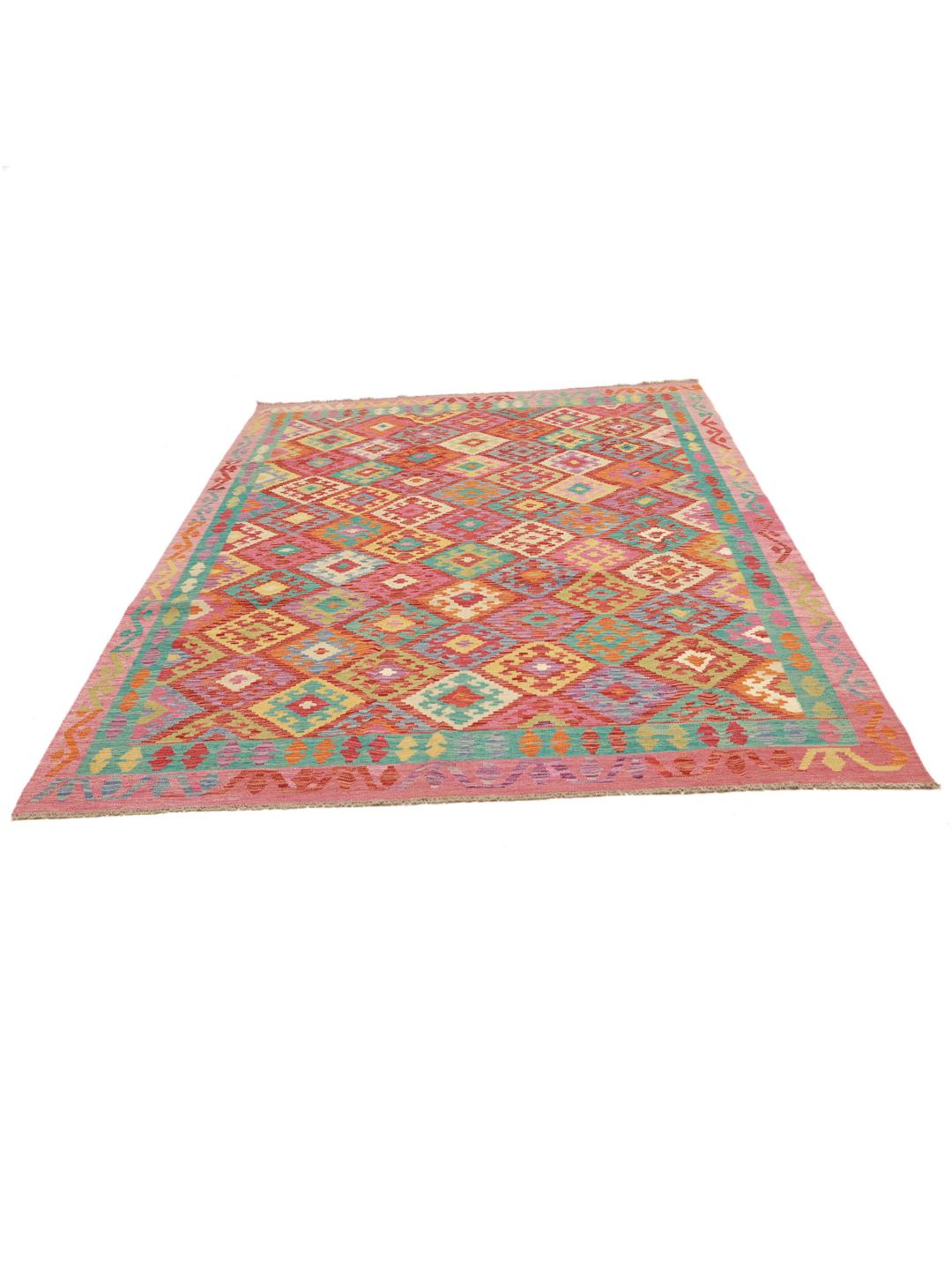
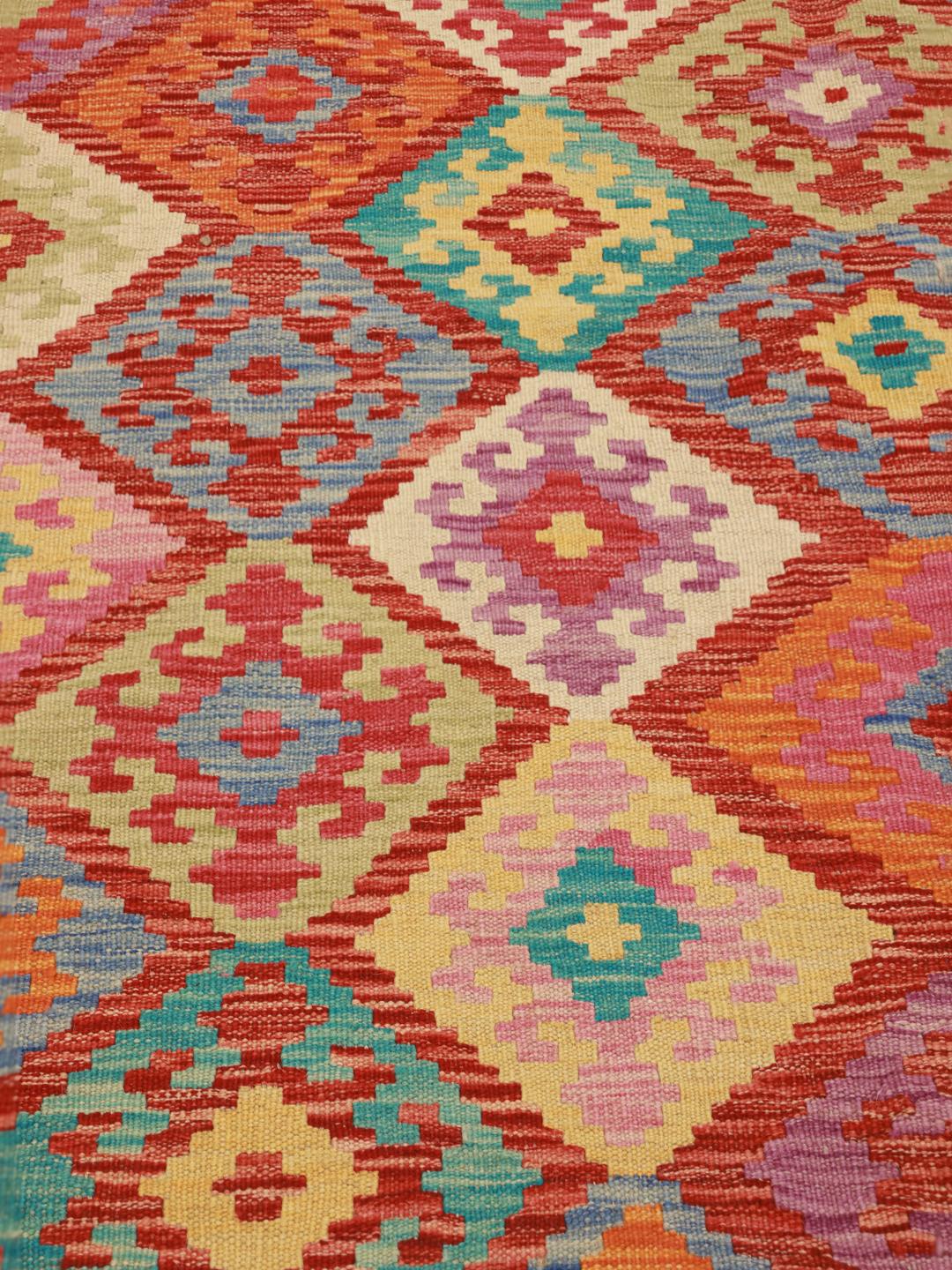
The visual language of this rug is defined by the diamond and geometric motifs that populate the field. These shapes are not merely decorative but are often symbolic, representing protection, fertility, or the natural landscape of the Afghan highlands. The bold borders provide a formal frame, balancing the complexity of the interior pattern and creating a sense of harmony that is a hallmark of the Afghan style.
Owning an Afghan Kelim is an investment in cultural continuity. These rugs are highly valued by collectors for their authenticity and the human effort required to create them. By bringing one into your home, you are not just acquiring a floor covering but a piece of functional art that tells a story of regional tradition and the dedicated skill of the people who continue to practice this ancient craft.