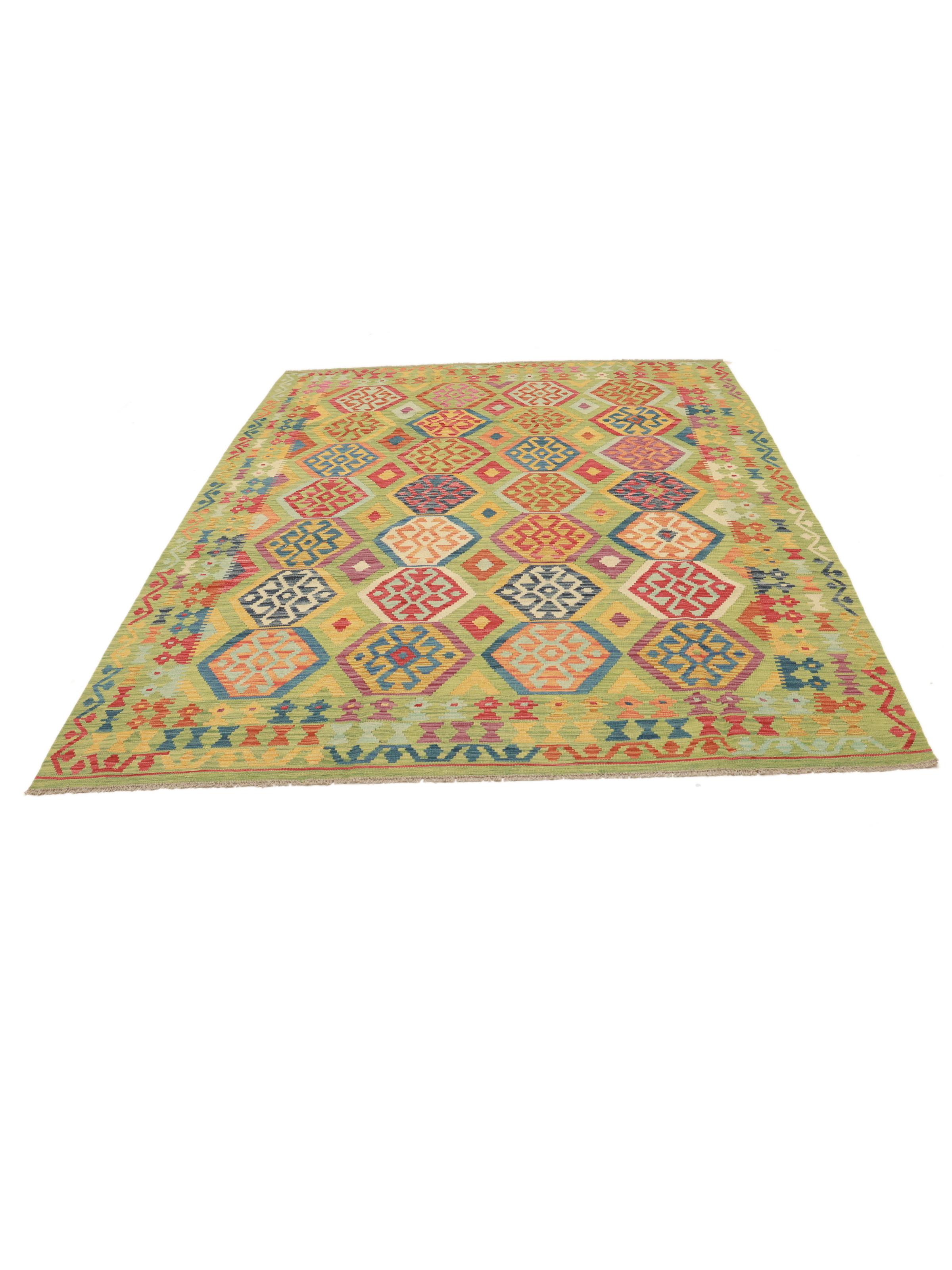
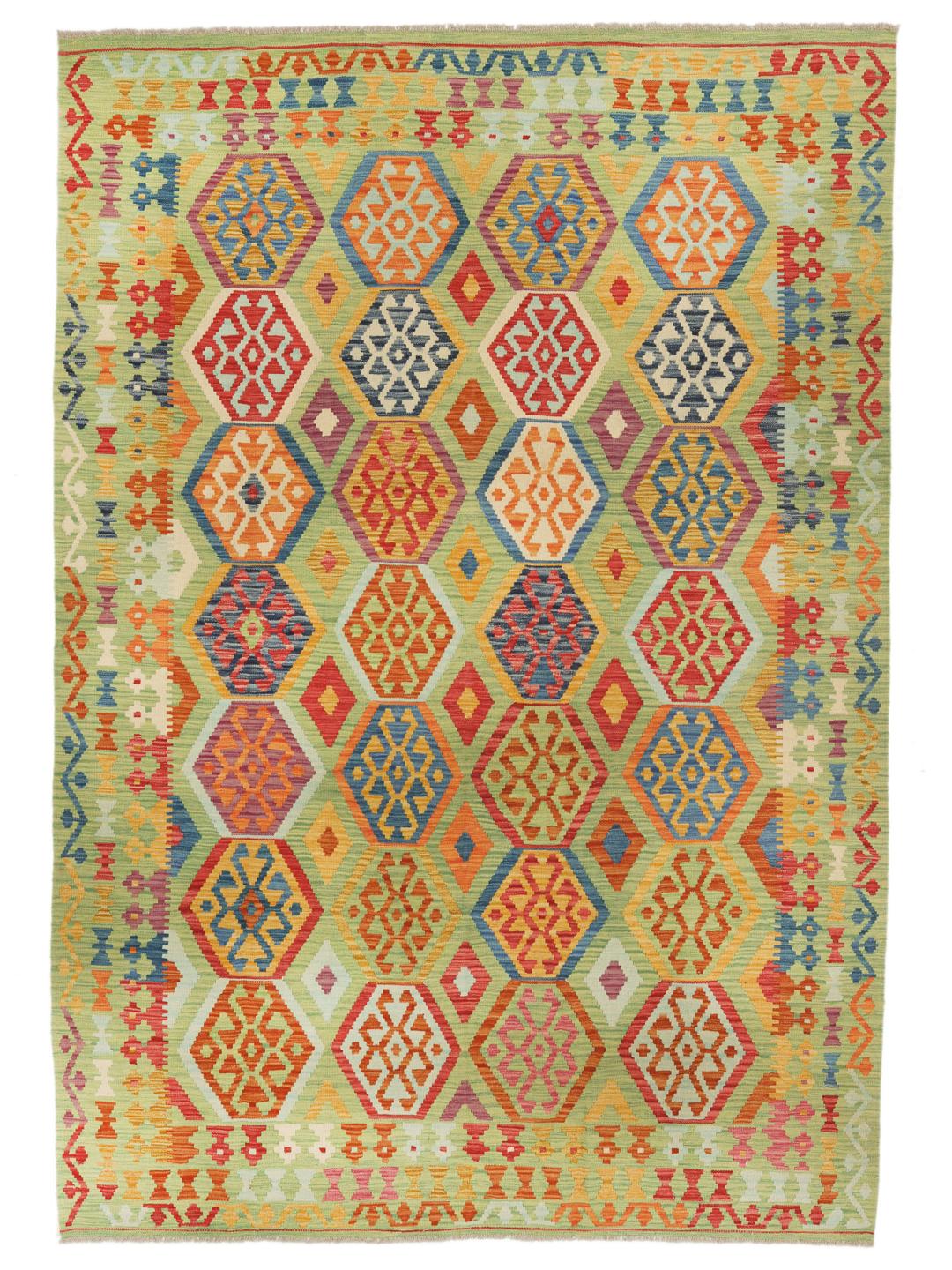
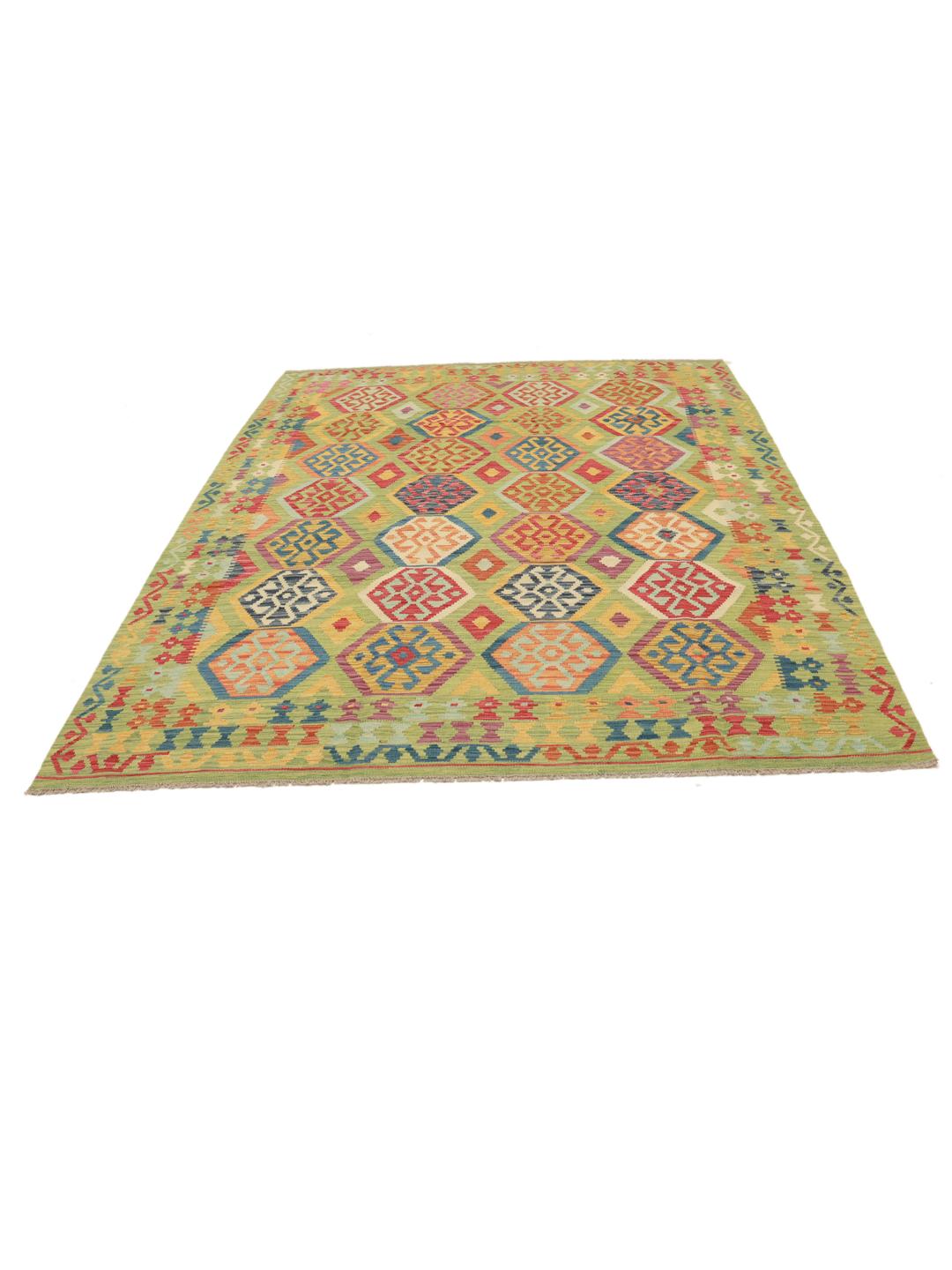
The Kelim tradition in Afghanistan is deeply rooted in the nomadic and village cultures of Central Asia. Historically, these flat-woven rugs were essential for daily life, serving as floor coverings, wall hangings, and functional storage bags for travelling families. Over generations, the art of weaving evolved into a sophisticated craft, with each region developing its own distinct vocabulary of motifs and colour preferences.
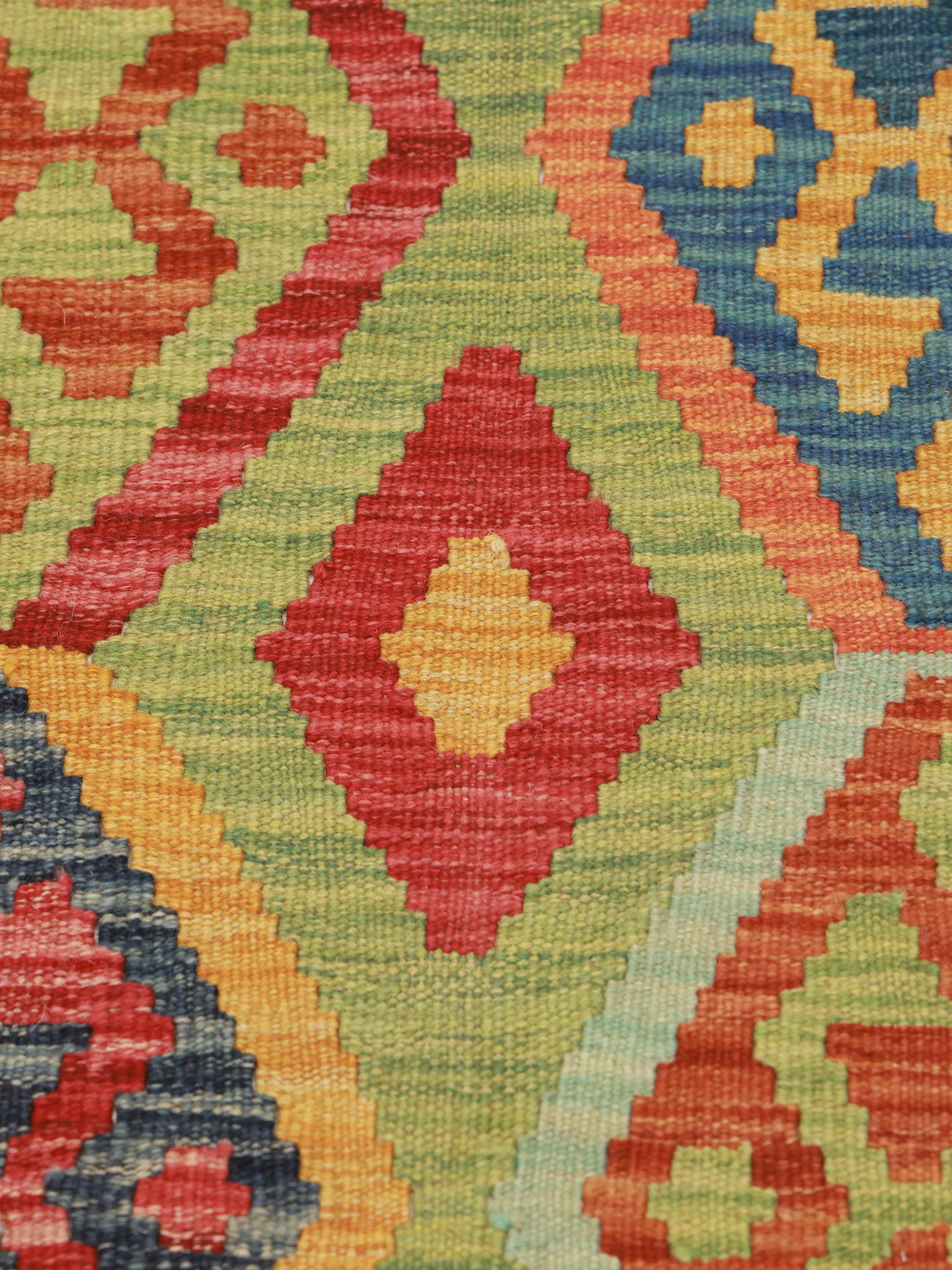
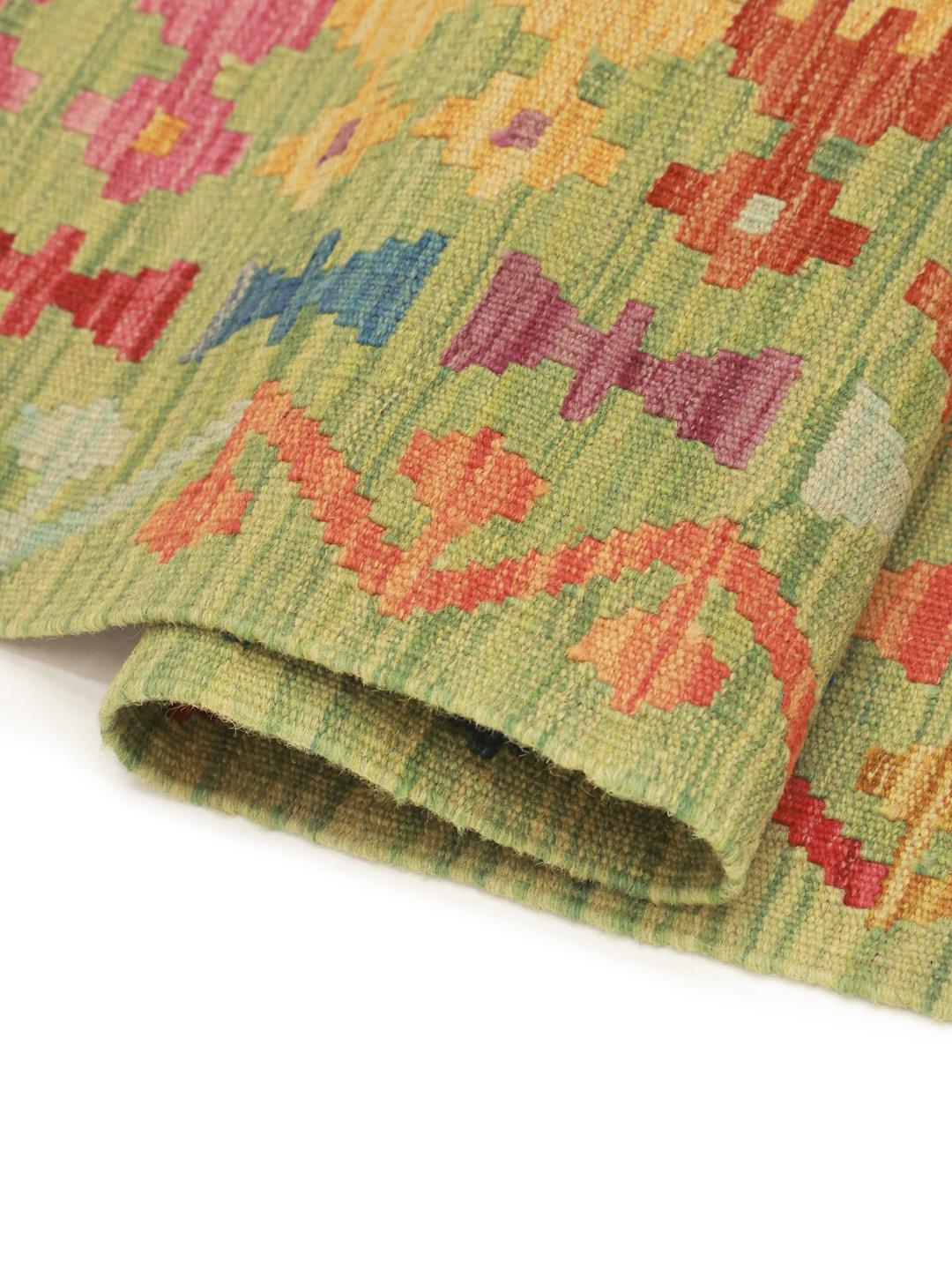
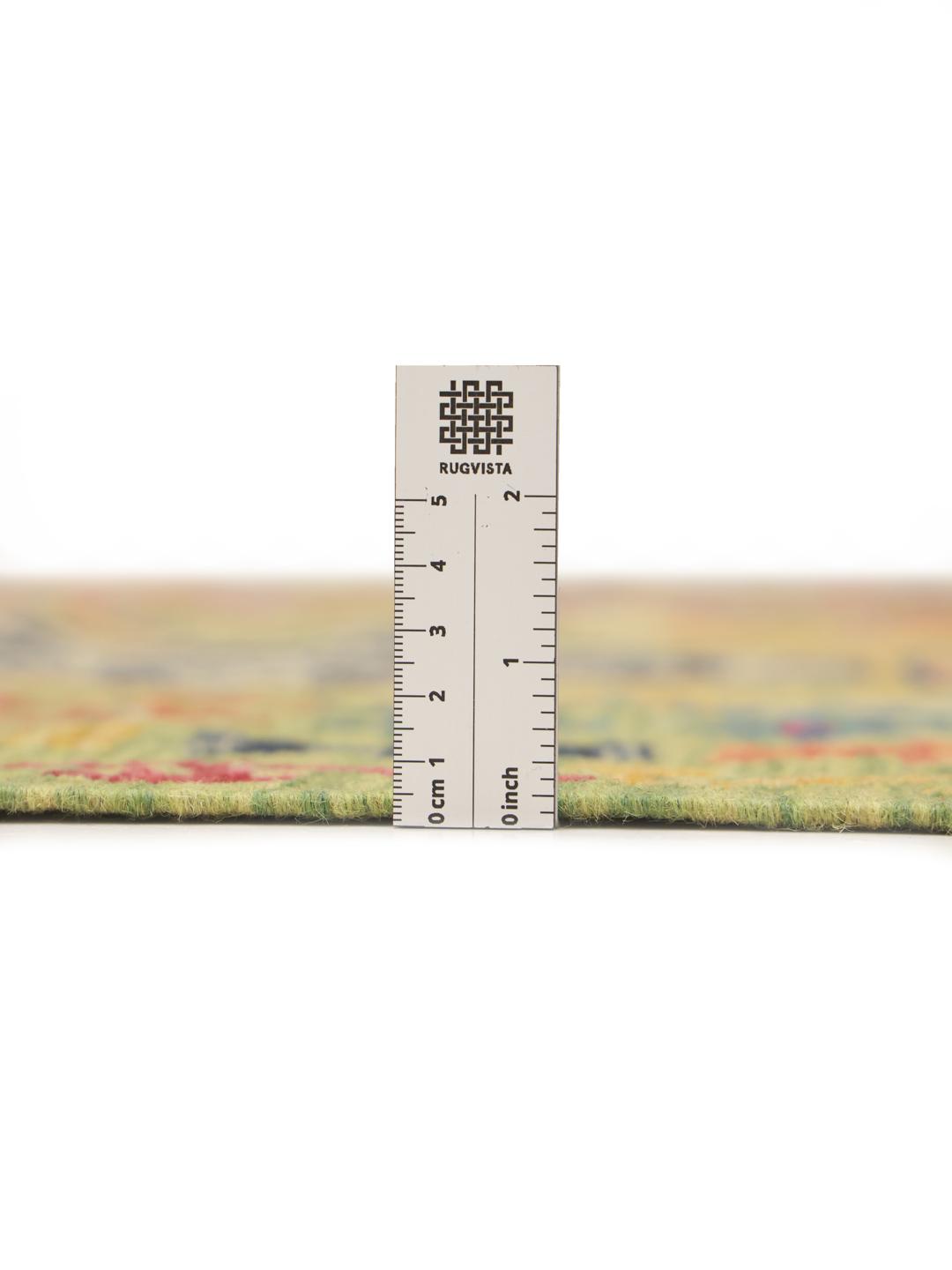
The term 'Kelim' refers to the specific flat-weaving technique where the weft threads are passed through the warp threads to create the pattern, resulting in a pileless, lightweight, and reversible fabric. This method requires a high degree of precision, as the weaver must manage multiple coloured threads to build complex designs without the use of a foundation pile. The result is a durable, thin textile that remains incredibly strong despite its lack of depth.
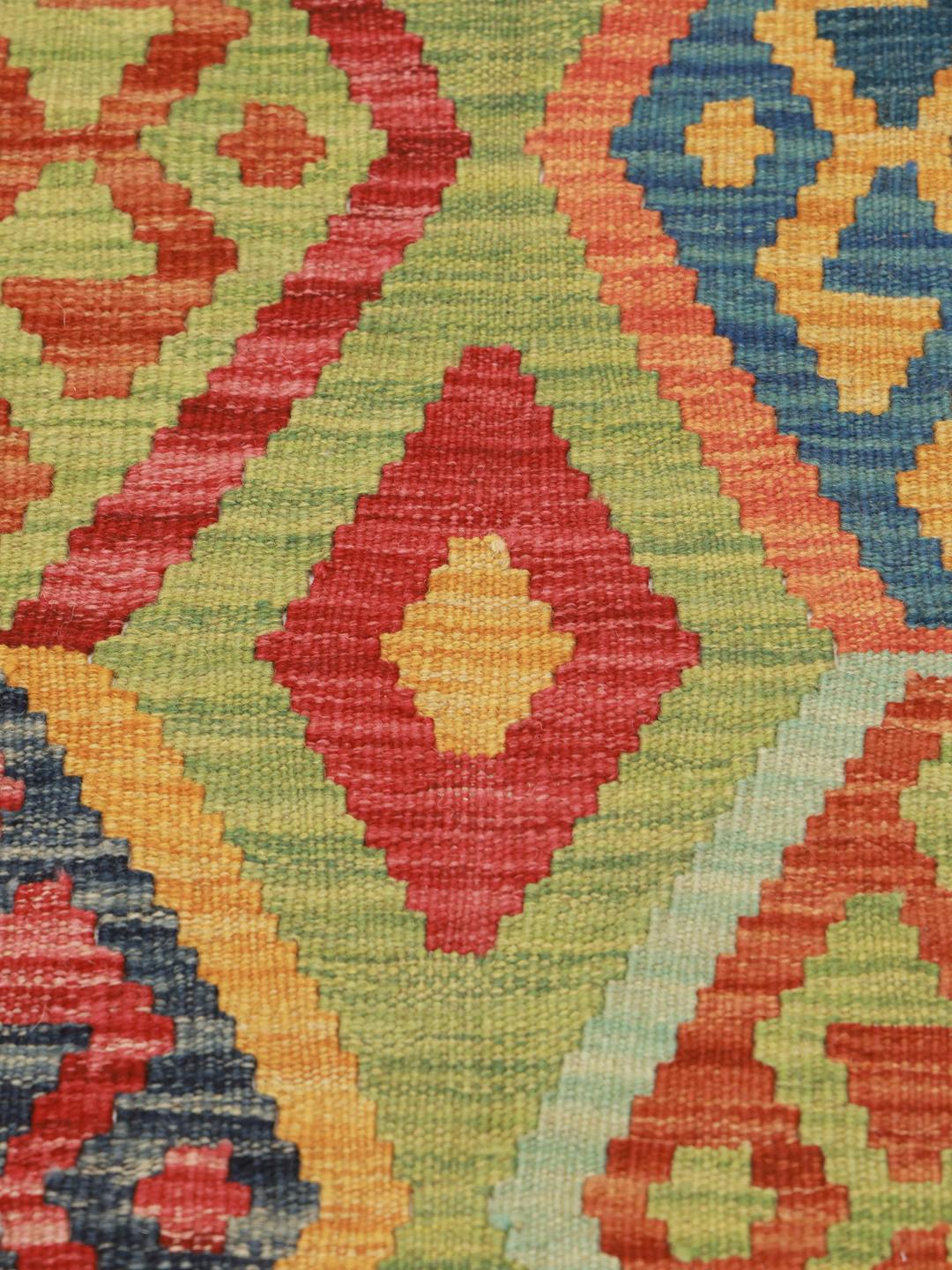
Visually, these rugs are characterised by their bold geometric language. You will often see repeating diamond shapes, triangles, and stylised floral motifs that have been passed down through family lineages. The use of vibrant, natural-looking colours is a hallmark of the Afghan style, often achieved through traditional dyeing techniques that give the wool a rich, organic appearance that matures beautifully with age.
Collecting these rugs is about more than just decoration; it is about preserving a cultural legacy. Each rug acts as a historical document, reflecting the environment and the aesthetic values of the people who created it. By bringing one into your home, you are connecting with a long lineage of artisans who have turned functional objects into lasting expressions of beauty and human skill.