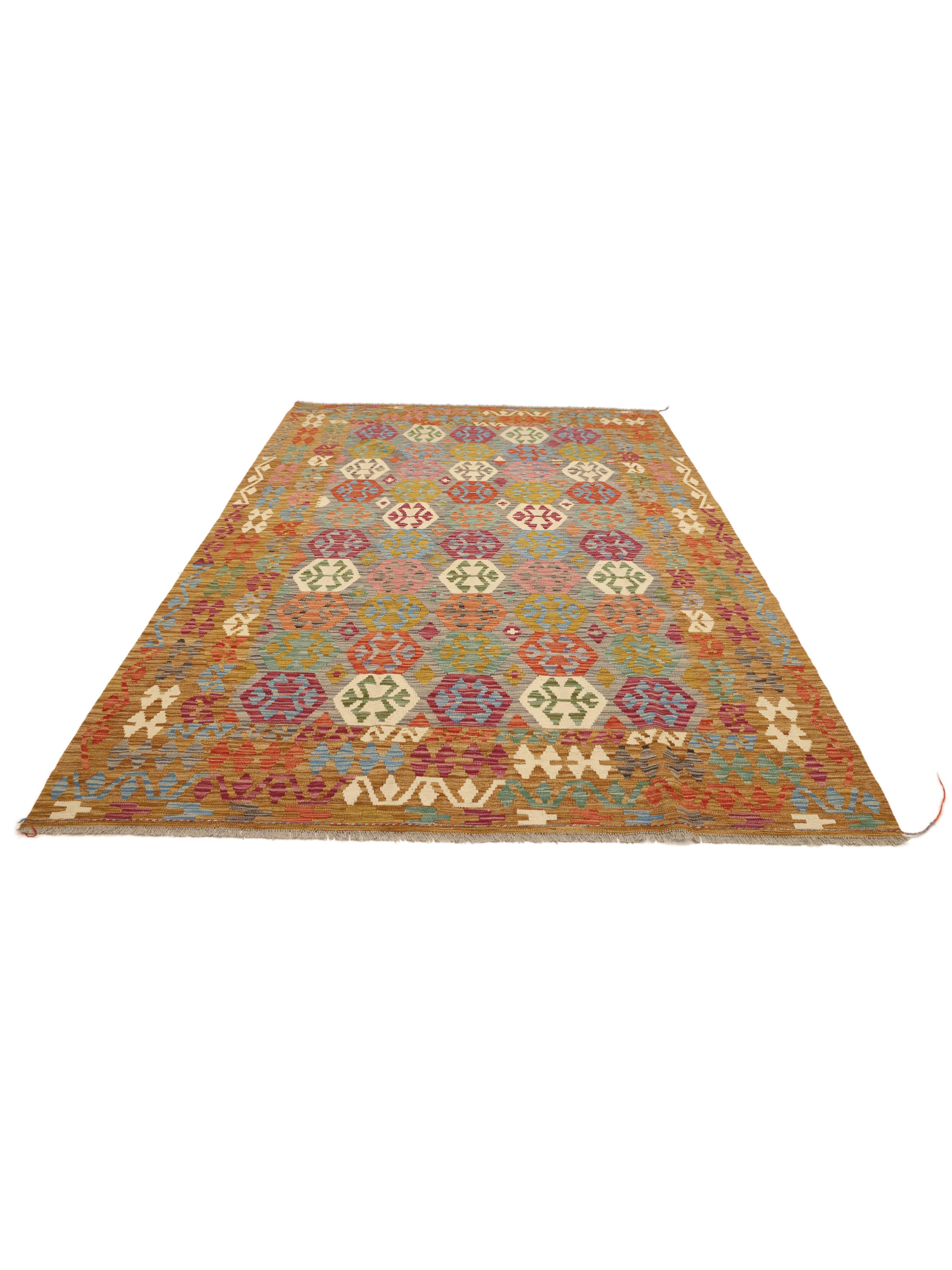
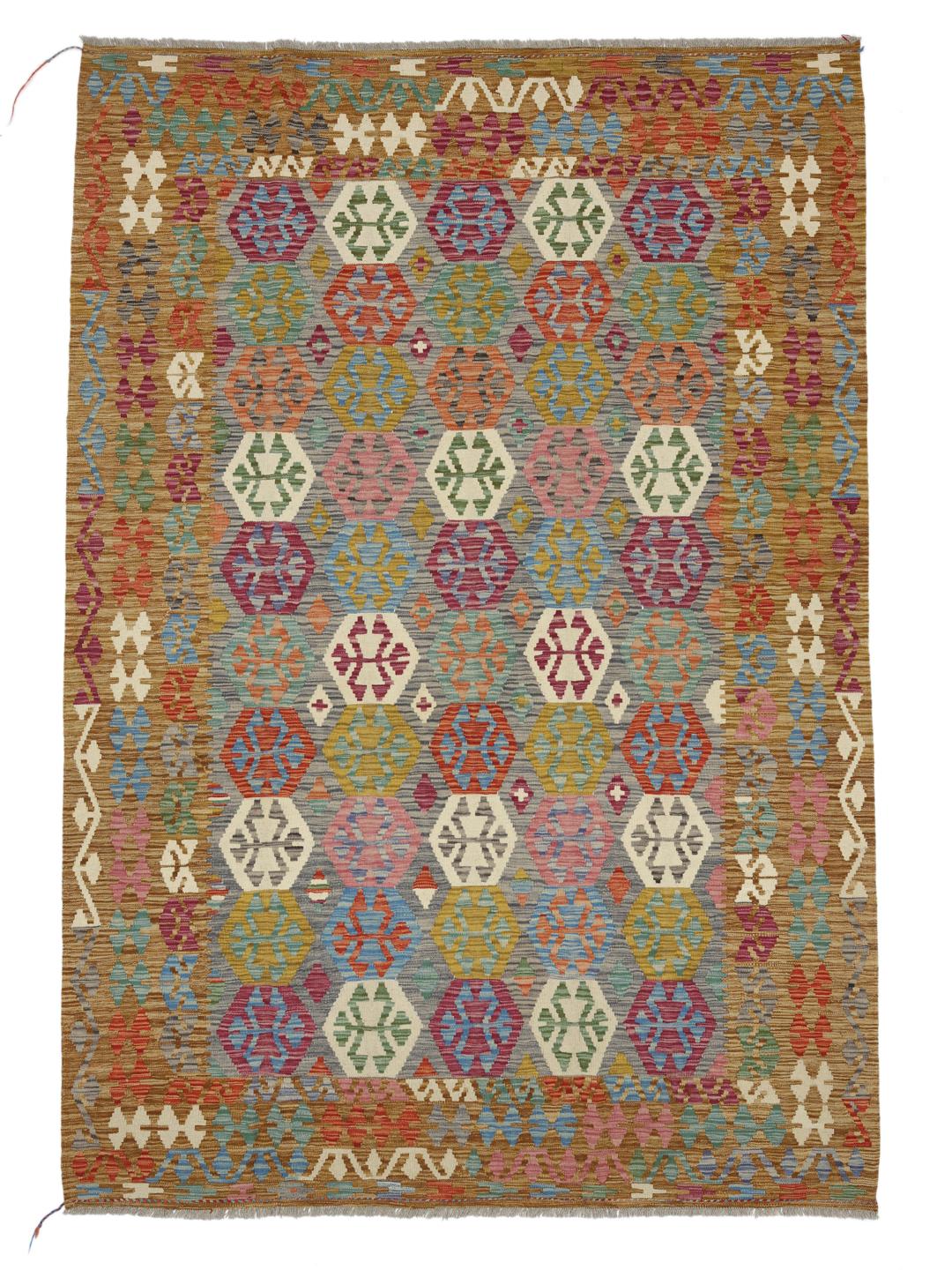
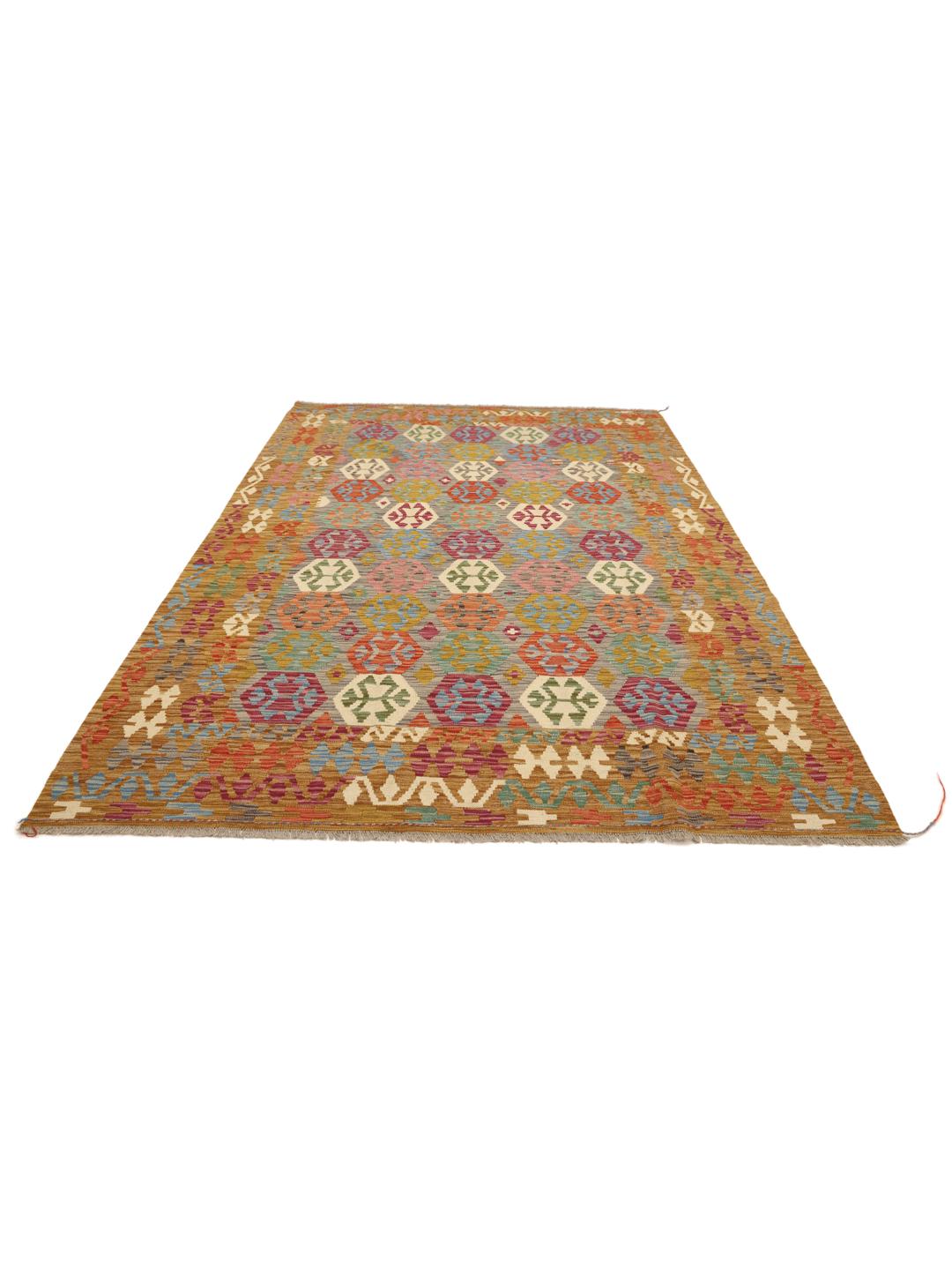
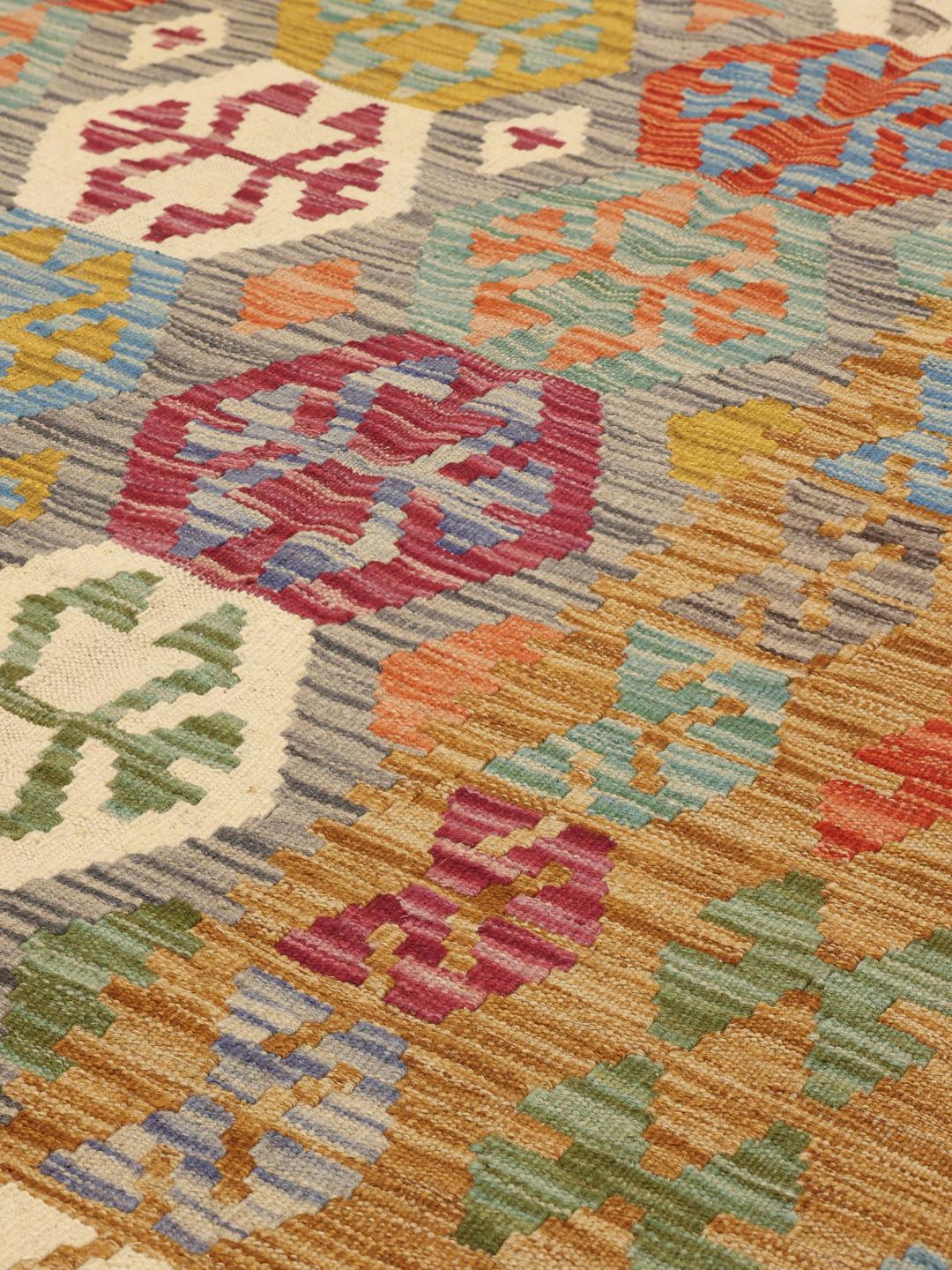
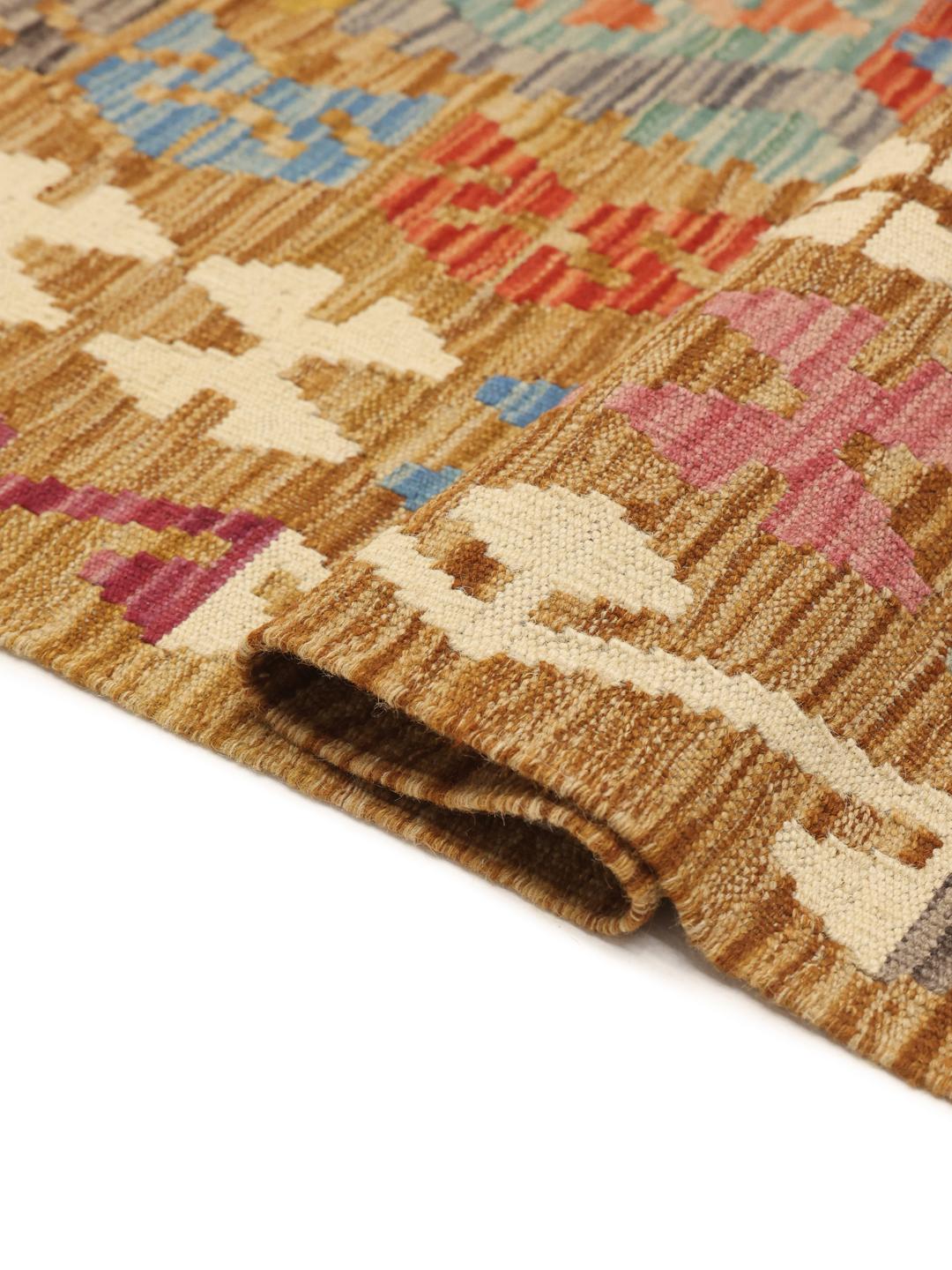
The Kelim tradition in Afghanistan is deeply rooted in the nomadic lifestyle of the region, where flat-weave rugs were essential for their portability and utility. These textiles have served as floor coverings, wall hangings, and storage bags for centuries, reflecting the diverse cultural influences of the Silk Road.
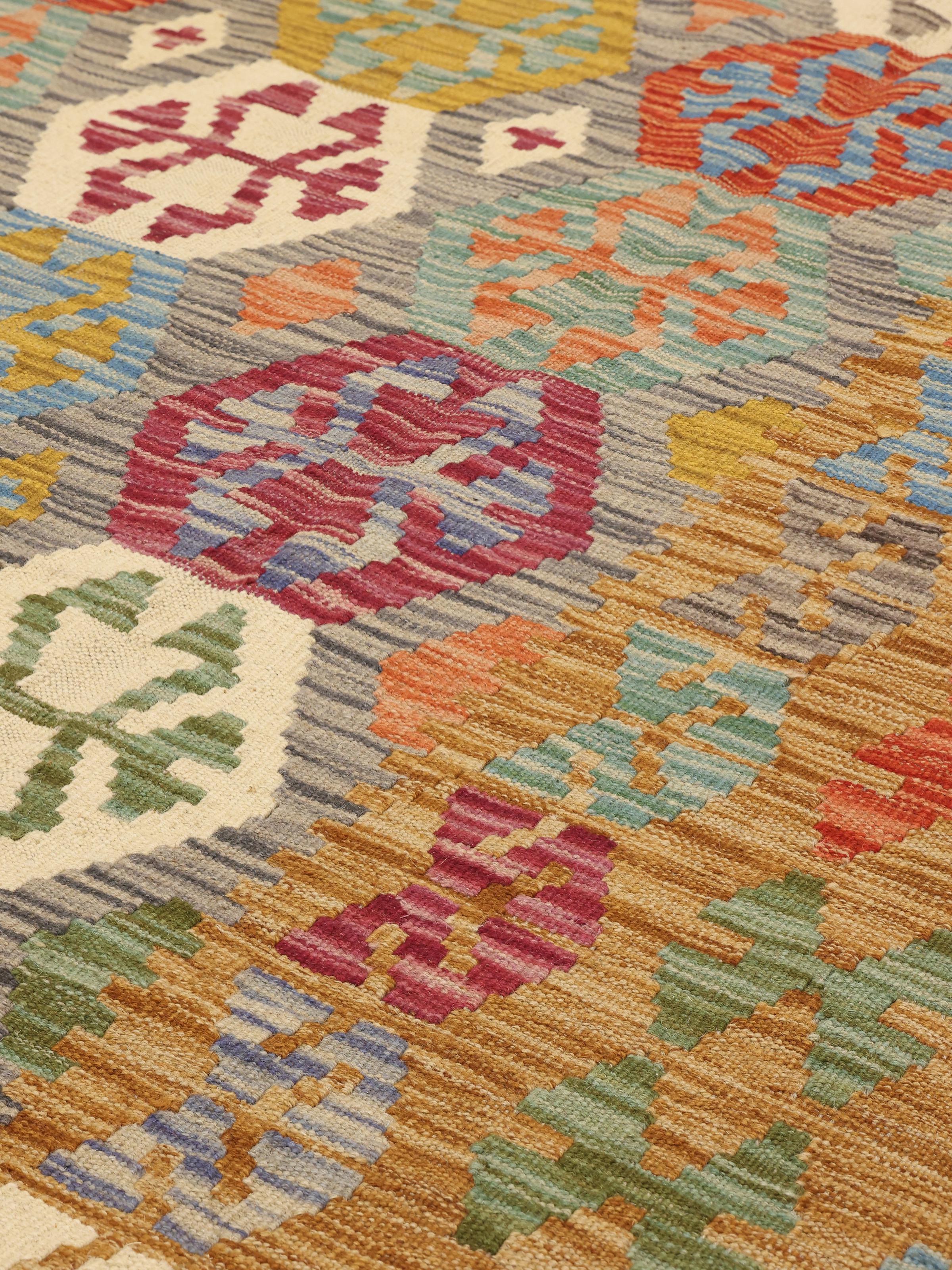
The term 'Kelim' refers specifically to the tapestry-weaving technique where there is no pile. Instead, the coloured weft threads are woven over and under the warp threads to create the design. This creates a reversible, lightweight, and durable rug that is prized for its clarity of pattern and structural integrity.
The signature design elements of Afghan Kelims often include bold, geometric medallions known as 'guls' or stylised tribal motifs. These patterns are not merely decorative but often hold symbolic meaning, representing elements of the natural world, family lineage, or protection. The use of vibrant, earthy tones is a hallmark of the traditional dyeing processes used in this region.
Collecting these rugs is an investment in cultural heritage. Each piece acts as a historical document, preserving the artistic vision and technical mastery of the weavers who created it. By choosing a hand-woven Kelim, you are supporting a craft tradition that values individual expression and regional identity over mass production.