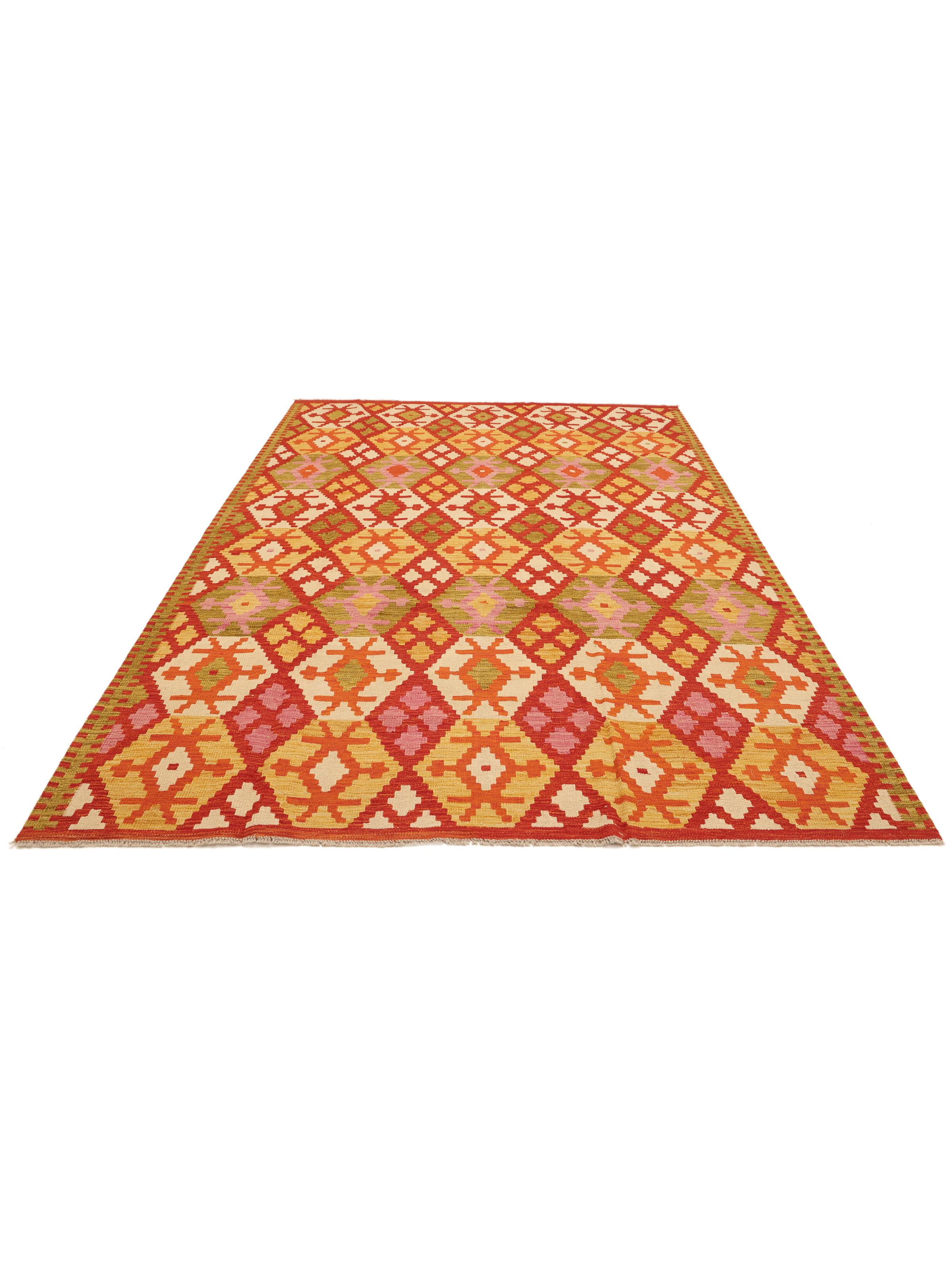
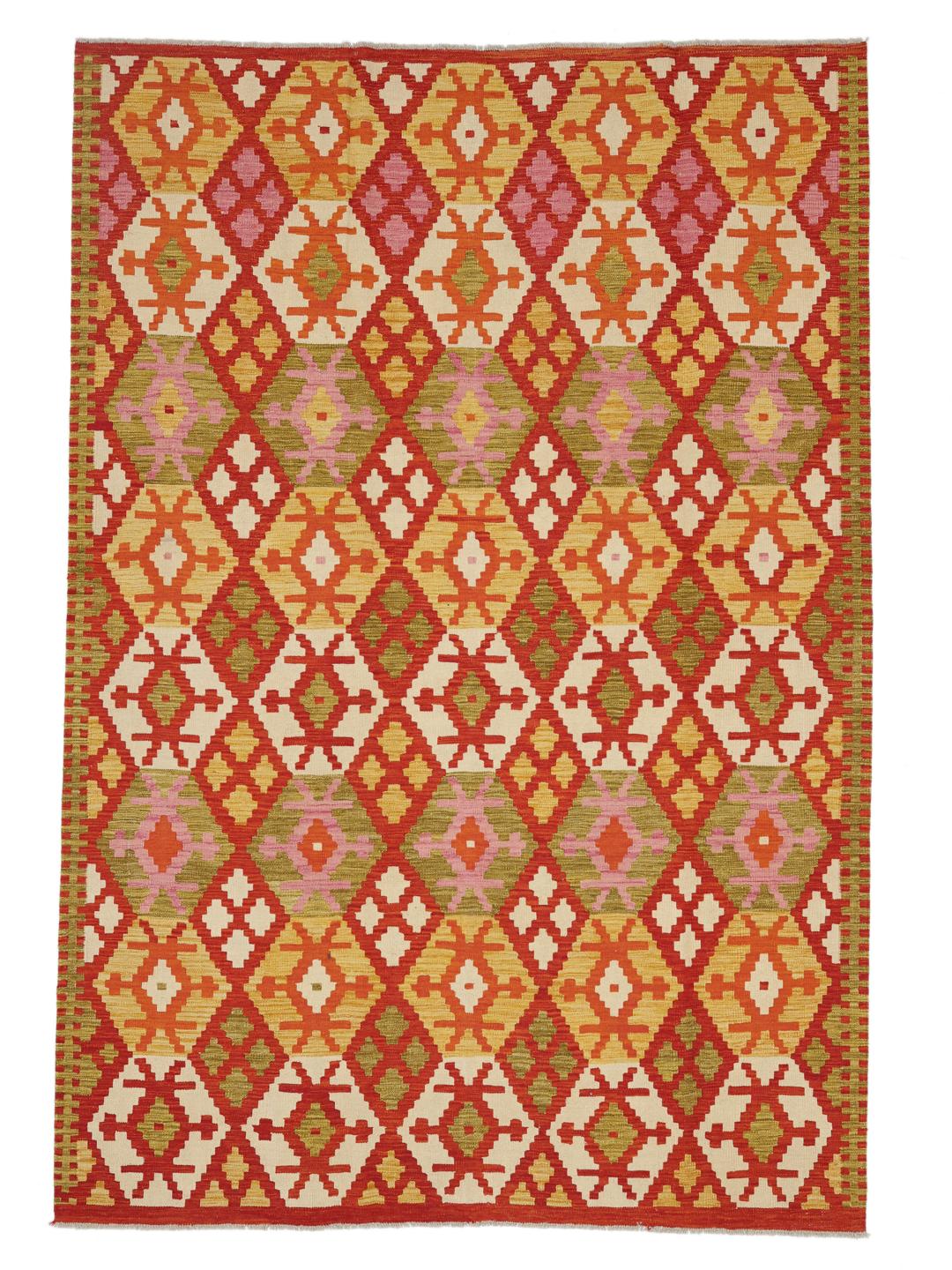
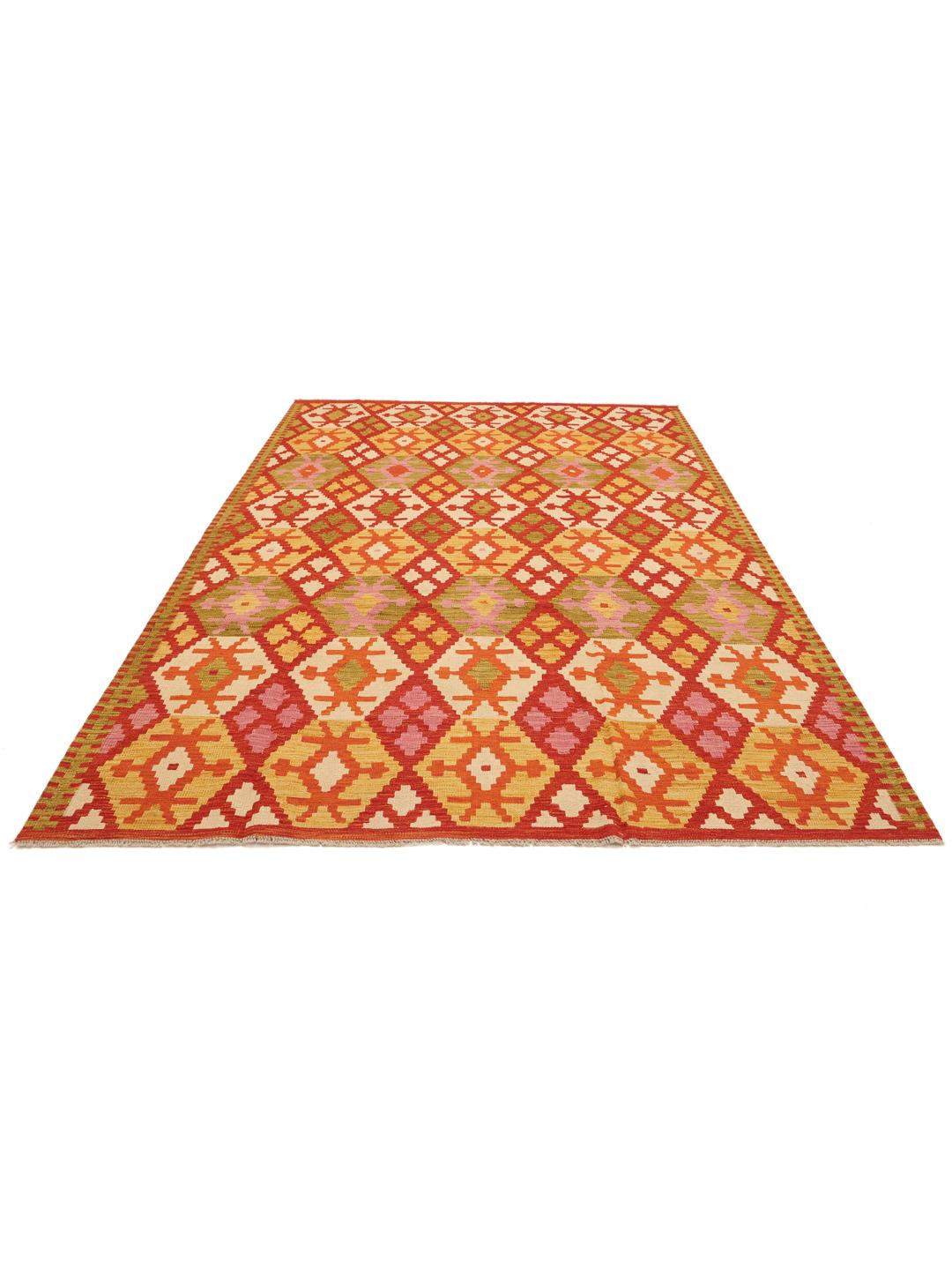
Kelim rugs have a long and storied history, originating from the nomadic tribes of the Middle East and Central Asia. These rugs were traditionally used by nomadic peoples as floor coverings, wall hangings, and functional textiles for their tents. The term Kelim refers to the flat-weaving technique used to create these pieces, which distinguishes them from pile-woven rugs.
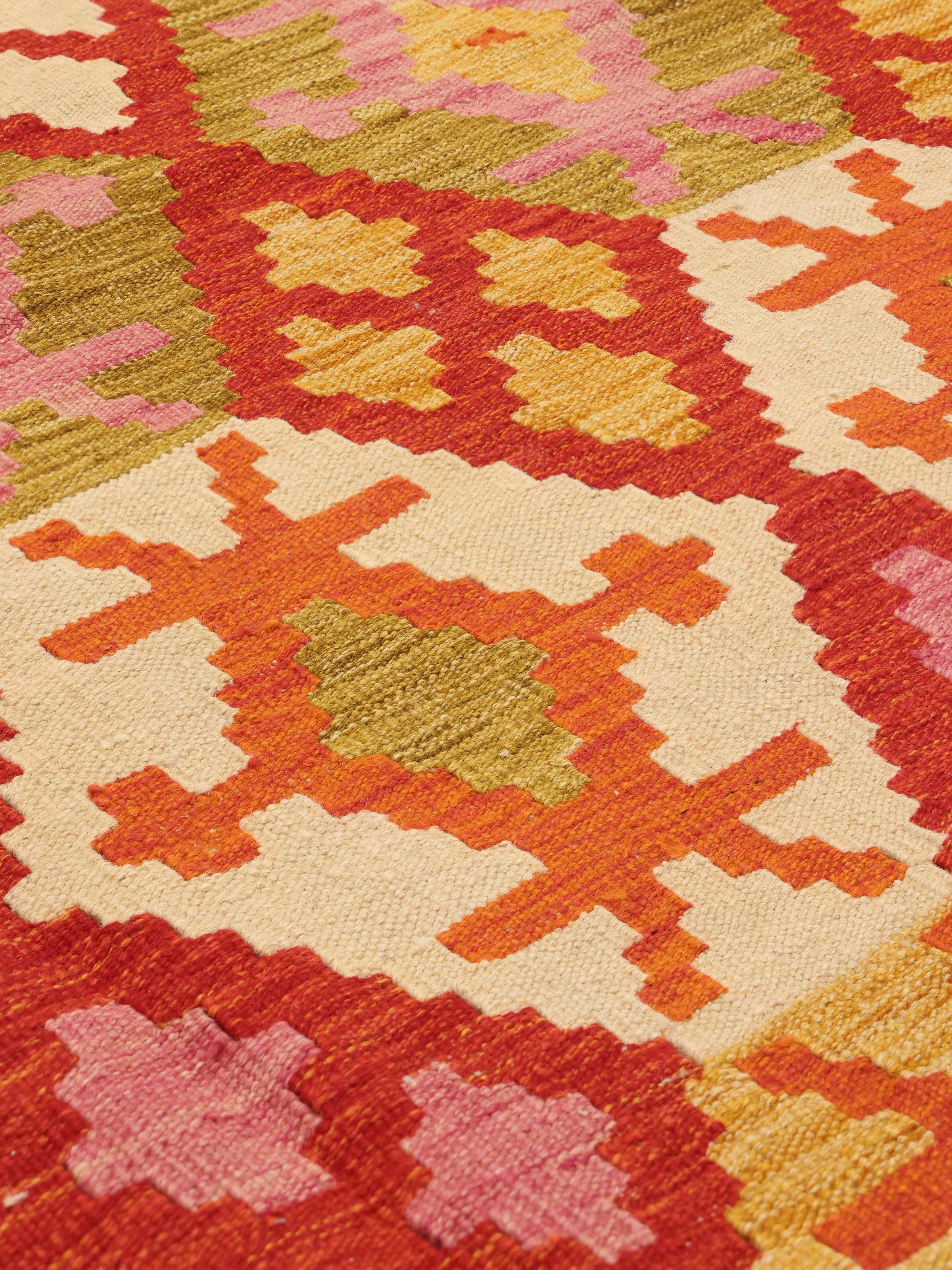
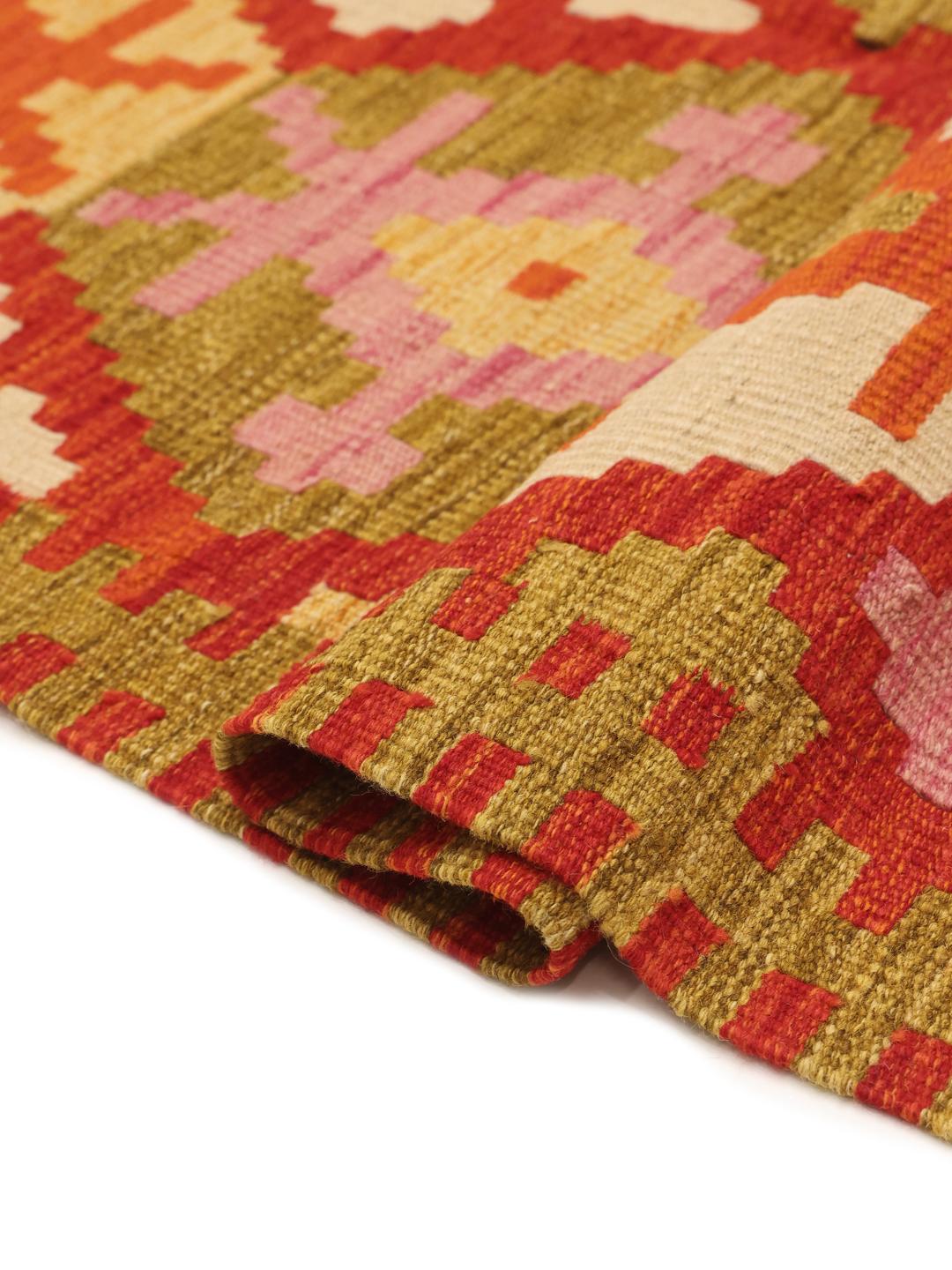
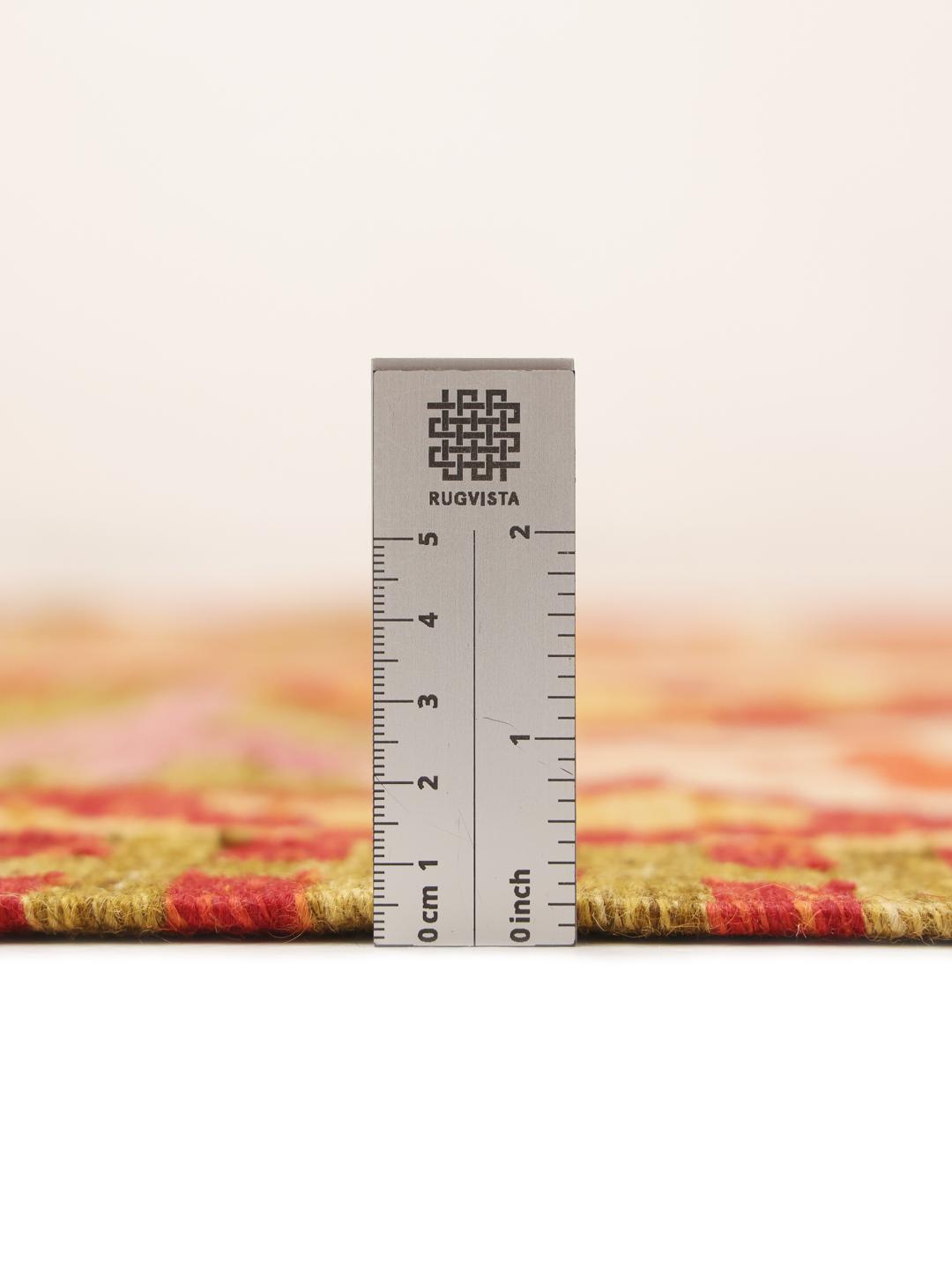
The flat-weave construction is what gives these rugs their characteristic thin, durable profile. Unlike knotted rugs, the design in a Kelim is created by interweaving the coloured weft threads with the warp threads, effectively making the pattern visible on both sides. This method requires a high level of skill to maintain tension and pattern alignment throughout the entire length of the textile.
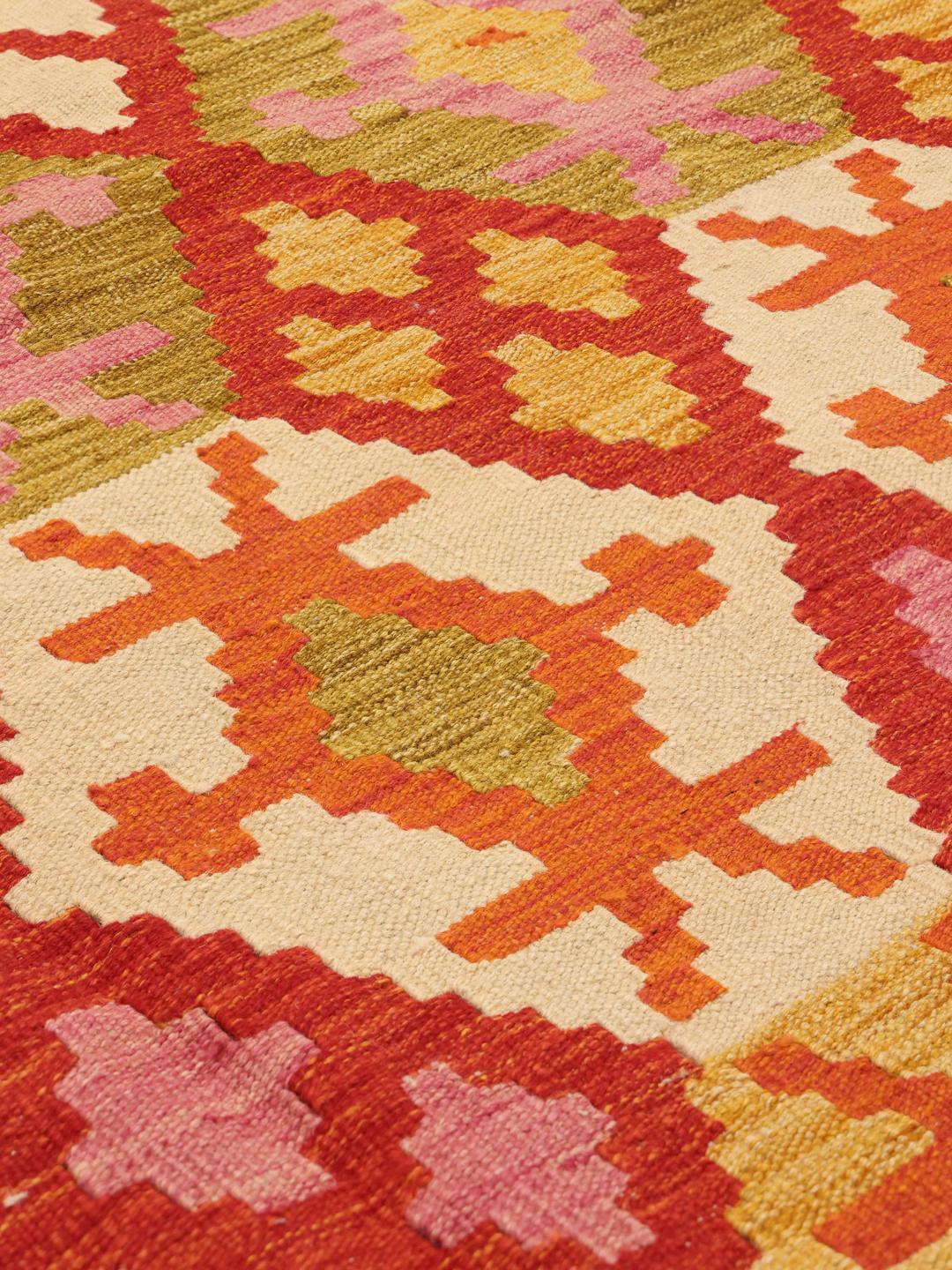
The visual language of the Afghan Kelim is defined by bold geometric patterns, often featuring diamonds, triangles, and stylised motifs. These designs are not merely decorative but often hold symbolic meaning, reflecting the cultural identity and environmental surroundings of the weavers. The use of vibrant, earthy tones is a hallmark of this tradition, reflecting the natural dyes historically available in the region.
Owning an Afghan Kelim is an investment in cultural heritage. These rugs are highly valued by collectors not only for their striking aesthetic but also for the preservation of ancient weaving techniques. When you bring a Kelim into your home, you are connecting with a centuries-old tradition that celebrates both utility and creative expression.