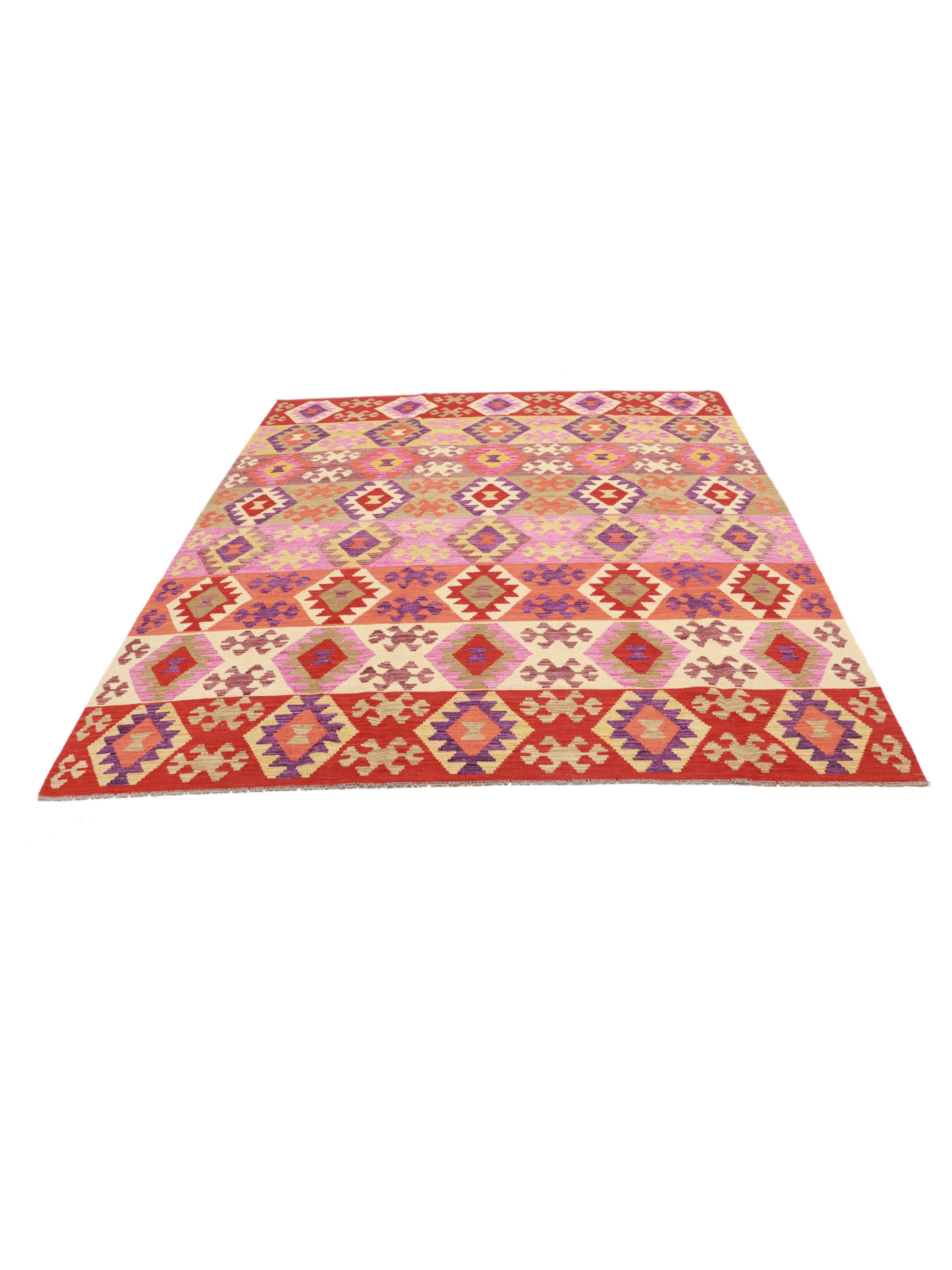
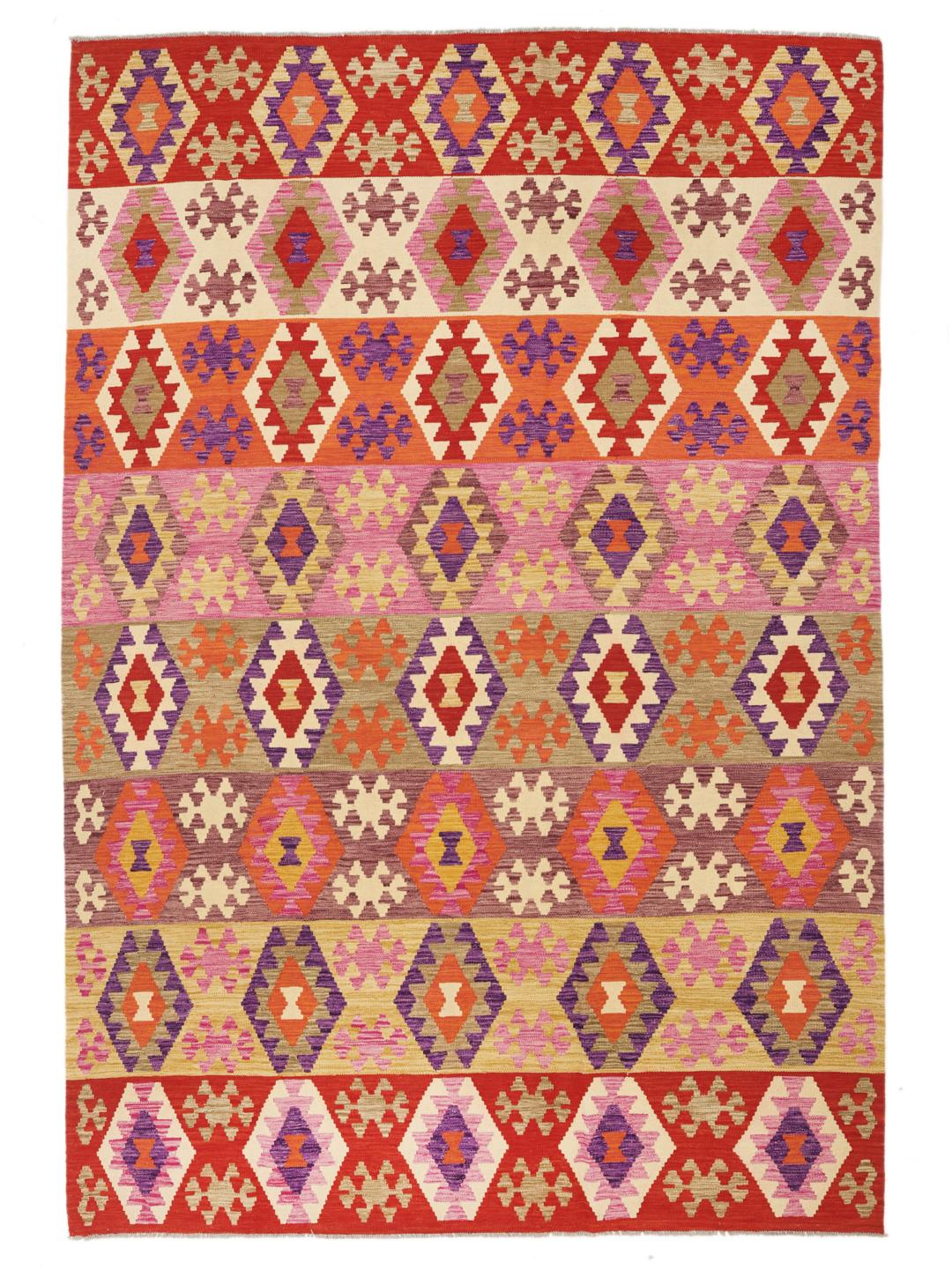
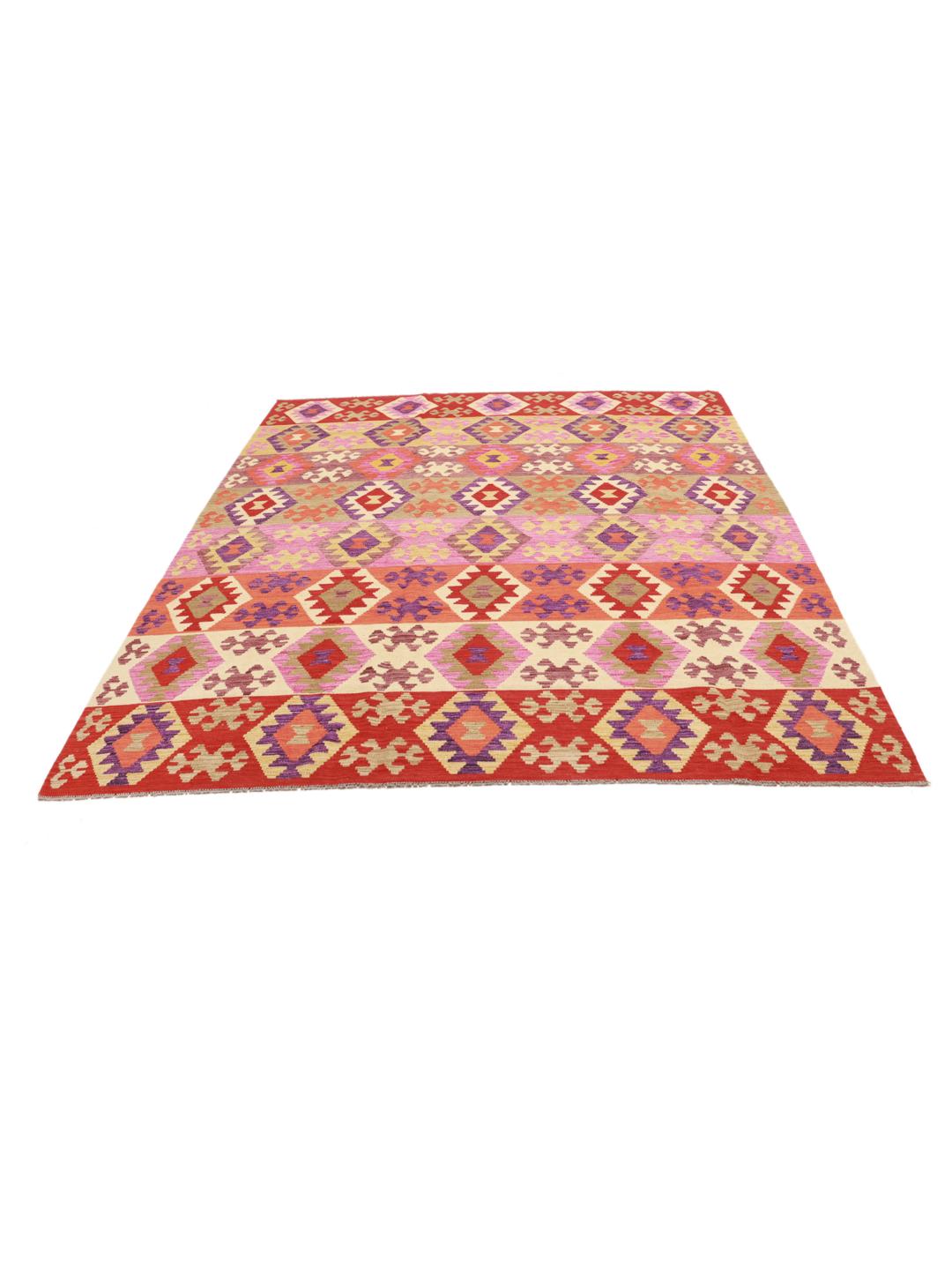
The Kelim tradition in Afghanistan is deeply rooted in the nomadic and semi-nomadic lifestyles of the region. For centuries, these flat-woven textiles have served as essential functional items for families, used as floor coverings, wall hangings, and storage bags. The migration of weaving techniques across the Middle East has allowed the Afghan Kelim to evolve into a distinct style, characterised by its bold geometric motifs and vibrant, earthy tones.
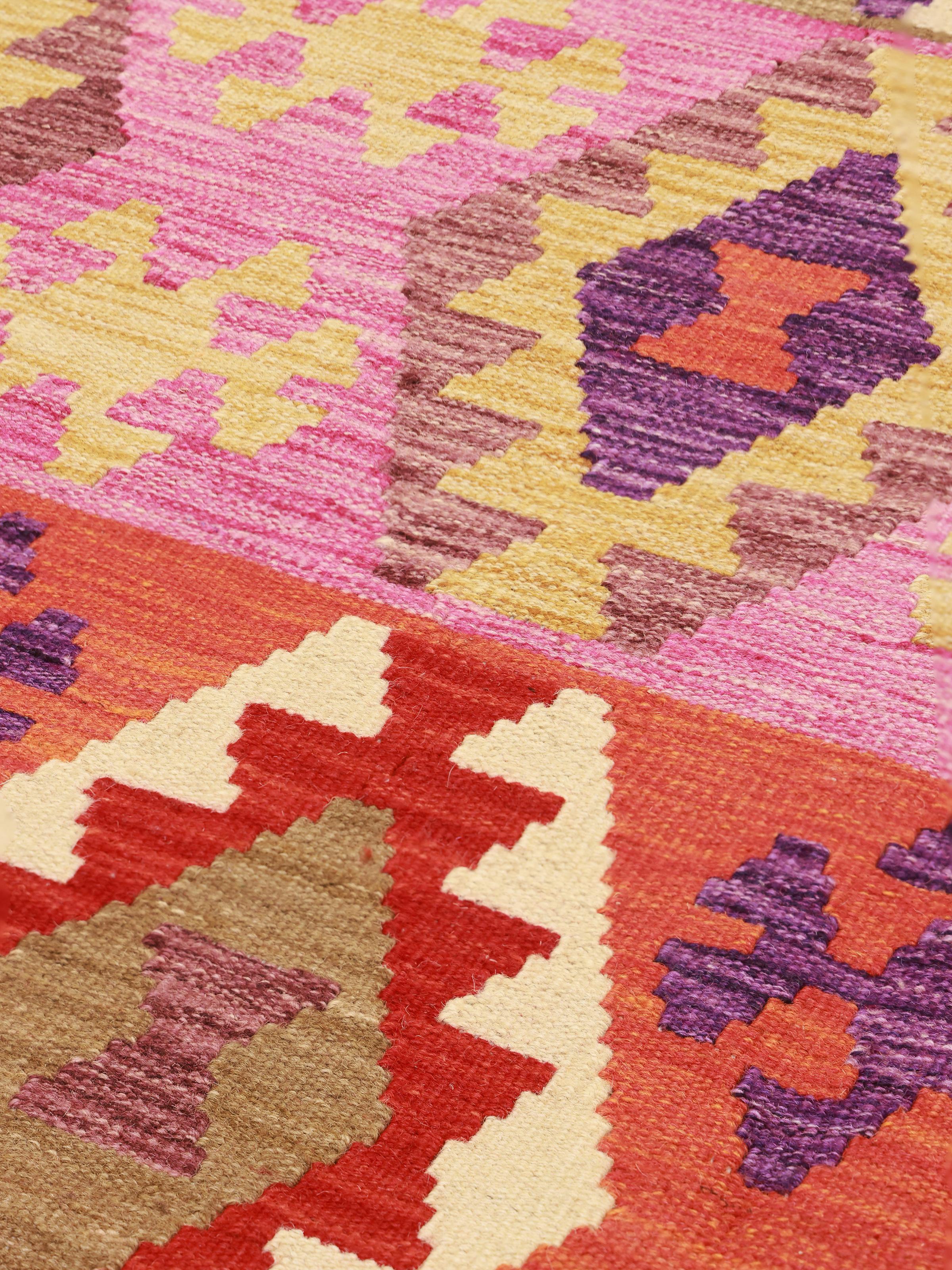
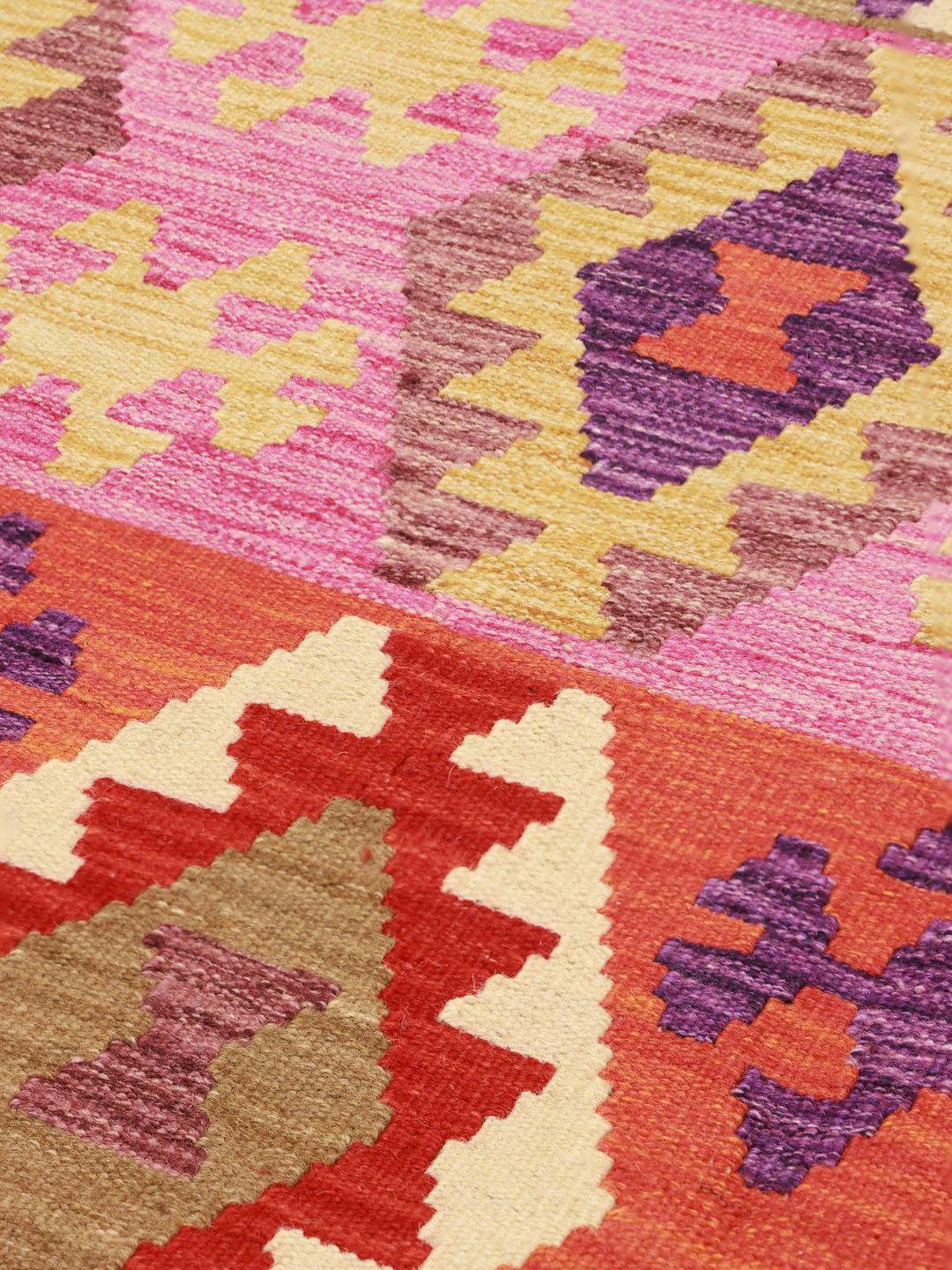
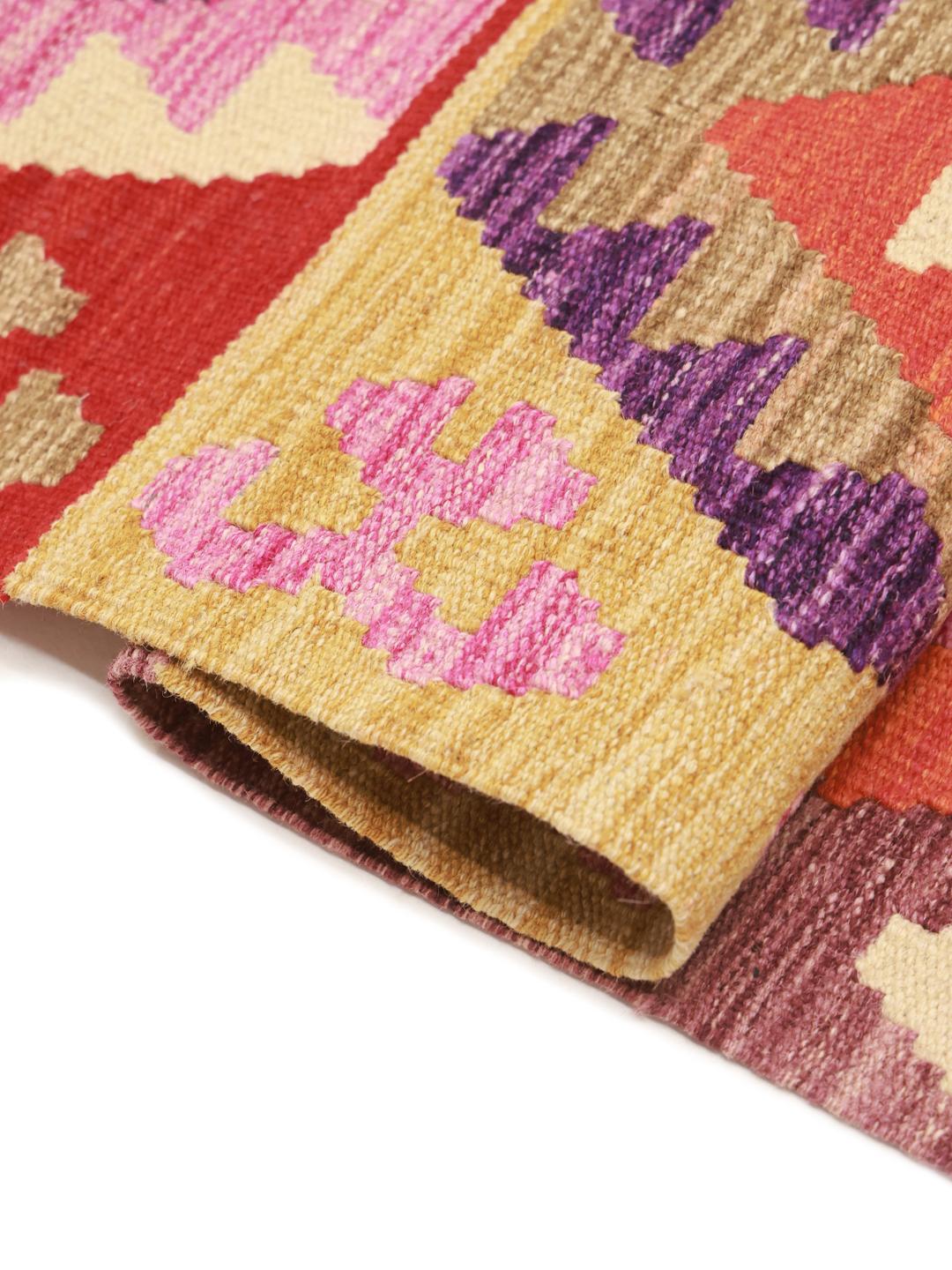
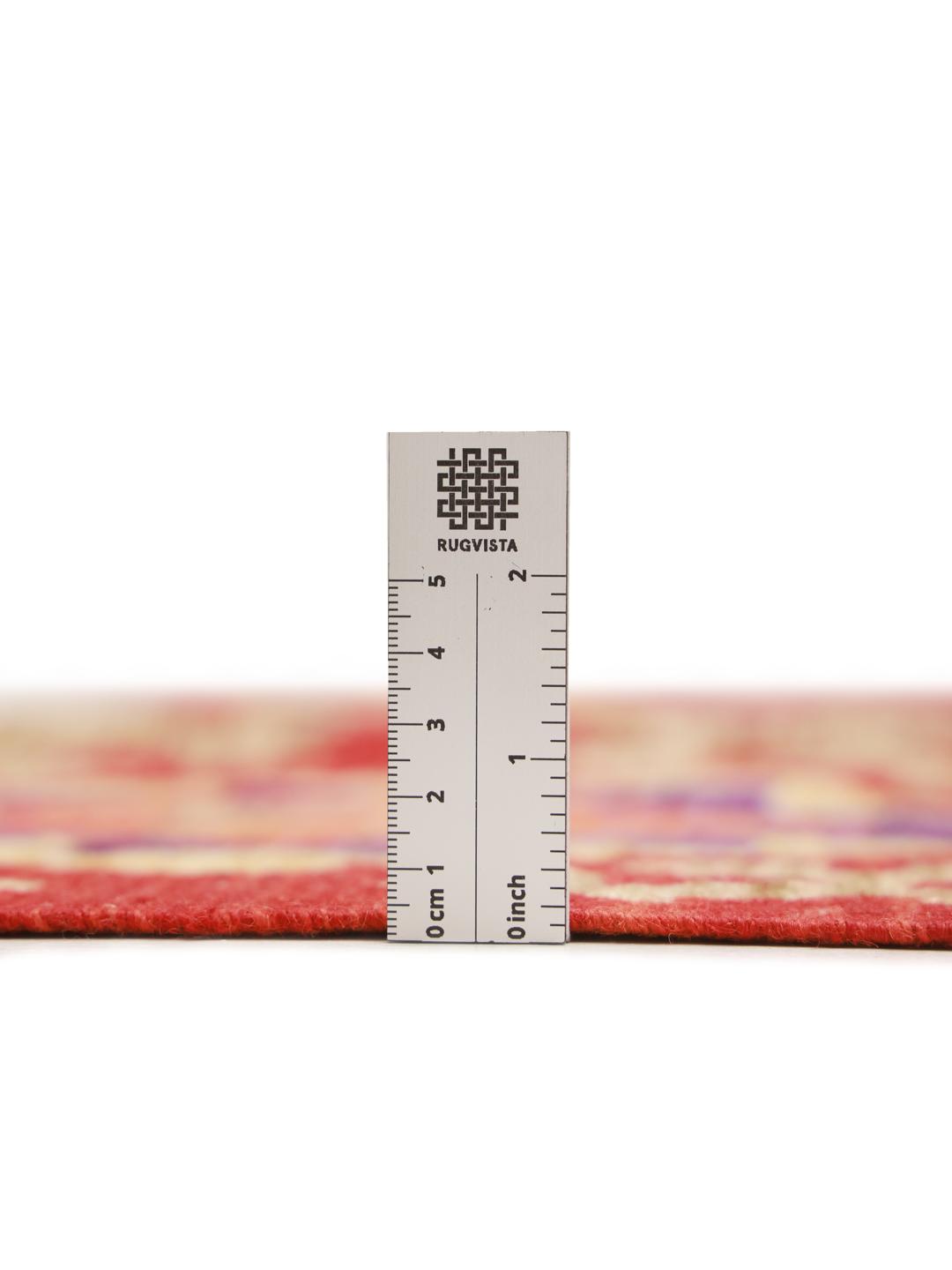
A Kelim is defined by its lack of a pile, achieved through the interlocking of weft and warp threads. This technique creates a reversible, lightweight, and durable fabric that is prized for its clarity of design. Because the pattern is created by the weave itself rather than being knotted into a foundation, the motifs appear sharper and more graphic, showcasing the weaver's ability to maintain perfect symmetry across the entire surface.
The signature design language of these rugs is dominated by geometric abstraction. You will frequently find repeating diamond shapes, triangles, and stylised floral motifs that hold symbolic meaning within the weaving community. The use of bold, contrasting colours is a hallmark of the Afghan style, often achieved through natural dyes that give the wool a rich, complex depth that changes subtly with the light.
Owning an Afghan Kelim is an act of preserving a rich cultural heritage. These rugs are highly valued by collectors for their authenticity and the sheer human effort required to produce them. By bringing one into your home, you are connecting with a long lineage of artisans who have passed down these complex patterns through generations, ensuring that this tradition remains a vibrant part of the contemporary design landscape.