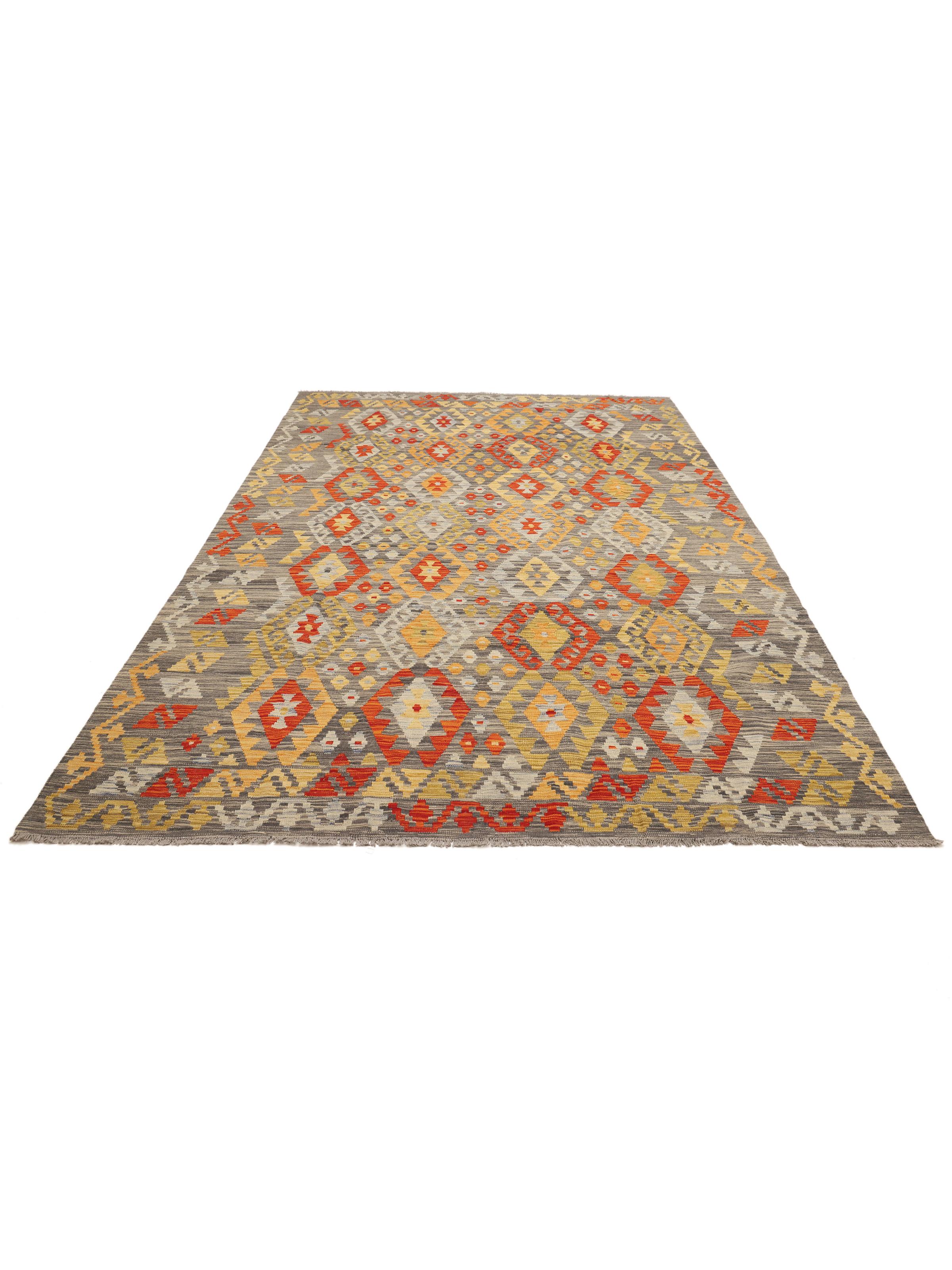
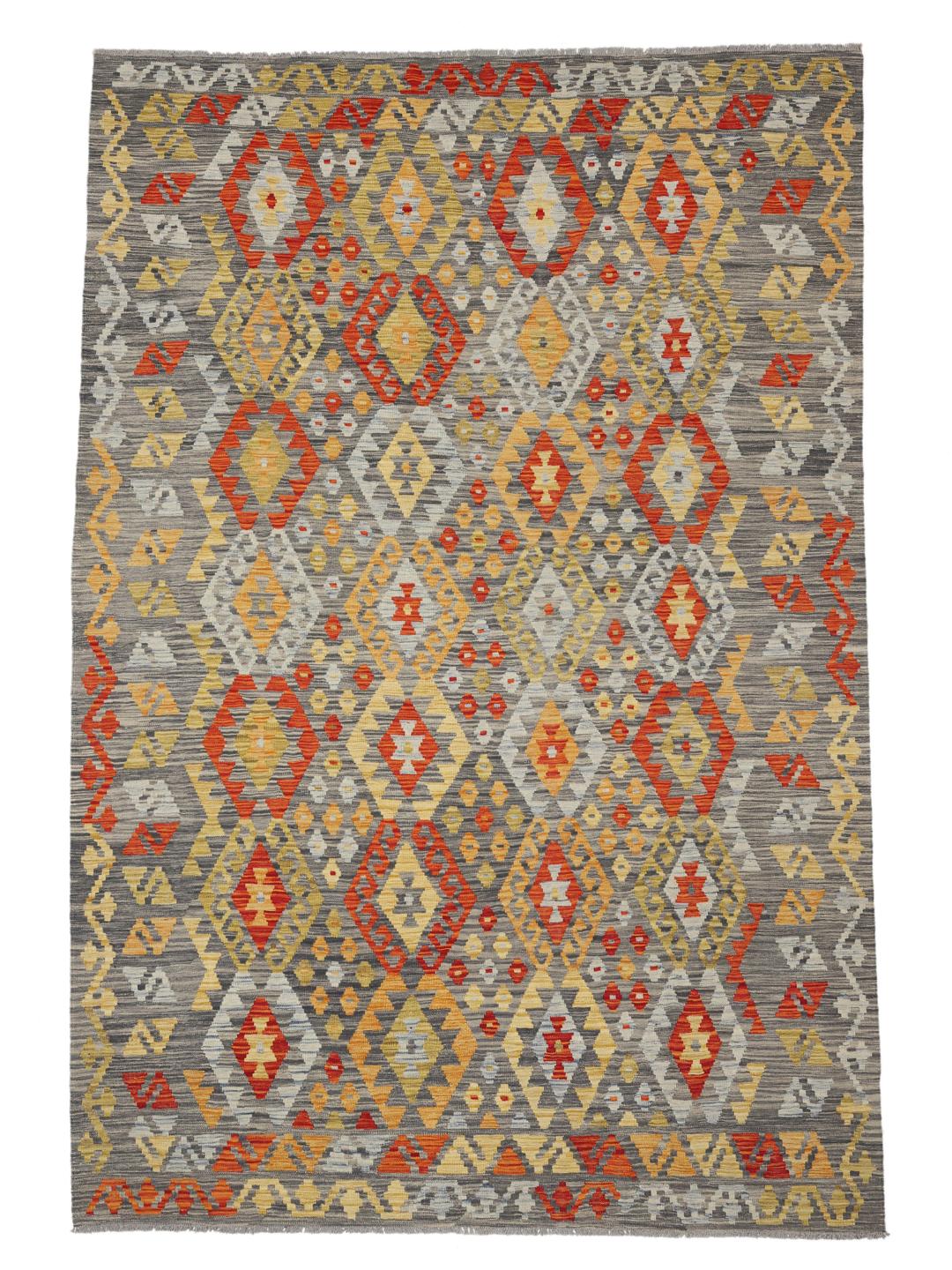
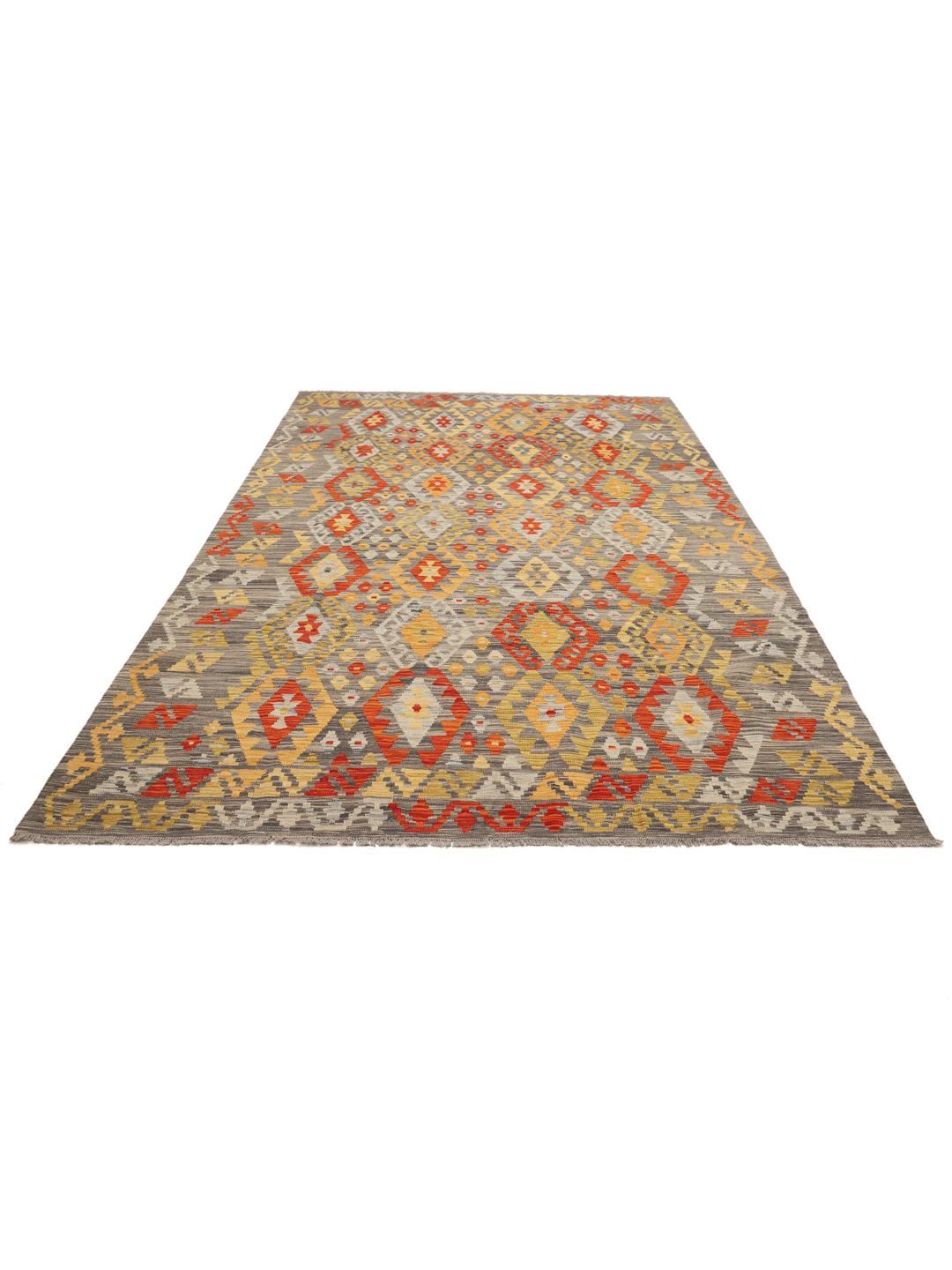
The Afghan Kelim tradition is rooted in the nomadic lifestyle of the Middle East, where flat-woven textiles were essential for their versatility and portability. These rugs were traditionally used to cover floors, create partitions, or provide warmth inside tents, evolving over centuries into the highly prized decorative pieces we see today.
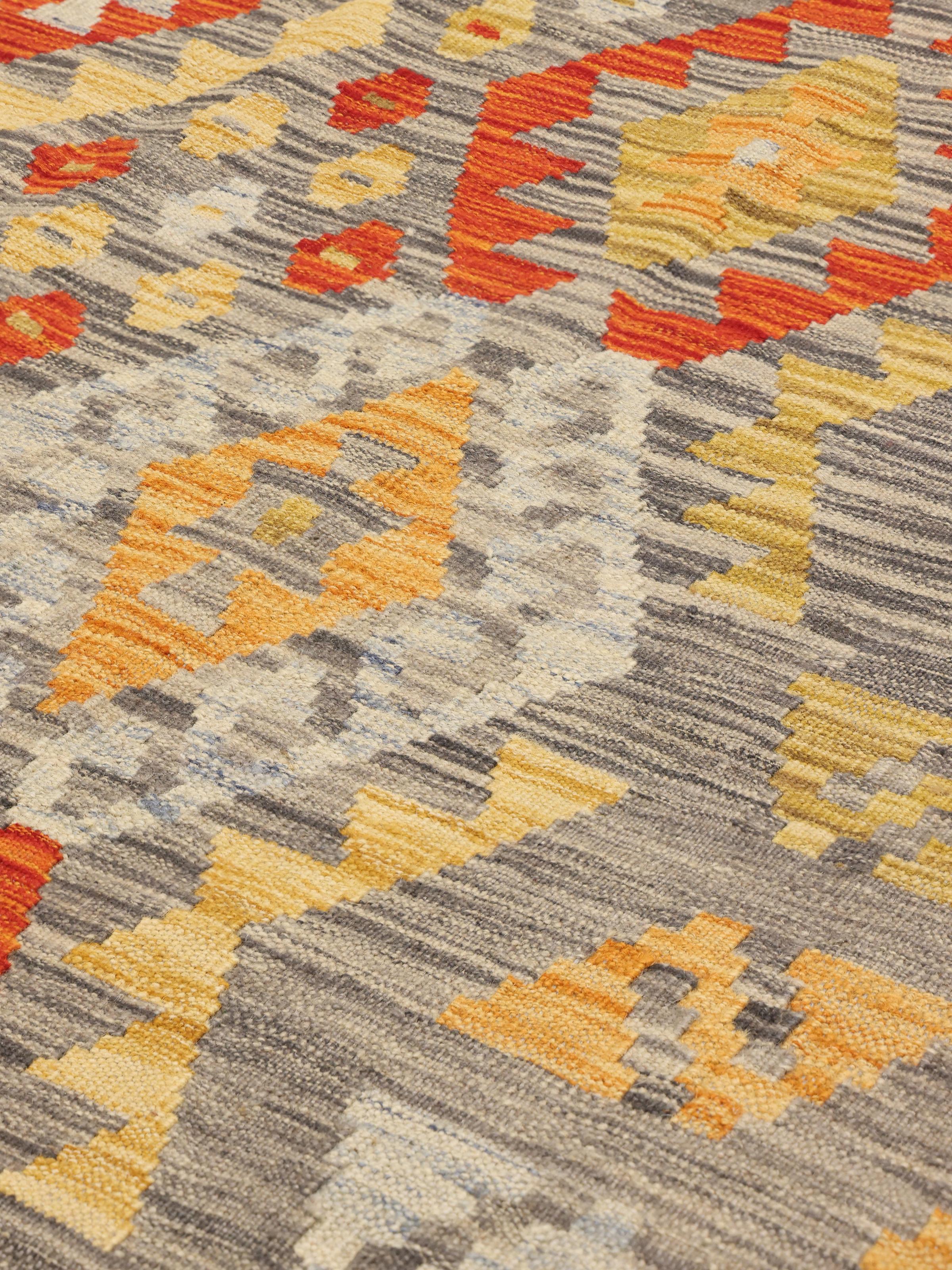
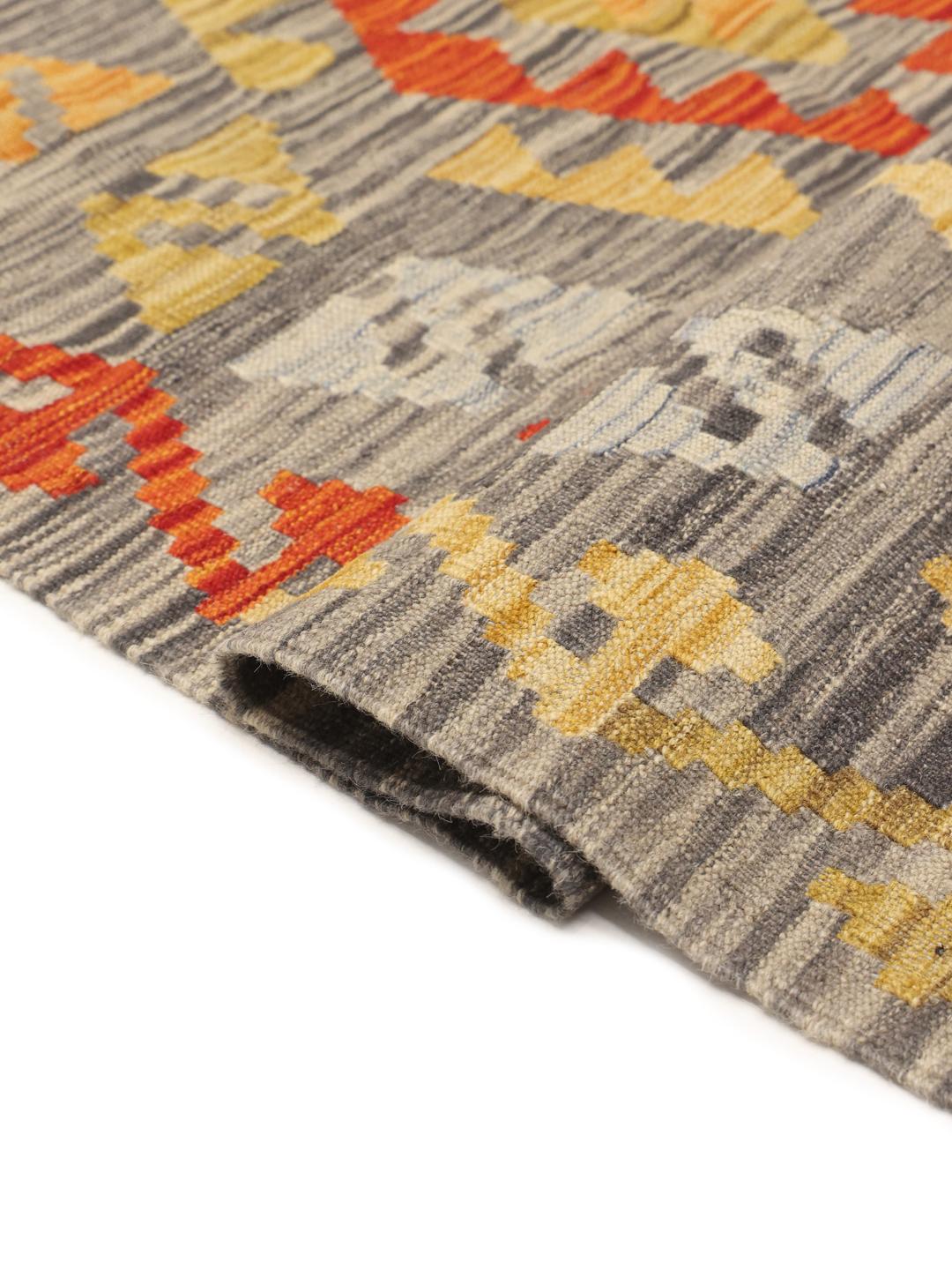
The term 'Kelim' refers to a specific flat-weaving technique where the weft threads are passed through the warp threads to create the design. Because there is no pile to hide the structure, the weaver must be exceptionally precise, as every colour change and geometric shift is visible on the surface. This technique creates a reversible, lightweight, and incredibly durable textile that holds its form for decades.
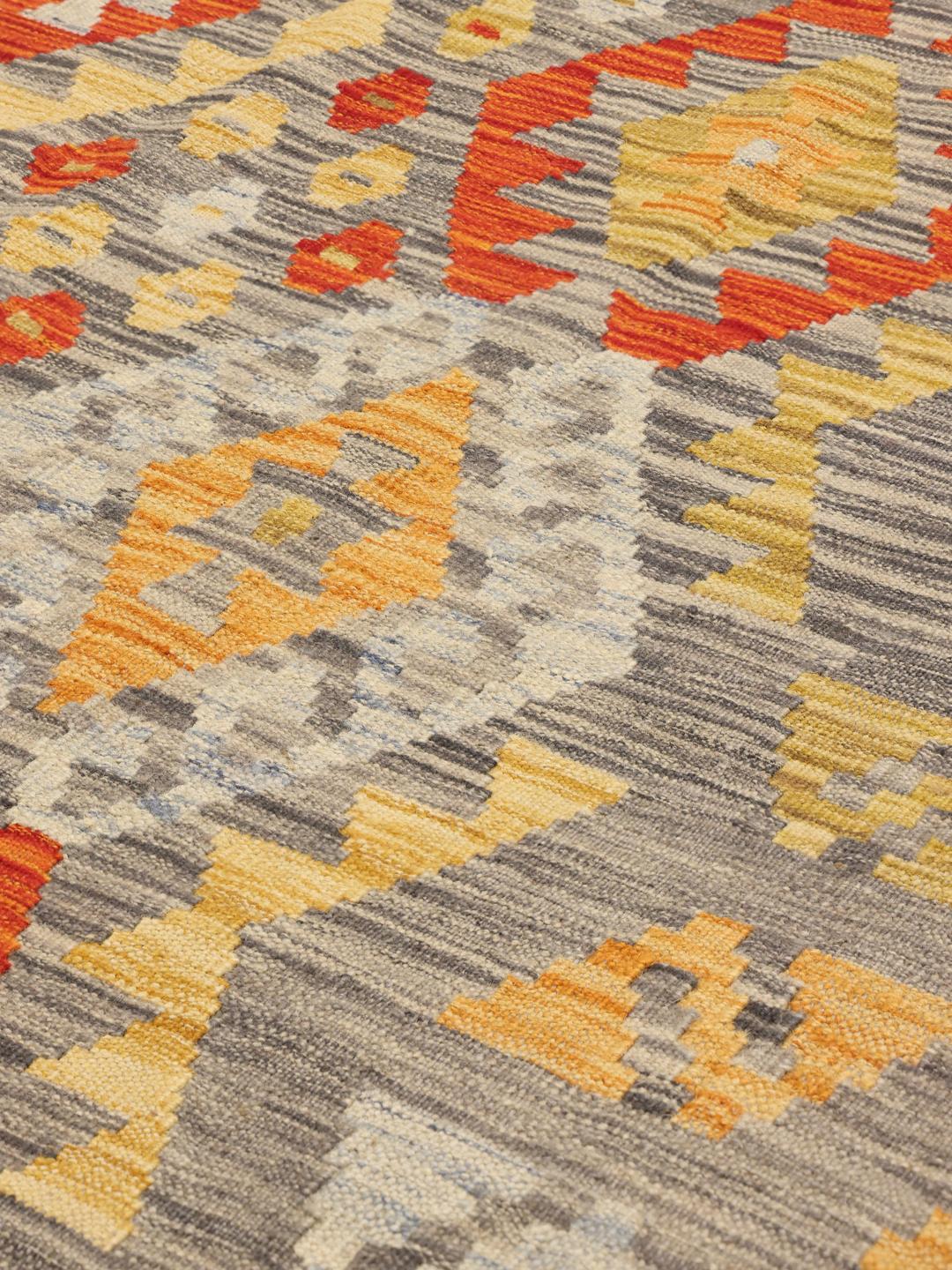
The design language of these rugs is defined by geometric abstraction and a rich, traditional colour palette. The diamond motifs seen here are classic elements of the region, often representing protection or fertility in local folklore. The bold use of red, yellow, and earthy tones is characteristic of the vibrant Wool dyes used in Afghan weaving, which age beautifully over time.
Collectors value these pieces for their authenticity and the human story woven into every thread. Owning an Afghan Kelim is an investment in cultural heritage, representing a bridge between ancient nomadic artistry and contemporary home design. These rugs are cherished for their ability to bring a soul and a sense of place to any interior.