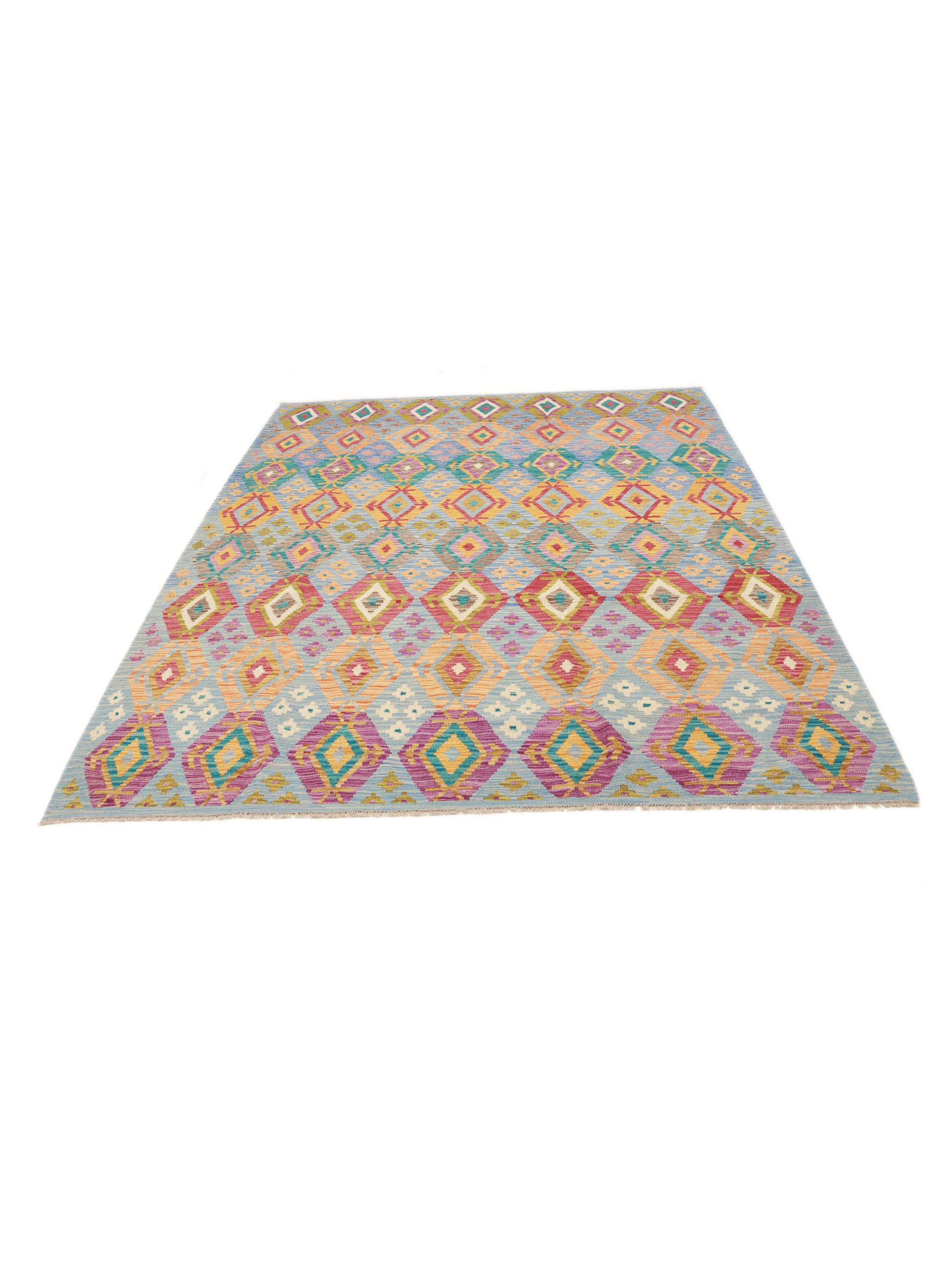
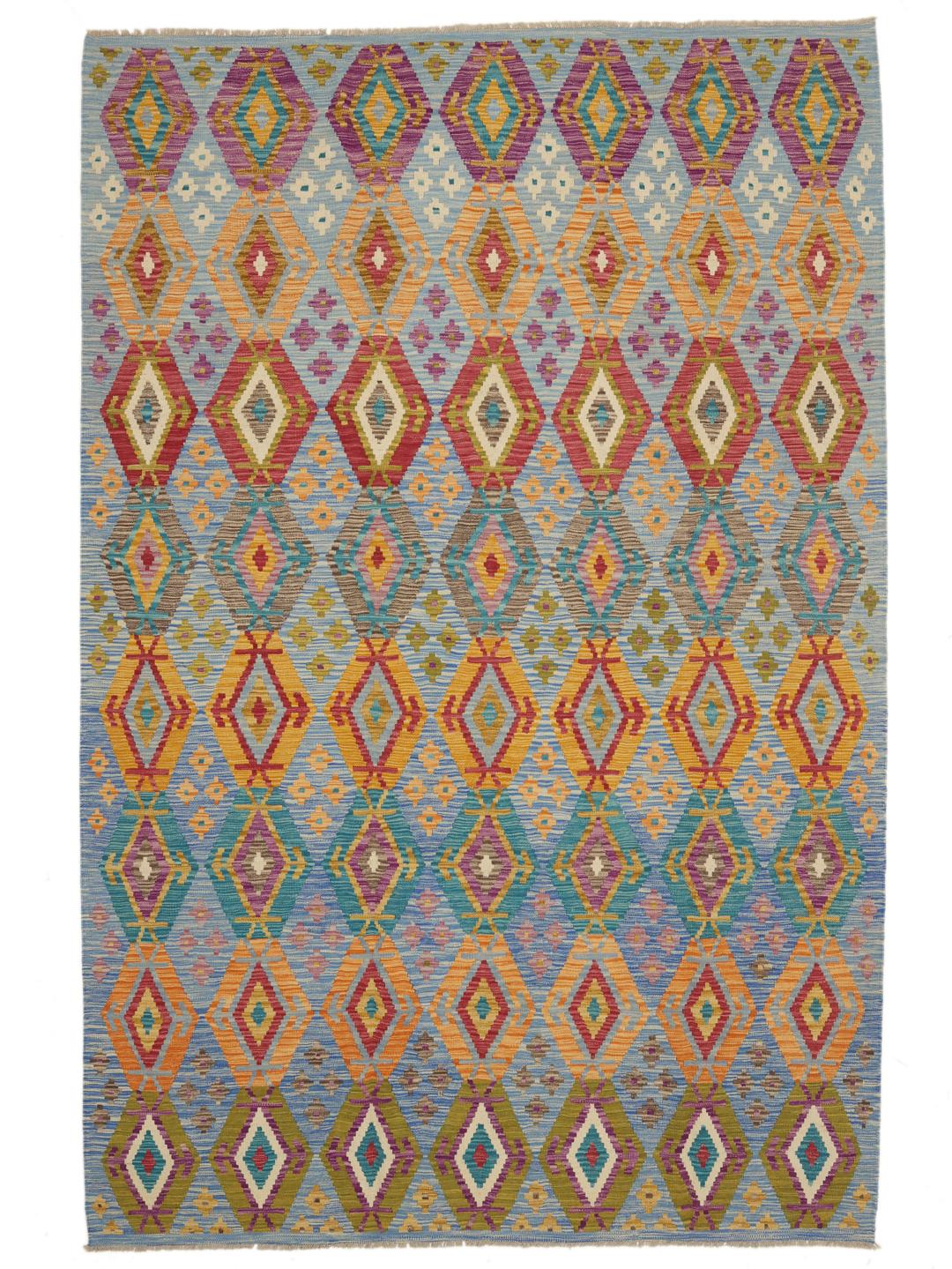
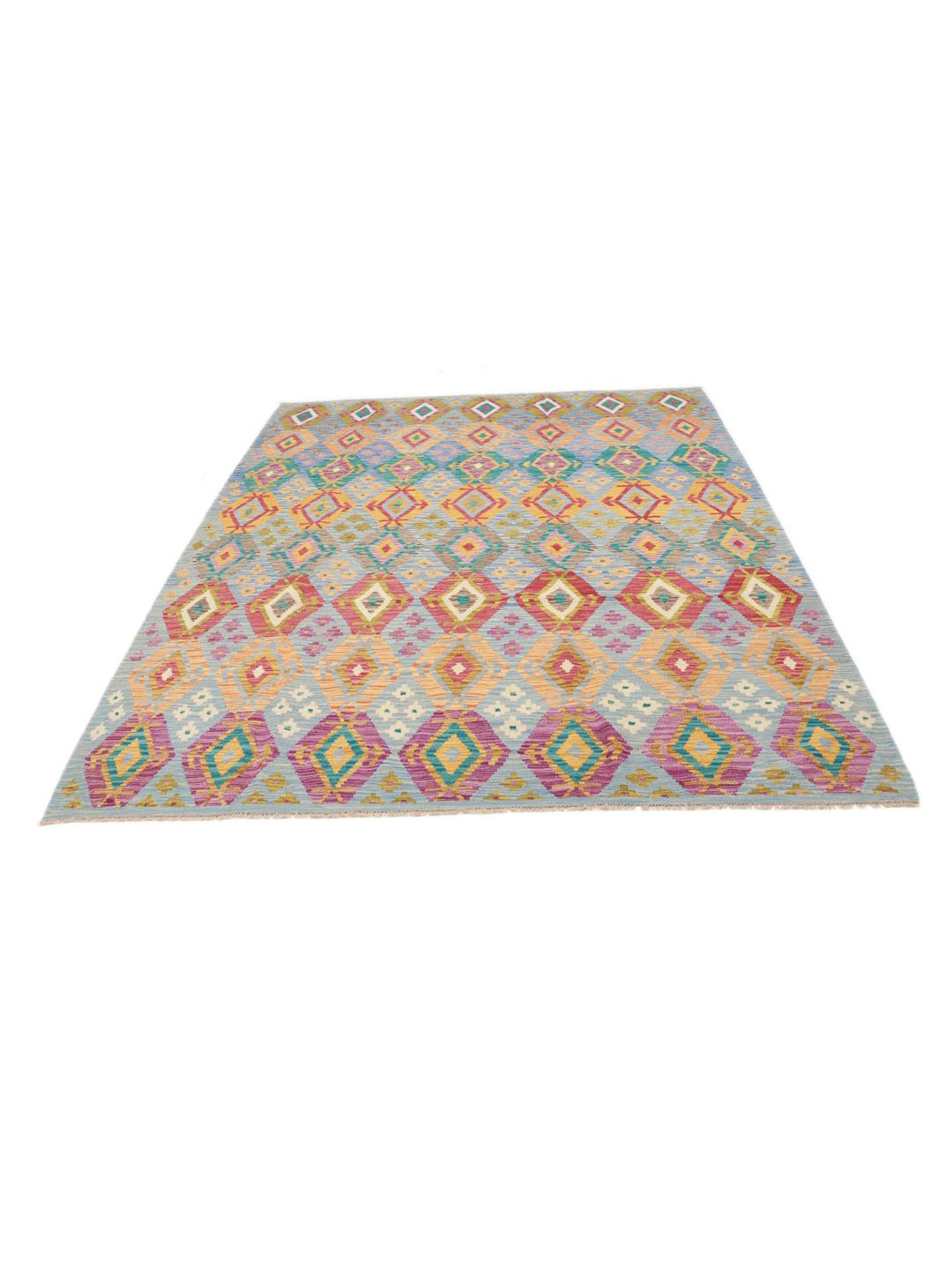
Kelim rugs have long been a cornerstone of nomadic life in the Middle East and Central Asia. Historically, these flat-woven textiles were crafted by tribal groups for practical uses such as floor coverings, wall hangings, and storage bags. The tradition of weaving these pieces without a pile allowed for easier transport across mountain ranges and deserts, a necessity for families living a migratory lifestyle.
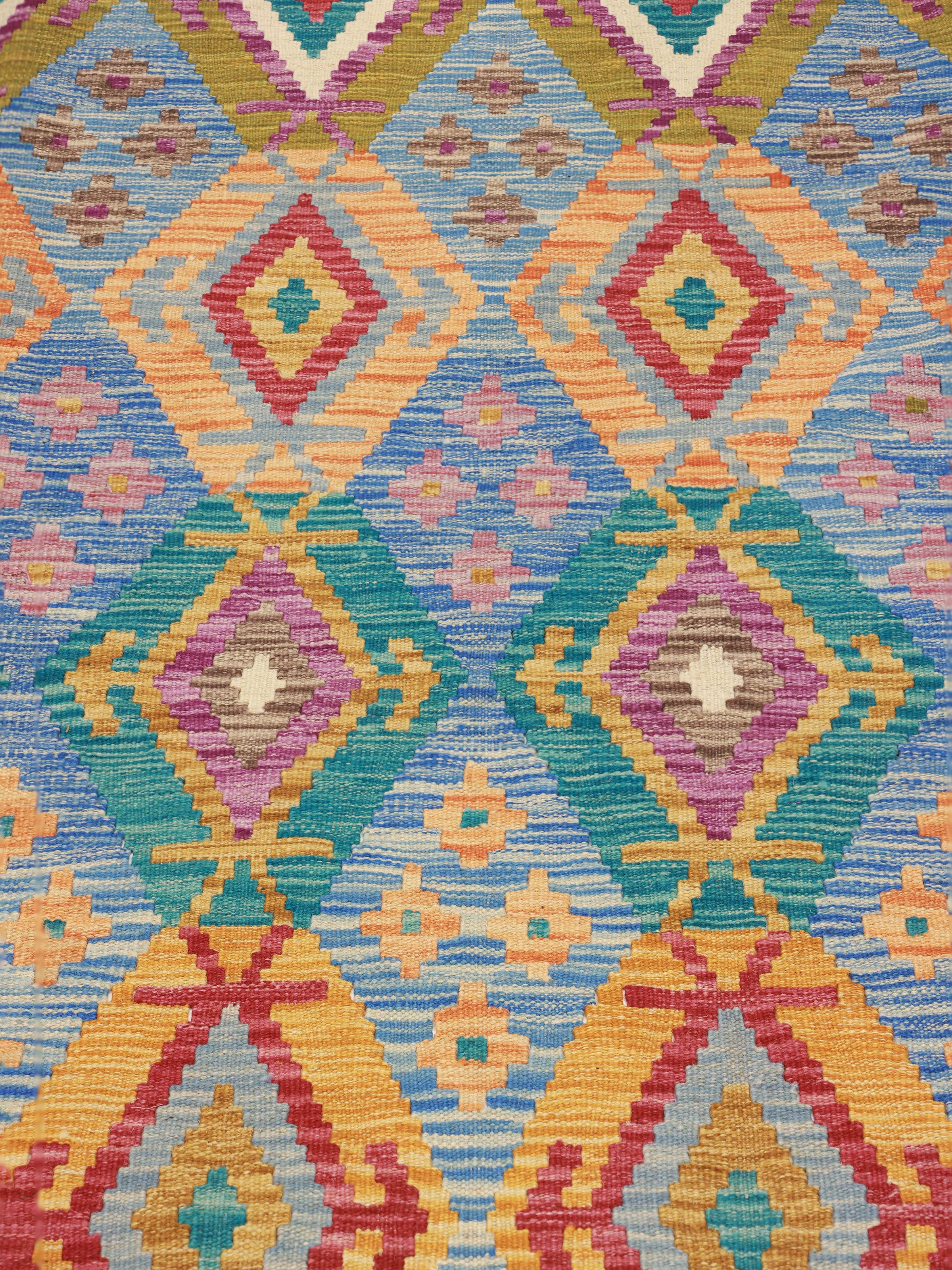
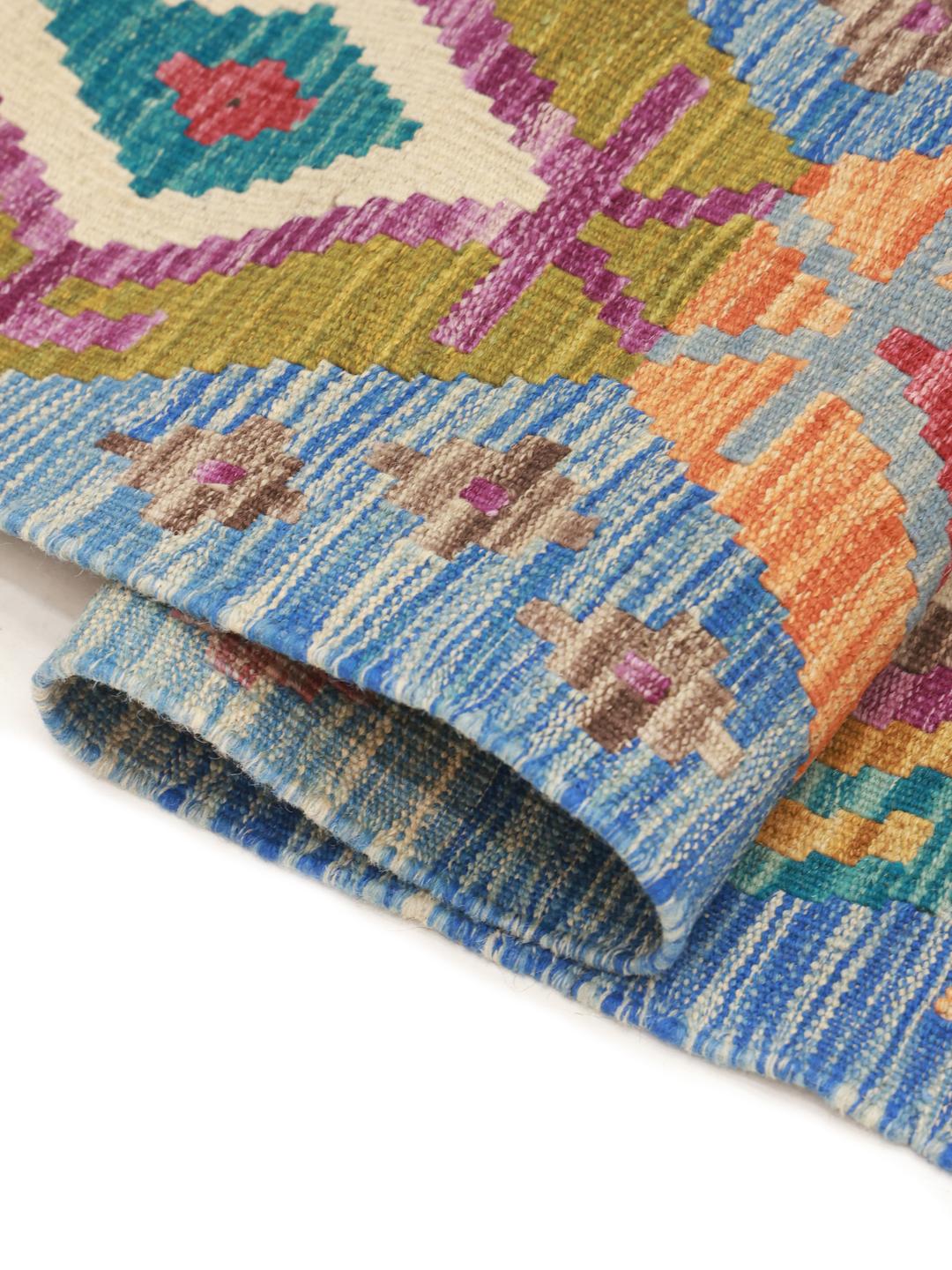
The term 'Kelim' refers to the specific technique of interlocking the weft threads with the warp to create a smooth, pattern-rich surface. This is a demanding craft that requires the weaver to manage complex colour transitions manually. By avoiding the use of knots, the weaver produces a thinner, more flexible textile that is incredibly strong, as the density of the weave creates a tight, resilient structure.
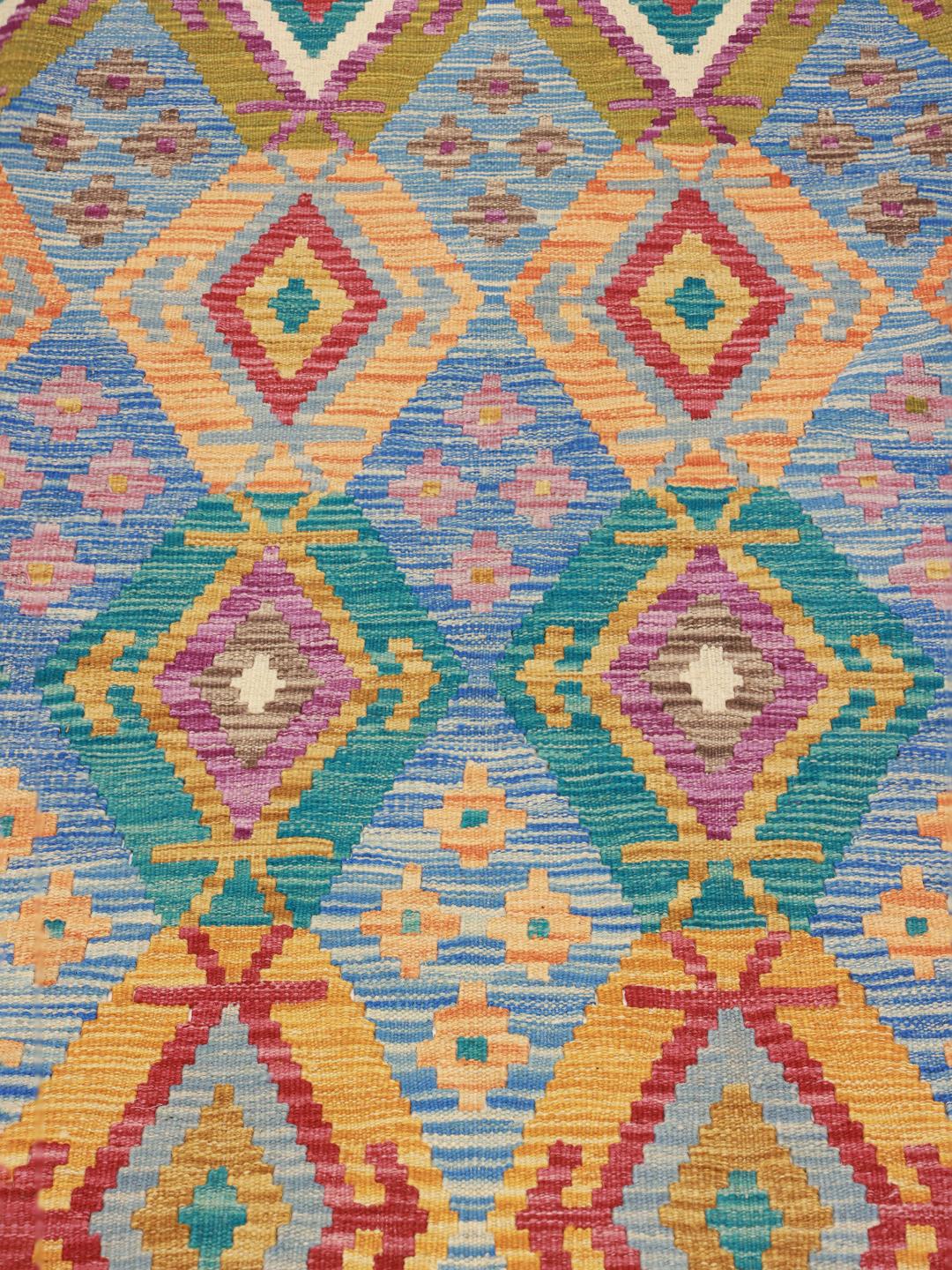
Signature design elements in Afghan Kelims often include bold, geometric motifs such as diamonds, zig-zags, and stylized floral shapes. These patterns are not merely decorative but often carry cultural significance, representing protection, fertility, or the natural landscape. In this particular piece, the repeating diamonds demonstrate the traditional love for symmetry and rhythmic repetition that defines the Afghan weaving style.
Owning an Afghan Kelim is more than a design choice, it is an appreciation of a deep-rooted cultural heritage. These rugs are highly valued by collectors for their authenticity and the skill required to produce them without the aid of modern technology. By bringing this piece into your home, you are preserving a craft tradition that values human ingenuity and the timeless beauty of natural wool.