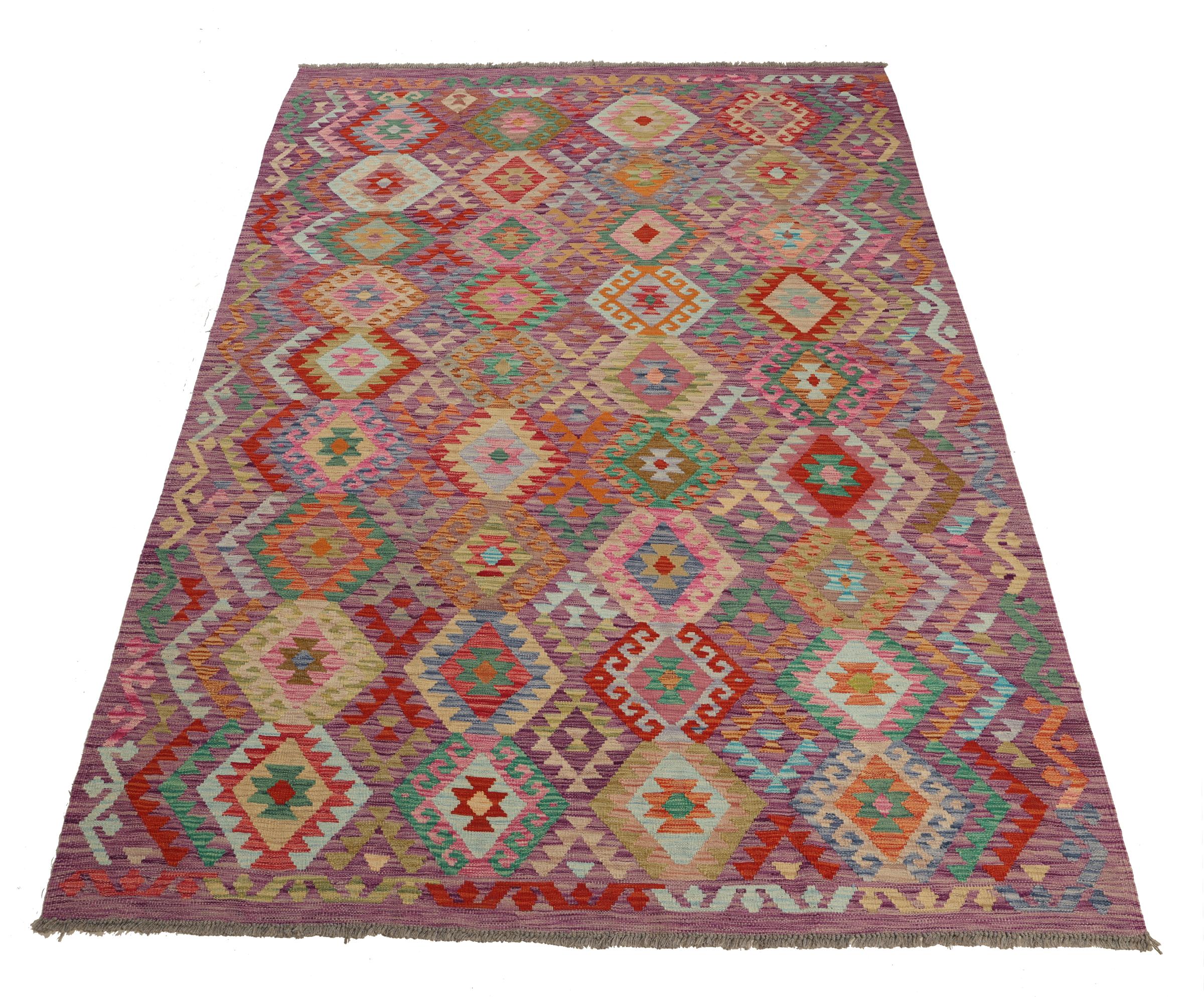
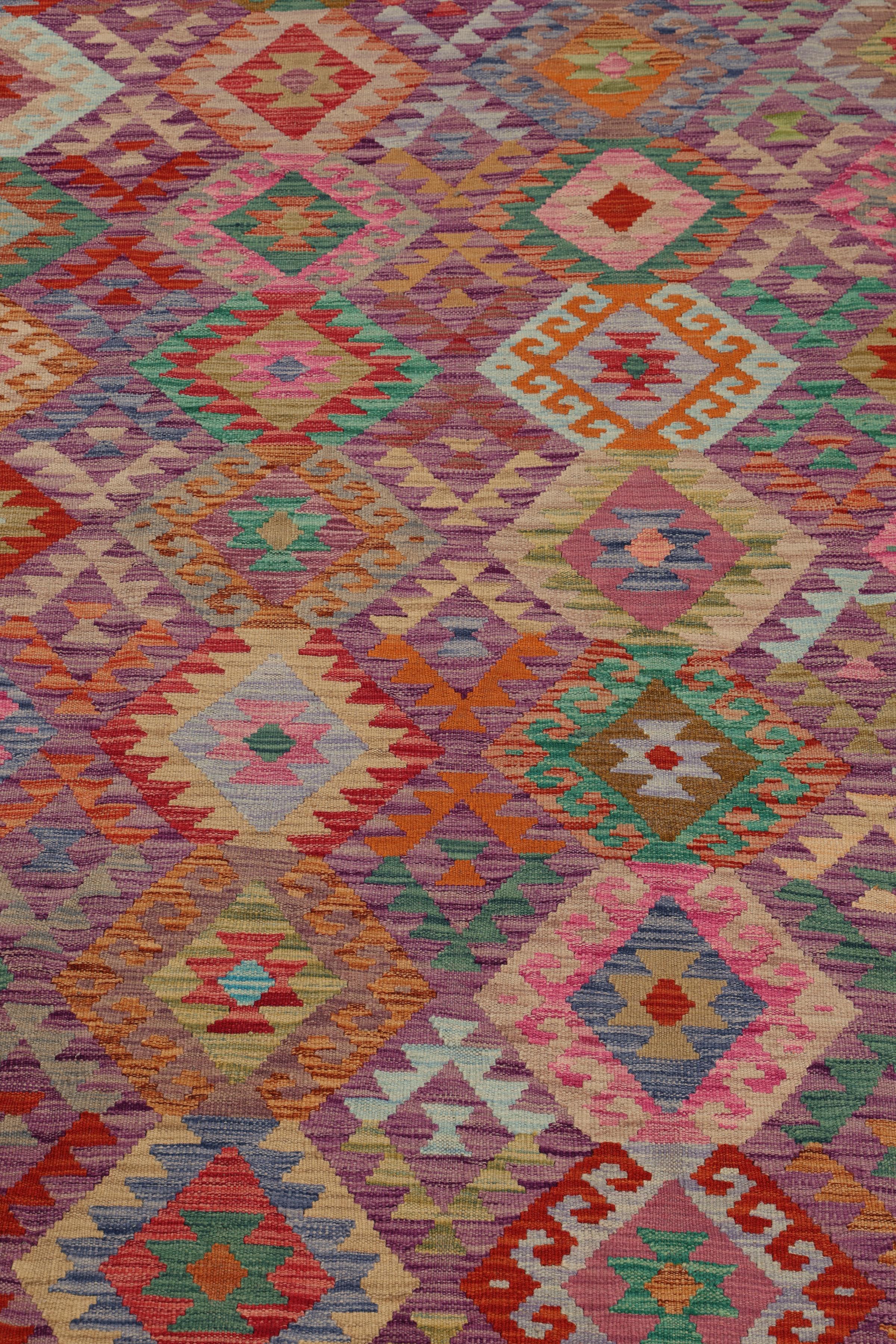
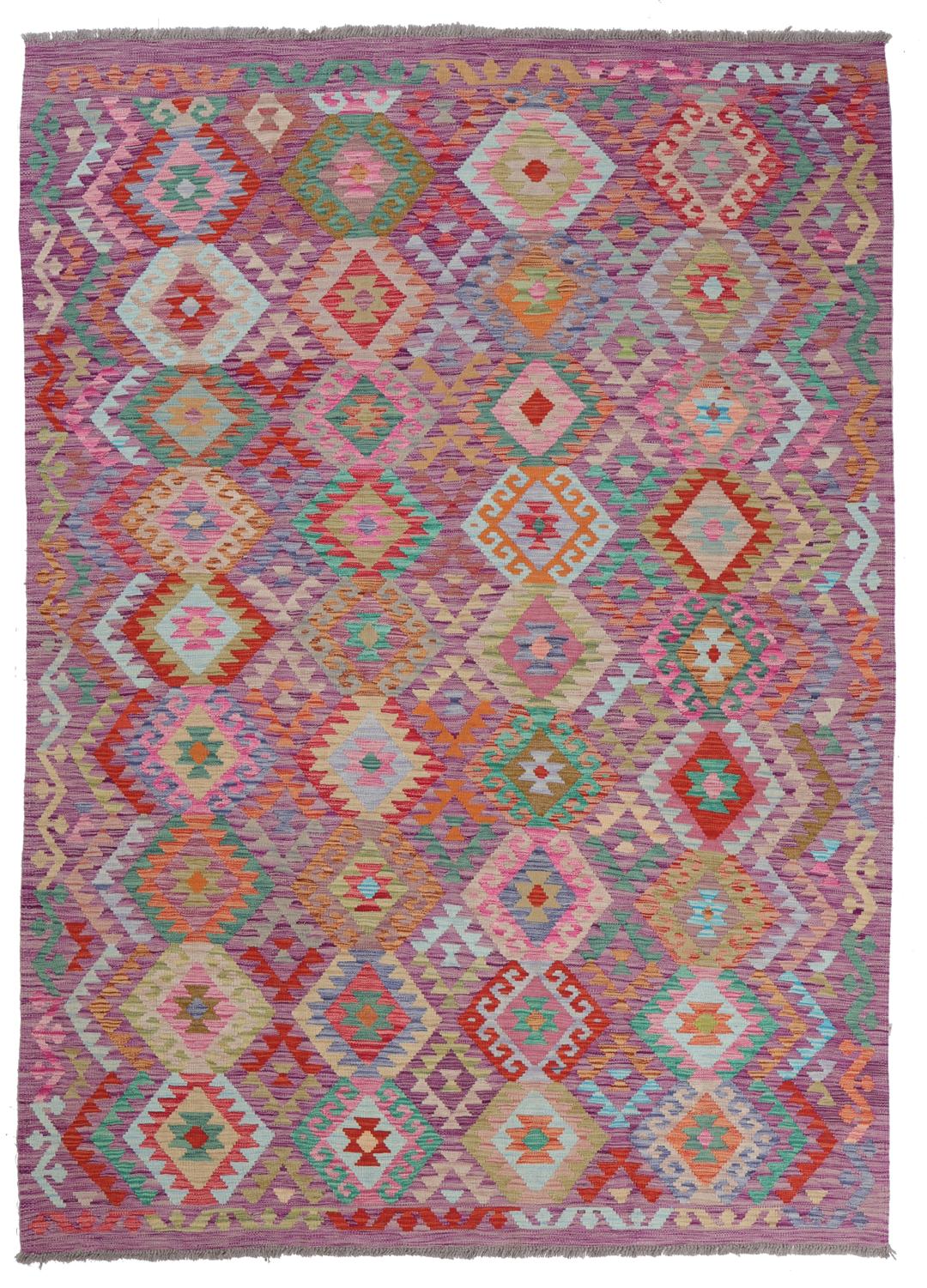
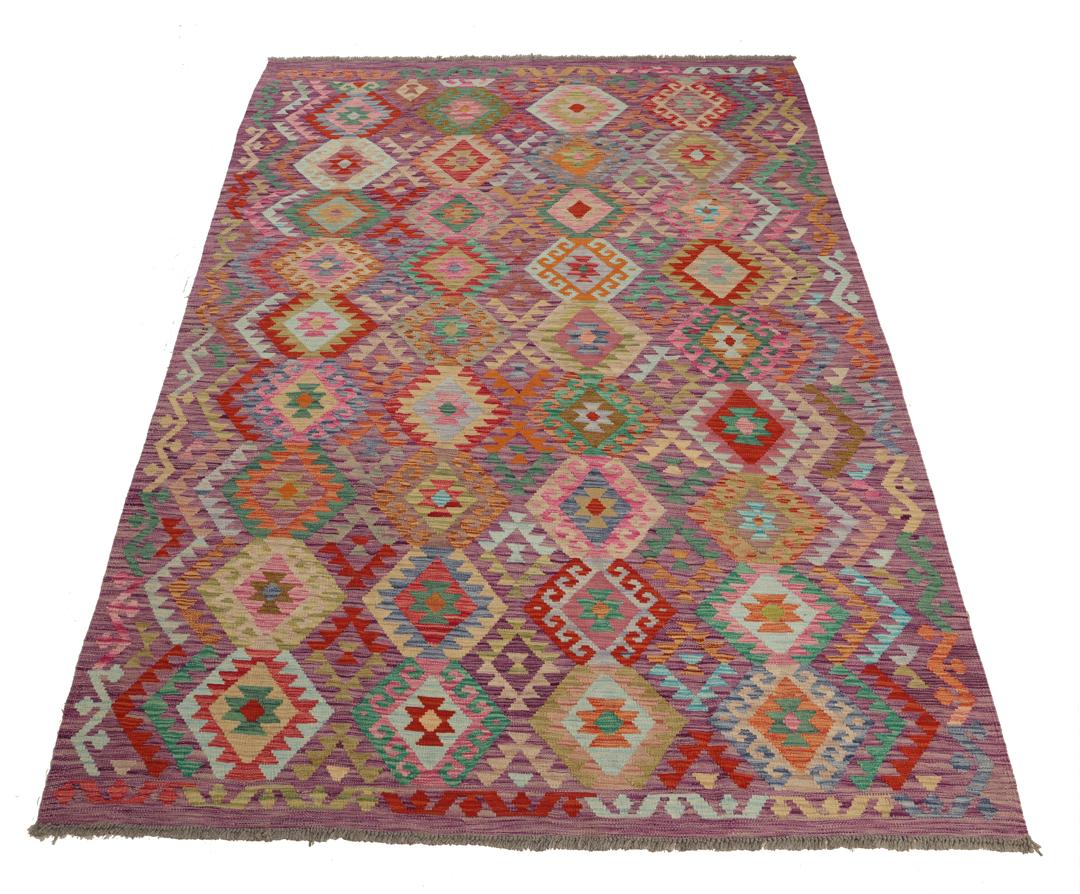
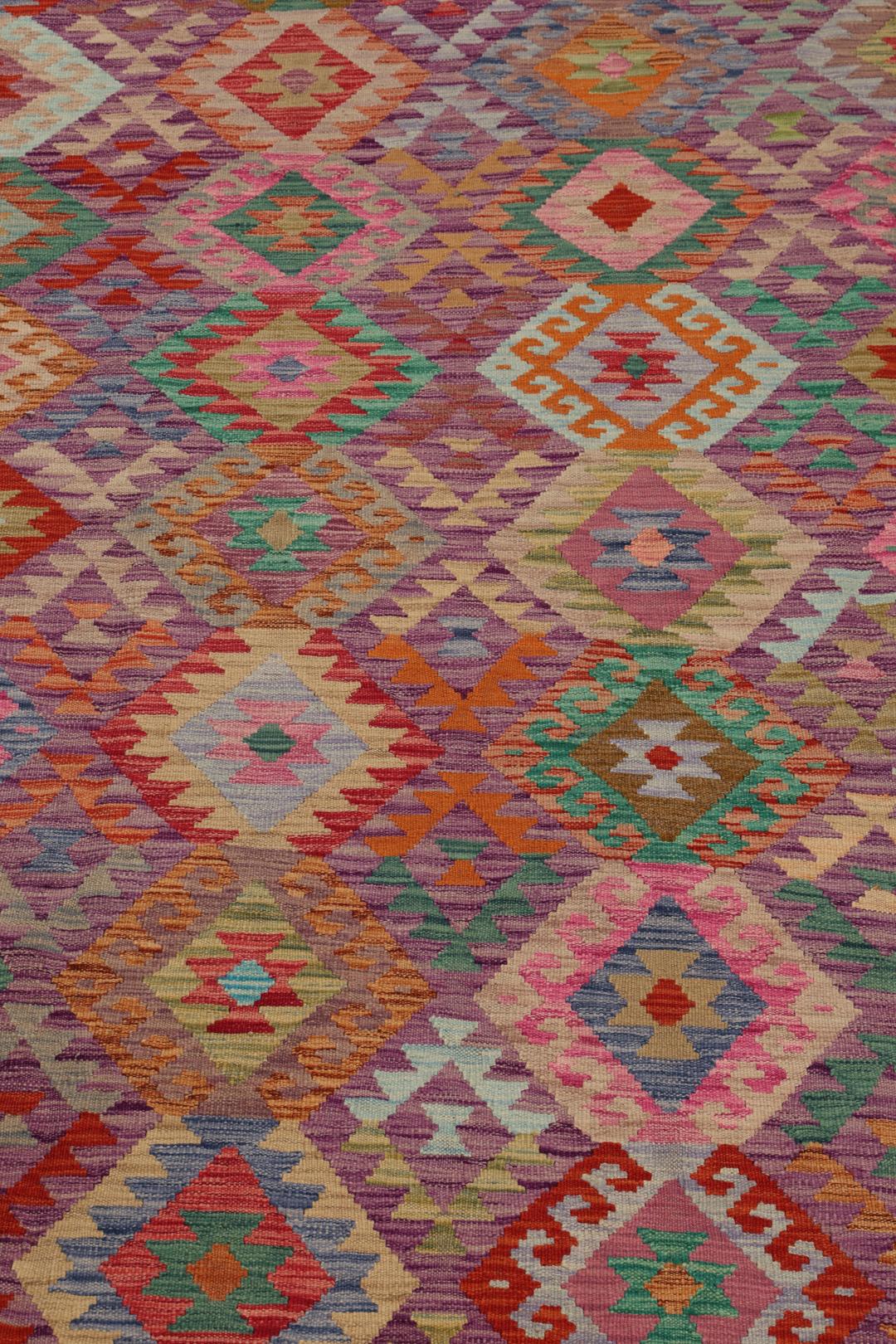
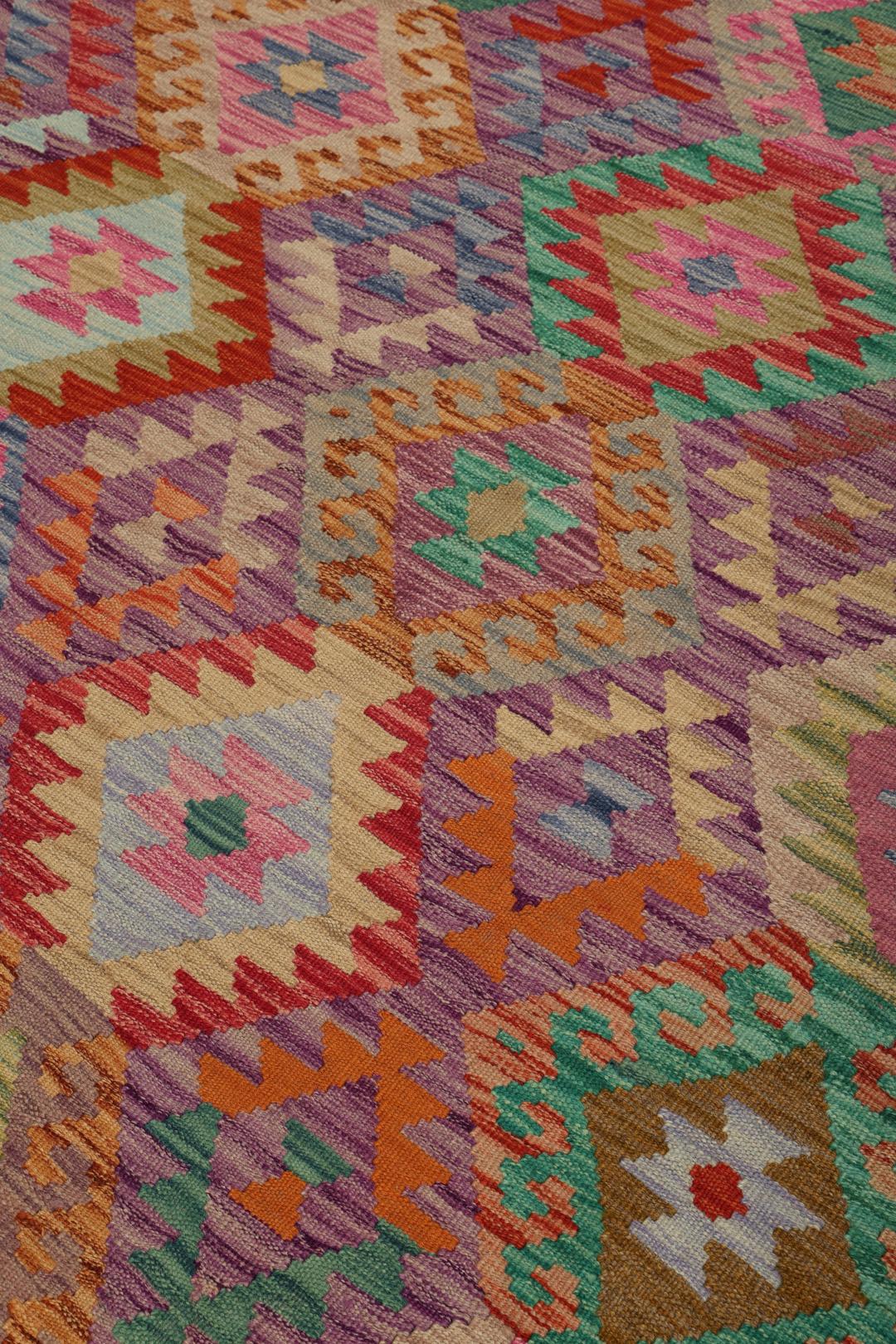
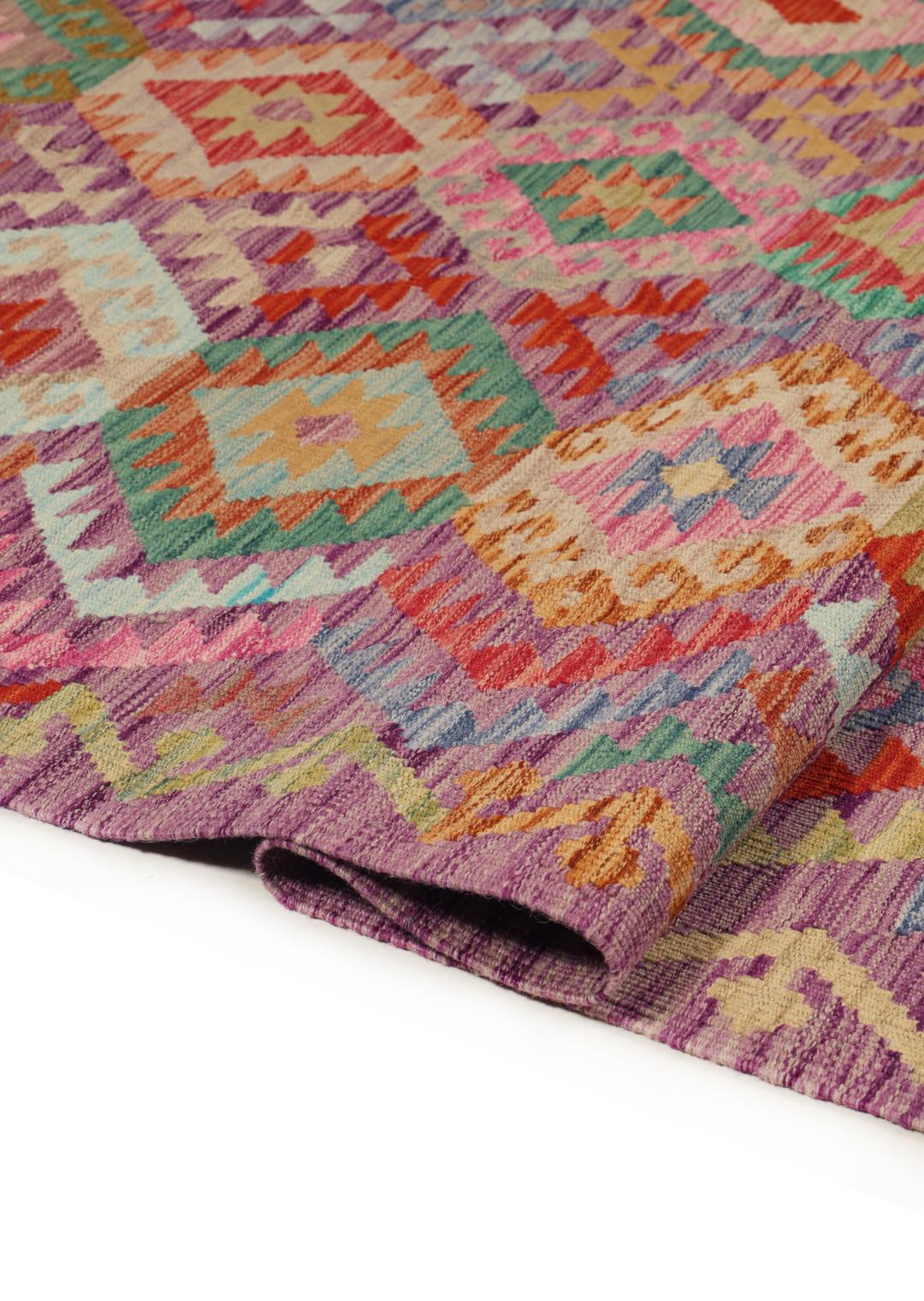
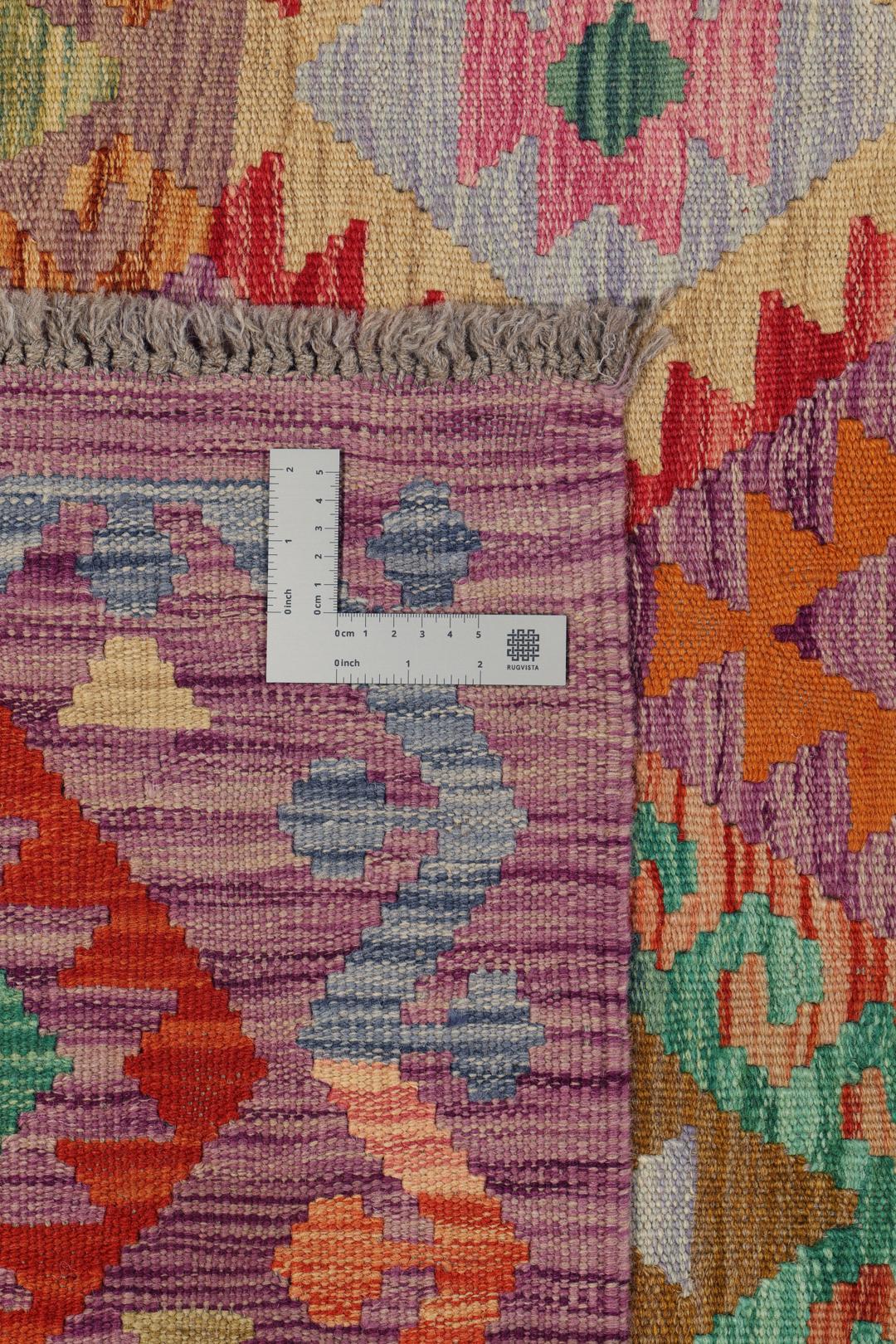
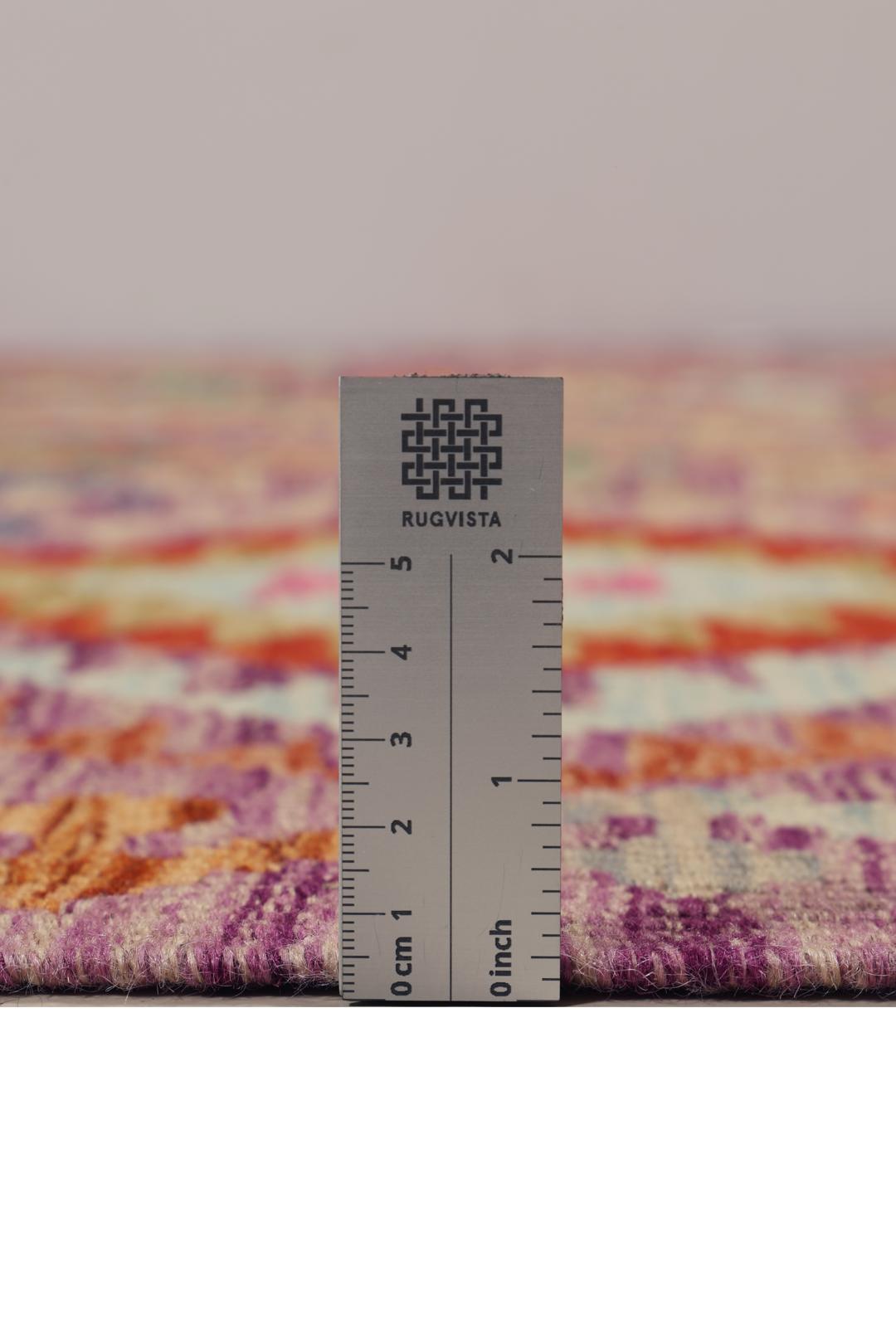
Kelim rugs have long been a cornerstone of the weaving traditions found throughout the Middle East and Central Asia. The term refers to a flat-woven textile, distinct for its lack of a knotted pile, which has been perfected over centuries by nomadic and semi-nomadic tribes across the region.
The Afghan kelim tradition is particularly celebrated for its use of high-quality, long-staple wool, which is often hand-spun to ensure strength and lustre. This material choice is vital, as the wool's natural lanolin provides a degree of inherent stain resistance and durability that synthetic fibres simply cannot match.
Visually, these rugs are defined by their sharp, geometric vocabulary. The repeating diamond and medallion motifs seen here are characteristic of the bold, tribal style that has defined the region's output for generations. Each colour is traditionally derived from natural dyes, giving the rug a rich, nuanced appearance that evolves beautifully over time.
Owning a kelim is an investment in cultural heritage, representing a craft that has survived the transition from utilitarian floor covering to prized collector's item. These rugs are valued not only for their aesthetic beauty but for the connection they provide to the history of the Silk Road and the nomadic cultures that first brought these designs to life.