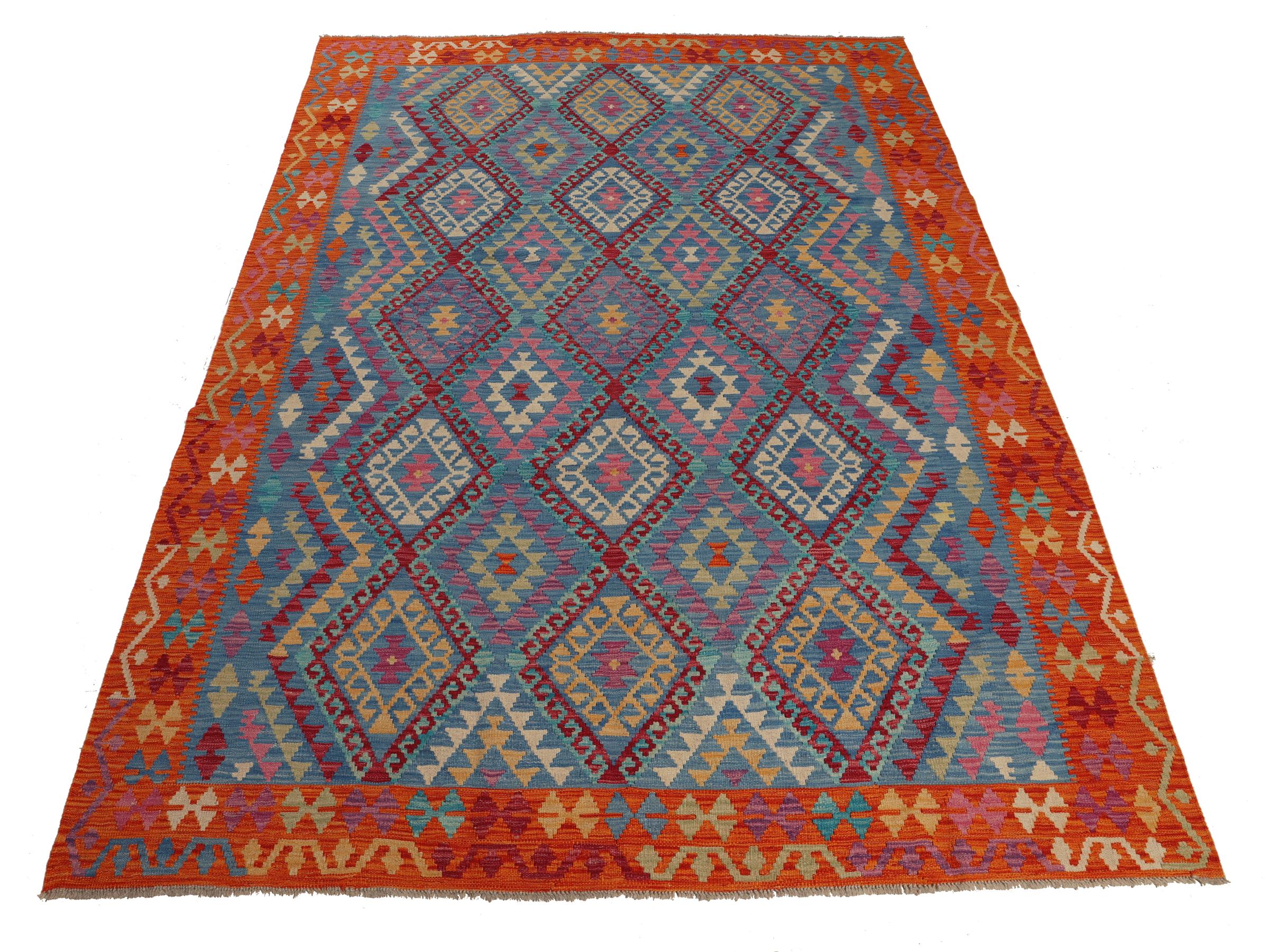
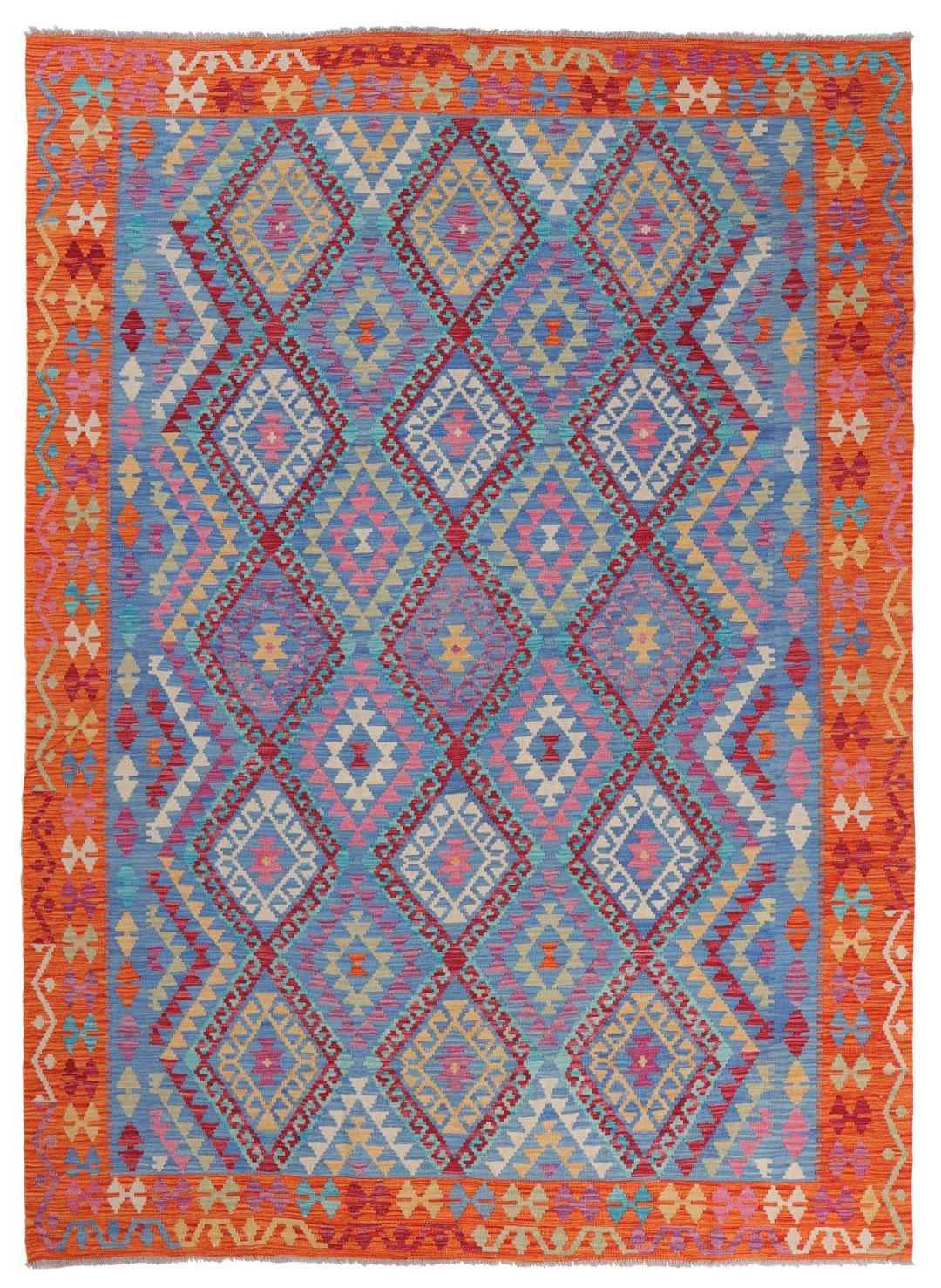
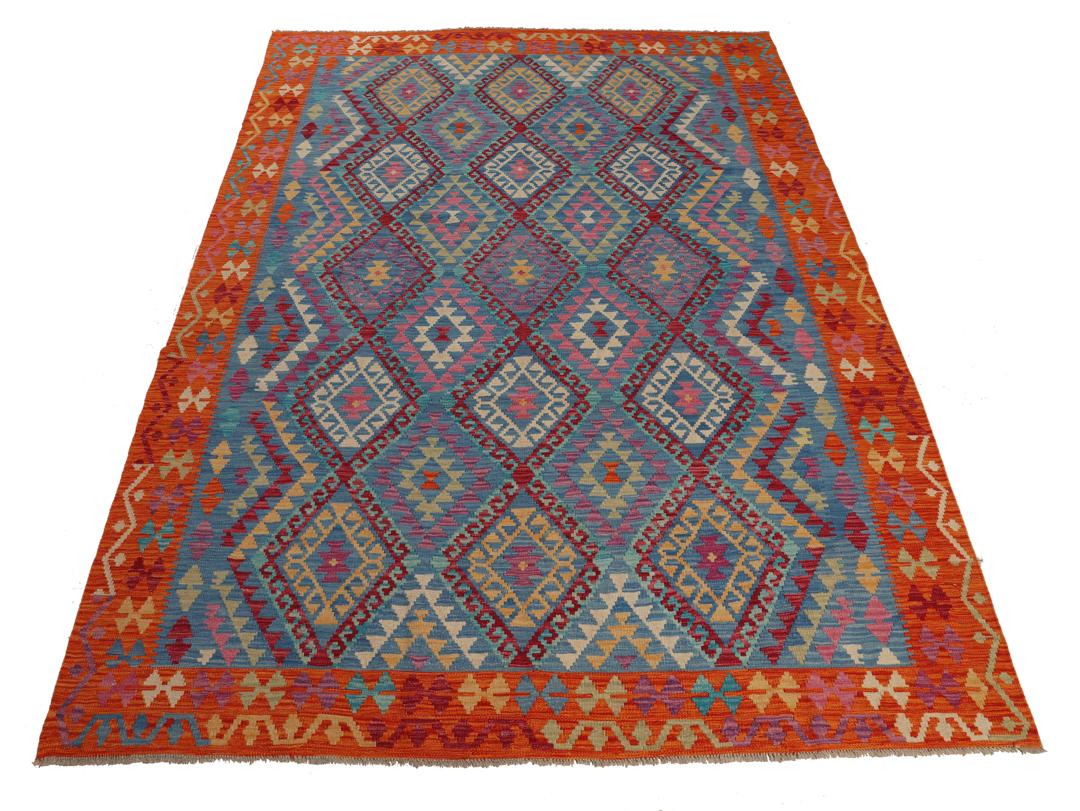
The Kelim tradition in Afghanistan is deeply rooted in the nomadic and semi-nomadic lifestyles of the region. For centuries, these flat-woven rugs have been essential to daily life, serving as floor coverings, tent dividers, and storage bags. The knowledge of weaving has been passed down through generations, with each region developing its own unique visual vocabulary and technical approach to the loom.
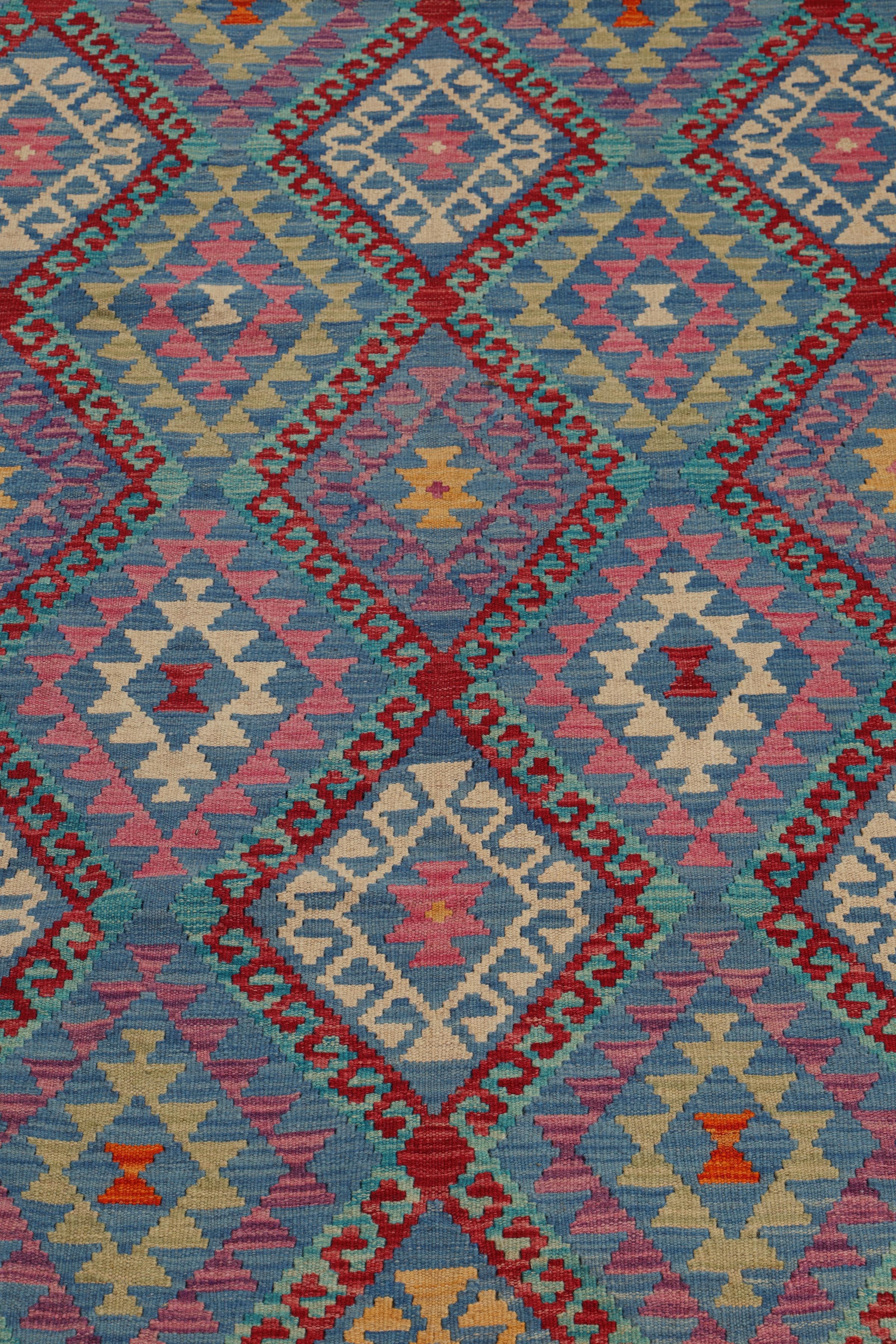
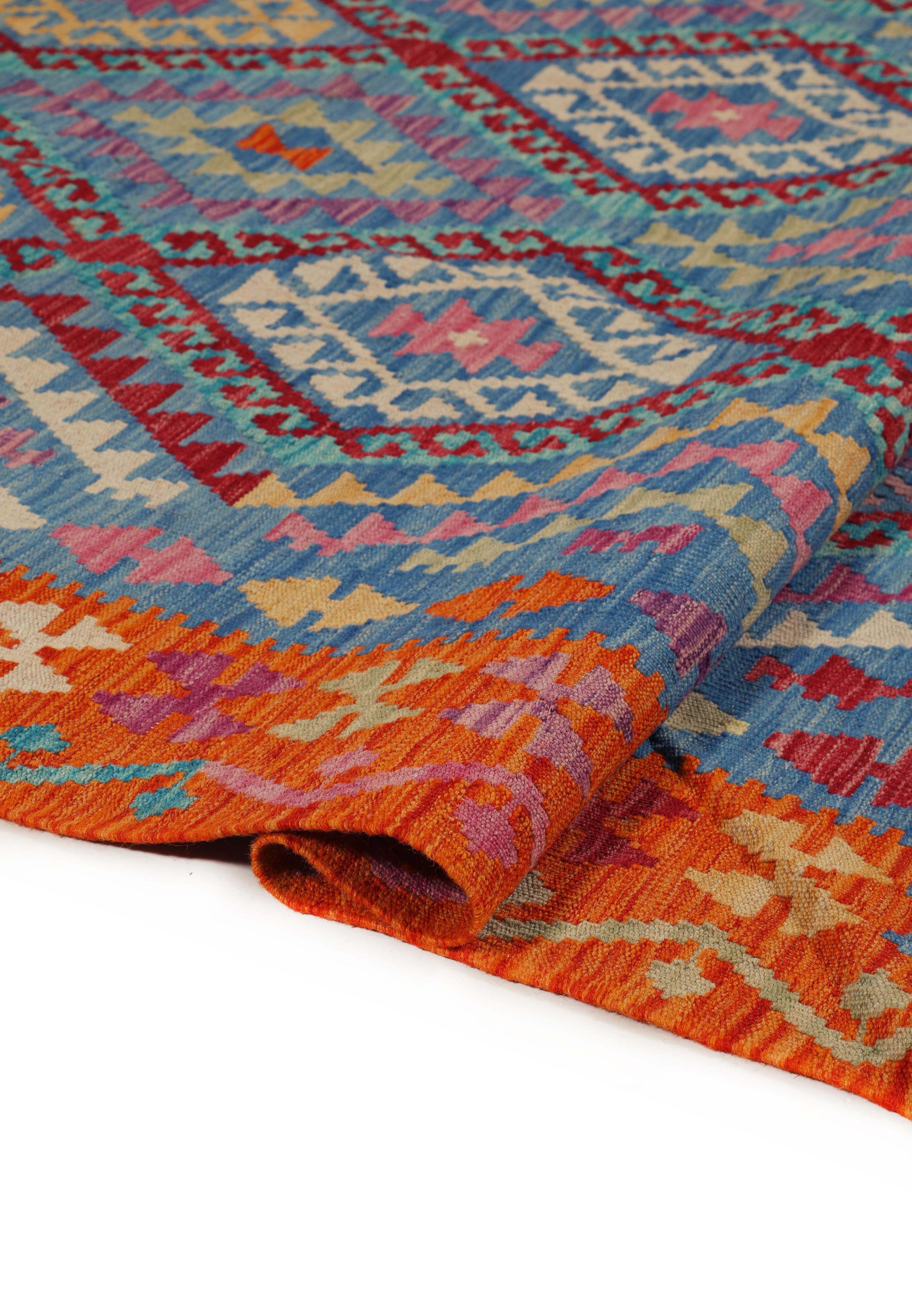
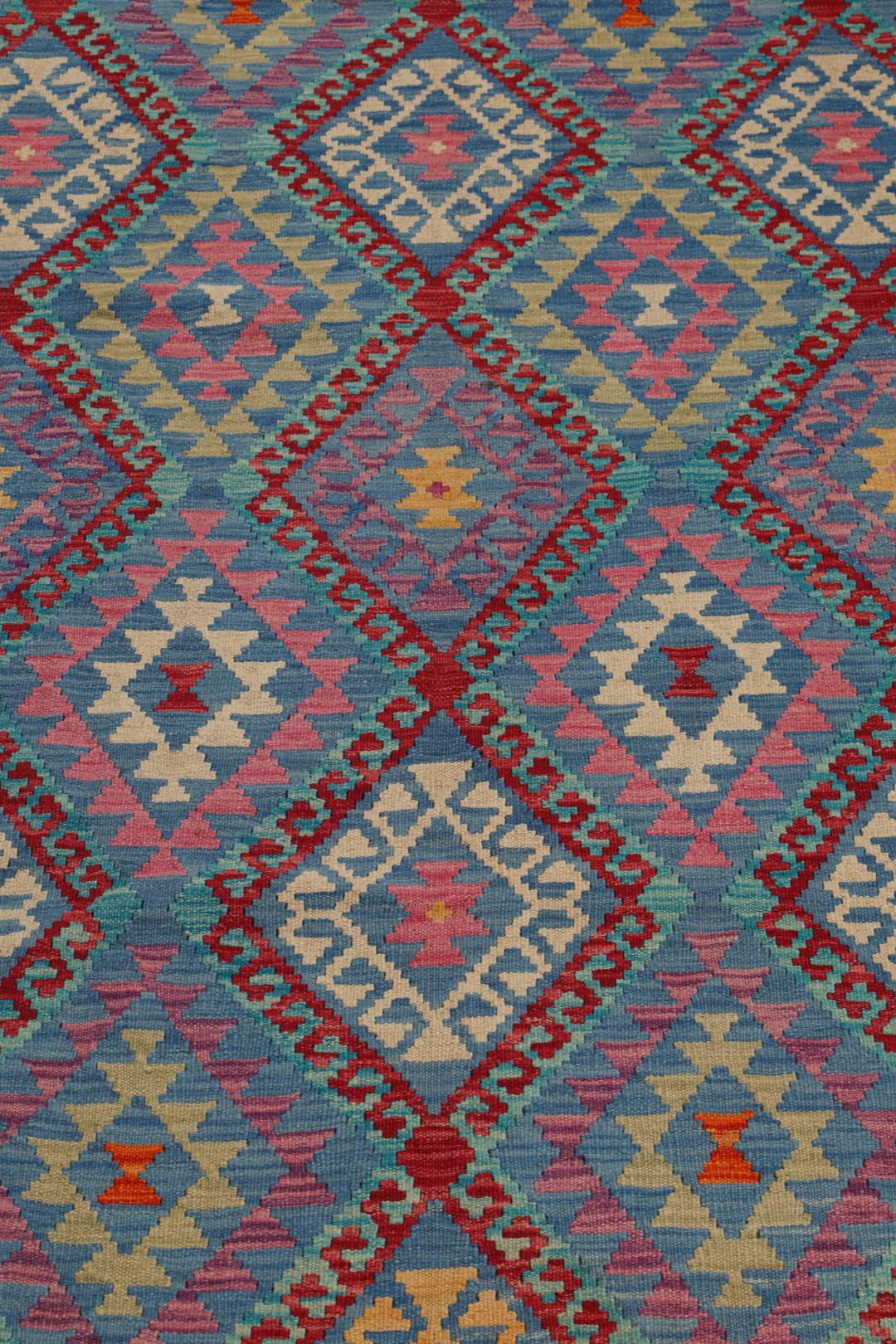
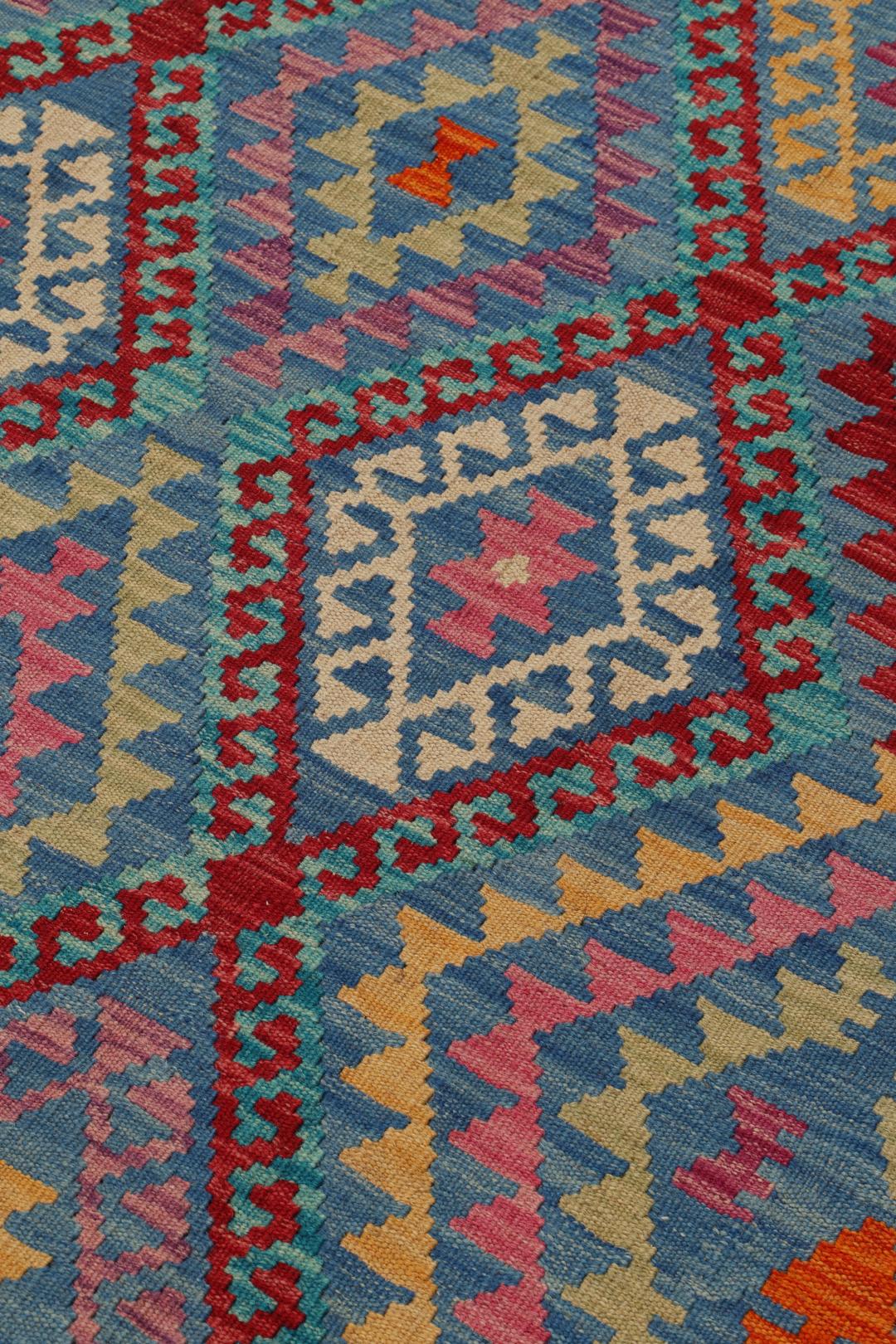
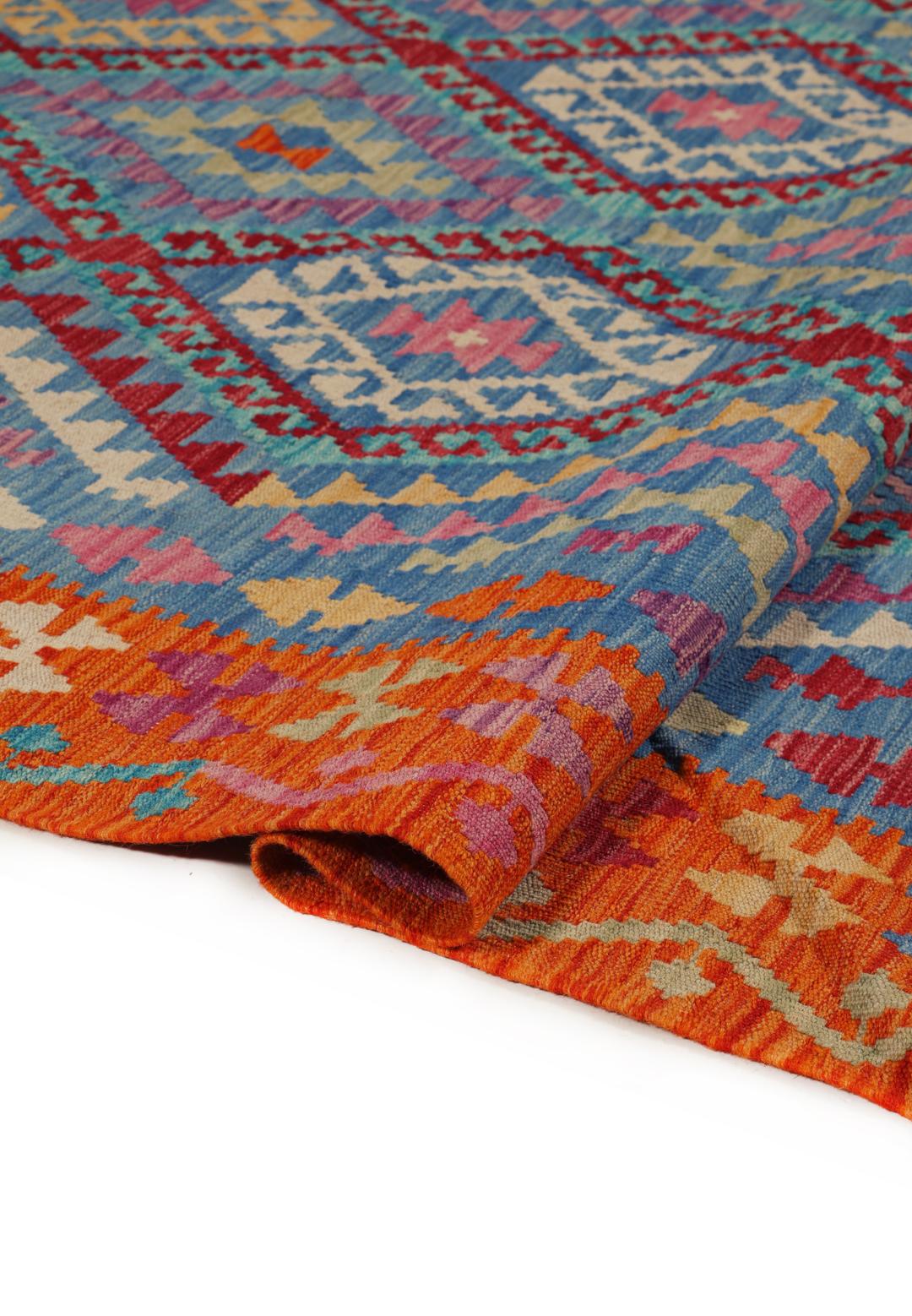
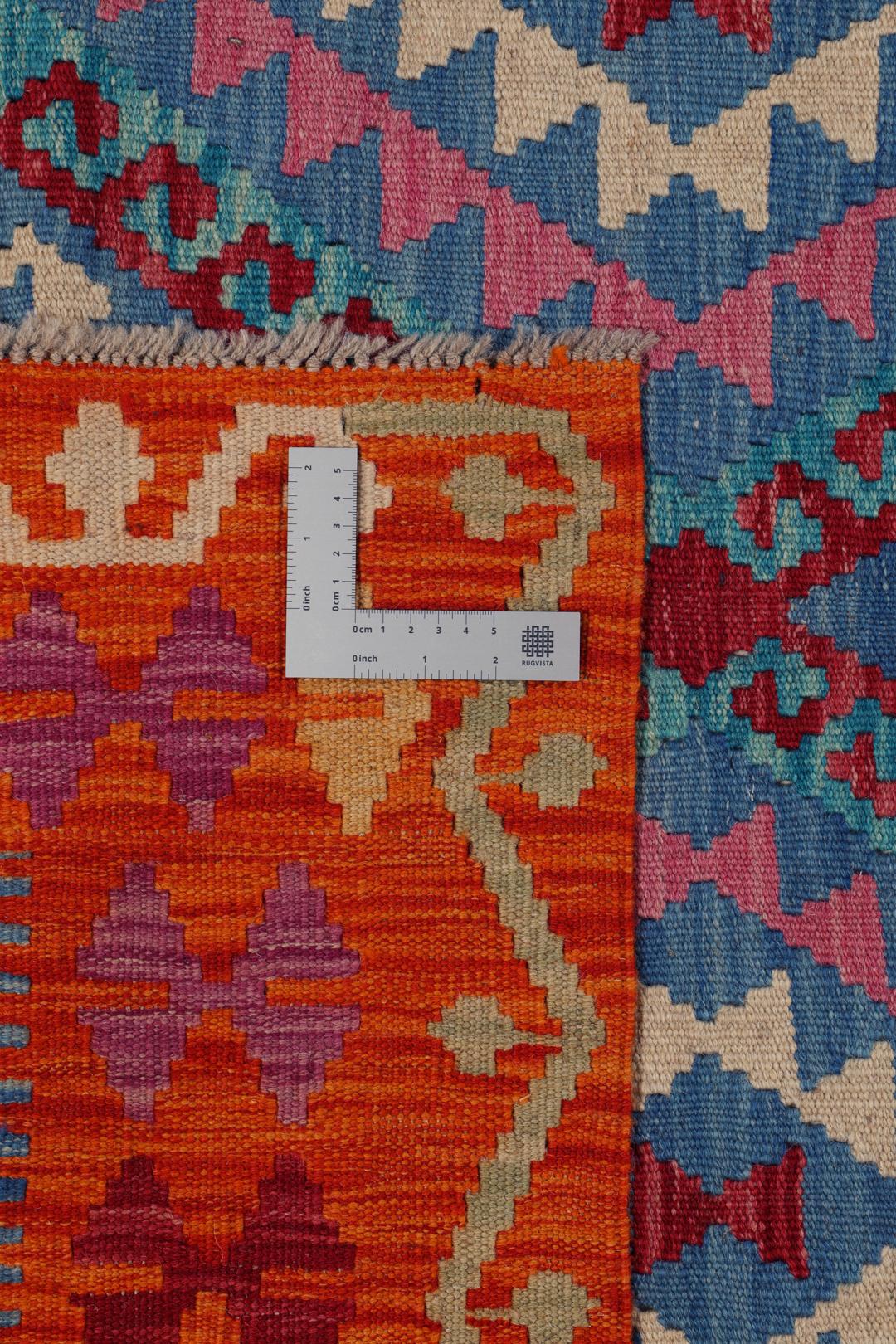
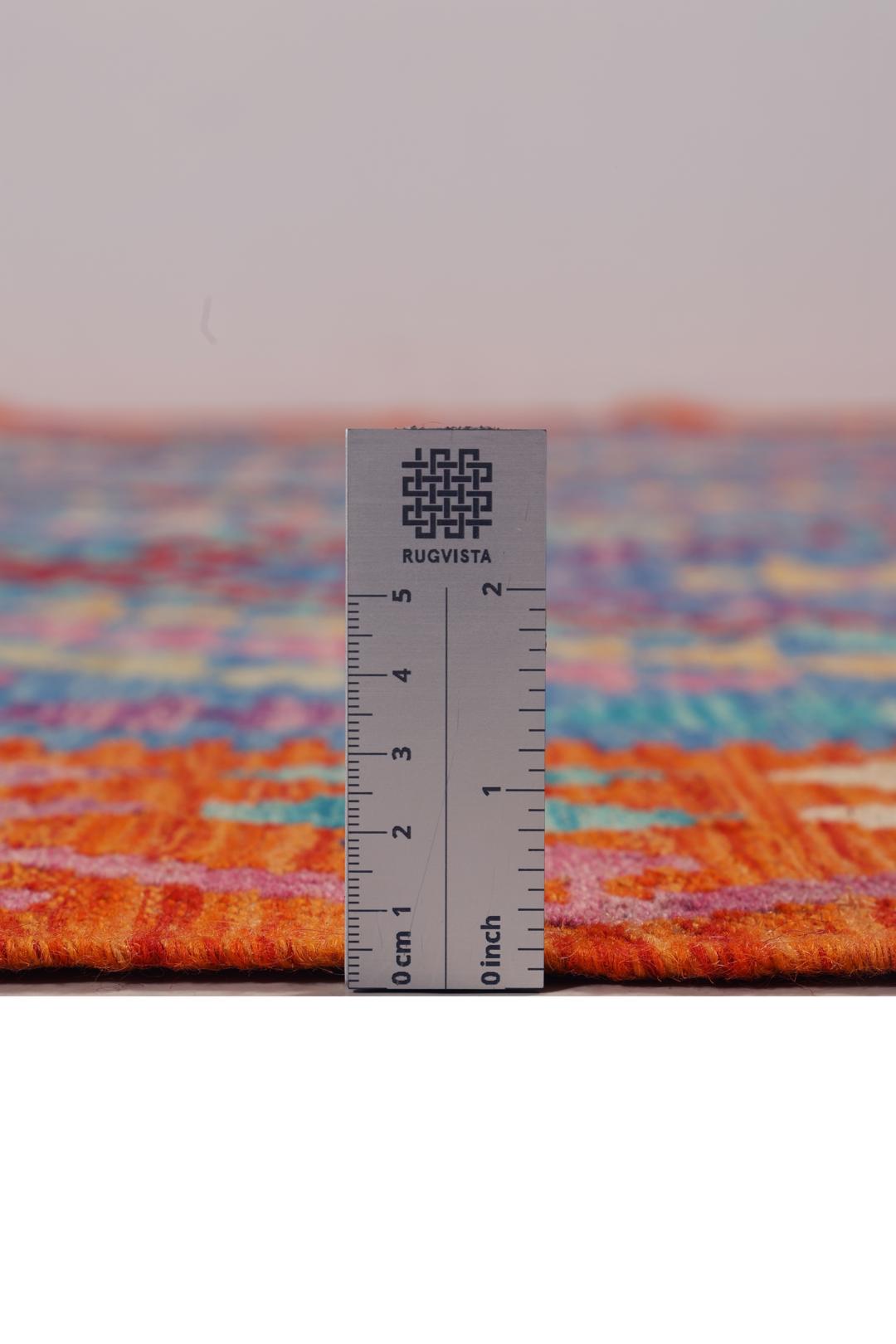
A Kelim is defined by its flat-weave construction, meaning it is created without a pile. This technique produces a thin, durable, and reversible textile that is highly valued for its versatility. The quality of a Kelim is often determined by the tightness of the weave and the quality of the Wool used; finer weaving results in a more stable, crisp pattern definition that allows the intricate geometric motifs to stand out clearly.
The design language of this Afghan Kelim is dominated by geometric abstraction. The diamond motifs, often referred to as 'gul' or tribal symbols, are not merely decorative but are imbued with cultural meaning and historical significance. The use of vibrant, contrasting colours is a hallmark of the region, reflecting a tradition of using natural dyes to create bold, energetic compositions that brighten the interiors of traditional homes.
Collecting a piece like this is a way to preserve a rich craft heritage. These rugs are highly prized by collectors for their authenticity and the human story behind every thread. By bringing this rug into your home, you are not just selecting a floor covering, but participating in a global tradition of skill, patience, and artistic expression that continues to thrive in the heart of Central Asia.