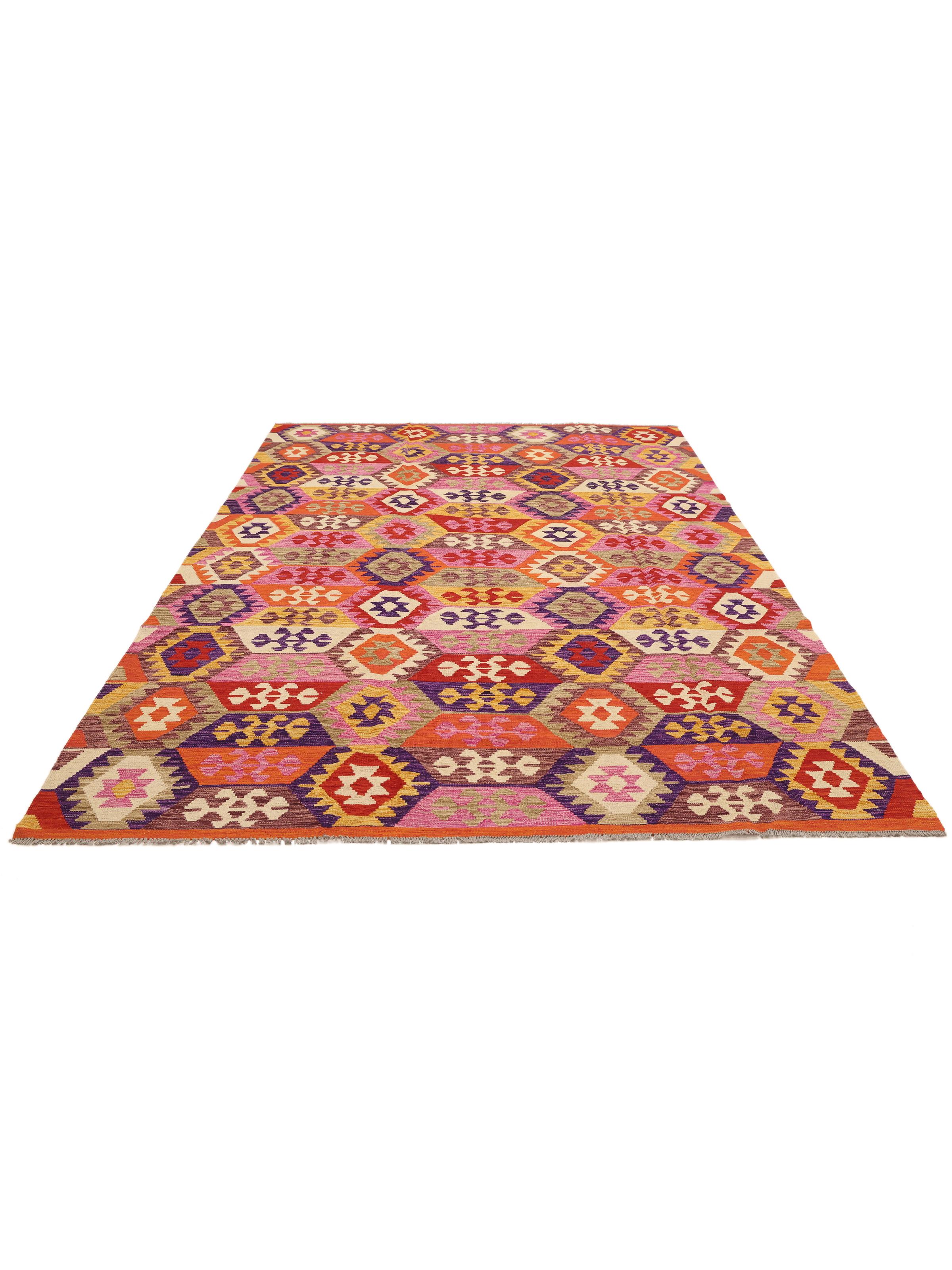
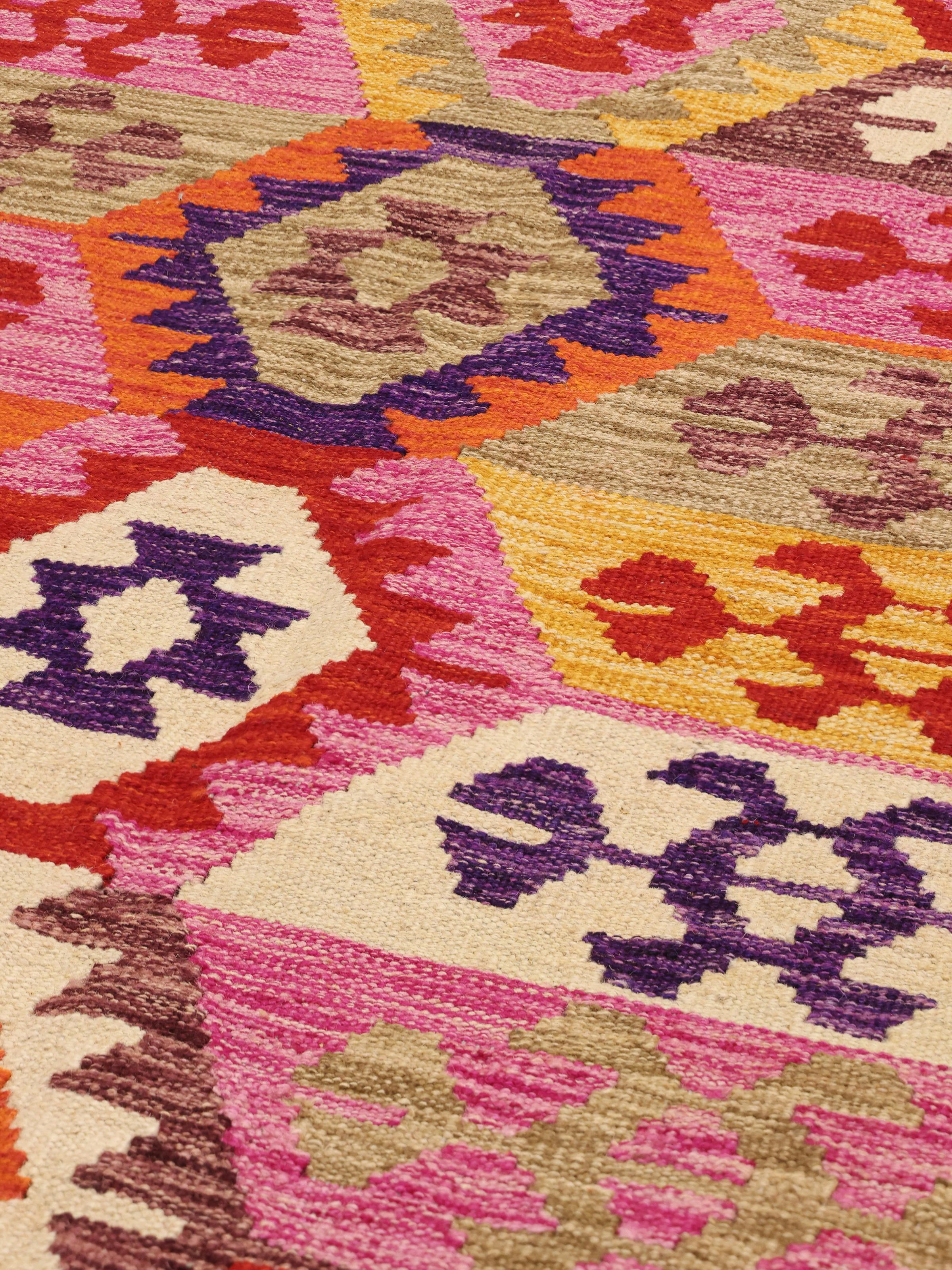
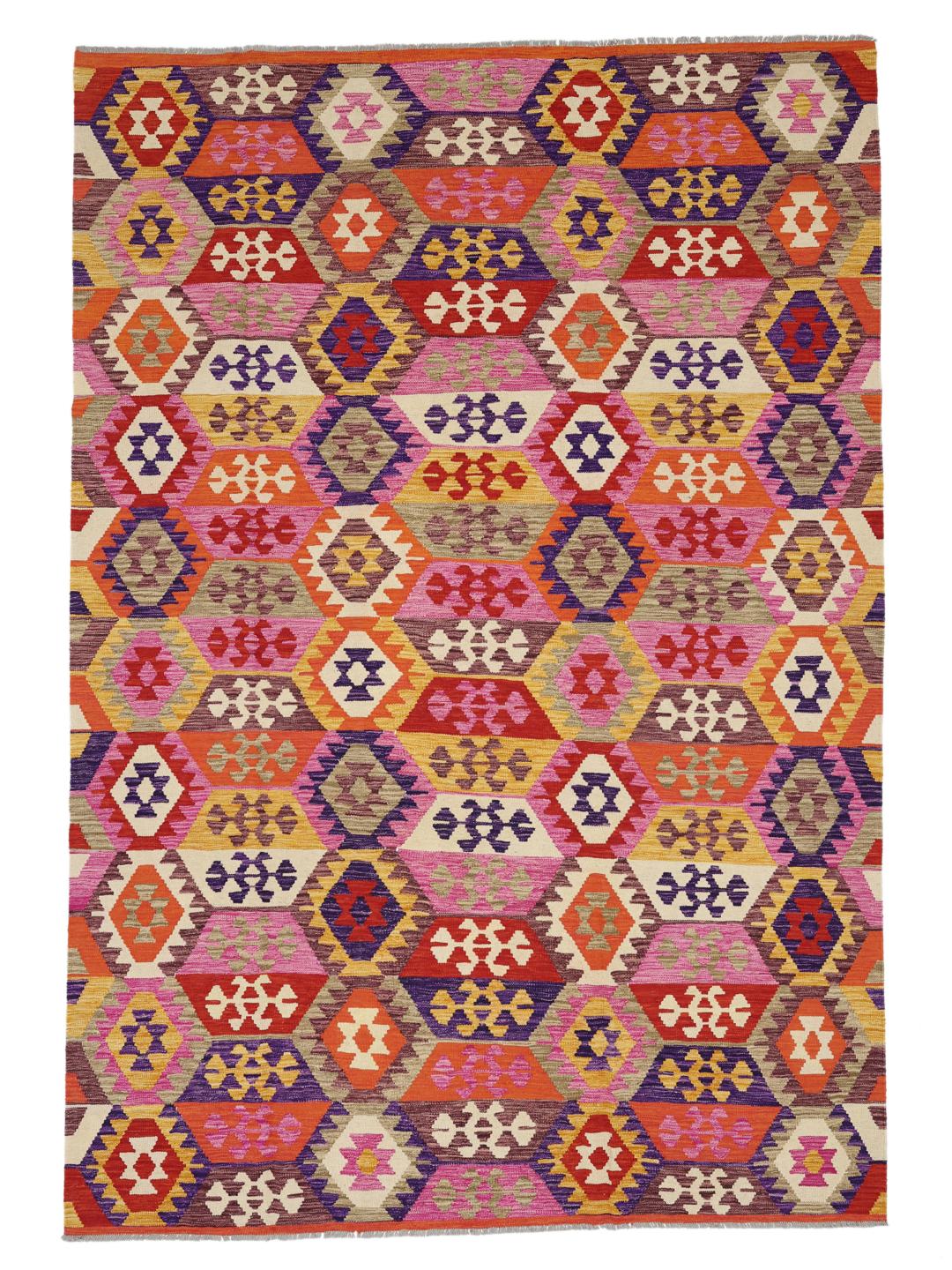
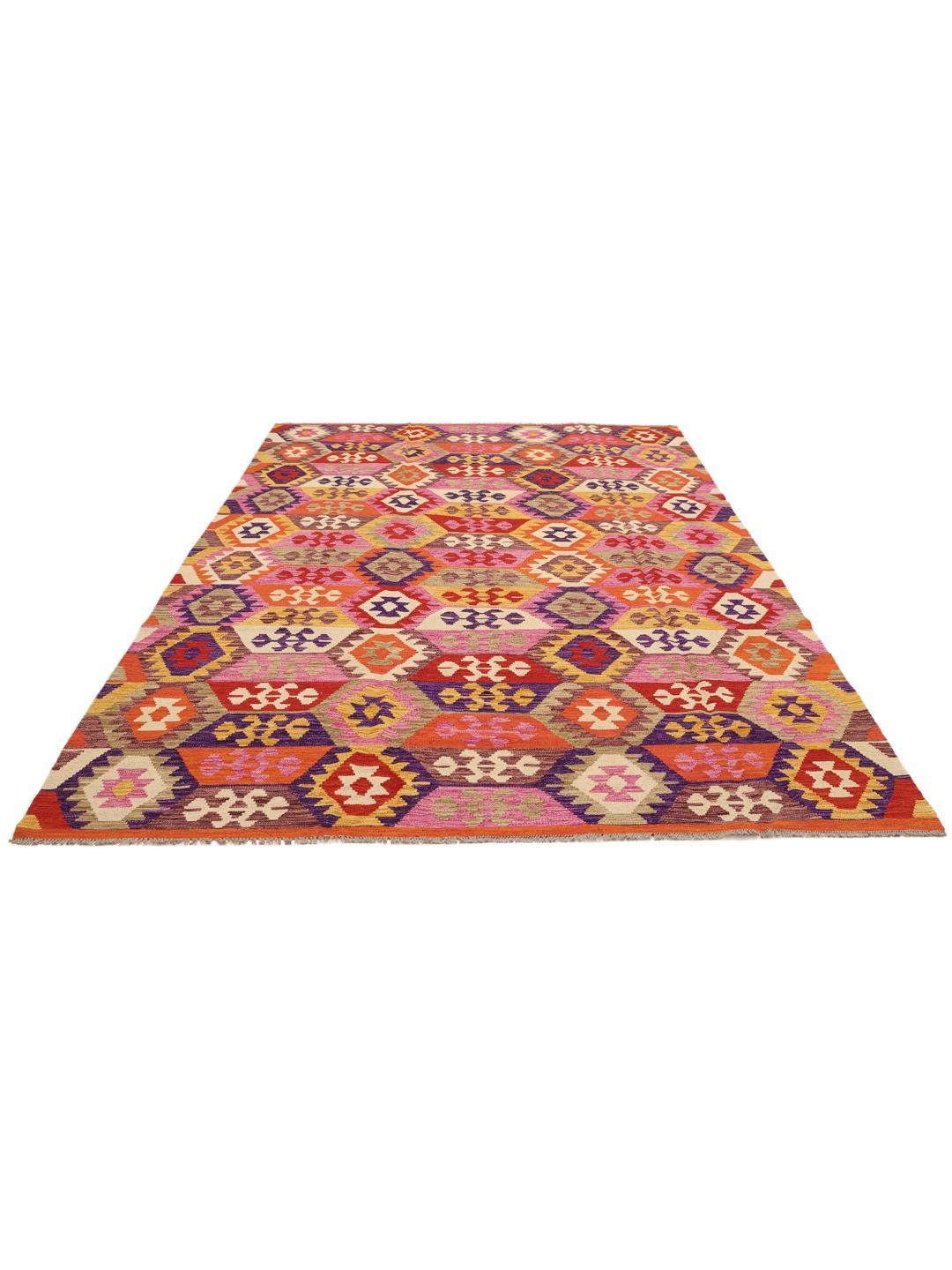
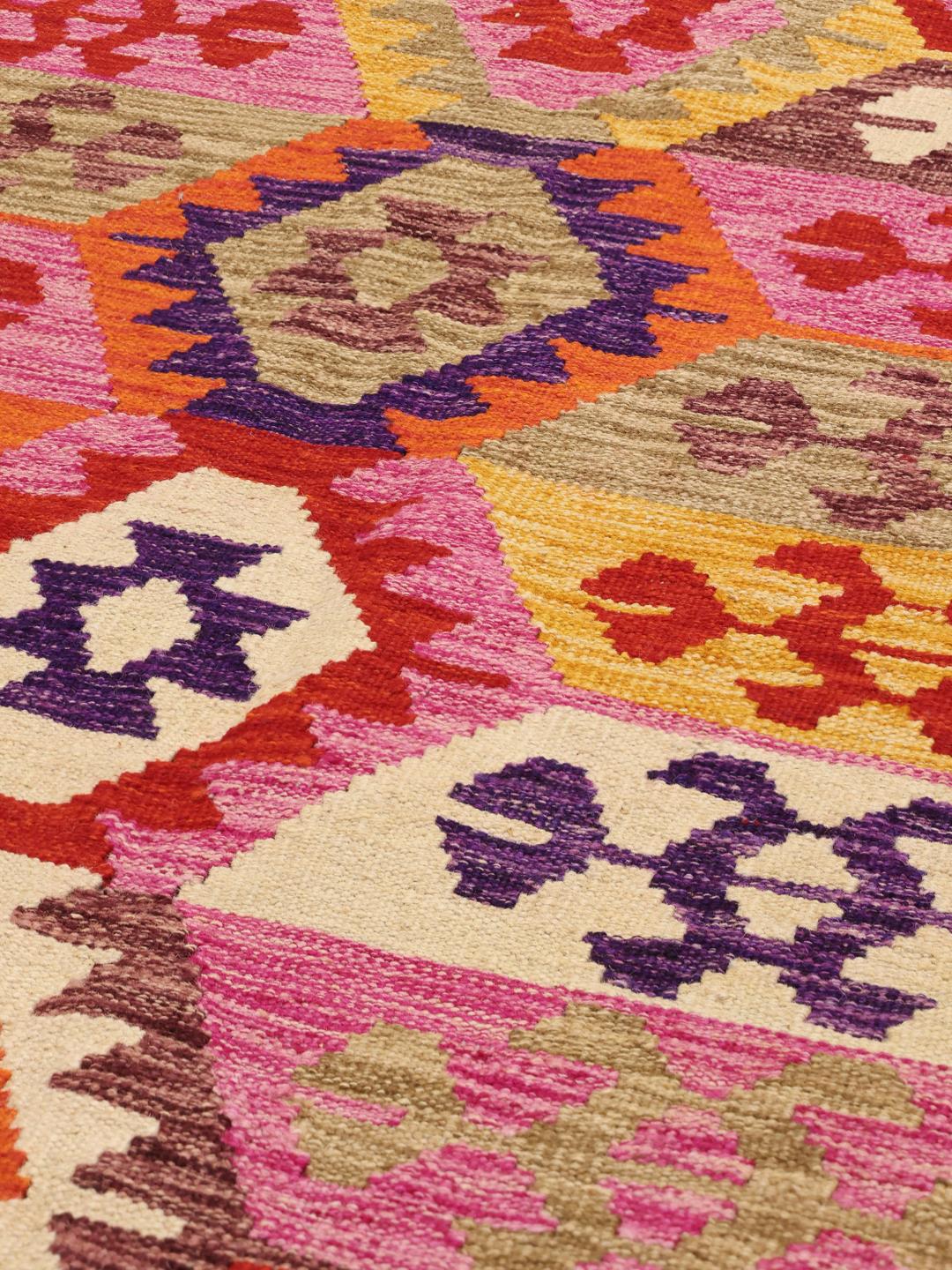
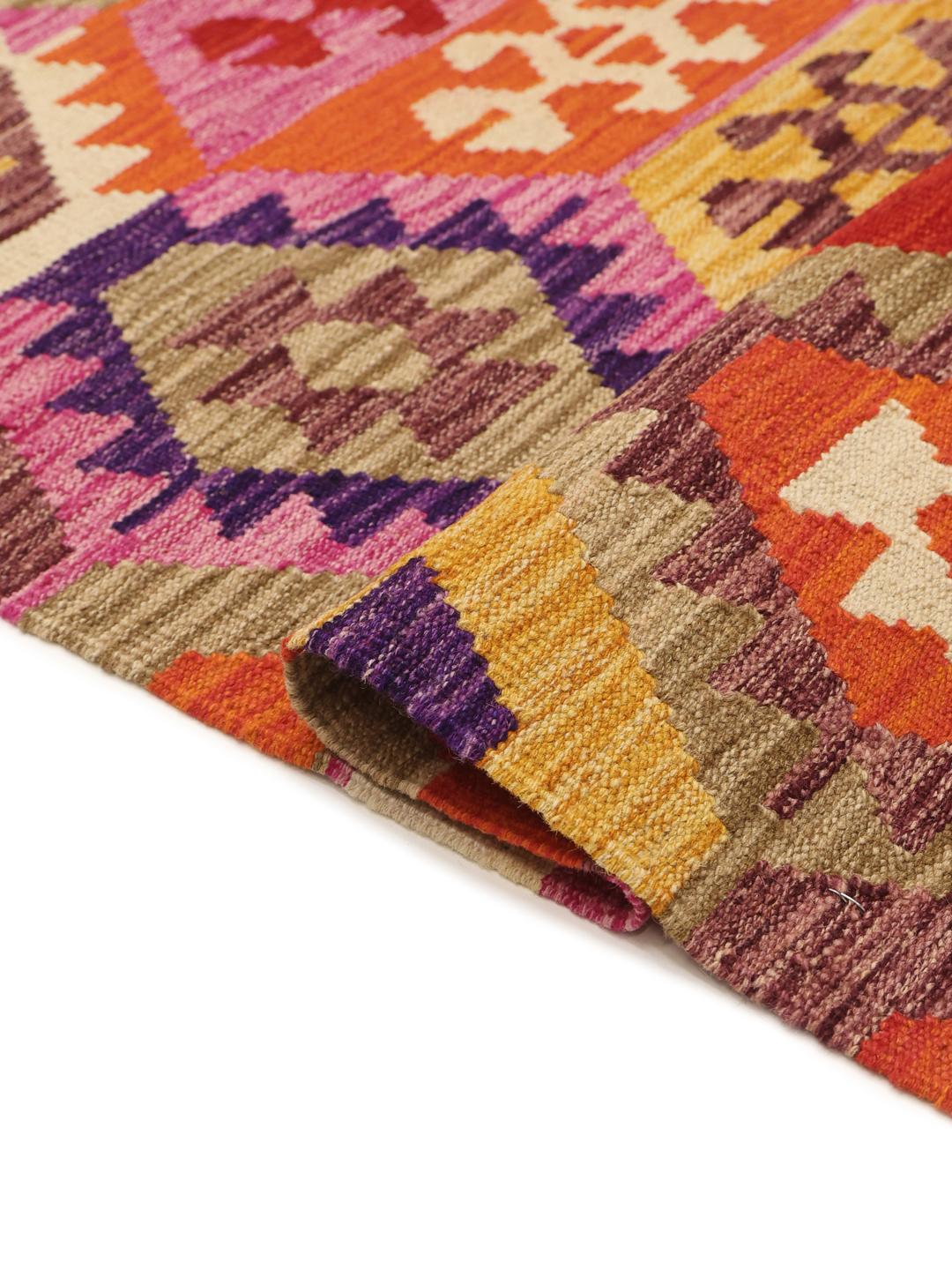
Kelim rugs have a long and storied history across the Middle East and Central Asia, serving as both essential household items and expressions of cultural identity. The term kelim refers to a specific flat-weaving technique that avoids the use of a pile, resulting in a thin, versatile fabric that has been used for centuries to cover floors, walls, or even as saddlebags for nomadic tribes.
The Afghan kelim tradition is deeply connected to the regional heritage of the area, where weaving is passed down through generations. These rugs are often characterised by their bold, geometric language, which uses abstract shapes and symbols to tell stories of the landscape, tribal history, and the weaver's own creative spirit.
Signature design elements in these rugs often include repeating medallions, diamond motifs, and decorative borders that frame the field. The use of vibrant, saturated colours is a hallmark of this style, often achieved through natural dyes that have been refined over generations to produce the deep, earthy tones seen in this particular piece.
Collecting a traditional Afghan kelim is an investment in cultural preservation. These rugs are valued not only for their aesthetic beauty but for the immense skill required to produce them by hand. Owning one means connecting with a living tradition that prioritises manual craft and individual expression over standardised production.