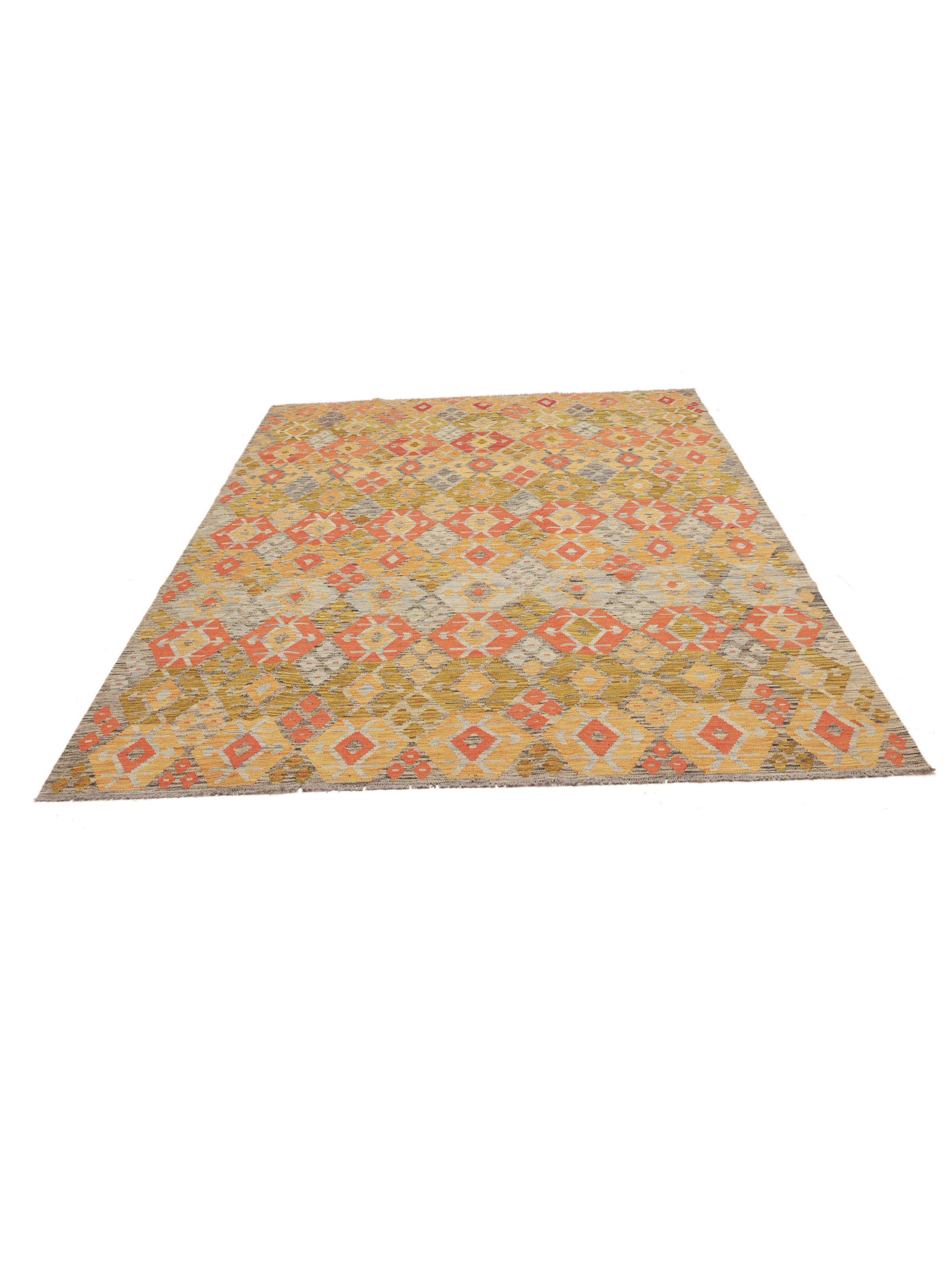
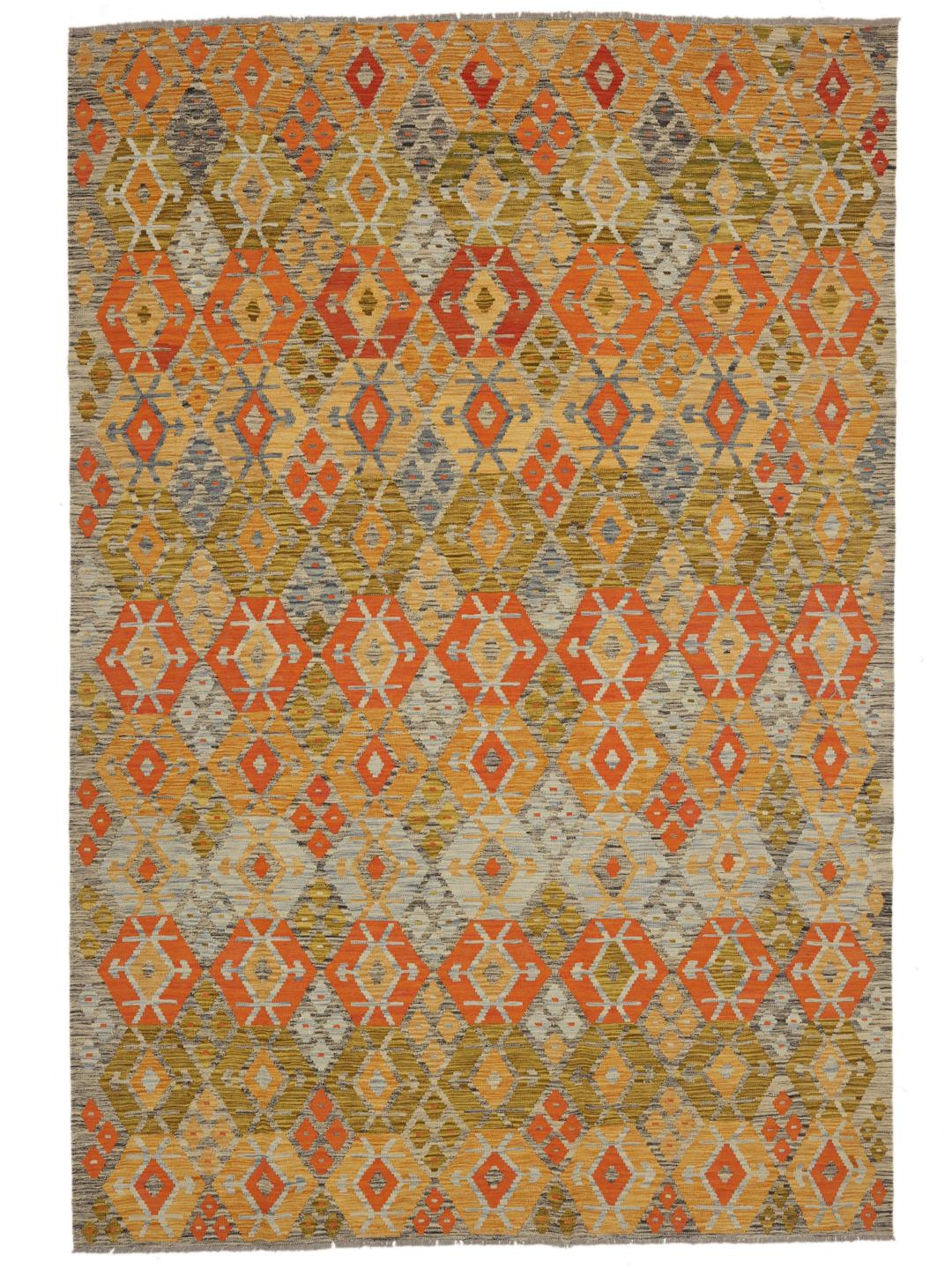
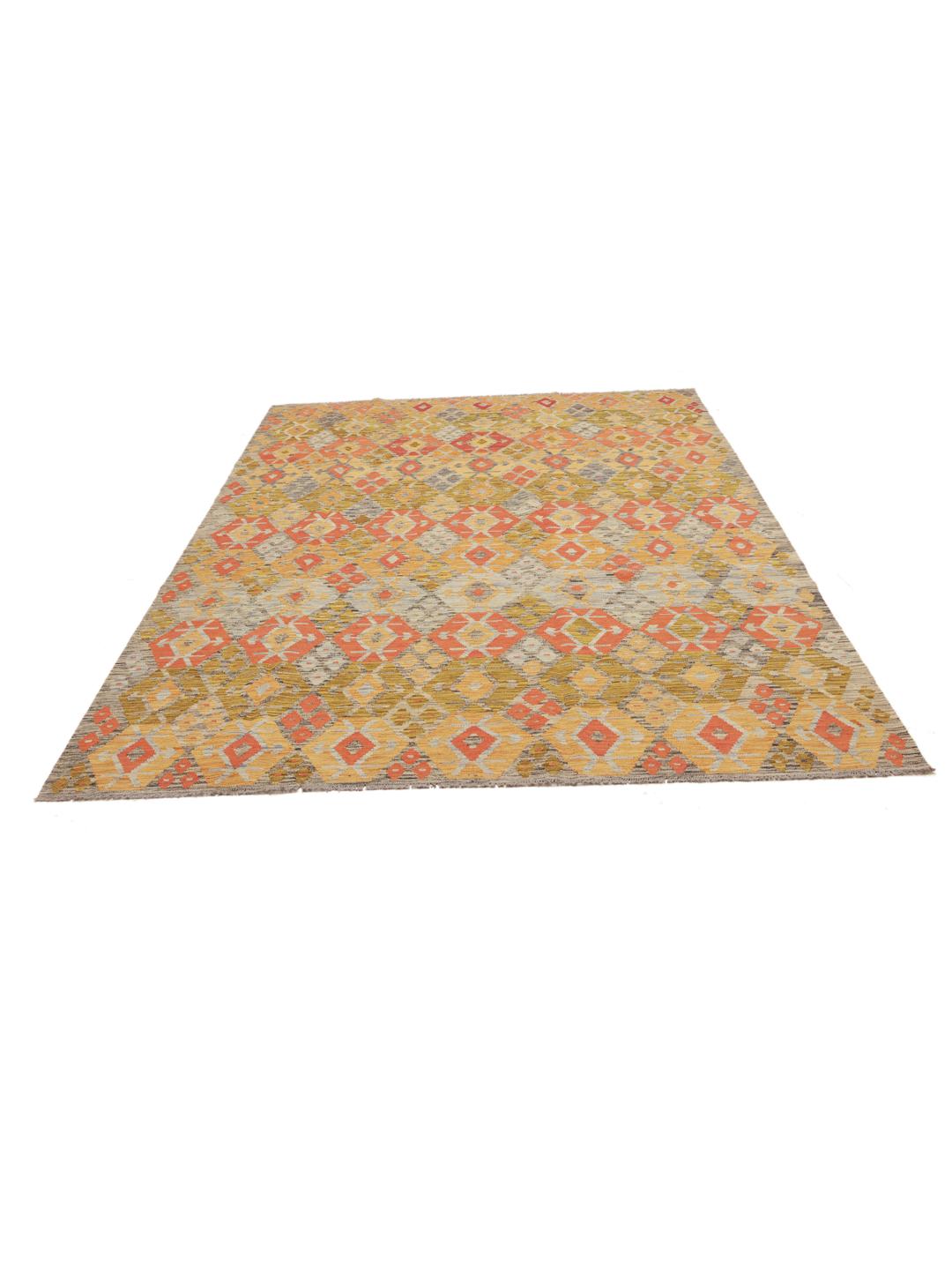
Kelim rugs have long been a cornerstone of textile art throughout Central and Western Asia. The tradition of weaving these flat-weave rugs is deeply ingrained in the nomadic and village cultures of the region, where they were originally created as functional items like saddlebags, floor coverings, and wall hangings to provide insulation and comfort.
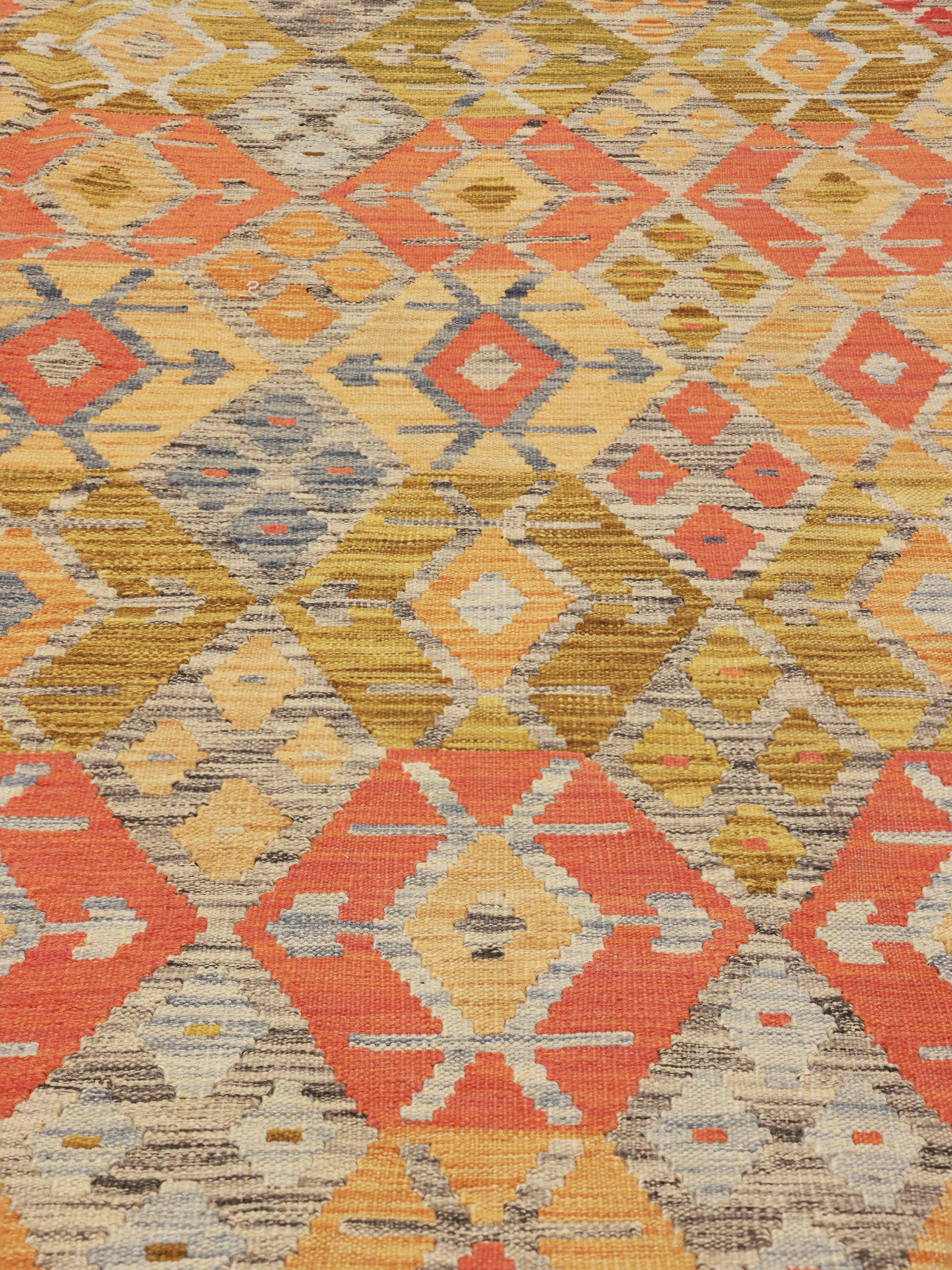
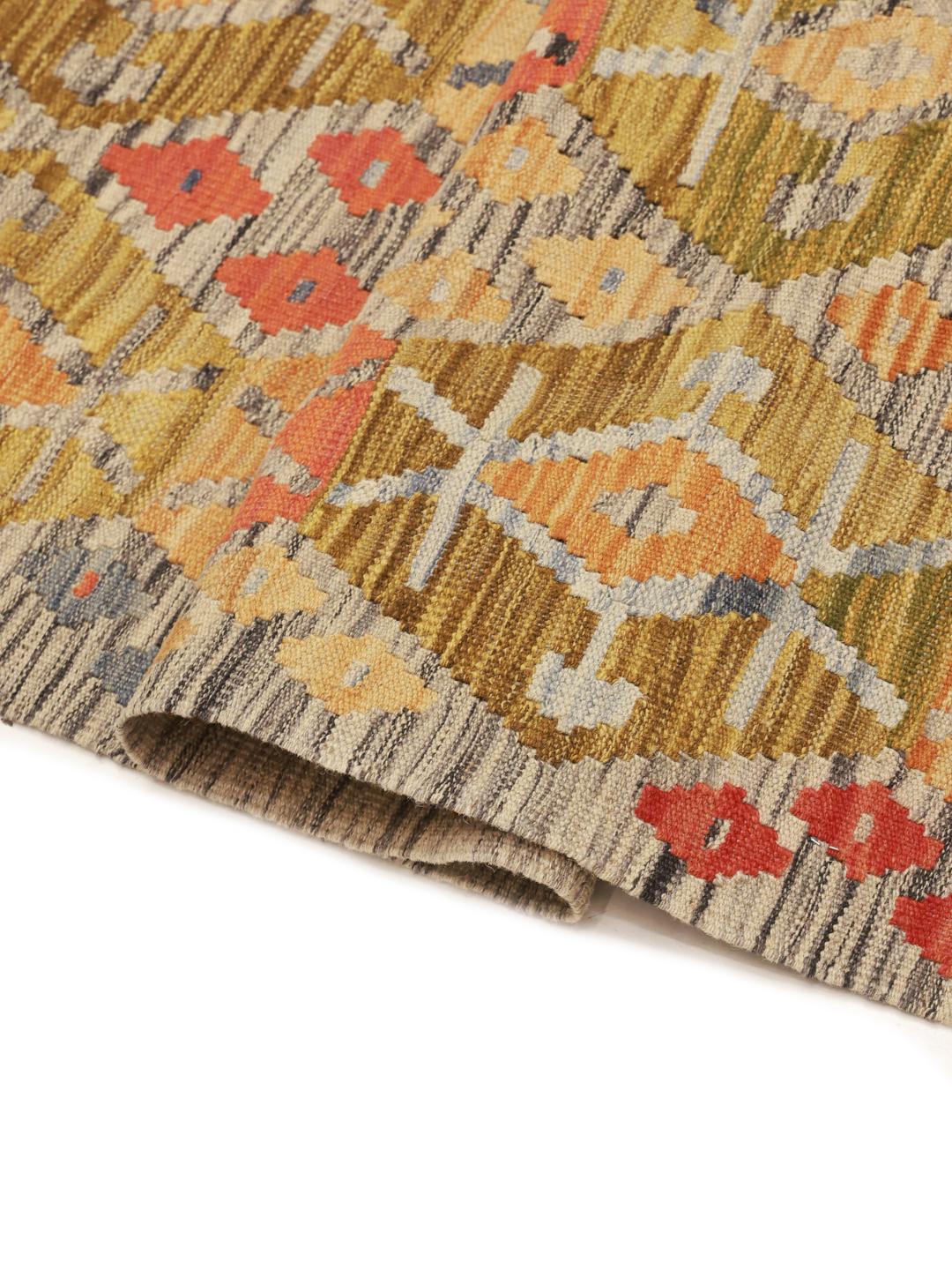
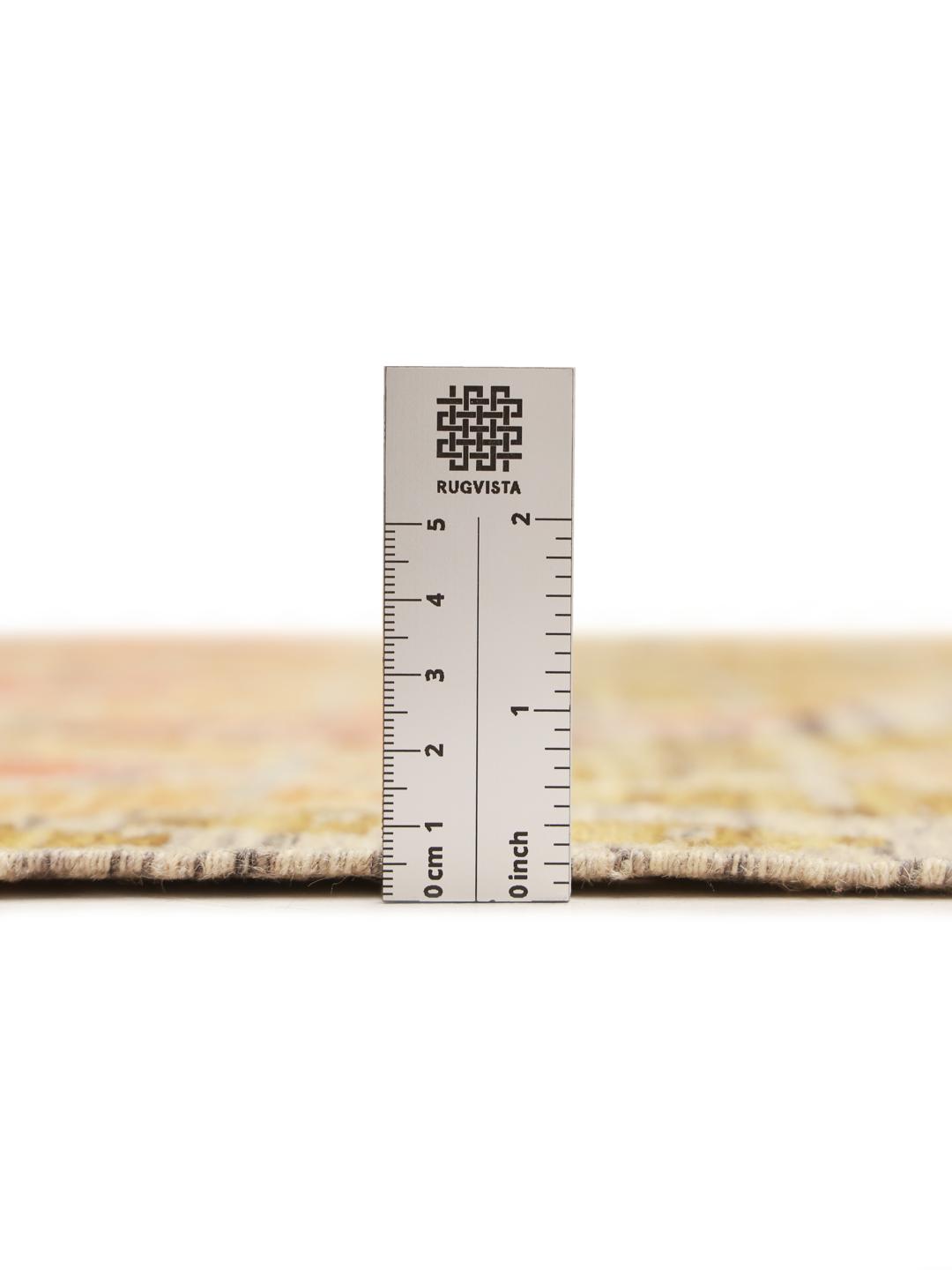
The term Kelim refers to the specific technique of interlocking the weft threads with the warp threads to create the pattern, which leaves no pile. This results in a reversible, lightweight, and incredibly durable textile. Because the pattern is created by the weave itself rather than being knotted into a base, the designs often appear sharp, crisp, and highly geometric.
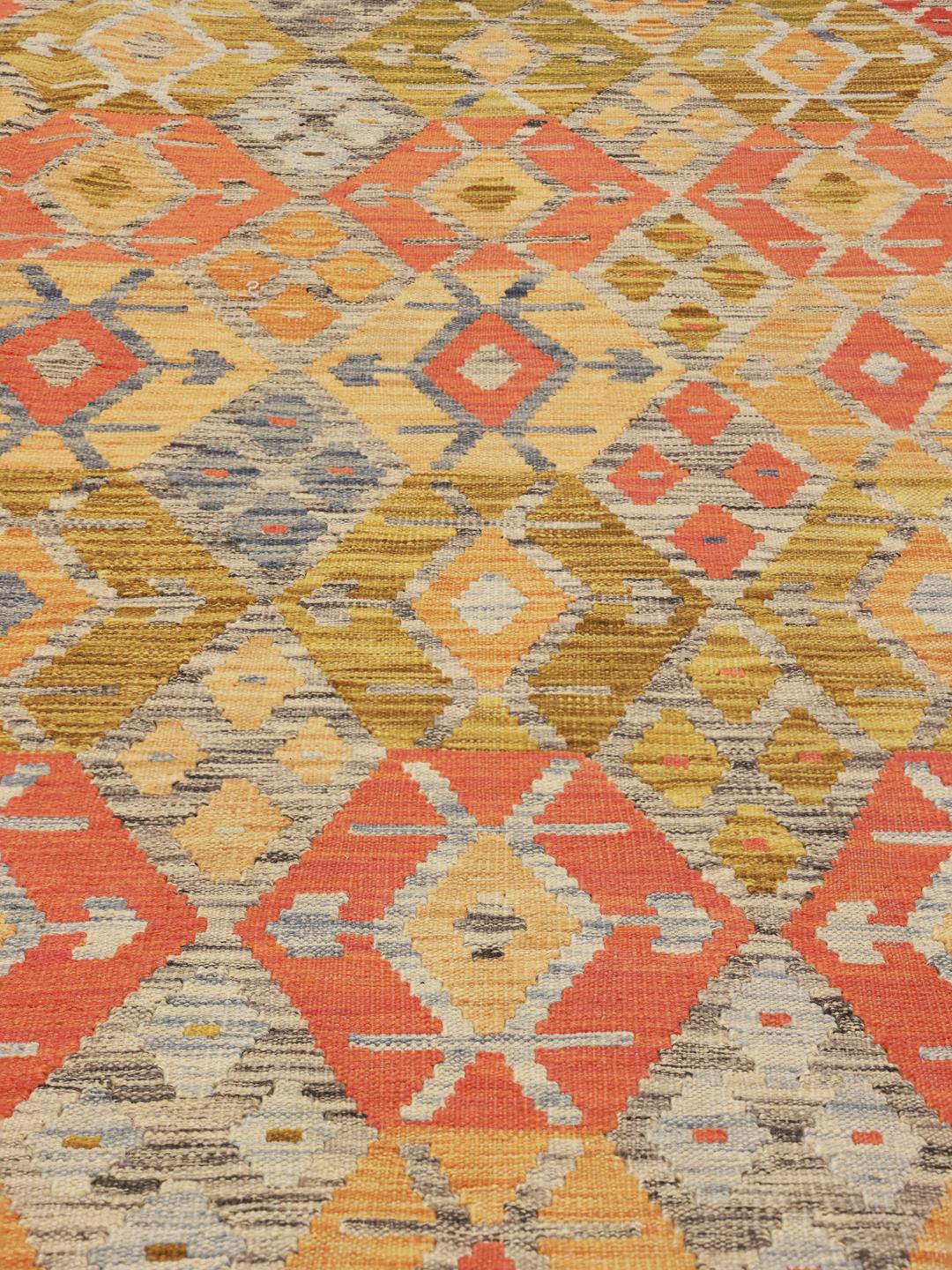
Designers of Afghan Kelims often draw upon a visual language of diamonds, triangles, and stylized floral or tribal motifs. The use of natural dyes and bold colour palettes, such as the vibrant oranges and yellows seen here, is characteristic of the region’s aesthetic. These patterns are not merely decorative but are deeply symbolic, often reflecting the geography, tribal identity, or the personal stories of the weaver.
Collecting a Kelim from this tradition is an investment in cultural history. These rugs are highly valued for their authenticity and the skill required to maintain the tension and pattern integrity across a large surface. By bringing one into your home, you are continuing the story of a craft that has survived for centuries, celebrating a legacy of skill and intentional design.