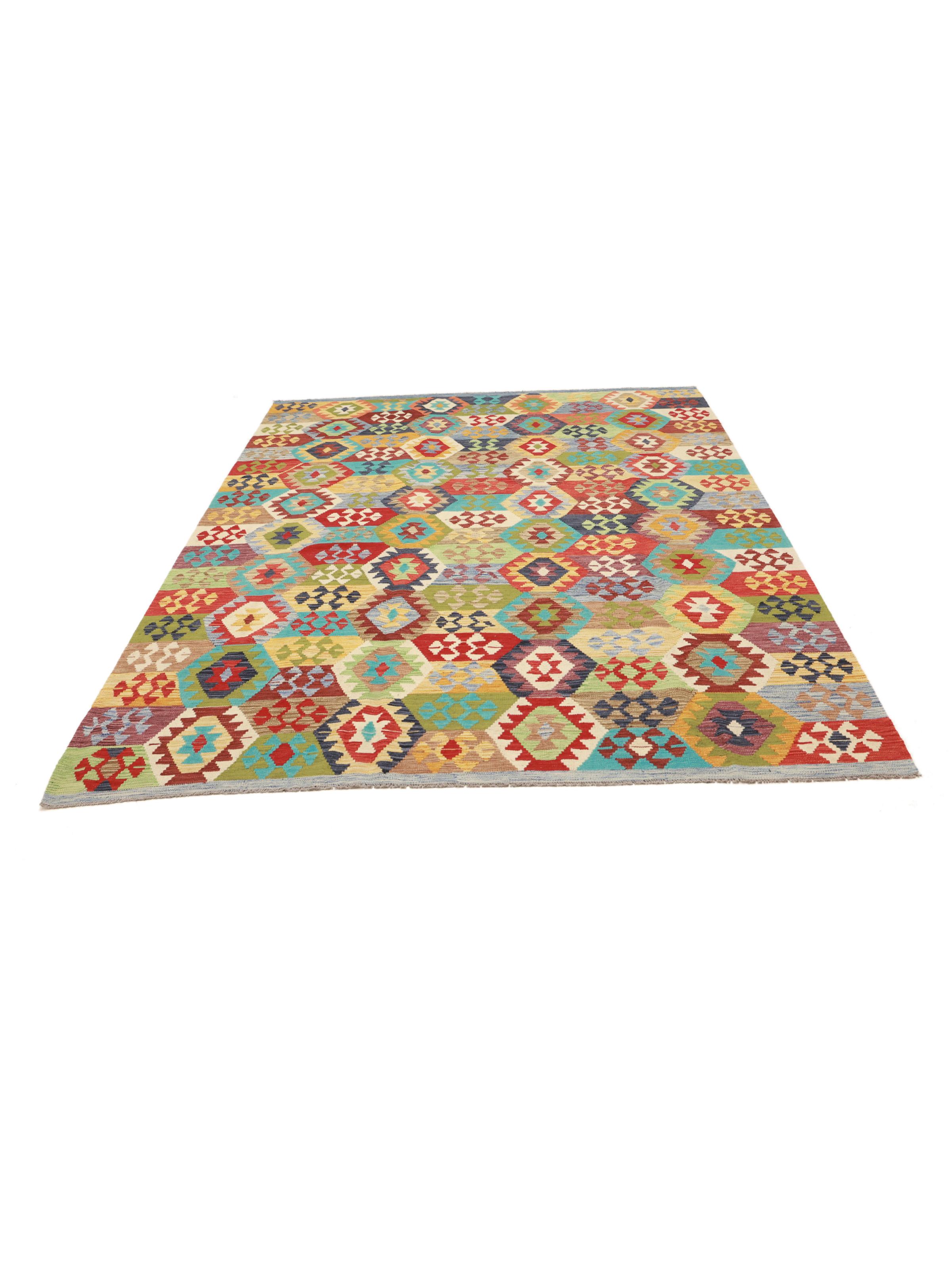
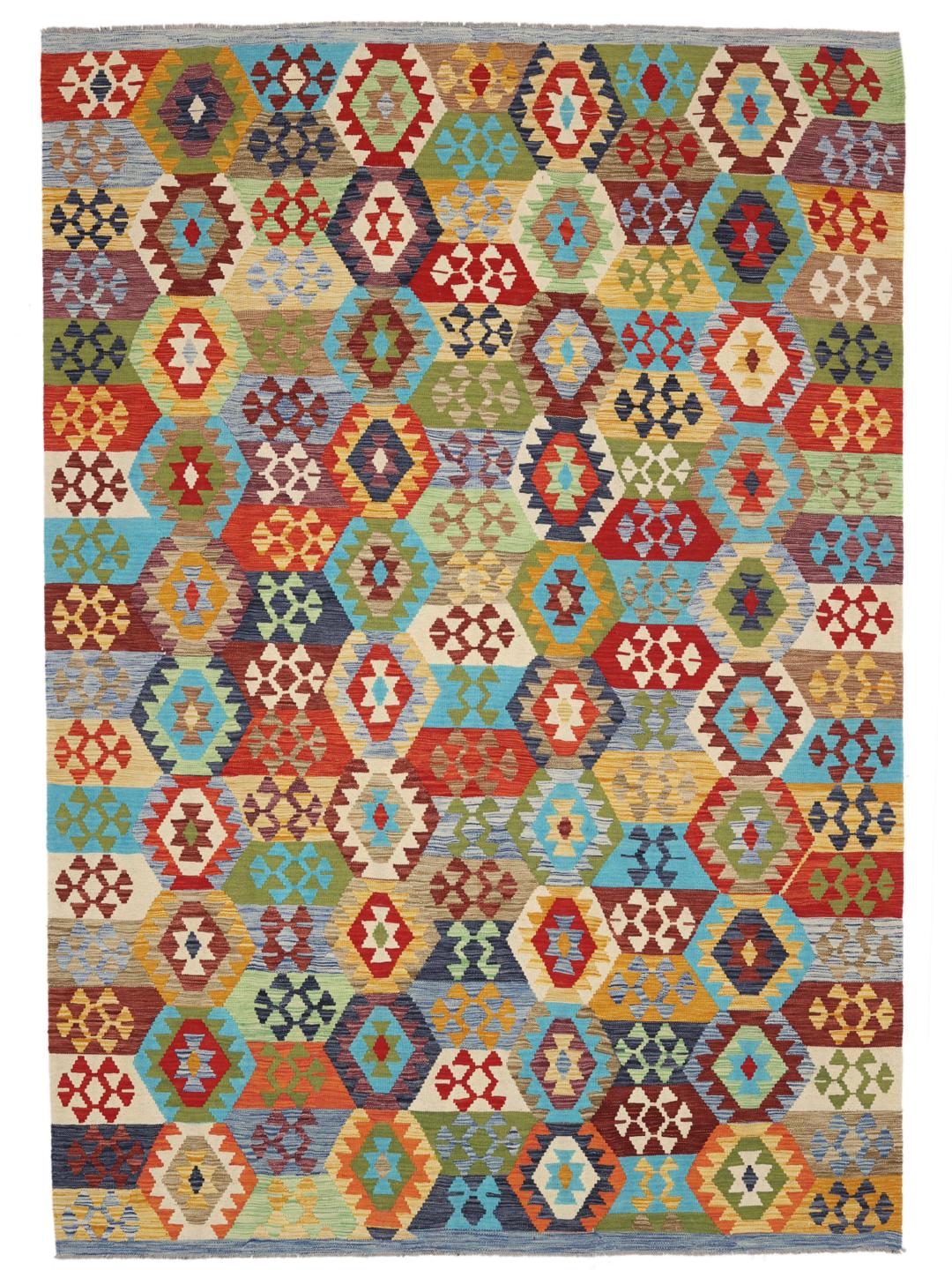
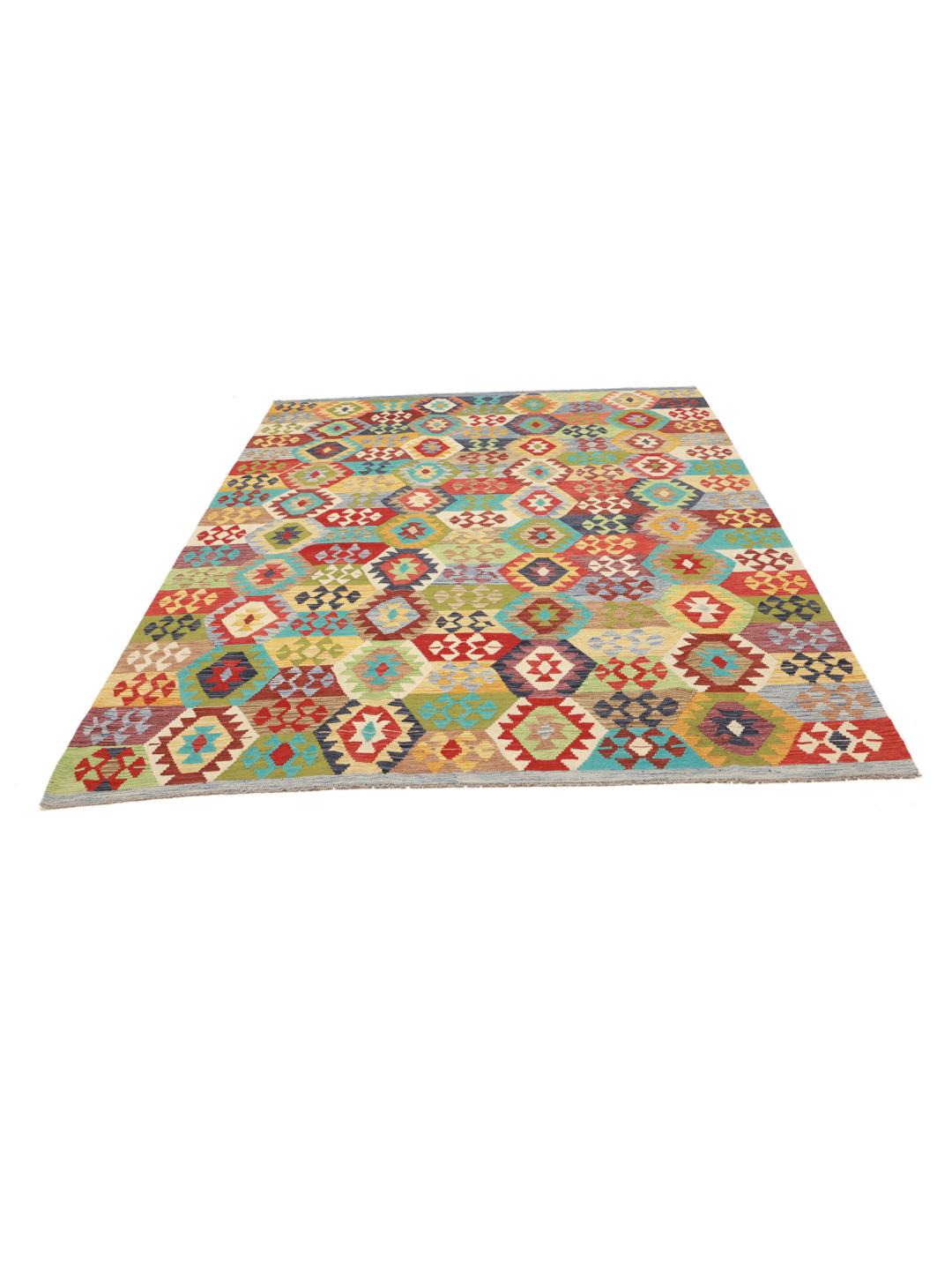
The Kelim rugs of Afghanistan are celebrated for their rich heritage, deeply rooted in the nomadic and semi-nomadic cultures of the Middle East. Historically, these textiles were essential to daily life, serving as floor coverings, blankets, and storage bags for travelling families. This nomadic origin has resulted in a tradition that prioritises portability and durability without sacrificing the beauty of complex, symbolic design.
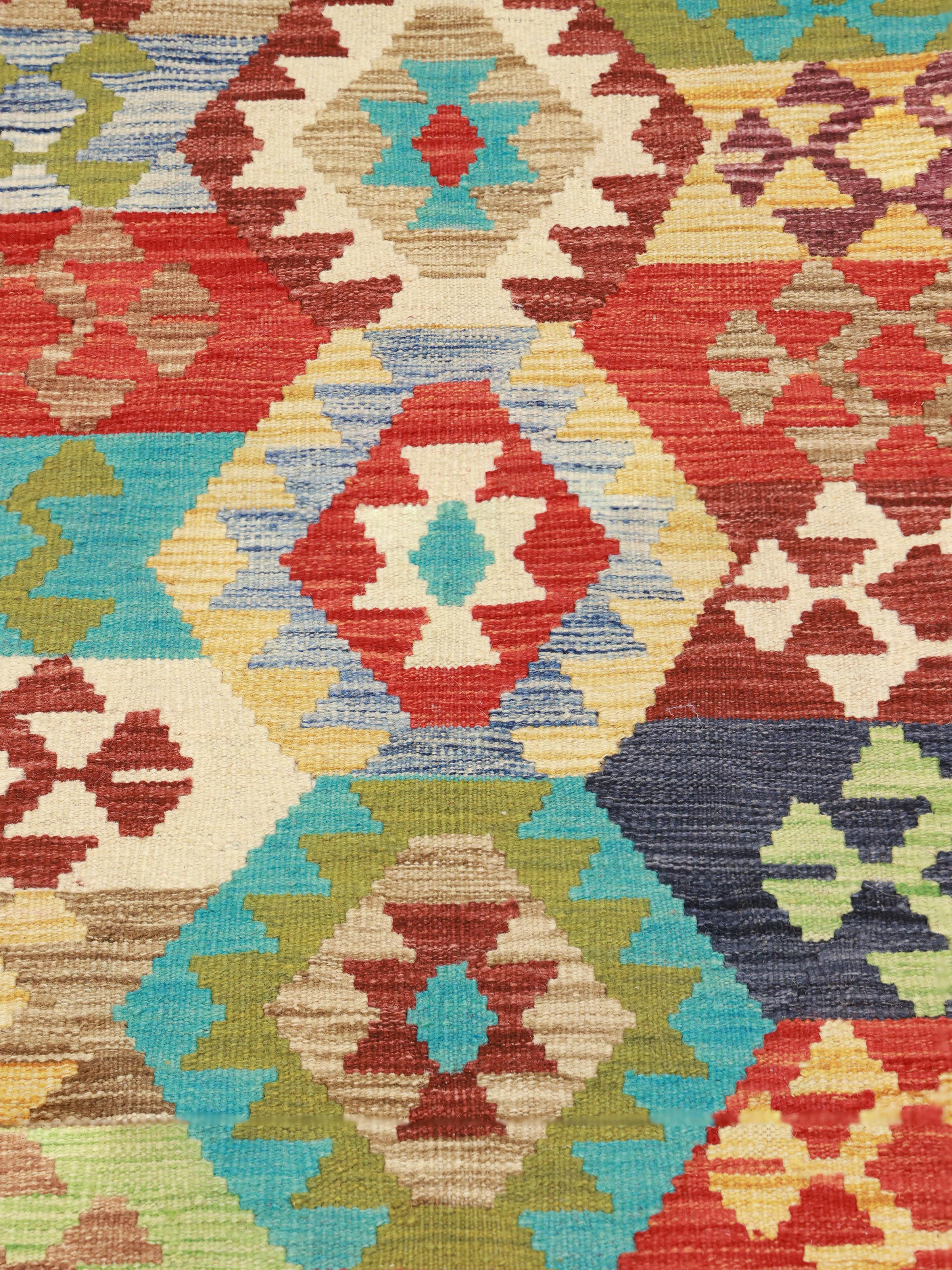
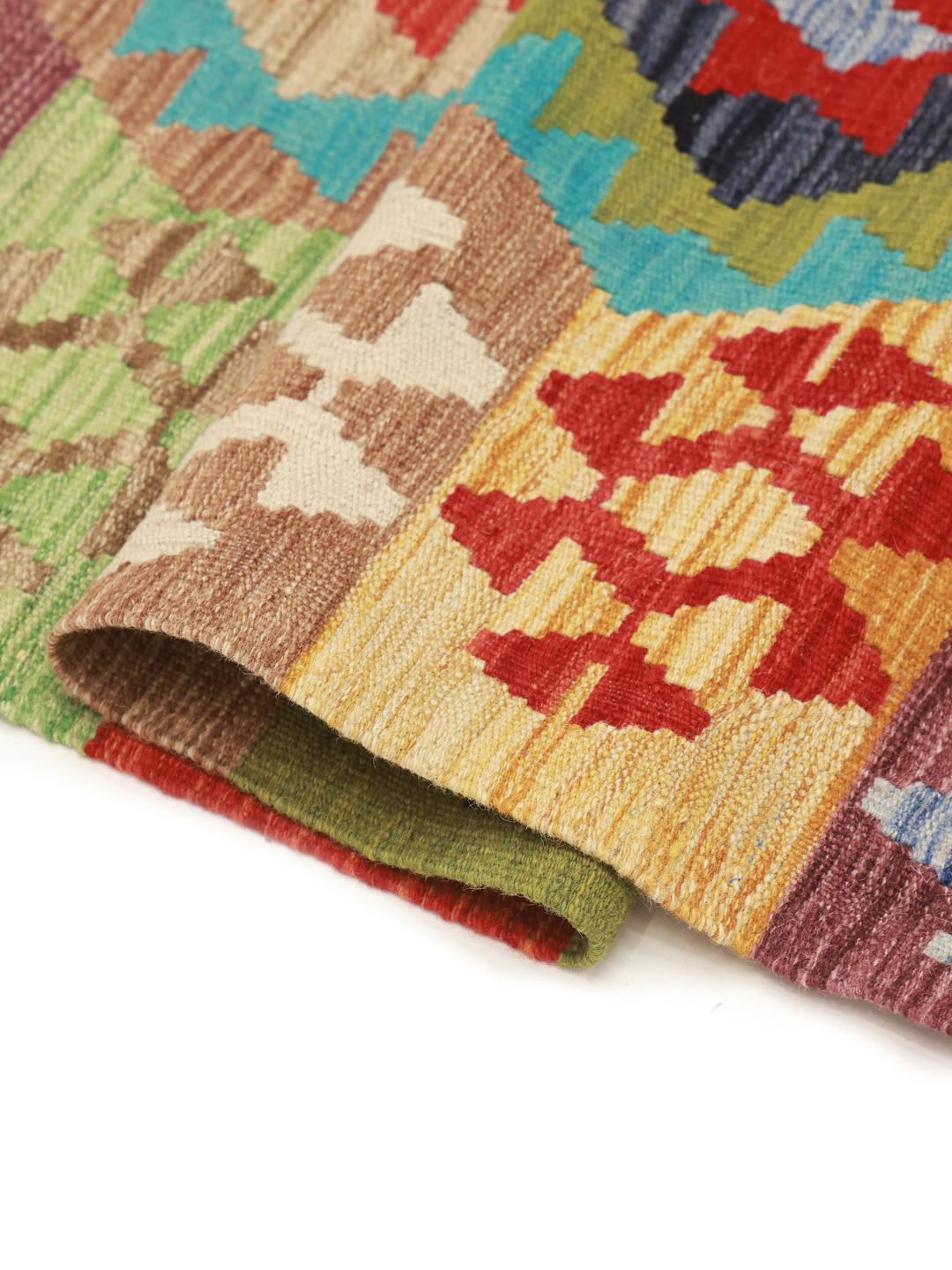
The term 'Kelim' refers to a flat-weaving technique where the weft threads are pulled tightly over the warp threads to create a smooth surface without a pile. This method allows for sharp, clean-edged geometric patterns that are characteristic of the region's artistic output. The absence of a traditional pile makes these rugs highly practical and versatile, as they are light, reversible, and easy to maintain while retaining a distinct, rustic charm.
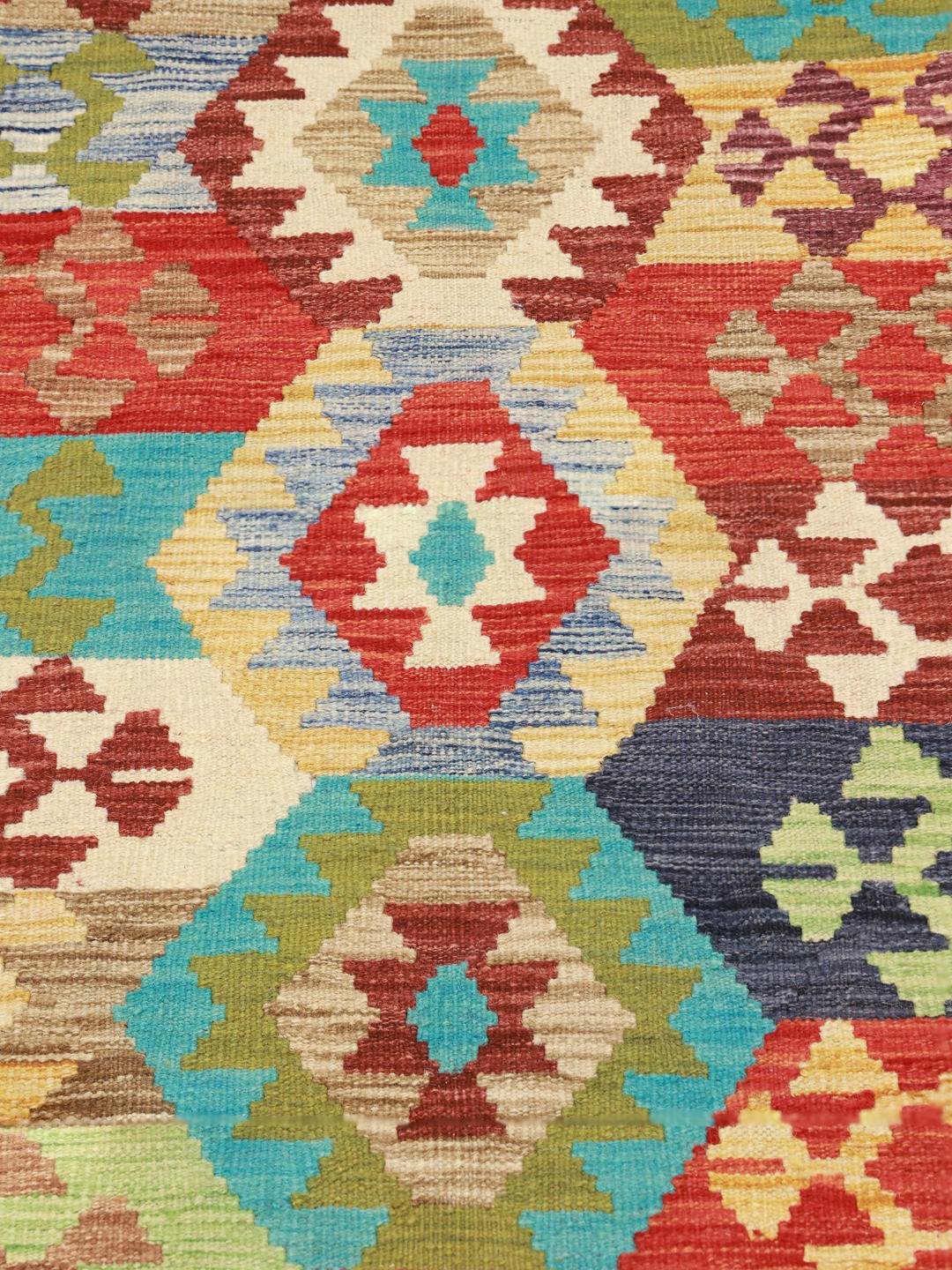
Signature design elements in these rugs often include bold geometric shapes, such as the repeating hexagons and diamond motifs seen here. These patterns are not merely decorative but are deeply connected to the history of the region, often representing protection, prosperity, or local tribal identity. The use of vibrant, contrasting colours is a hallmark of the Afghan style, achieved through traditional dyeing methods that produce deep, resonant hues.
Collecting a hand-woven Afghan Kelim is more than a design choice; it is an act of preserving a centuries-old craft. These rugs are highly valued for their authenticity and the human story woven into every thread. By bringing such a piece into your home, you are connecting with a long lineage of artisans whose skill and cultural pride continue to make these rugs a cornerstone of interior design worldwide.