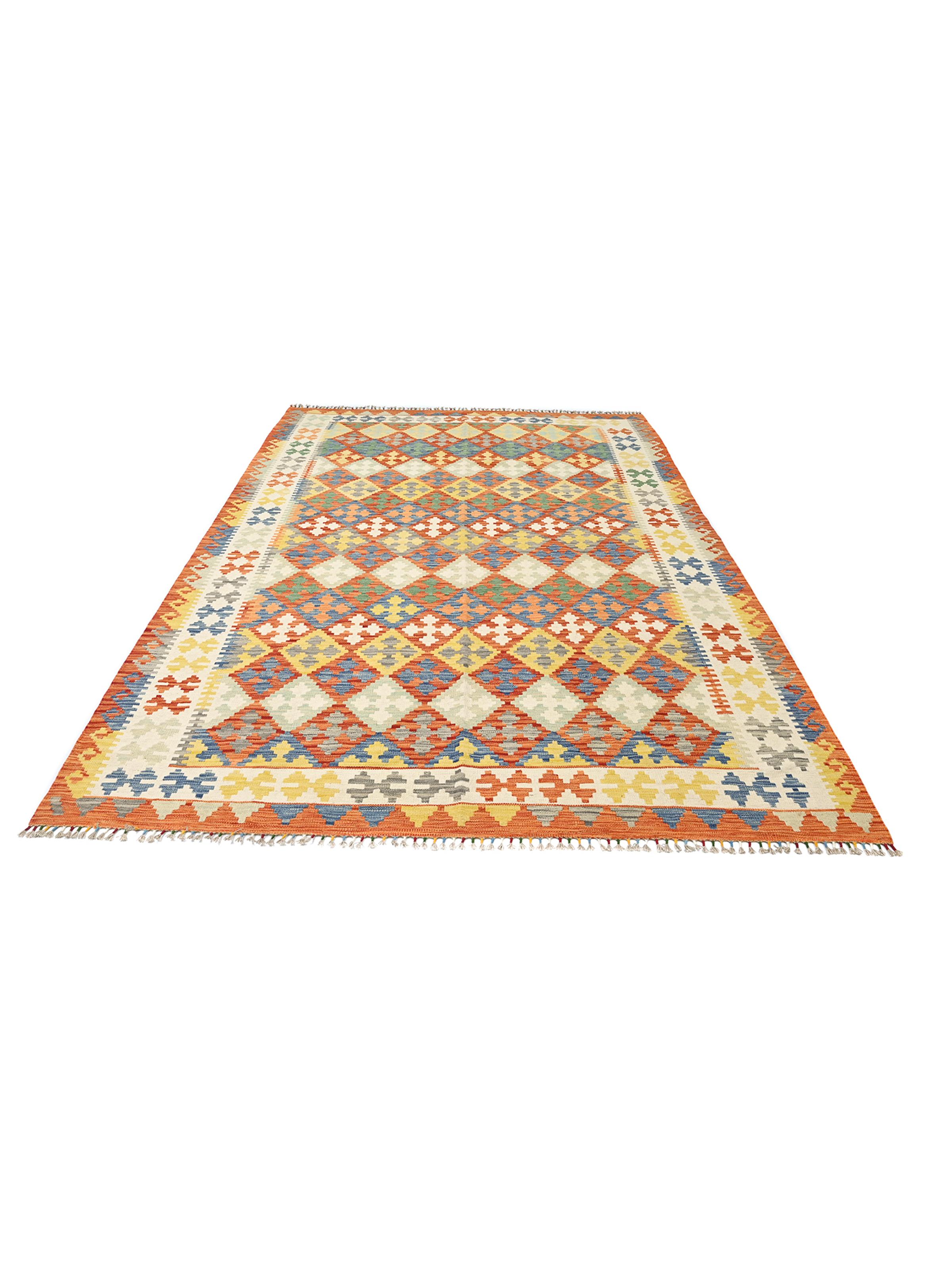
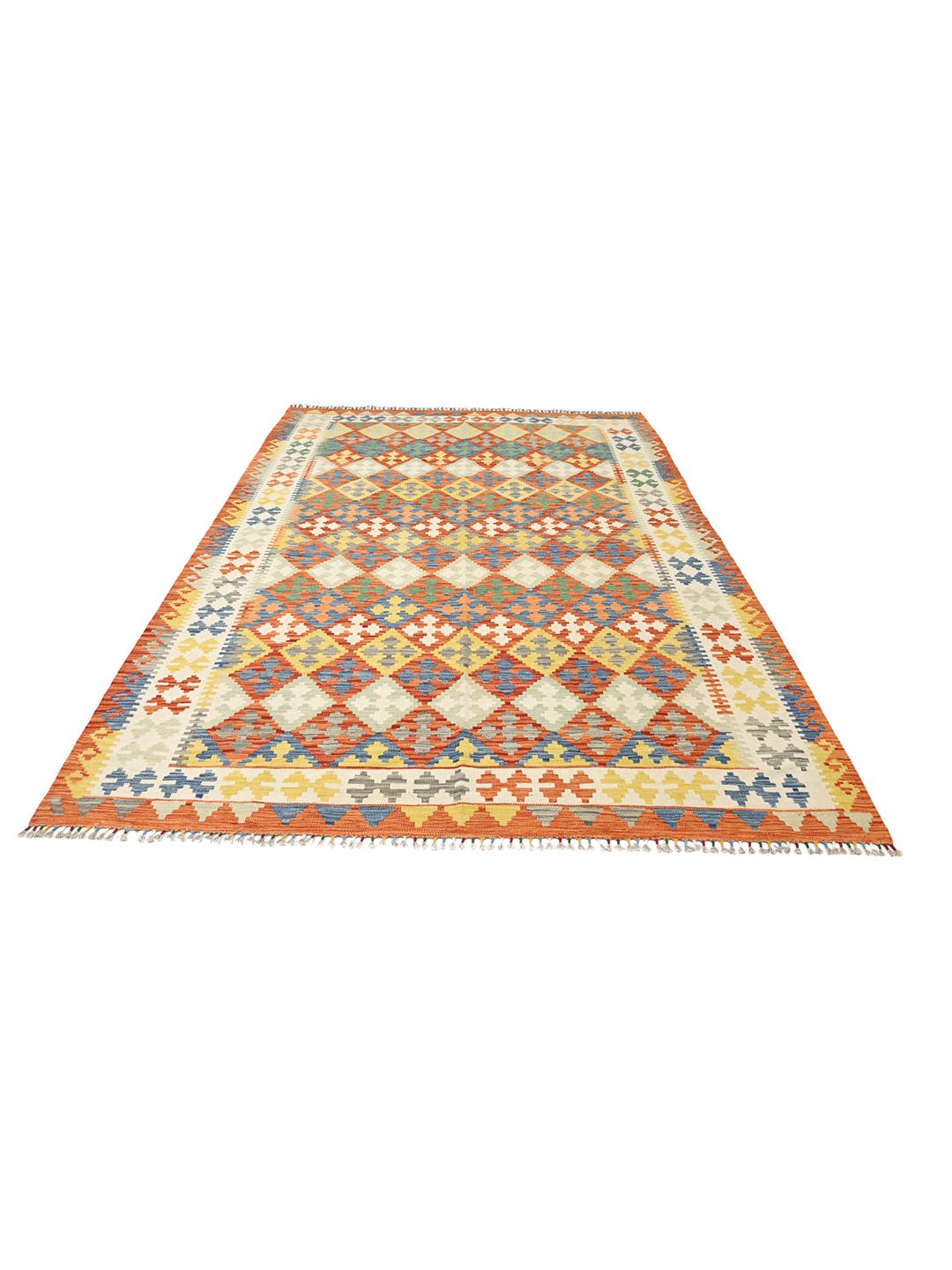
The Kelim tradition is deeply rooted in the nomadic and village cultures of the Middle East and Central Asia. These rugs, known for their flat-weave technique, were historically crafted by tribal weavers for practical purposes, such as floor coverings, wall hangings, and storage bags. The transition of these designs into the broader global market has preserved the ancient techniques of their origin.
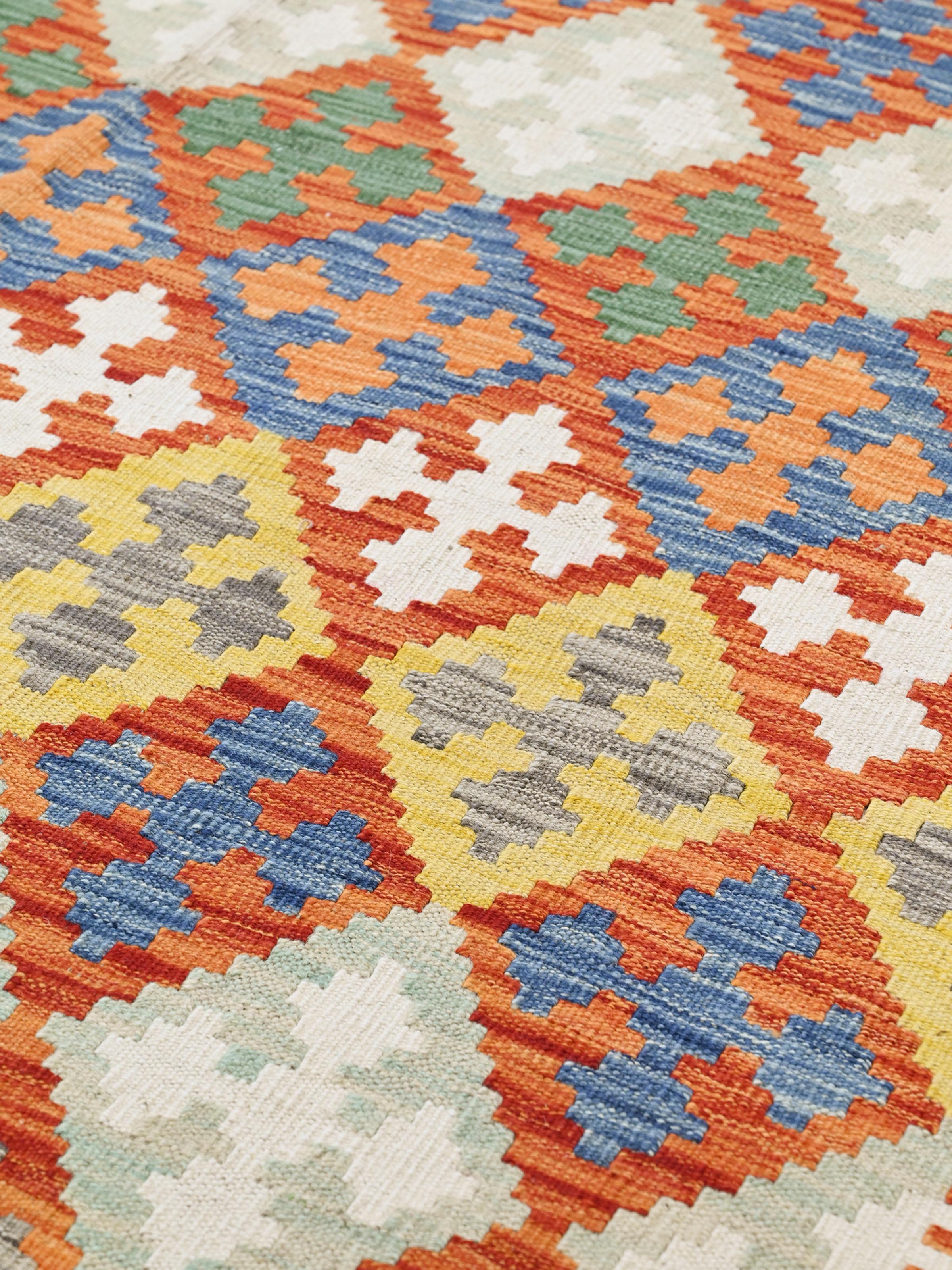
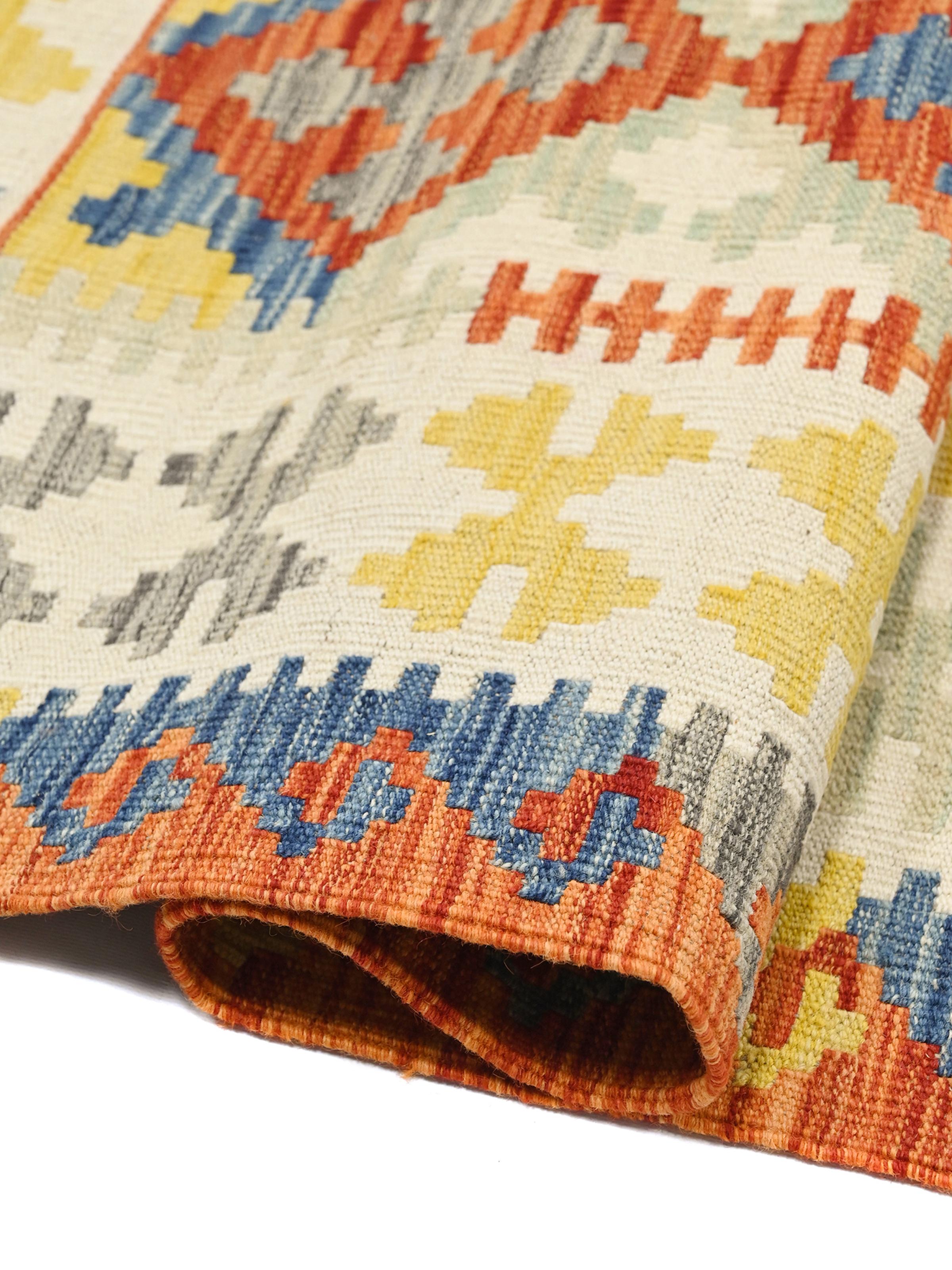
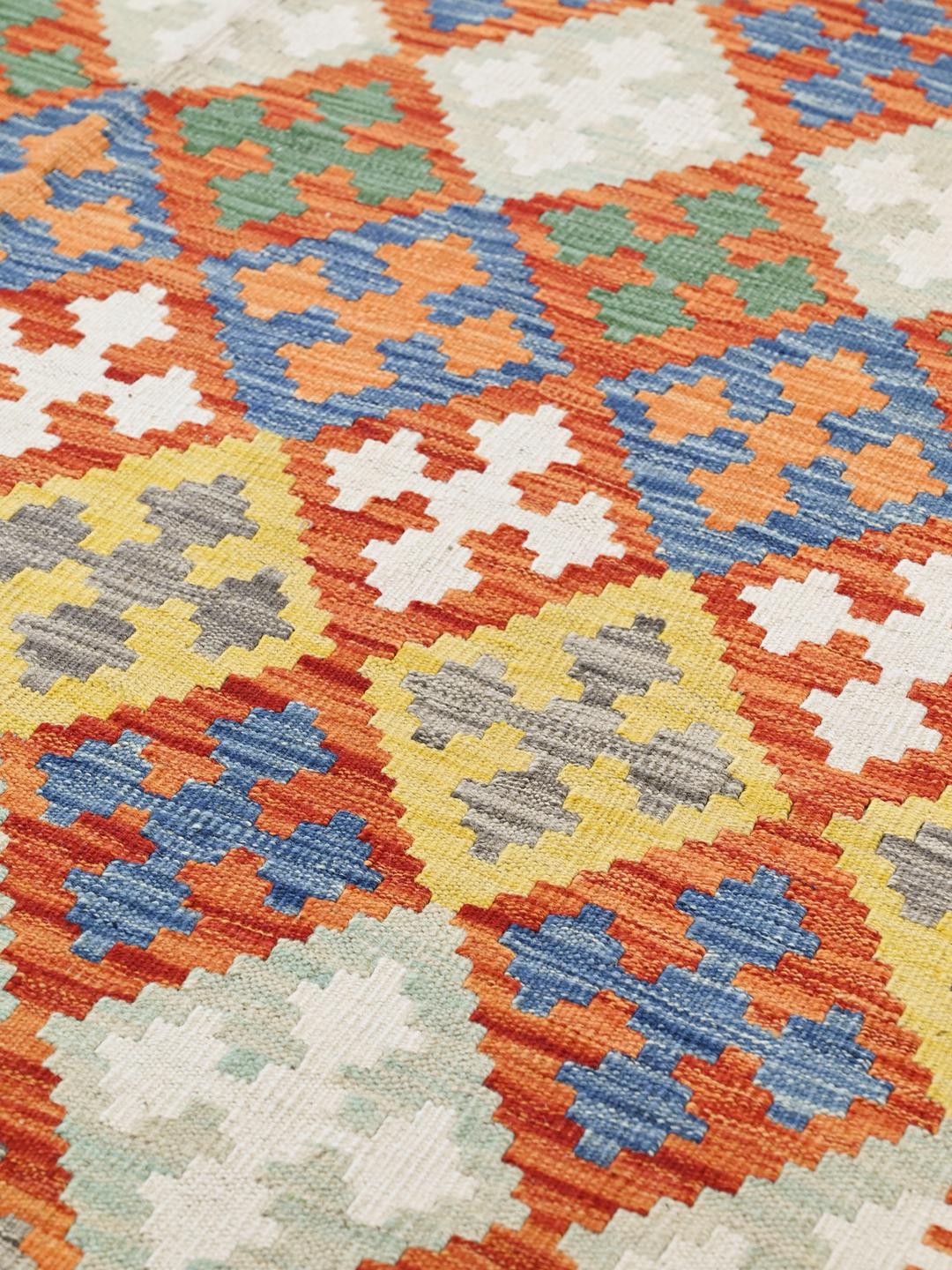
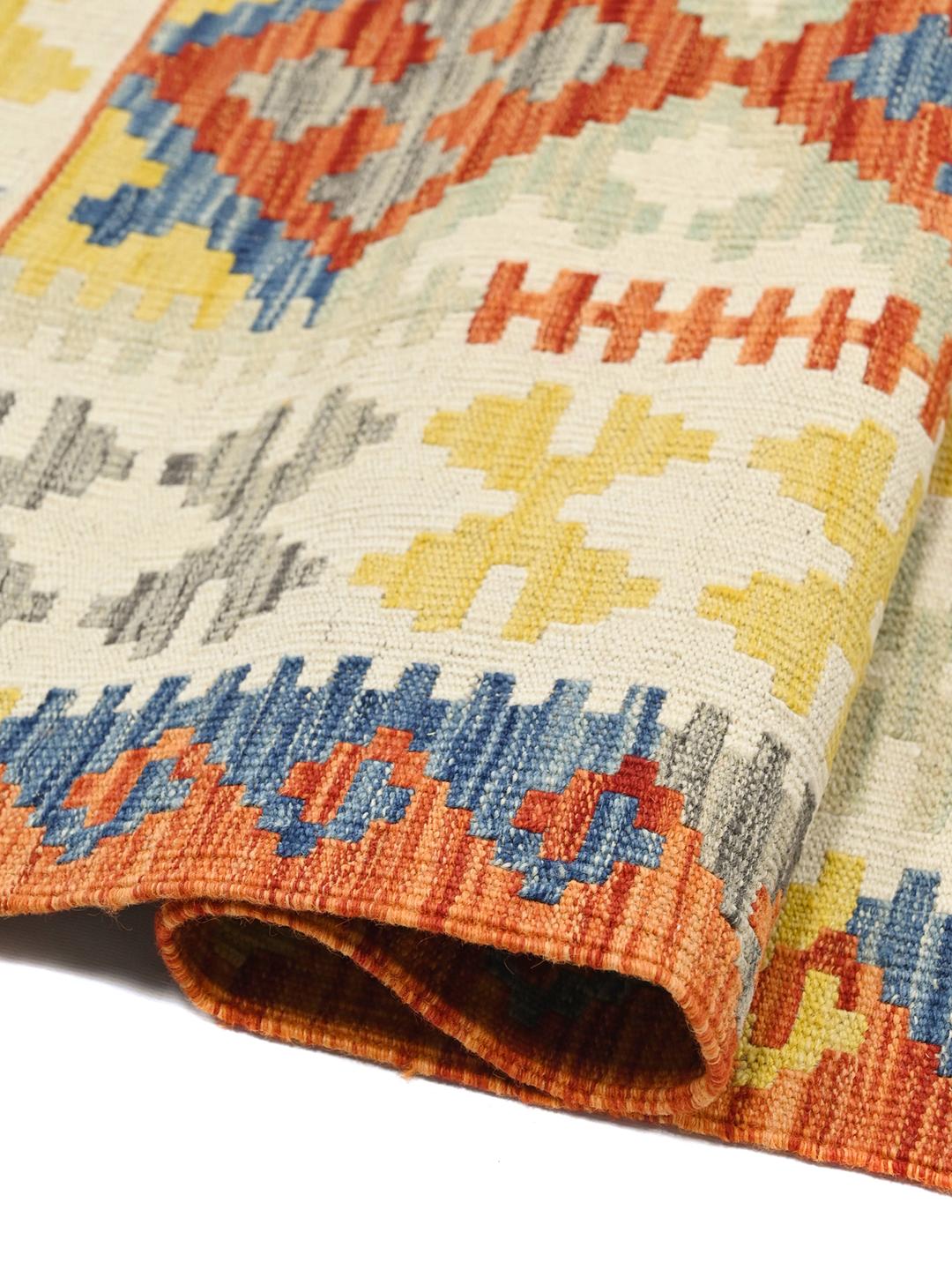
The term 'Kelim' refers to the specific flat-weave construction where the pattern is created by interlocking the weft threads. Unlike pile rugs, this method results in a reversible, light, and thin fabric. This technical approach requires a high level of precision, as the weaver must carefully manage the tension to ensure the geometric patterns remain sharp and the borders stay perfectly aligned.
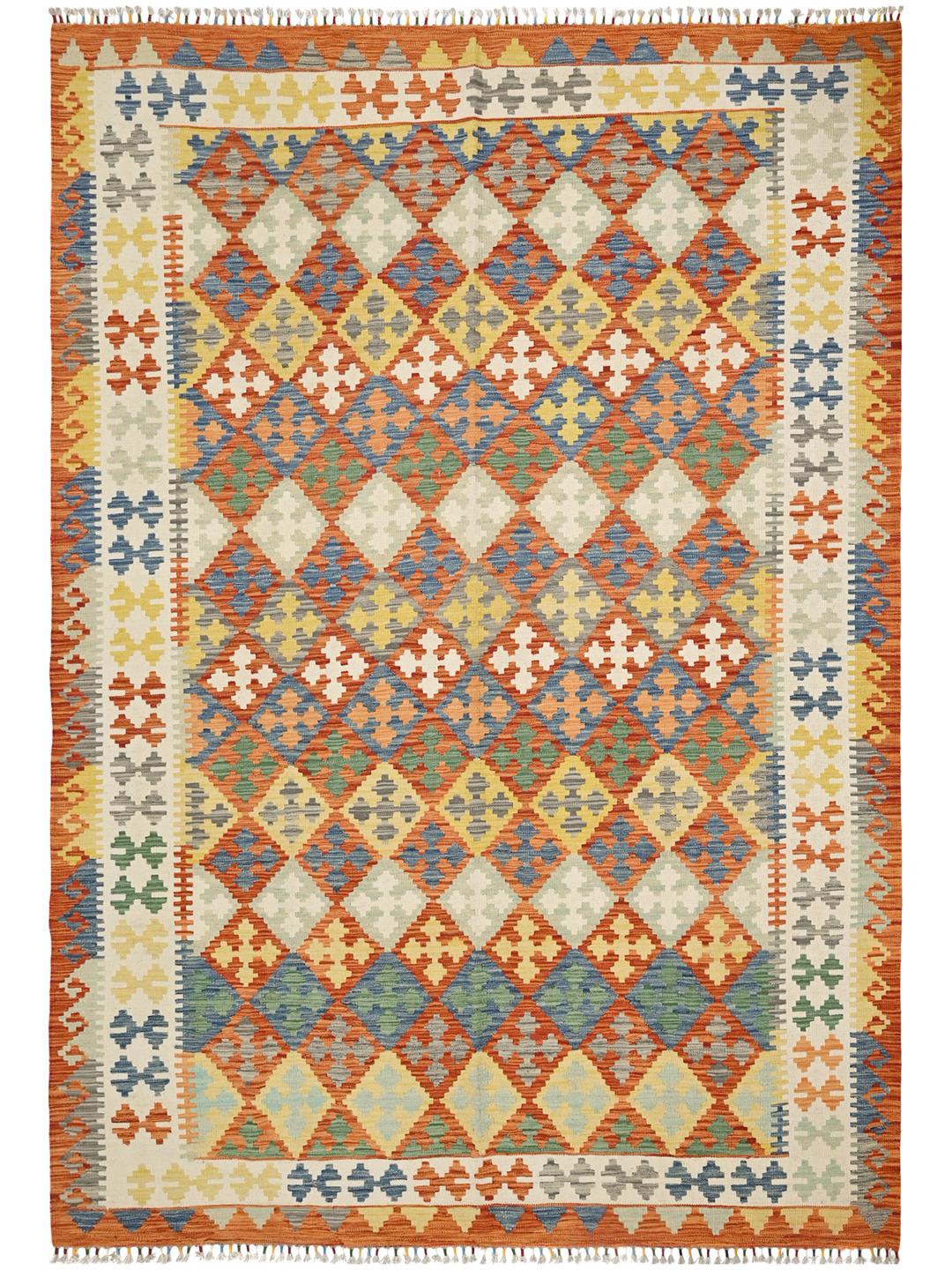
Signature design elements of these pieces include bold geometric shapes, most notably the diamond or lozenge motif seen here. These patterns are often arranged in repeating rows, creating a sense of rhythm and harmony. The use of vibrant, natural-toned wool allows these motifs to stand out, often framed by complex, decorative borders that showcase the weaver's artistic vision.
Collecting these rugs is an investment in cultural heritage and human skill. Each piece serves as a record of the weaver's environment, beliefs, and traditional design language. By choosing an authentic piece, you are not just acquiring a floor covering, but a tangible connection to a storied craft that has been passed down through generations.