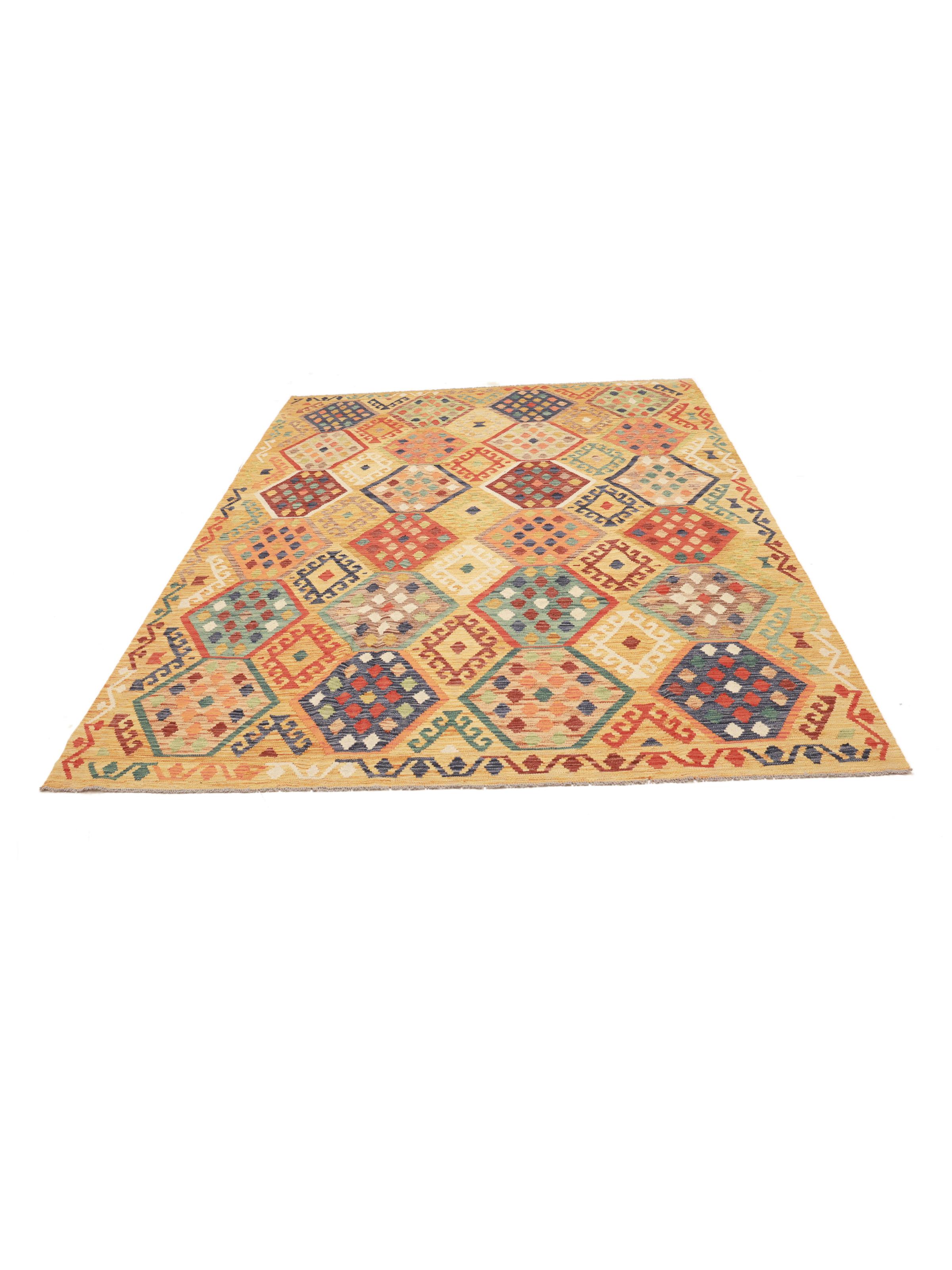
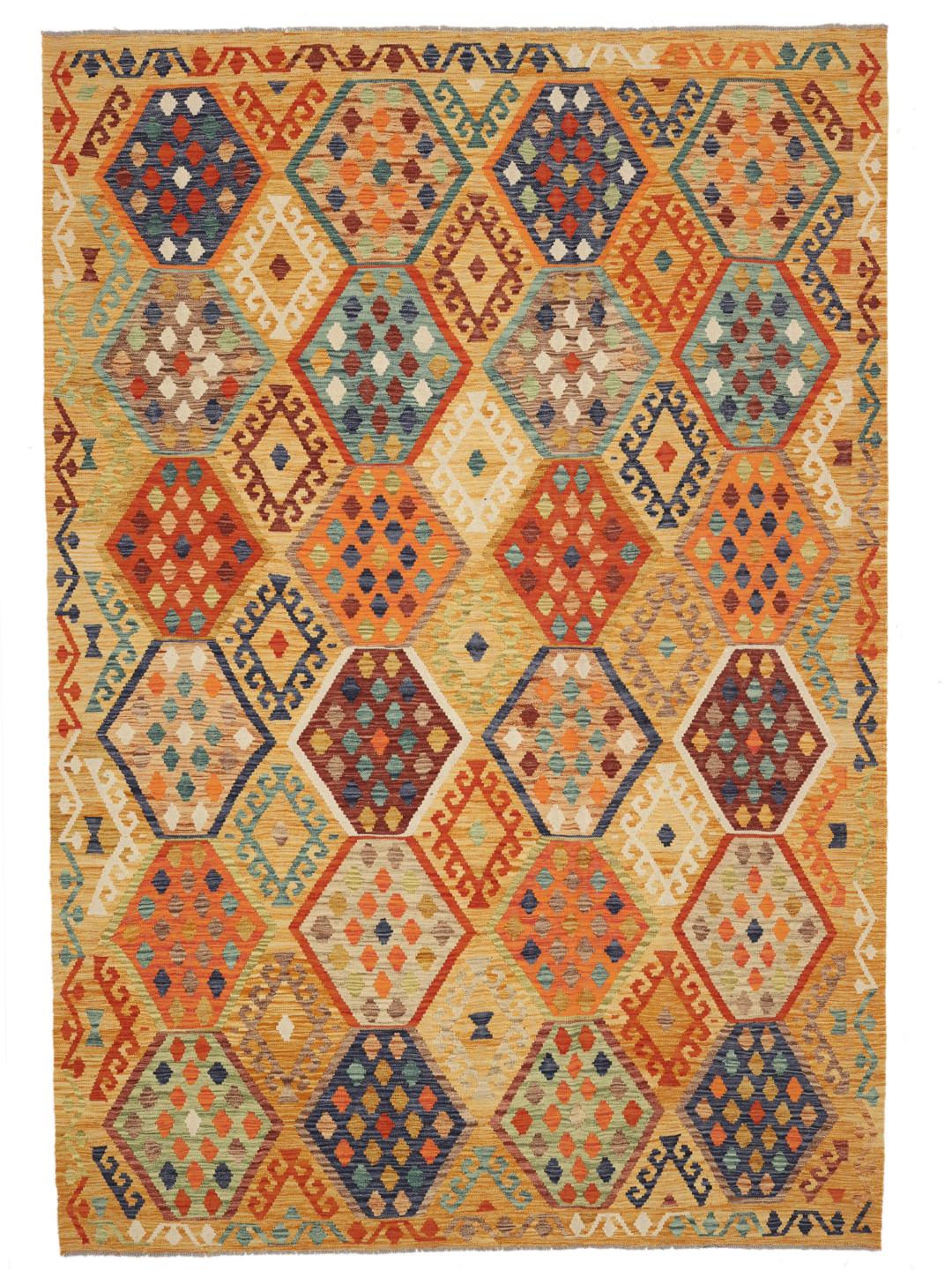
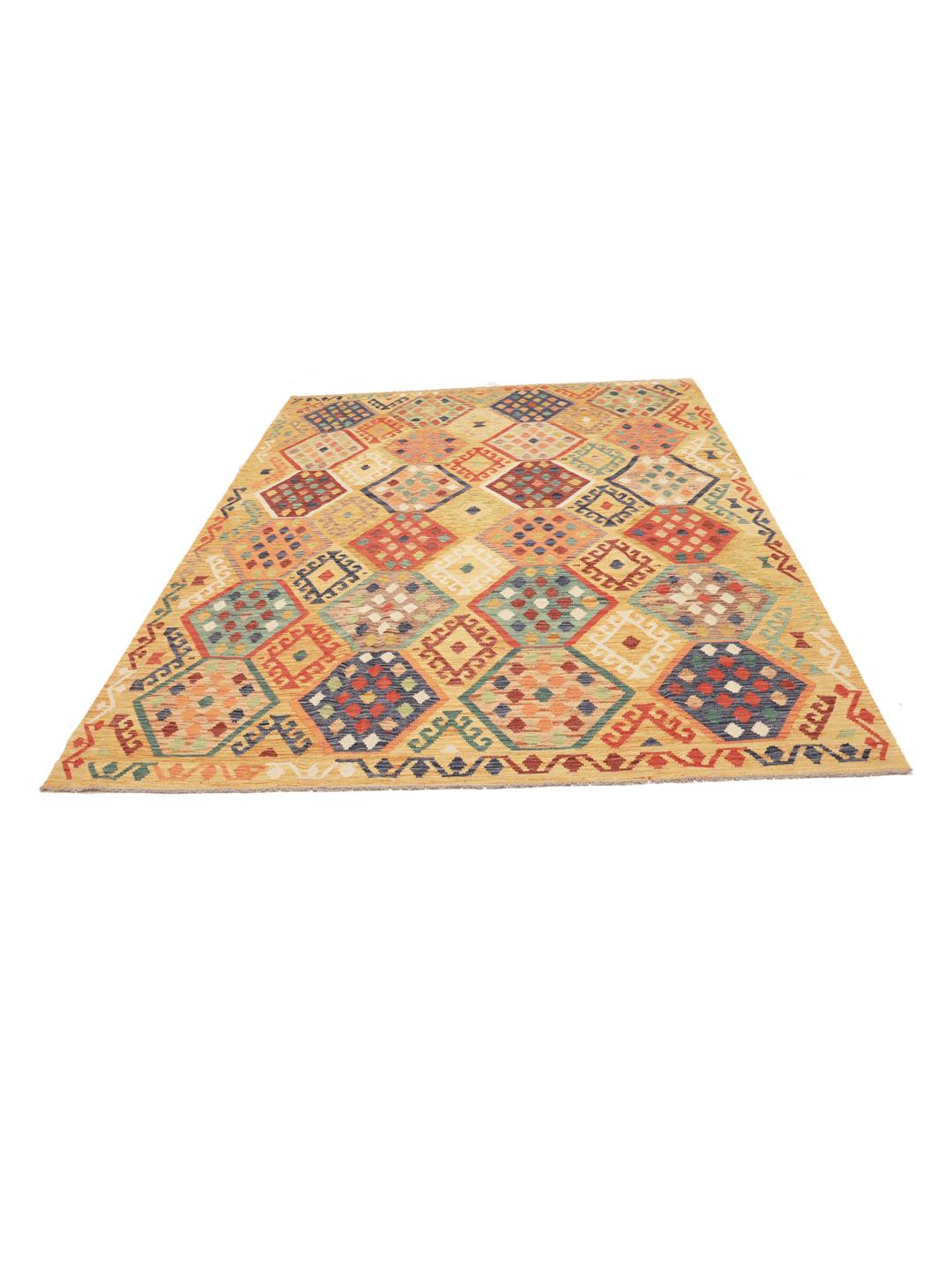
Kelim rugs have long been a cornerstone of the weaving traditions found across the Middle East and Central Asia. Originally developed as functional, portable textiles by nomadic tribes, these flat-woven pieces were prized for their versatility and durability. Over time, the tradition evolved into a refined art form, with Afghanistan emerging as a significant hub for producing these dense, intricately patterned rugs that bridge the gap between ancient necessity and modern interior aesthetics.
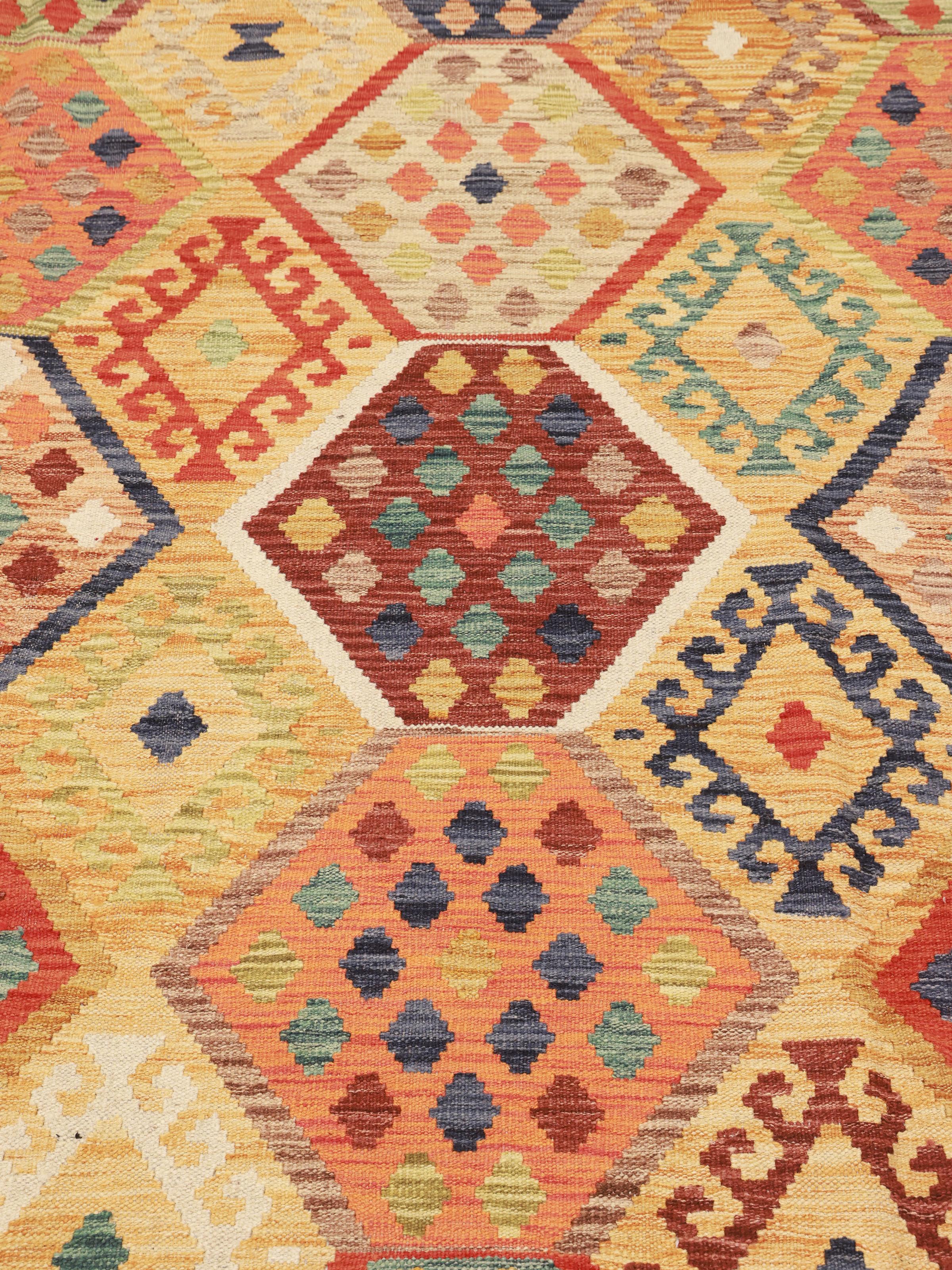
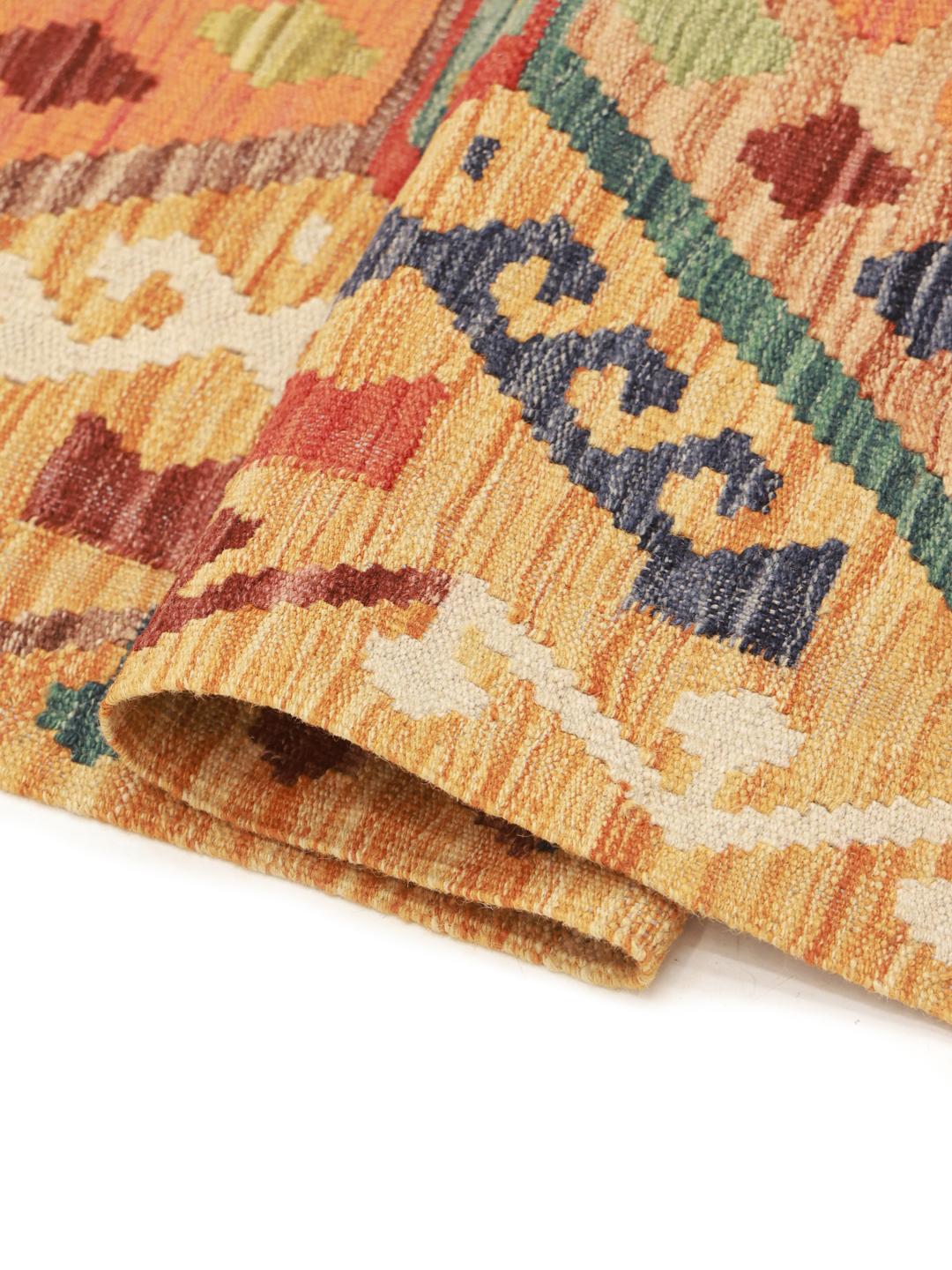
The term Kelim refers to the specific flat-weaving technique where the weft threads are passed over and under the warp threads to create a smooth, pileless surface. This method is technically demanding, as the weaver must manage the colour changes and tension with absolute precision to ensure the geometric patterns remain sharp and consistent across the entire rug. Because there is no pile to hide errors, the quality of a Kelim is immediately apparent in the clarity of its lines and the tightness of its weave.
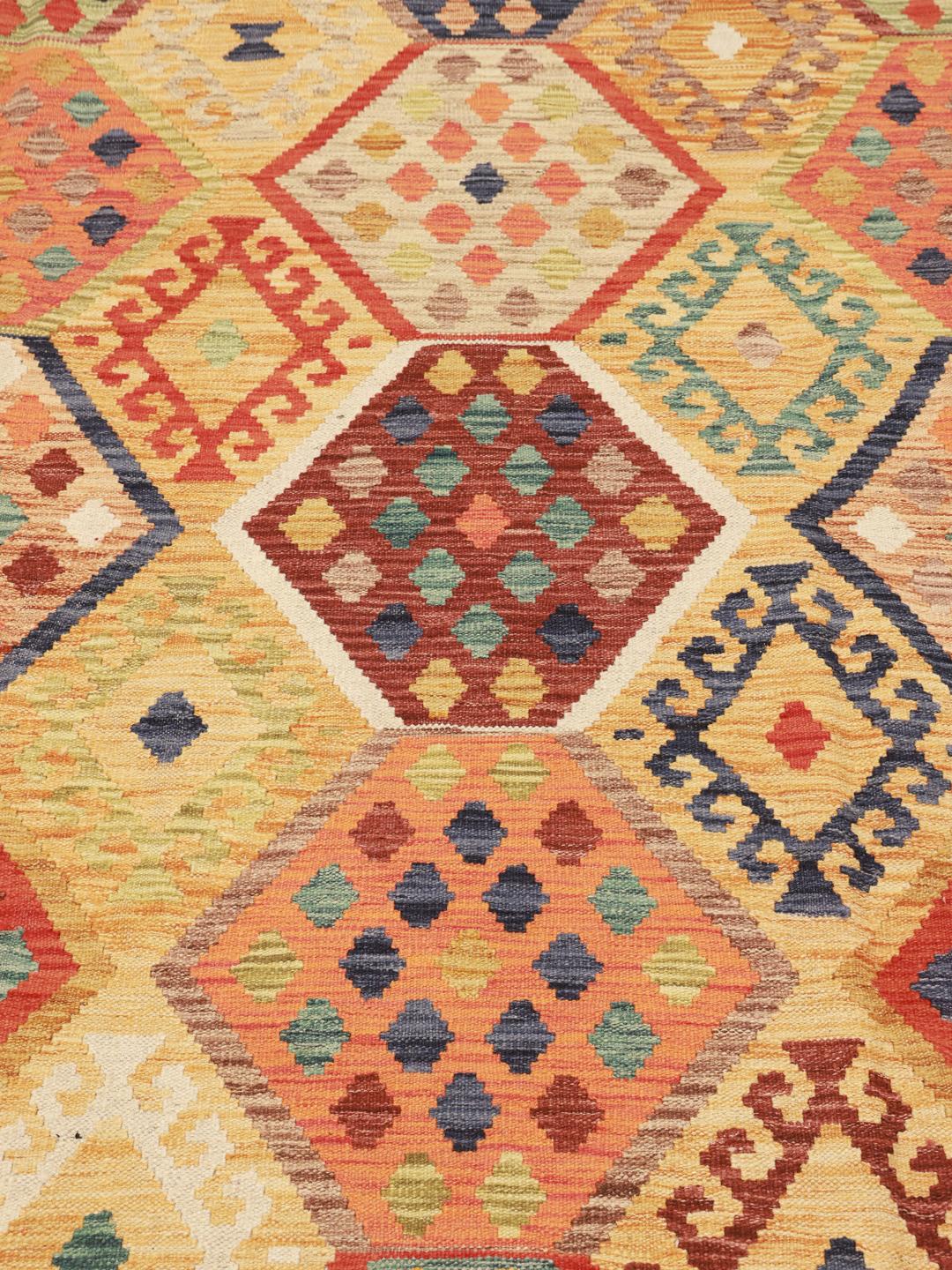
The visual language of this tradition is deeply rooted in geometric symbolism, with the diamond motif serving as one of the most classic and recognisable elements. These shapes are often arranged in repeating sequences or complex lattices, reflecting a design philosophy that values order, balance, and rhythm. The use of vibrant, contrasting colours within these borders is a signature trait, often achieved through traditional dyeing methods that result in rich, earthy tones that ground the more intricate patterns.
Collecting a Kelim is an investment in cultural heritage and human skill. Because they are not mass-produced, each rug serves as a document of the specific time, place, and individual hand that brought it into existence. They are valued by enthusiasts for their authenticity and their ability to bring a sense of grounded history into a contemporary home. Owning one means participating in a legacy of craft that continues to be celebrated for its resilience and aesthetic sophistication.