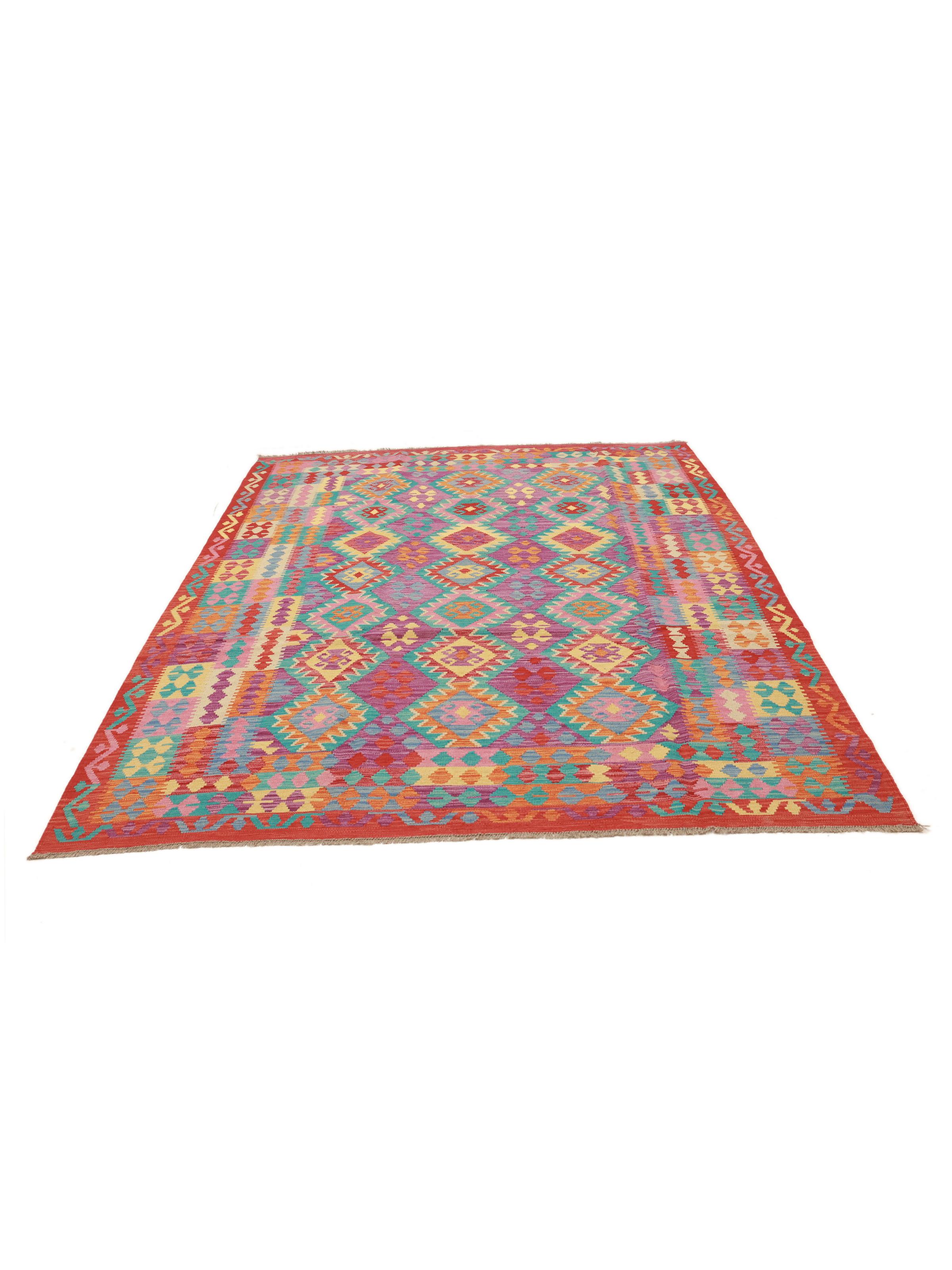
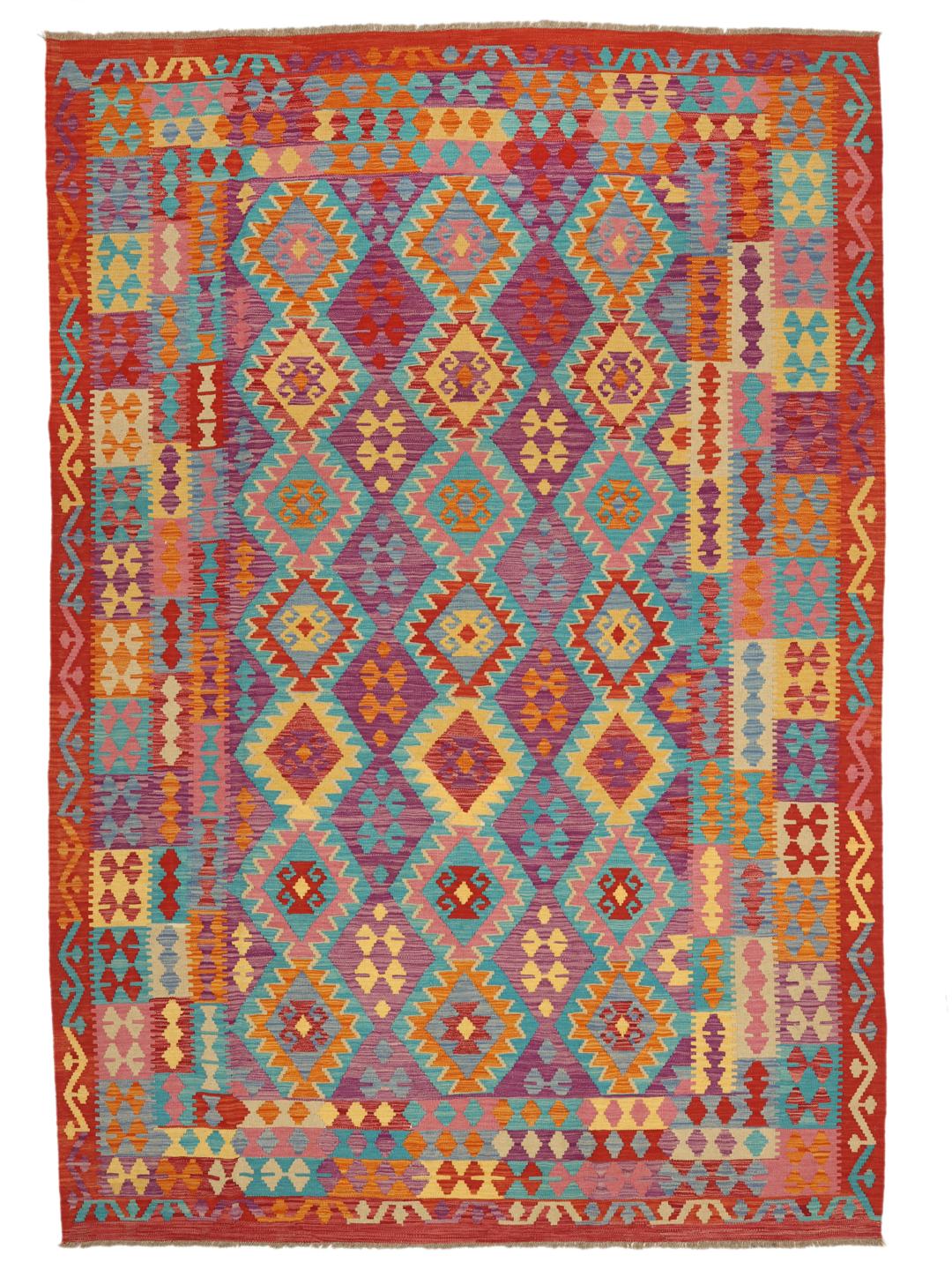
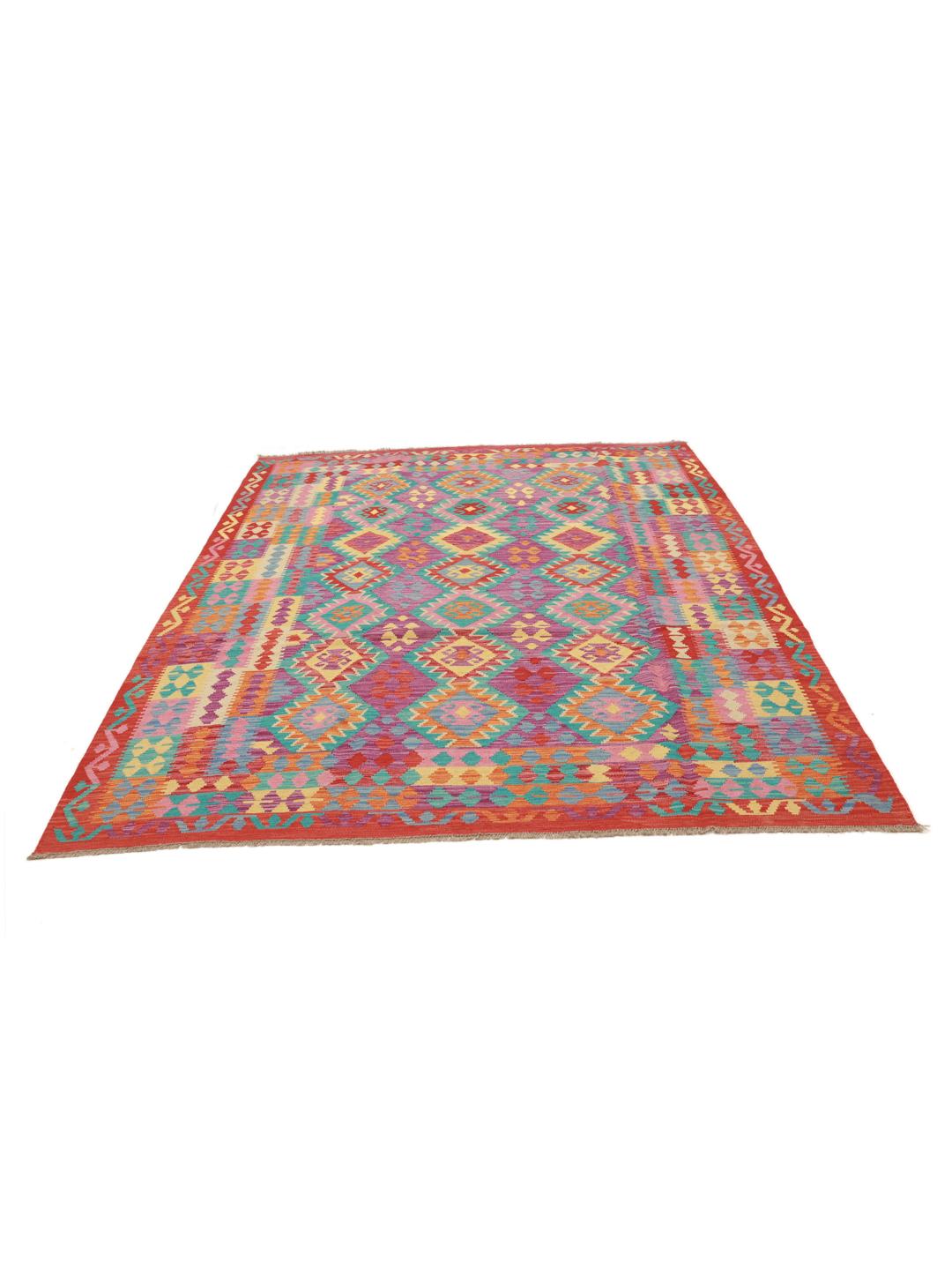
The Kelim tradition in Afghanistan is a testament to the resilience and creativity of nomadic and village cultures across the Middle East. These flat-woven rugs have been produced for centuries, serving as essential, portable, and durable furnishings for families who moved with the seasons. The techniques used have been passed down through generations, maintaining a link to an ancient way of life.
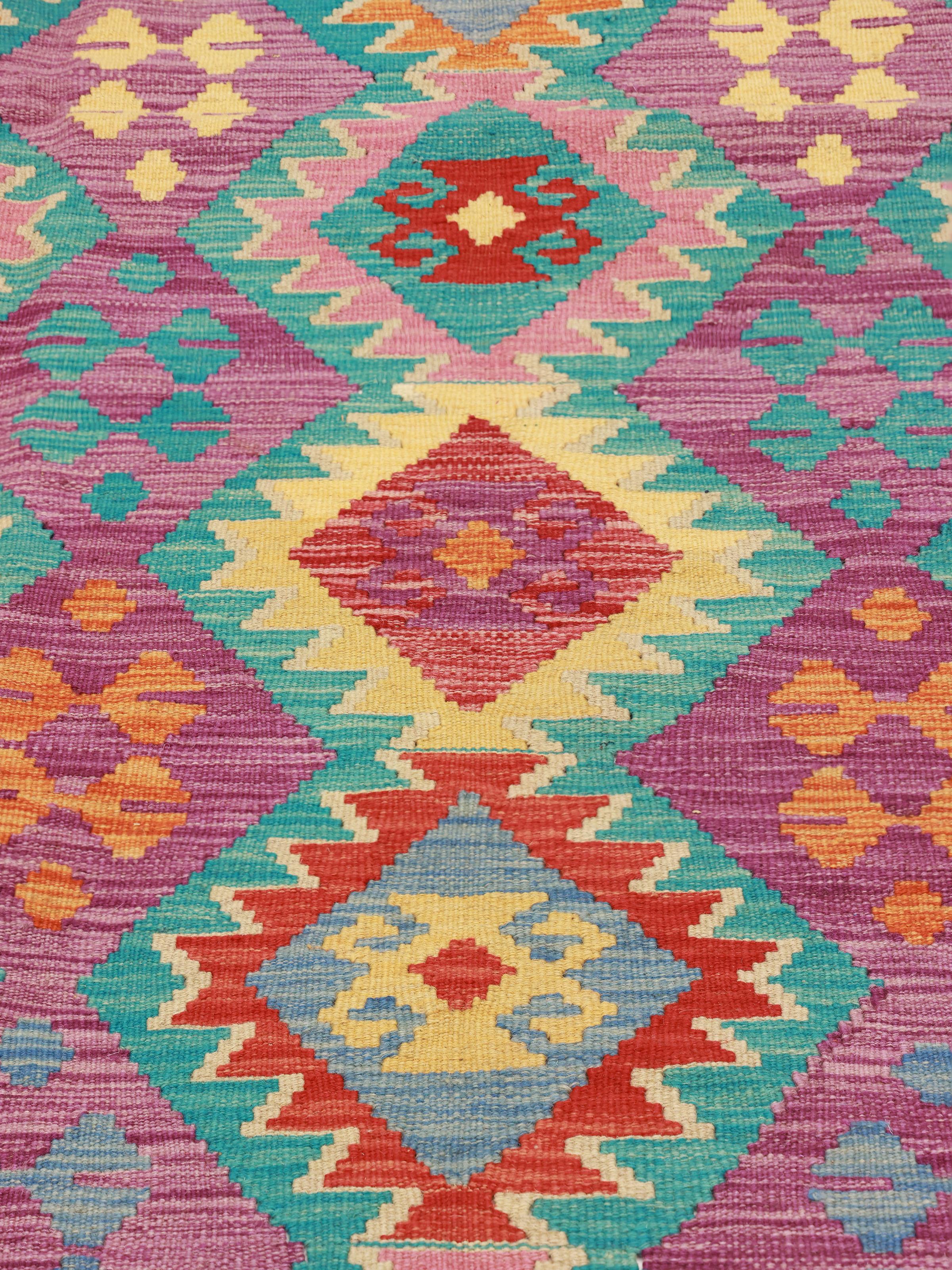
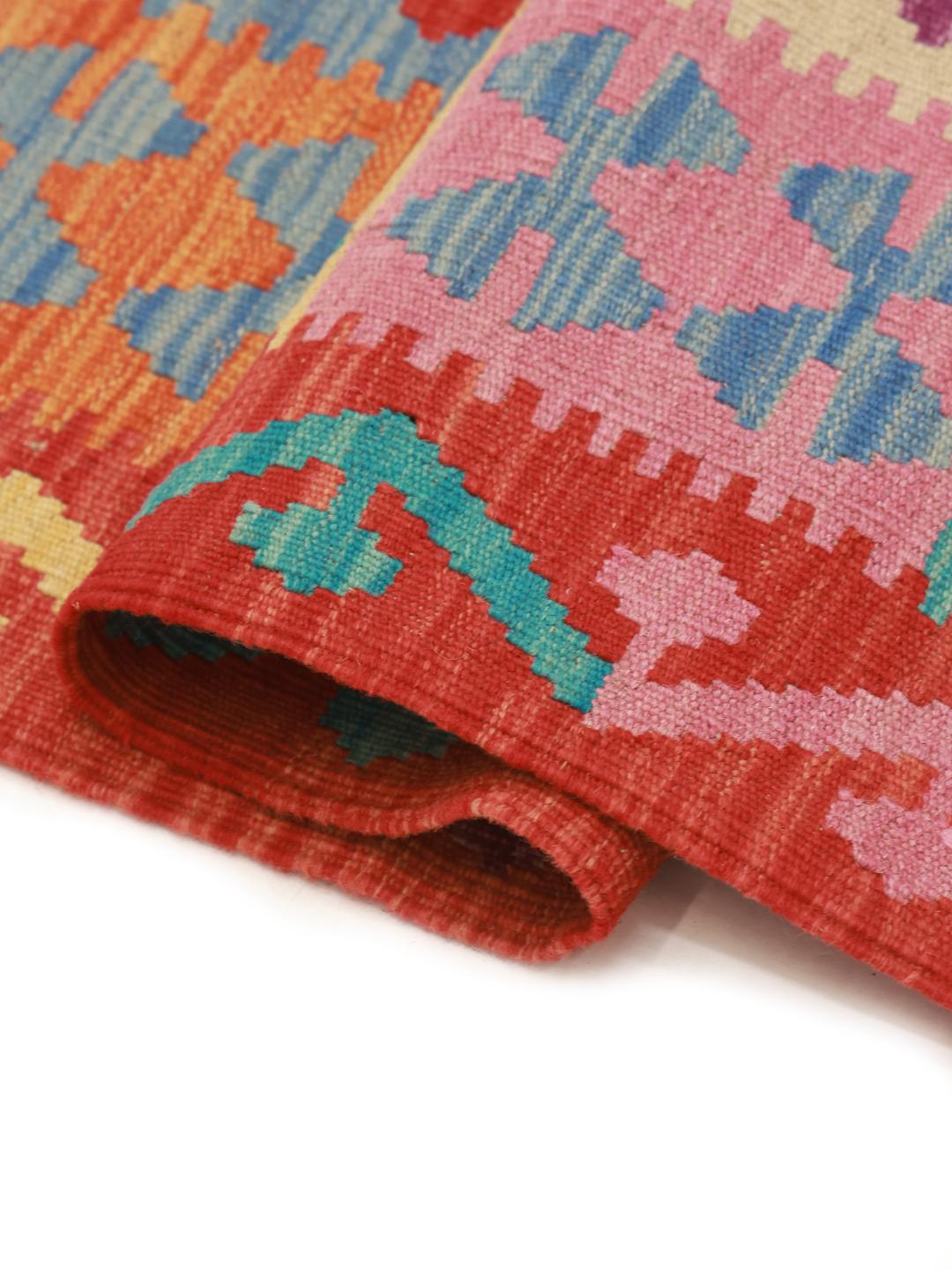
A kelim is characterised by its lack of pile, achieved by interweaving the coloured weft threads through the warp. This process creates a flat, reversible surface that is both lightweight and incredibly resilient. This construction method allows for sharp, clean geometric lines, which is why the patterns in these rugs often appear so crisp and intentional.
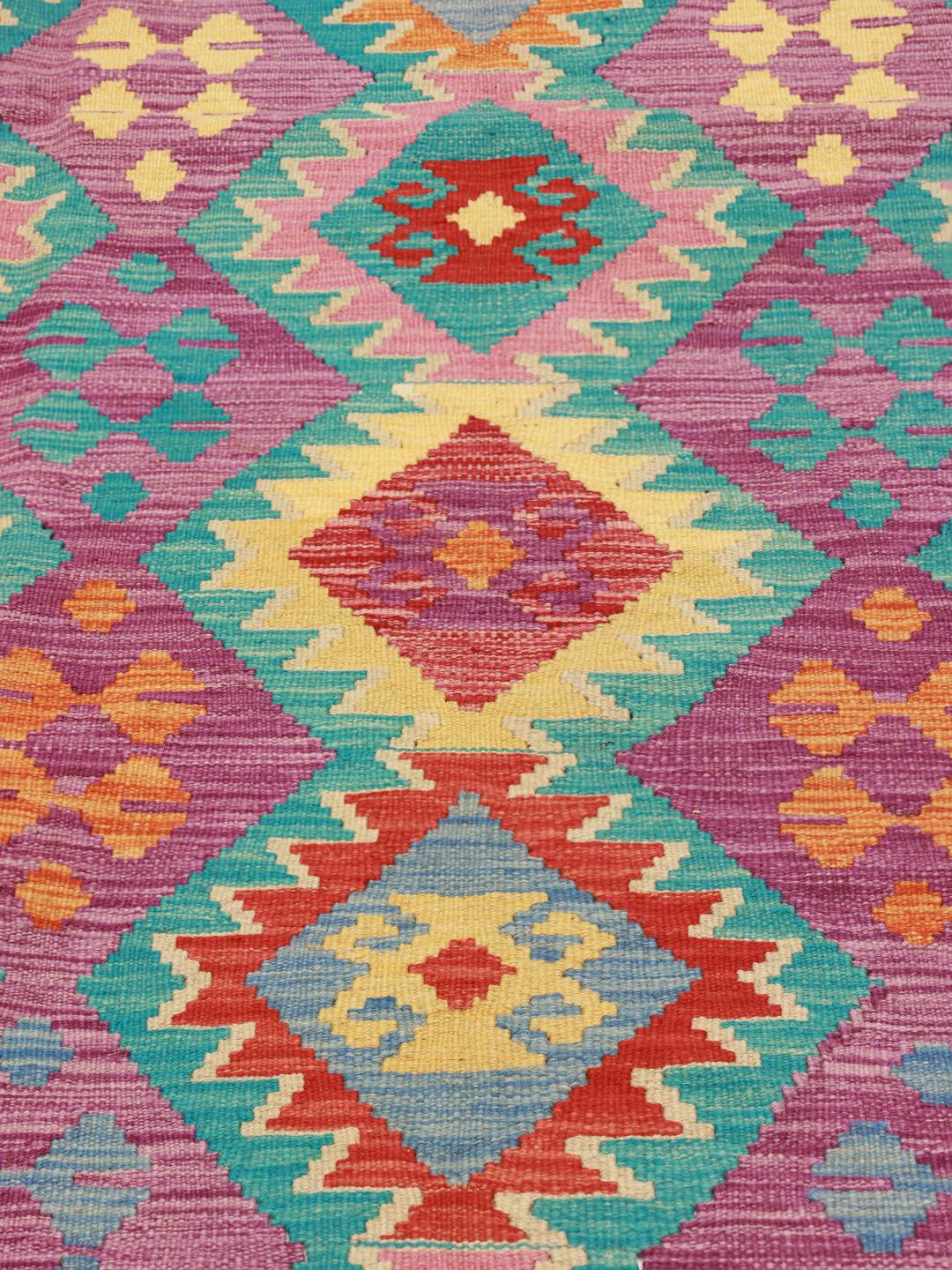
The signature design of this piece features repeating diamond motifs, a classic element in the region's textile language. These shapes are not merely decorative but often carry symbolic meanings related to protection, fertility, and the natural world. The use of a bold, warm field colour is traditional, providing a strong backdrop for the contrasting geometric shapes.
Collecting these rugs is an investment in cultural heritage. Because they are made by hand without the use of modern machinery, each rug reflects the specific choices and skill of the weaver. Owning a piece like this connects you to a global history of craft and provides a lasting, authentic element that brings depth to any modern home.