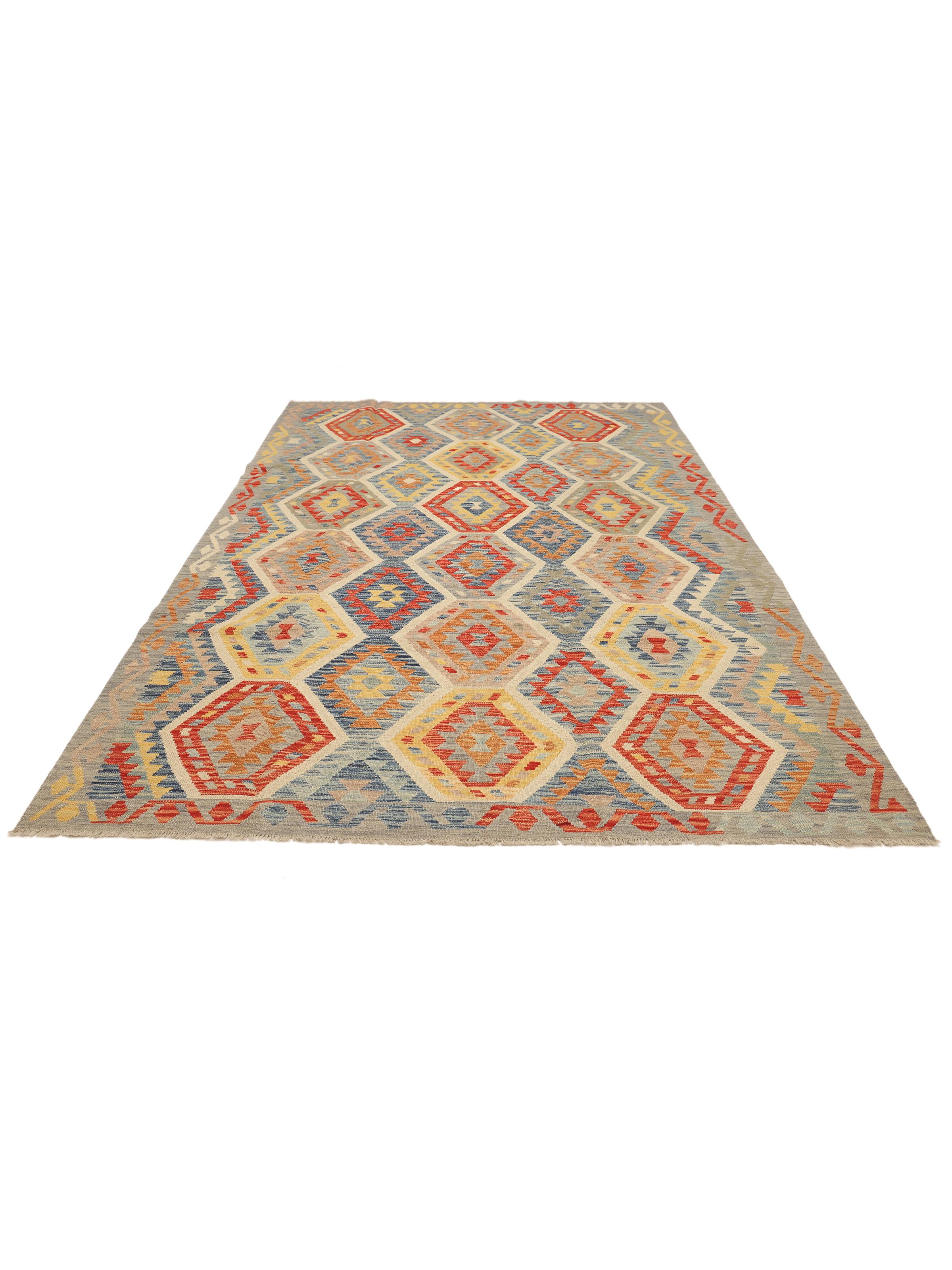
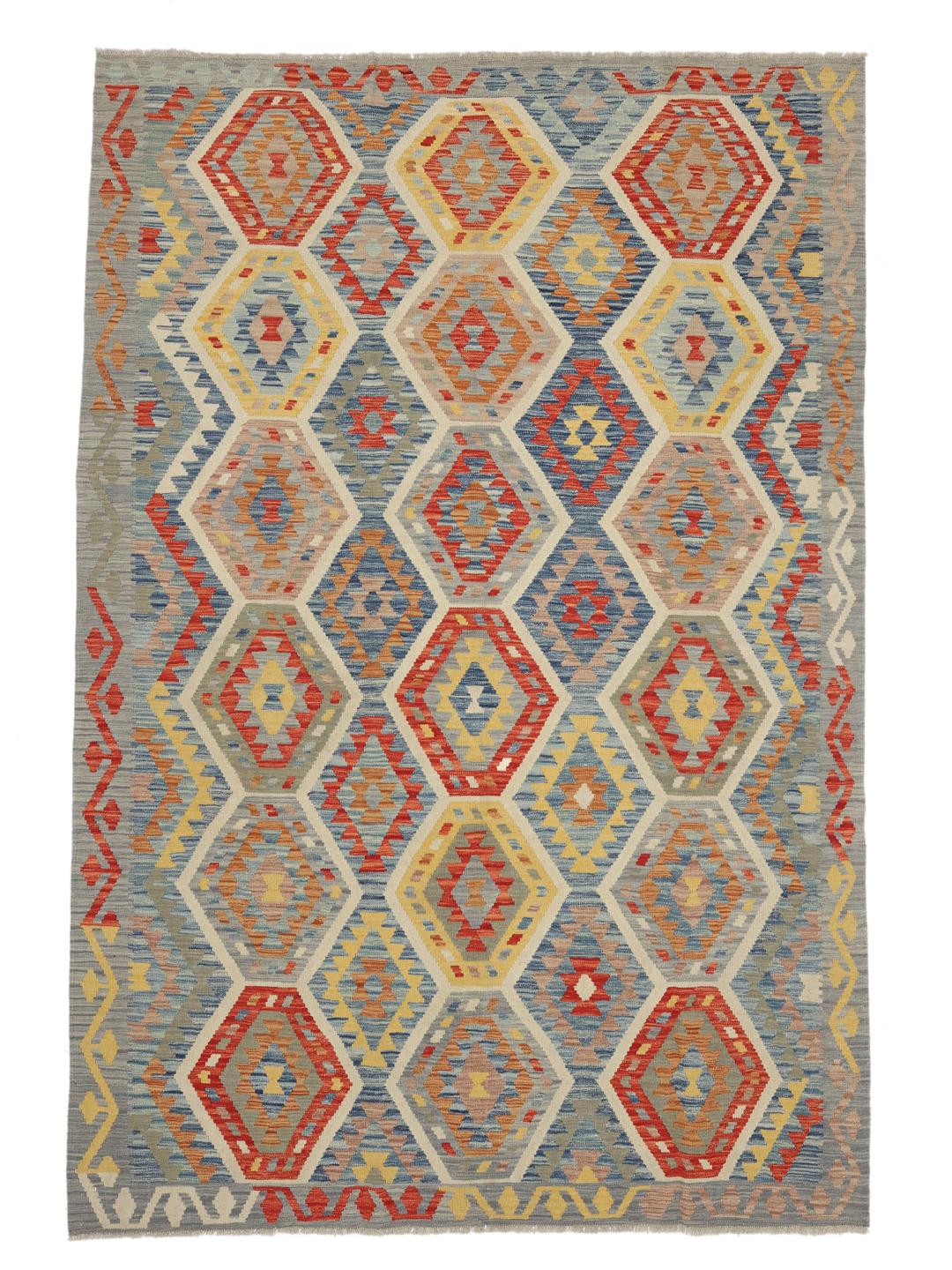
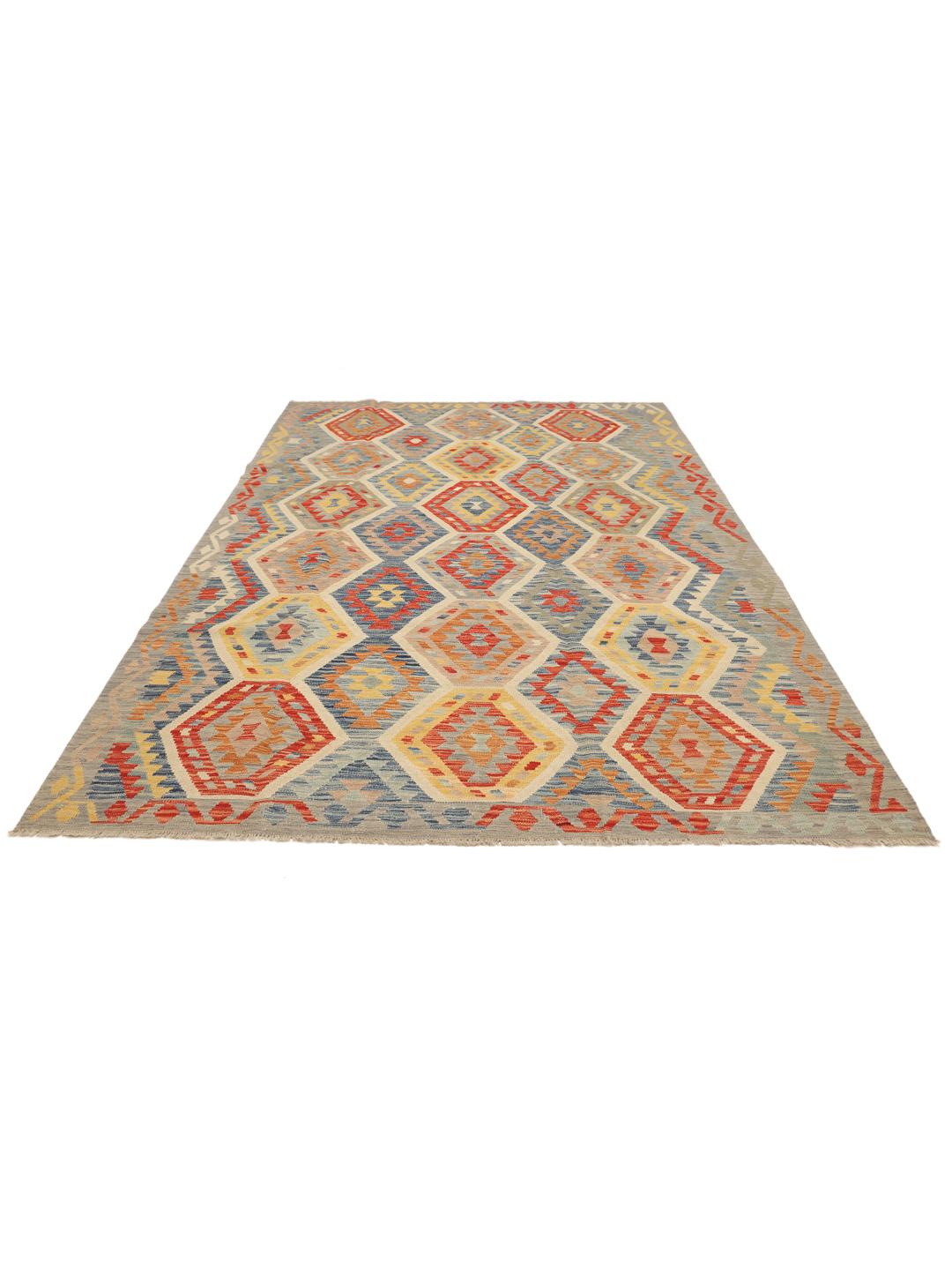
The Kelim Afghan Old Style rug is rooted in the rich traditions of nomadic and village weaving in Afghanistan. These rugs have long been a staple of life in the region, serving as functional floor coverings, wall hangings, and even transport sacks, reflecting the migratory history of the tribes who created them.
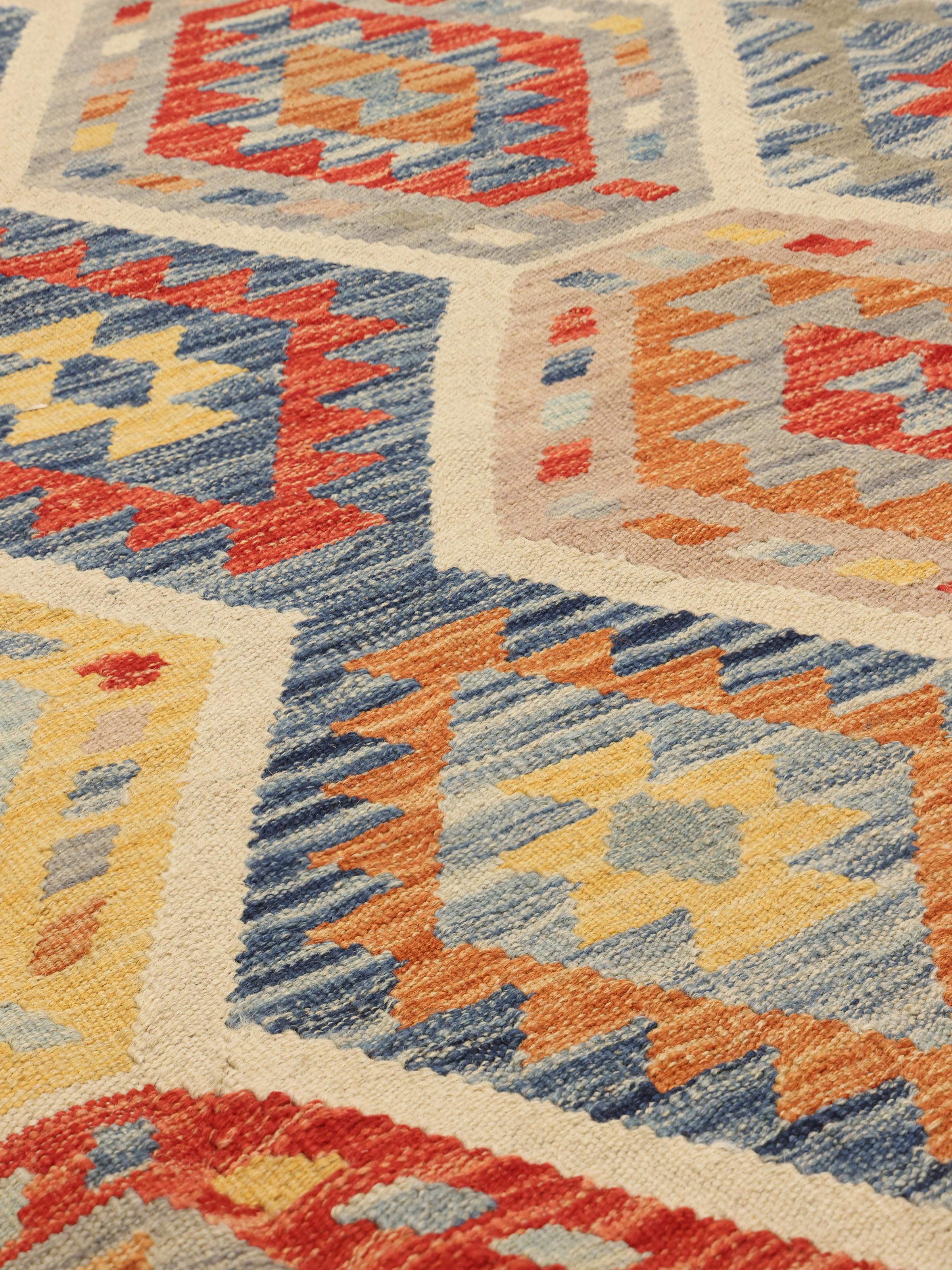
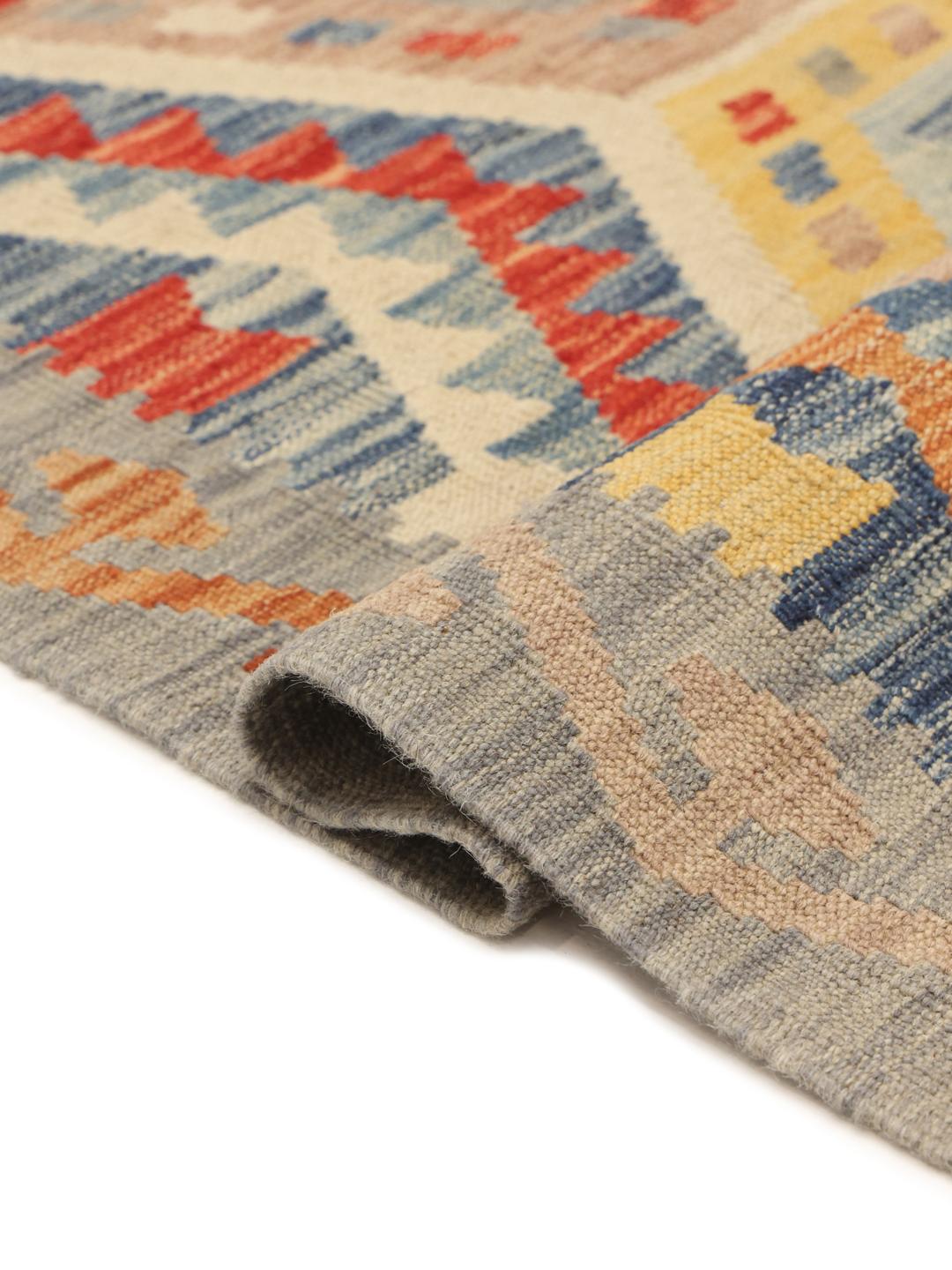
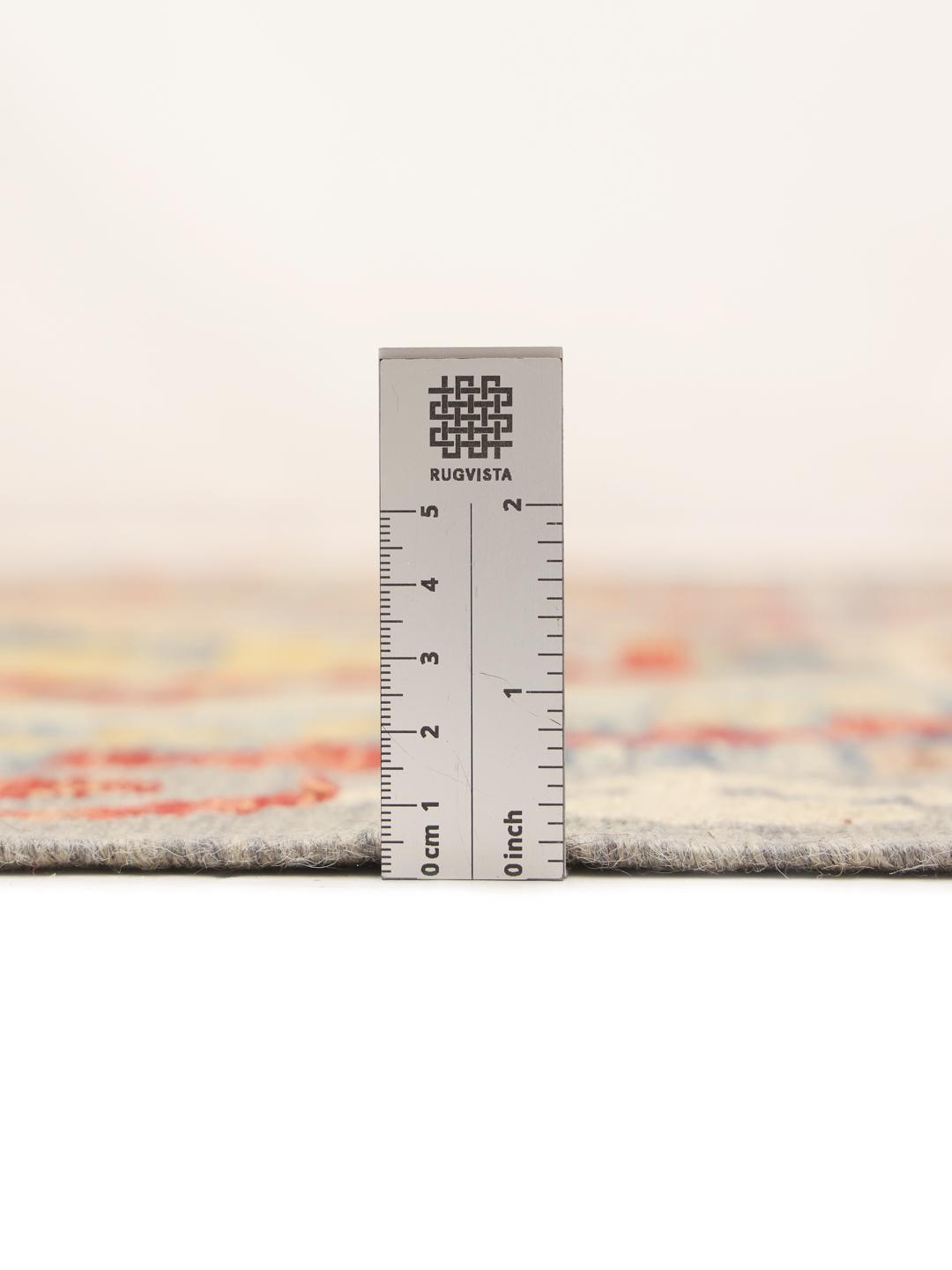
Technically, the term Kelim refers to a flat-woven rug, meaning it lacks a pile. This construction is achieved by interlocking the weft threads tightly with the warp, a method that creates a reversible, durable textile. The absence of pile allows the complex geometric patterns to appear sharp and distinct, emphasising the mathematical precision required during the weaving process.
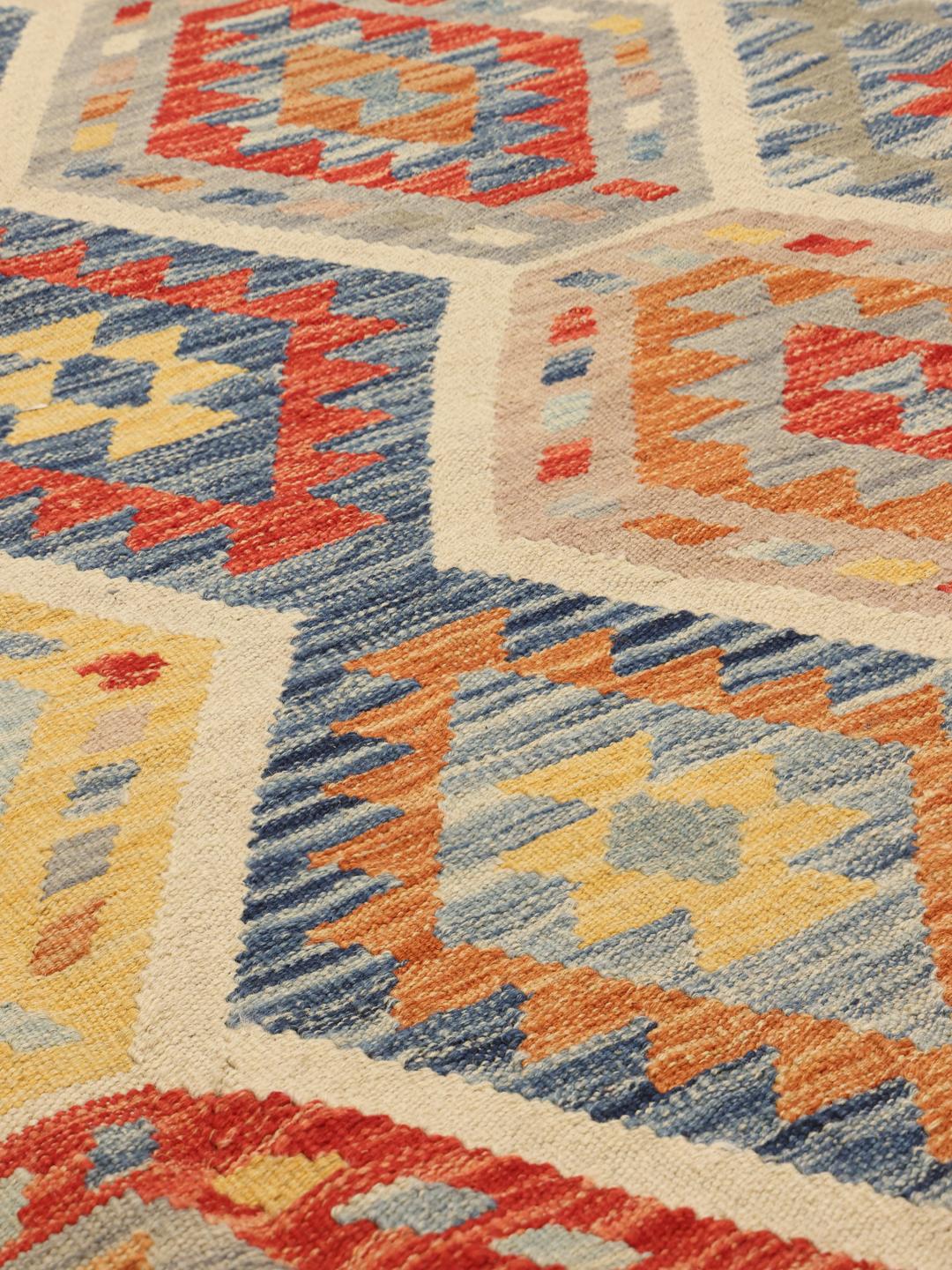
The design vocabulary of these rugs is defined by bold geometric shapes, most notably the diamond and various tribal motifs. These patterns are often arranged in repeating sequences, enclosed by decorative borders that frame the field. The use of traditional dyes results in a palette that is both earthy and vibrant, characteristic of the Afghan weaving aesthetic that has captivated collectors for decades.
Collecting a Kelim is an investment in cultural heritage and skilled artistry. These rugs are highly valued for their longevity and the way they age, developing a unique patina that enhances their visual depth over time. To own one is to preserve a living history, celebrating the dedication of the artisans who continue to keep these ancient techniques alive.