The tradition of weaving Kelim rugs is deeply rooted in the history of the Middle East and Central Asia. Originally created by nomadic and semi-nomadic tribes for practical use as floor coverings, tent dividers, and saddlebags, these flat-weave textiles have evolved into highly sought-after decorative pieces that carry the stories of their makers.
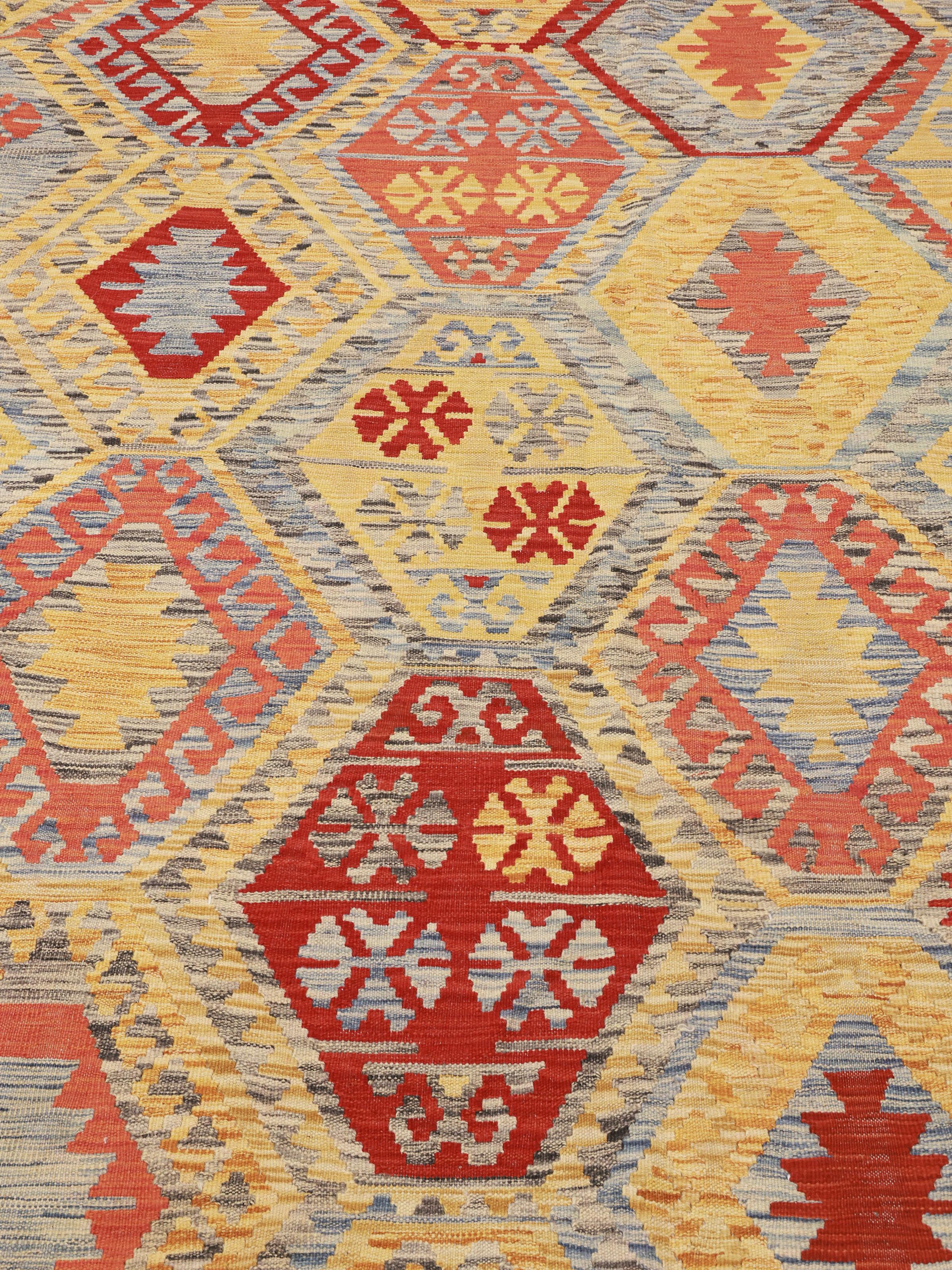
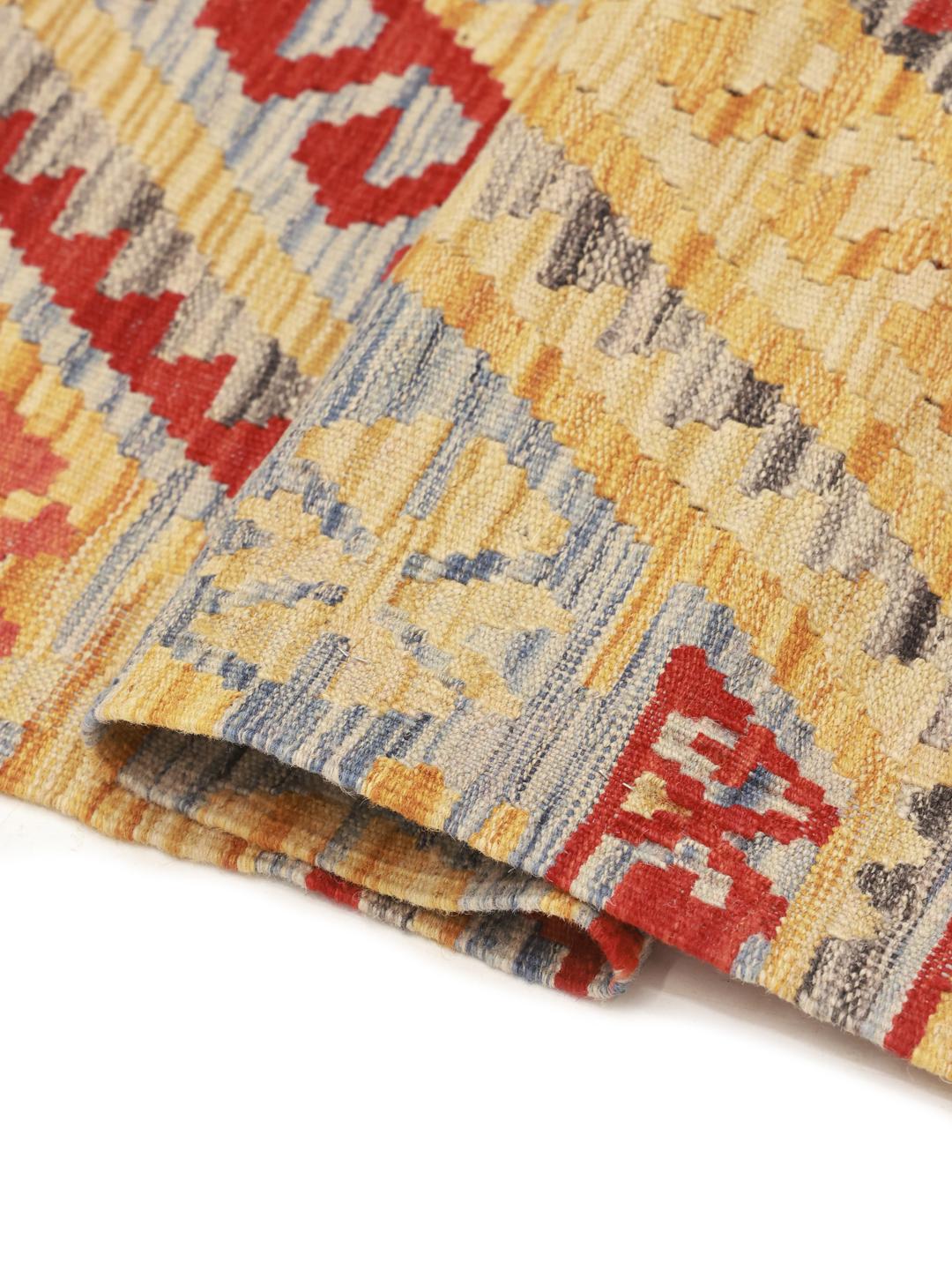
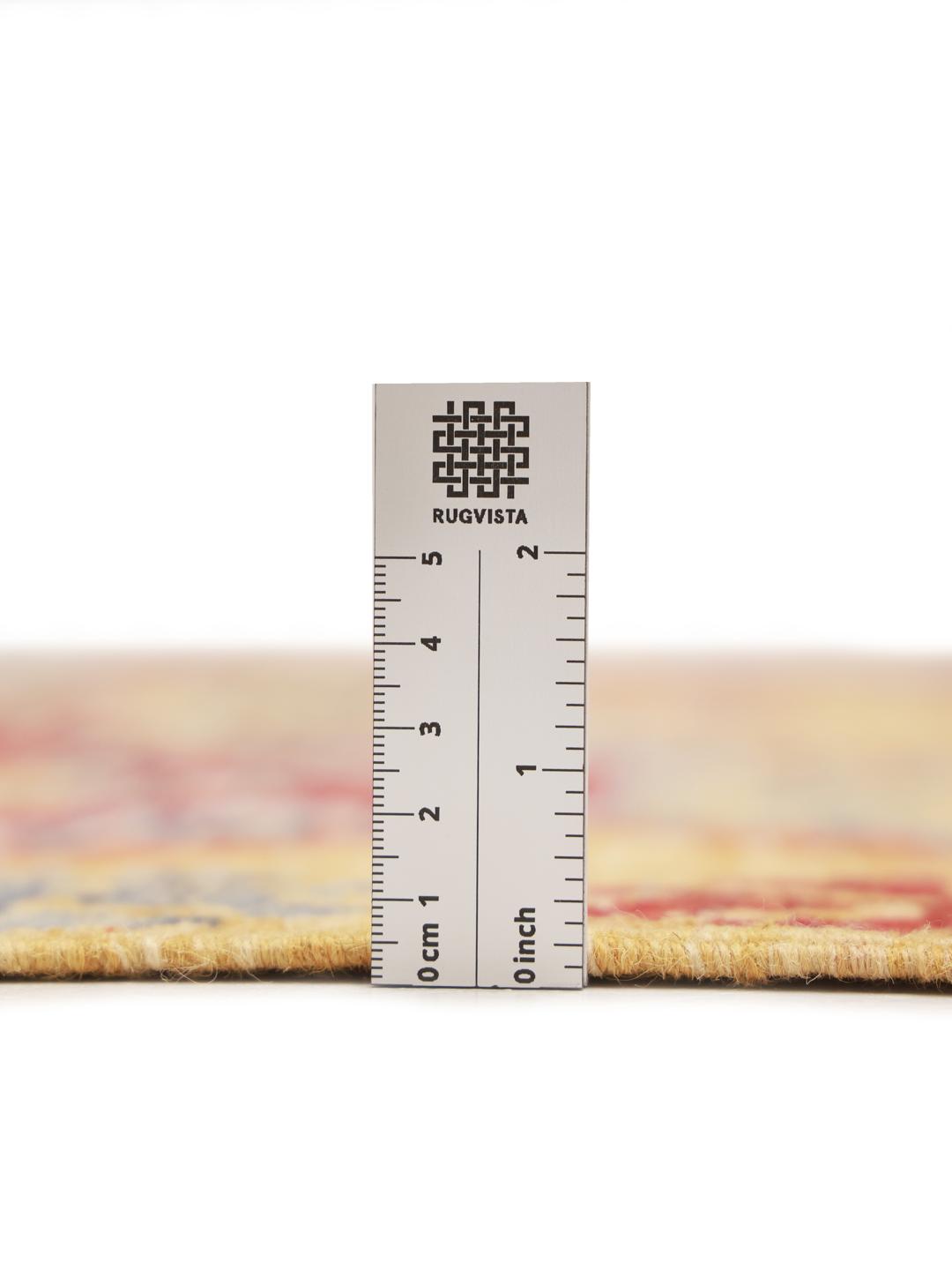
The term 'Kelim' refers to a specific flat-weaving technique where the weft threads are passed through the warp threads to create the pattern. Unlike knotted rugs, this method results in a thinner, reversible textile that is both lightweight and incredibly resilient, making it a staple of regional craft for centuries.
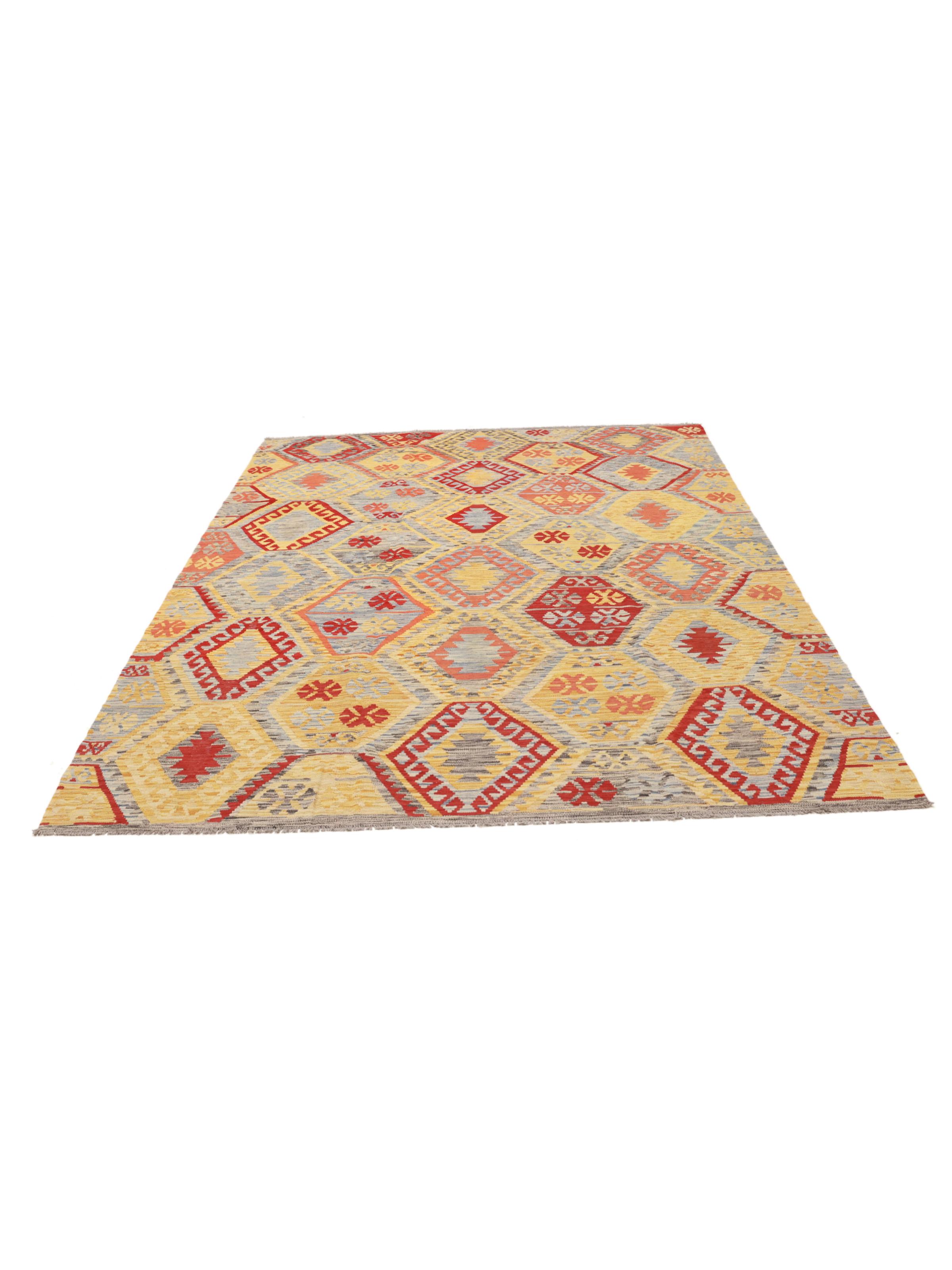
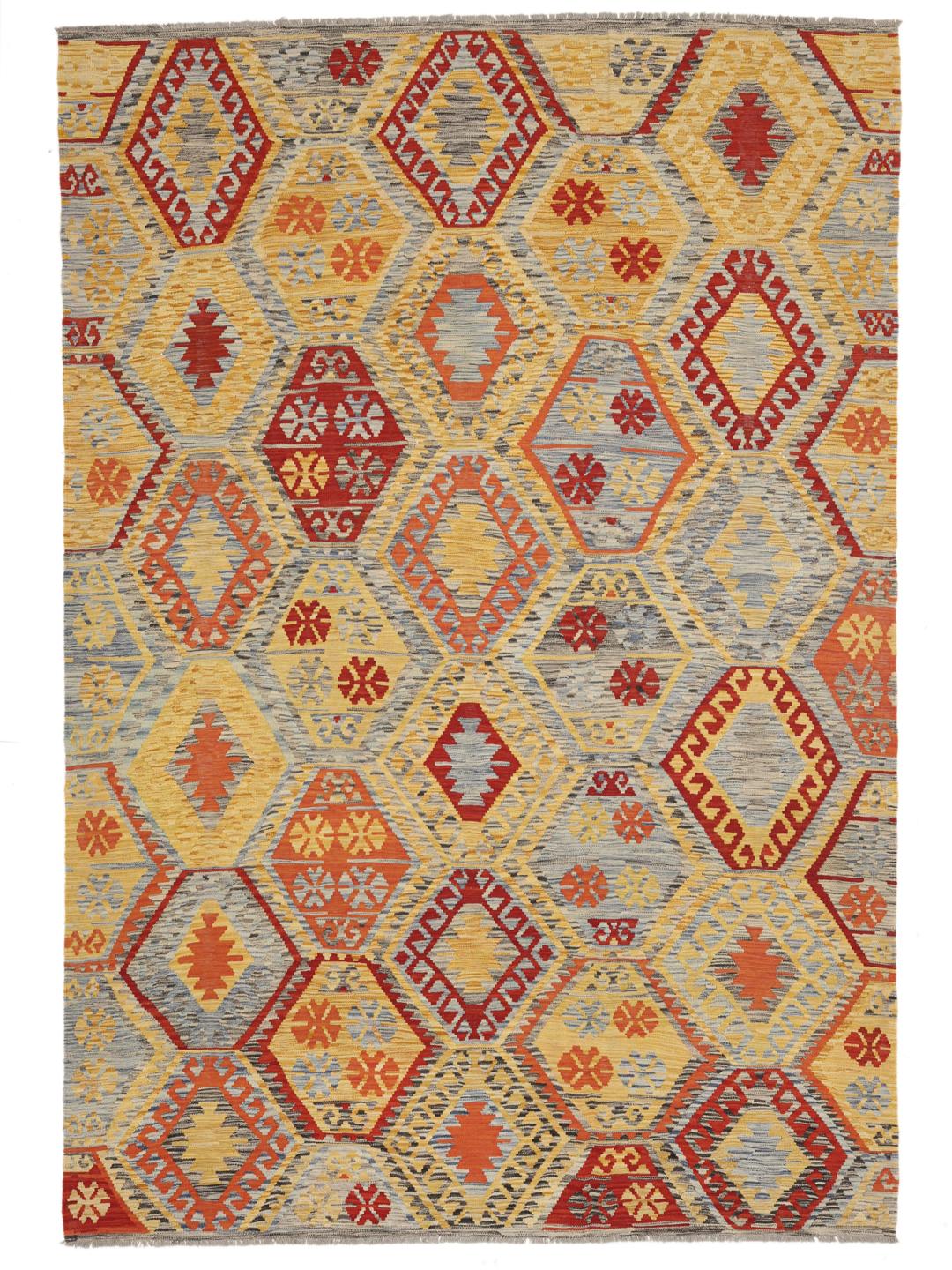
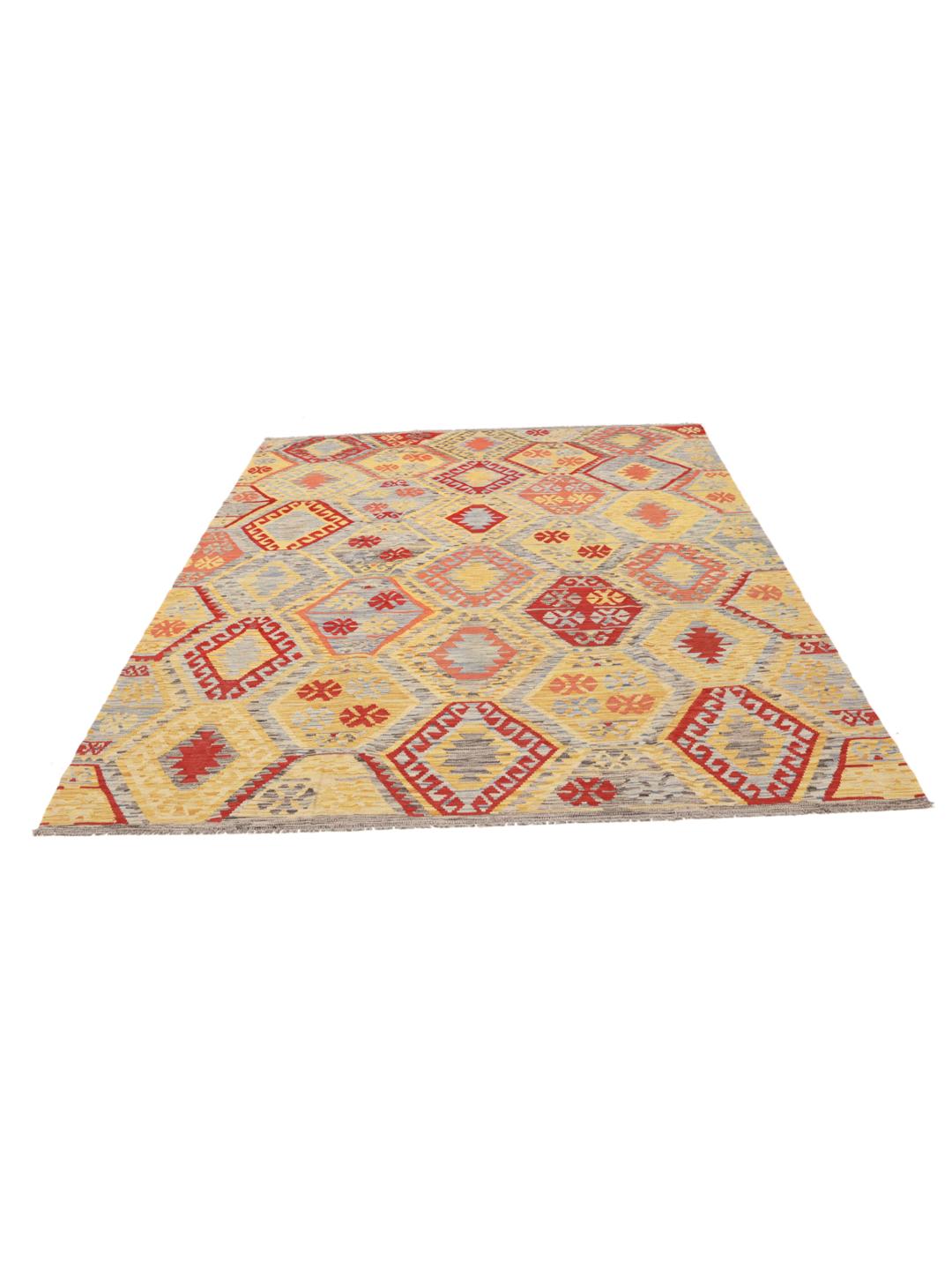
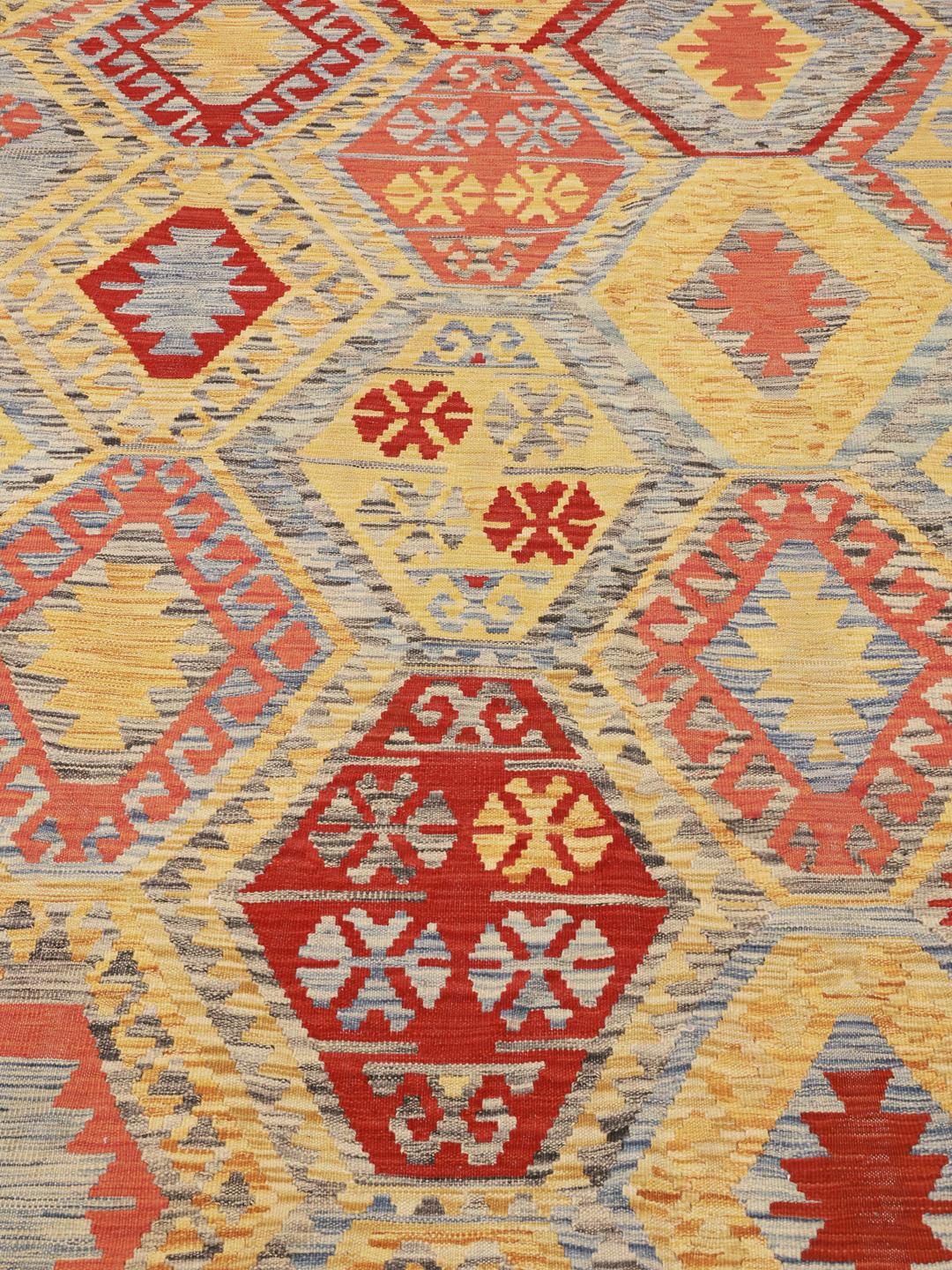
Design-wise, these rugs are characterised by their bold geometric language. The diamond motifs and stylised floral elements seen here are traditional signatures, often representing protection or fertility within tribal iconography. The use of vibrant, sun-drenched colours reflects the natural dyes historically derived from local plants and minerals found in the rugged Afghan landscape.
Owning a Kelim Afghan Old Style rug is an invitation to connect with a long-standing cultural heritage. Collectors value these pieces for their authenticity, the skill required to maintain consistent tension across such a large surface, and the way they bridge the gap between ancient function and contemporary home aesthetics.