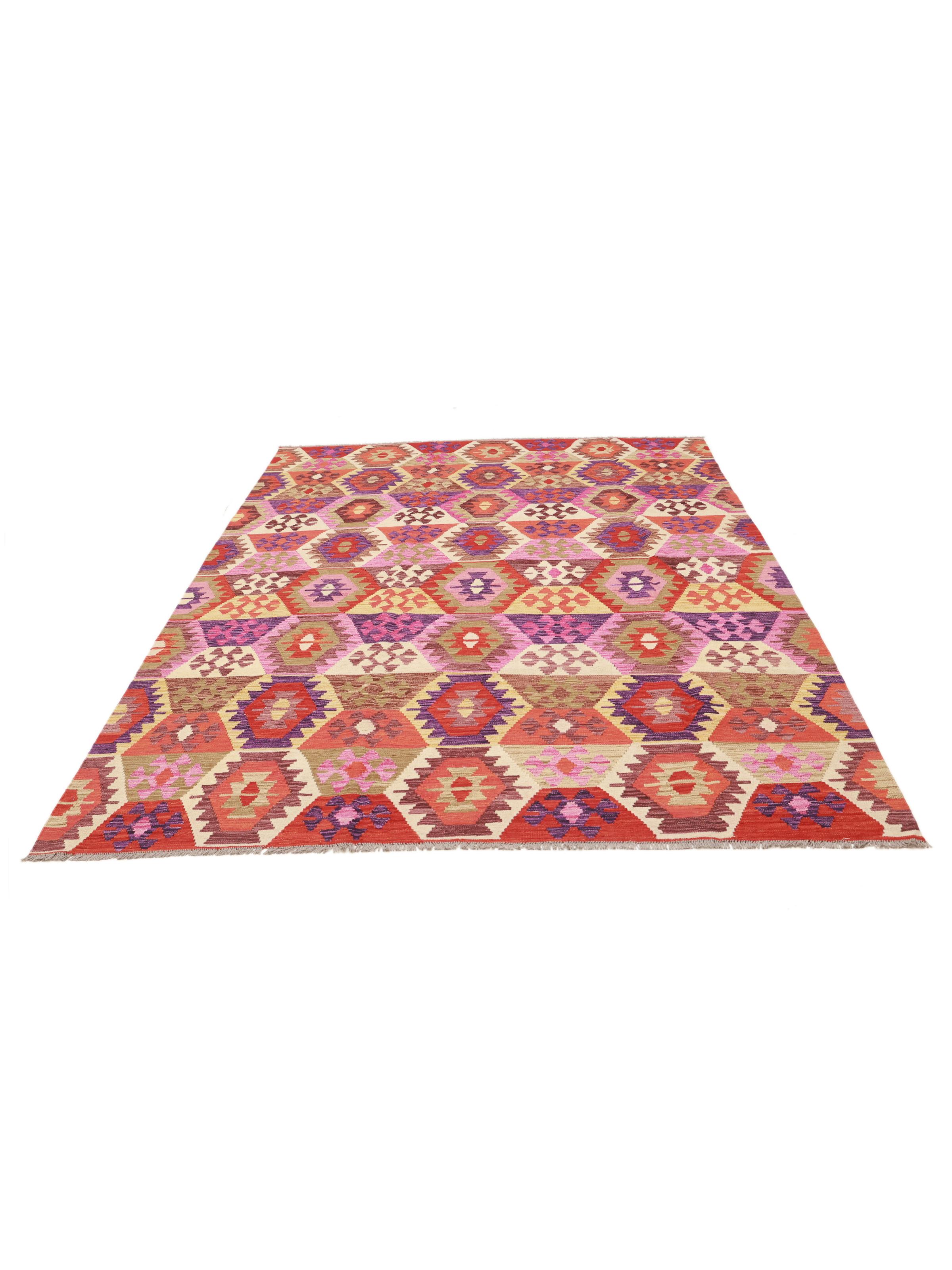
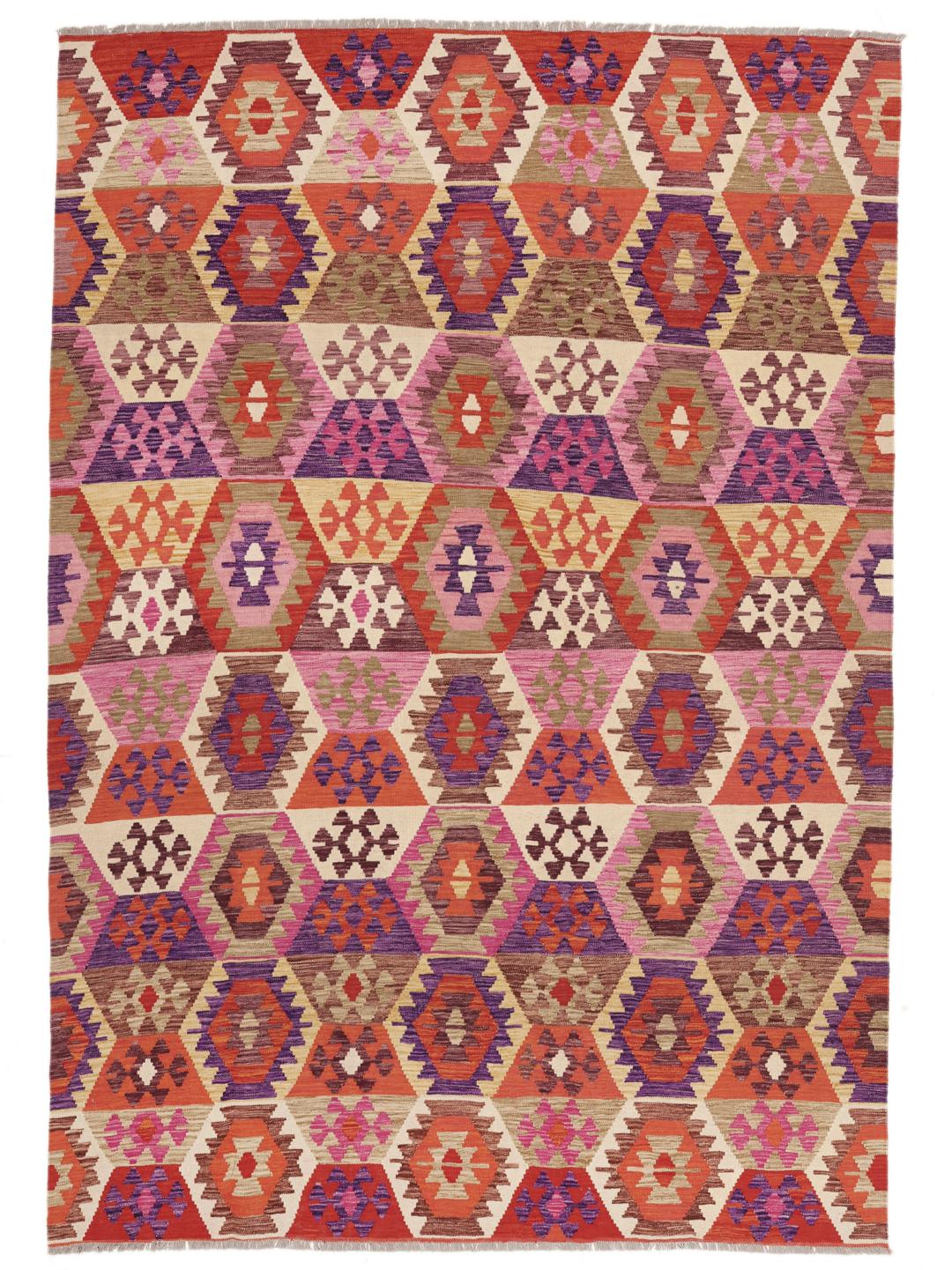
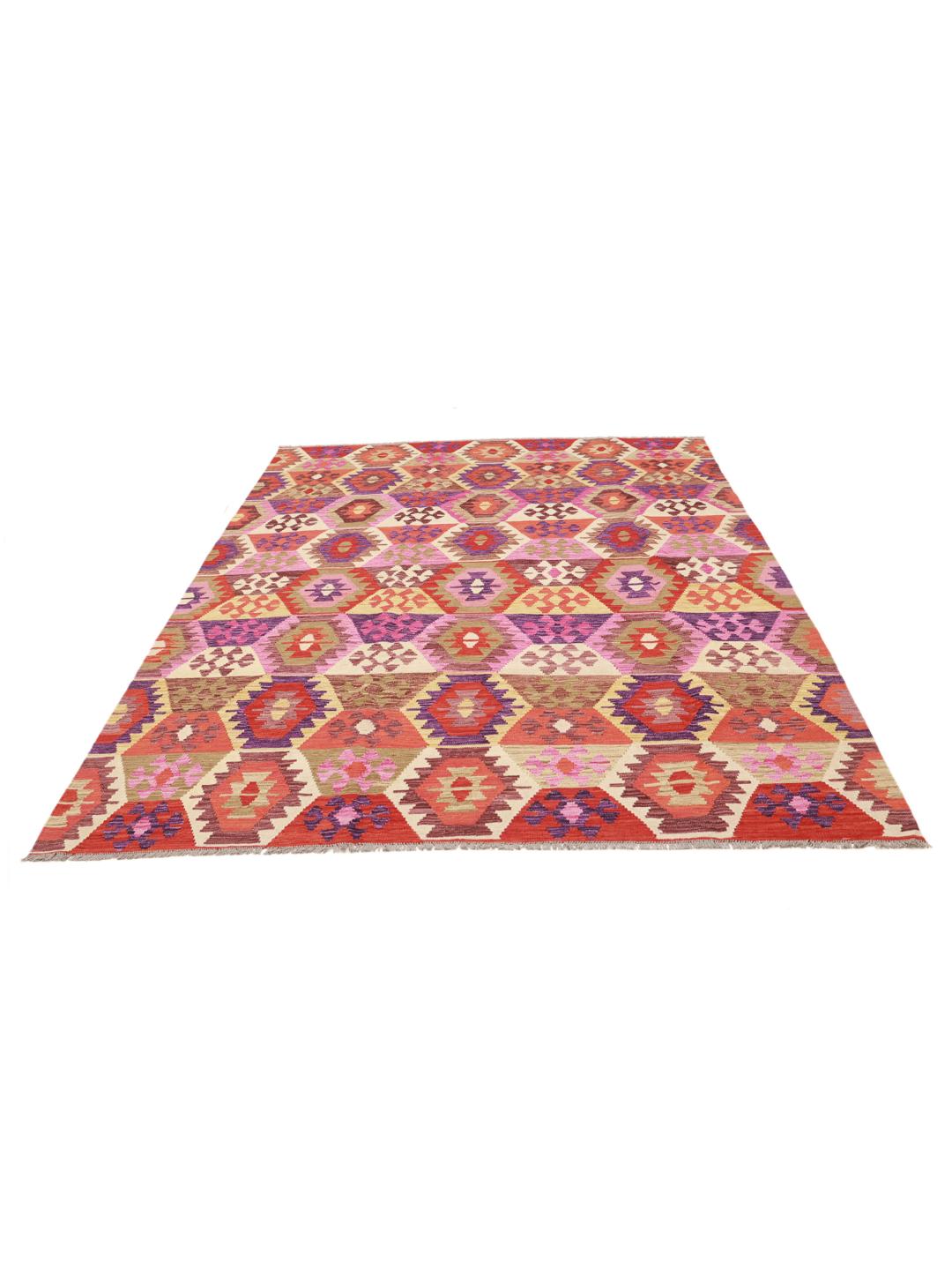
The Kelim tradition in Afghanistan is deeply rooted in the nomadic history of the region, where these flat-woven textiles were essential for both utility and artistic expression. These rugs were traditionally created by tribal weavers to serve as floor coverings, wall hangings, or storage bags, with each design reflecting the specific heritage and environment of the weaving community.
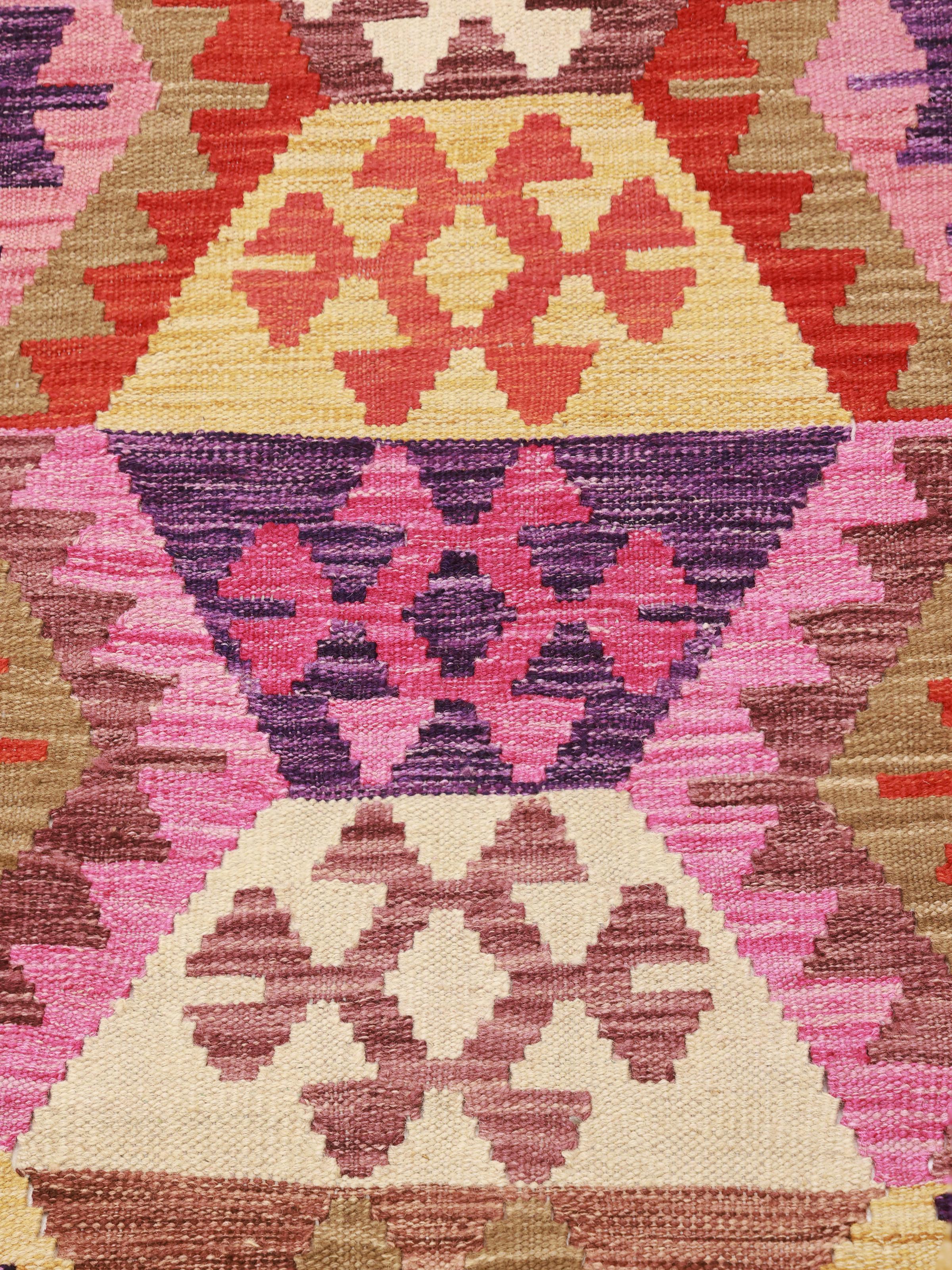
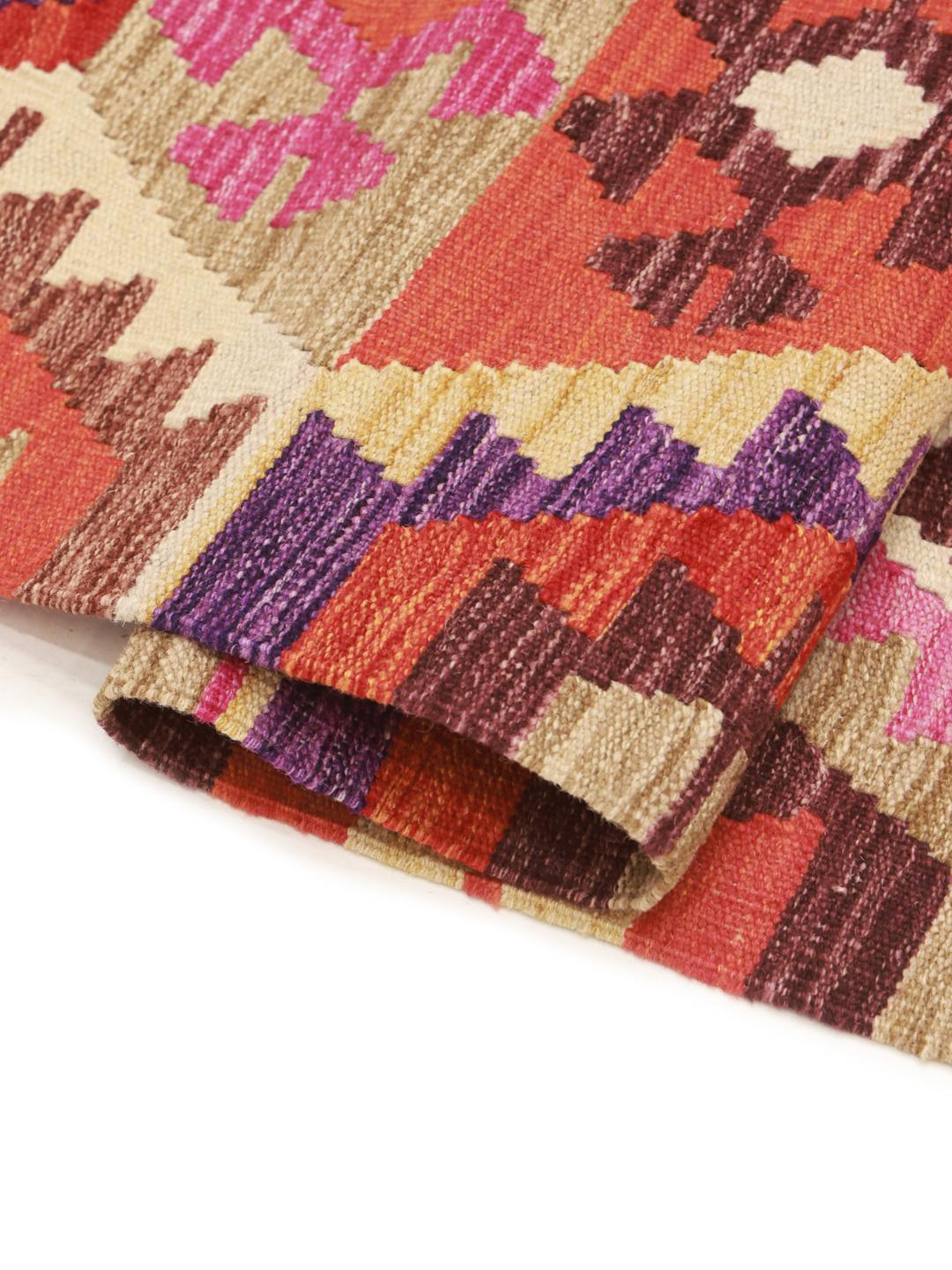
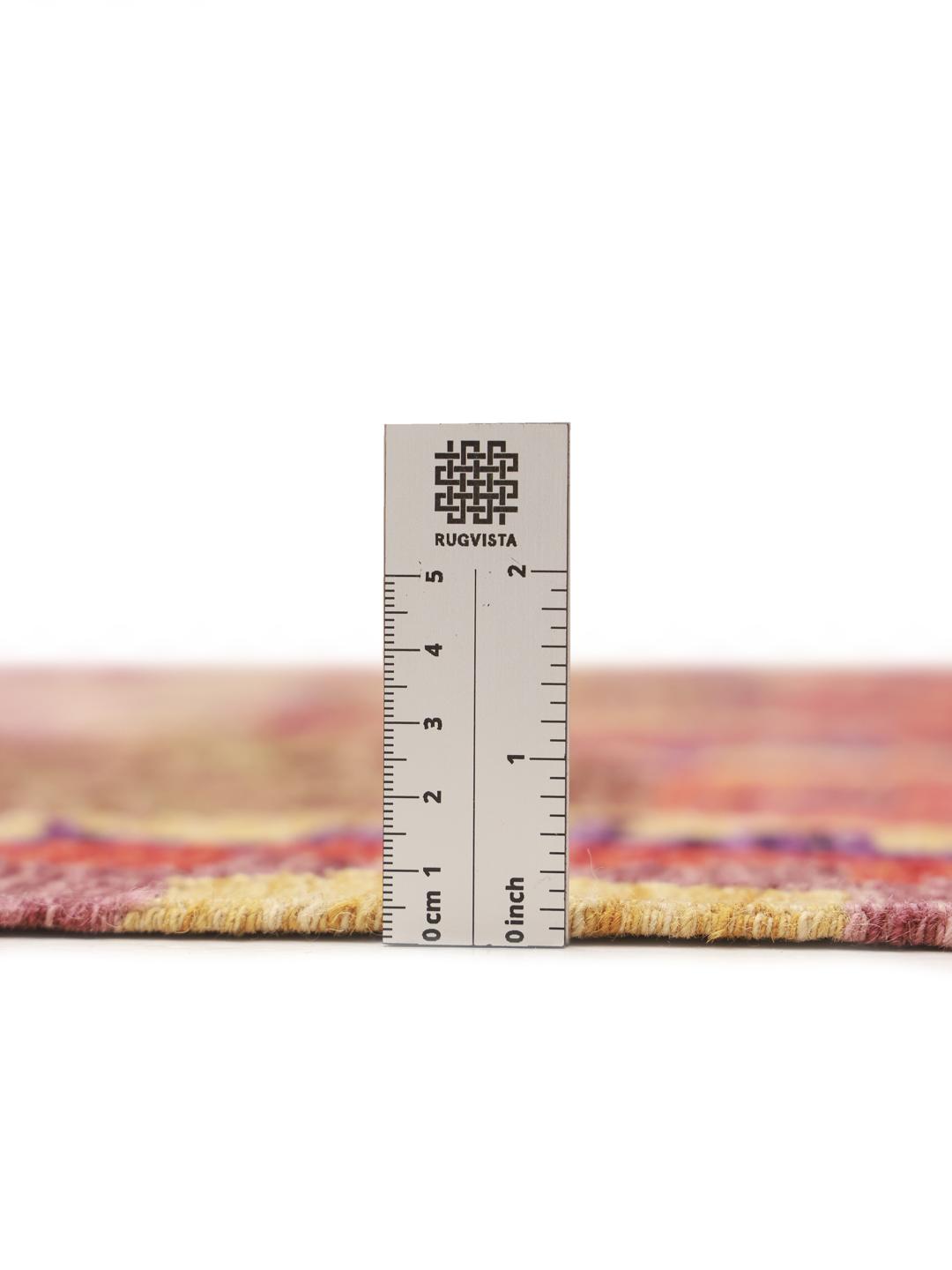
The term 'Kelim' refers to the specific flat-weaving technique where the warp and weft are interlaced without a pile. This method creates a thin, reversible rug that is incredibly durable and versatile. Because there are no knots to pile up, the clarity of the pattern is exceptionally high, allowing the geometric motifs to stand out with sharp, crisp edges that define the aesthetic of the region.
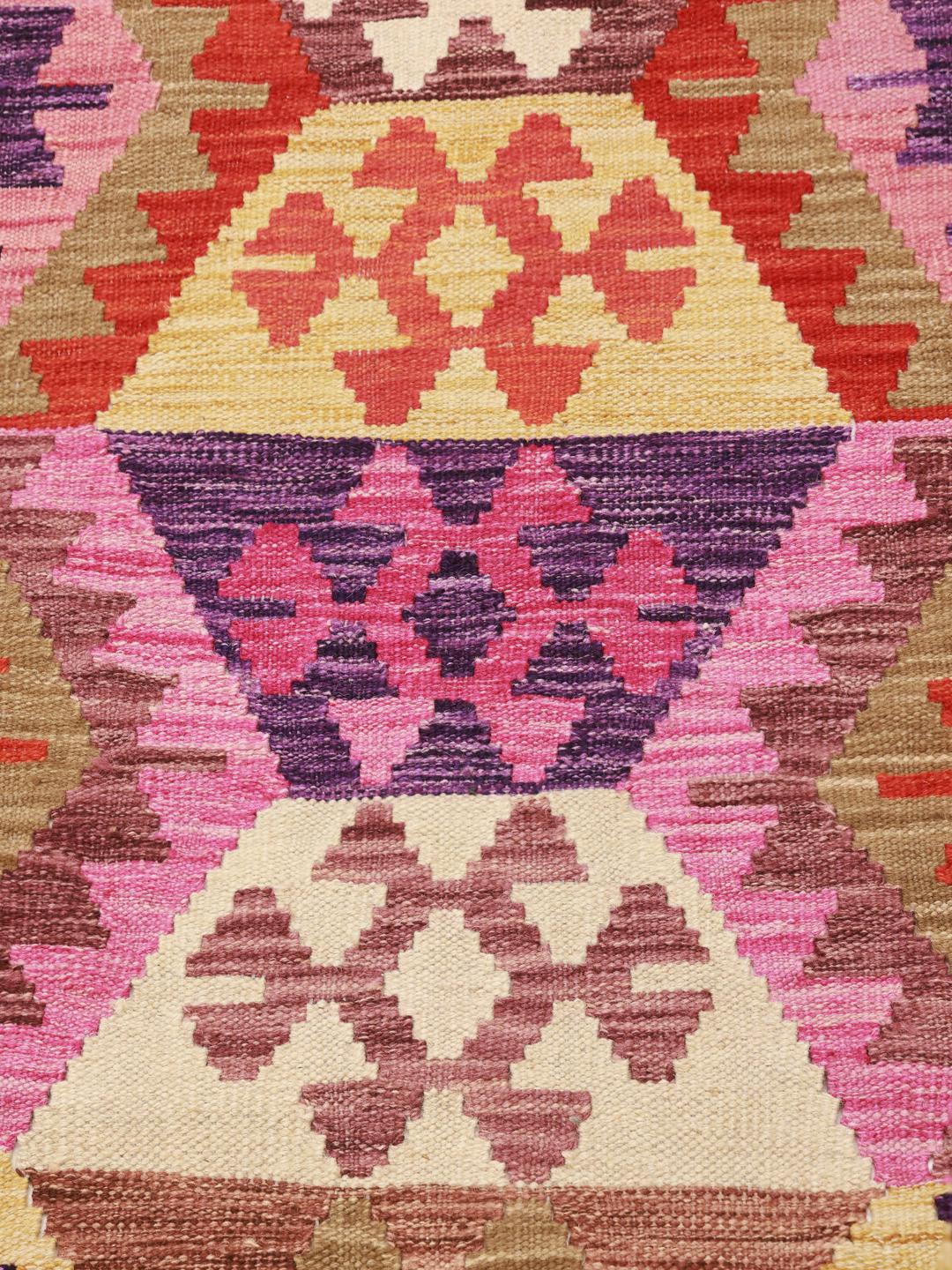
Signature design elements in these rugs often include complex geometric shapes, such as diamonds, triangles, and stylized floral or tribal motifs. The colour palettes are typically derived from natural dyes, creating a harmonious blend of earthy reds, deep purples, and warm neutrals. In this particular piece, the rhythmic repetition of these motifs creates a sense of balance and visual flow that is characteristic of the finest Afghan weaving.
Owning an Afghan Kelim is more than just purchasing a home accessory; it is an act of preserving a cultural legacy. These rugs are highly valued by collectors for their authenticity, the skill required for their creation, and the way they bridge the gap between historical craft and modern interior design. Each rug stands as a testament to the enduring human spirit and the timeless appeal of handmade art.