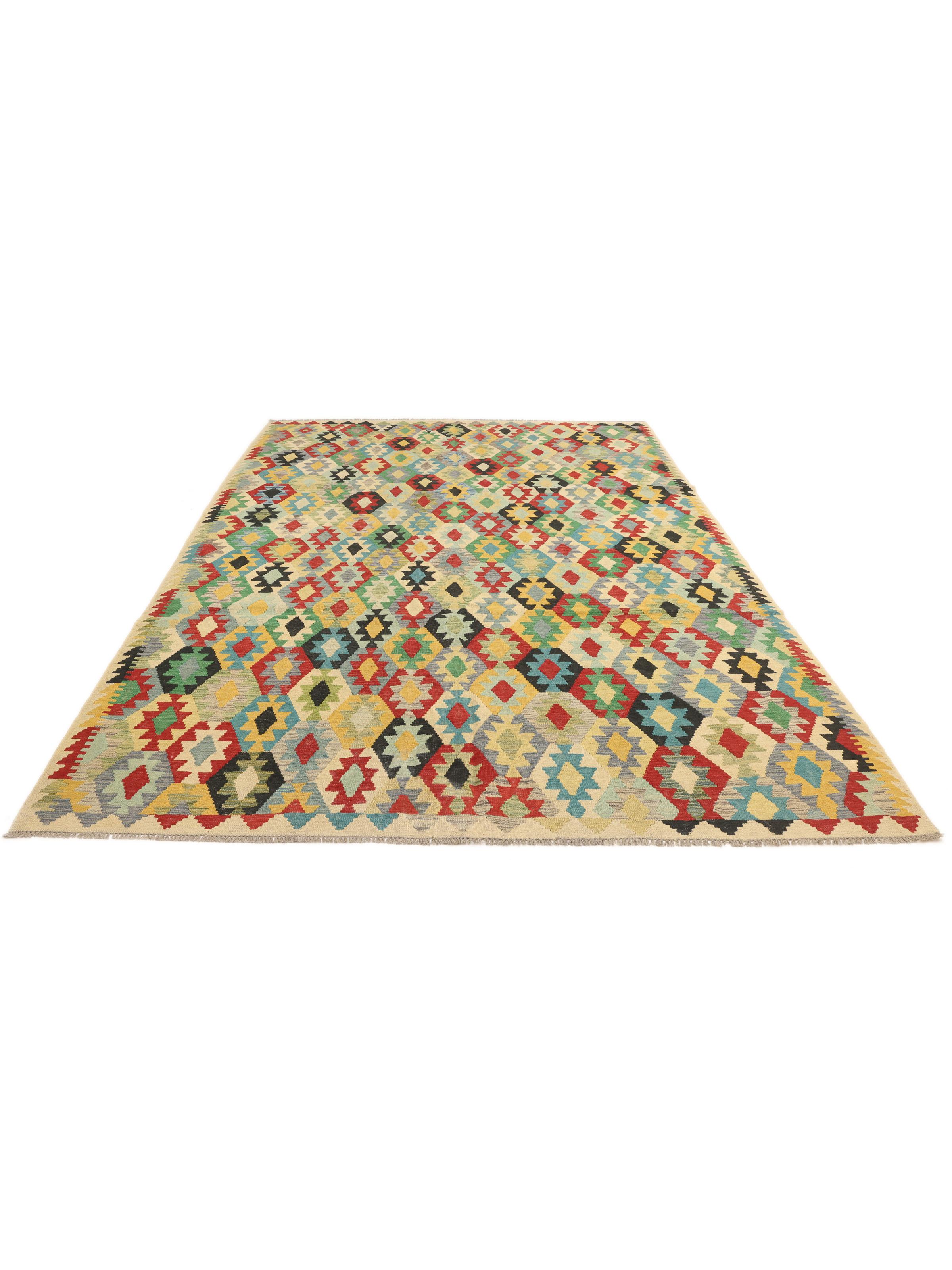
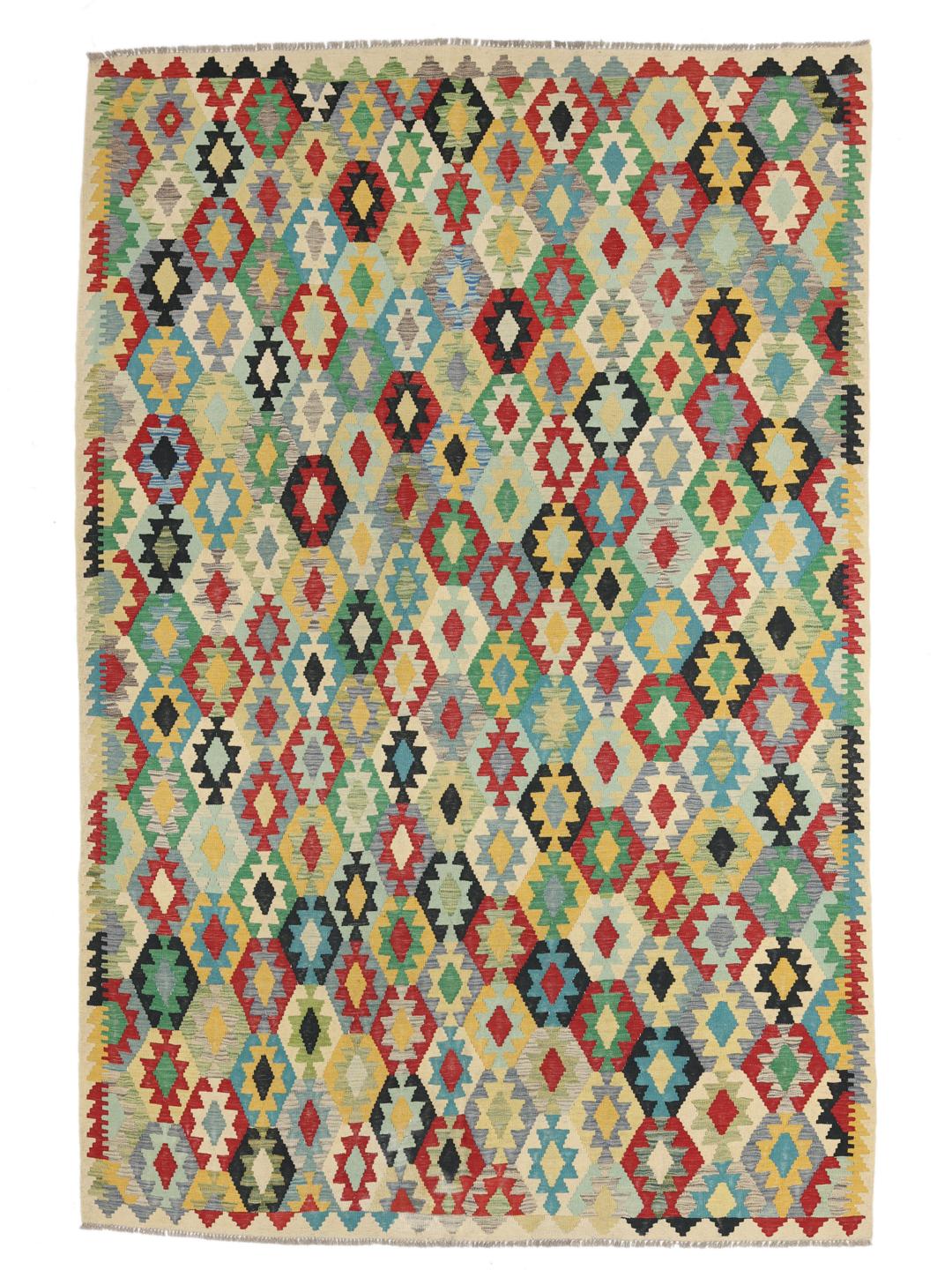
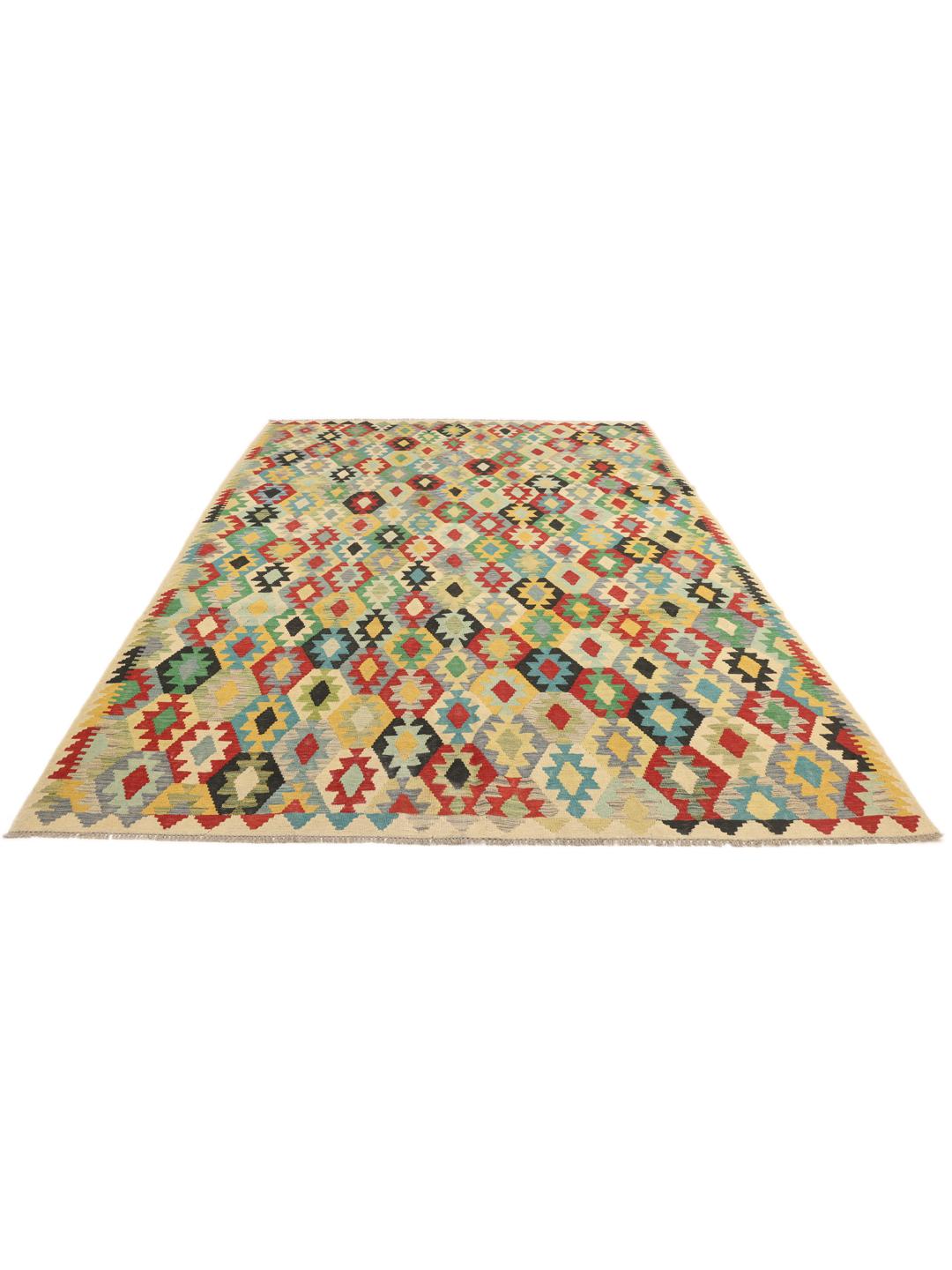
The Kelim tradition in Afghanistan is deeply rooted in the nomadic and semi-nomadic lifestyles of the region. Historically, these flat-weave rugs were created as essential, portable household items, serving as floor coverings, wall hangings, and storage bags for families traversing the rugged landscapes of Central Asia. The migration of these weaving techniques across the Silk Road has allowed the craft to evolve, incorporating influences from various cultures while maintaining its distinct, utilitarian spirit.
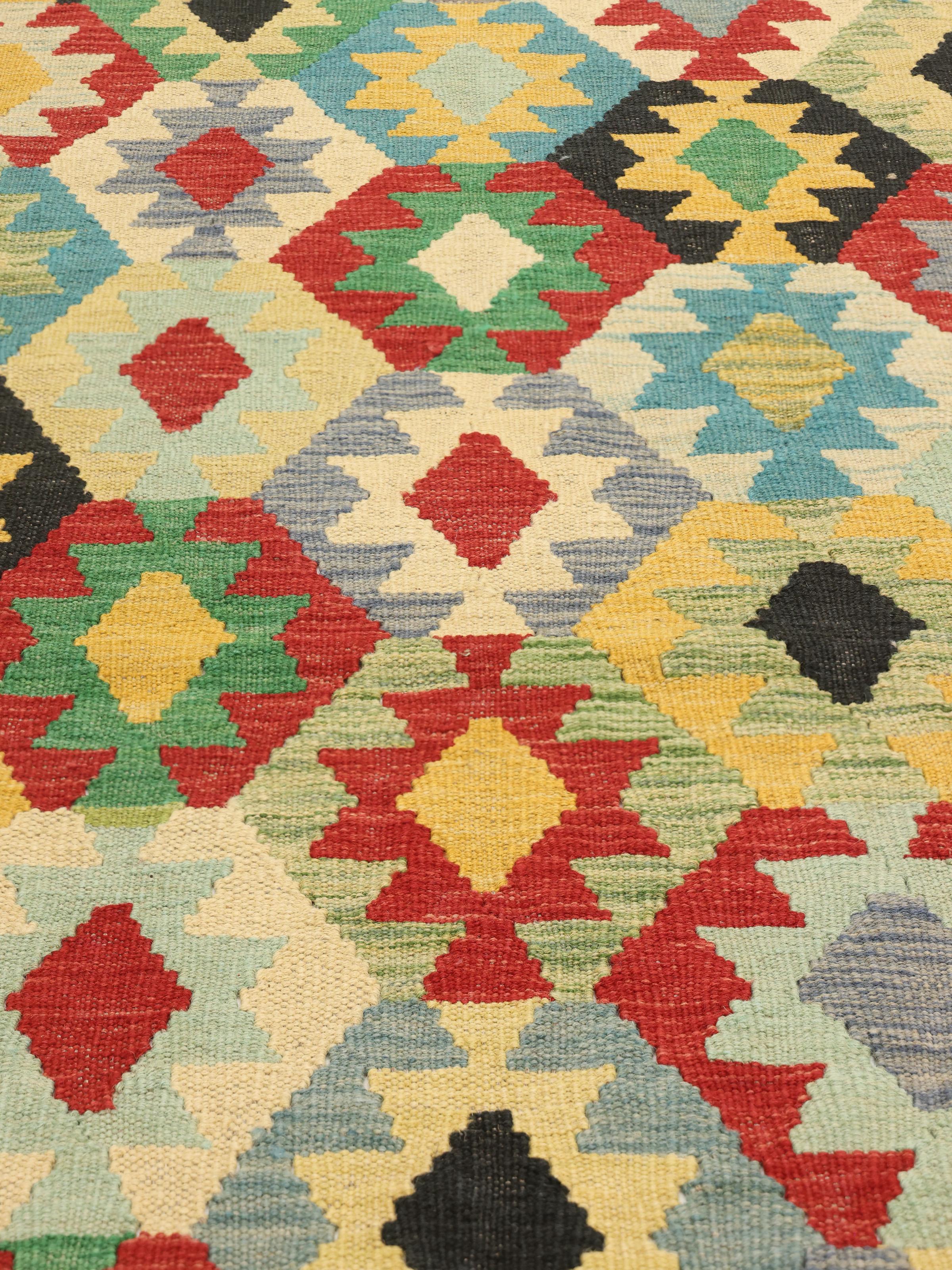
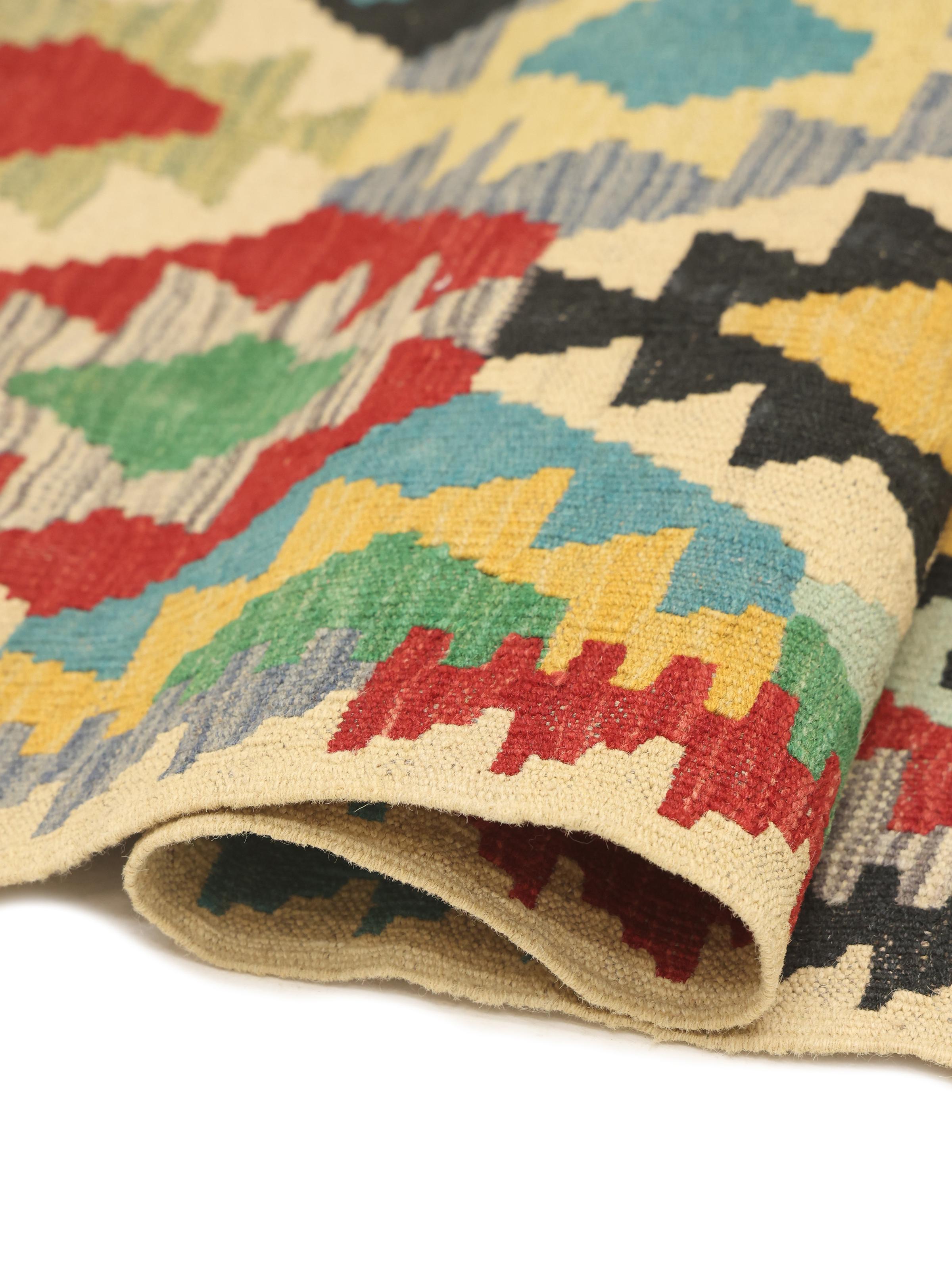
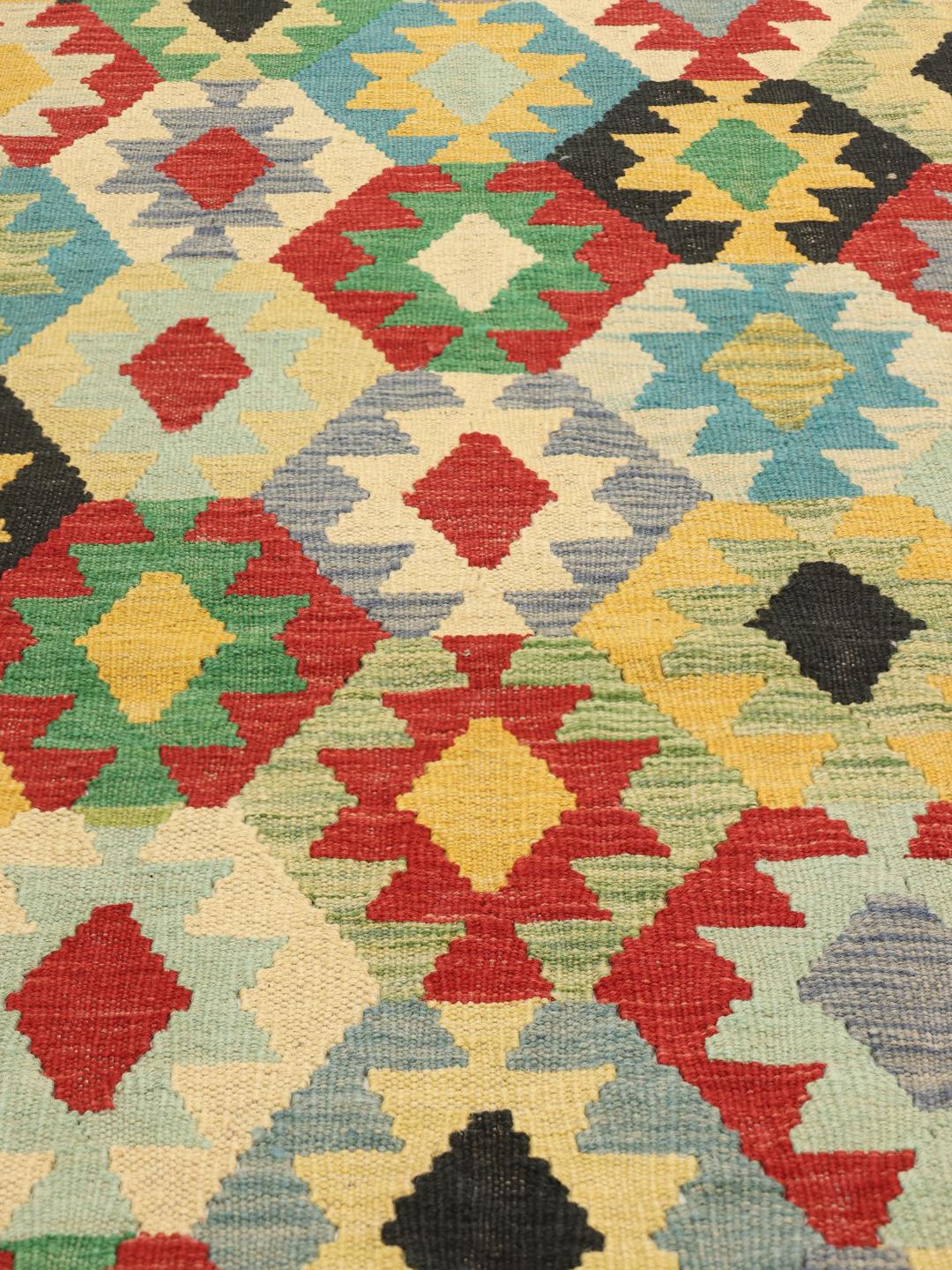
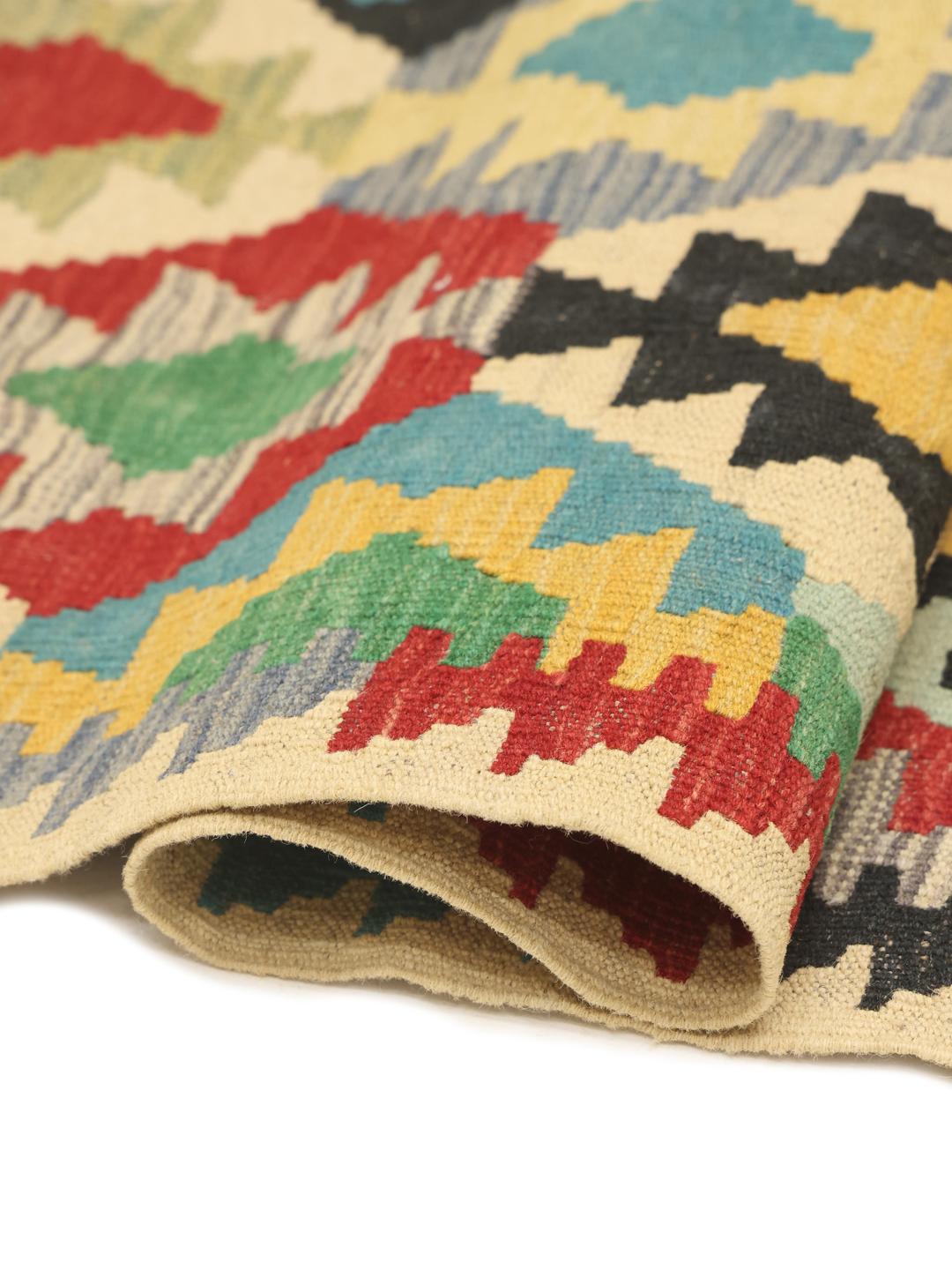
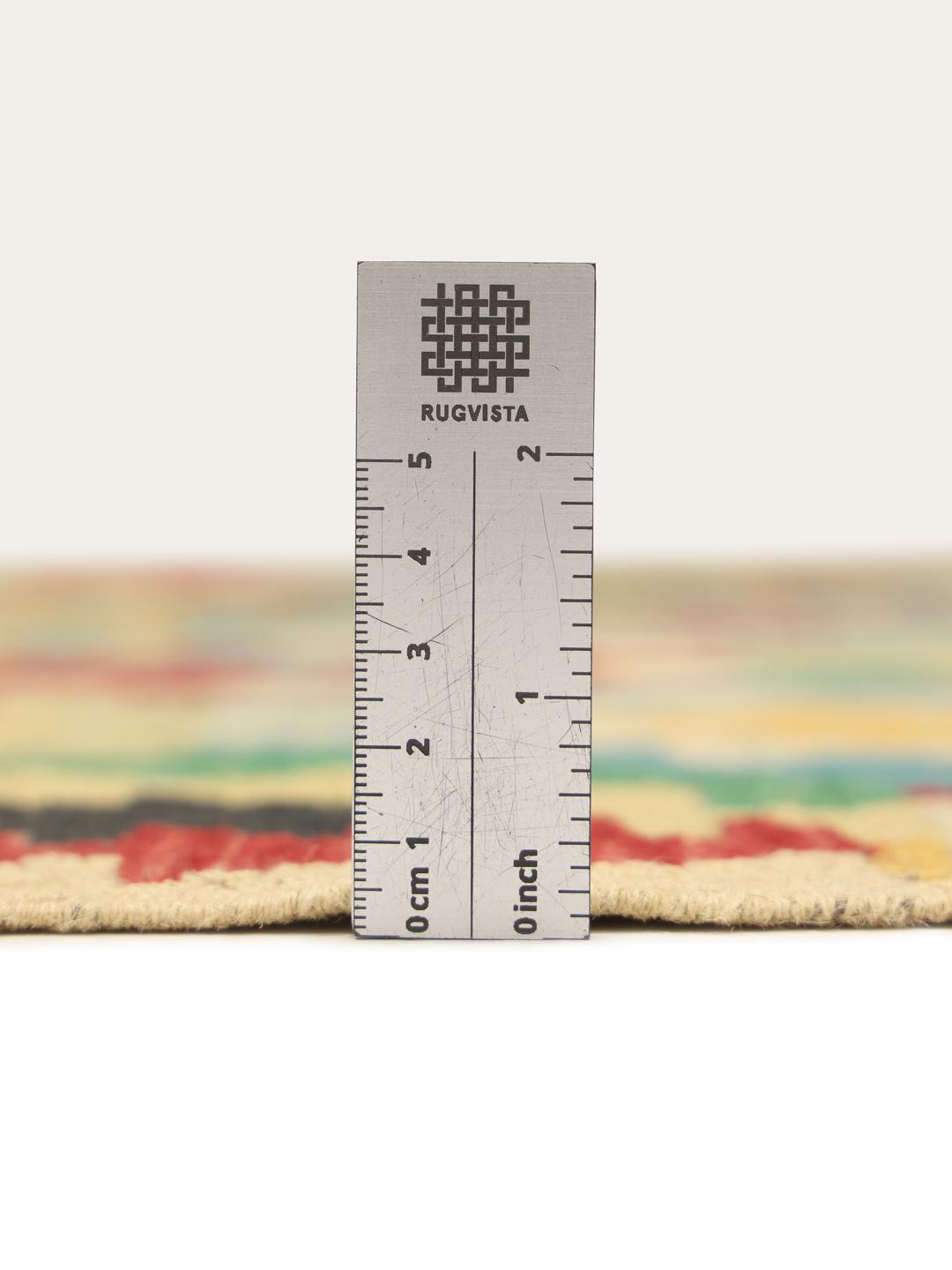
The term 'Kelim' refers to the specific flat-weaving technique where the warp and weft threads are interlaced to create a smooth surface without a raised pile. This method is highly prized for its clarity of pattern and lightweight nature, making it ideal for the mobile lifestyle of its origins. Because there is no pile to hide the weave, the quality of the wool and the tension of the weave are paramount, resulting in a textile that is both incredibly durable and visually precise.
Signature design elements of these rugs often include bold geometric motifs, with the diamond being a particularly prominent feature. These patterns are not merely decorative but are frequently rooted in symbolic language, representing protection, fertility, or the natural surroundings of the weaver. The use of vibrant, contrasting colours is a hallmark of this tradition, designed to bring life and energy to the interiors of traditional homes.
Today, these rugs are highly valued by collectors and interior enthusiasts alike for their cultural weight and the undeniable skill they represent. Owning a Kelim is an act of preserving a dying art form, as the patience and traditional knowledge required to produce them are becoming increasingly rare. These pieces offer a connection to a rich, historical lineage, providing a sense of heritage and authenticity that mass-produced items cannot replicate.