Kelim rugs have a long and storied history rooted in the nomadic weaving traditions of Afghanistan and the wider region. Originally created as functional blankets, saddlebags, and floor coverings, these flatwoven textiles were designed to be lightweight, durable, and easy to transport. Over centuries, they evolved from simple household items into highly expressive canvases for regional weavers.
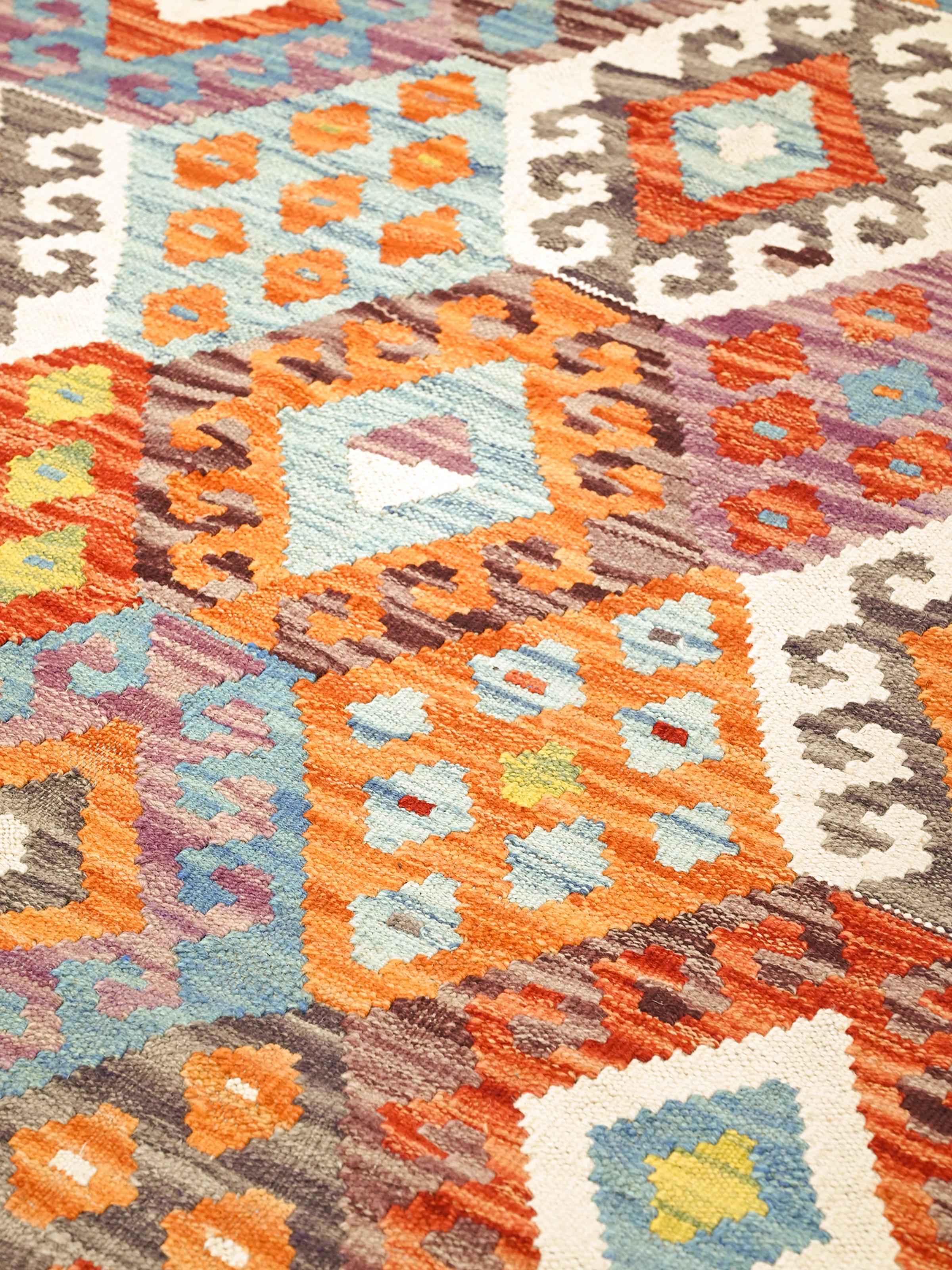
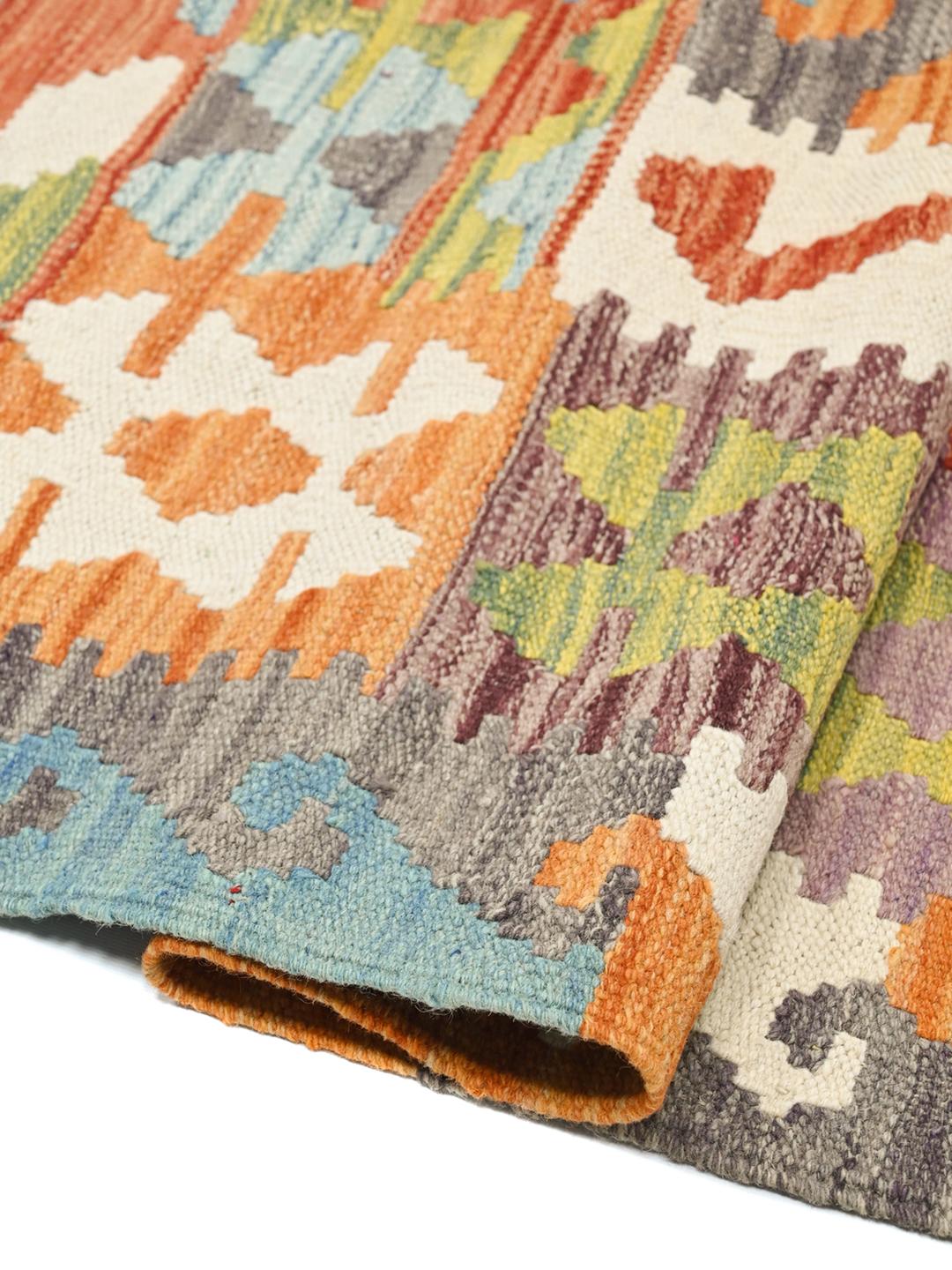
The term Kelim refers to a specific flatweaving technique where the weft threads are tightly interwoven with the warp to create a smooth, pileless surface. This method results in a reversible textile with sharp, geometric patterns. Unlike knotted rugs, the flatweave construction emphasizes the structural interplay of the threads, making the design an integral part of the rug's physical fabric.
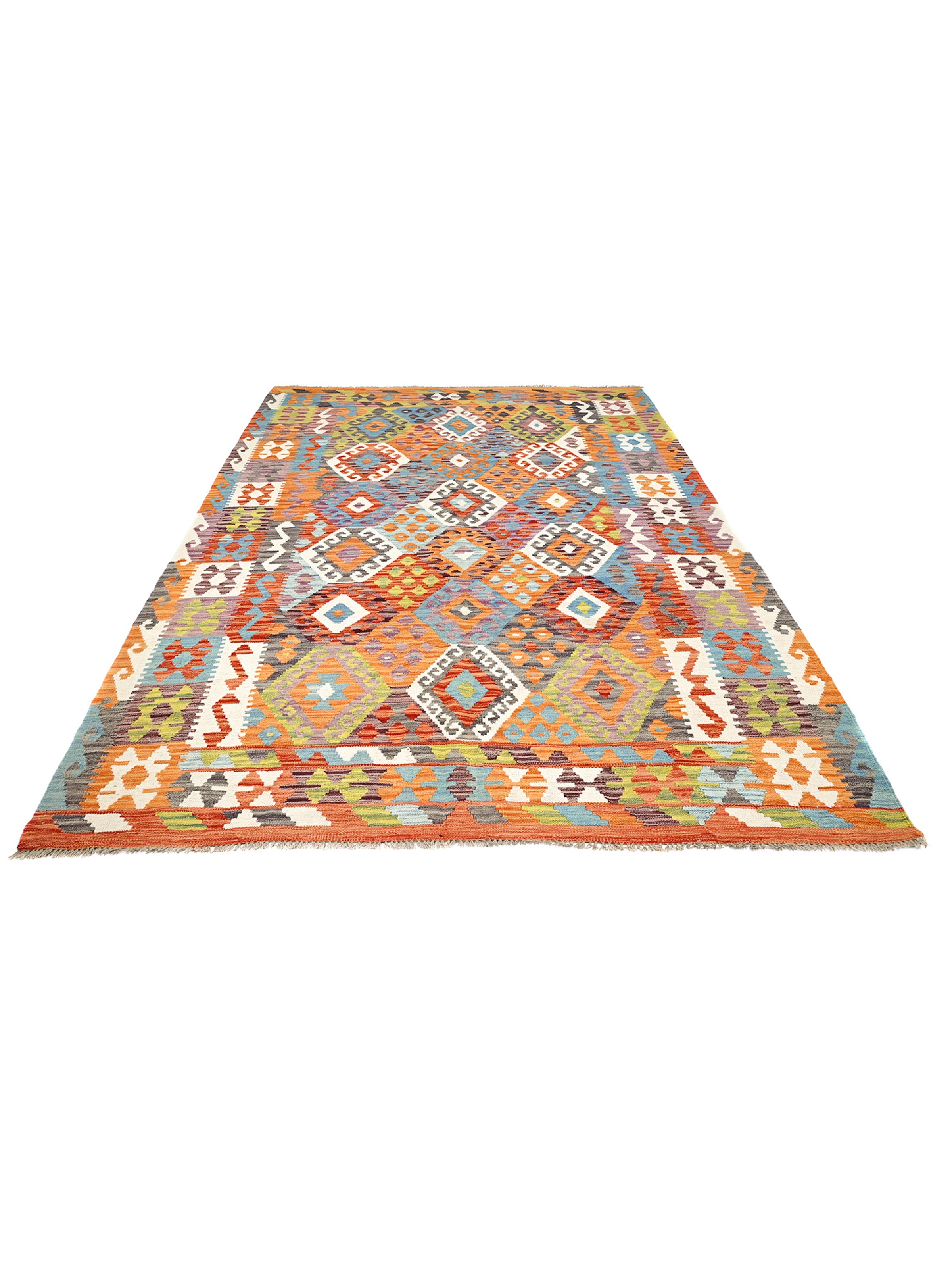
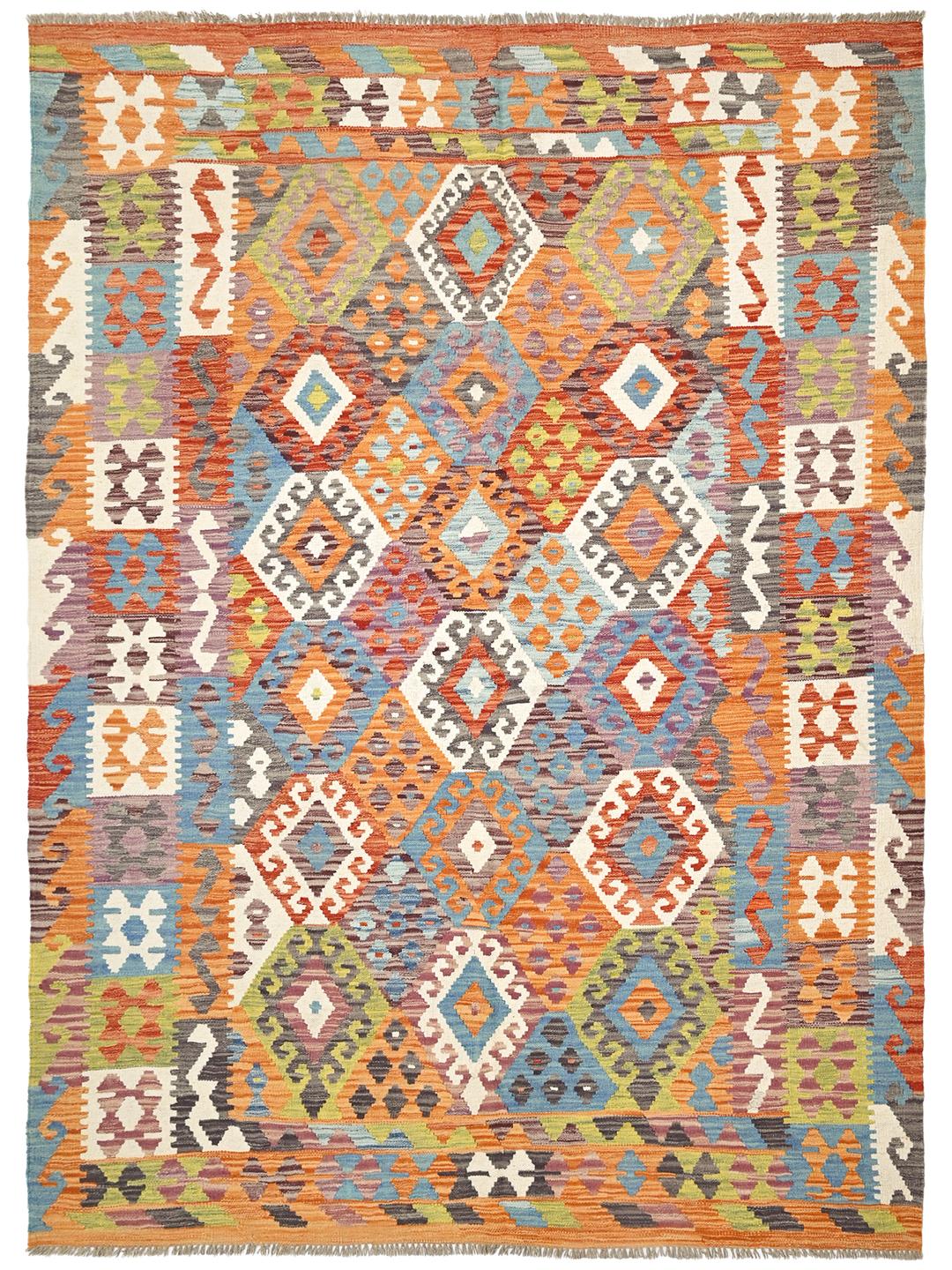
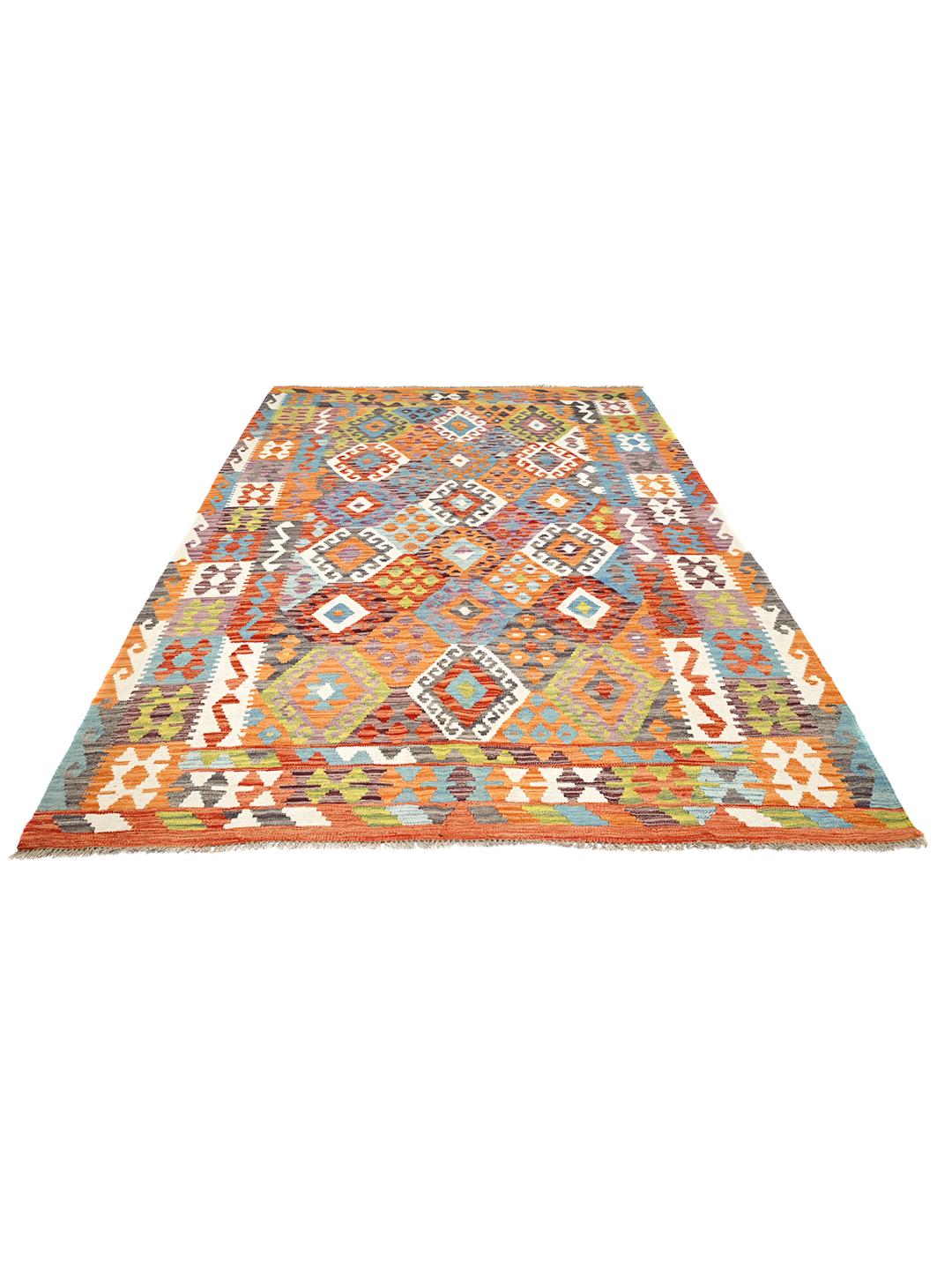
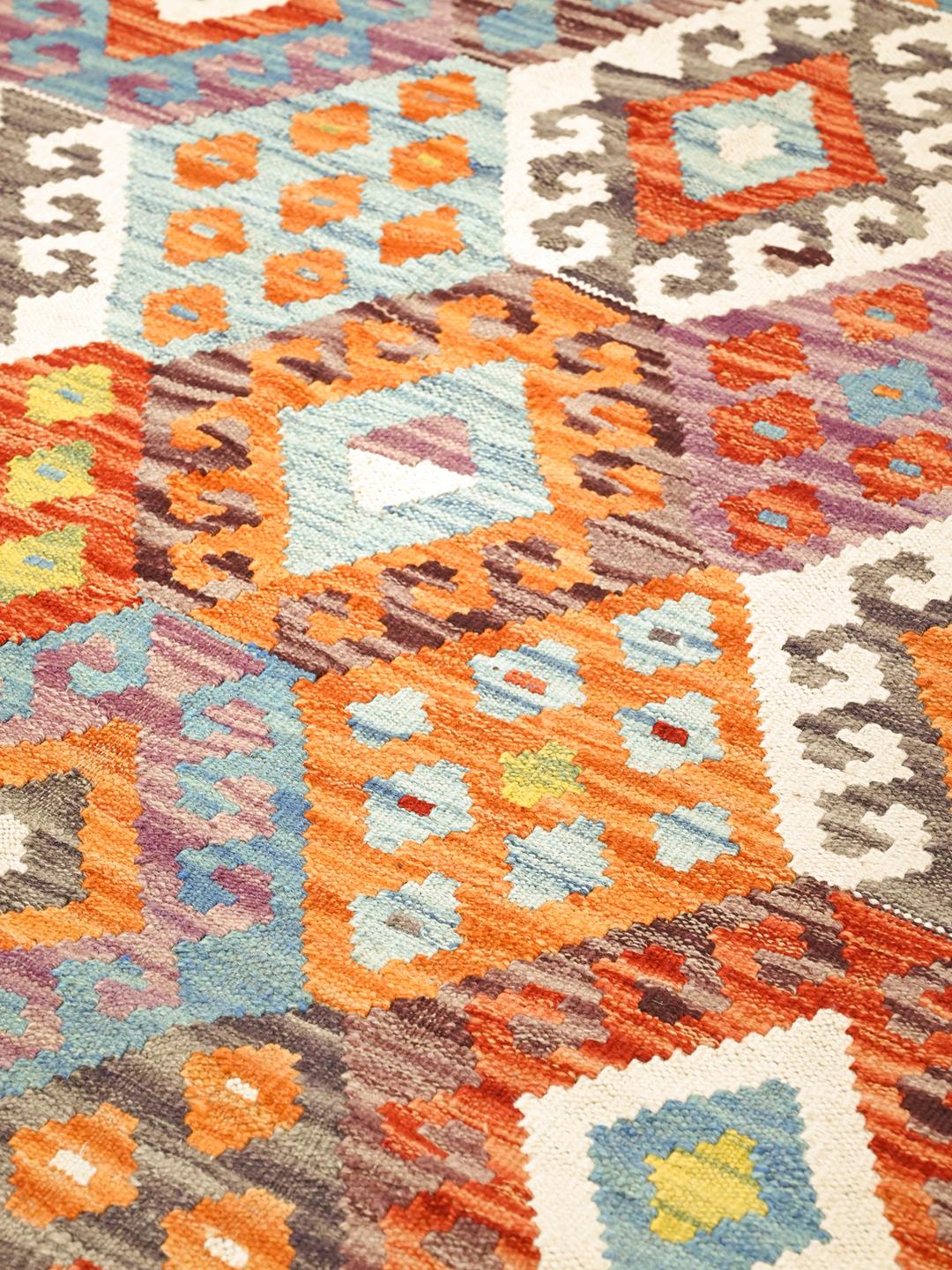
The visual language of this Kelim Afghan Old Style is defined by its bold geometric motifs, particularly the repeating diamond shapes and tribal symbols. These patterns often carry deep cultural meanings, representing protection, fertility, or the natural landscape of the weaver's homeland. The use of a vibrant orange field paired with contrasting multicolor details showcases the artistic confidence of Afghan weavers.
Today, Afghan Kelims are highly valued by collectors and interior enthusiasts alike for their graphic appeal and cultural authenticity. Owning a hand-woven piece from this tradition connects your home to generations of weaving knowledge, offering a beautiful balance of historical depth and contemporary style.