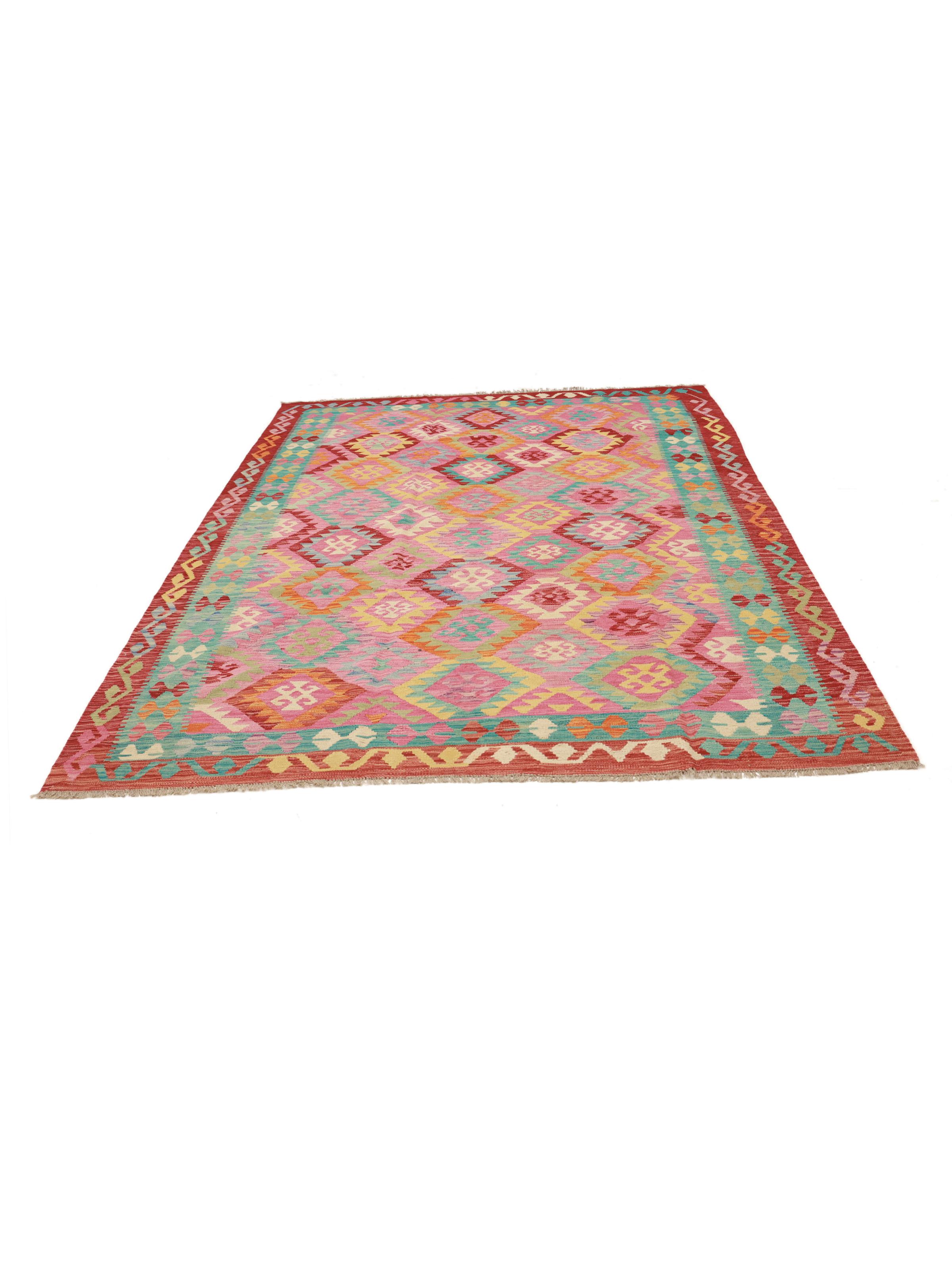
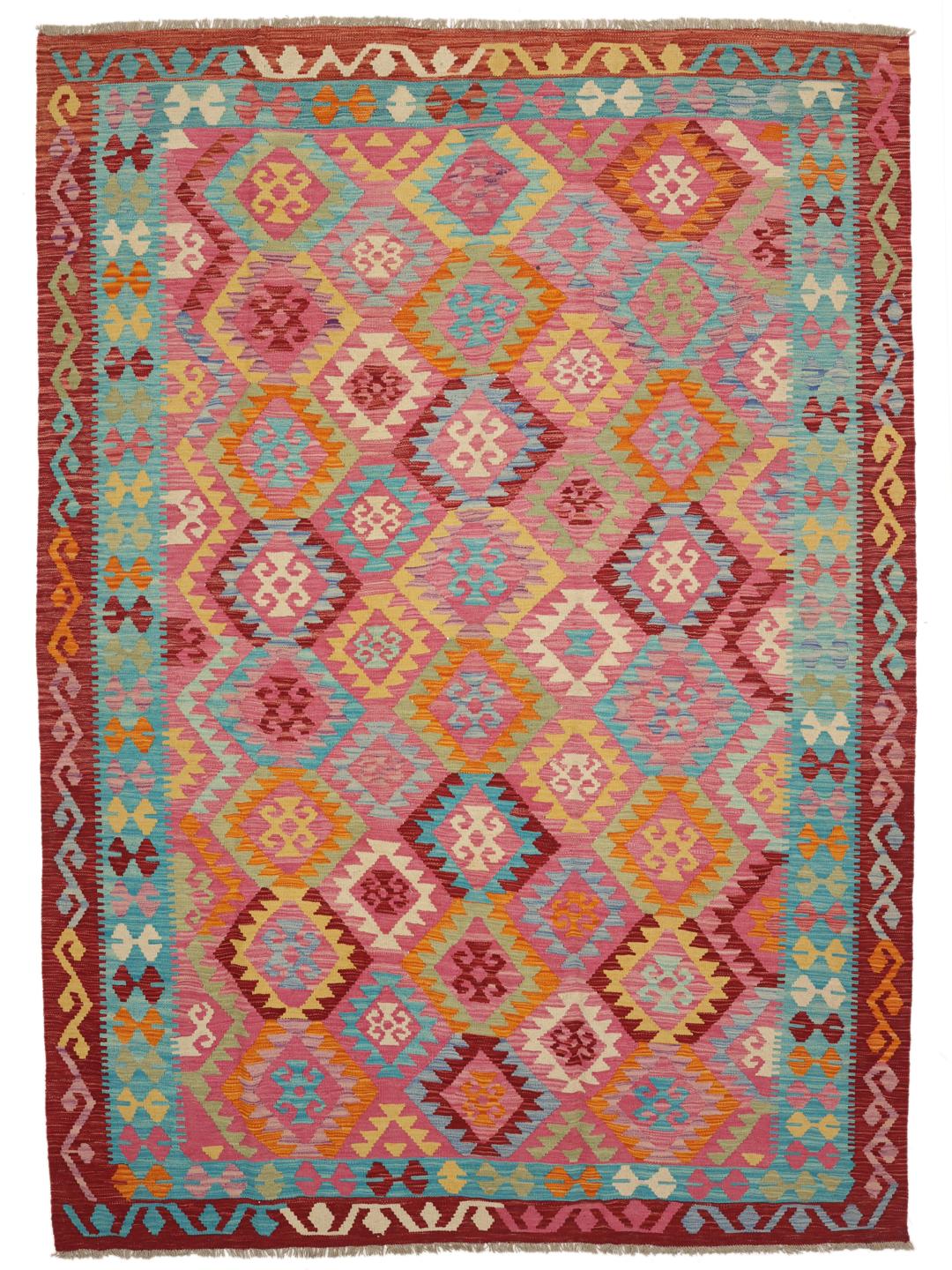
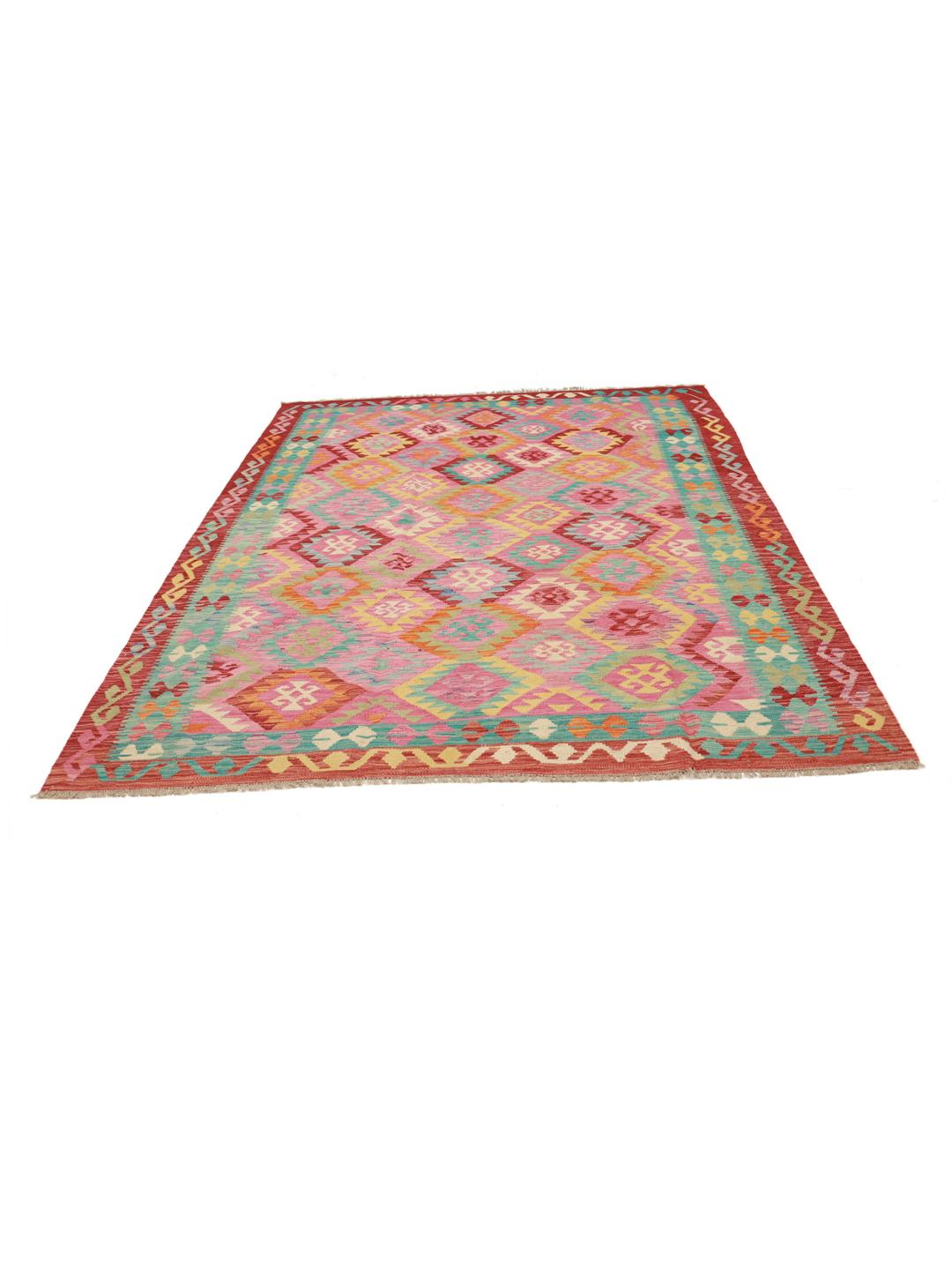
The Kelim tradition is deeply rooted in the history of the Middle East and Central Asia, where these flat-woven textiles have served as essential functional objects for nomadic and village communities for centuries. These rugs are not just floor coverings but are integral to the cultural identity of the regions where they are produced, often serving as wall hangings, storage bags, or floor mats within traditional homes.
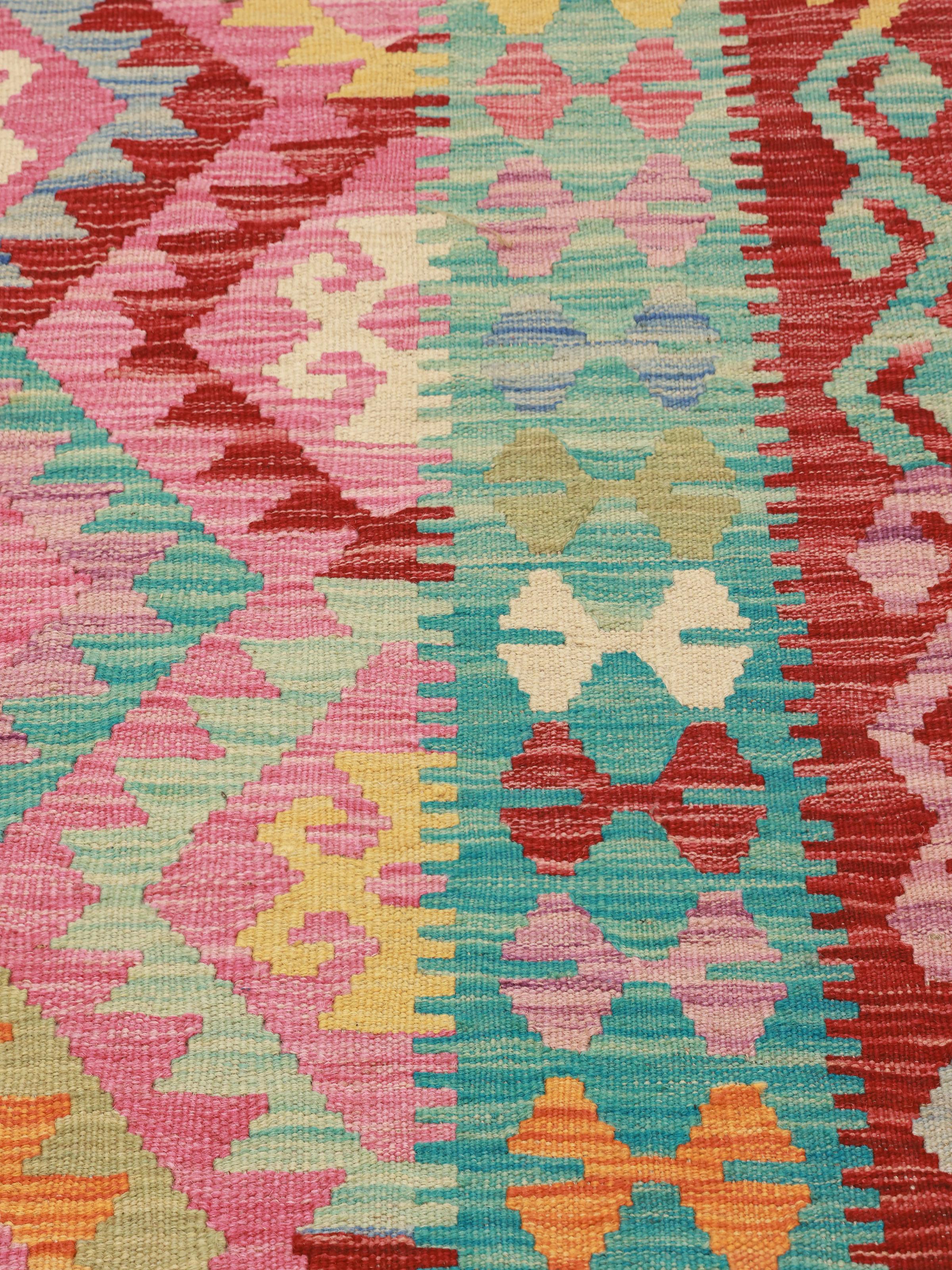
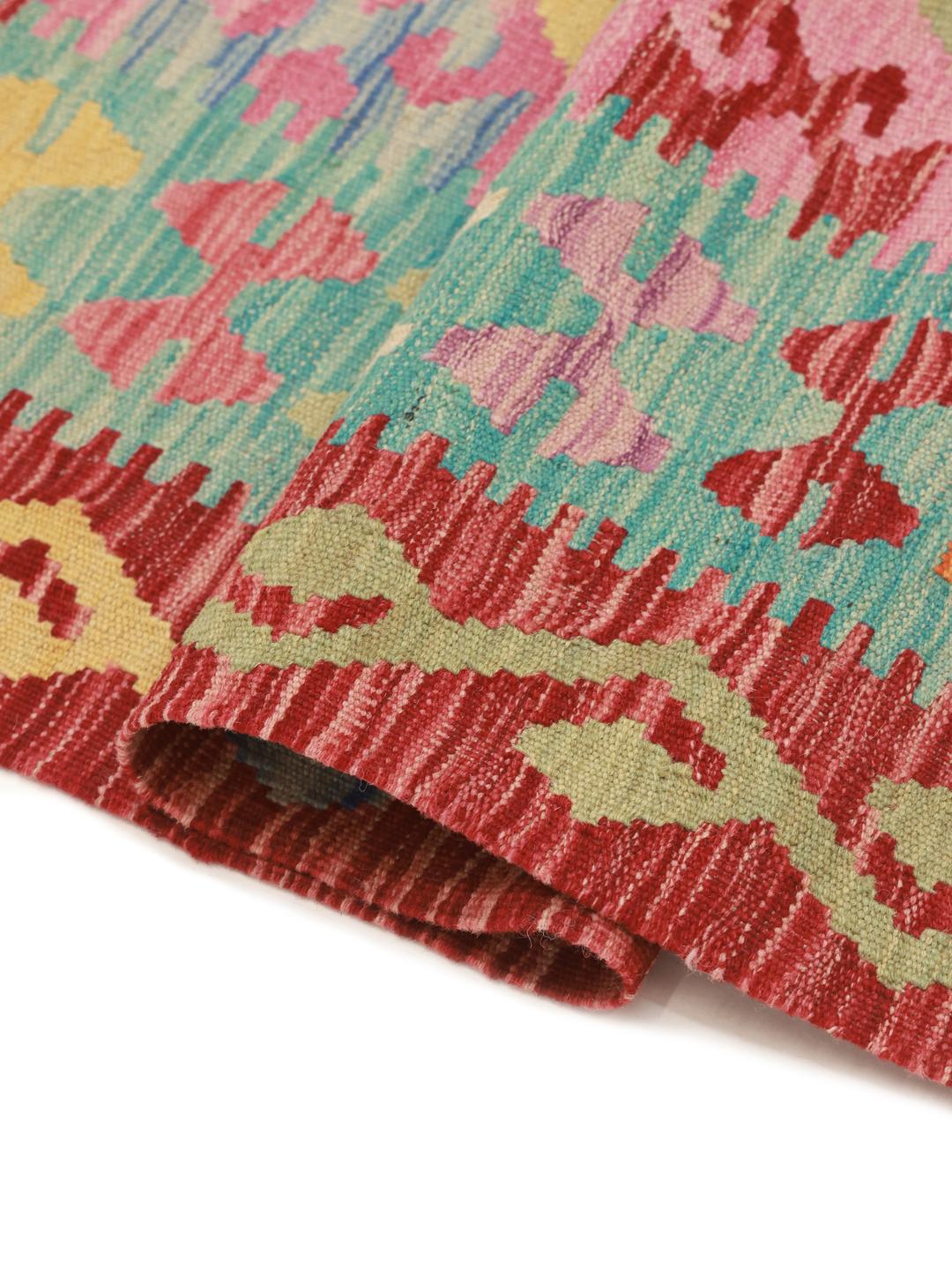
The term 'Kelim' refers to a specific technique of tapestry weaving where the horizontal threads are pulled tightly over the vertical threads to create a smooth, pileless surface. This method allows for sharp, crisp geometric designs and reversible patterns, as the motifs are created by the weaving process itself rather than being knotted into a foundation. This requires a high level of skill to maintain tension and pattern alignment across the entire length of the piece.
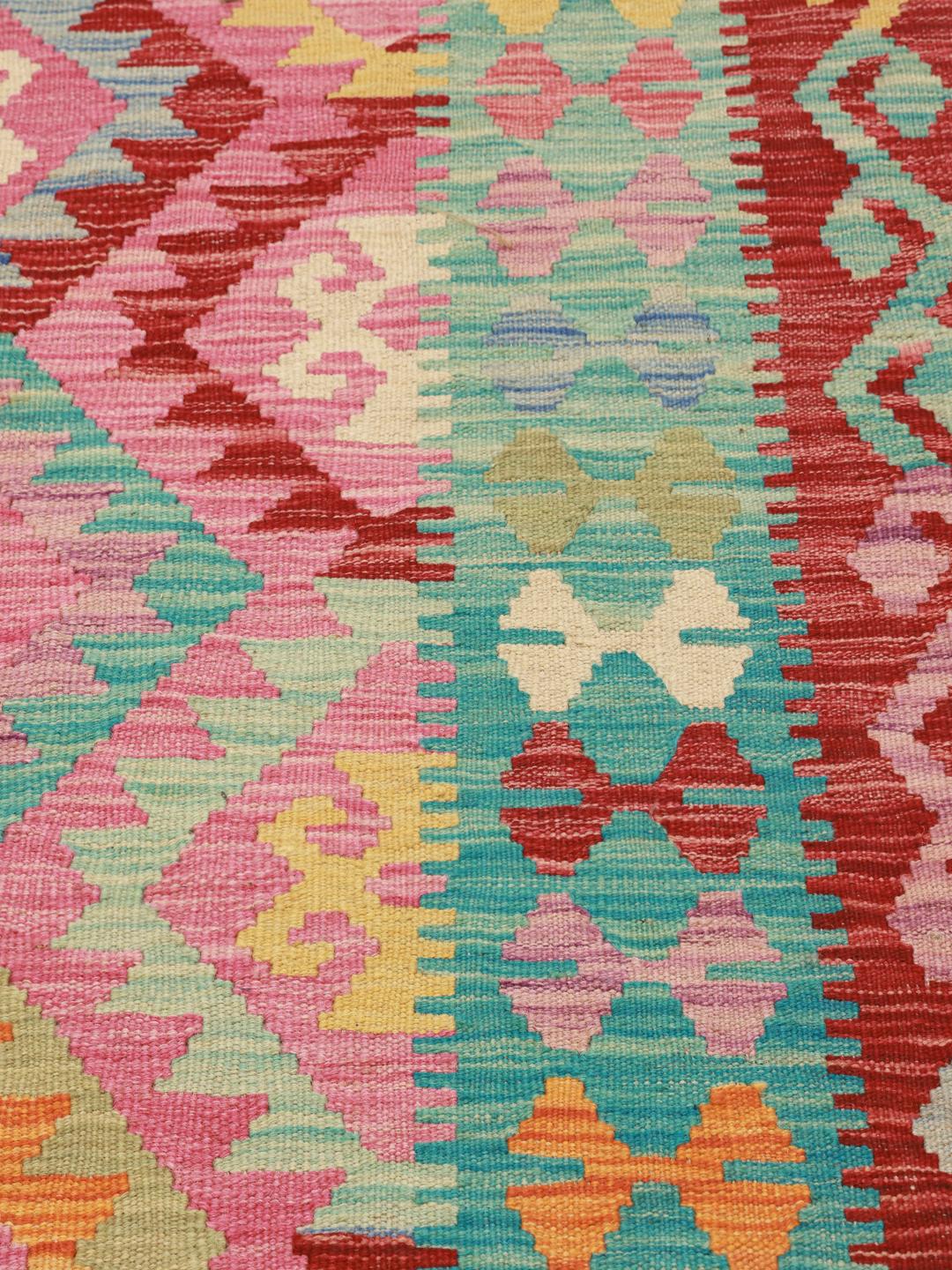
Visually, these rugs are defined by their use of geometric motifs, most notably the diamond and various tribal symbols that represent protection, abundance, and the natural world. The vibrant colours are often derived from natural dyes, reflecting the landscape and the traditional colour palettes favoured by the weaving cultures of the Middle East. This specific style is celebrated for its ability to balance intricate, rhythmic patterns with a bold, modern aesthetic.
Collecting these rugs is an investment in cultural heritage. Because they are produced by hand using techniques passed down through generations, each rug acts as a historical document of the weaver's community and individual creativity. Owning one offers the unique opportunity to preserve a craft tradition that remains as relevant and beautiful today as it was in the past.