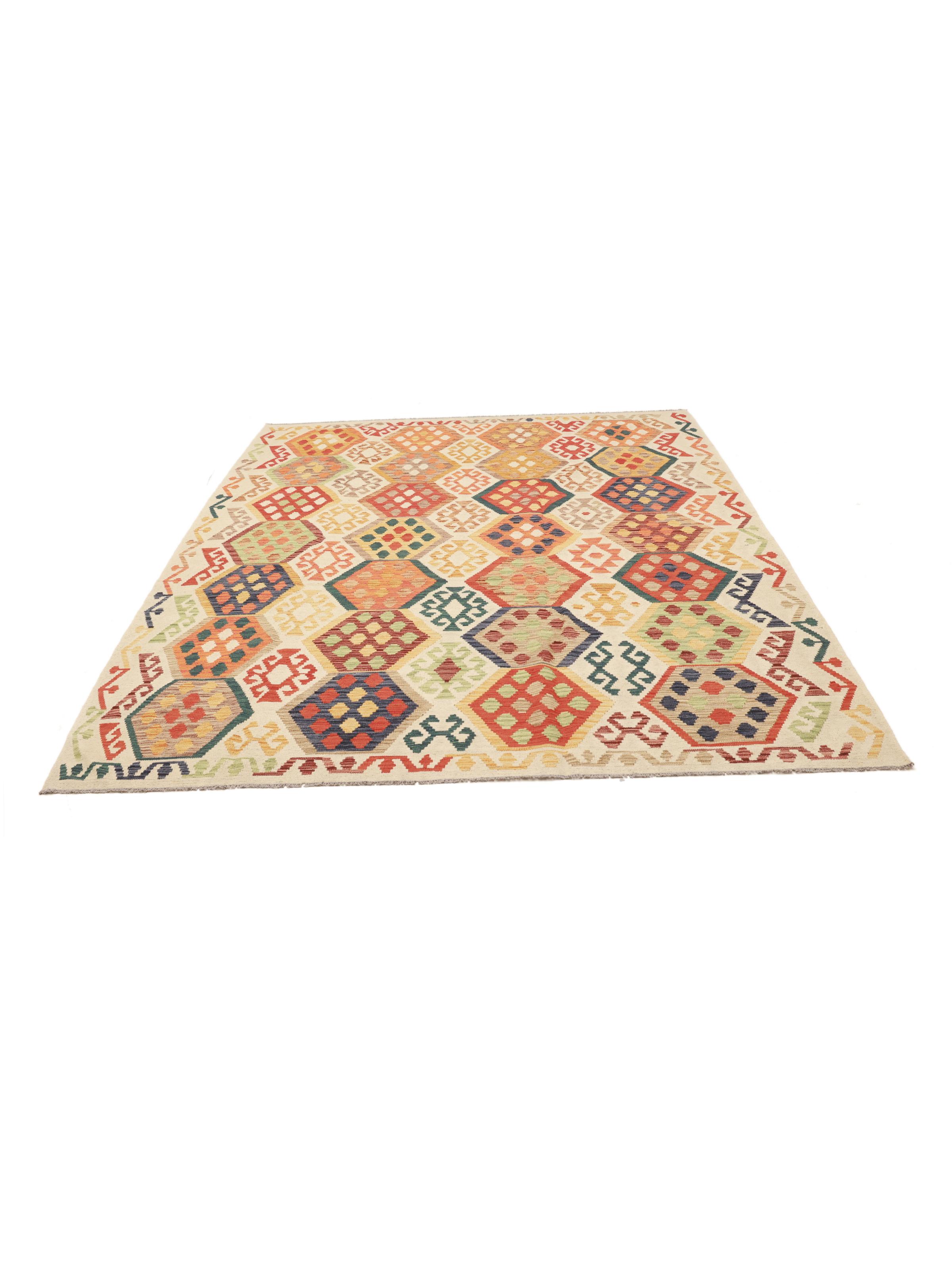
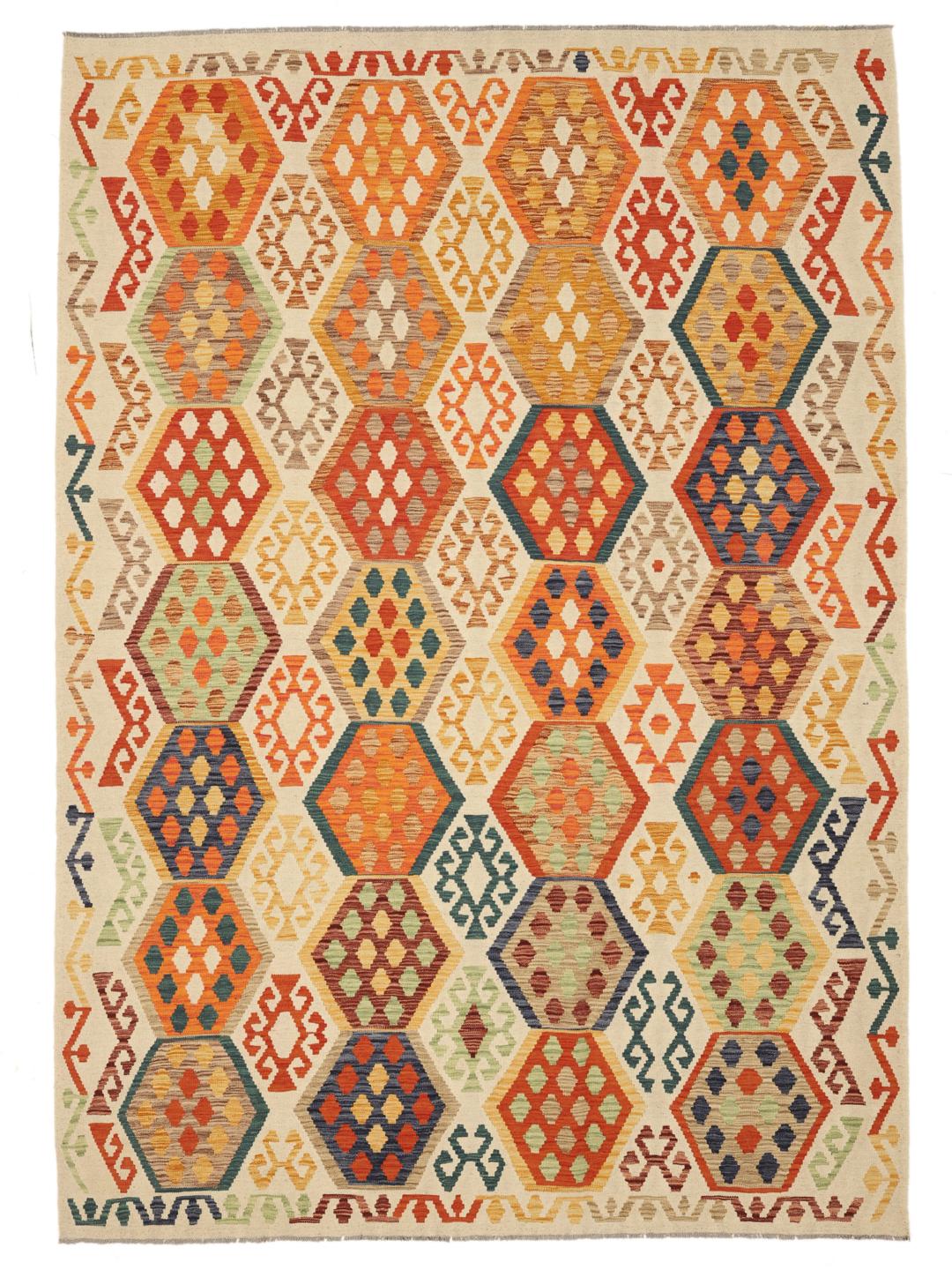
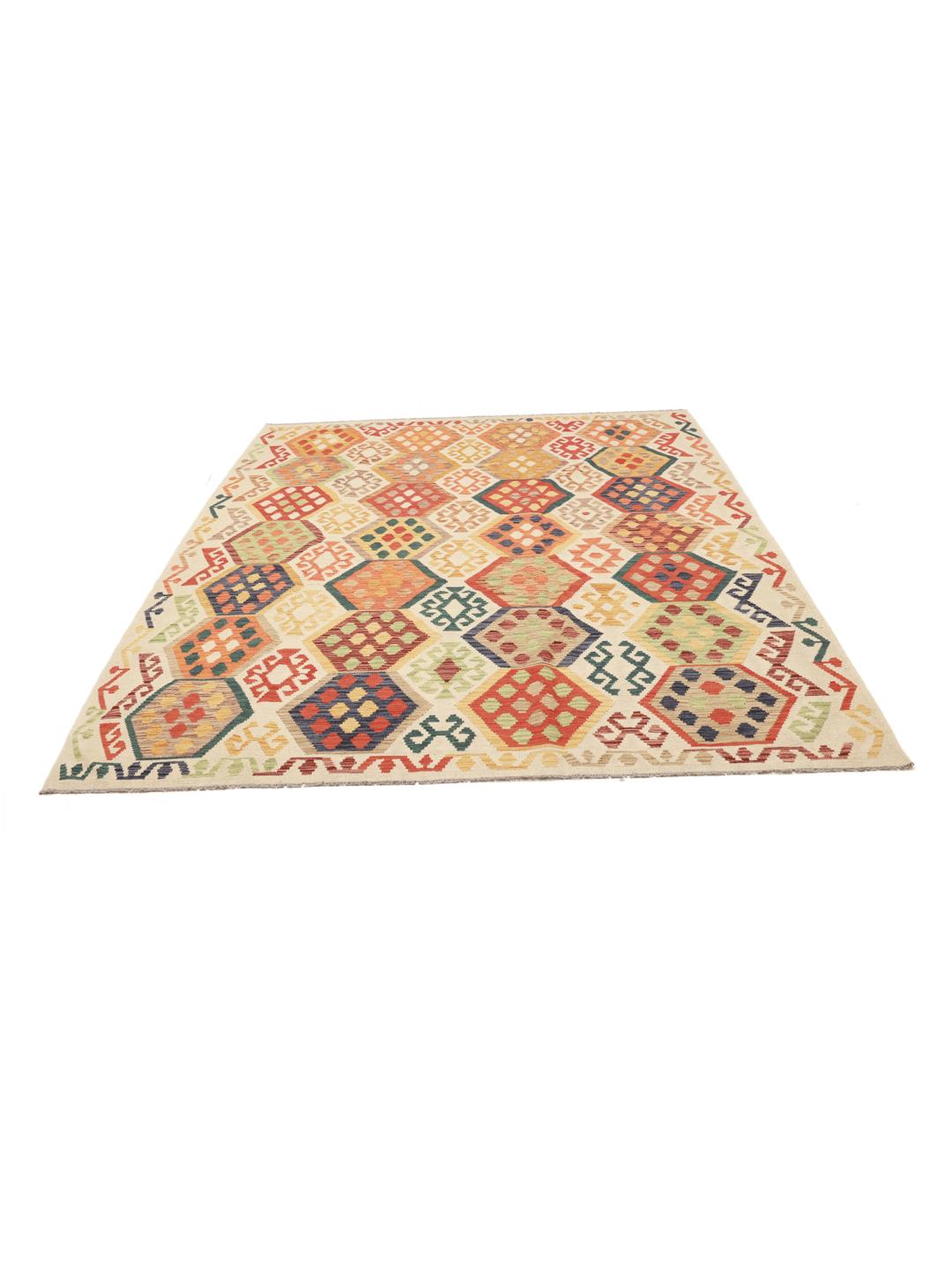
Kelim rugs have a long and storied history, originating from the nomadic tribes of the Middle East and Central Asia. These flat-woven textiles were historically used for everything from floor coverings and wall hangings to saddlebags and tent dividers, serving as essential, versatile items for life on the move. Today, the Afghan tradition remains one of the most respected, known for its bold geometric designs and the use of high-quality local wool.
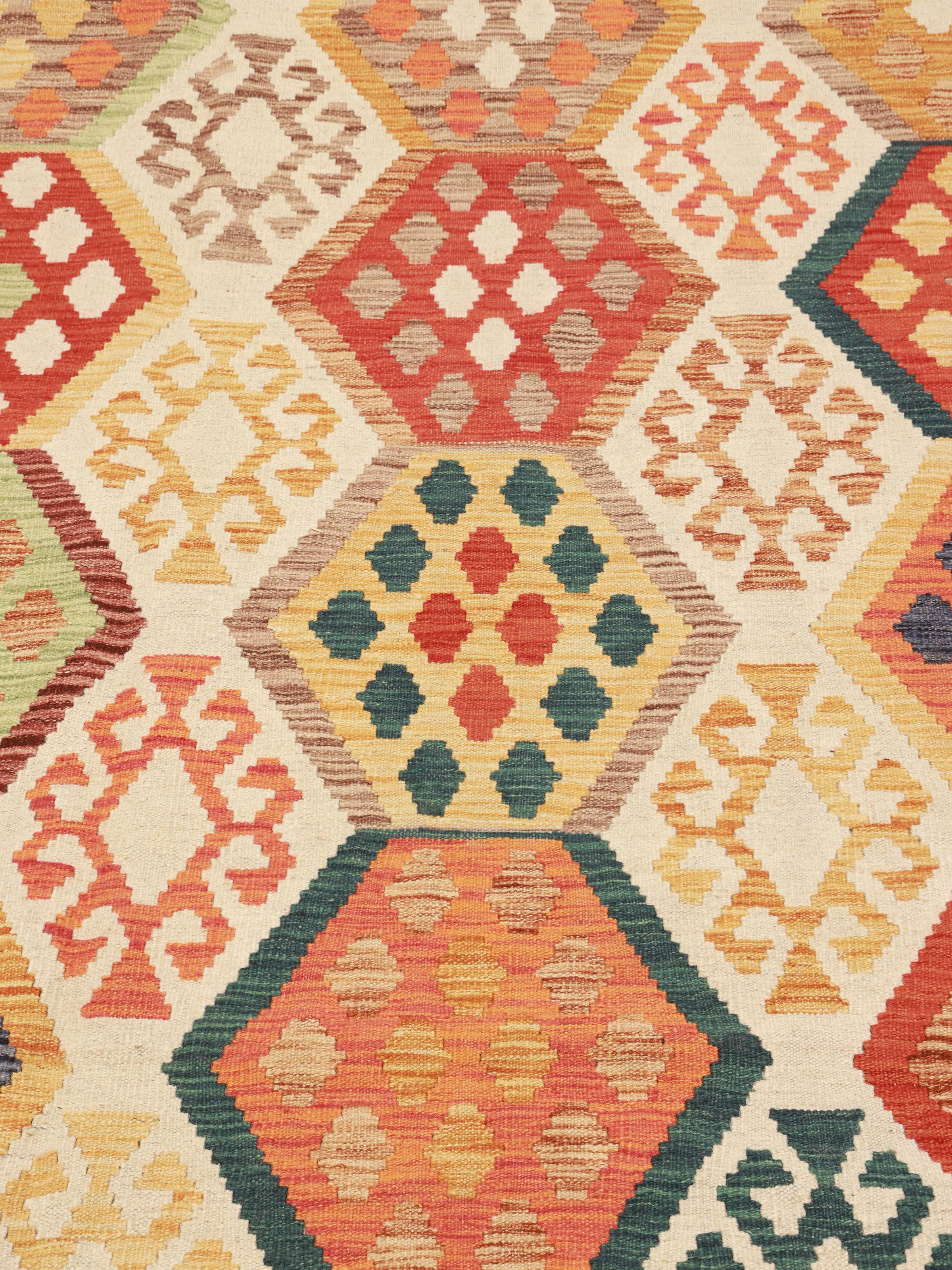
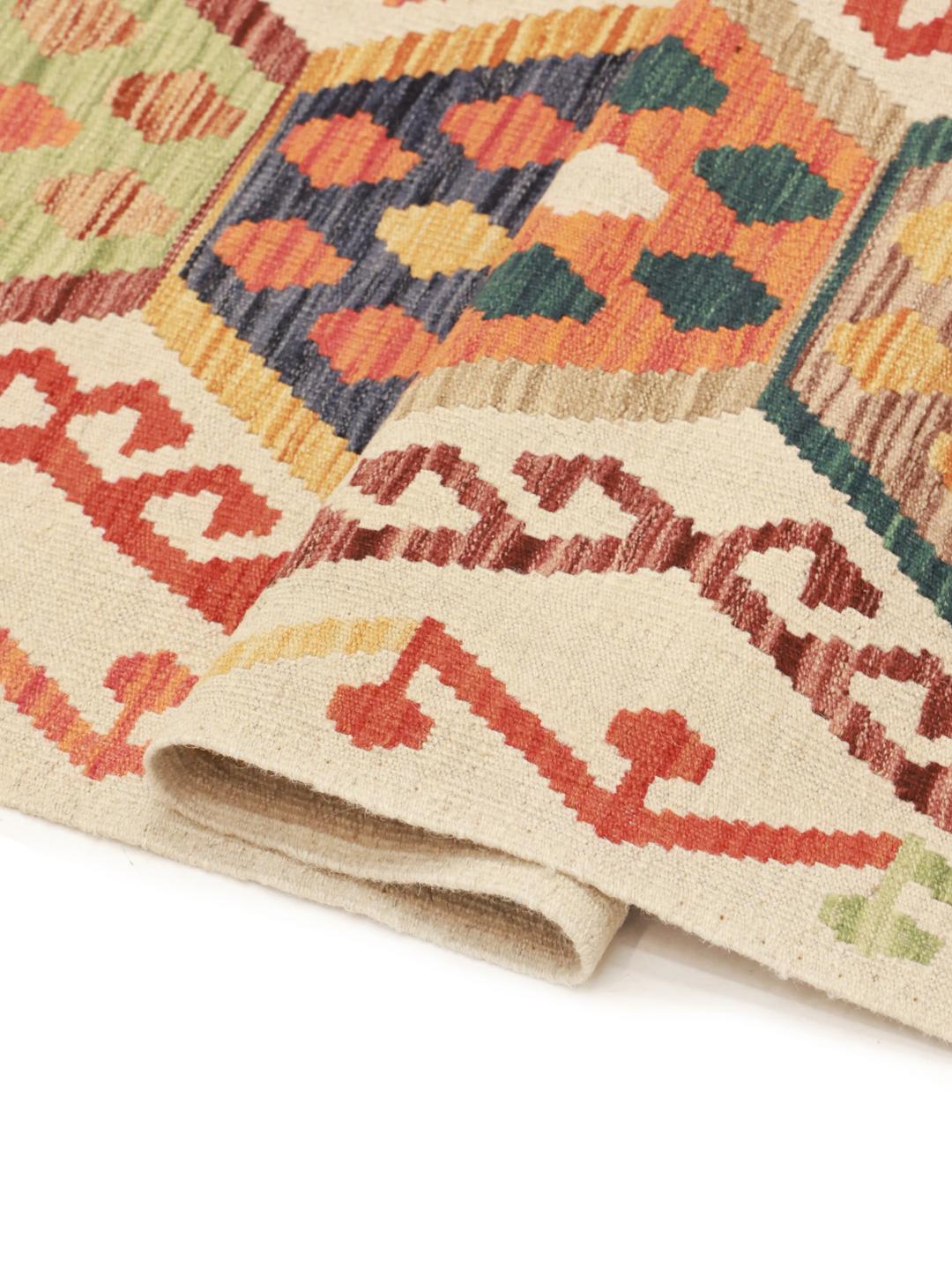
The term 'Kelim' refers to a specific tapestry-weave technique where the weft threads are pulled tightly against the warp to create a smooth, pileless surface. This method is what gives these rugs their characteristic durability and strength. Because the design is woven directly into the foundation rather than knotted onto it, the patterns are crisp, clear, and visible on both sides of the rug.
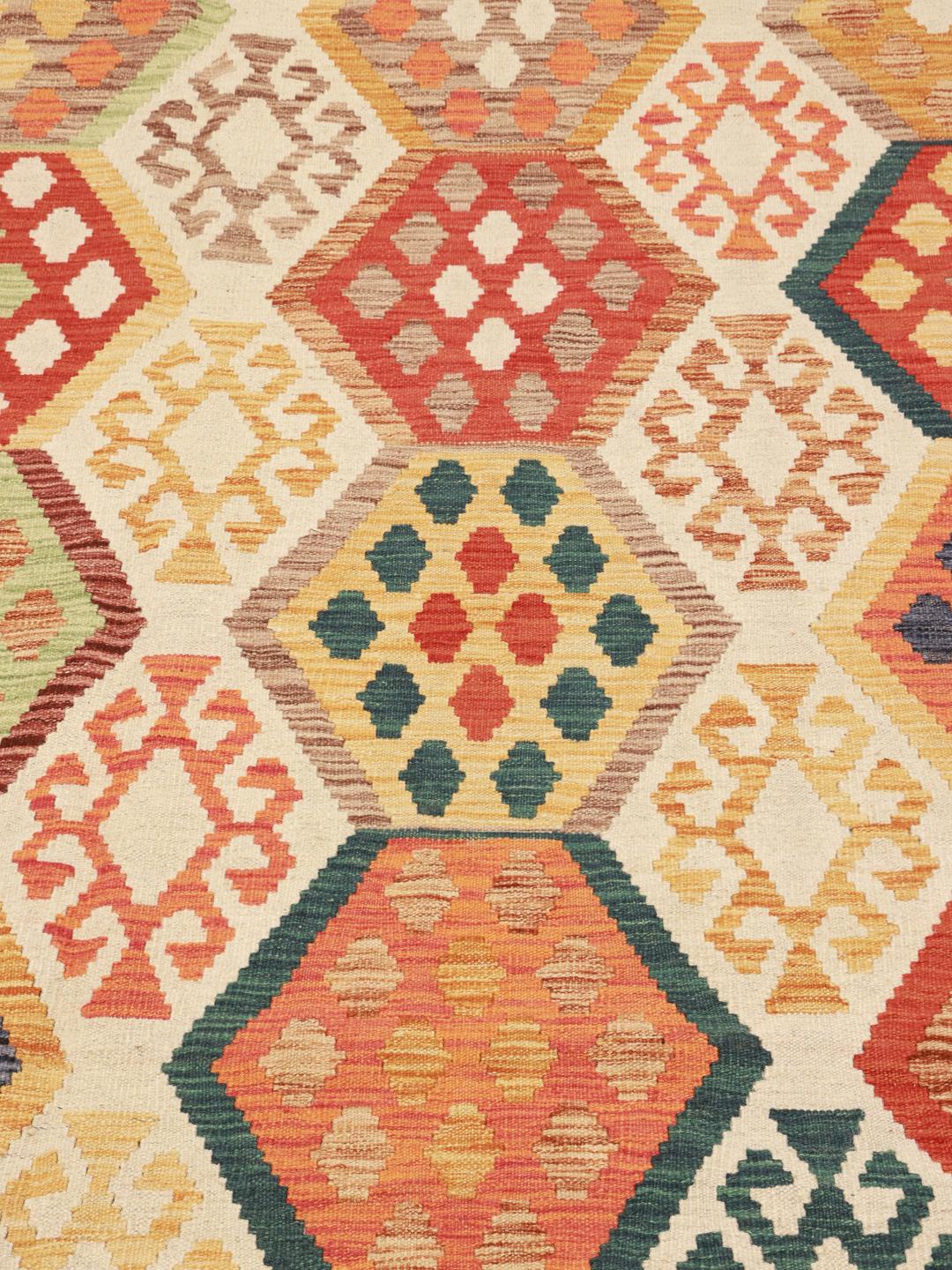
Visually, these rugs are defined by their geometric language. You will often see repeating diamonds, triangles, and intricate borders that tell stories of the weaver's environment and tribal identity. The use of vibrant, often naturally dyed colours is a signature of the Afghan style, creating a striking contrast against the neutral tones of the wool foundation. This specific rug showcases a lively, complex geometric layout that is both traditional and timeless.
Owning an Afghan Kelim is an investment in cultural heritage. Collectors and enthusiasts value these pieces for their authenticity, the skill required to weave them, and the way they bring history into a contemporary home. They represent a connection to a craft that has been passed down through generations, offering a tangible link to the artistry of the past.