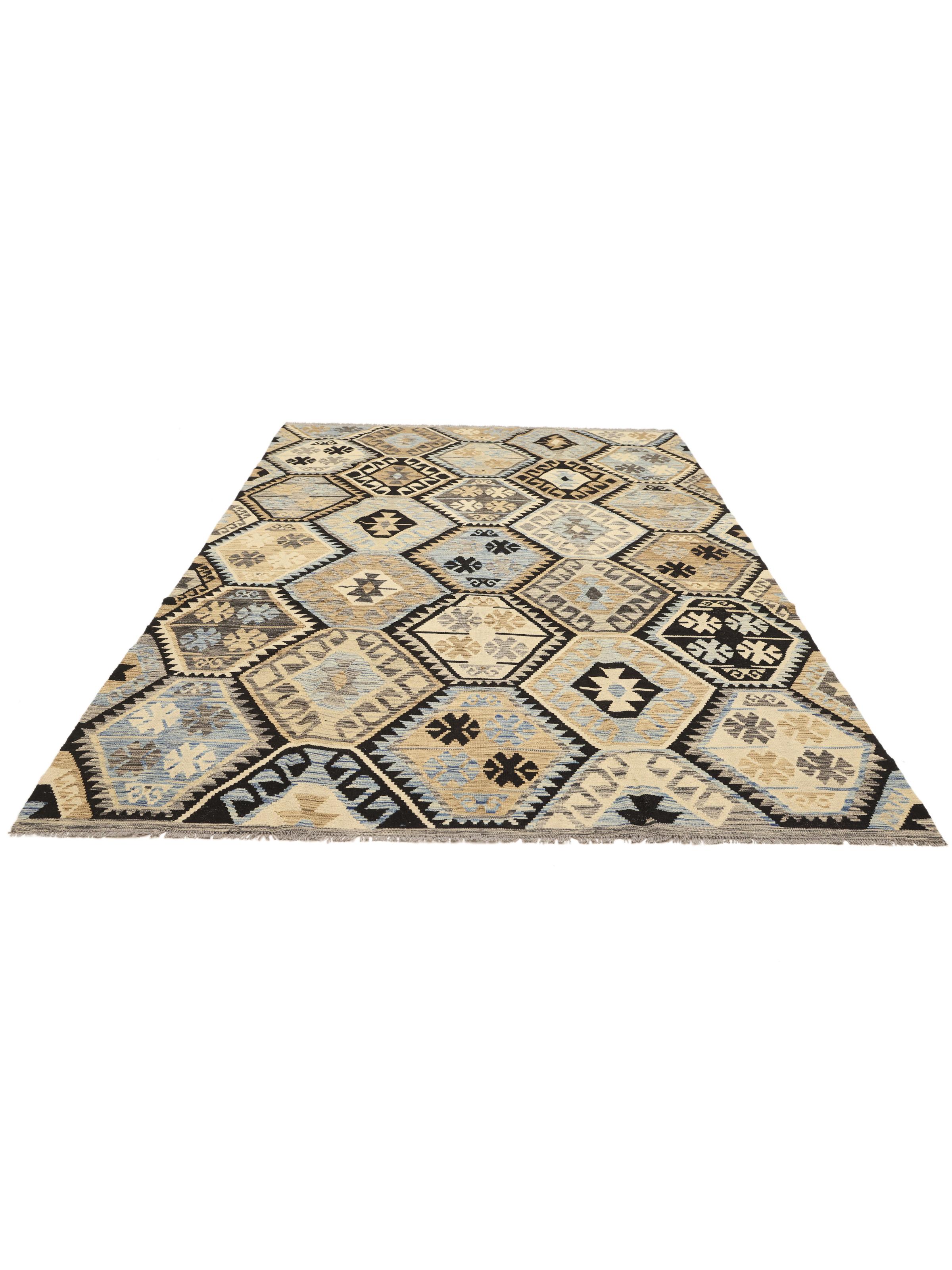
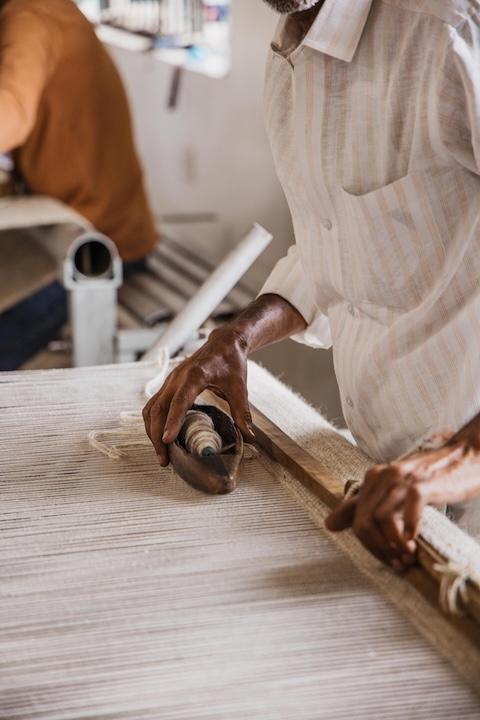
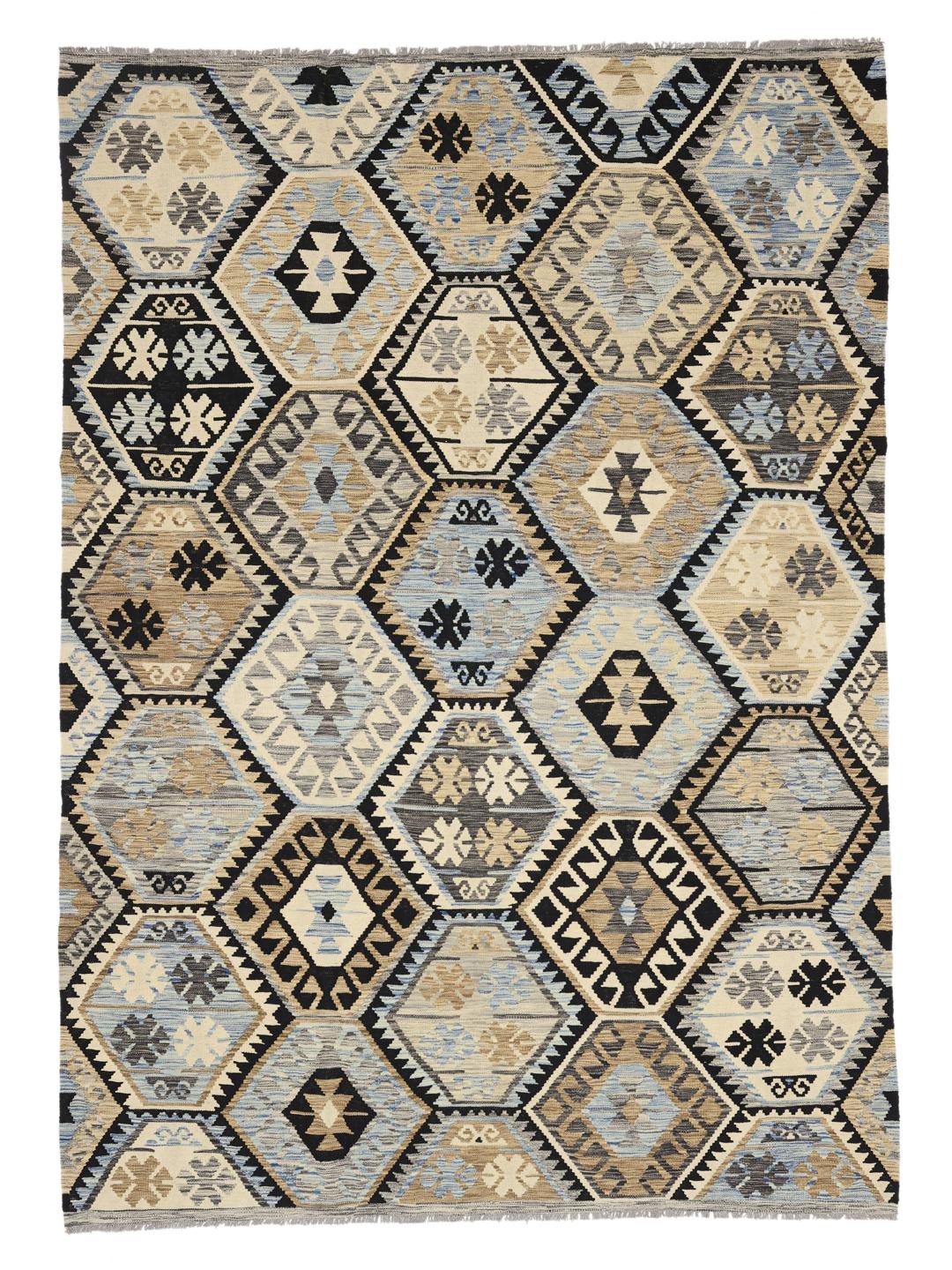
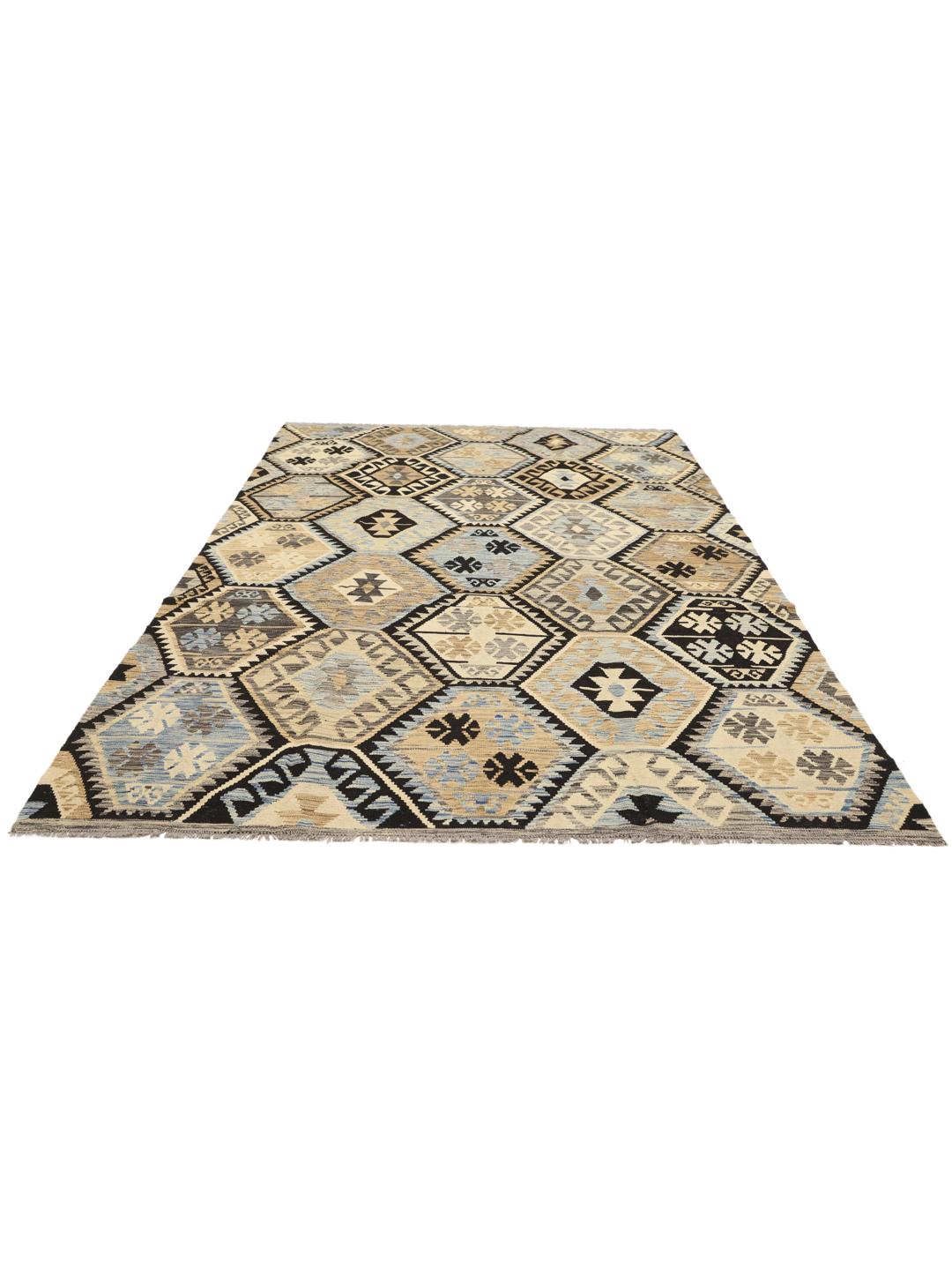
The tradition of weaving Kelim rugs in Afghanistan is deeply rooted in the nomadic history of the region. These flat-woven textiles were historically used by migratory tribes for warmth, shelter, and decoration, with designs passed down through generations to record cultural stories and tribal identities.
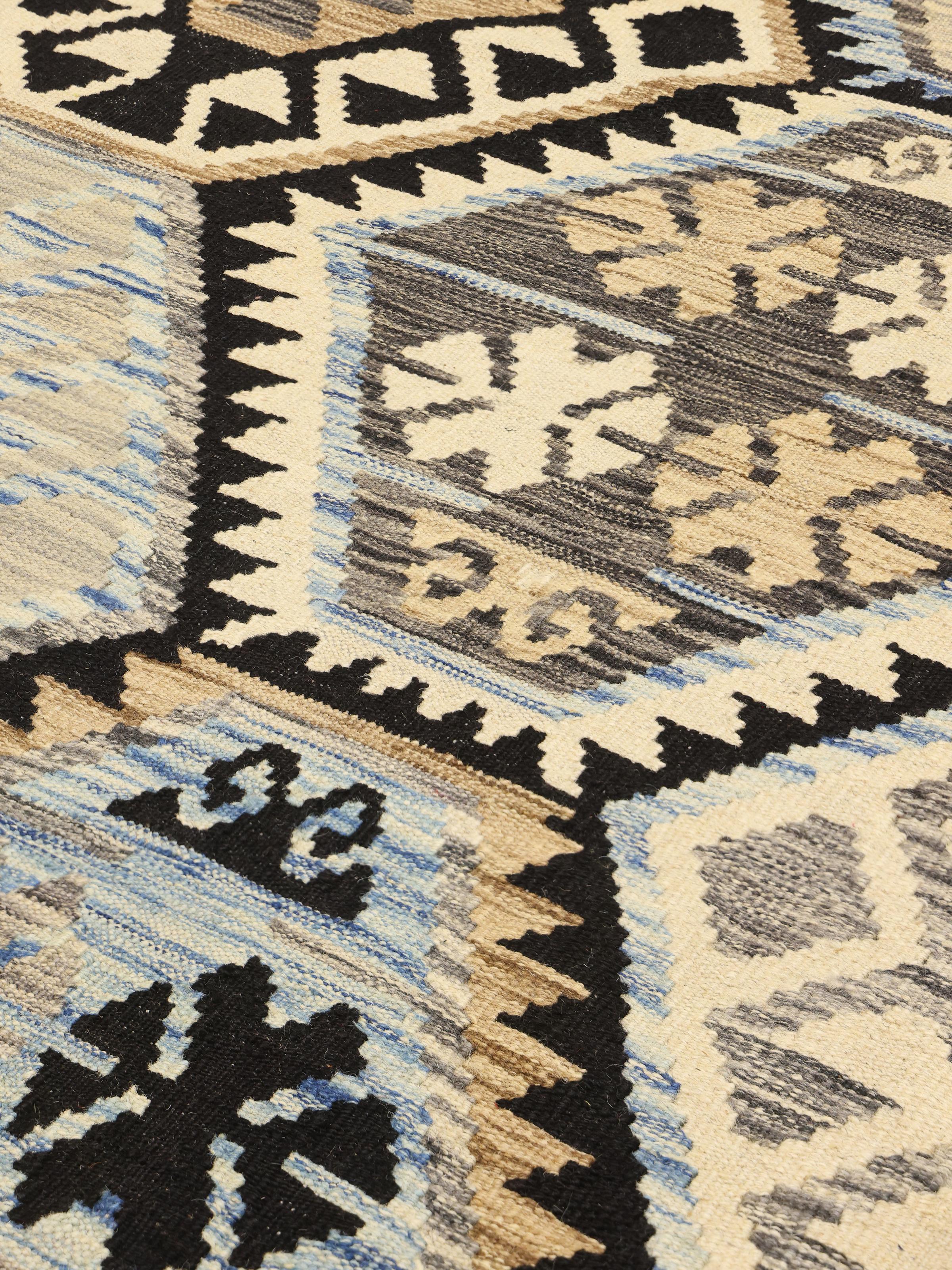
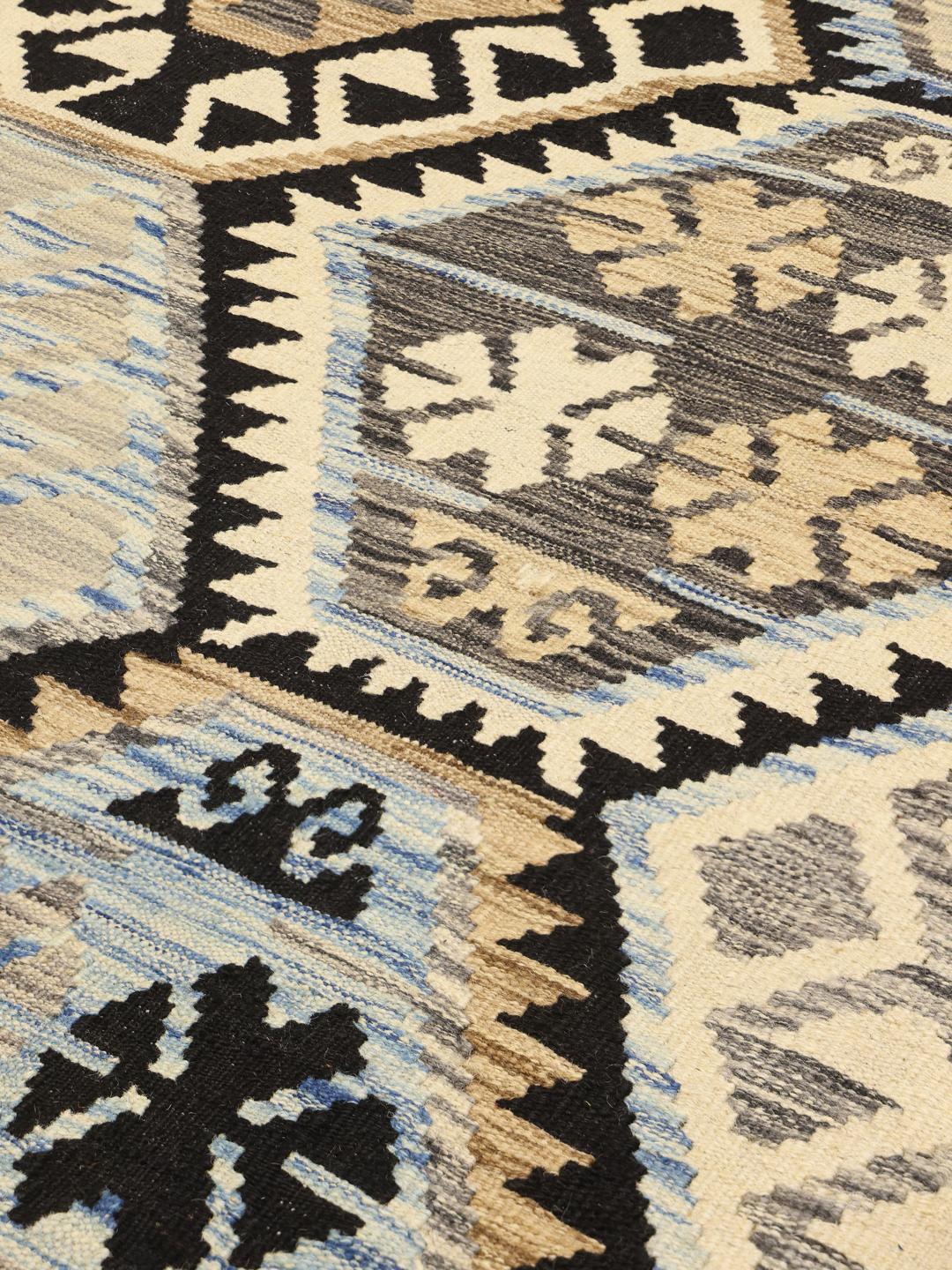
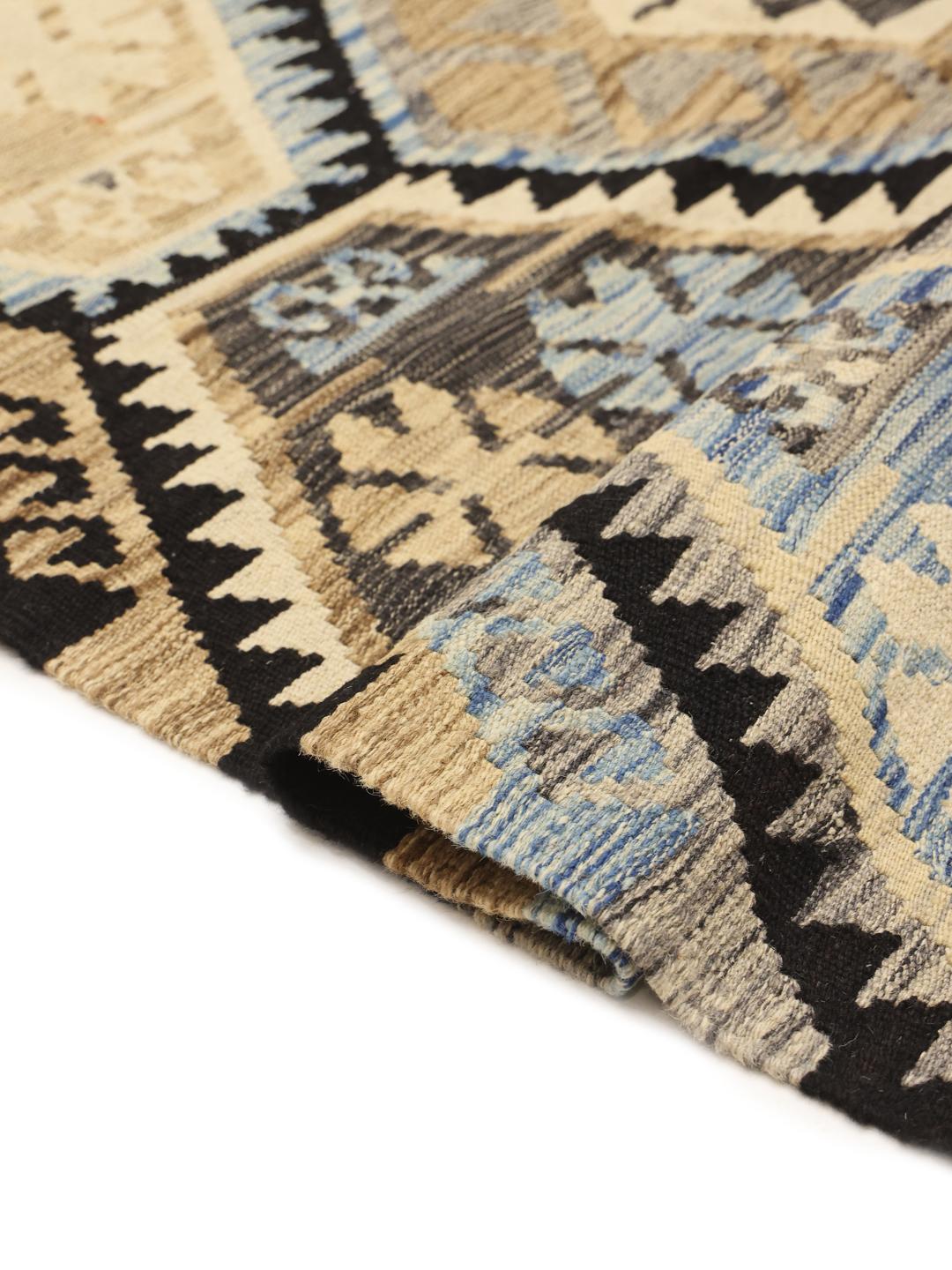
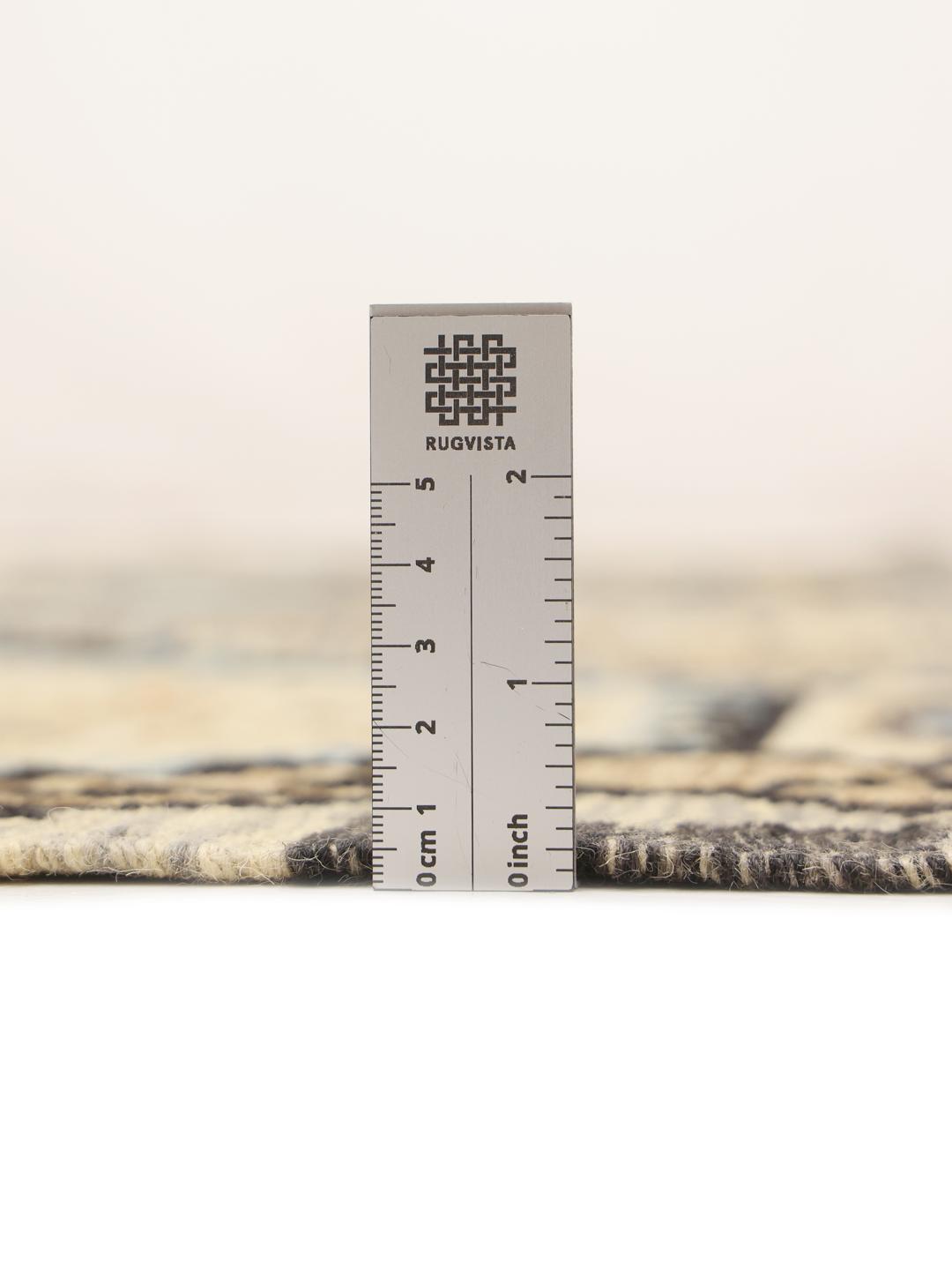
A Kelim is defined by its flat-weave construction, meaning it is made without a pile. This technical approach creates a durable, reversible, and lightweight textile that is highly versatile. The skill required to maintain consistent tension across such a large surface is what separates a master-woven Kelim from everyday utility items.
The visual language of these rugs is dominated by geometric precision. You will often see repeating motifs like diamonds, hexagons, and stylized floral elements, all of which are used to fill the field in a balanced, rhythmic way. The borders are typically formal and decorative, serving to frame the complex internal patterns.
Owning an authentic Afghan Kelim is a way to preserve a piece of living history. These rugs are highly valued by collectors for their authenticity and the human effort embedded in every fibre. By bringing this piece into your home, you are supporting a craft tradition that has provided beauty and utility for centuries.