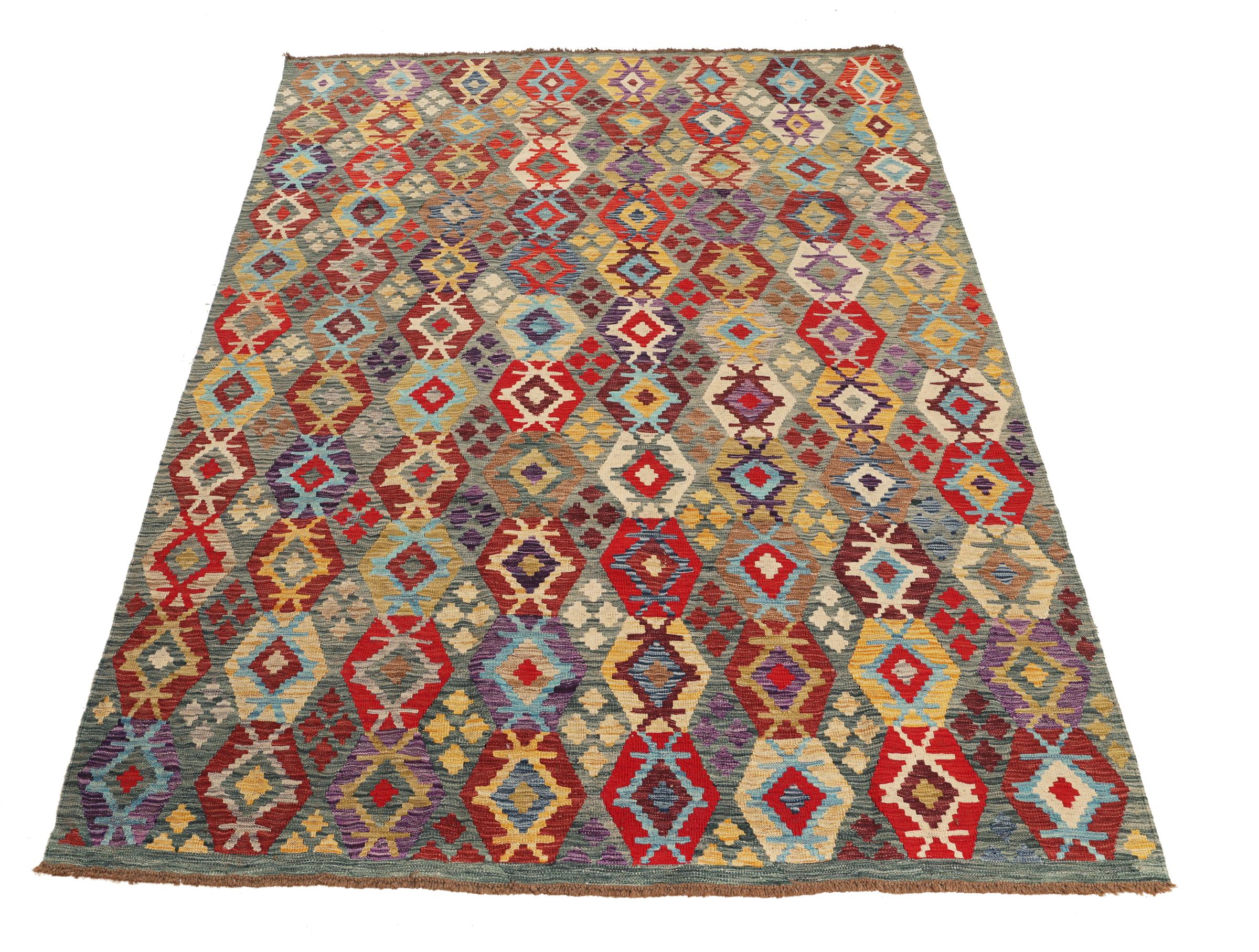
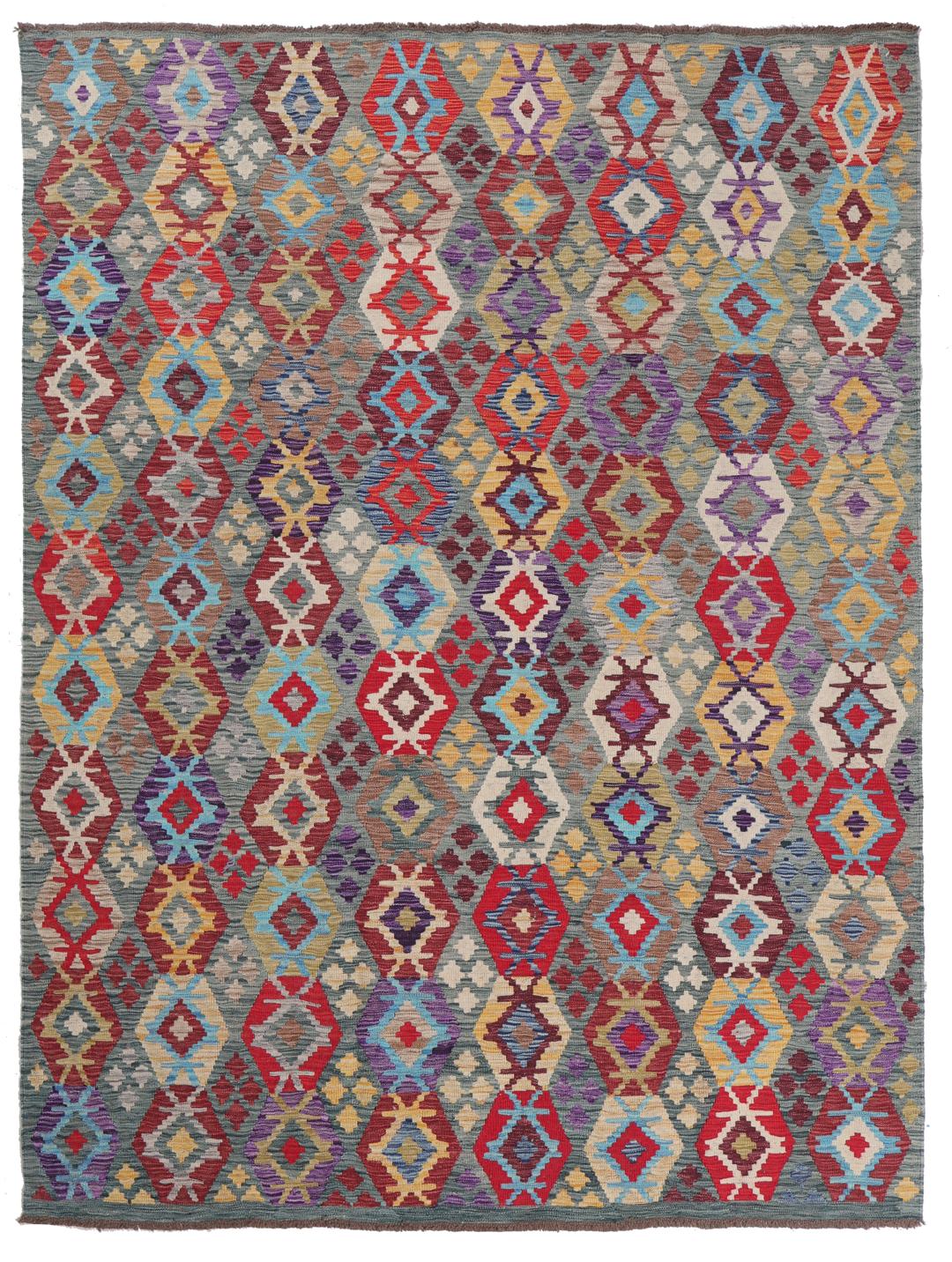
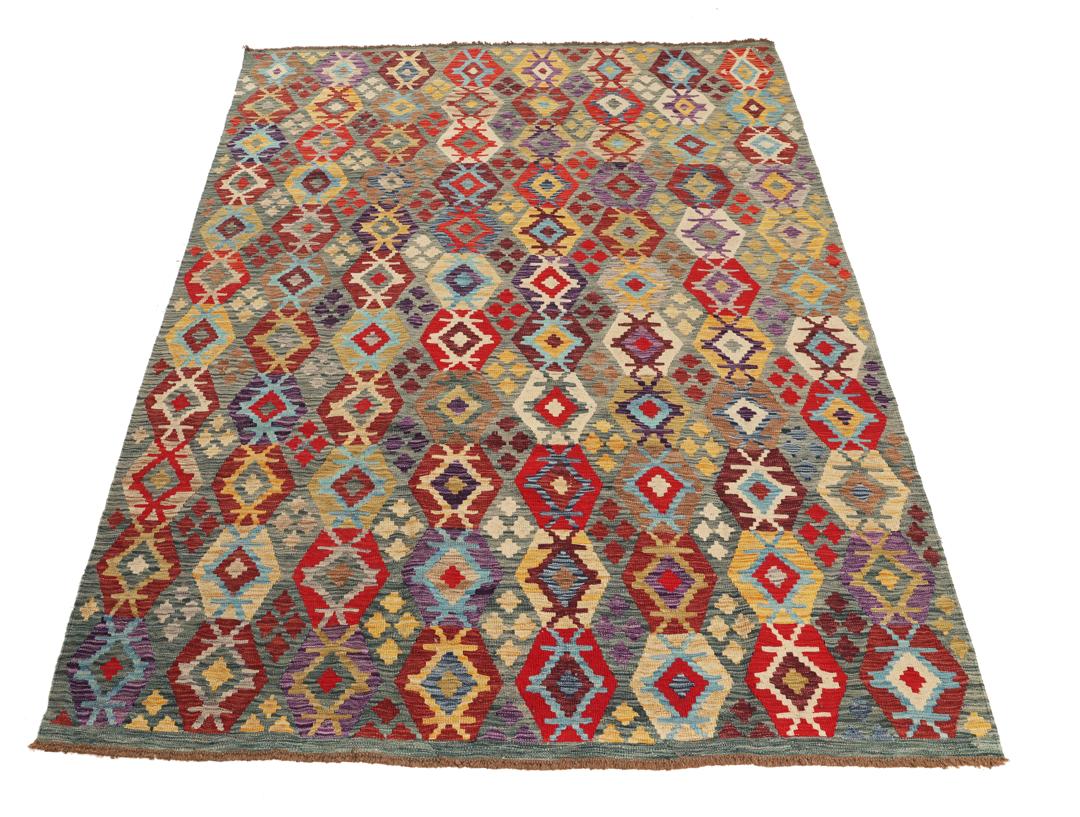
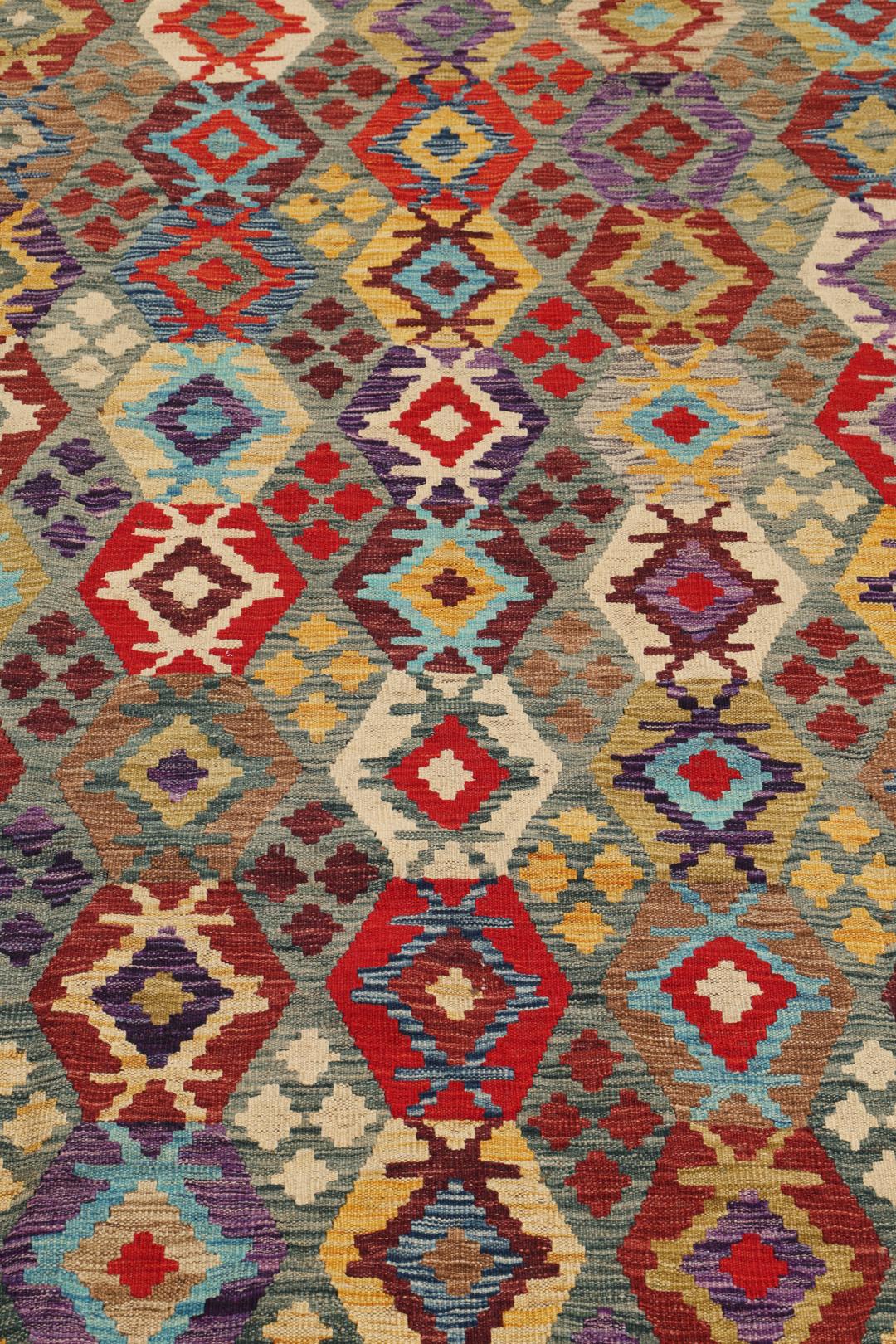
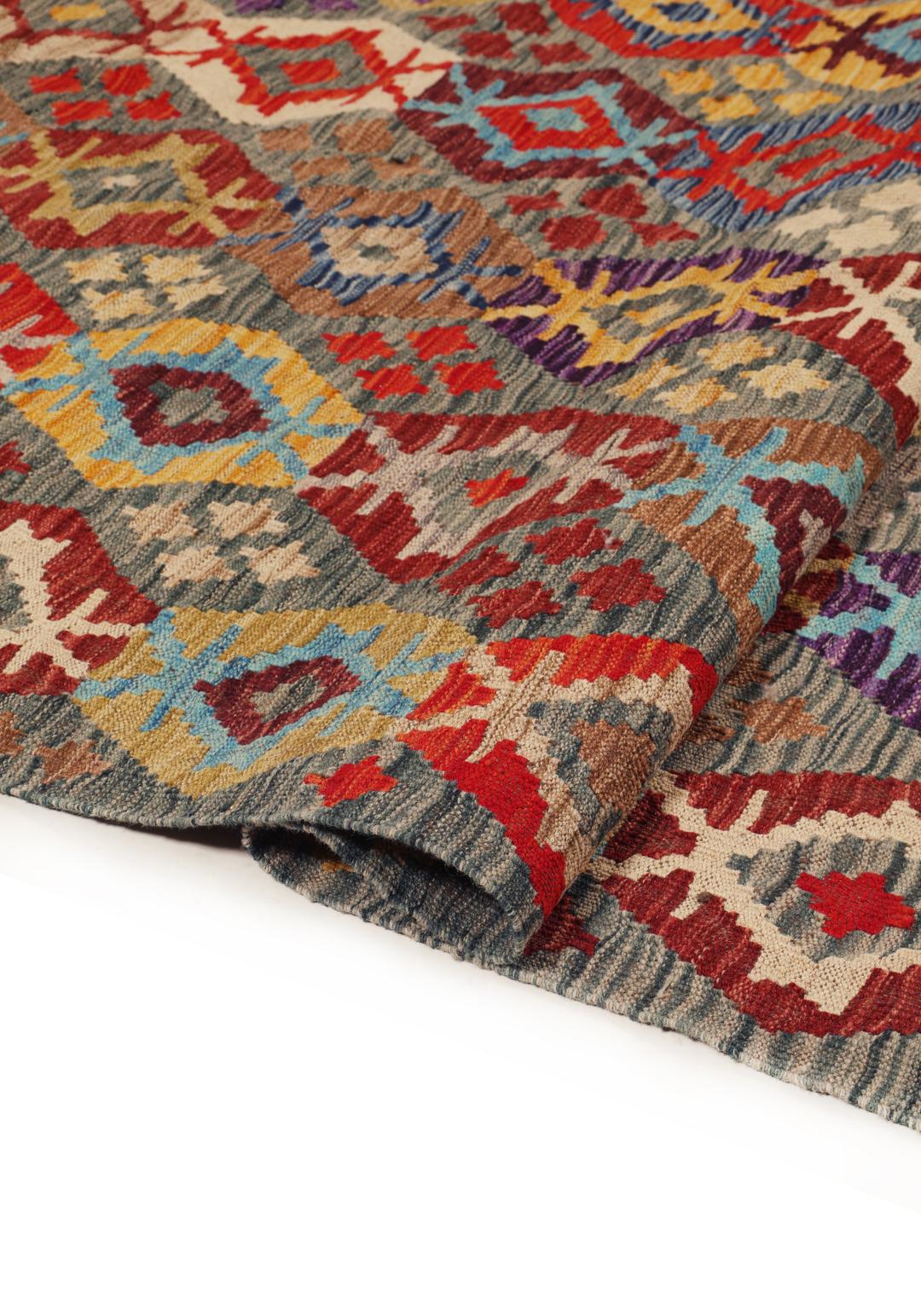
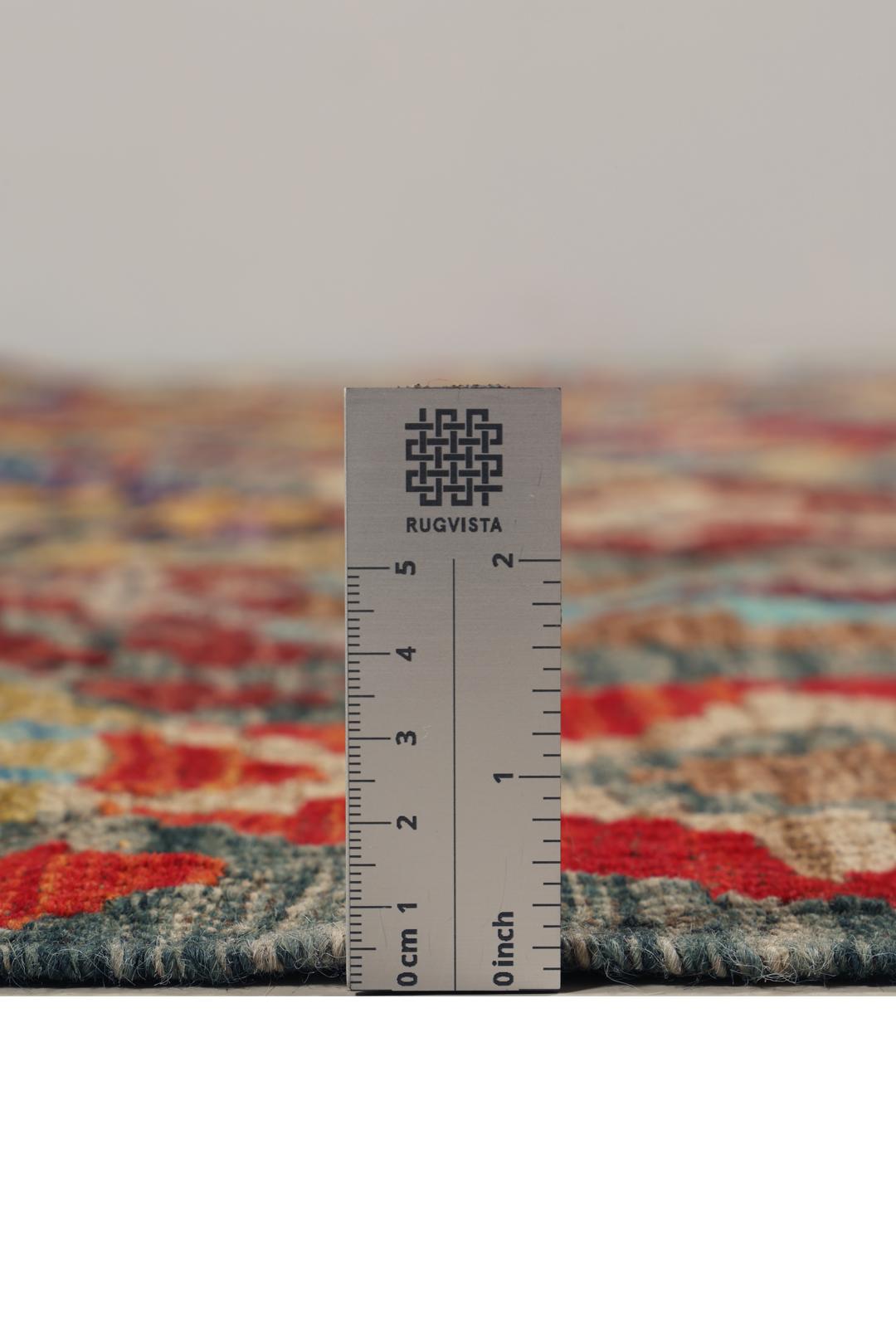
Kelim rugs have long been a cornerstone of nomadic and village life across the Middle East and Central Asia. Originally created as functional items like saddlebags, floor coverings, and tent decorations, these flat-woven textiles are celebrated for their portability and intricate designs that reflect the cultural identity of the weaving communities.
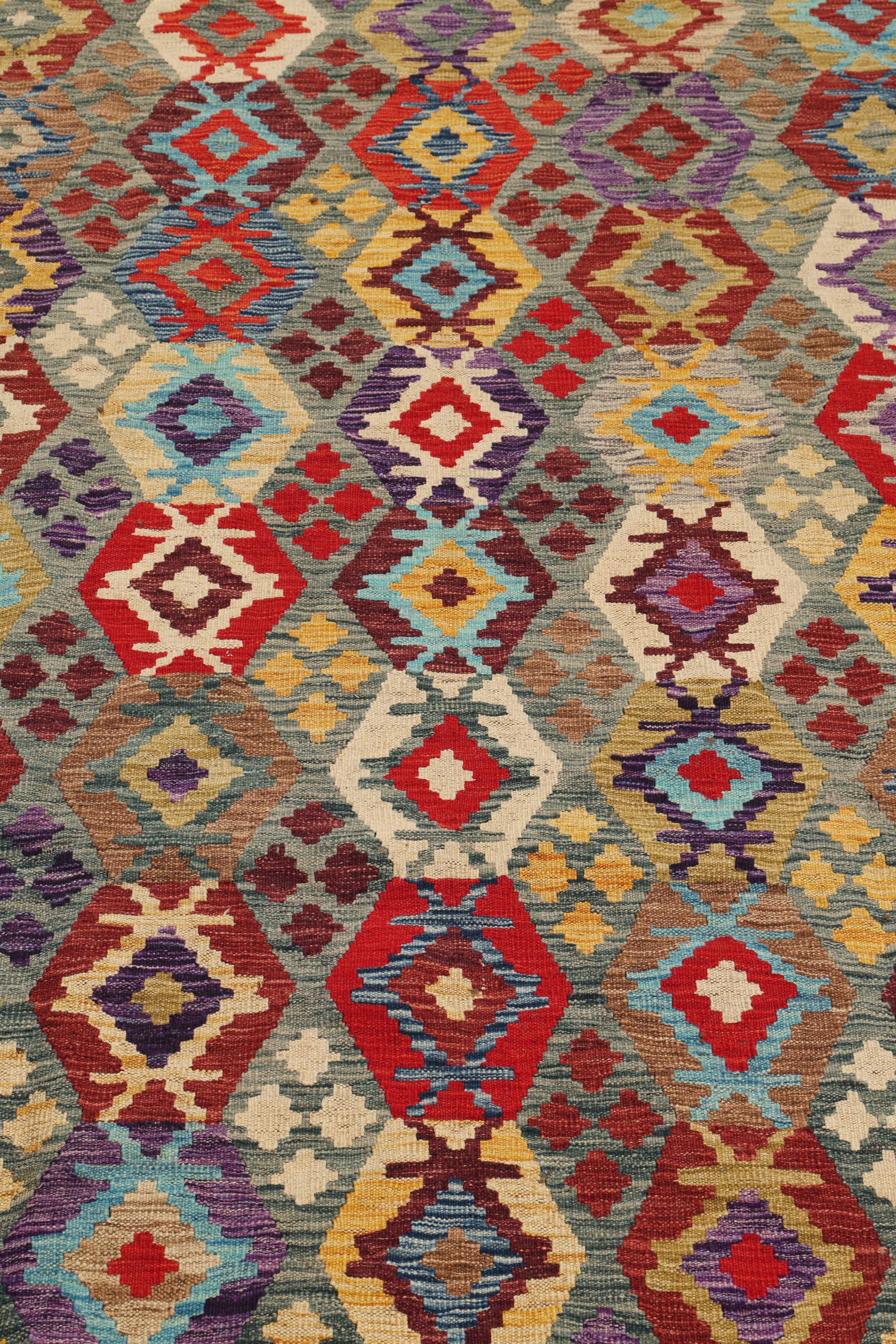
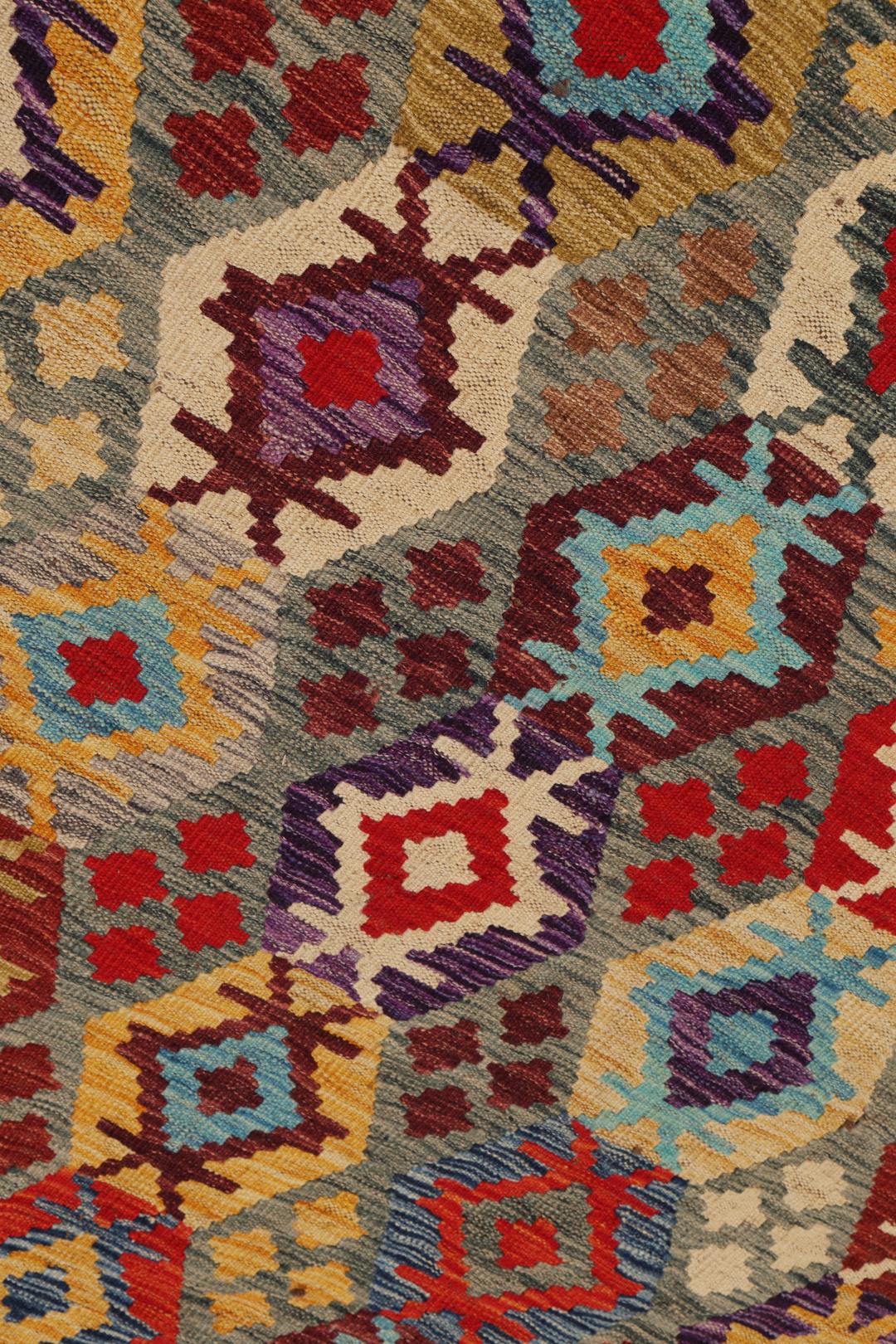
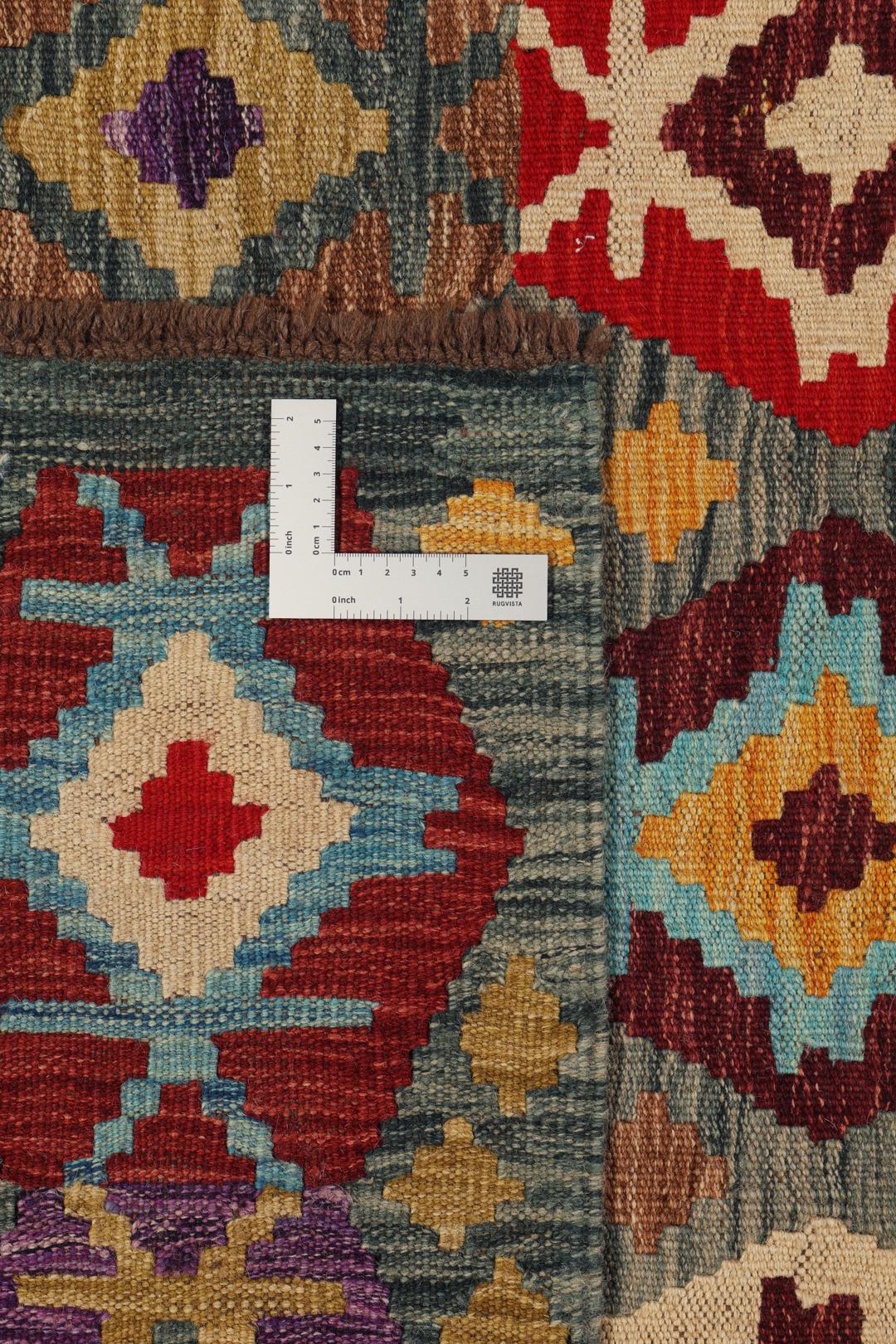
The term 'Kelim' refers to the specific slit-weave technique where the weft threads are tightly packed to cover the warp, resulting in a smooth, pileless surface. This method demands a high level of precision, as the artisan must manage colour changes and pattern alignment without the safety net of a knotted pile, making the structural integrity of the piece a true mark of the weaver's expertise.
Signature design elements of Afghan Kelims often include bold, repeating geometric motifs such as diamonds and triangles, which hold deep symbolic meaning. The use of natural, vibrant dyes creates a striking contrast against the field, often featuring a decorative border that frames the complex internal geometry.
Owning an Afghan Kelim is a way to connect with a rich, enduring tradition of craft. These rugs are highly valued by collectors for their authenticity and the way they bridge the gap between historical nomadic utility and modern interior design, offering a slice of heritage that is as durable as it is beautiful.