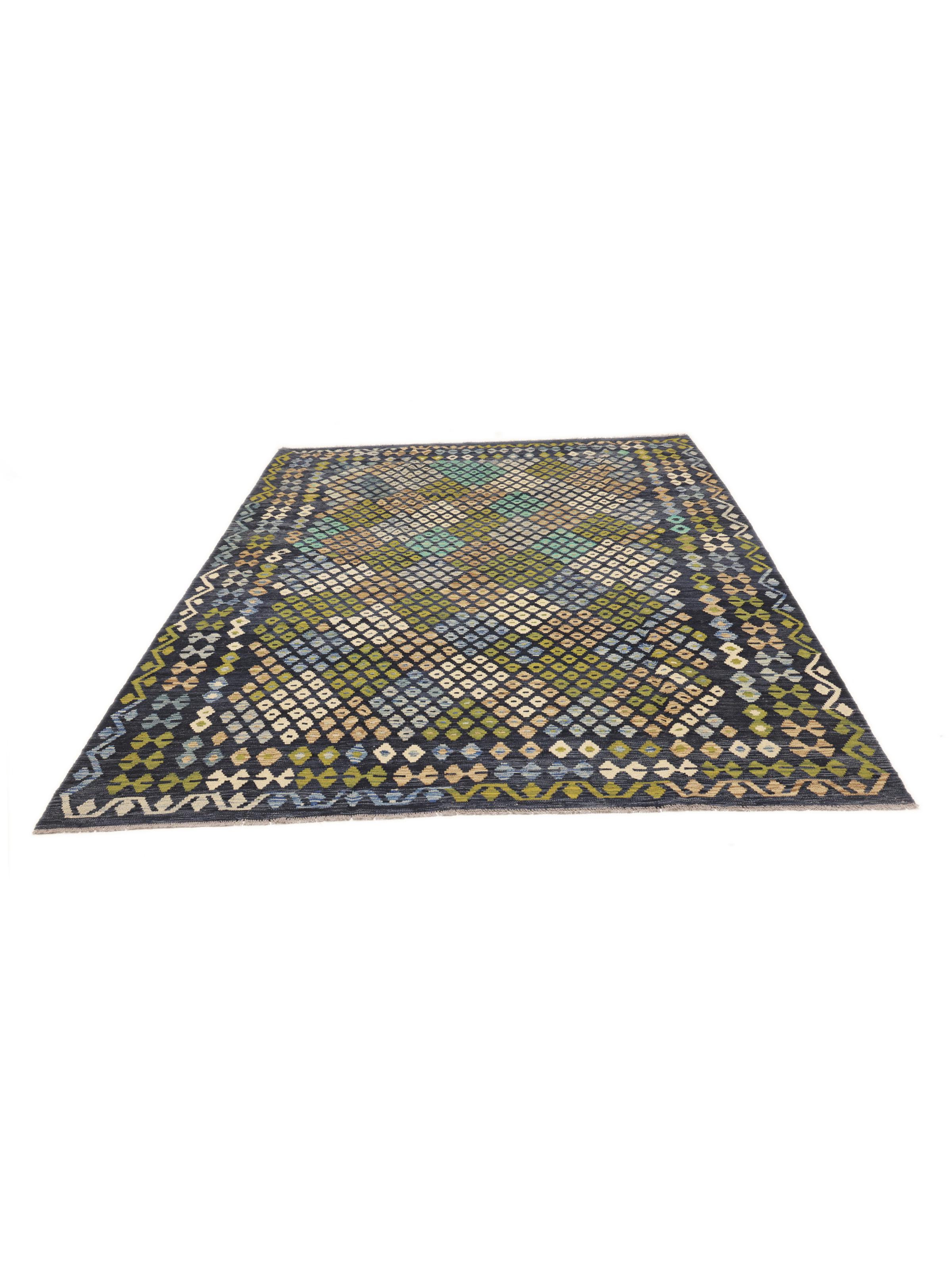
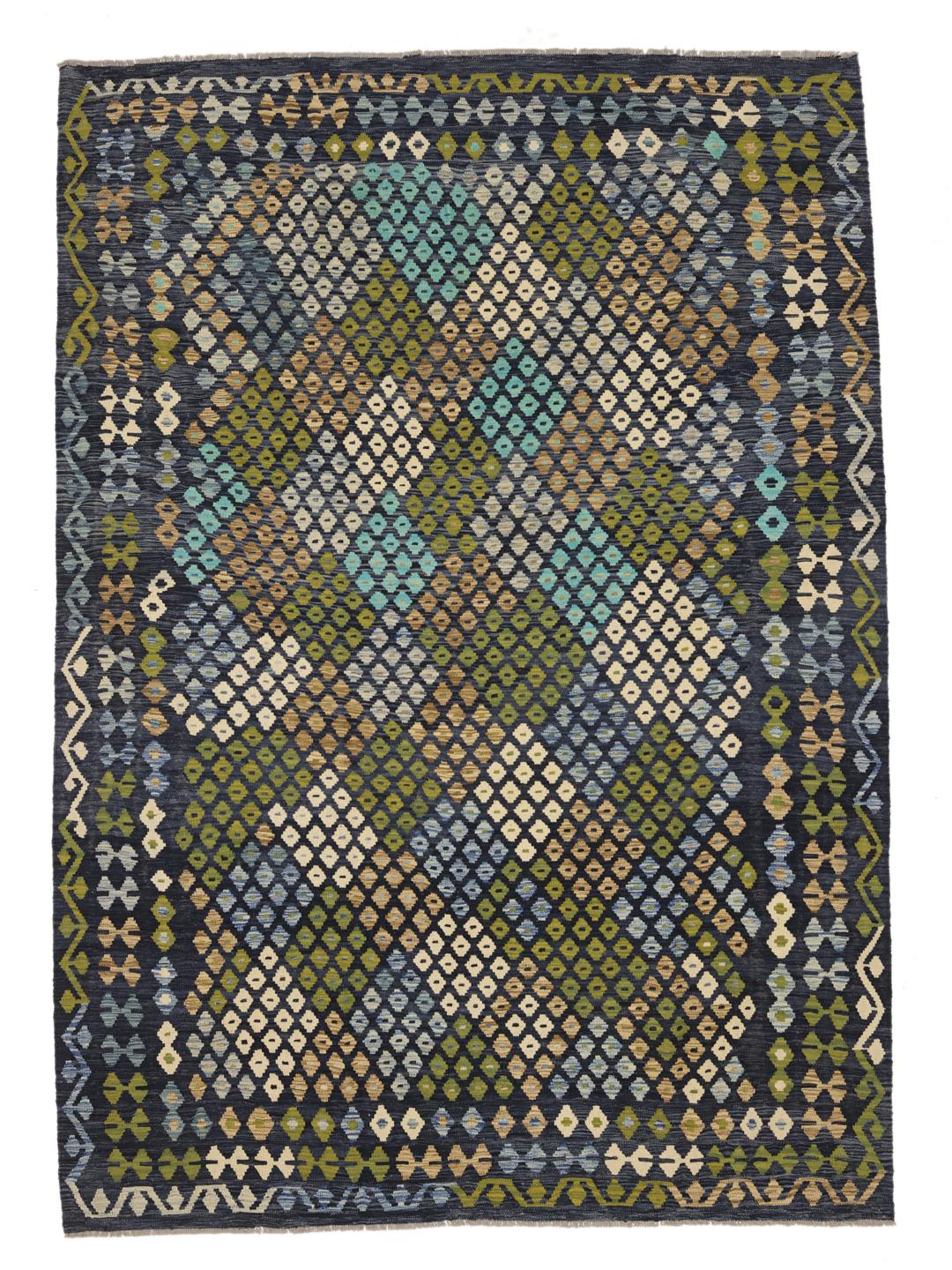
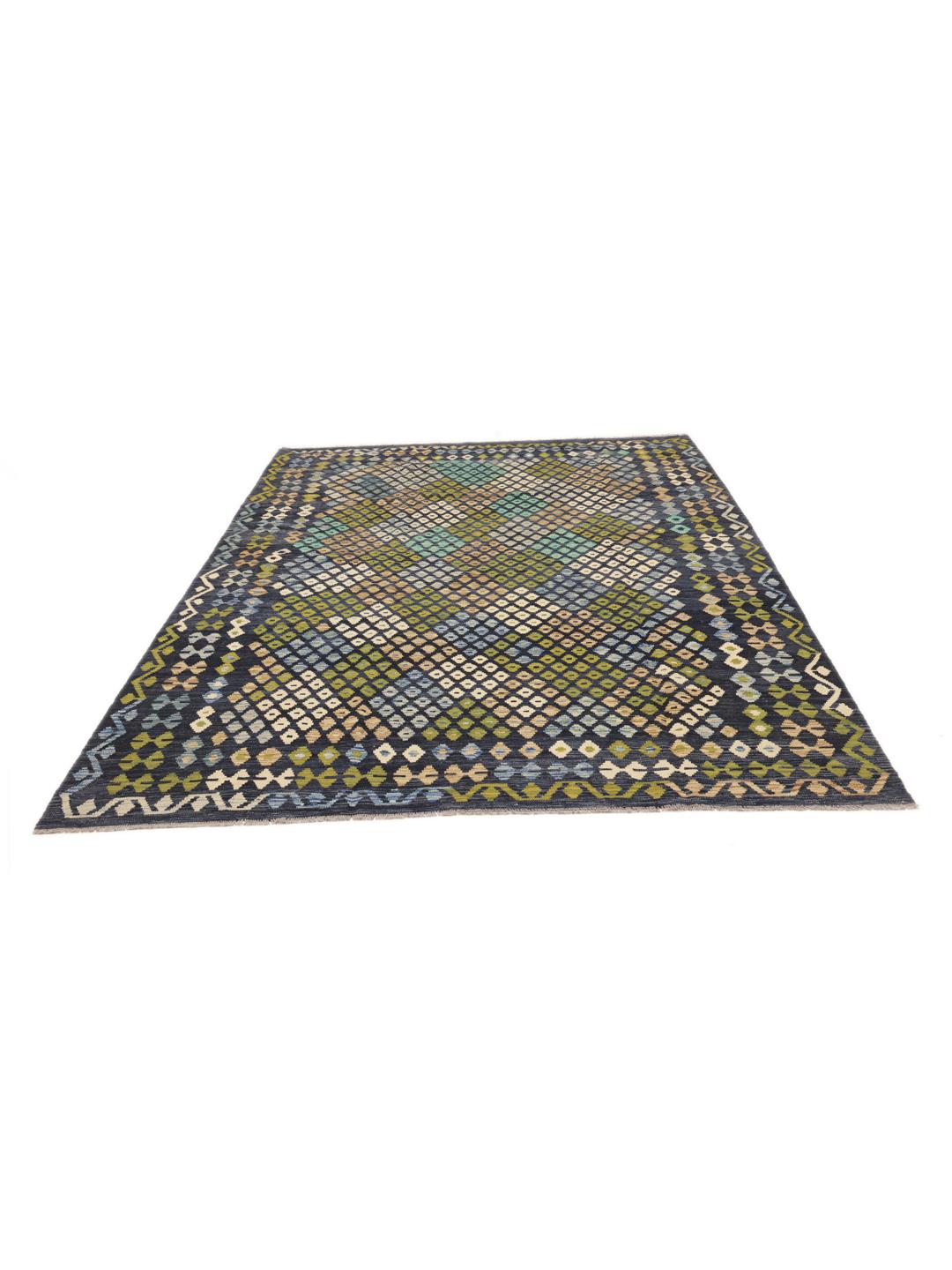
Kelim rugs have long been a cornerstone of nomadic life across the Middle East and Central Asia. Originally designed for practical use as floor coverings, tent dividers, and storage sacks, these flat-weave textiles evolved to become highly prized artistic expressions of the cultures that created them.
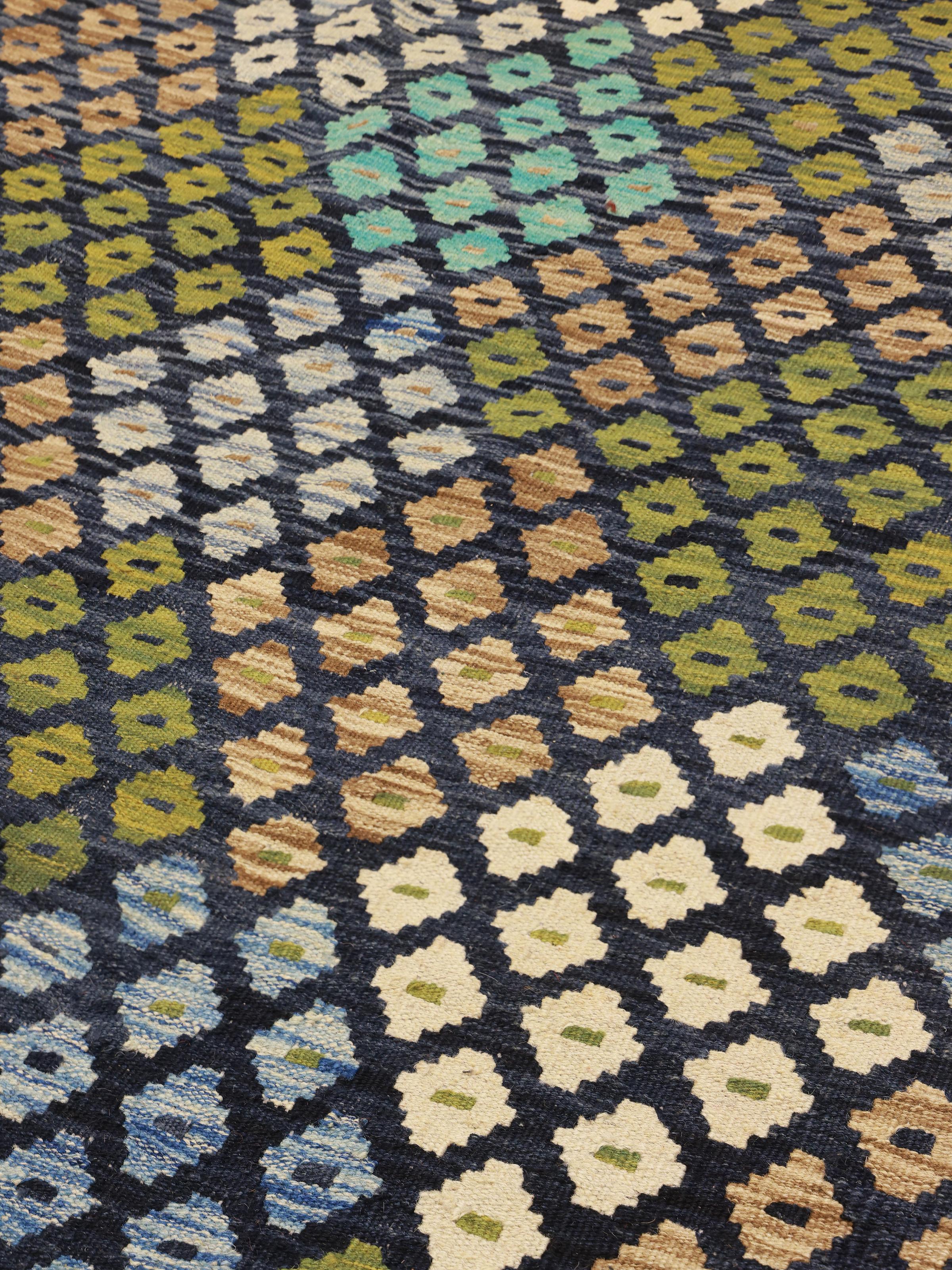
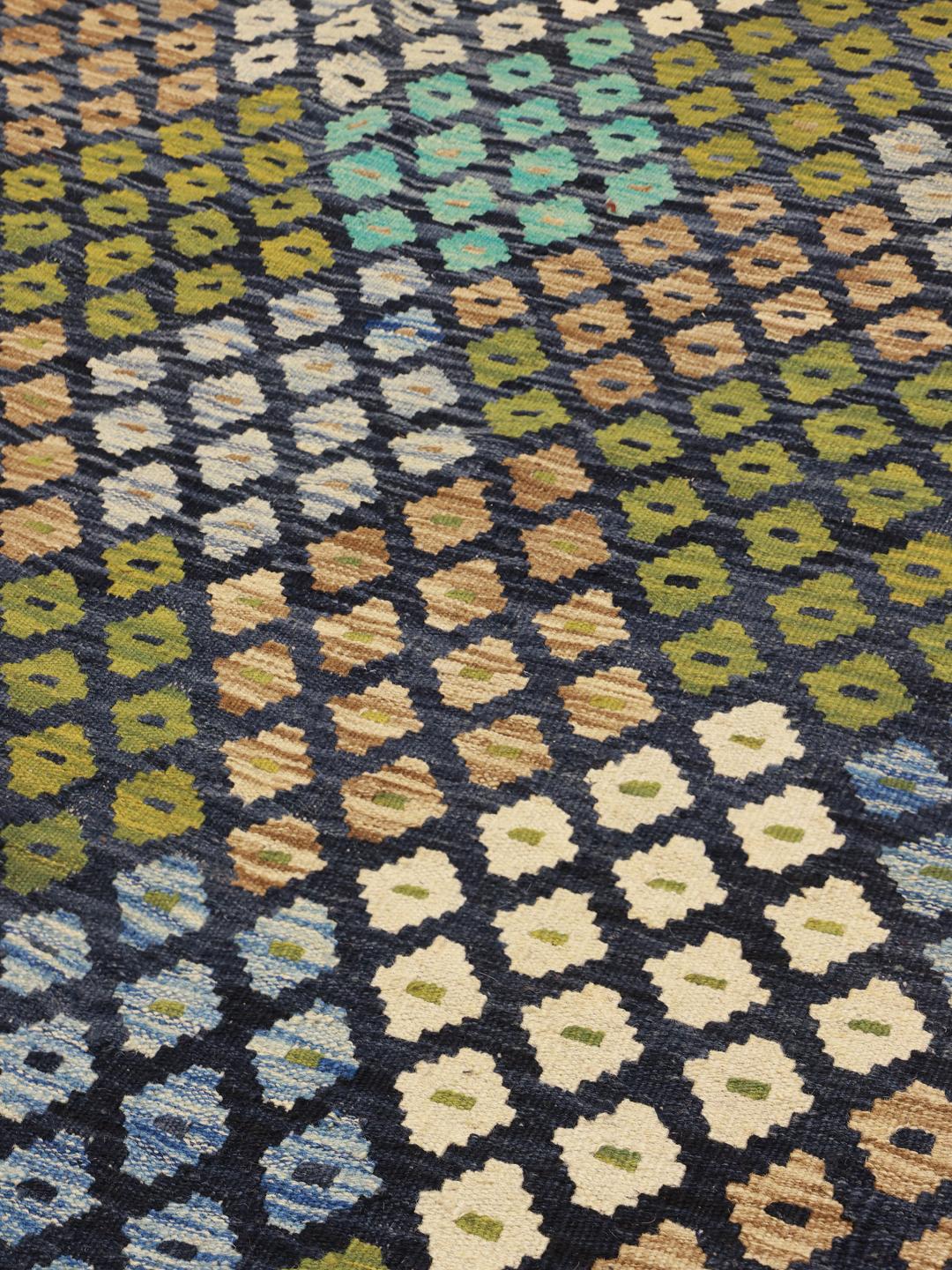
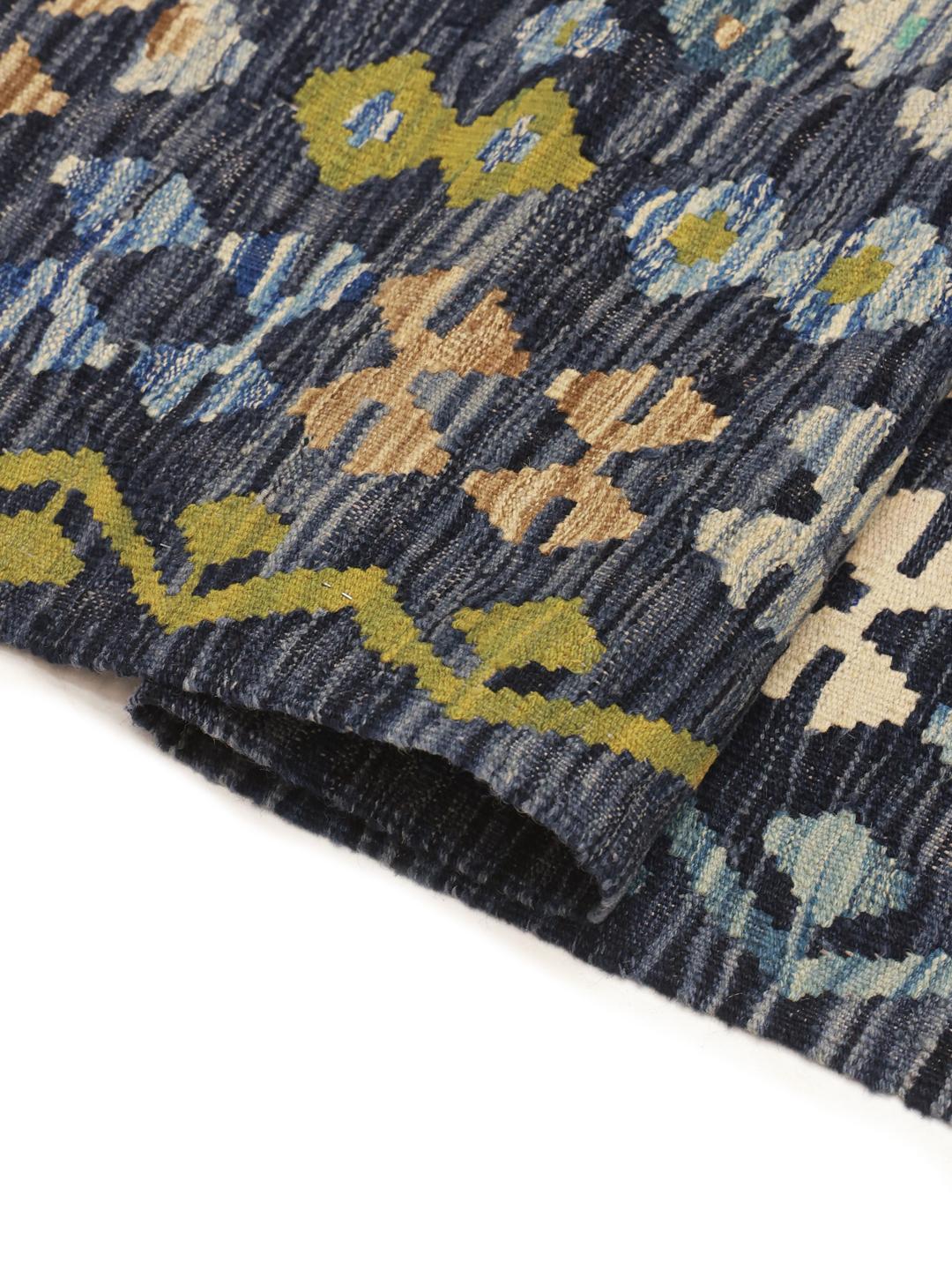
The term 'Kelim' refers to the specific weaving technique where no pile is involved. Instead, the warp and weft threads are tightly interlaced to form a flat, durable surface. This method demands a high level of expertise, as the weaver must manage colour changes and pattern transitions with extreme precision to ensure the structural integrity of the piece.
This particular Afghan style is known for its bold use of geometric motifs, often featuring diamonds, triangles, and intricate border details. These patterns are not merely decorative but are deeply rooted in the tribal heritage of the region, with each shape often carrying a traditional meaning or a reflection of the weaver's environment.
Today, these rugs are collected for their authenticity and the way they bridge the gap between ancient craft and modern living. Owning an Afghan Kelim is an opportunity to preserve a piece of cultural history, celebrating the enduring skill of the artisans who continue to keep these ancient weaving traditions alive.