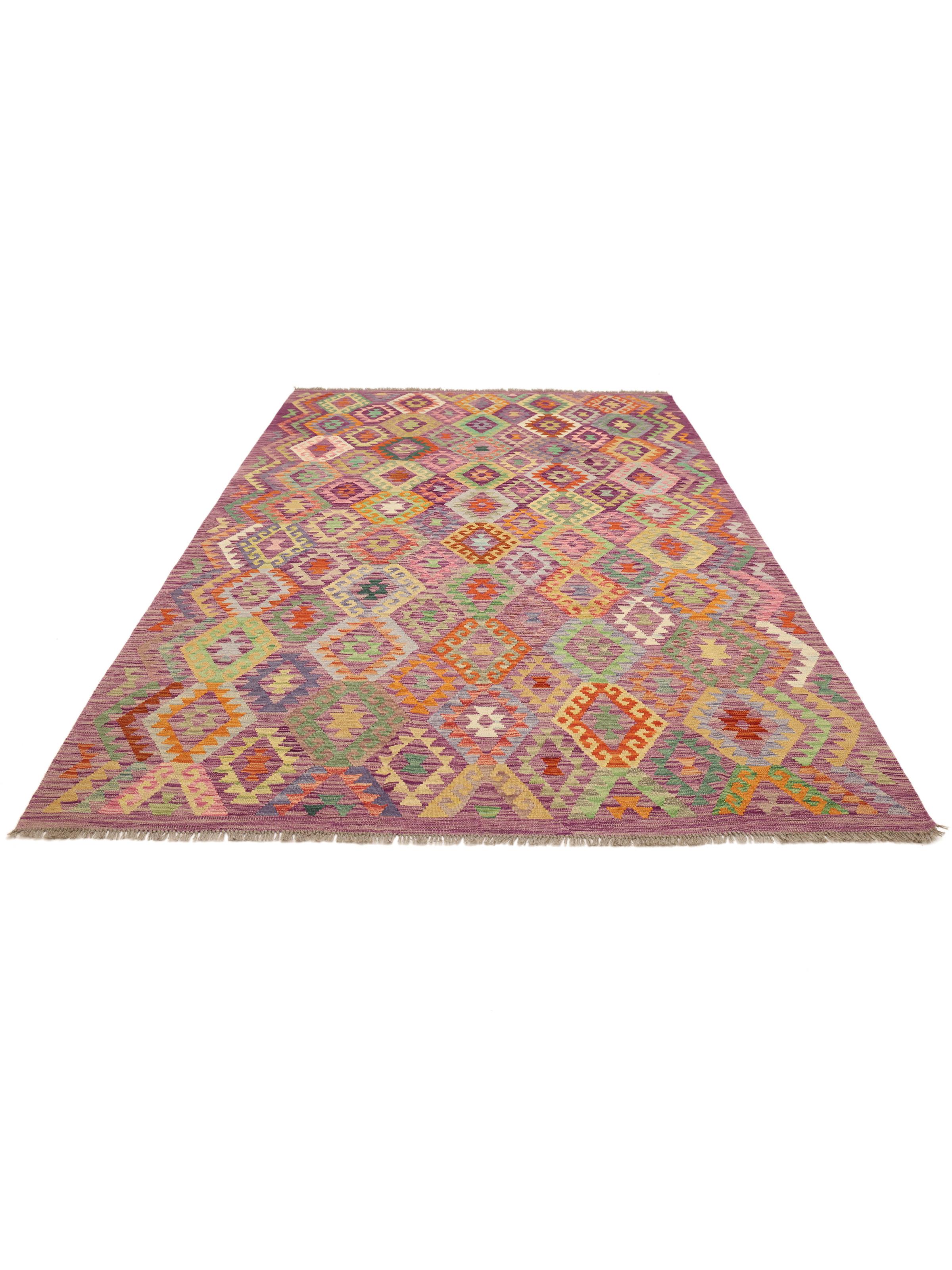
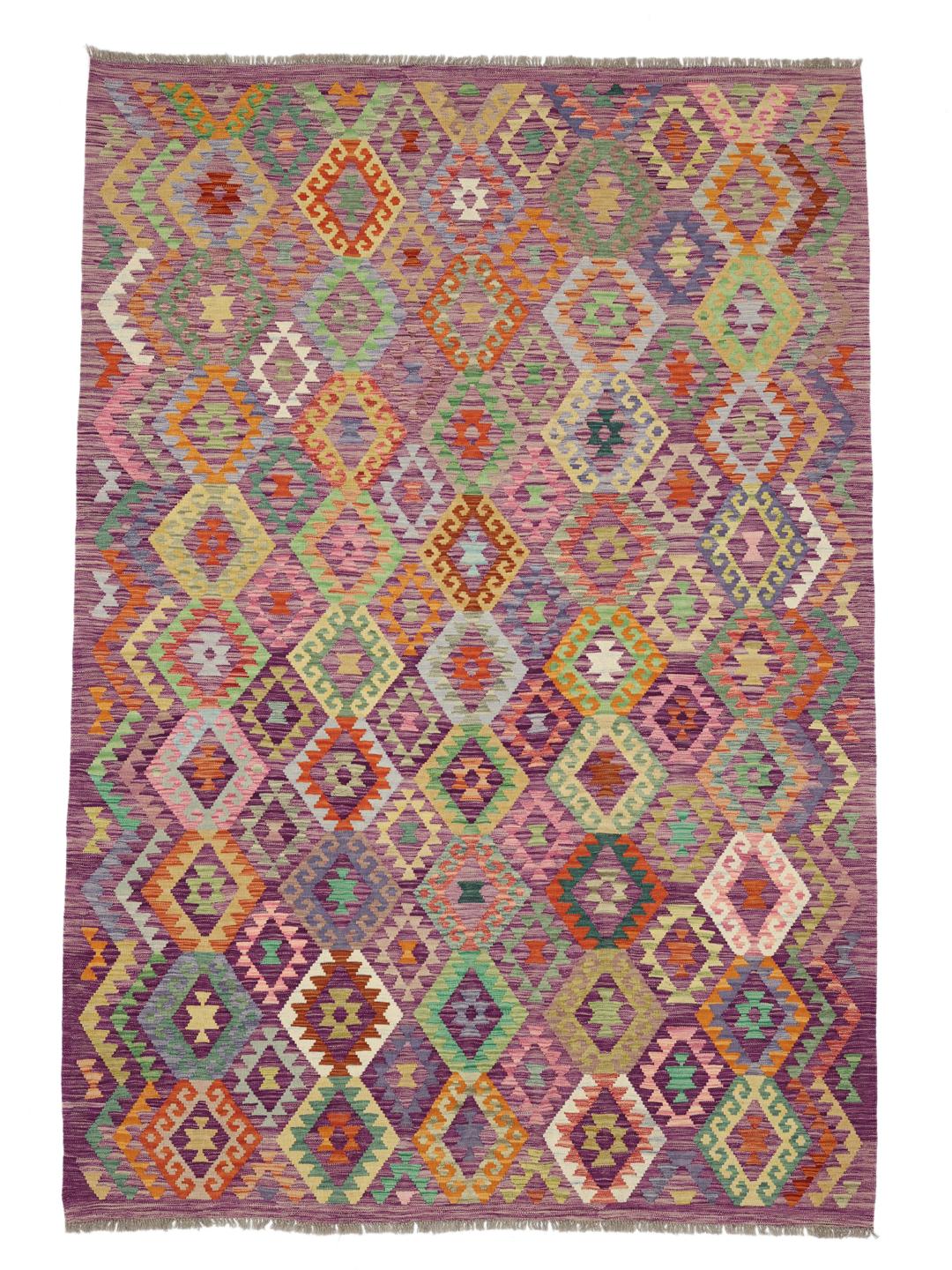
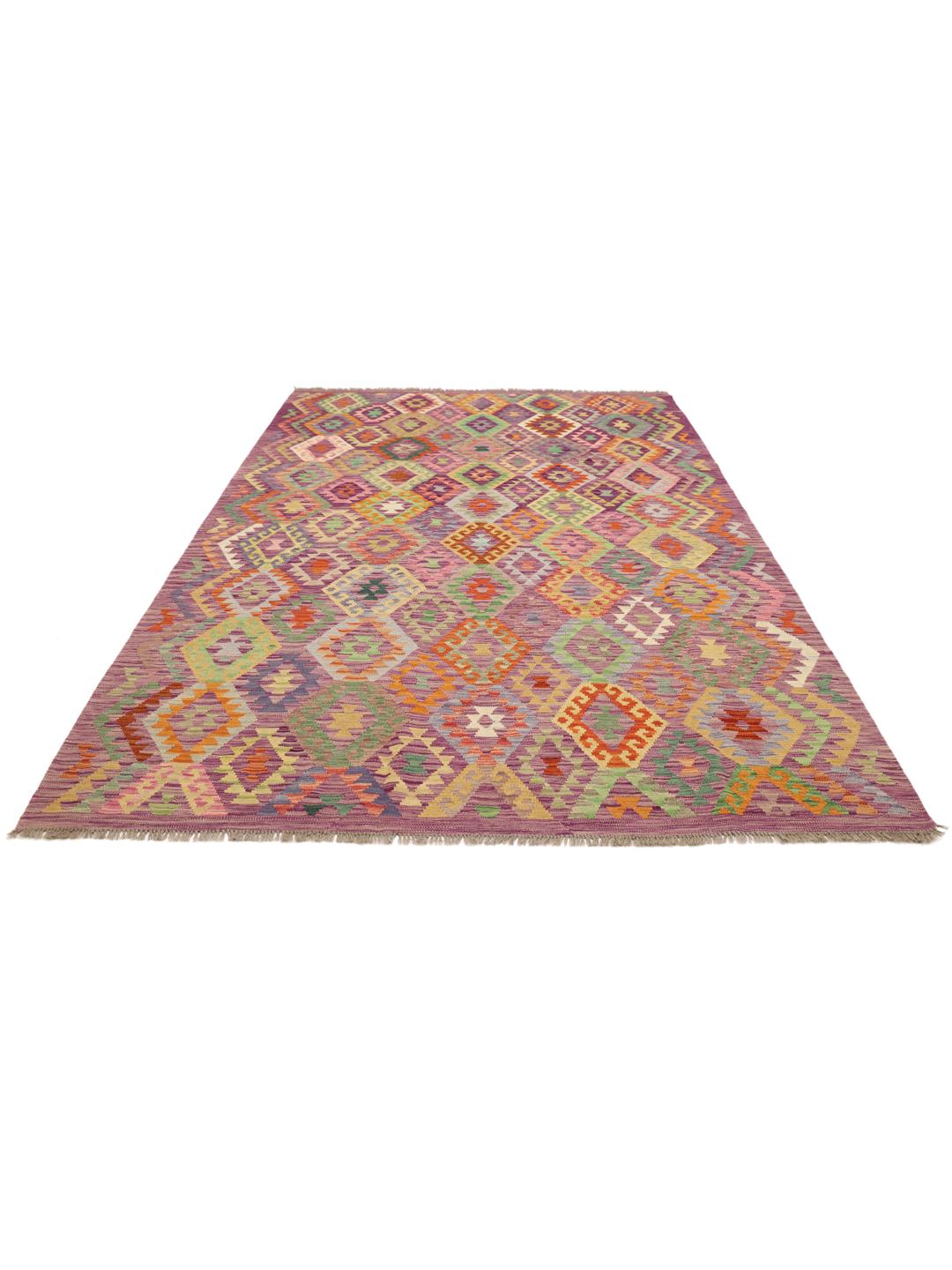
The Kelim tradition is deeply rooted in the history of the Middle East and Central Asia. These flat-woven rugs have been produced for centuries by nomadic and semi-nomadic tribes, serving not just as floor coverings, but as essential household items that were durable enough for life on the move. Today, Afghanistan remains a vital centre for this craft, preserving ancient techniques that have been passed down through generations.
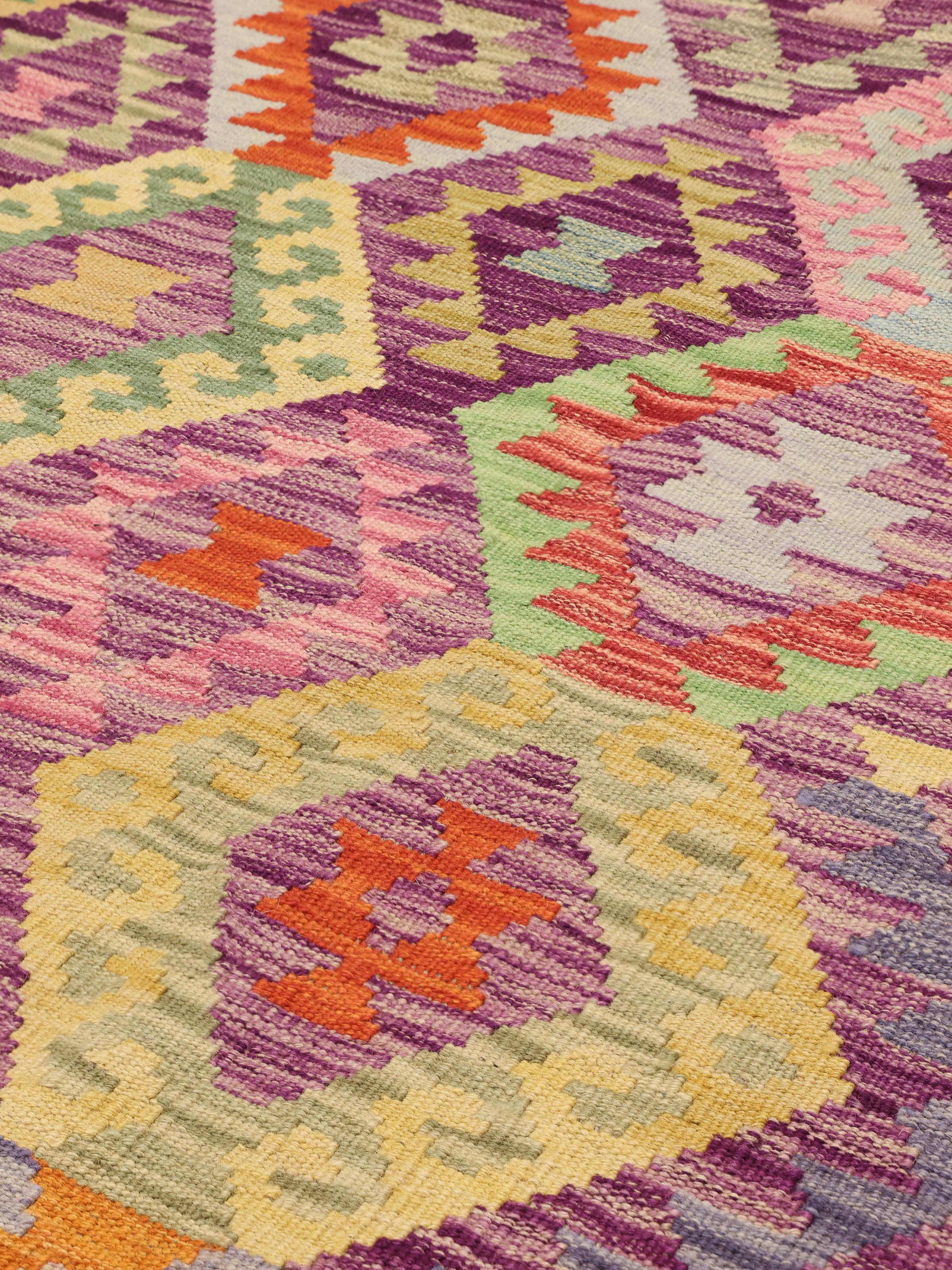
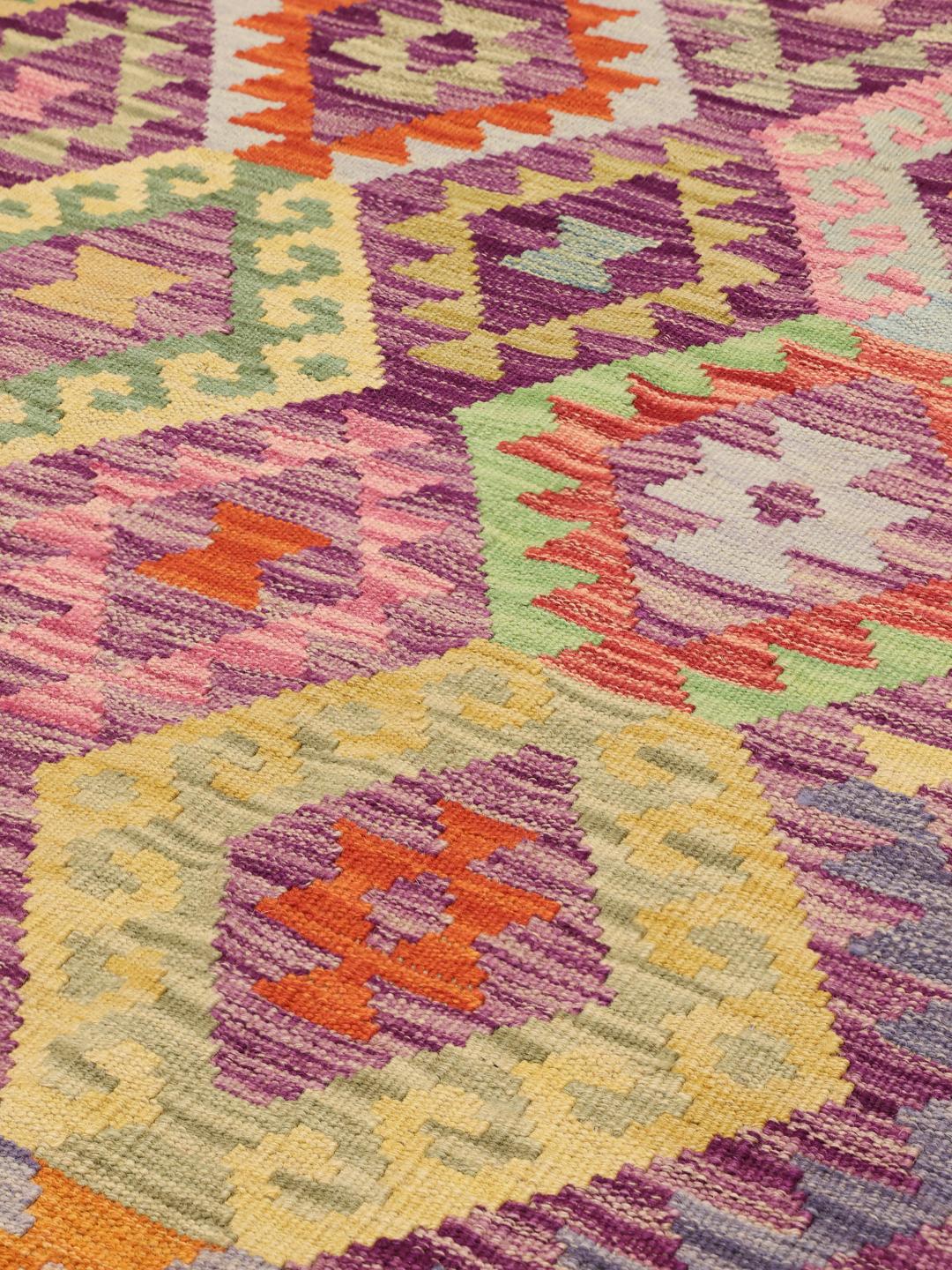
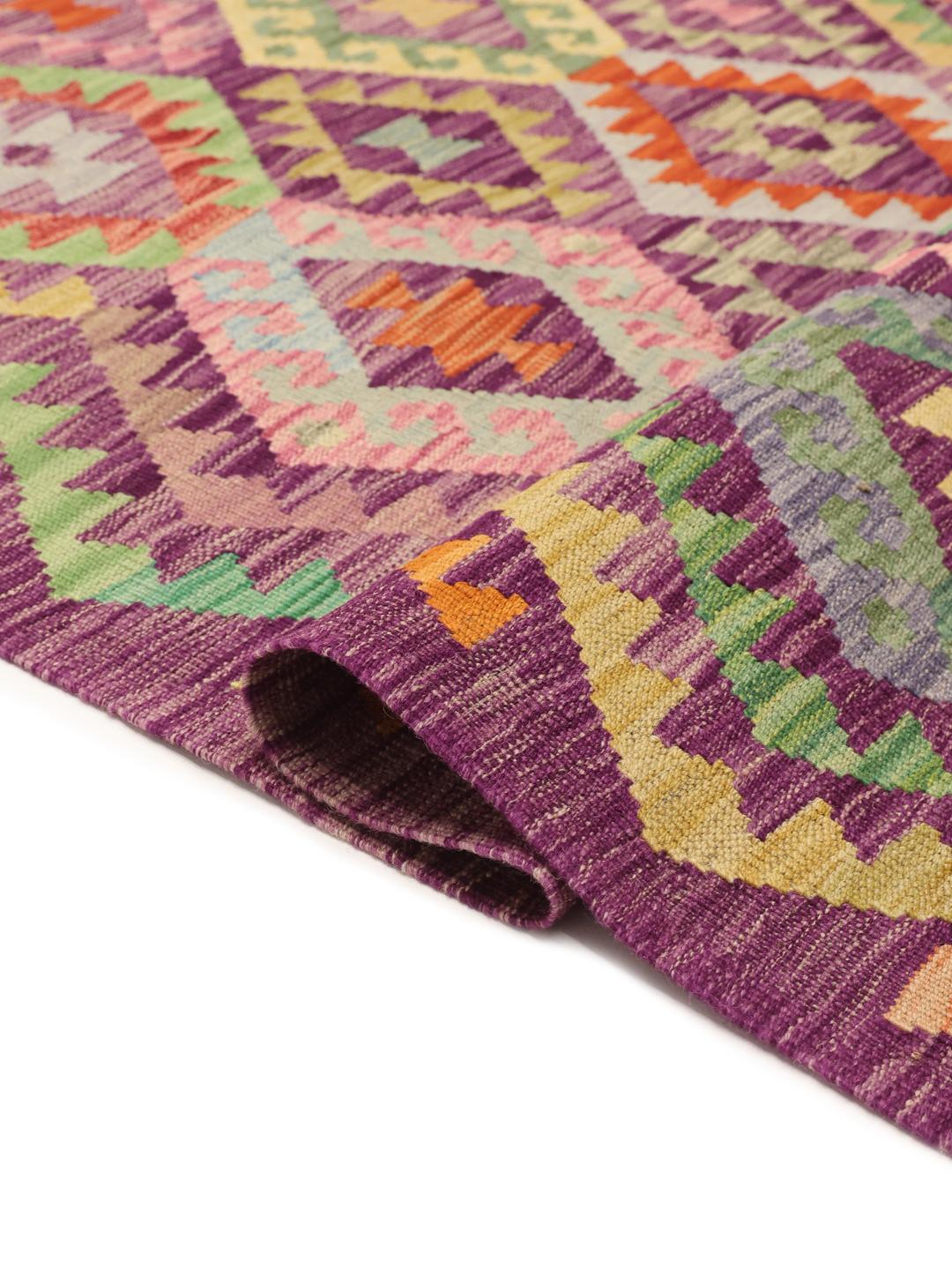
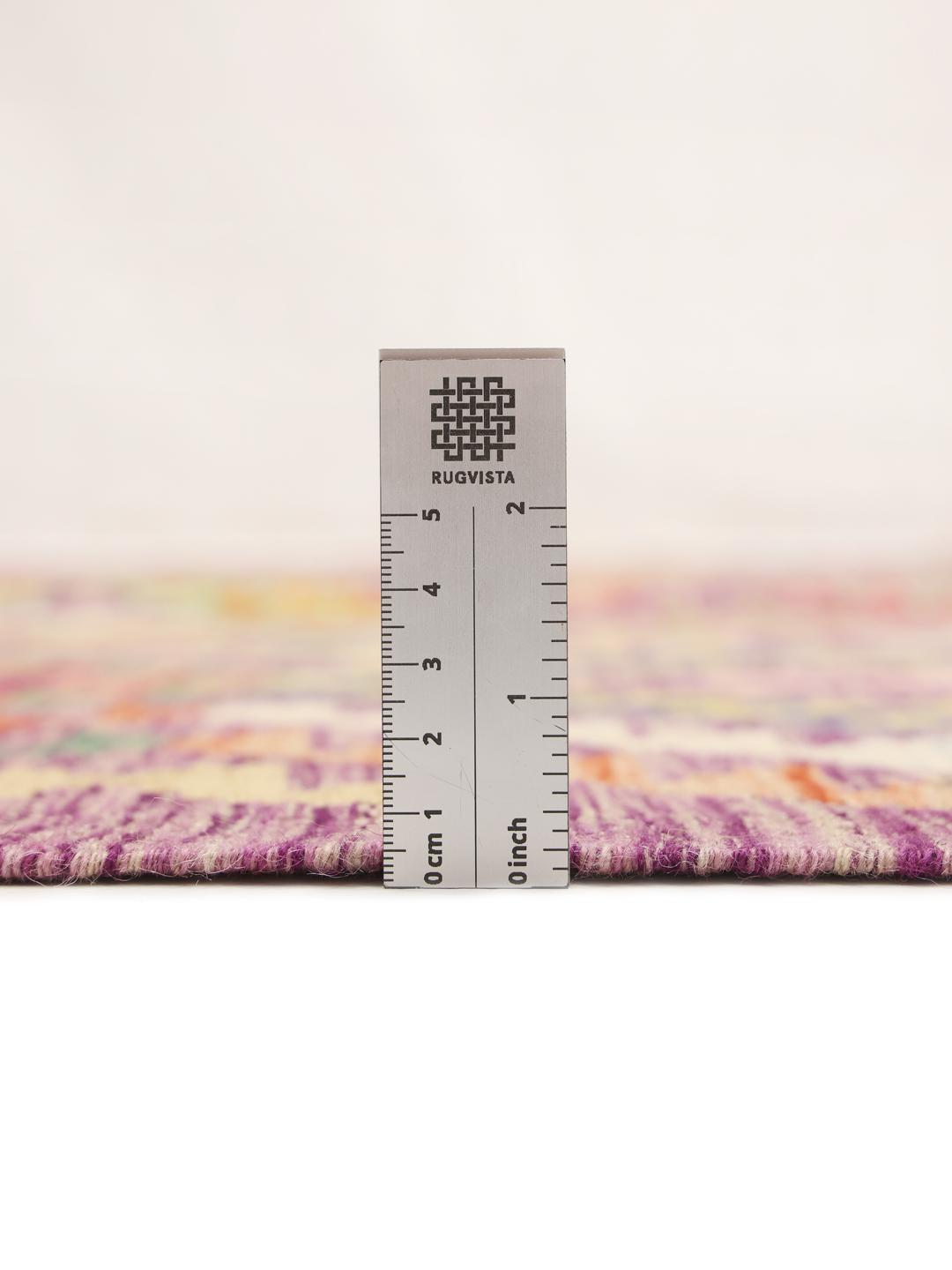
A Kelim is defined by its flat-weave construction, which lacks a traditional knotted pile. Instead, the design is created by tightly interlacing the coloured weft threads over and under the warp. This technique results in a reversible rug that is lightweight and incredibly sturdy, making it a functional choice for both floors and as wall hangings.
The signature design elements of Afghan Kelims often feature bold, geometric motifs such as diamonds, triangles, and stylised floral shapes. These patterns are typically arranged in repetitive layouts that draw the eye across the entire field. The vibrant colour palettes are often derived from natural dyes, giving the rugs an earthy, authentic aesthetic that fits beautifully into diverse home styles.
Collecting a Kelim is an opportunity to own a piece of cultural heritage. These rugs are highly valued for their honest, unpretentious beauty and the immense skill required to produce them. By bringing one into your home, you are connecting with a long-standing tradition of craftsmanship that prioritises both utility and artistic expression, ensuring a meaningful addition to your collection.