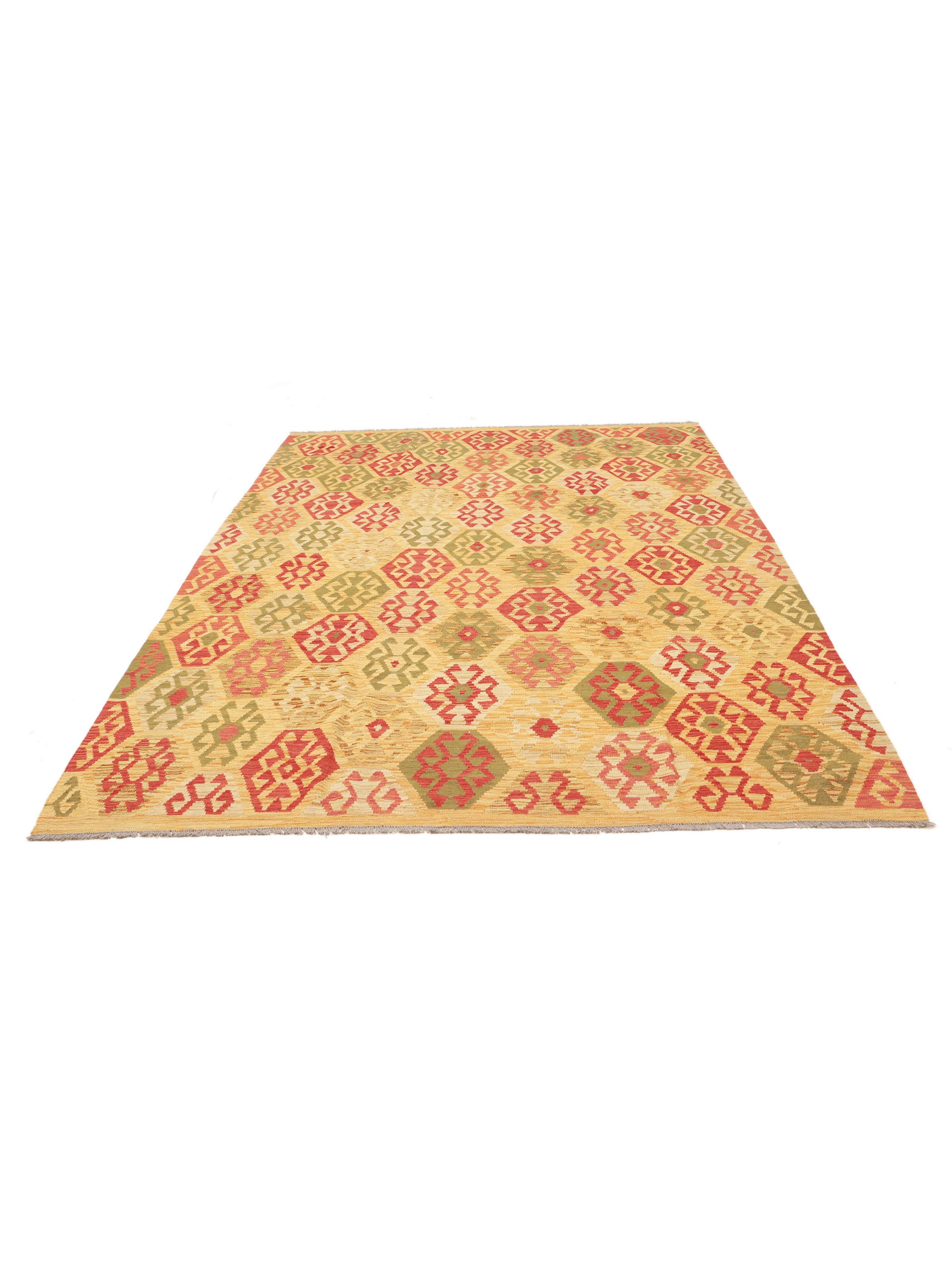
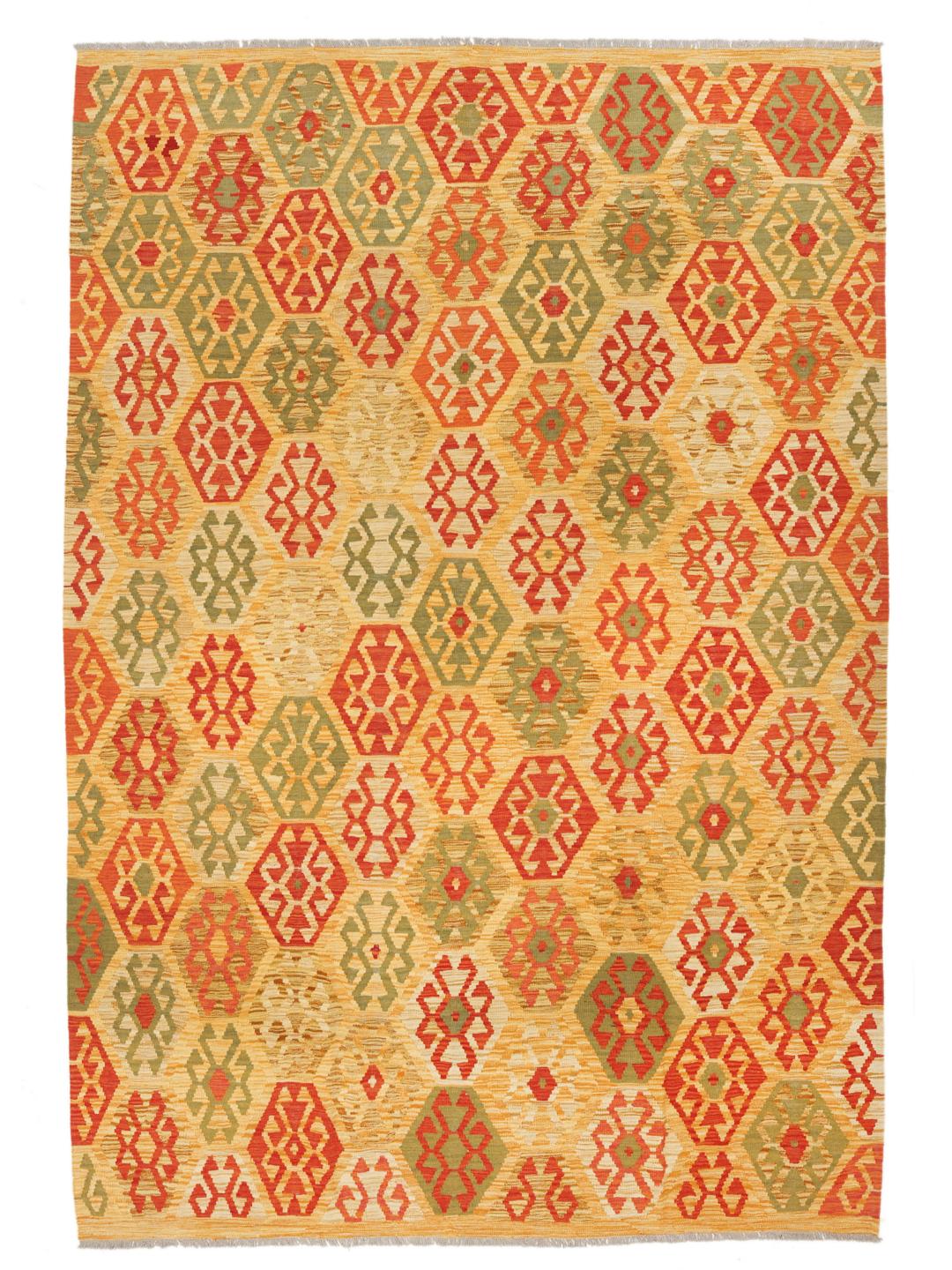
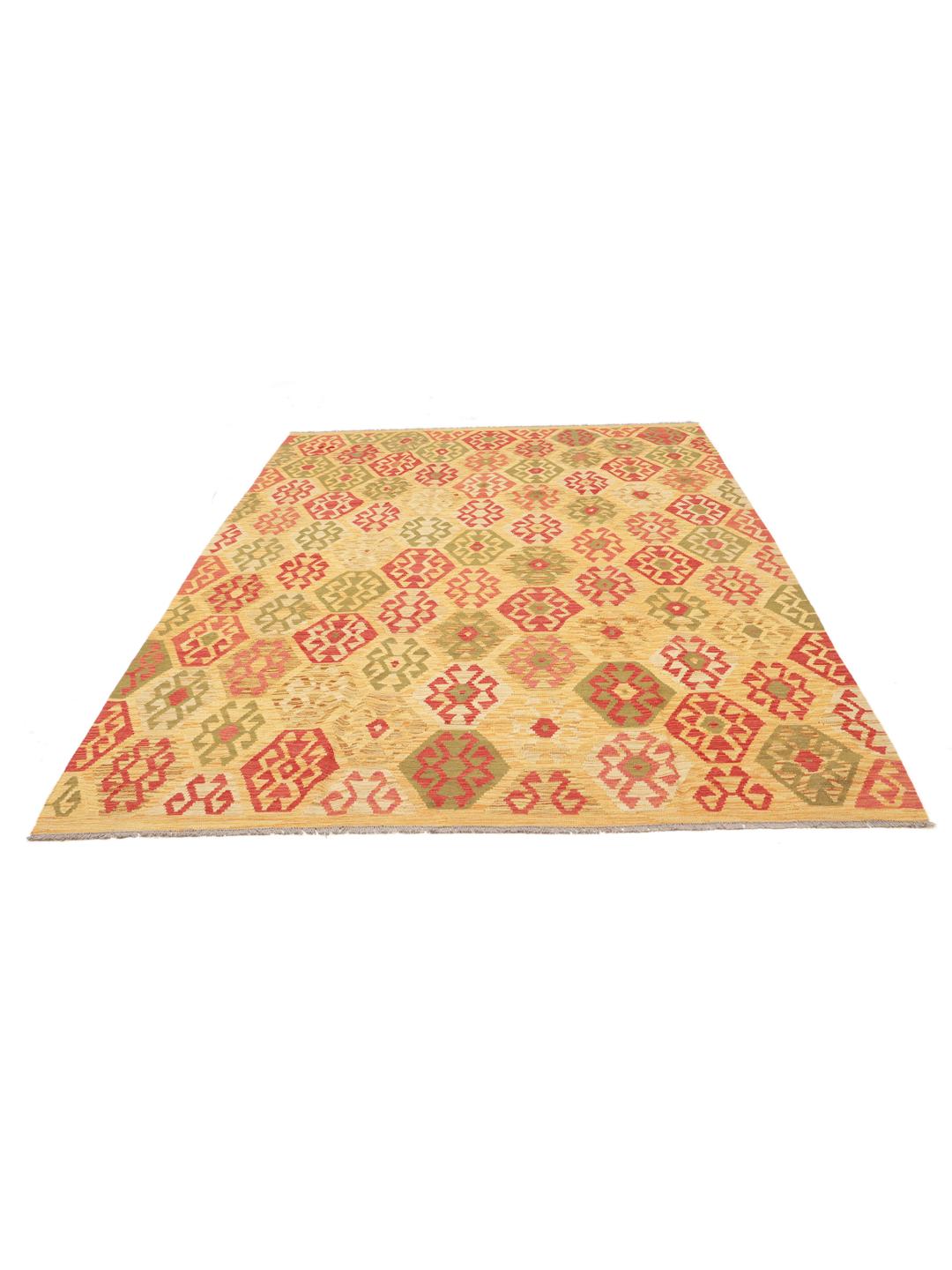
Kelim rugs have long been a cornerstone of nomadic life in the Middle East and Central Asia. Historically, these flat-woven textiles were crafted by tribal weavers to serve a variety of practical needs, including floor coverings, wall hangings, and storage bags. The tradition of the Afghan Kelim is particularly noted for its use of local, high-quality wool, which is spun and dyed using time-honoured methods to create rugs that are both durable and deeply expressive of the local landscape.
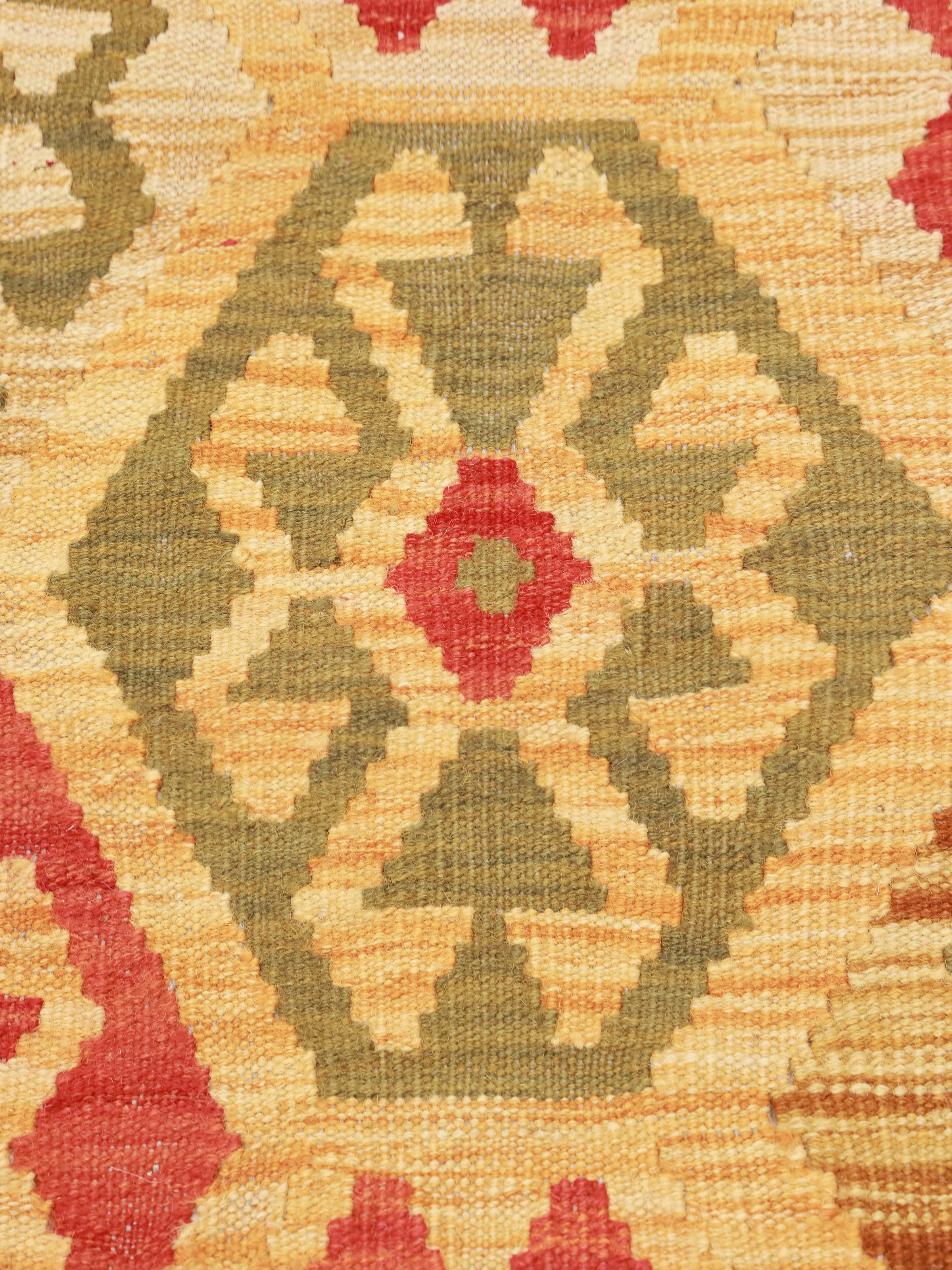
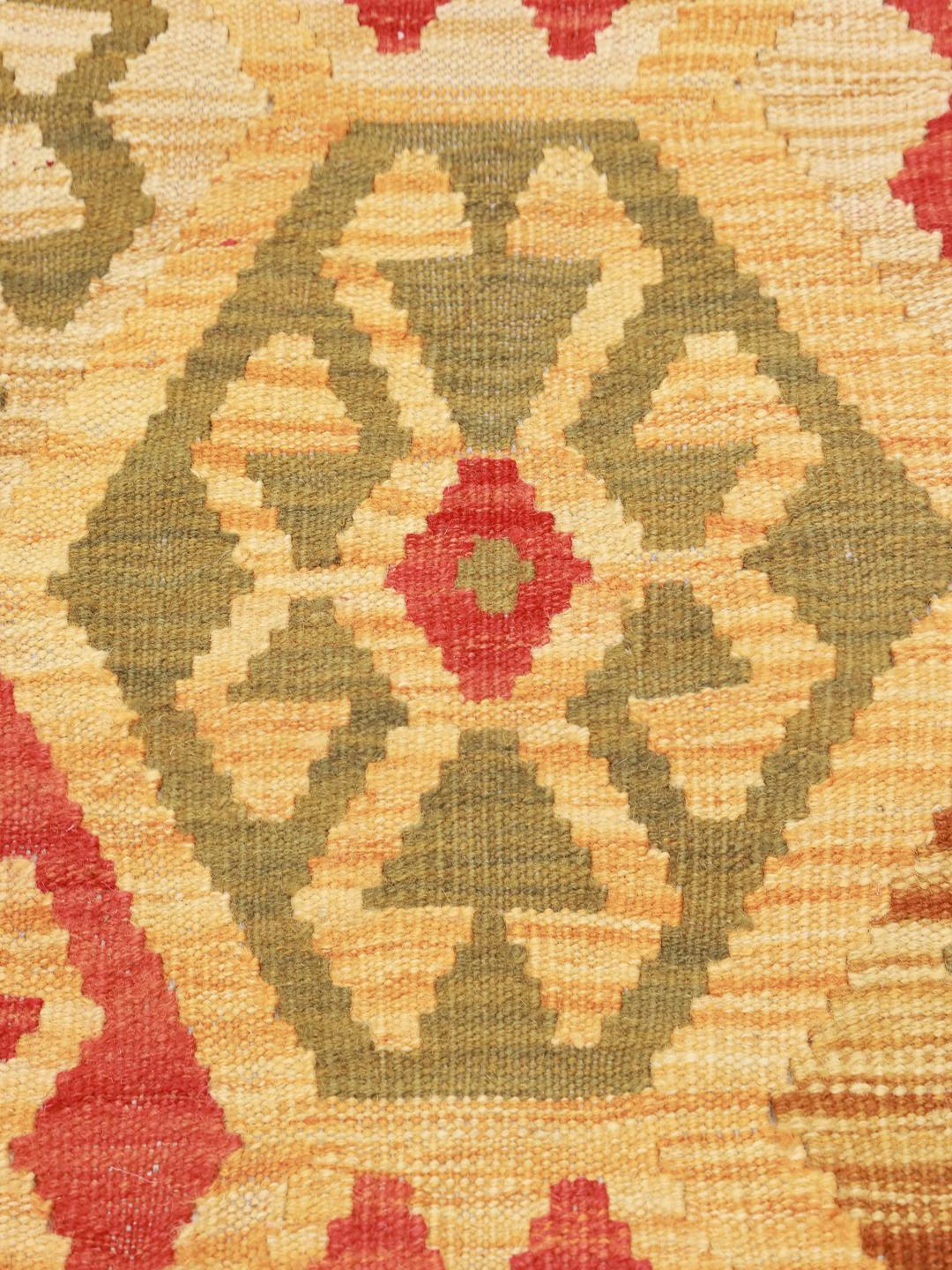
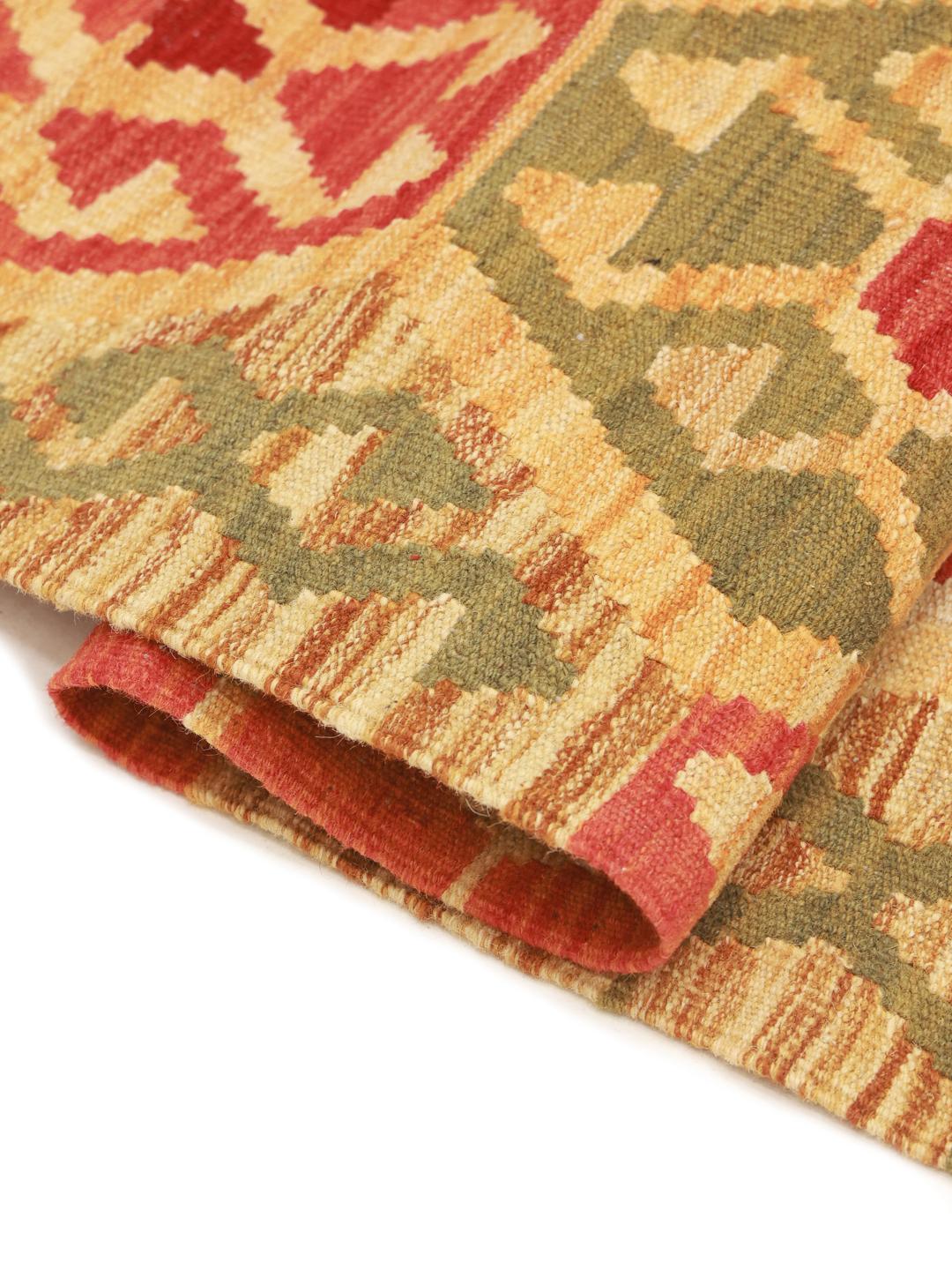
The technical term 'Kelim' refers to the specific slit-weave technique used to create the pattern. In this method, the weaver changes colours by wrapping the weft around the warp threads, creating small vertical slits where different colours meet. This technique is not just a stylistic choice but a hallmark of genuine craft, requiring the weaver to have a precise understanding of tension to ensure the rug remains flat and structurally sound throughout its life.
The design language of these rugs is deeply rooted in geometric abstraction. Motifs often represent tribal symbols, protective amulets, or elements of the natural world, all arranged in repeating patterns that create a sense of balance and movement. The use of vibrant, natural-inspired colours is a signature of the Afghan tradition, often reflecting the dramatic shifts in light and colour found in the high-altitude regions where these rugs are primarily produced.
Collecting these rugs is an act of preserving cultural heritage. Each piece acts as a narrative, with patterns and colour choices passed down through generations, effectively telling the story of the artisan and their community. Owning a Kelim Afghan Old Style rug means participating in this ongoing history, bringing a piece of the world's rich textile tradition into your home while enjoying a durable, functional, and deeply meaningful floor covering.