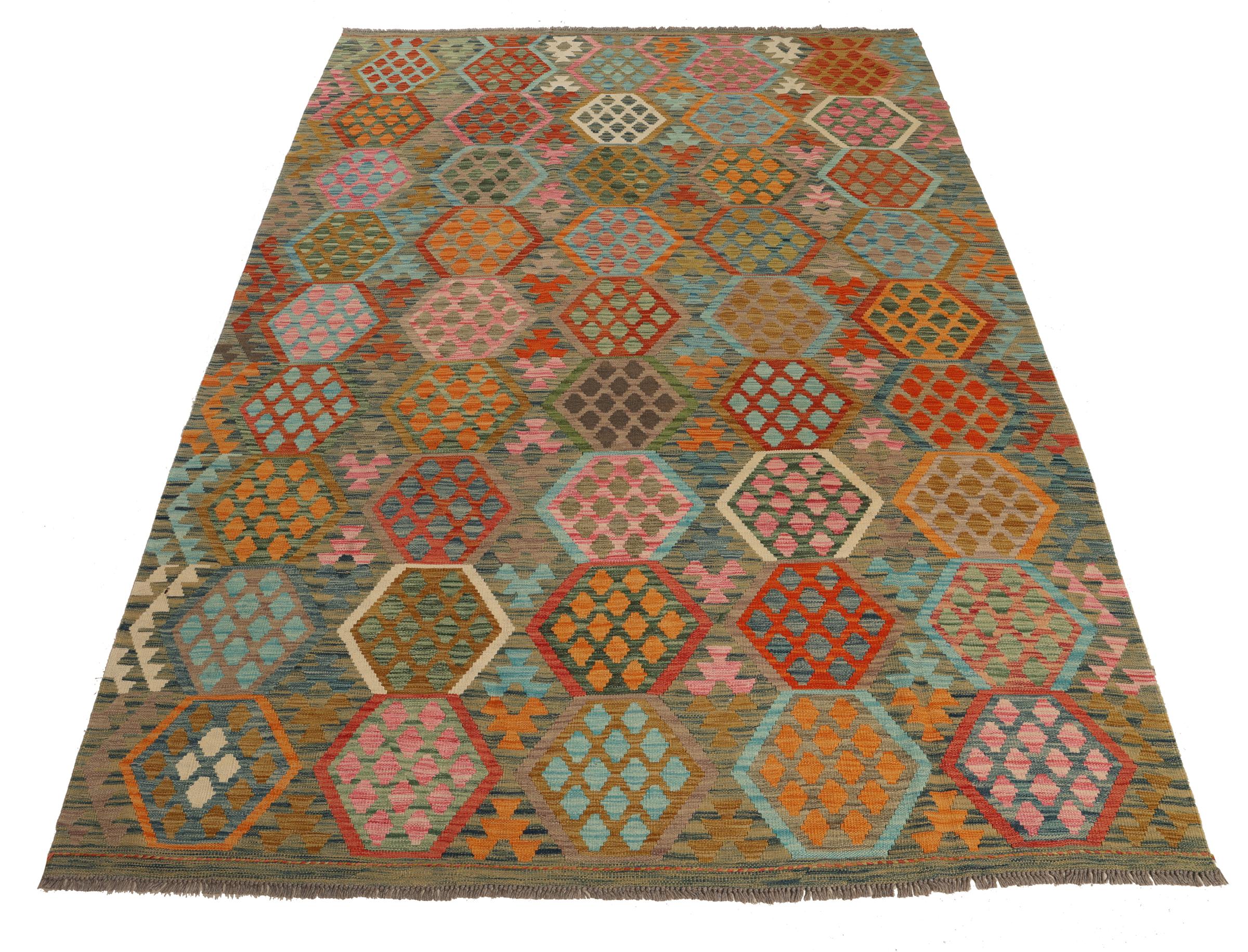
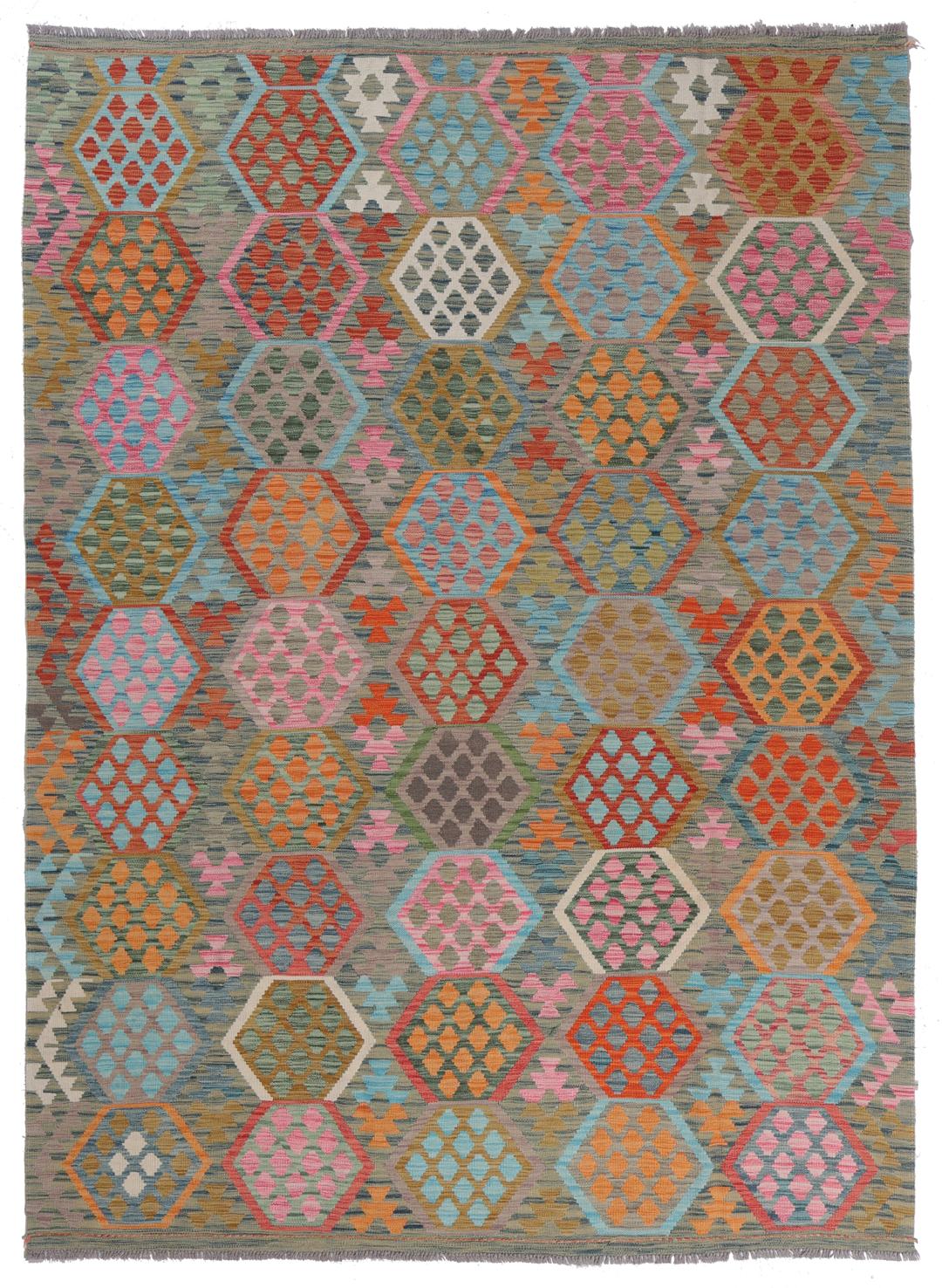
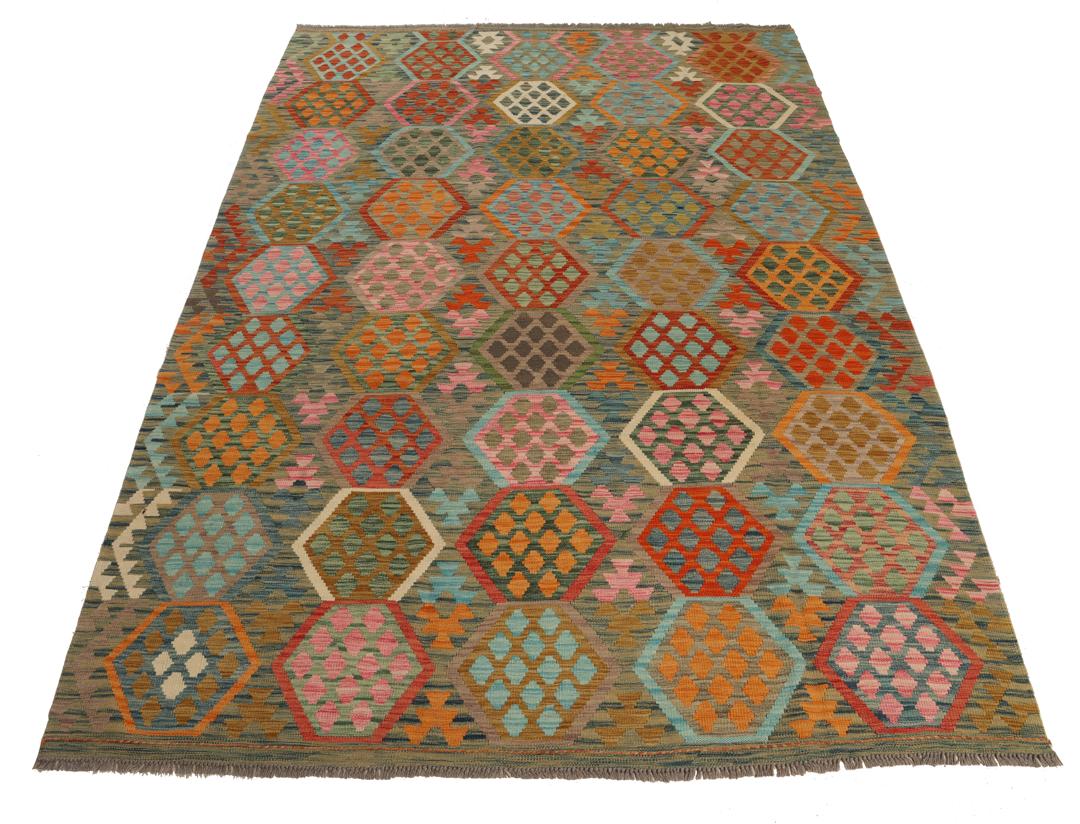
Kelim rugs from Afghanistan are rooted in a deep-seated nomadic tradition, where weaving was not merely a craft but a vital cultural practice. These textiles have historically served as versatile, portable floor coverings and wall hangings for families across the region, evolving over centuries to reflect the landscape and the artistic sensibilities of the people who created them.
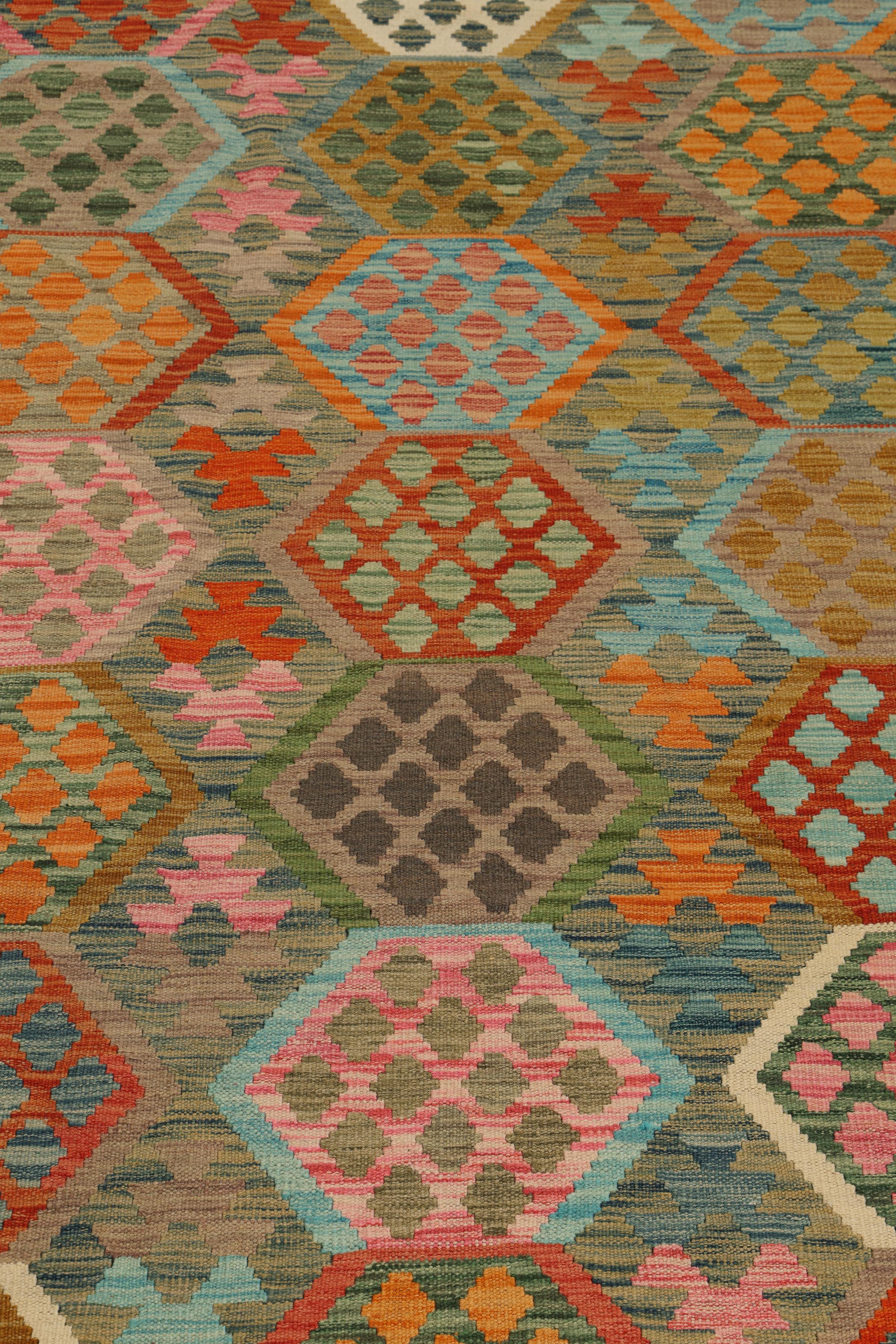
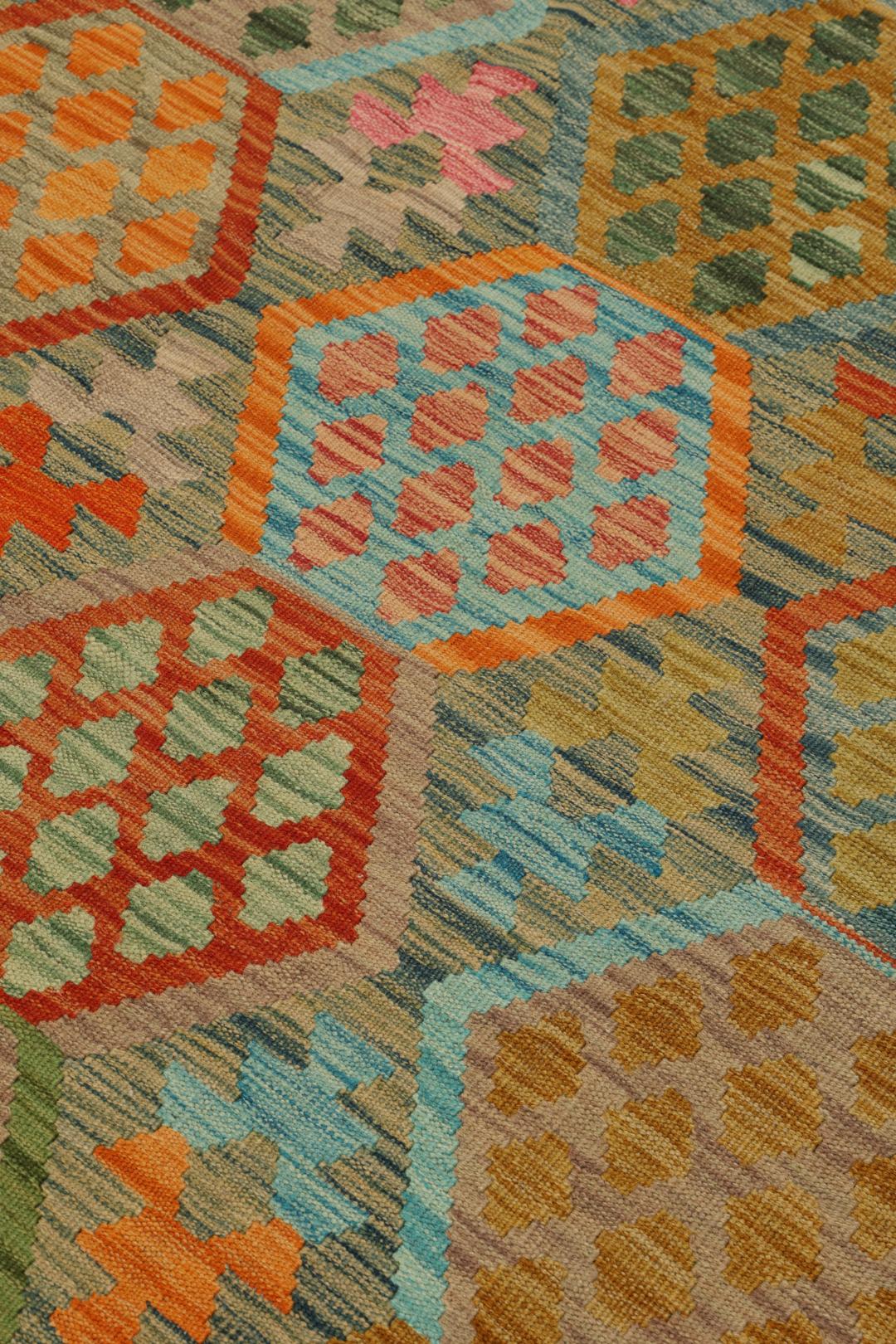
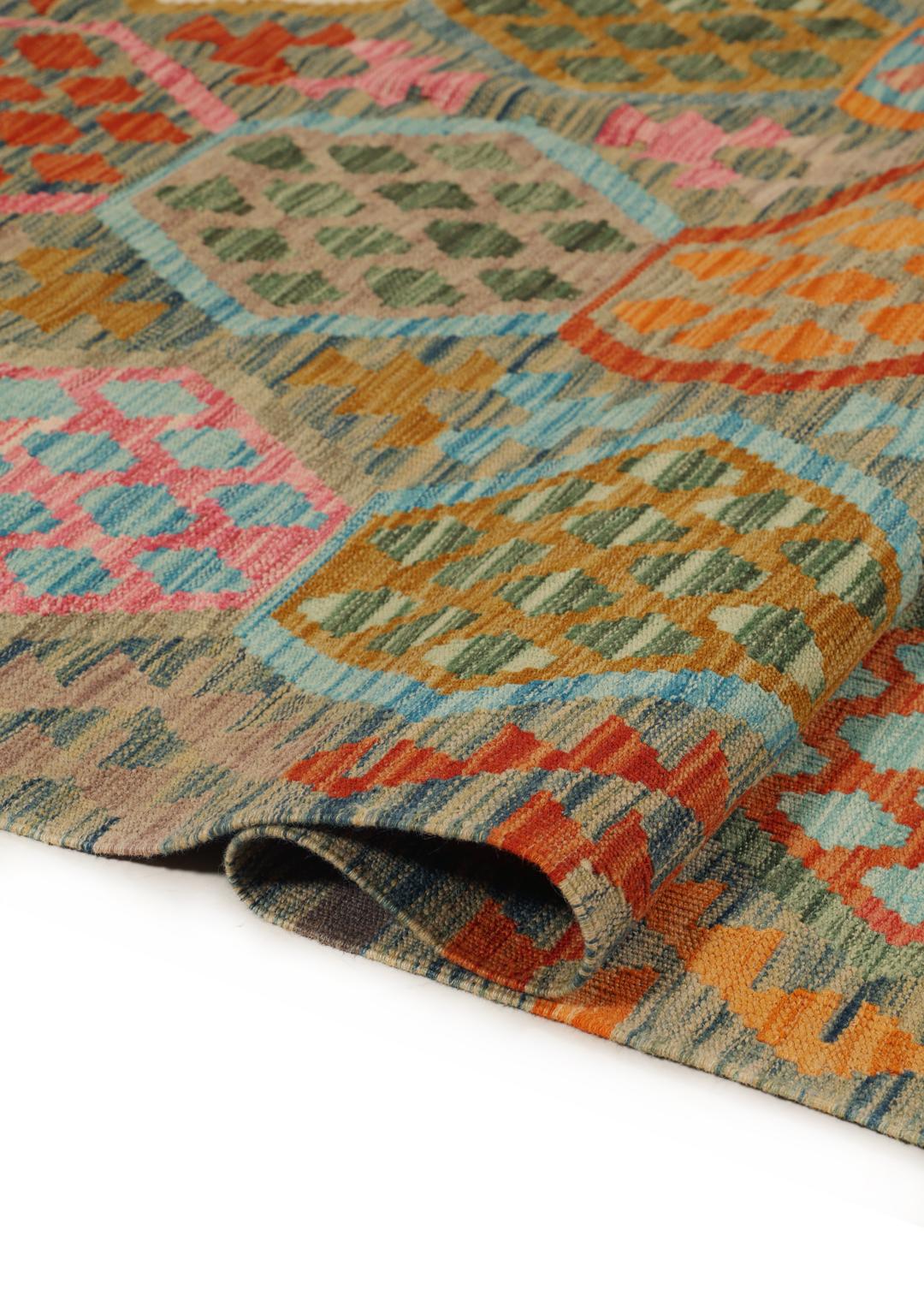
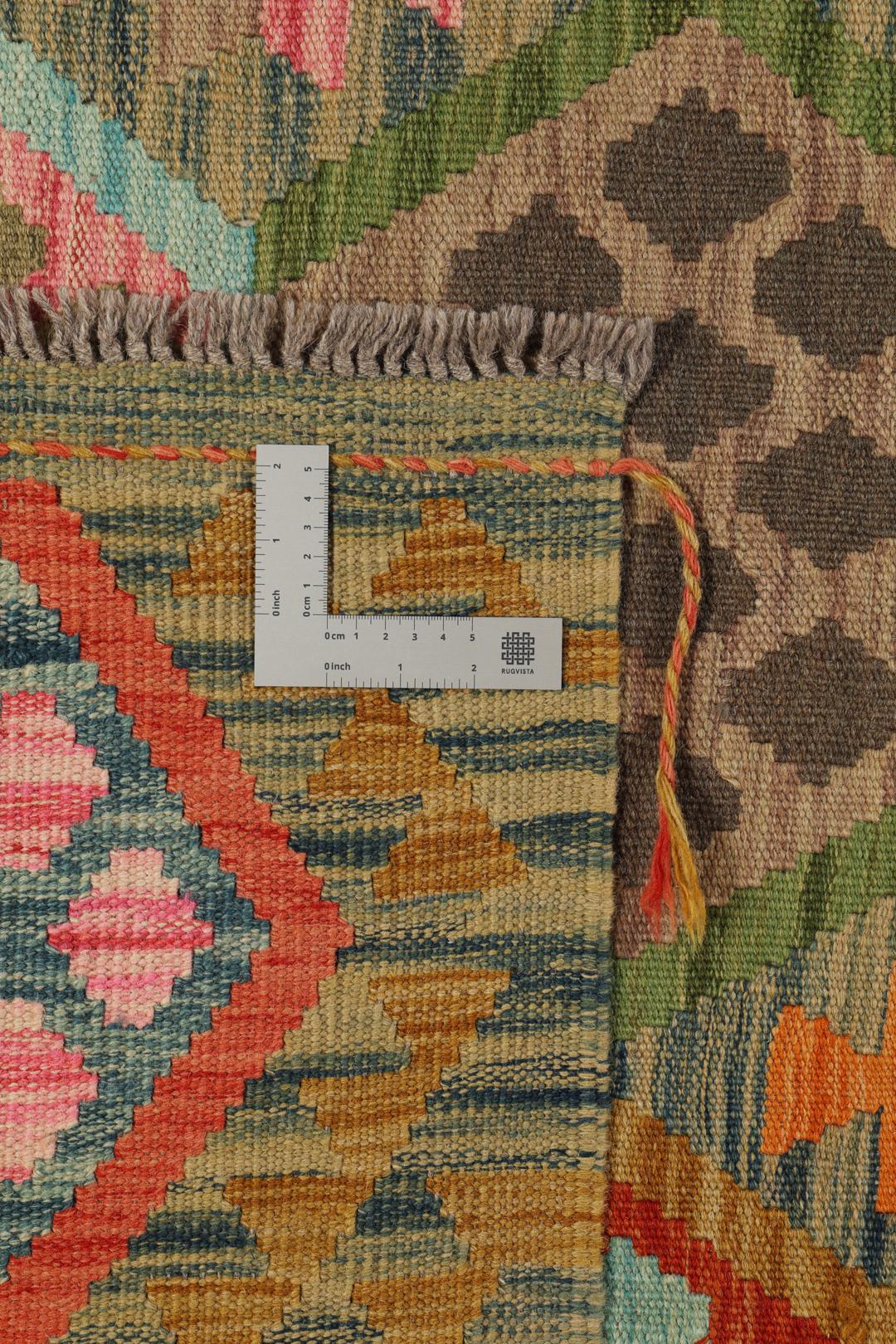
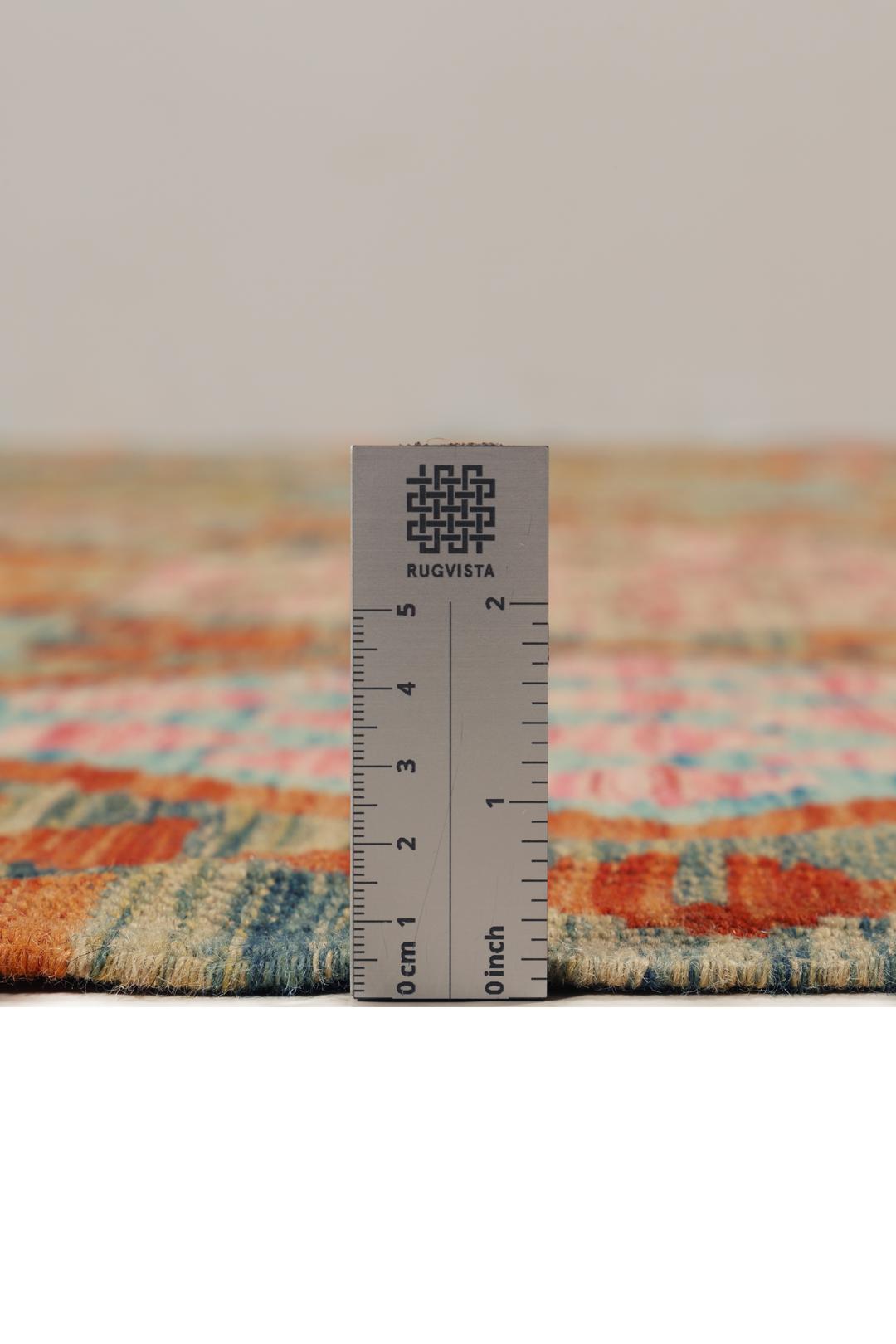
The term 'Kelim' refers to a flatweave technique, meaning the rug is created without a pile. This is achieved by interlacing the warp and weft threads to create a smooth, tapestry-like surface. This method demands a high level of skill, as the weaver must manage the colour changes and tension perfectly to ensure the structural integrity and the sharpness of the pattern throughout the entire piece.
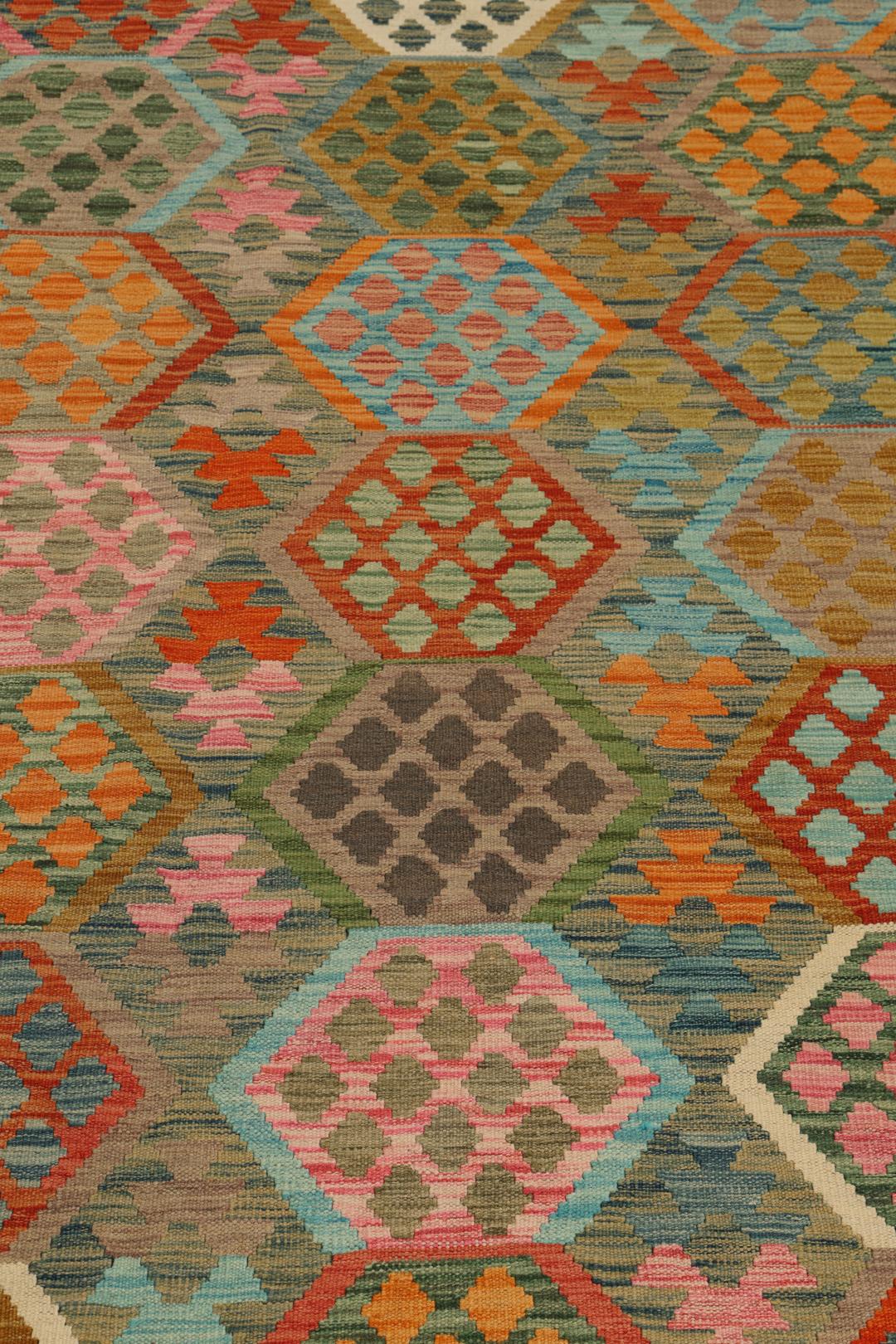
Signature design elements in Afghan Kelims often include bold, geometric motifs that convey meaning through their repetition and placement. The honeycomb or hexagonal shapes seen here are a classic motif, often representing community or the natural world. These patterns are brought to life through traditional dyeing methods that produce the deep, earthy, and vibrant tones characteristic of the region's textile heritage.
Collecting these rugs is an investment in cultural preservation. Each piece is a bridge to the past, embodying the skill and dedication of artisans who have passed these techniques down through generations. To own such a rug is to appreciate the weight of history, the complexity of human skill, and the enduring nature of craft that continues to resonate in modern homes.