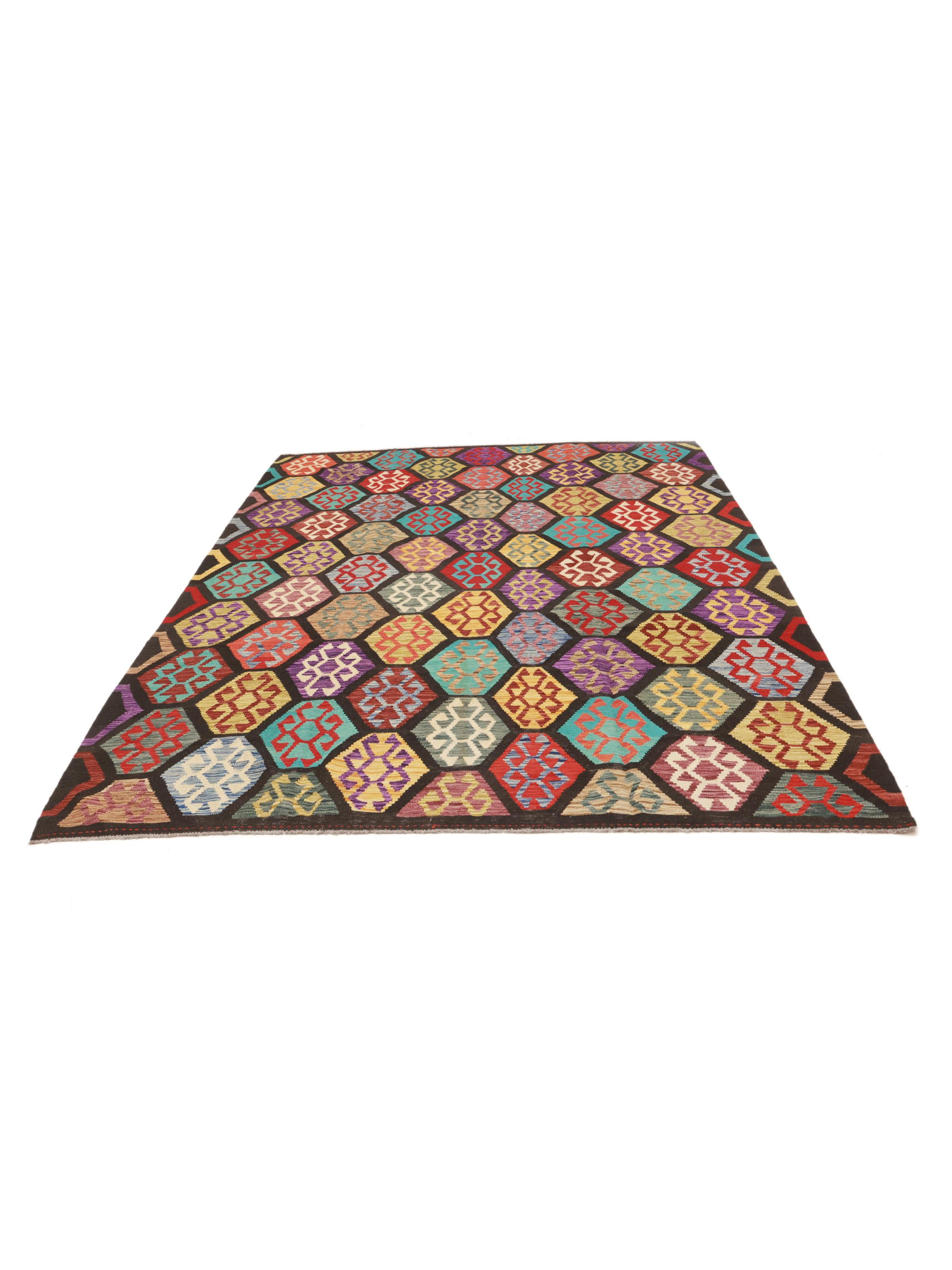
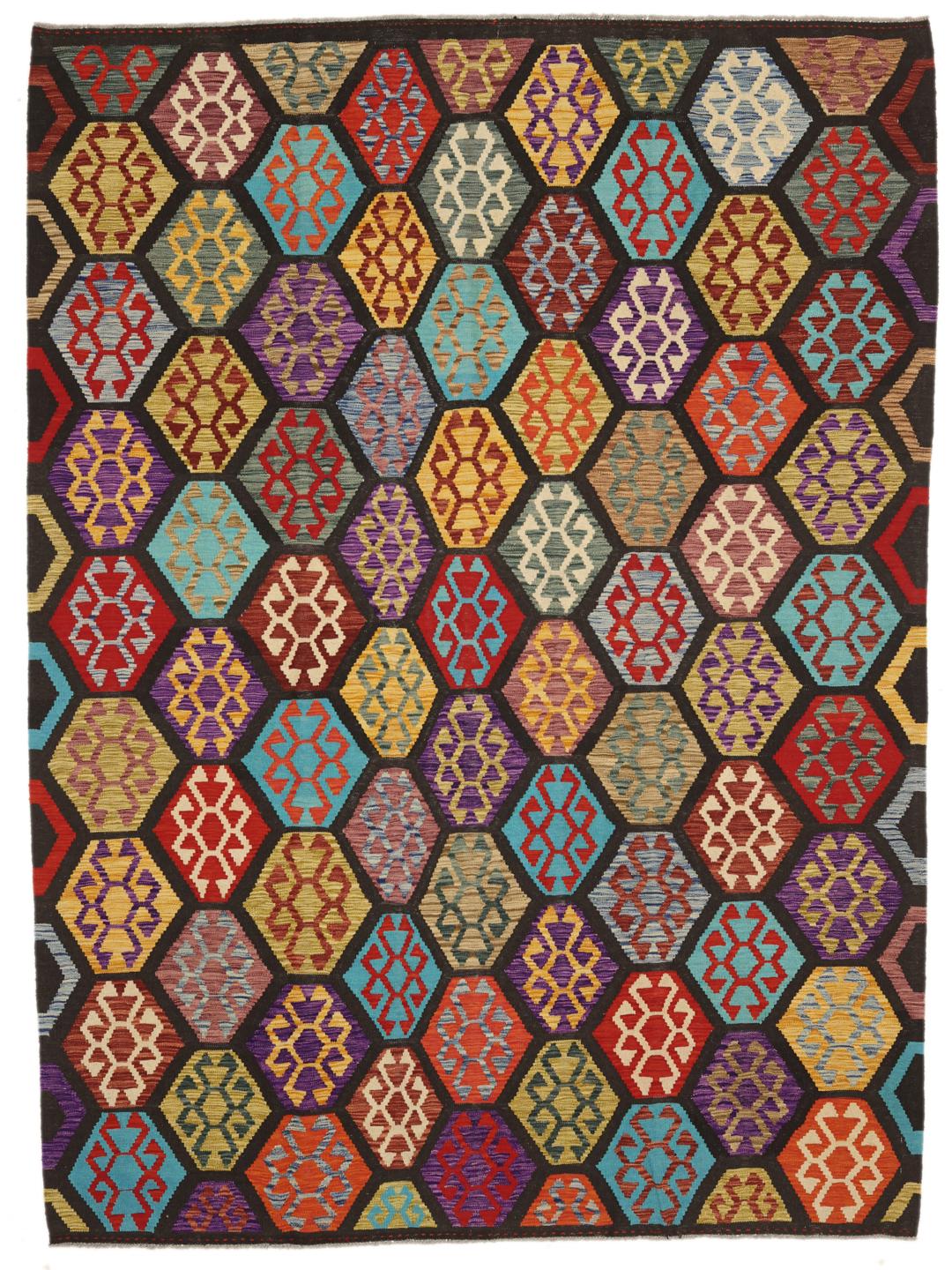
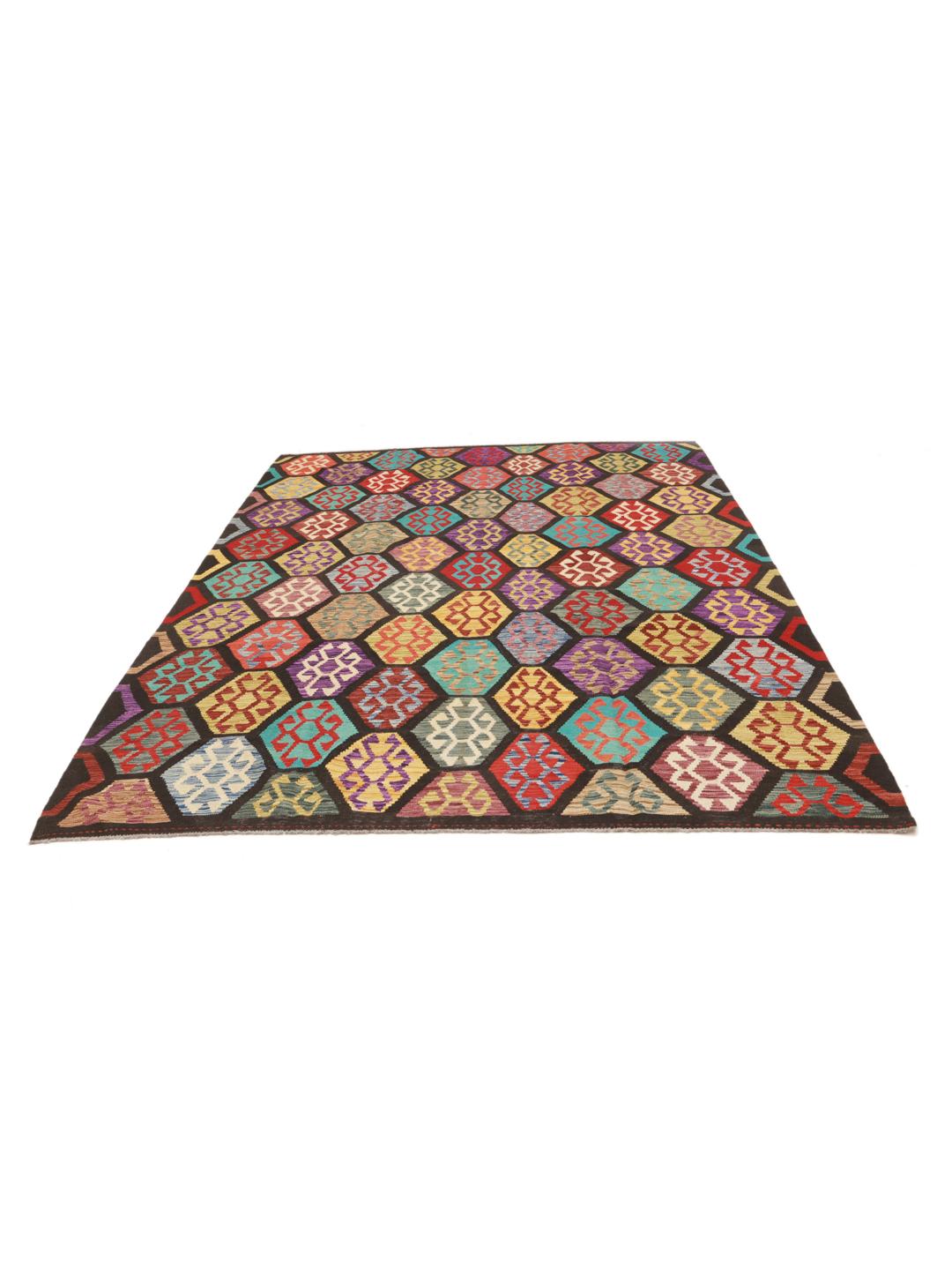
Kelim rugs have a storied history rooted in the nomadic cultures of the Middle East and Central Asia. Historically, these flat-woven textiles were essential for daily life, serving as floor coverings, blankets, and storage bags for travelling tribes. Over centuries, these functional pieces evolved into the decorative masterpieces we celebrate today.
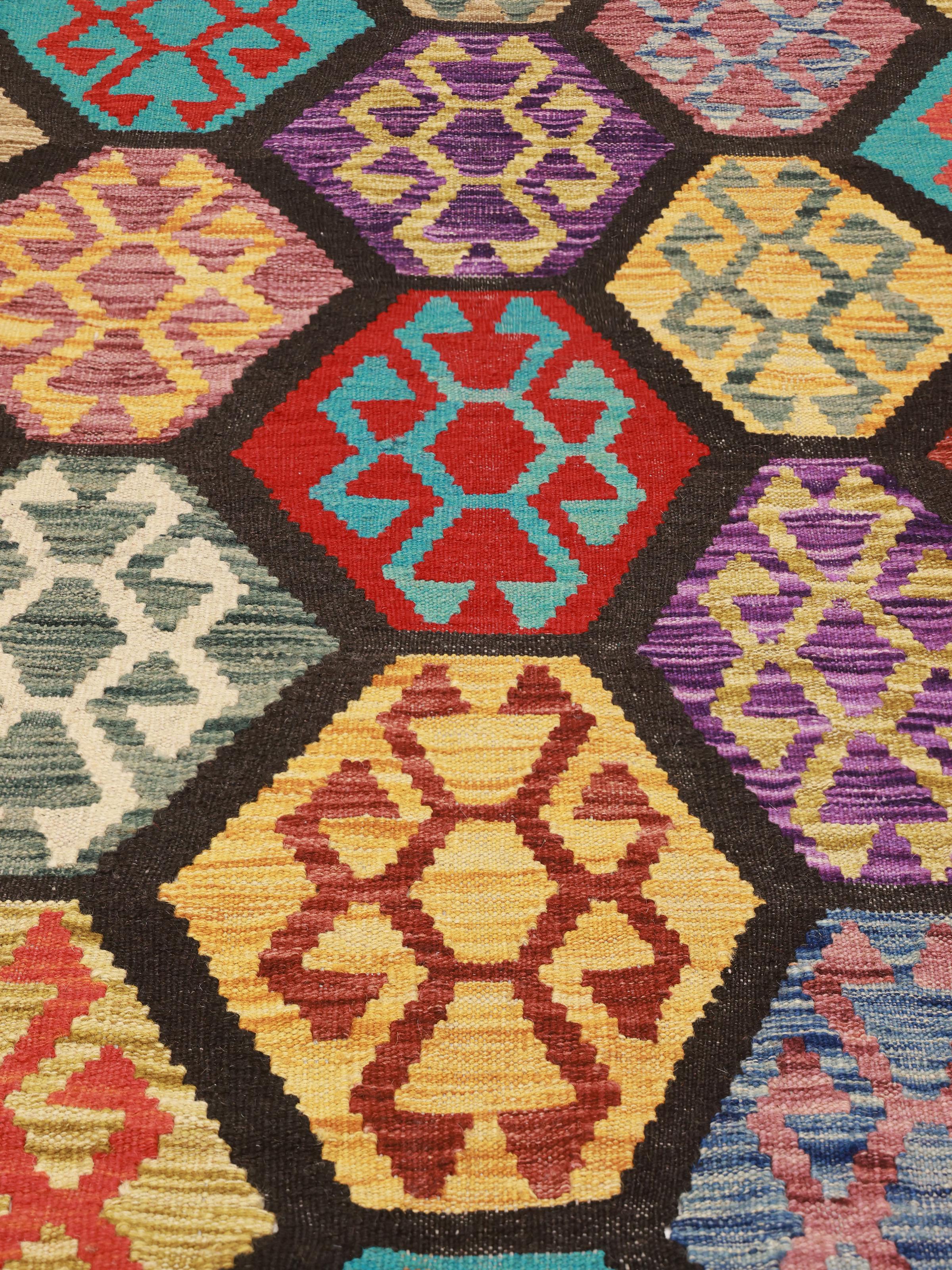
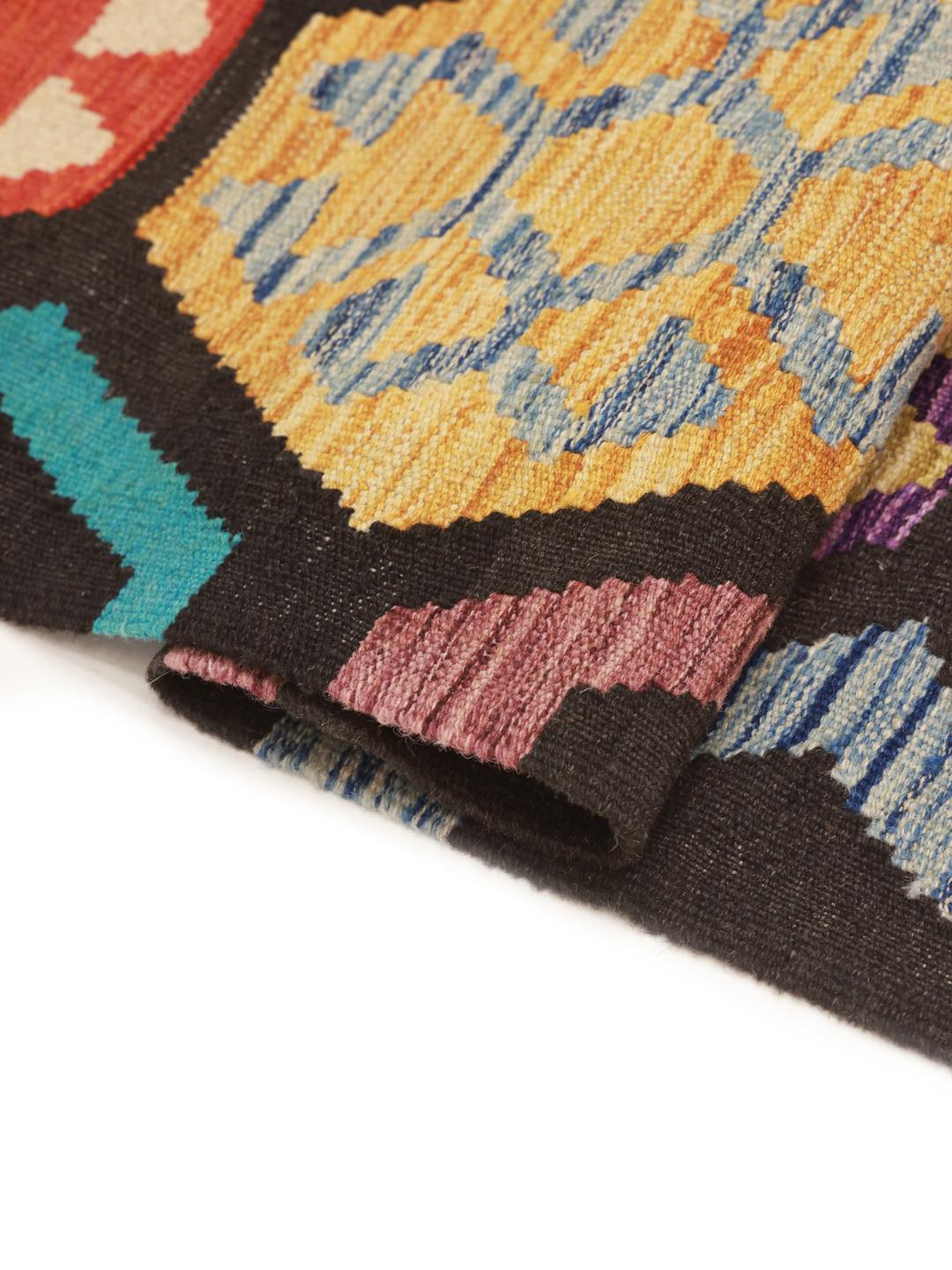
The term Kelim refers to a specific tapestry-weave technique where the weft threads are woven tightly over the warp threads to create a flat, pileless surface. This method allows for crisp, sharp geometric patterns and bold colour blocking, which are hallmarks of the style. Because there is no pile, the rug relies entirely on the precision of the weave for its durability and aesthetic appeal.
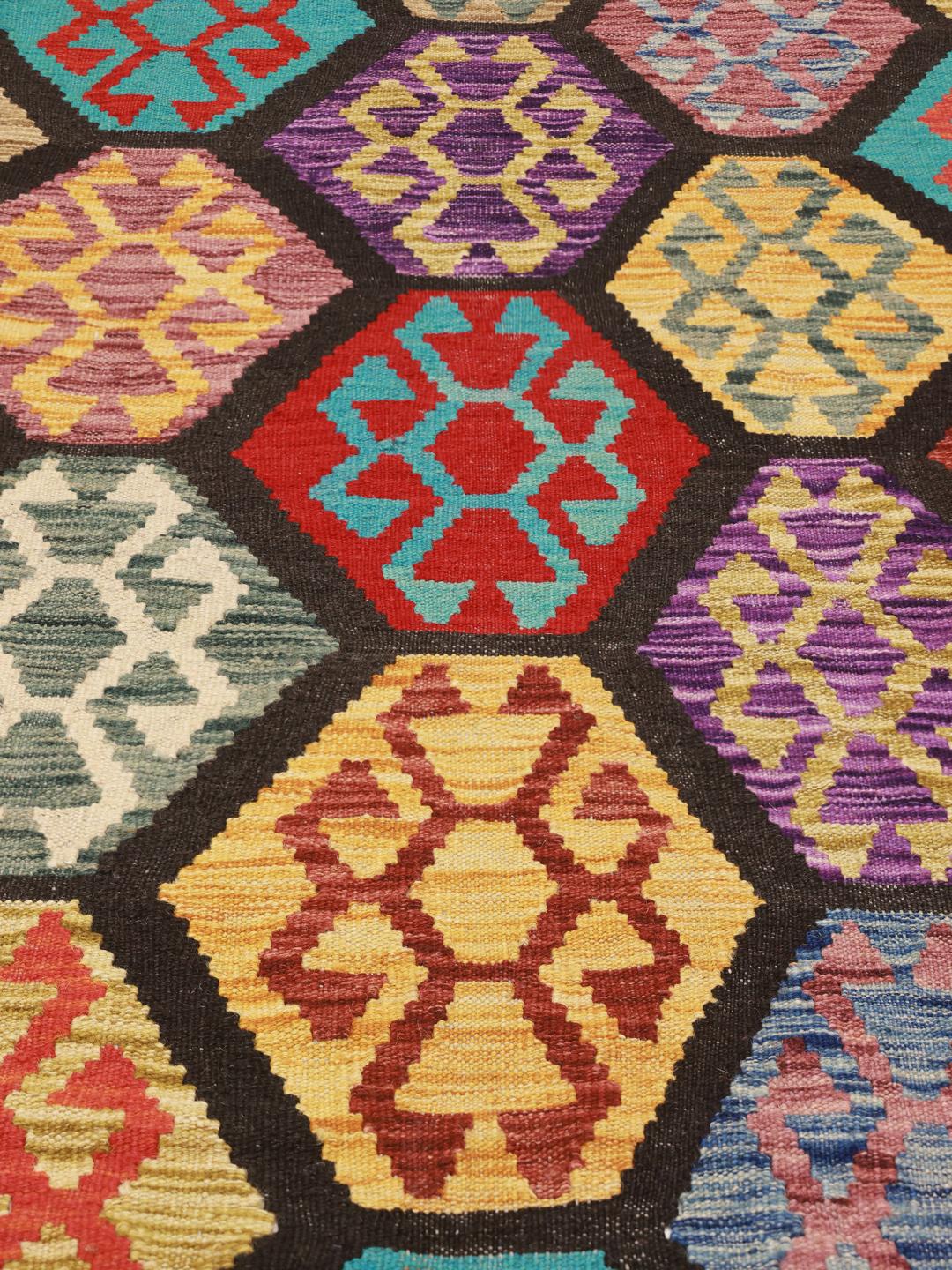
Signature design elements often include tribal motifs and geometric shapes like diamonds, triangles, and hexagons. In this specific piece, the honeycomb layout is a sophisticated interpretation of traditional motifs, showcasing how weavers blend geometric rigour with a vibrant, playful palette to create a sense of movement across the surface.
Today, these rugs are highly valued by collectors who appreciate the blend of history, manual skill, and design. Owning an Afghan Kelim is an investment in cultural heritage, representing a connection to the nomadic spirit and the enduring beauty of hand-crafted textiles that stand the test of time.