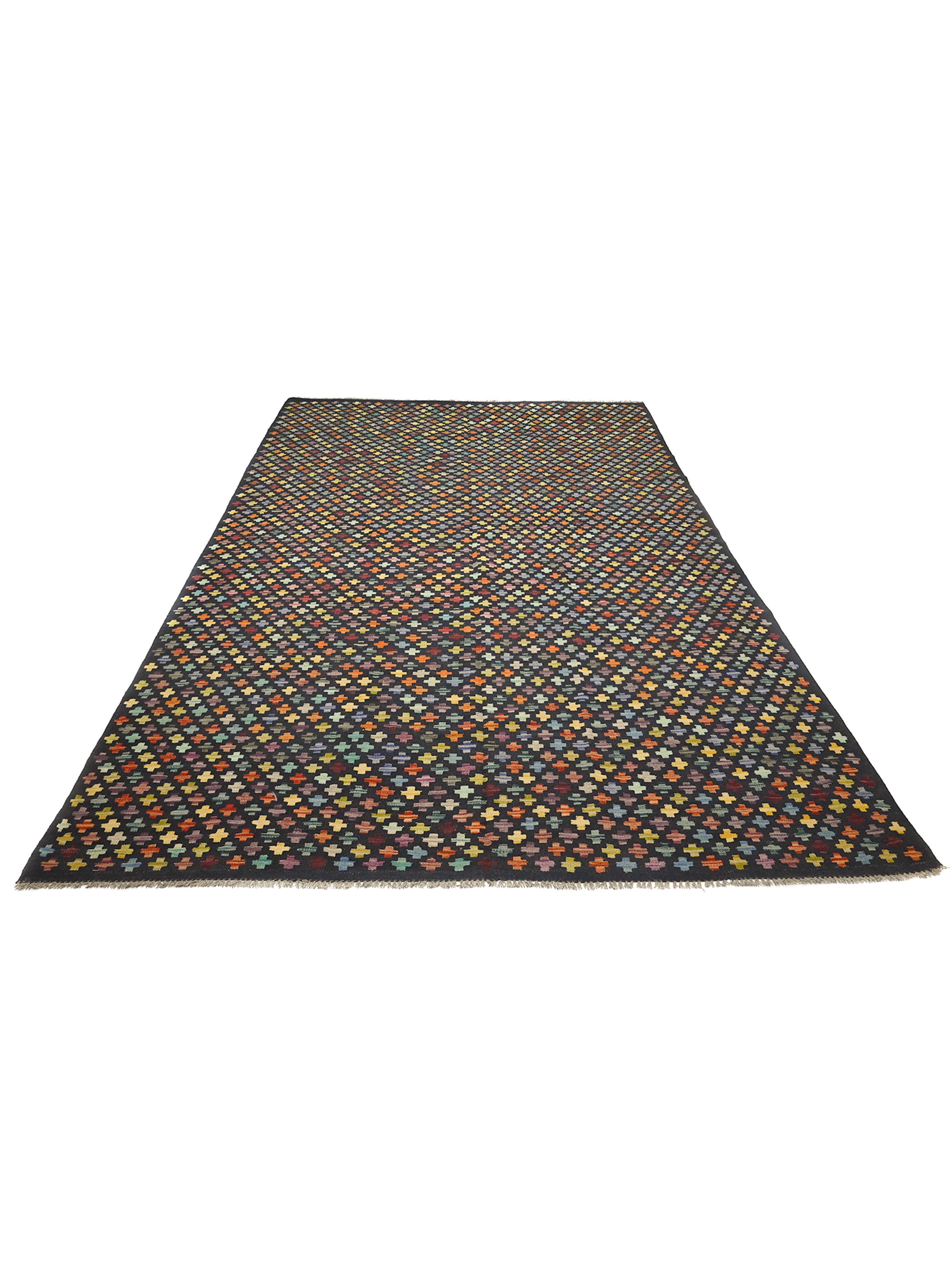
The Kelim tradition in Afghanistan is deeply rooted in the nomadic and semi-nomadic lifestyles of the region. These rugs were historically created by tribal weavers as functional items for daily life, serving as floor coverings, tent decorations, and storage bags, reflecting a culture that values beauty in utility.
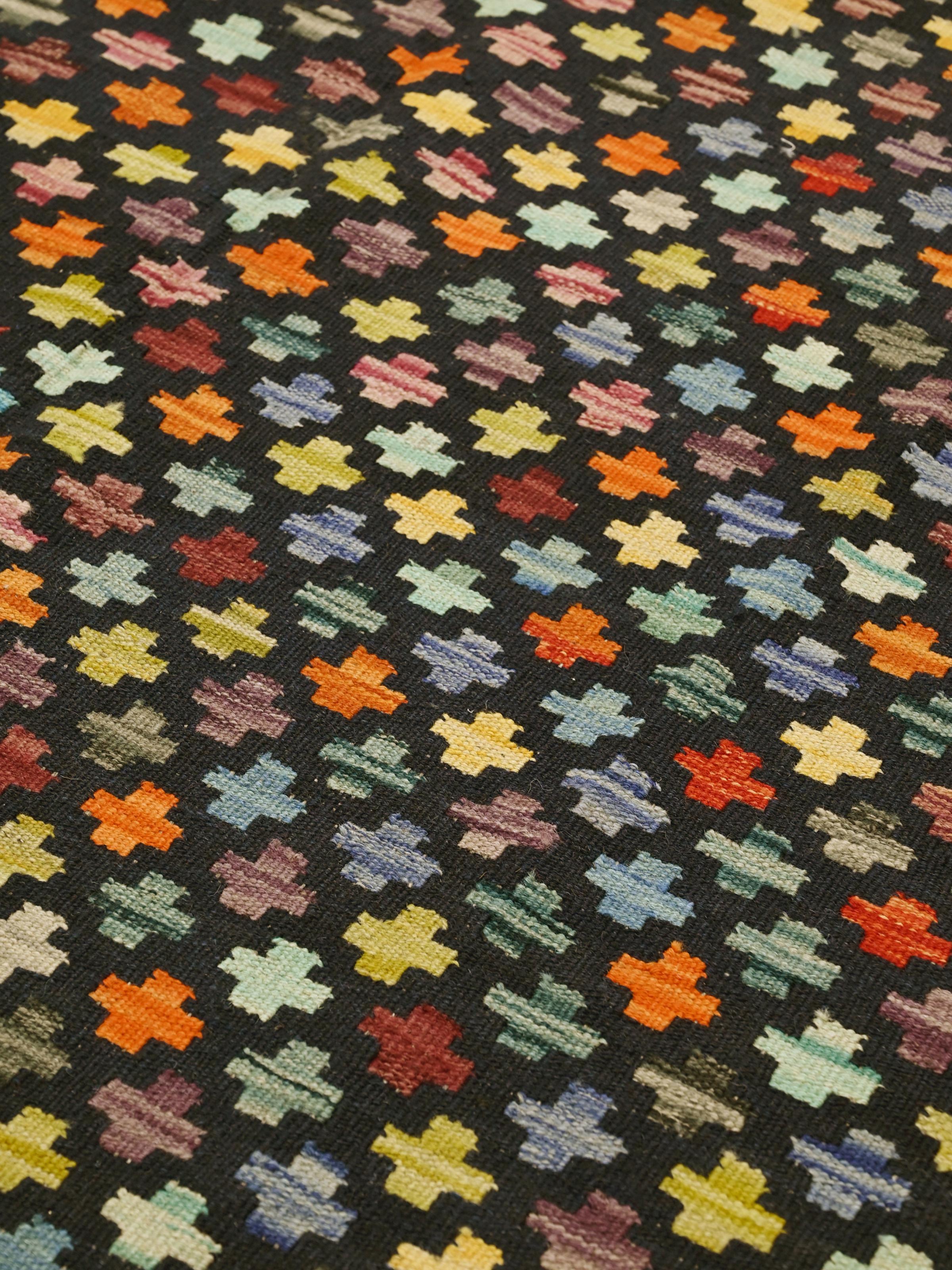
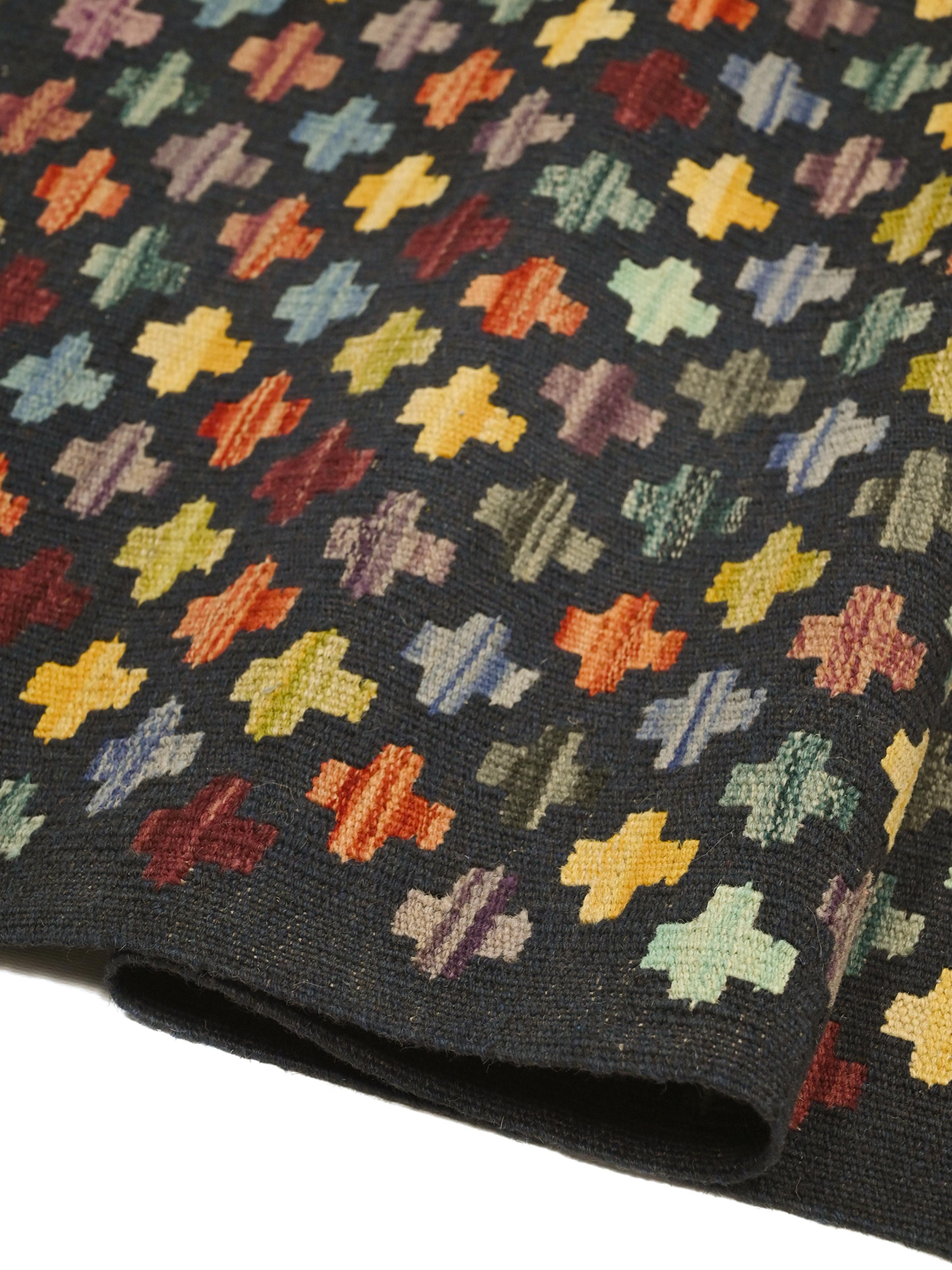
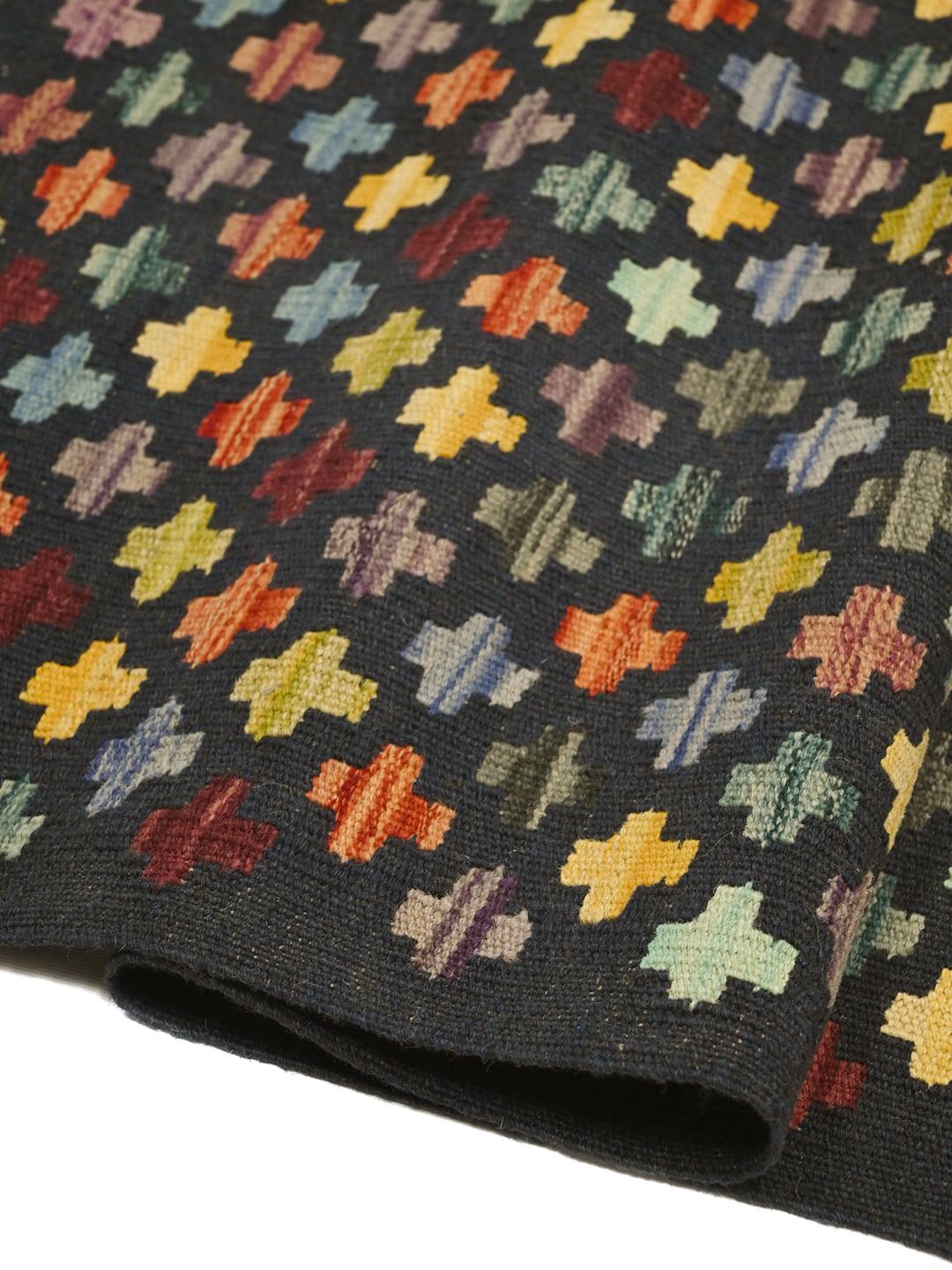
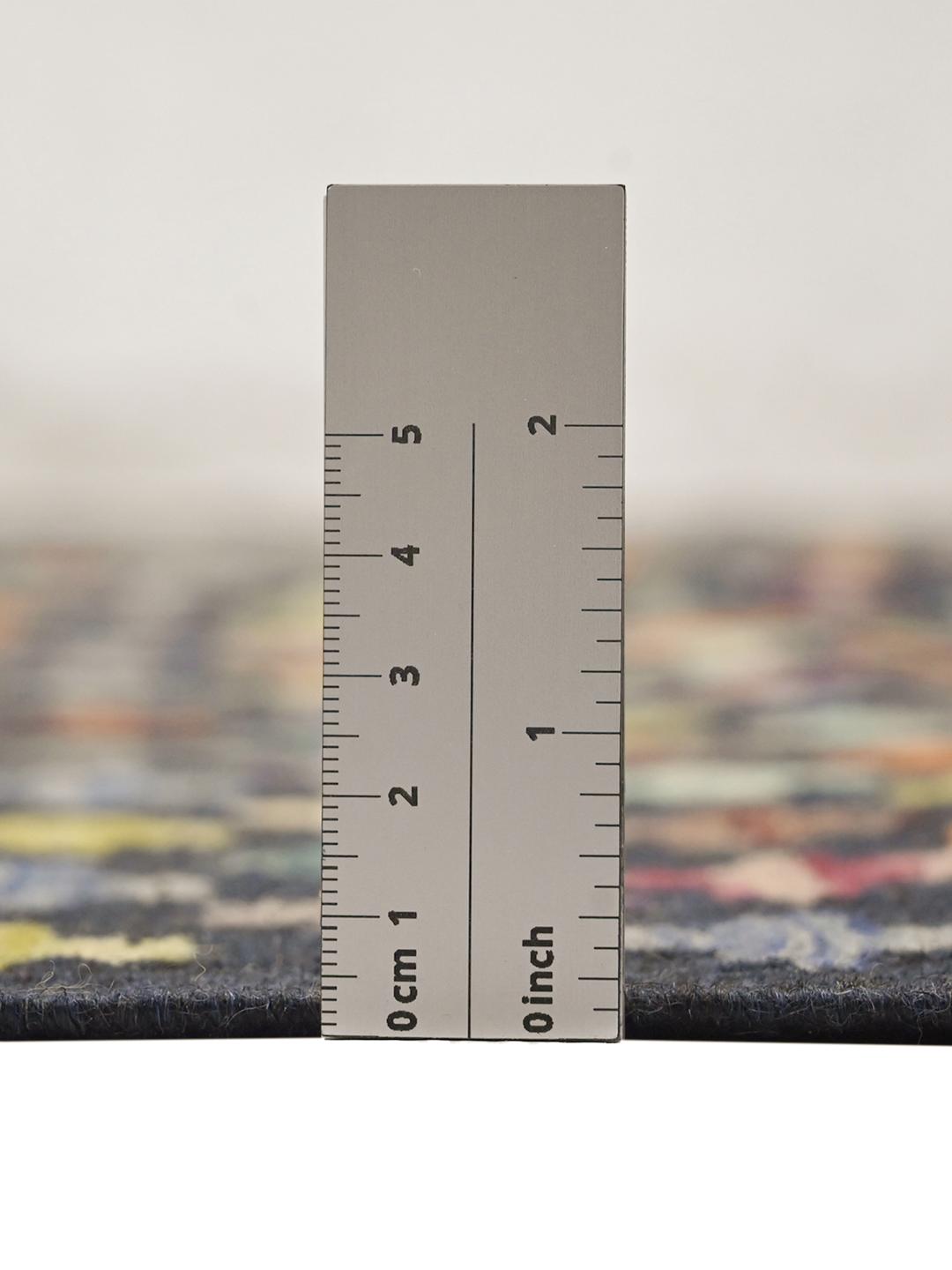
The term 'Kelim' refers to the flat-weaving technique that distinguishes these rugs from knotted-pile carpets. By weaving the warp and weft threads together, the artisan creates a durable, reversible textile that is known for its crisp, clean lines and lack of a thick pile, which is ideal for the functional needs of desert life.
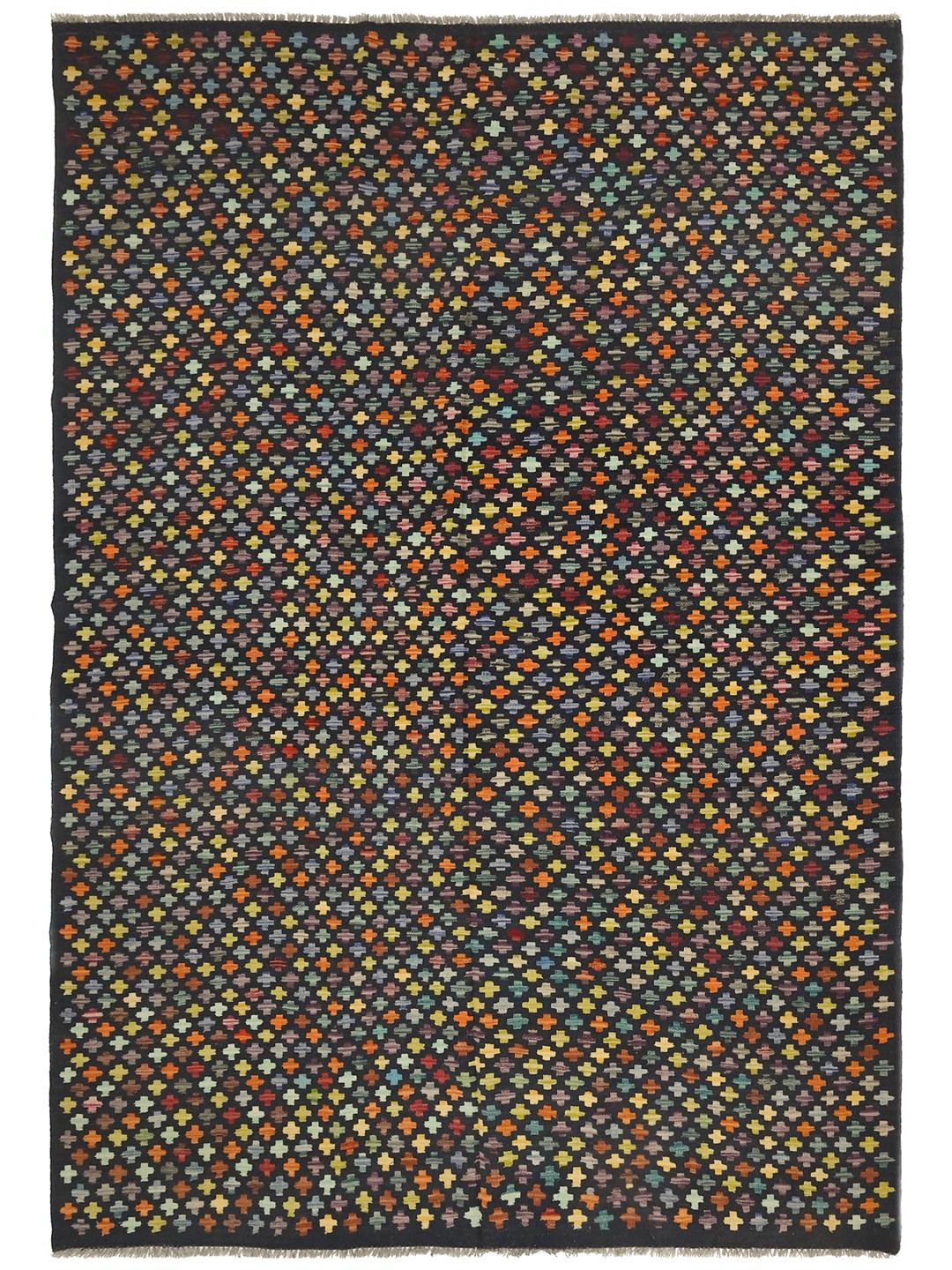
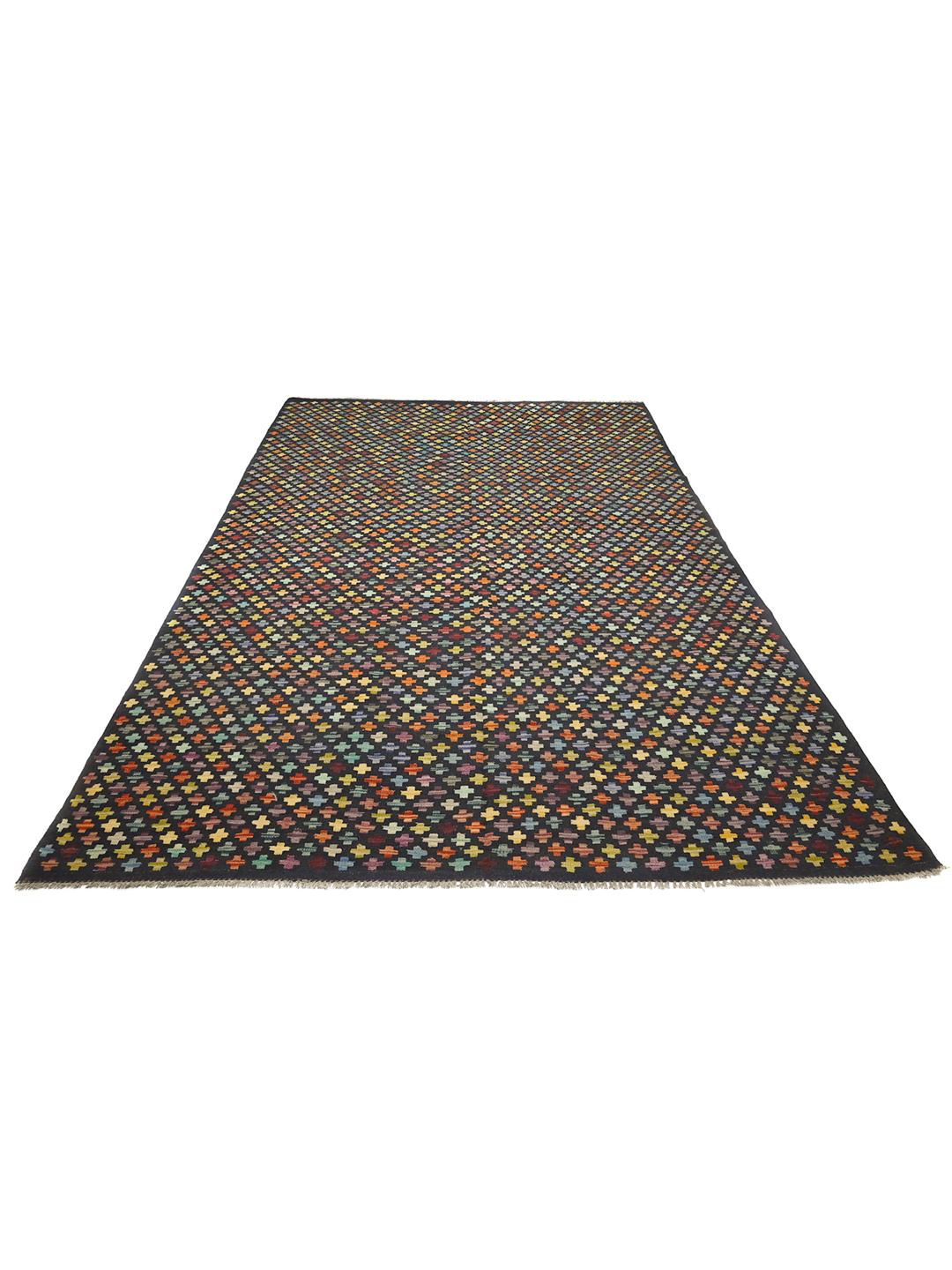
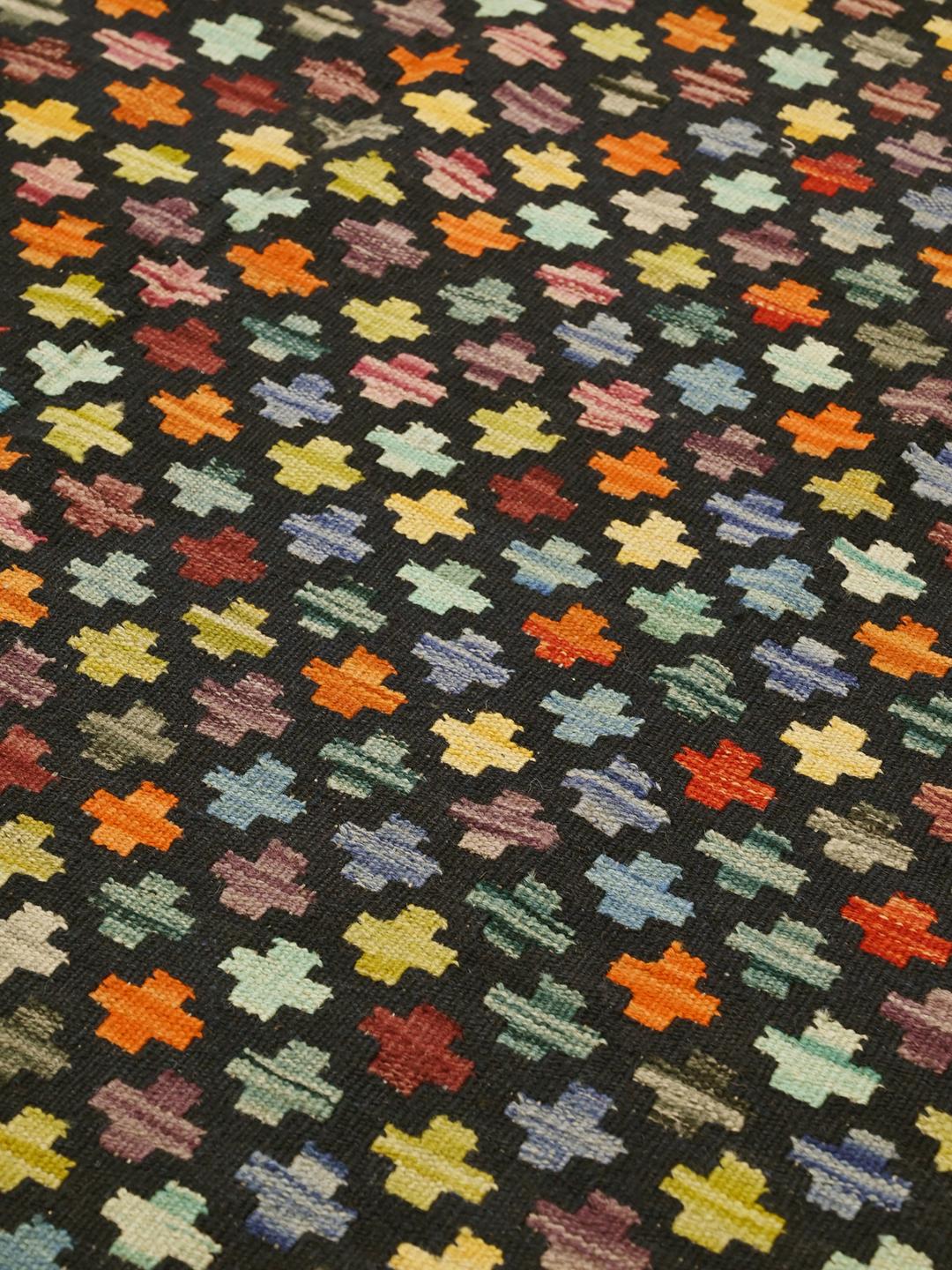
The signature design elements of these pieces often include geometric motifs, such as the small, cross-like shapes seen here. These patterns are typically passed down through generations, with variations in colour and composition serving as a visual language that tells the story of the specific tribe or family that created the piece.
Owning an authentic Afghan Kelim is more than just purchasing a floor covering; it is acquiring a piece of cultural heritage. These rugs are highly valued for their raw, honest beauty and the immense skill required to produce them by hand, representing a connection to a craft tradition that has remained largely unchanged for centuries.