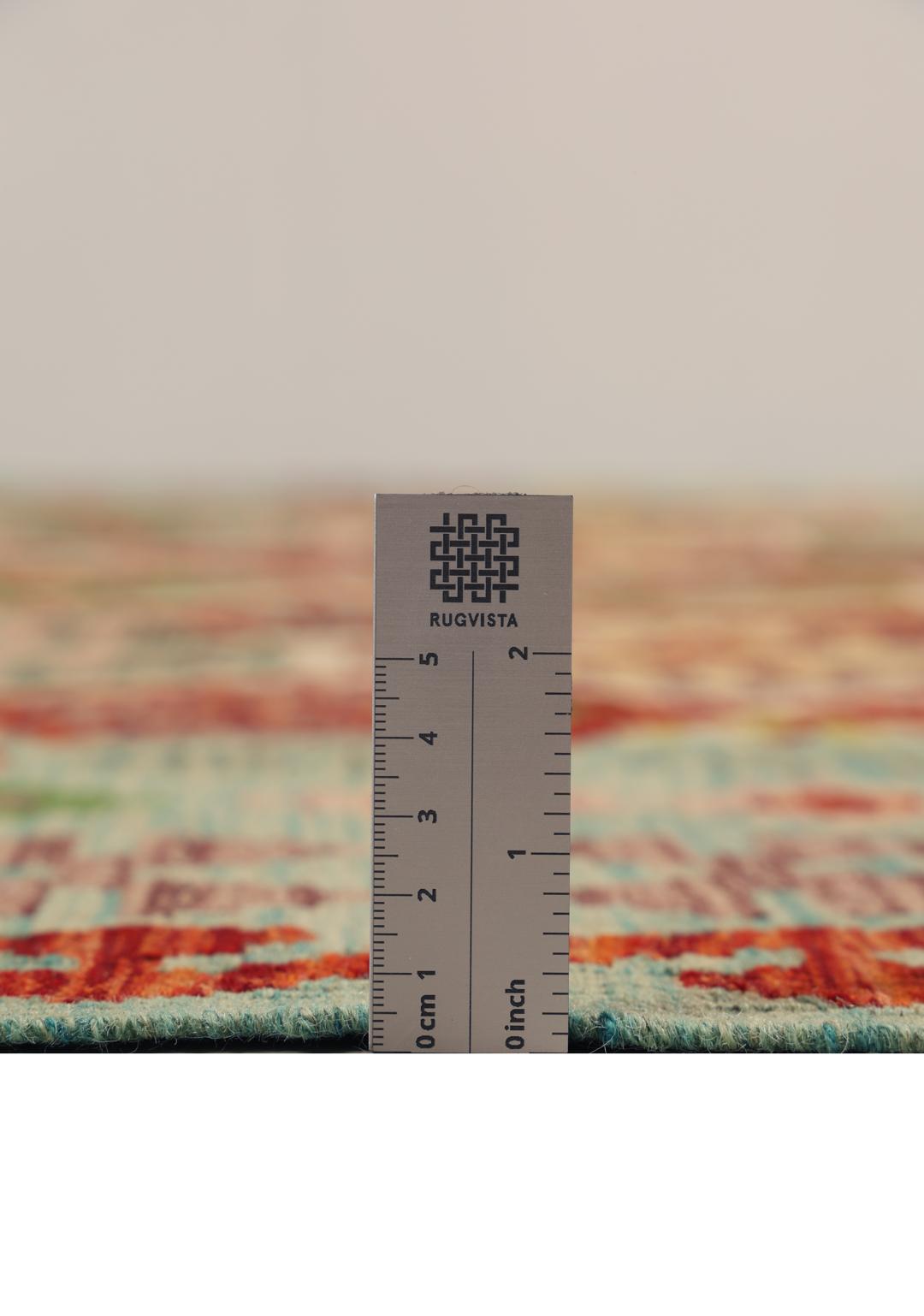
Kelim rugs have a storied past, originating from the nomadic tribes of the Middle East and Central Asia. These flat-woven textiles were historically used as practical items for daily life, serving as floor coverings, wall hangings, and storage bags for travelling families. The tradition has evolved over centuries, with Afghan weavers refining these techniques to create pieces that are as beautiful as they are functional.
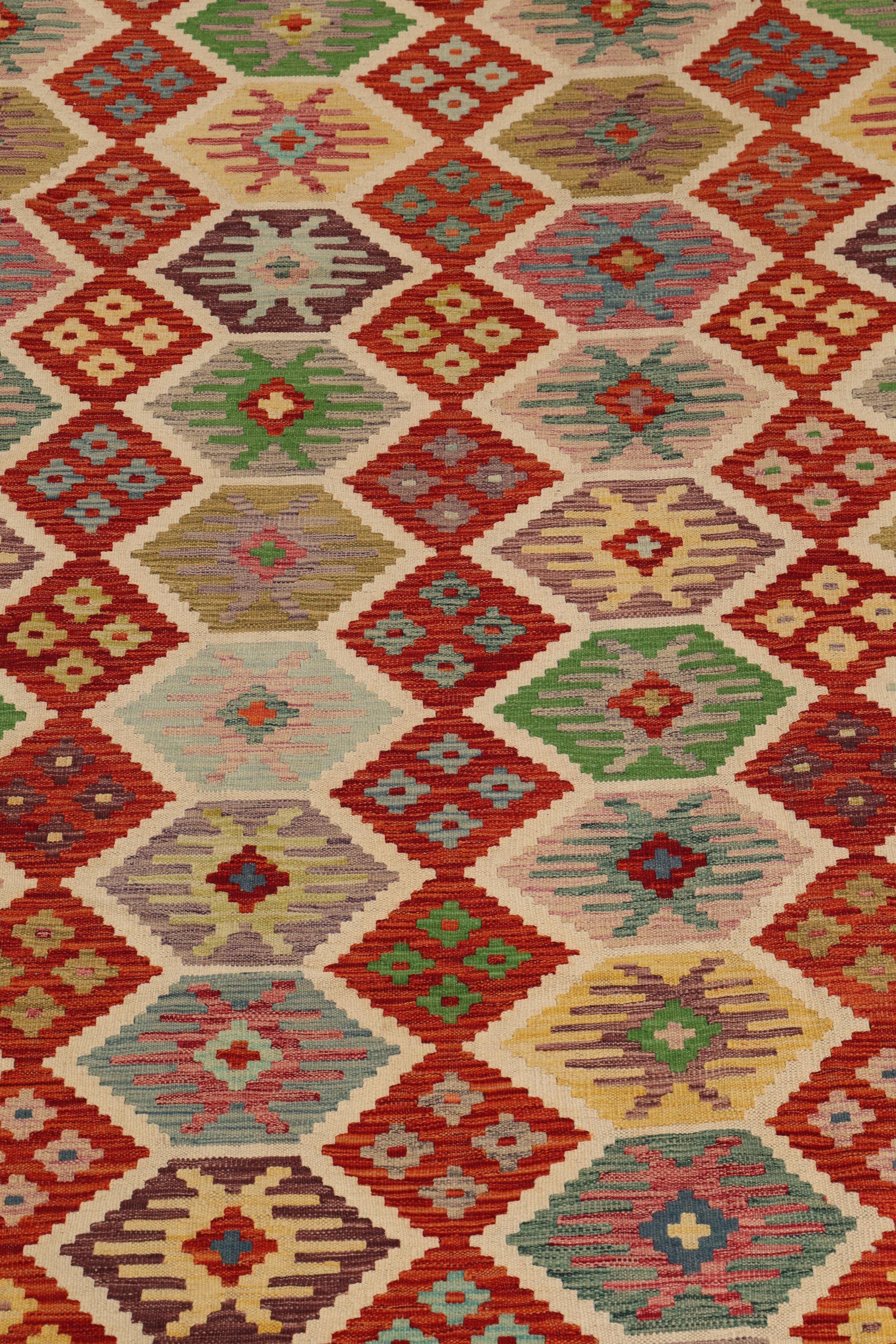
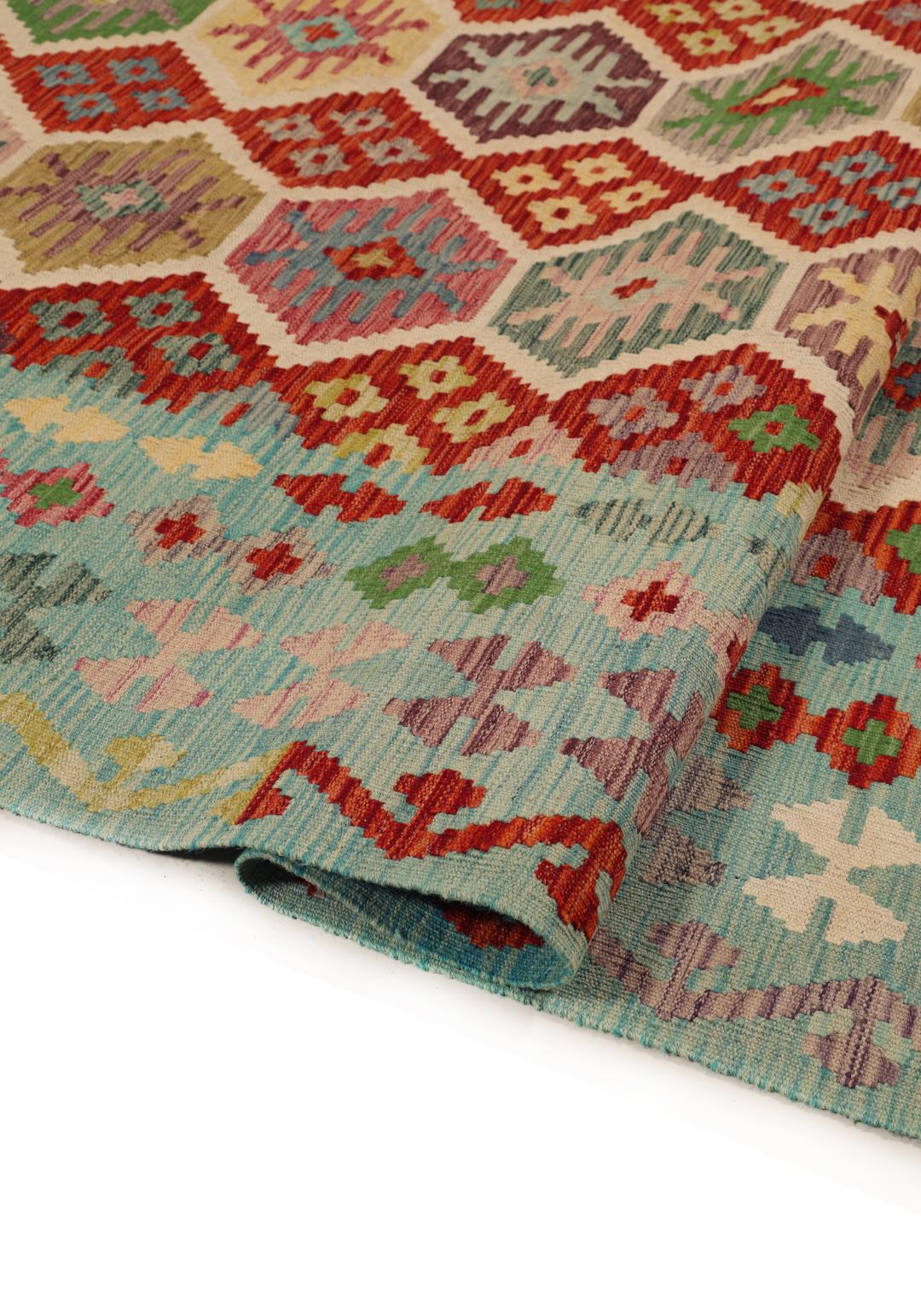
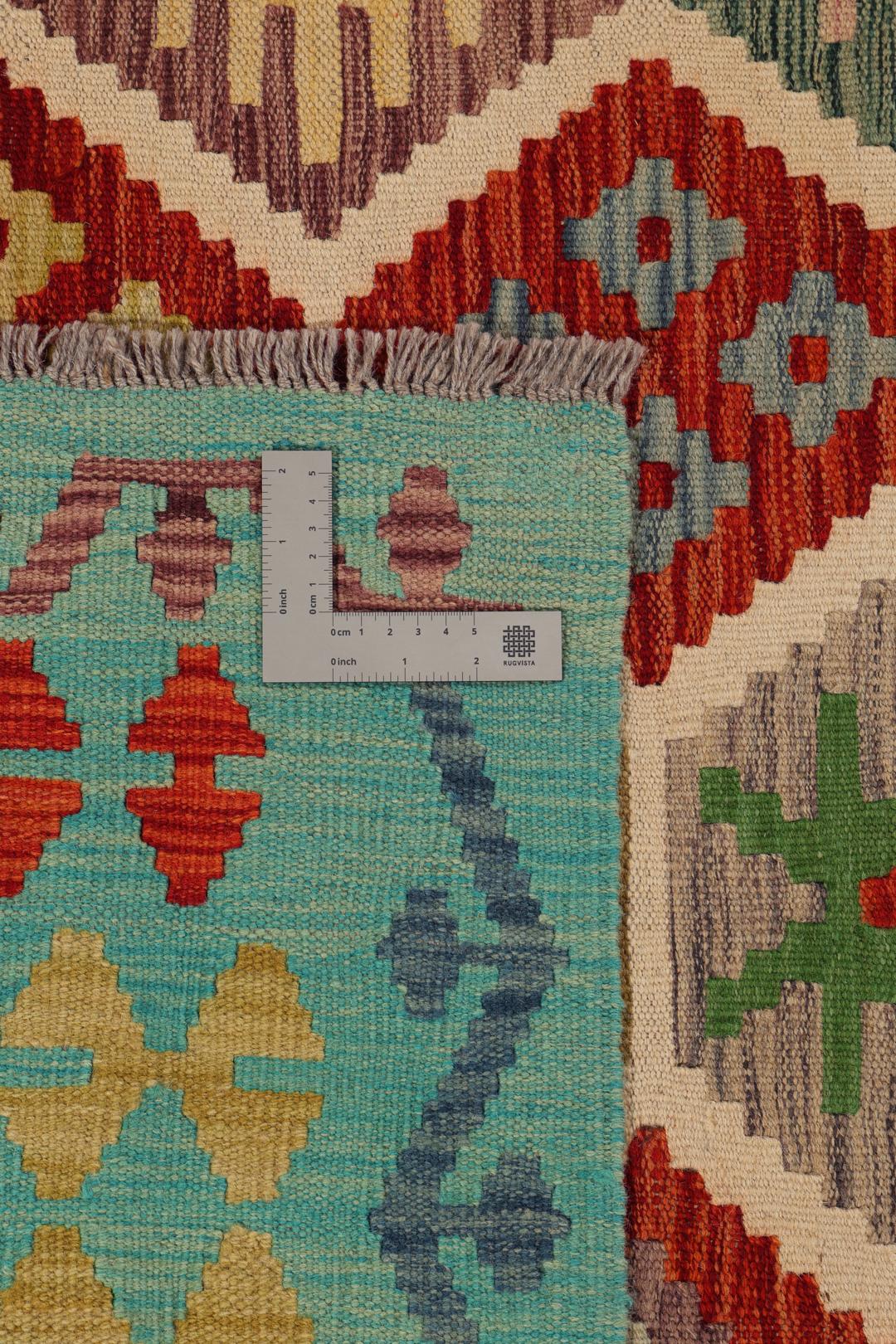
The term 'Kelim' refers to the specific flat-weaving technique where the weft threads are passed through the warp to create the pattern, resulting in a rug without a pile. This method allows for sharp, clean geometric designs and a lightweight, reversible structure. Because no knots are used, the skill of the weaver is tested by their ability to maintain consistent tension and clear colour transitions throughout the entire work.
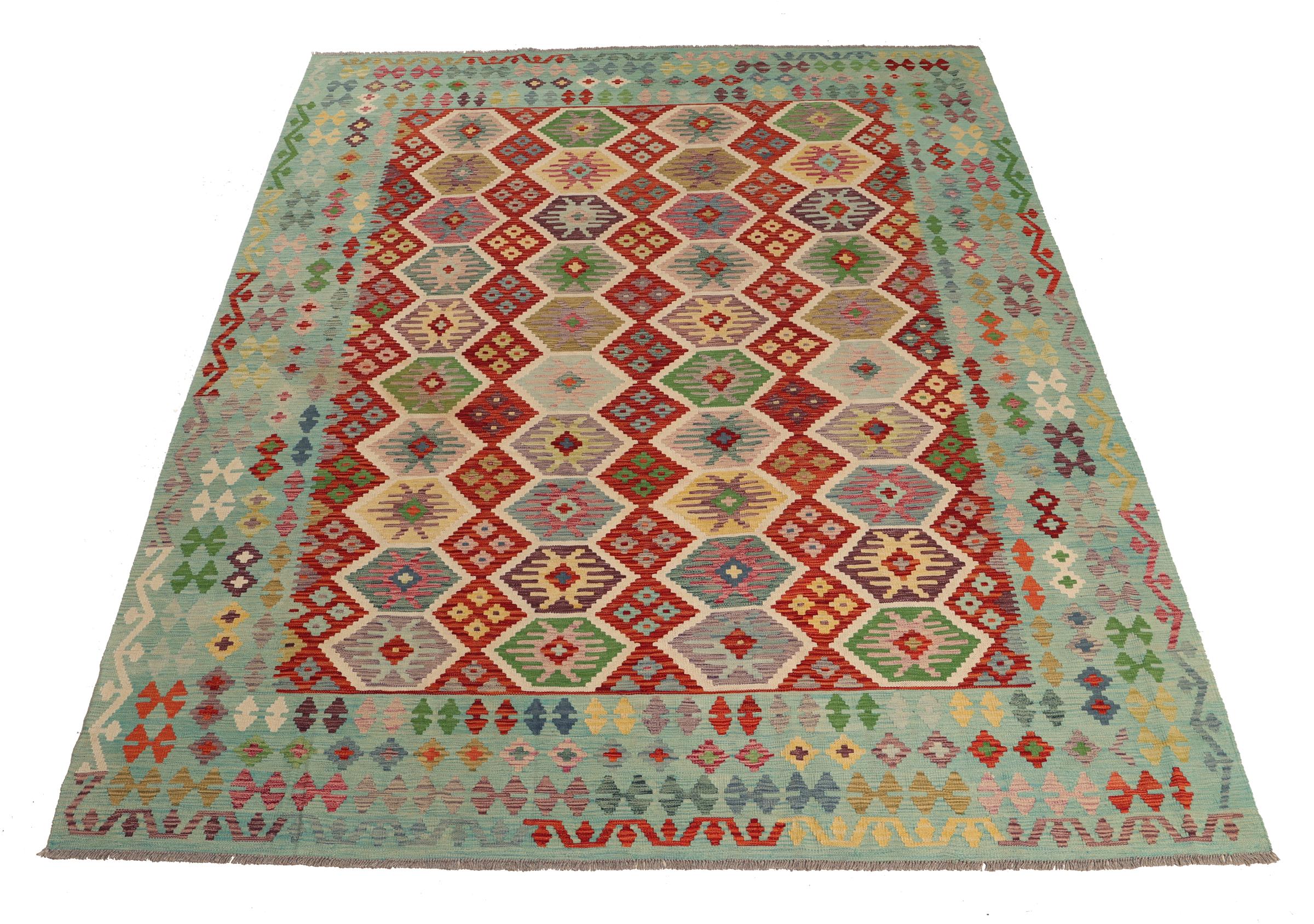
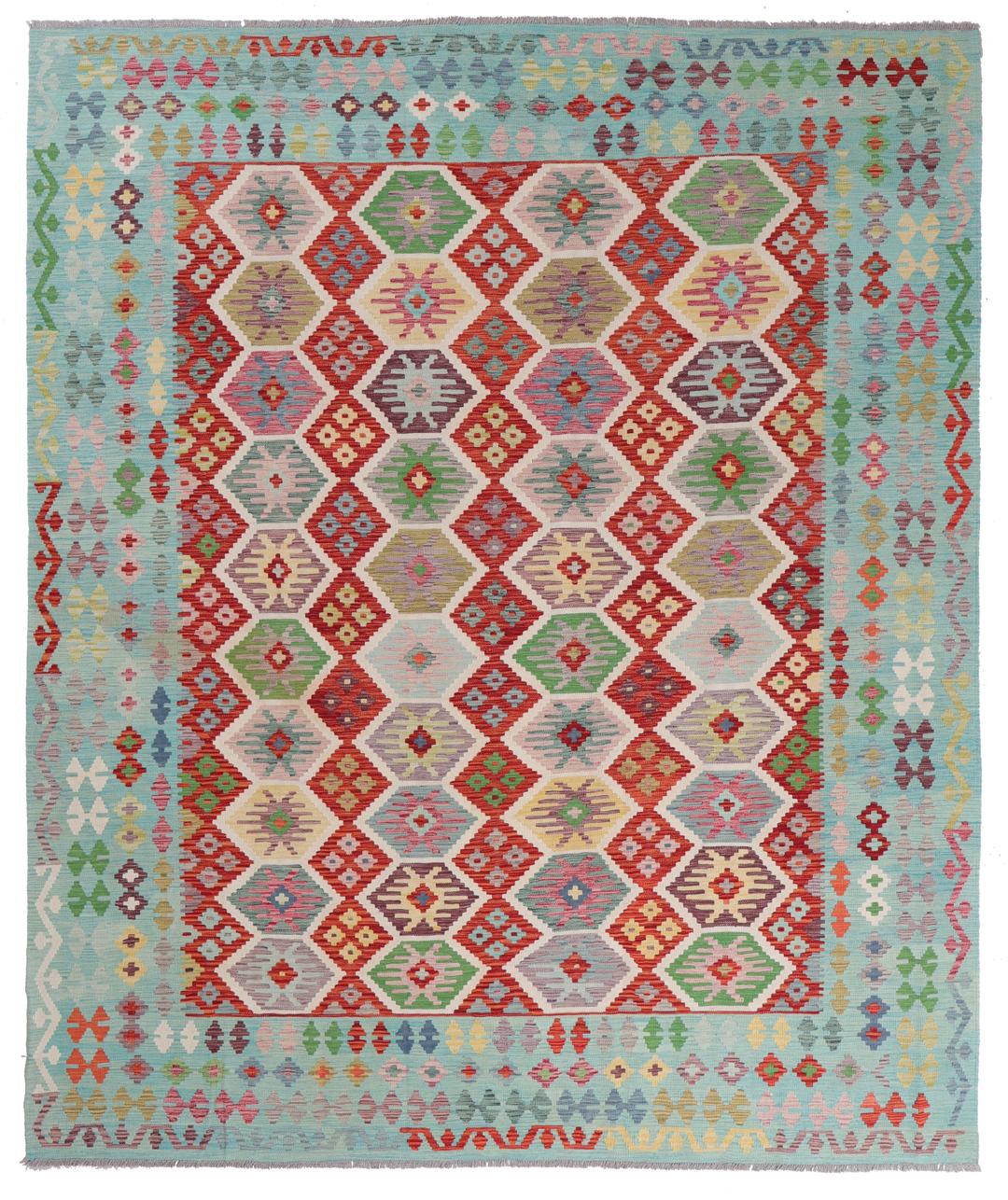
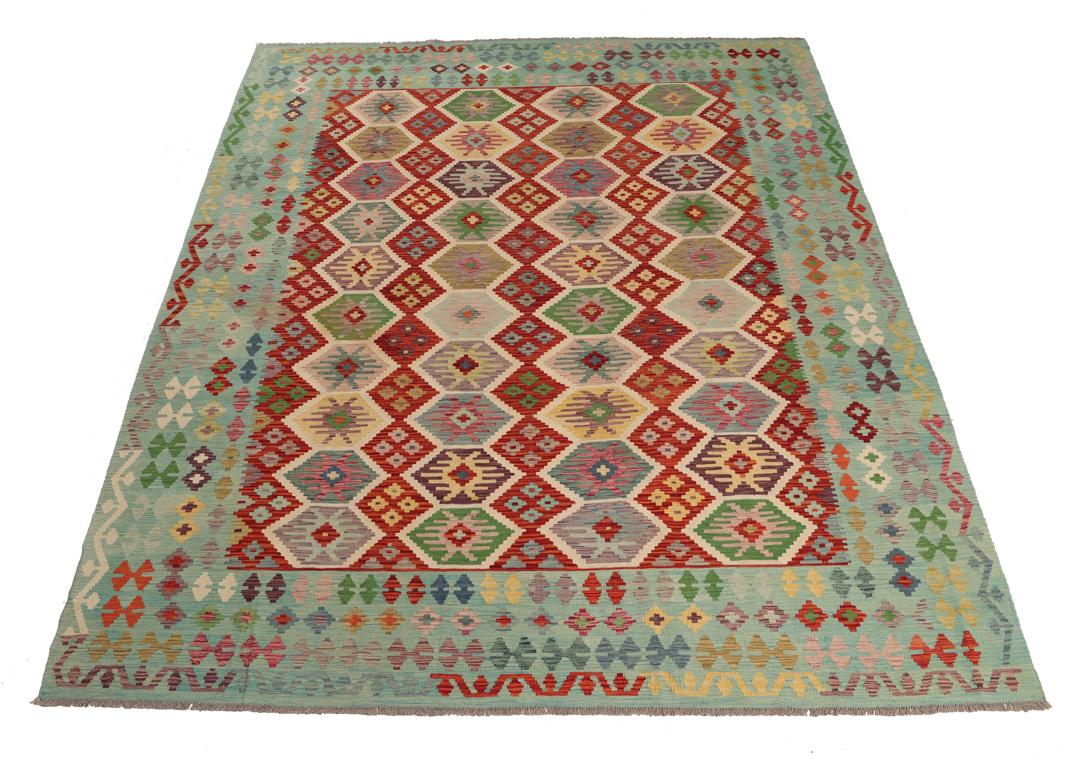
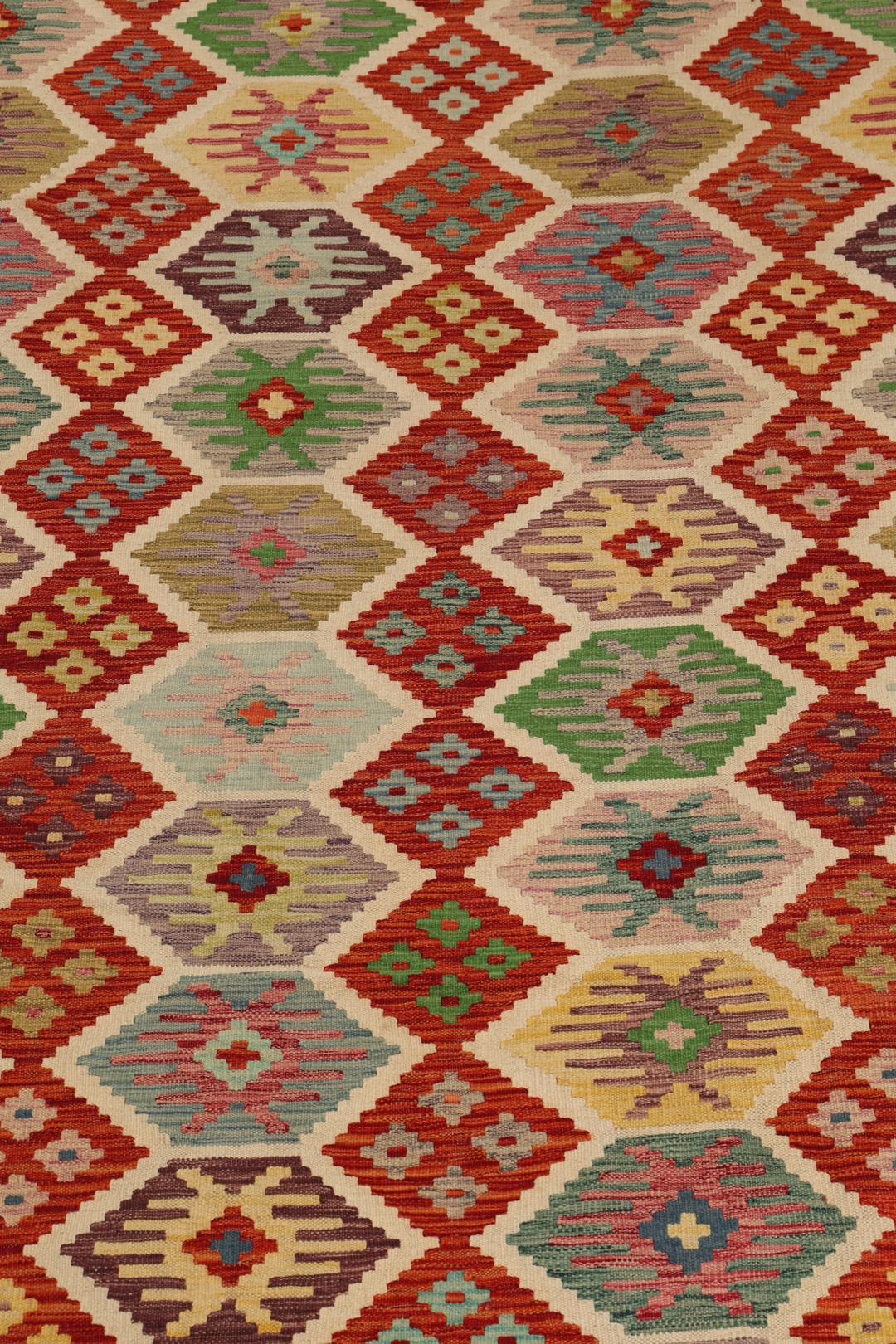
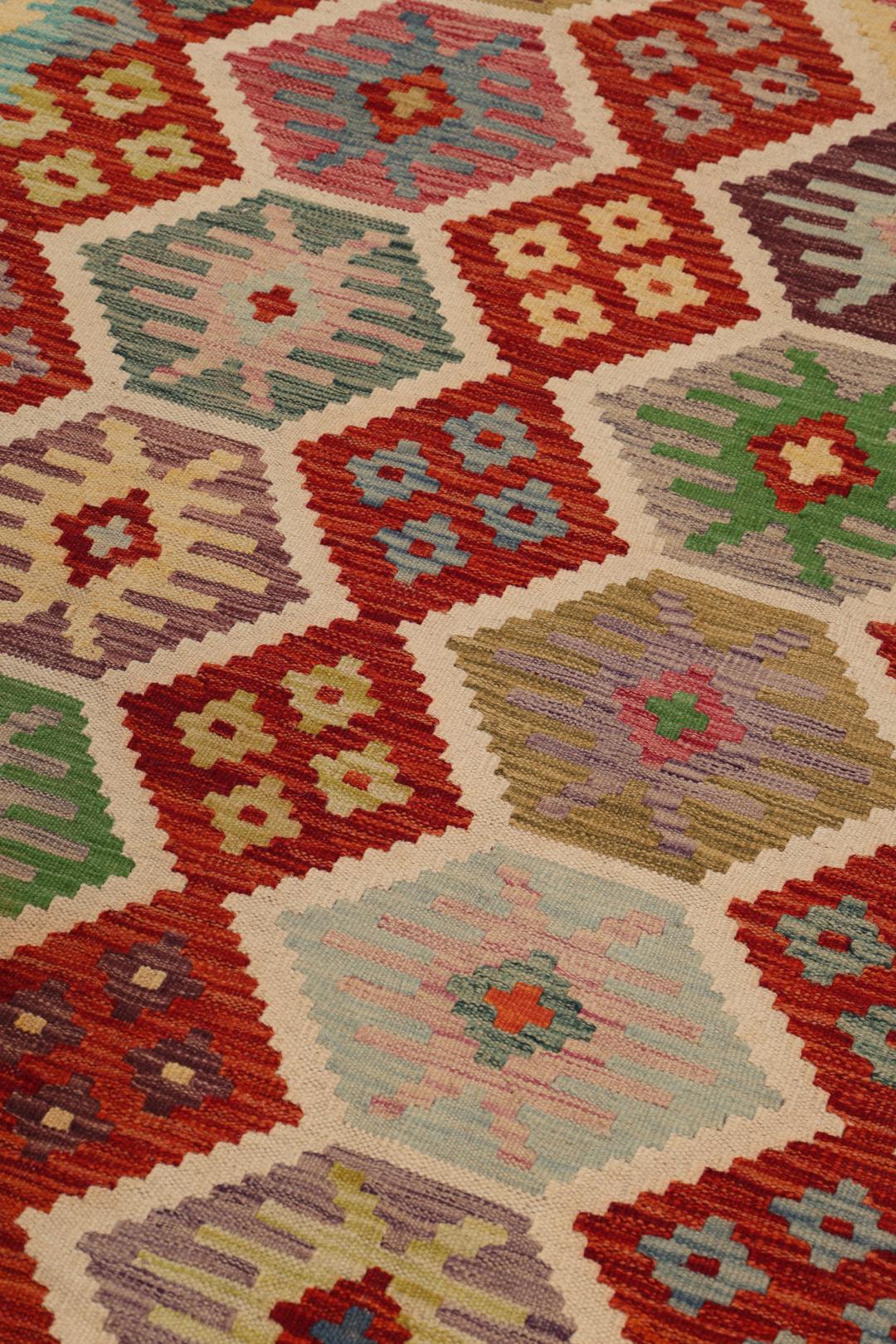
Signature design elements in Afghan Kelims often include bold, repeating geometric motifs such as diamonds, triangles, and stylised floral shapes. The use of vibrant, contrasting colours is a hallmark of this tradition, reflecting the natural dyes historically derived from local plants and minerals. This particular piece showcases this visual language with its rhythmic, interlocking diamond patterns that draw the eye and provide a sense of balance.
Owning an Afghan Kelim is an investment in cultural heritage and long-standing craft tradition. These rugs are highly valued by collectors for their authenticity and the human effort embedded in every thread. By bringing such a piece into your home, you are honouring a legacy of skill and preserving a form of artistry that remains deeply connected to the history of the nomadic cultures from which it emerged.