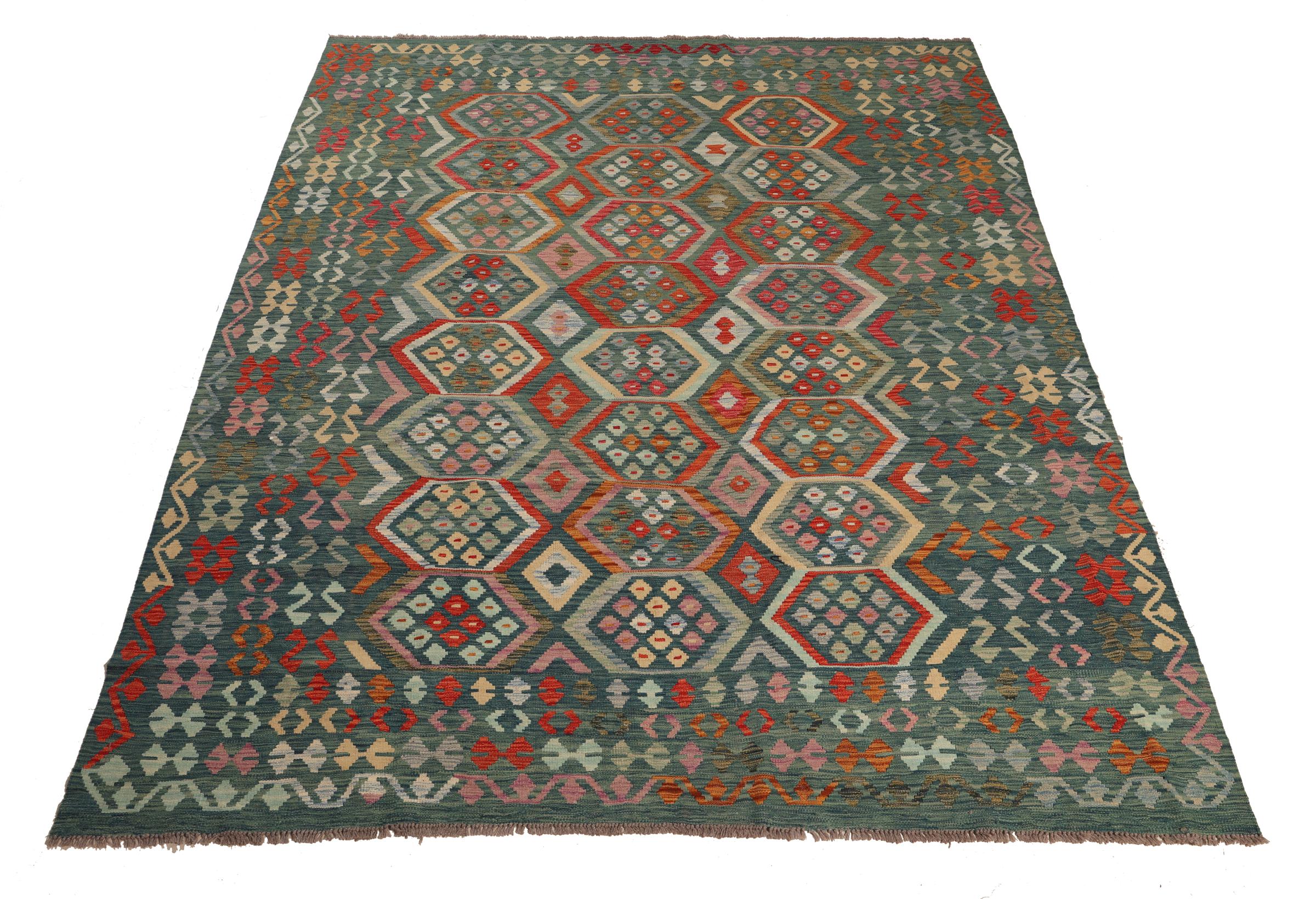
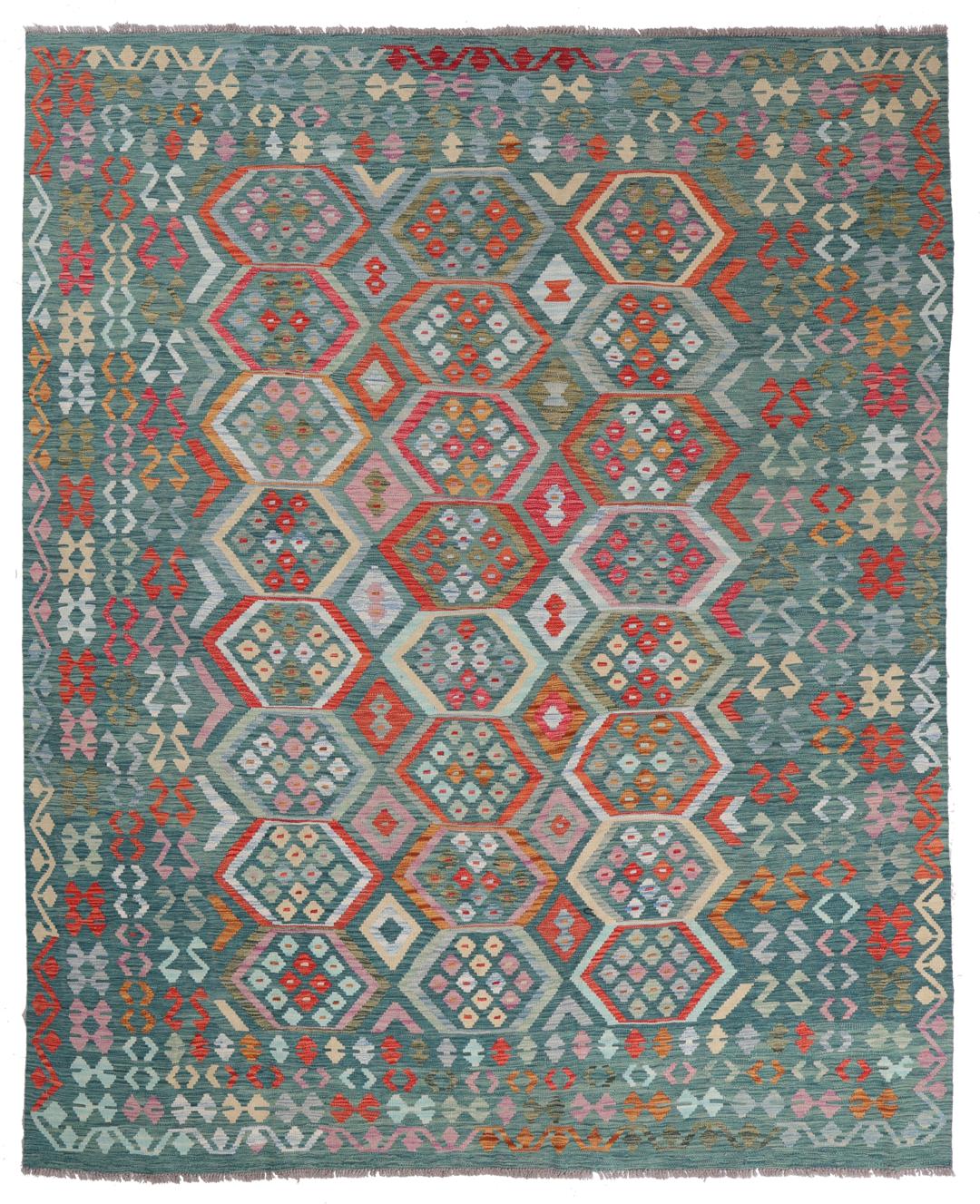
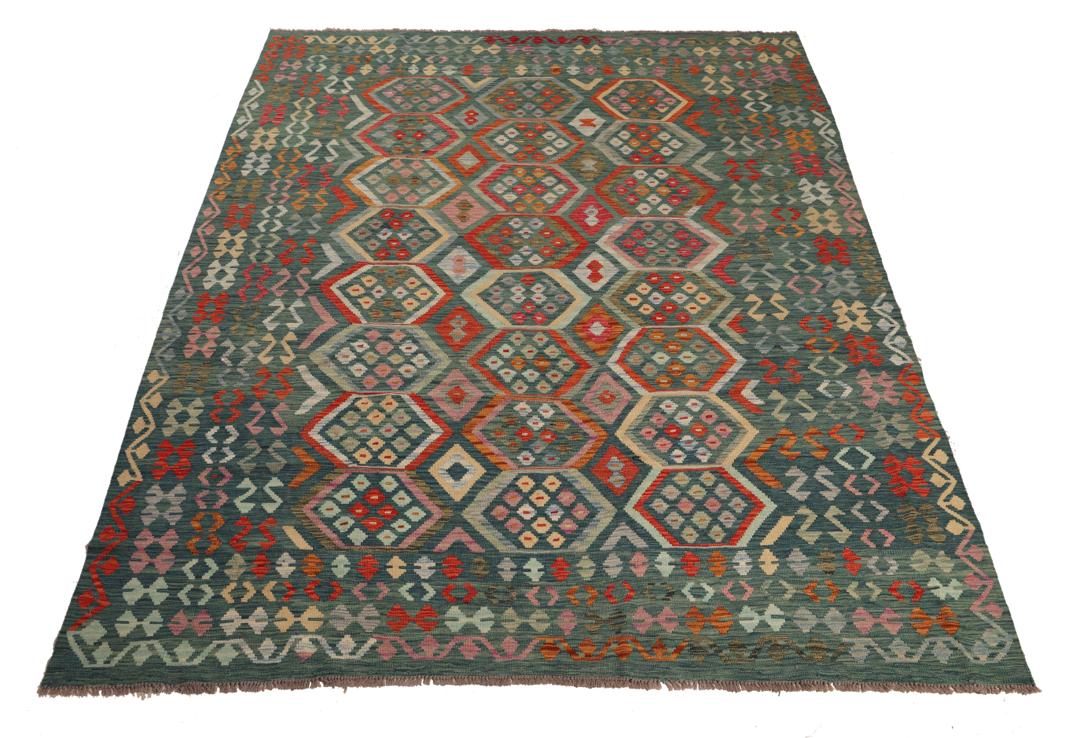
The Afghan Kelim tradition is deeply rooted in the nomadic history of the Middle East, where weaving served as both an essential craft and a form of artistic expression. These rugs were traditionally created by tribal women, who infused their work with symbols and patterns that represented their environment, local legends, and ancestral heritage.
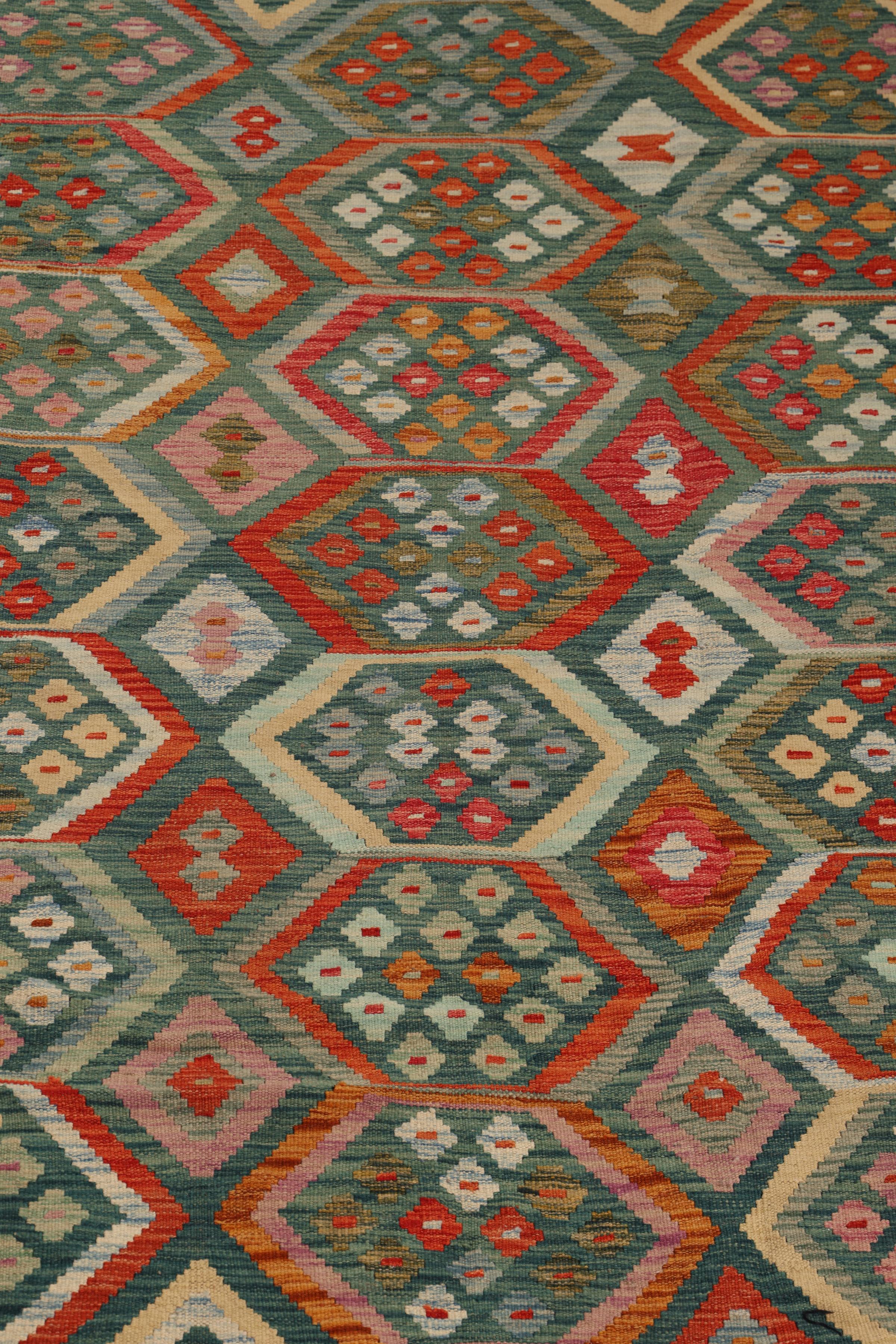
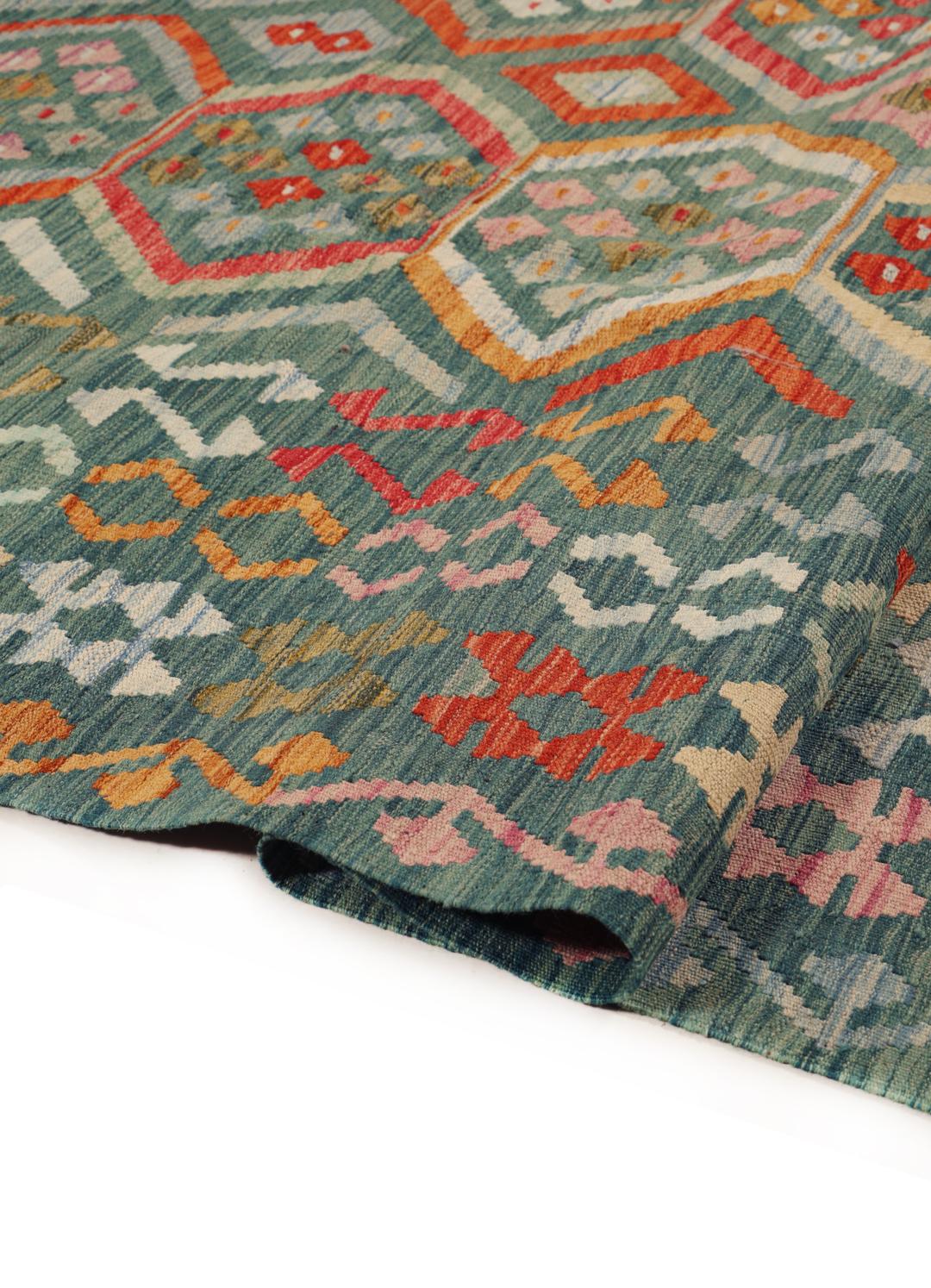
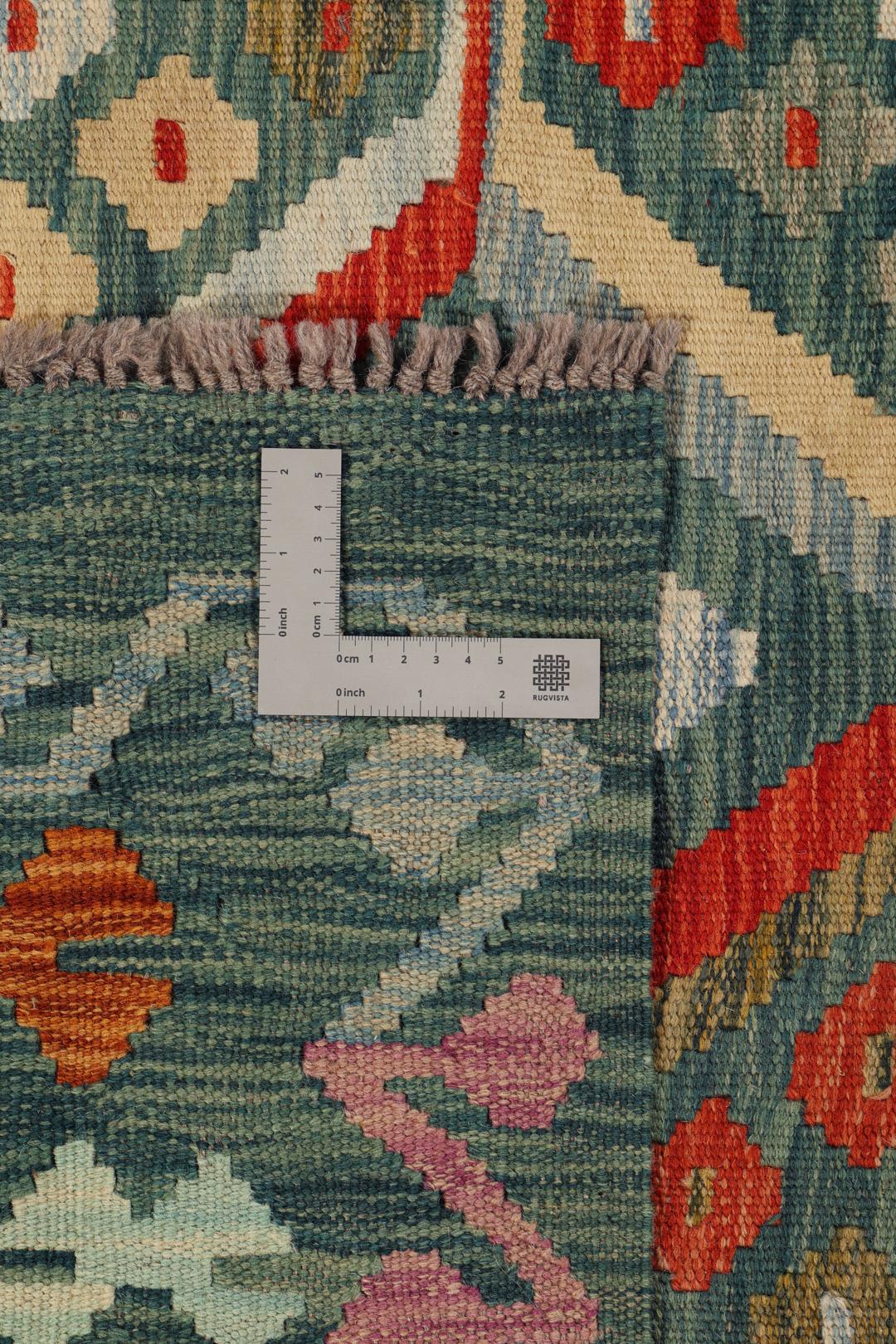
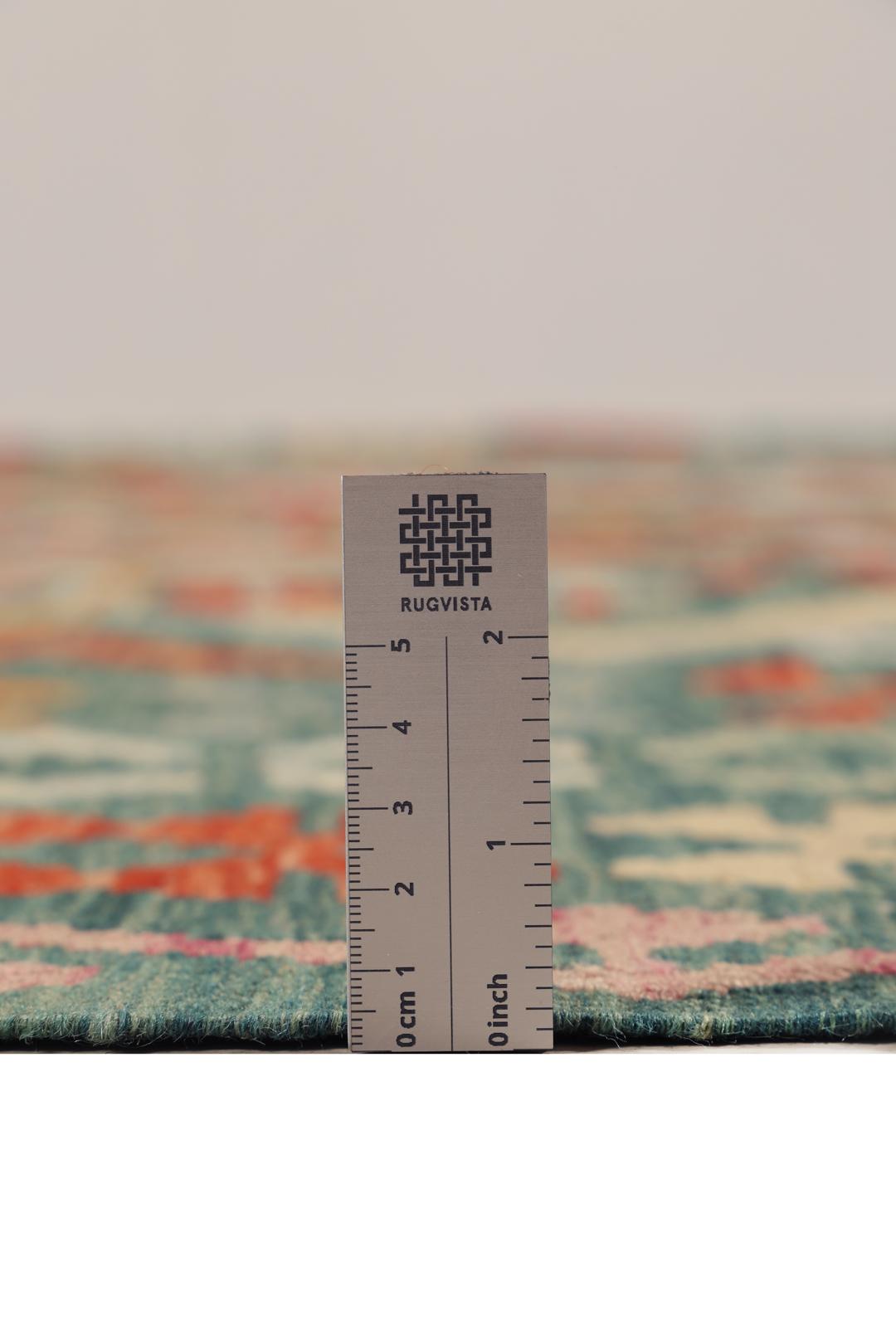
A Kelim is defined by its flat-weave construction, meaning it is created without a pile. This technical approach requires the weaver to incorporate the pattern directly into the warp and weft, creating a reversible rug that is lightweight yet remarkably strong. This method results in a clean, sharp aesthetic that has remained popular for centuries due to its adaptability to different interior styles.
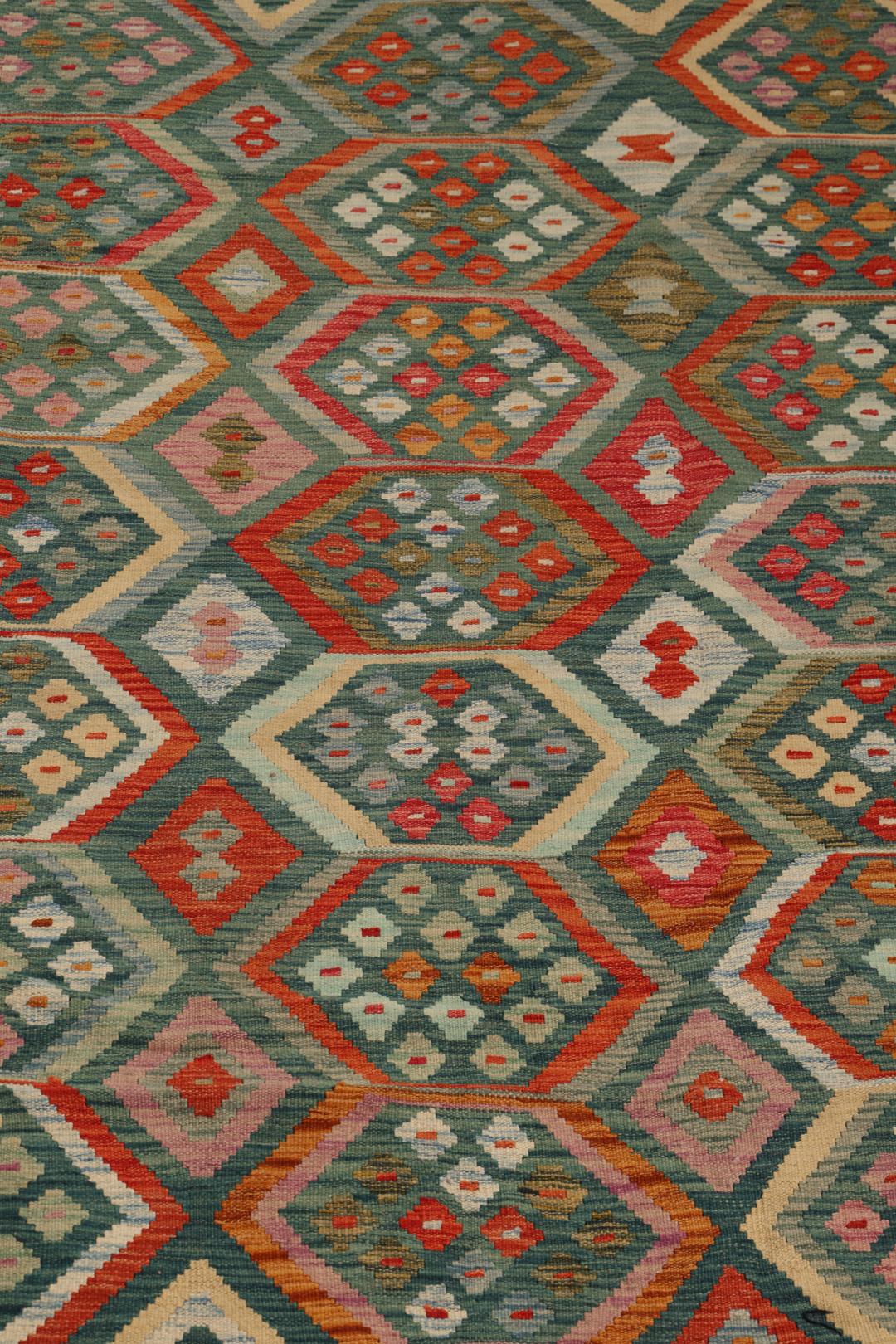
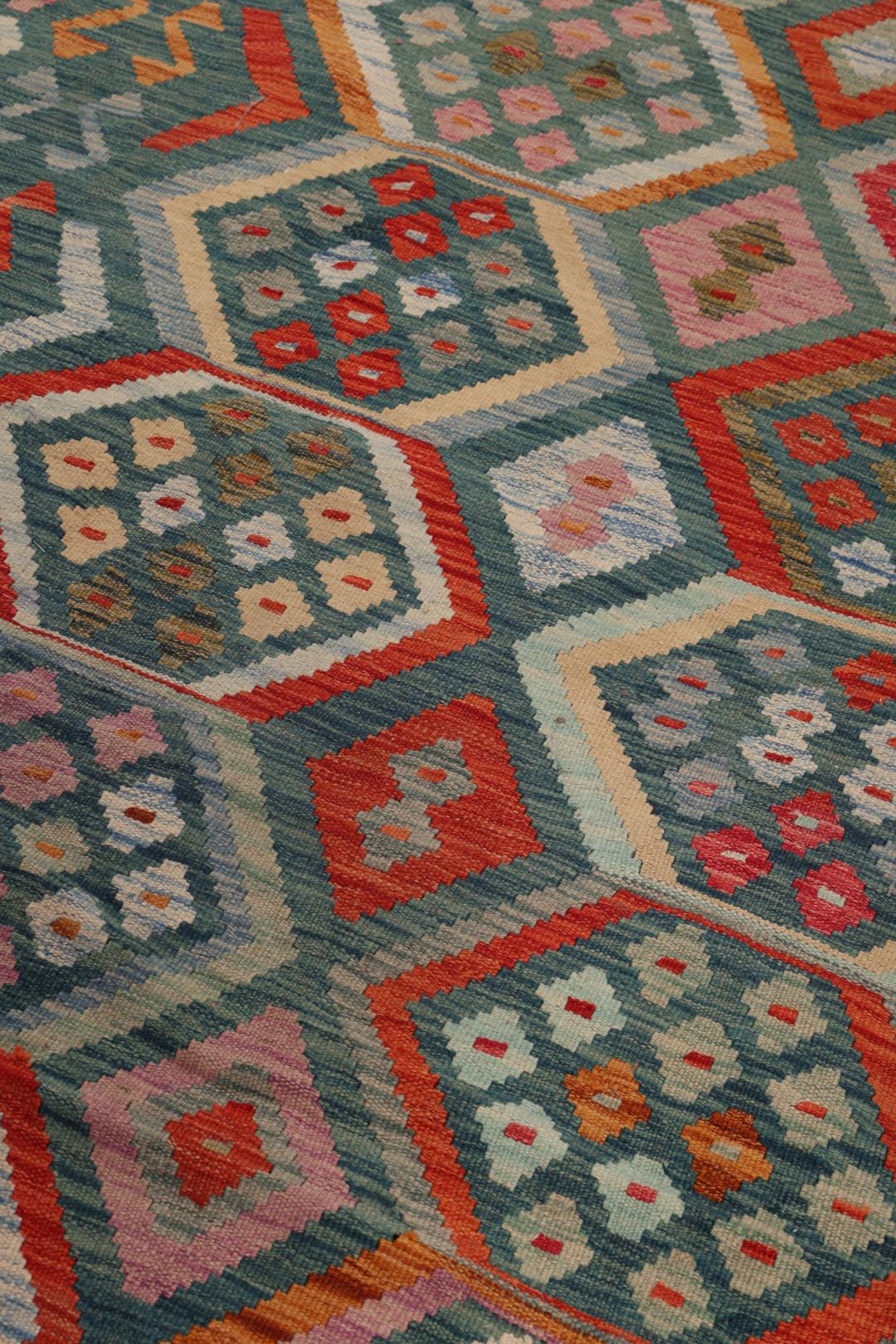
The design of this piece is characterised by its bold geometric motifs, often featuring interlocking hexagons and diamonds that create a rhythmic, balanced composition. The use of vibrant, contrasting colours within these shapes is a hallmark of the Afghan style, designed to stand out against the more neutral tones of traditional nomadic tents and modern homes alike.
Collecting an Afghan Kelim is an investment in human skill and cultural history. These rugs are not merely decorative items but are considered vital records of a craft tradition that has survived changing landscapes and times. By choosing this piece, you are preserving the legacy of the artisans who crafted it and bringing a piece of genuine, storied craft into your own sanctuary.