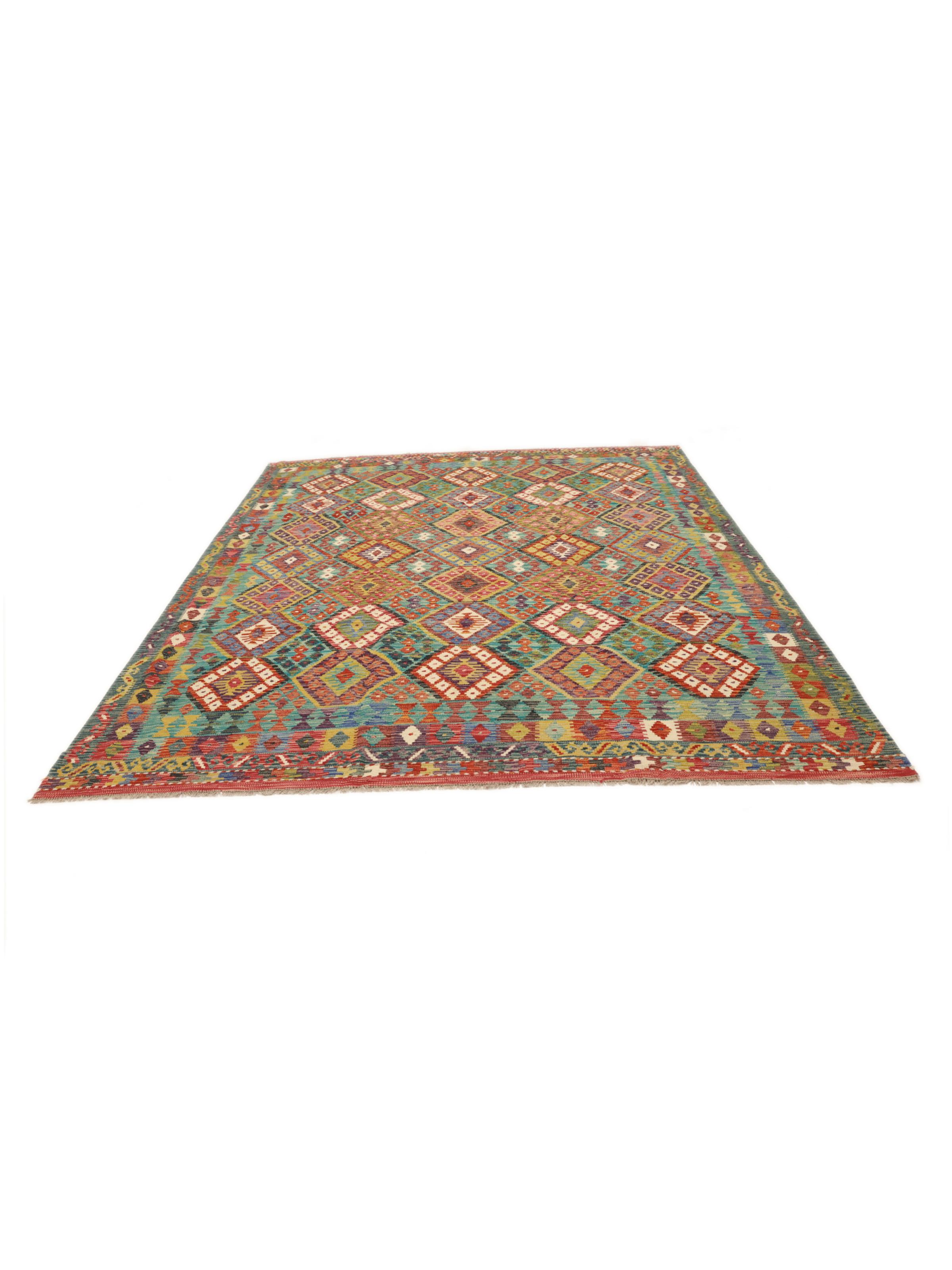
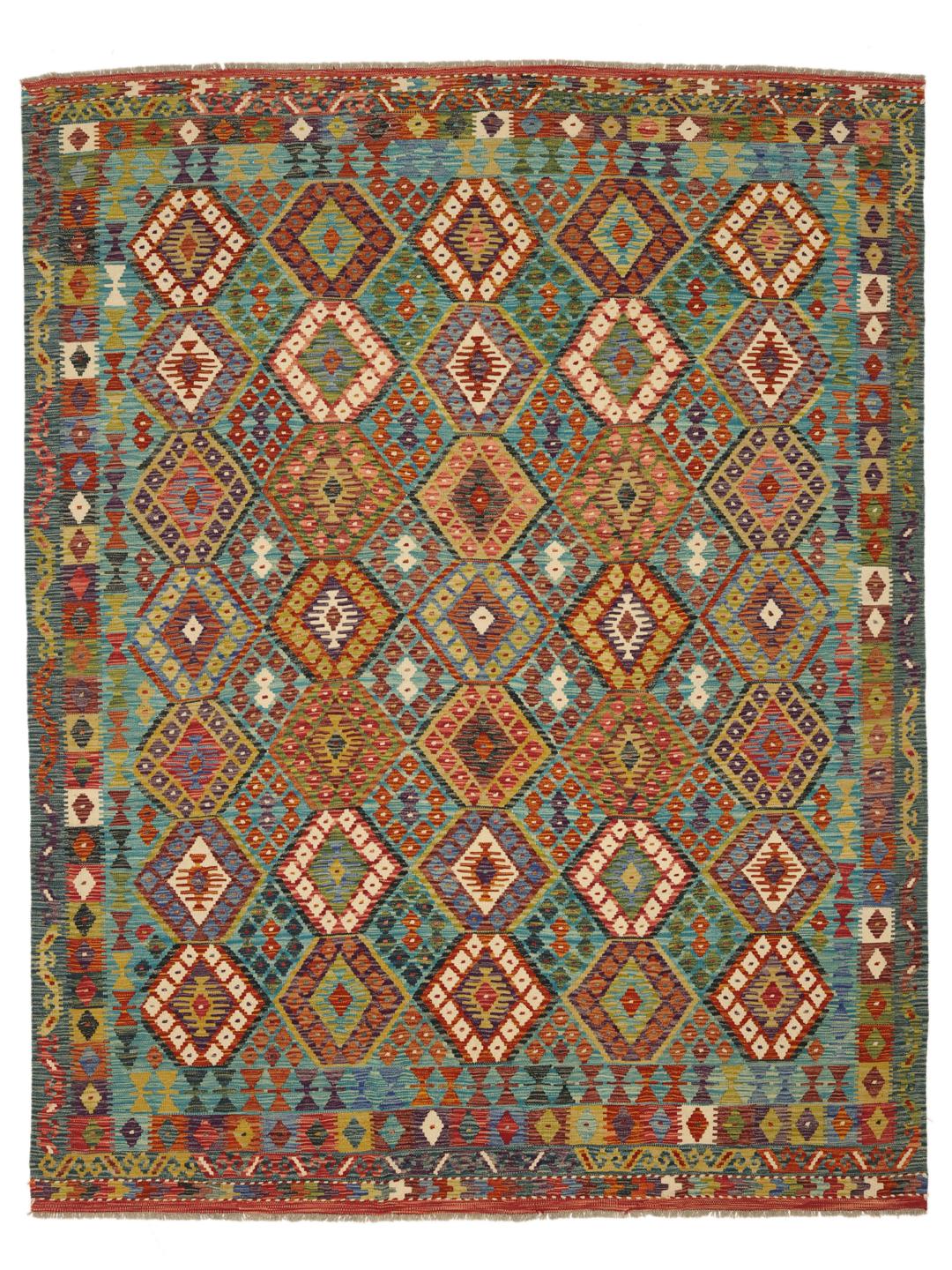
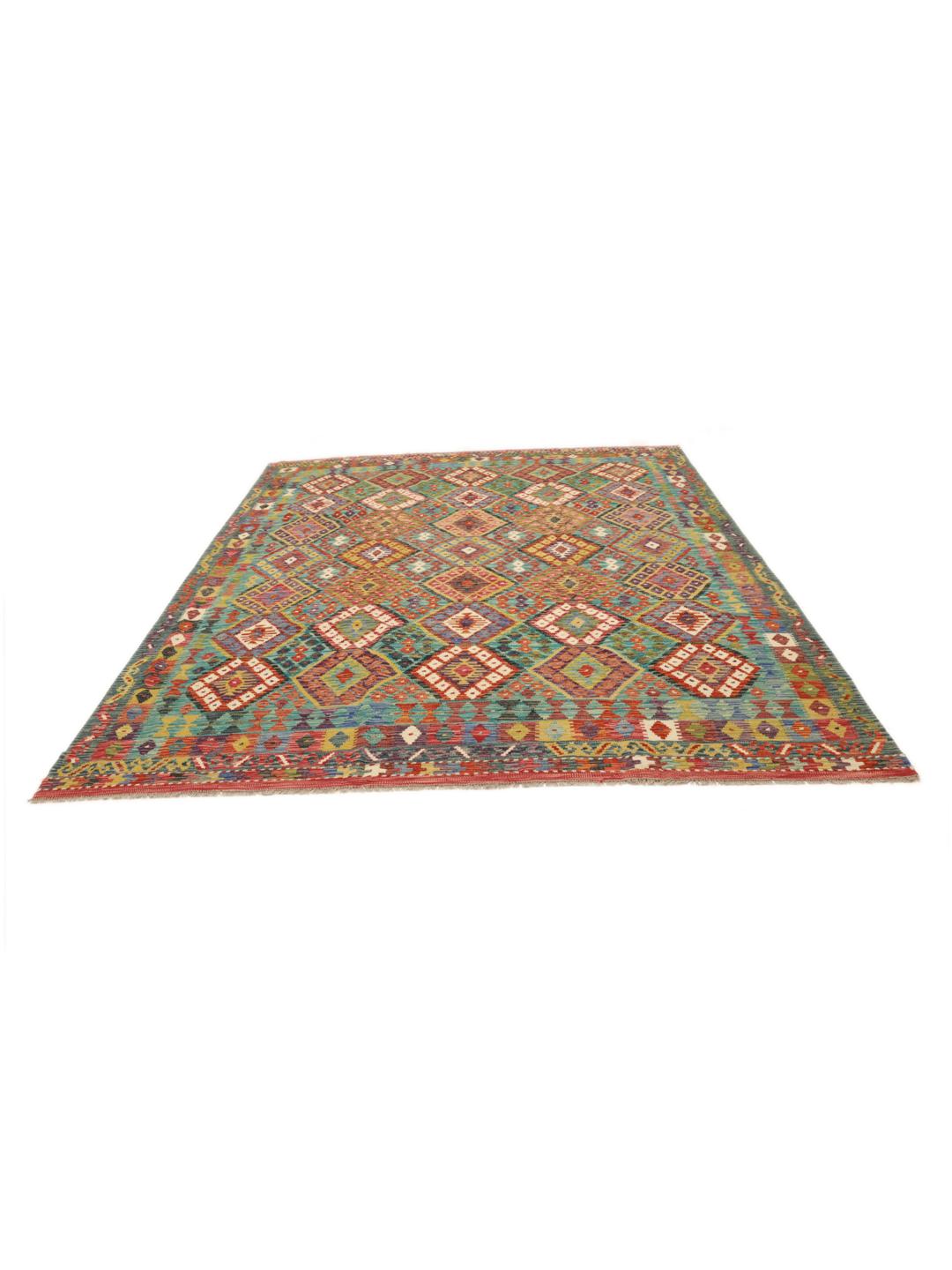
The Kelim tradition in Afghanistan is deeply rooted in the nomadic and semi-nomadic lifestyles of the region's diverse ethnic groups. These rugs were historically created as functional, portable textiles used for floor coverings, wall hangings, and storage bags, reflecting a culture that valued both utility and artistic expression in their daily items.
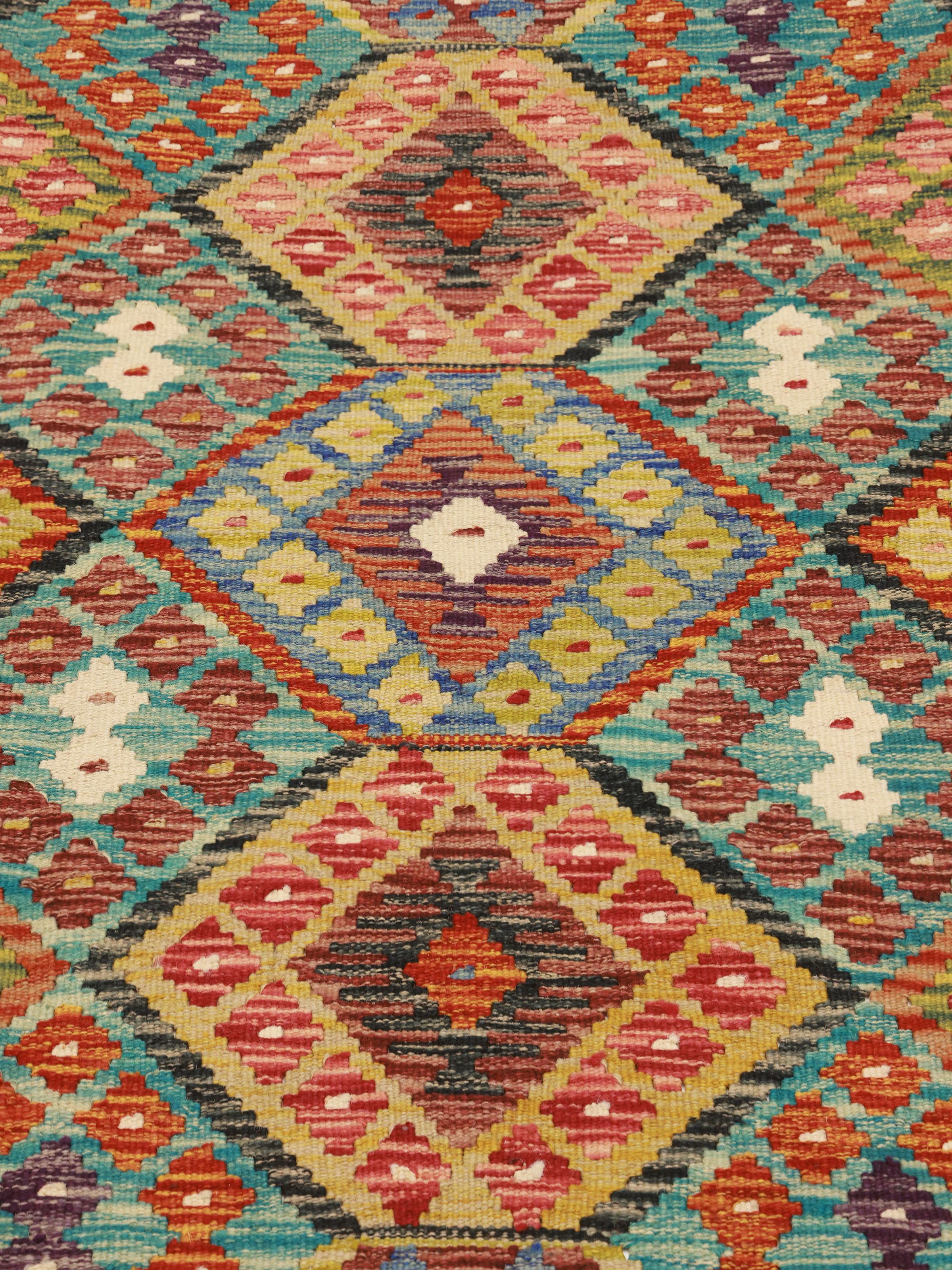
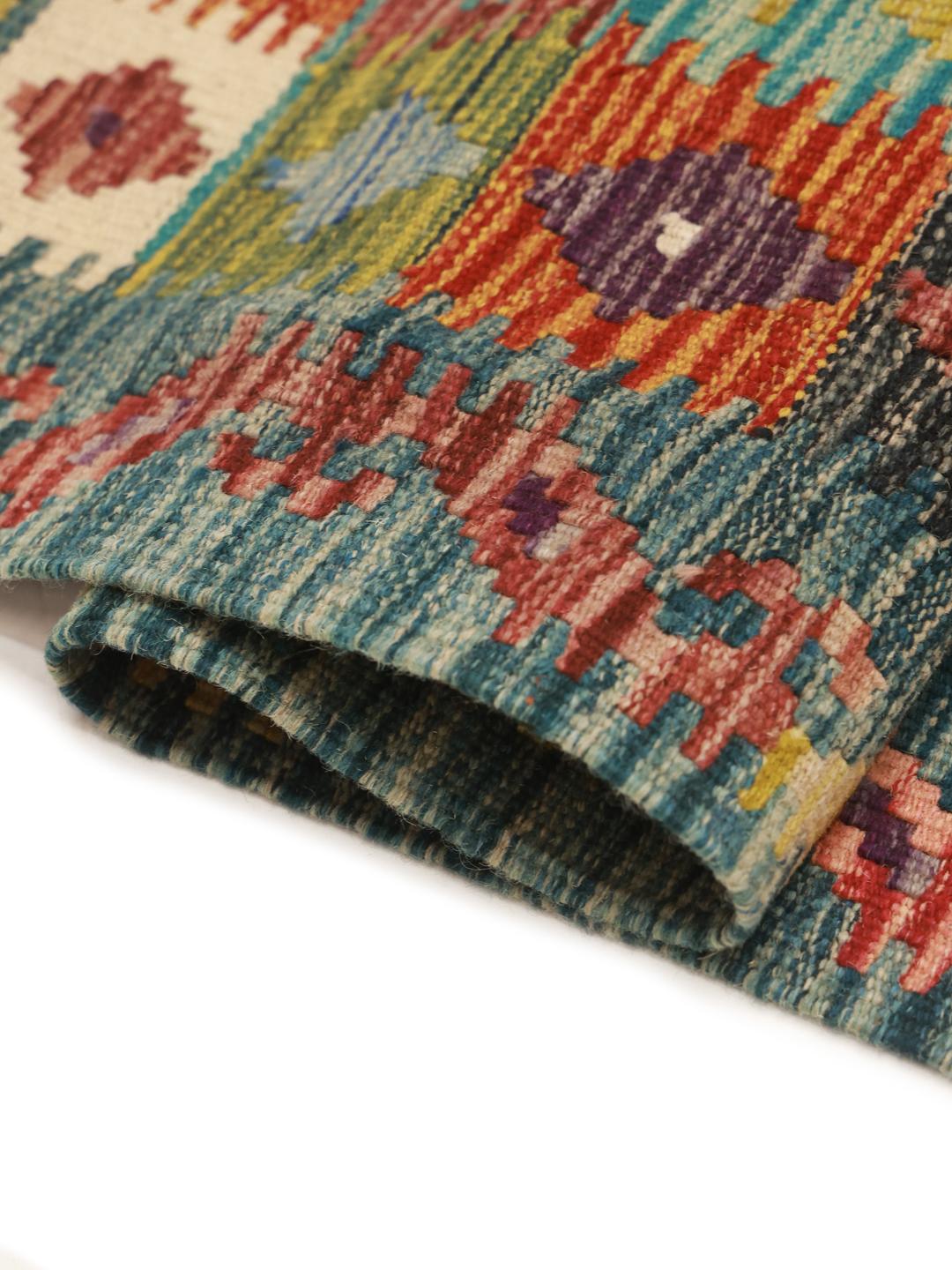
The term Kelim refers to a specific flat-weaving technique where the warp and weft threads are interlaced to create a smooth surface without a pile. This method is highly prized for its versatility and the clarity it brings to graphic, geometric designs. Because the pattern is created during the weaving process itself, the design appears nearly identical on both sides, a hallmark of this ancient craft.
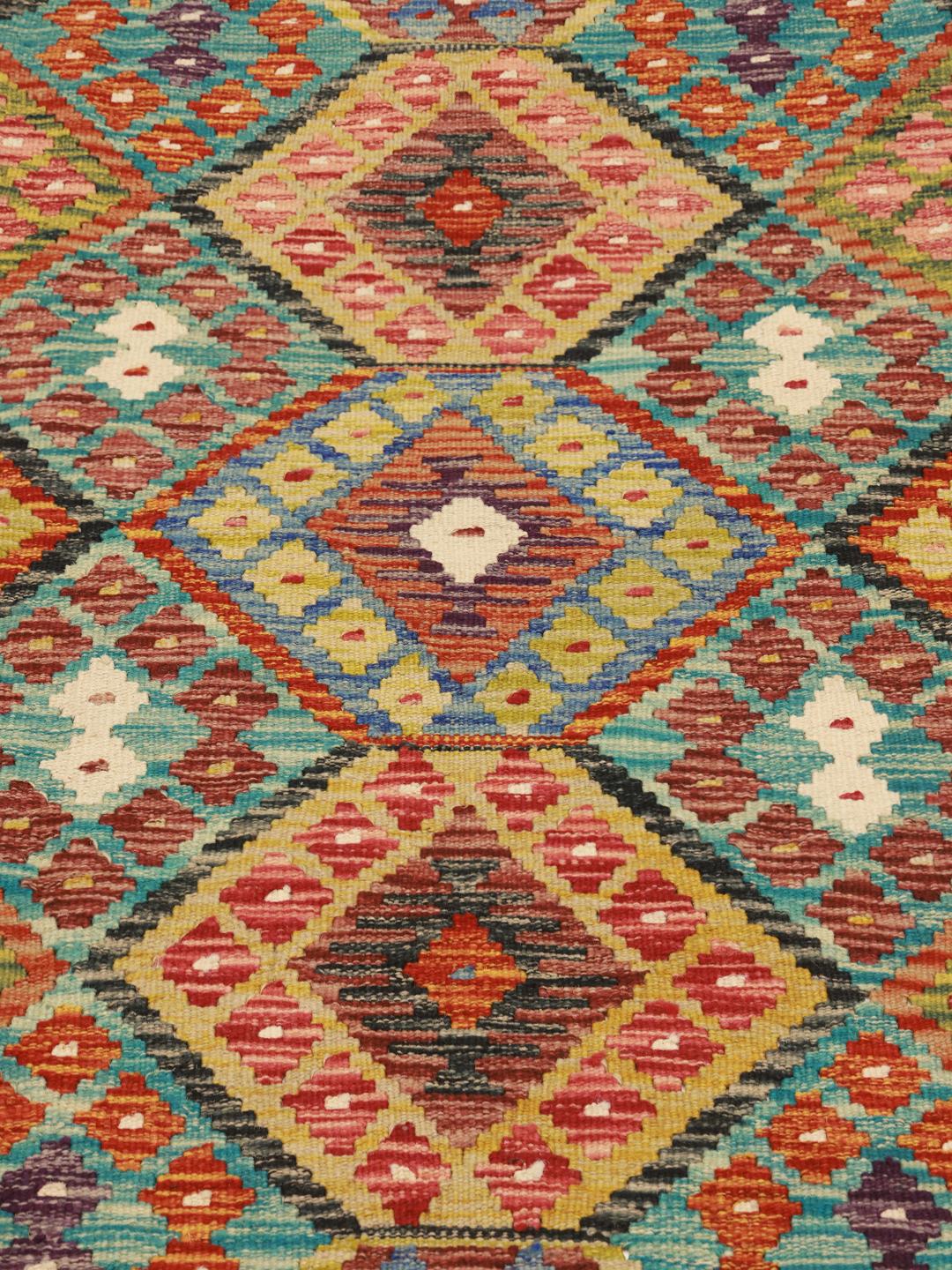
The design language of Afghan Kelims is defined by bold, angular motifs, with the diamond being a particularly prominent symbol. These shapes are often arranged in repeating rows, creating a sense of rhythmic movement across the field. The use of natural dyes has historically provided these rugs with their characteristic warm, earthy tones, though modern interpretations continue to explore a wider spectrum of vibrant colours.
Owning an Afghan Kelim is an opportunity to connect with a long-standing heritage of textile art. These rugs are highly sought after by collectors and interior enthusiasts alike for their rugged durability and their ability to anchor a room with cultural depth. By choosing a hand-woven piece, you are supporting a legacy of craftsmanship that has survived for centuries as a vital part of Middle Eastern domestic life.