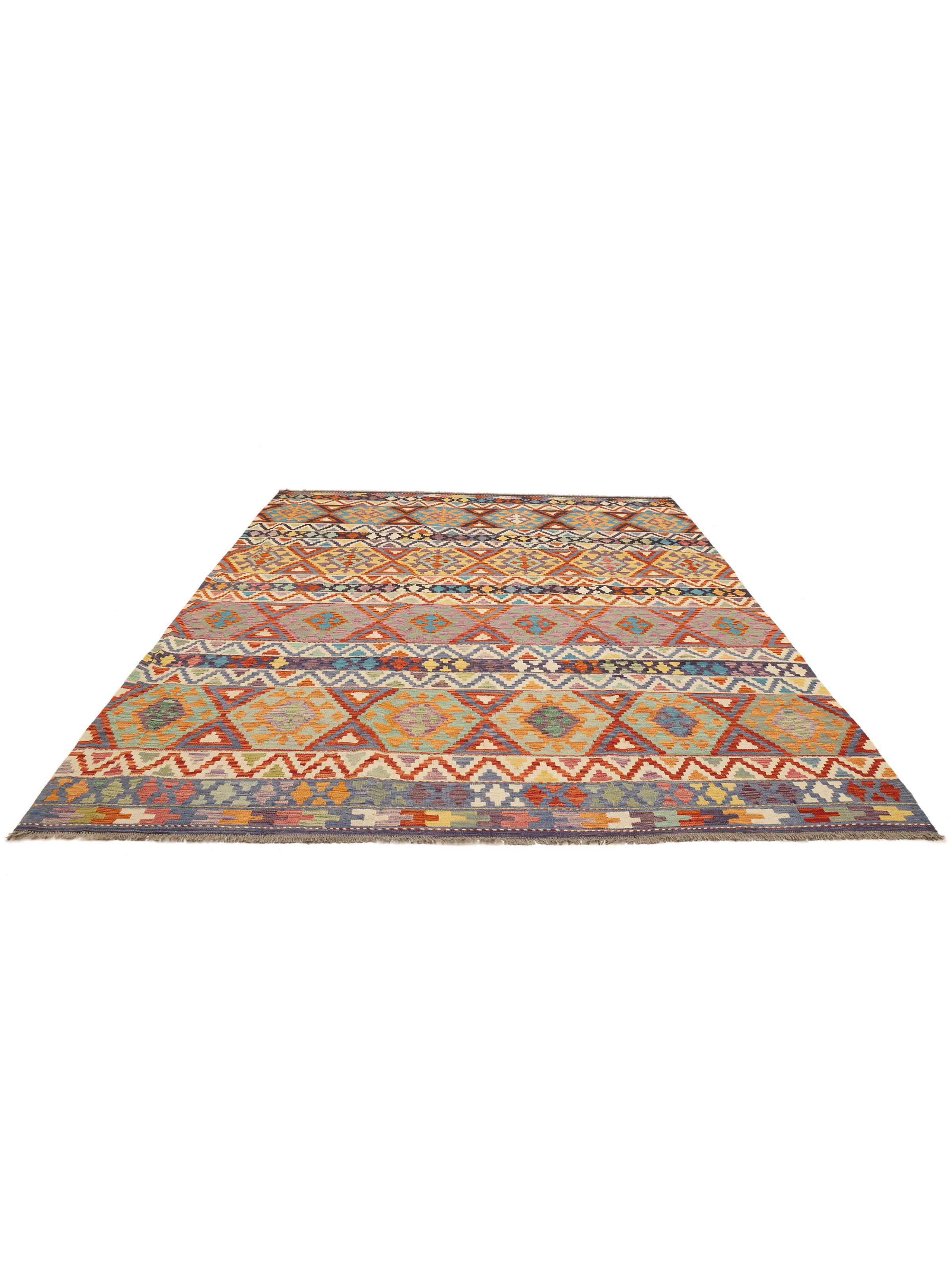
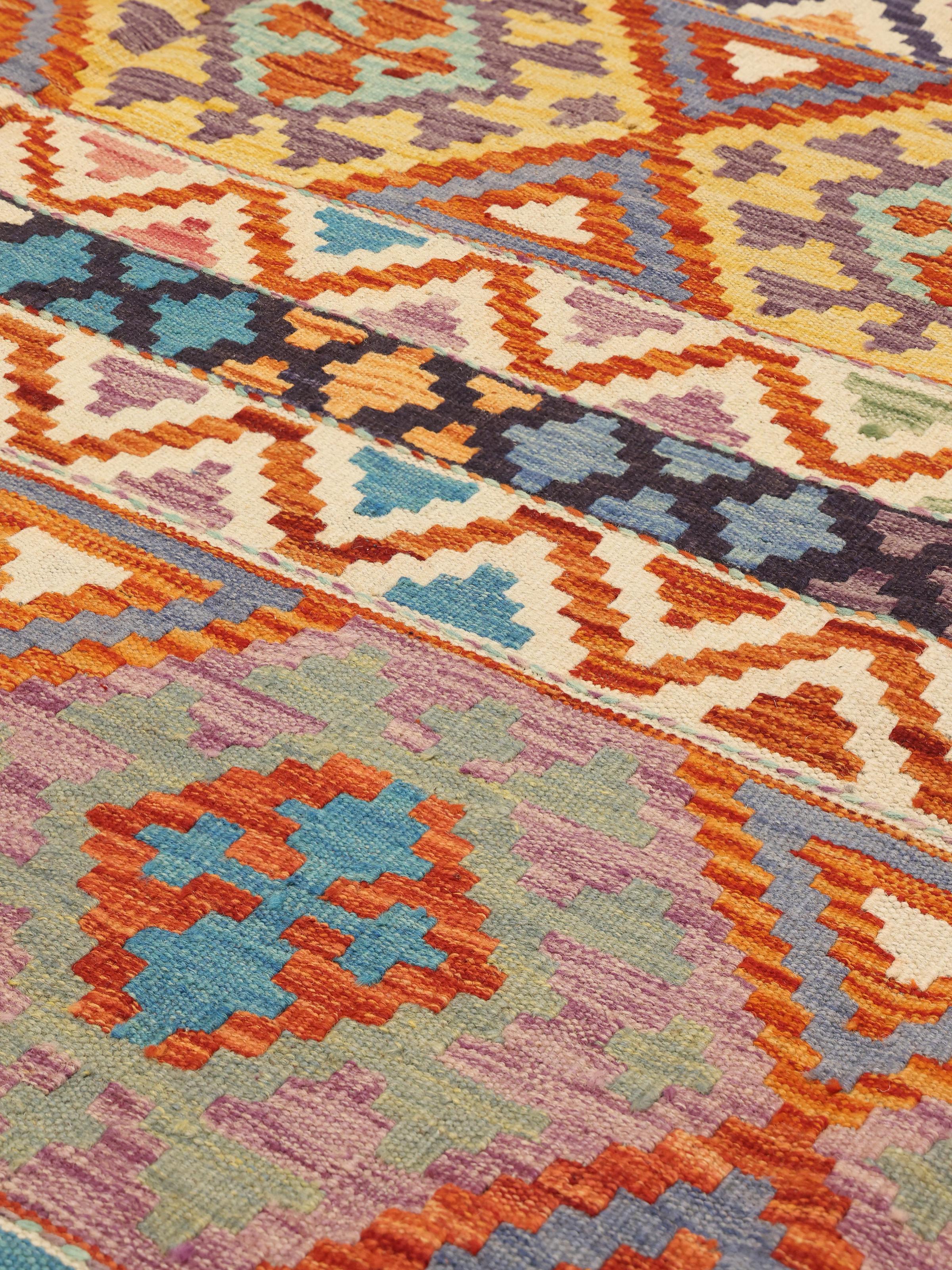
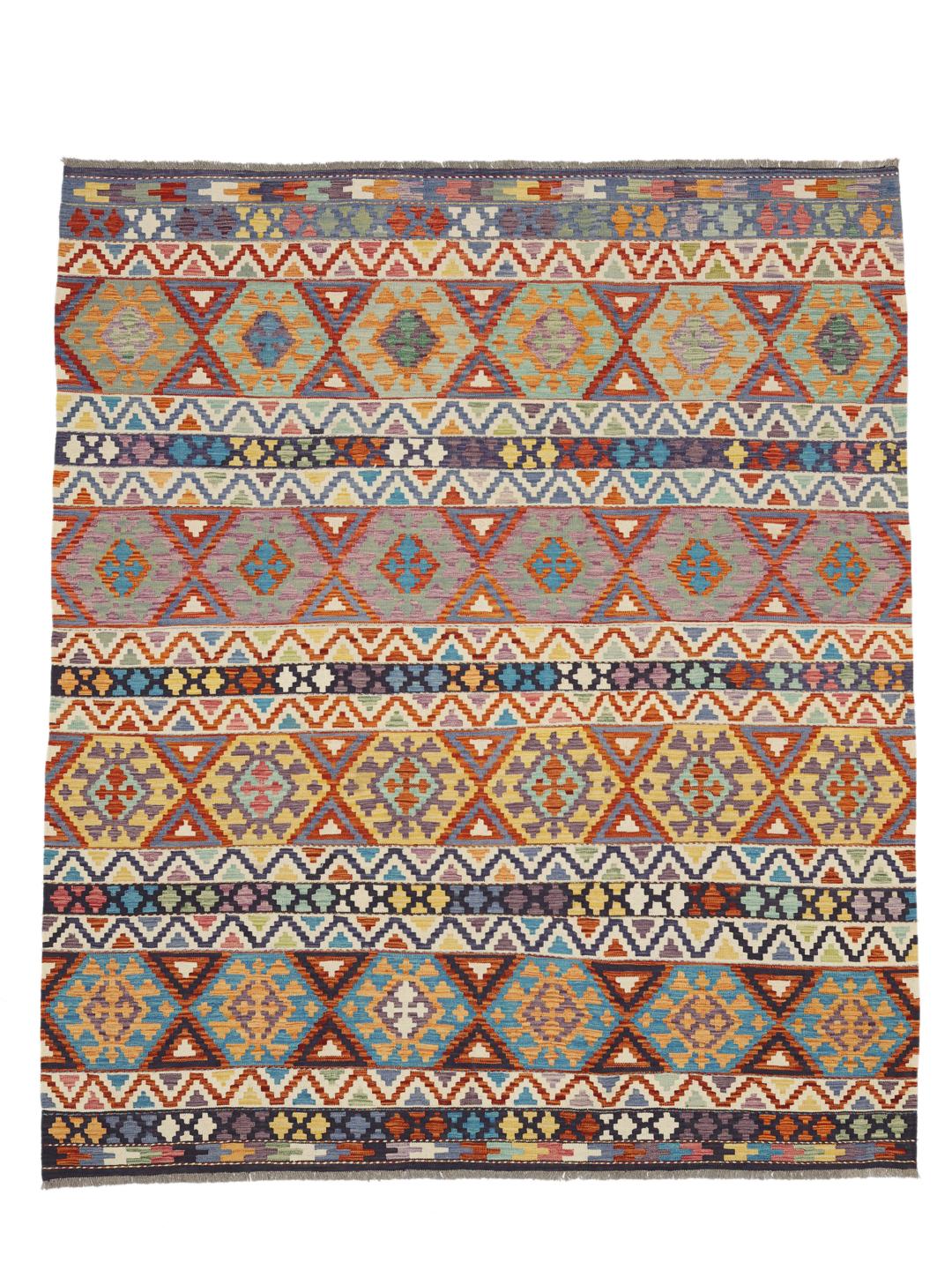
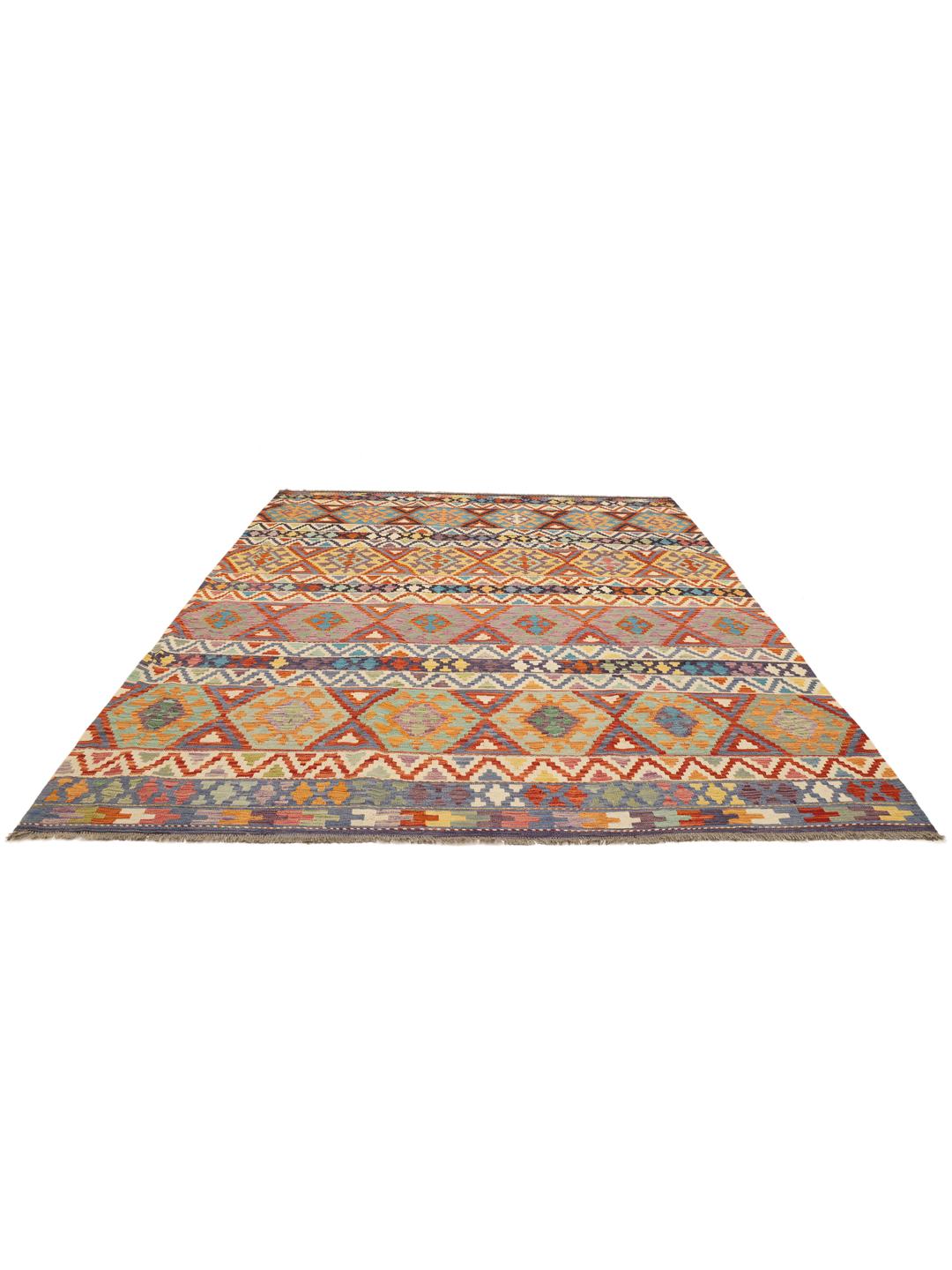
Kelim rugs have a long and storied history, originating from the nomadic cultures of the Middle East and Central Asia. These flat-woven textiles were historically essential for nomadic life, serving as floor coverings, wall hangings, and storage bags due to their versatility and portability.
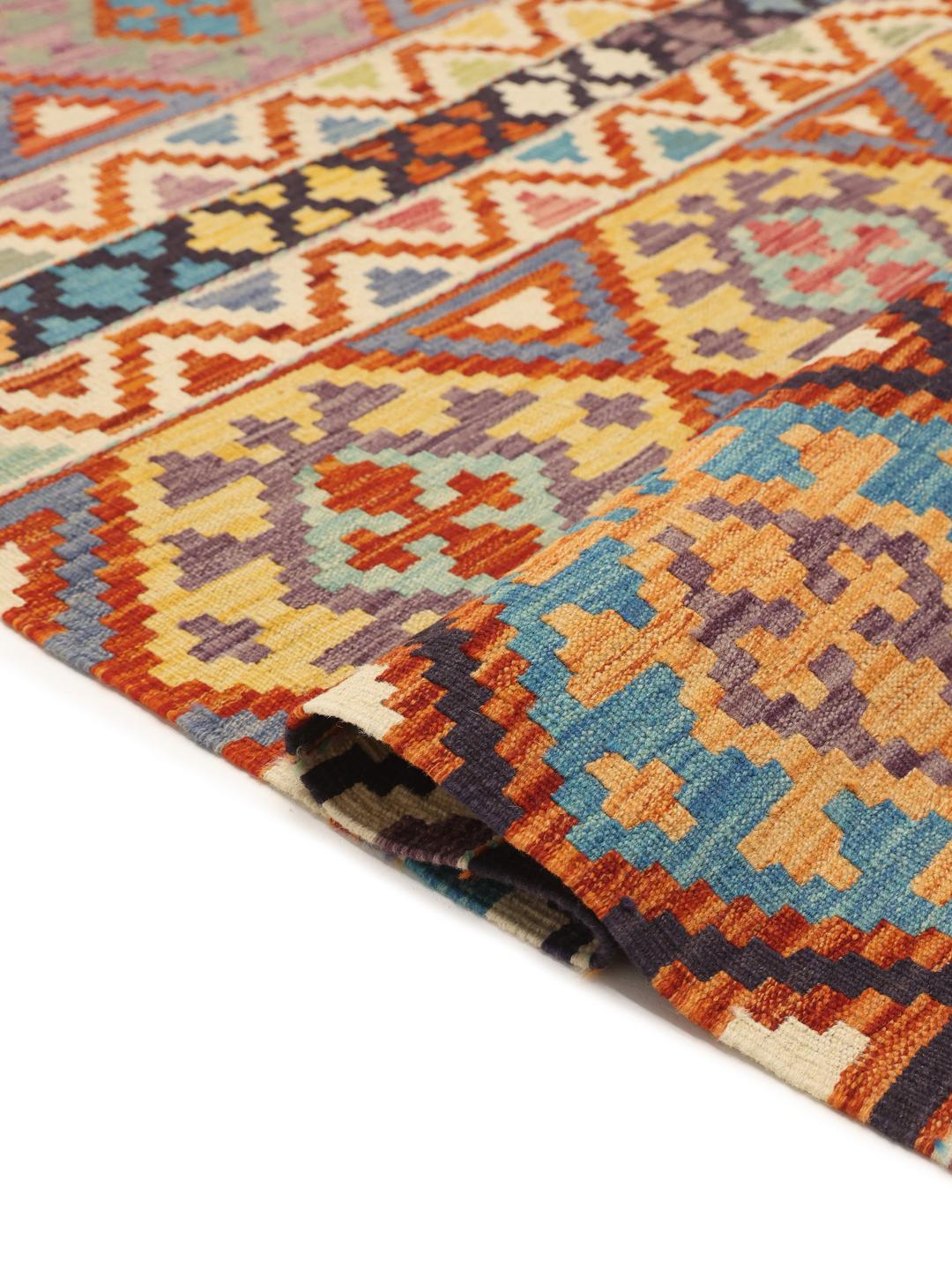
The term Kelim refers to the specific flat-weaving technique used to create these rugs. By interweaving the coloured weft threads through the warp, artisans create a reversible, pileless fabric that is both lightweight and incredibly resilient. This method has been passed down through generations, preserving the cultural identity of the regions where they are made.
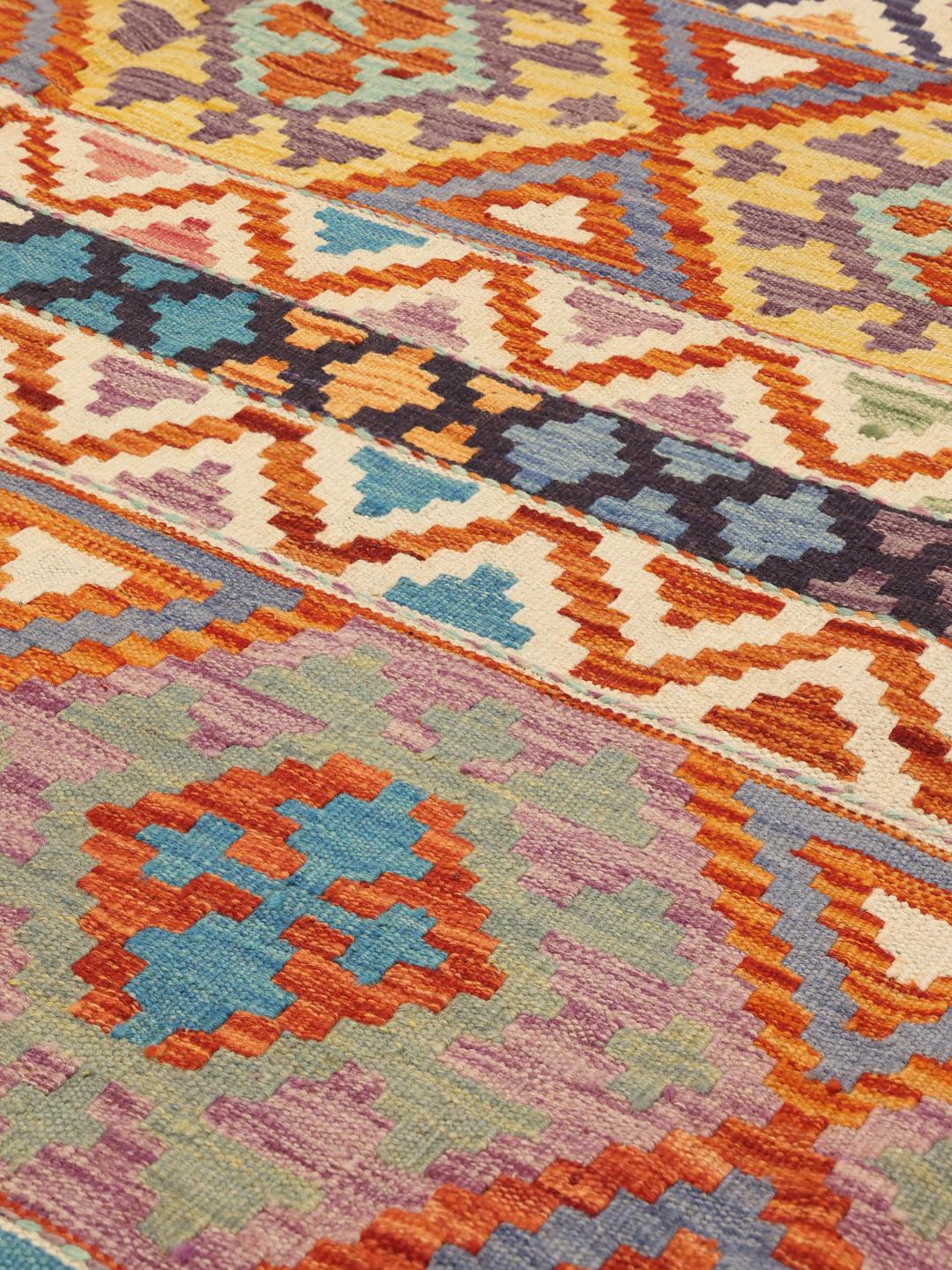
Visually, these rugs are defined by their geometric language. You will often see repeating motifs like diamonds, triangles, and stylised floral elements, all arranged in horizontal bands or complex, repeating grids. The use of bold, contrasting colours is a hallmark of the Afghan tradition, often derived from natural dyes that age beautifully over time.
Owning a Kelim is an invitation into a rich cultural heritage. These rugs are not merely decorative items but are valued by collectors for their authenticity and the skill required to produce them. By bringing this piece into your home, you are continuing a tradition of craft that celebrates both utility and artistic expression.