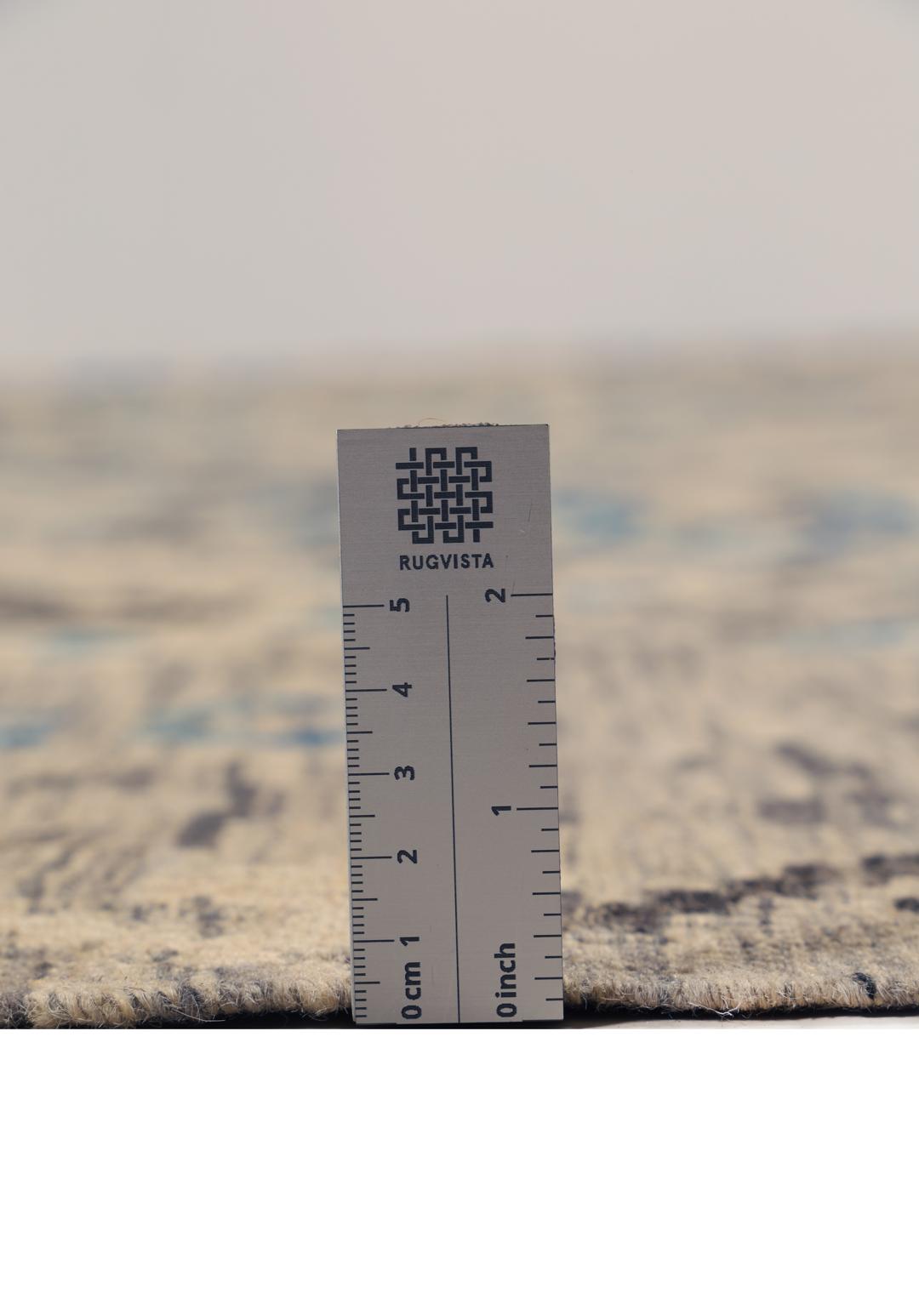
The tradition of Afghan kilim weaving is deeply rooted in the nomadic and semi-nomadic cultures of the Middle East. These flat-woven rugs have been produced for centuries, serving as functional, portable items that could be used as floor coverings, blankets, or wall hangings in the traditional dwellings of the region.
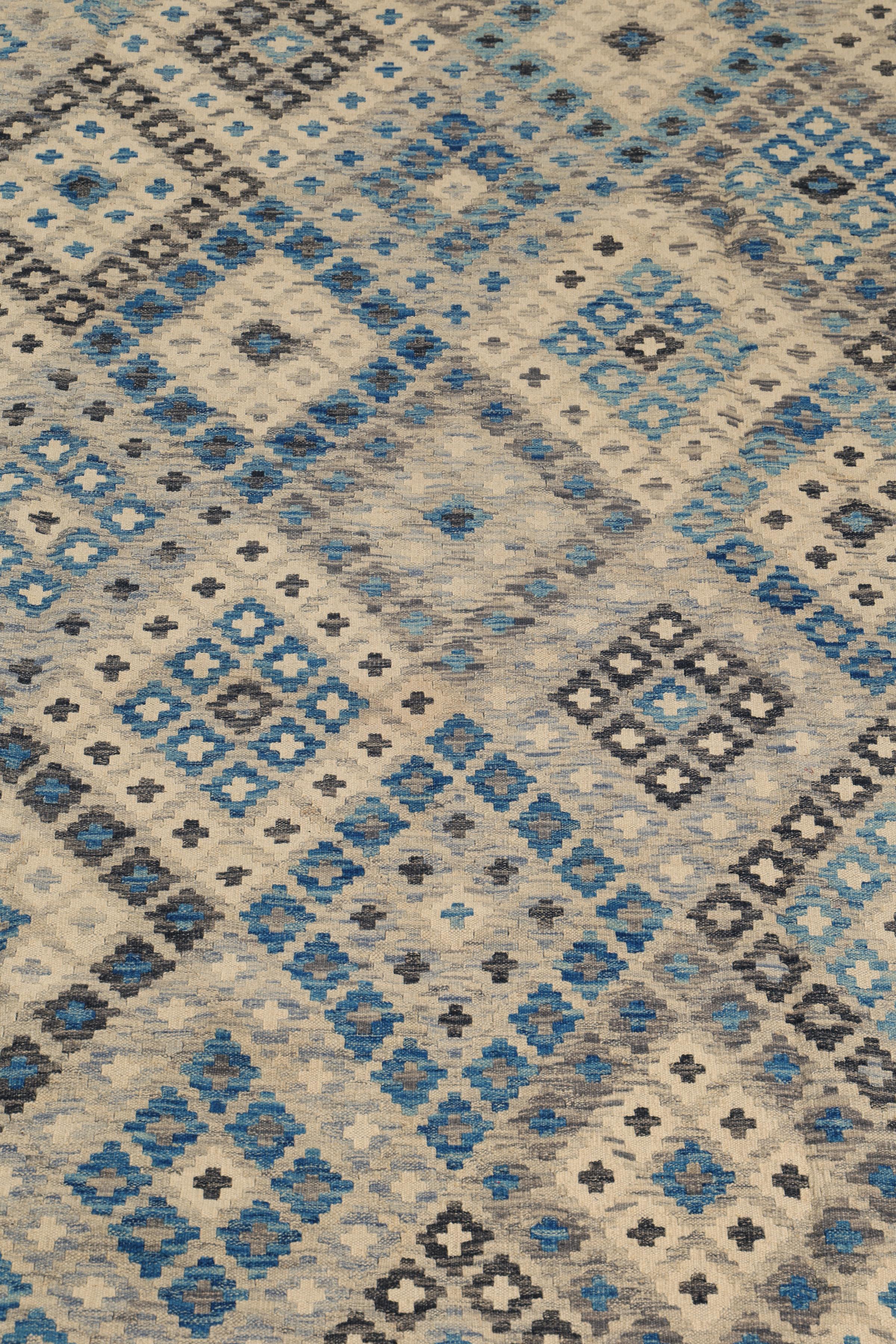
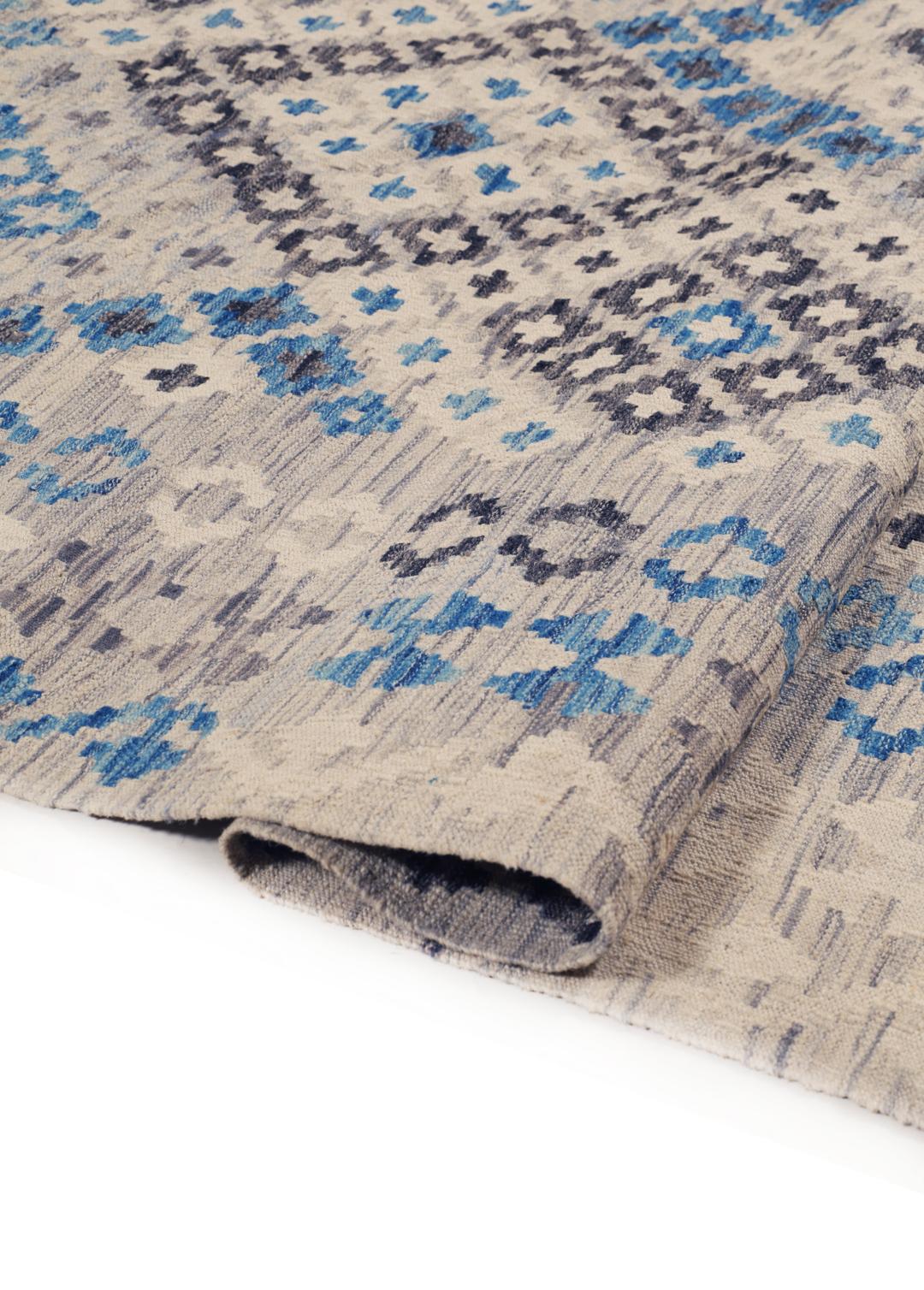
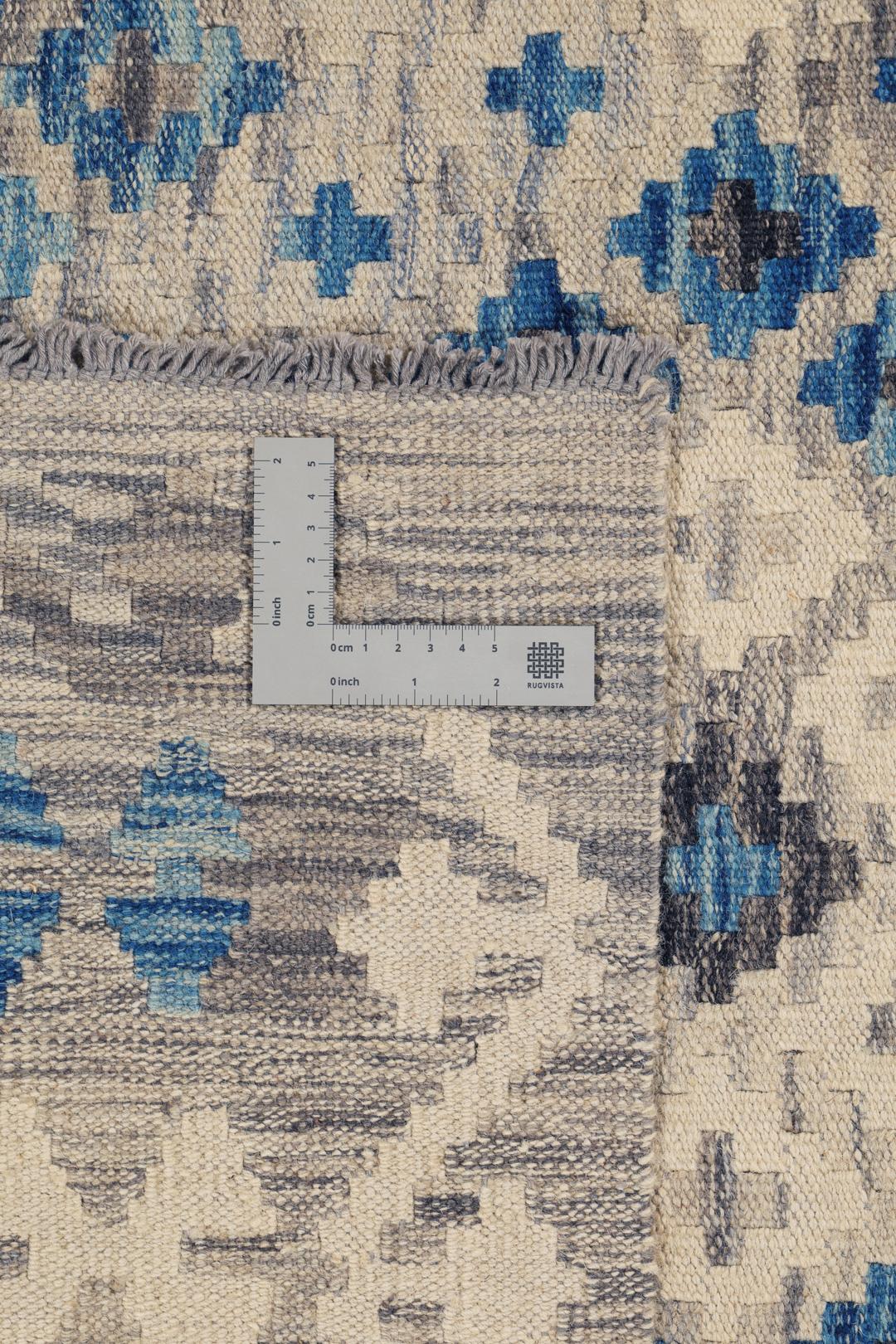
The term 'kilim' specifically refers to this tapestry-like, pileless weaving technique. By using a weft-faced weave, the artisans achieve a clean, sharp aesthetic where the pattern is created by the colours of the weft threads themselves. This technique requires a high degree of precision, as the weaver must manage the tension of the warp and weft threads to ensure the rug remains flat and durable.
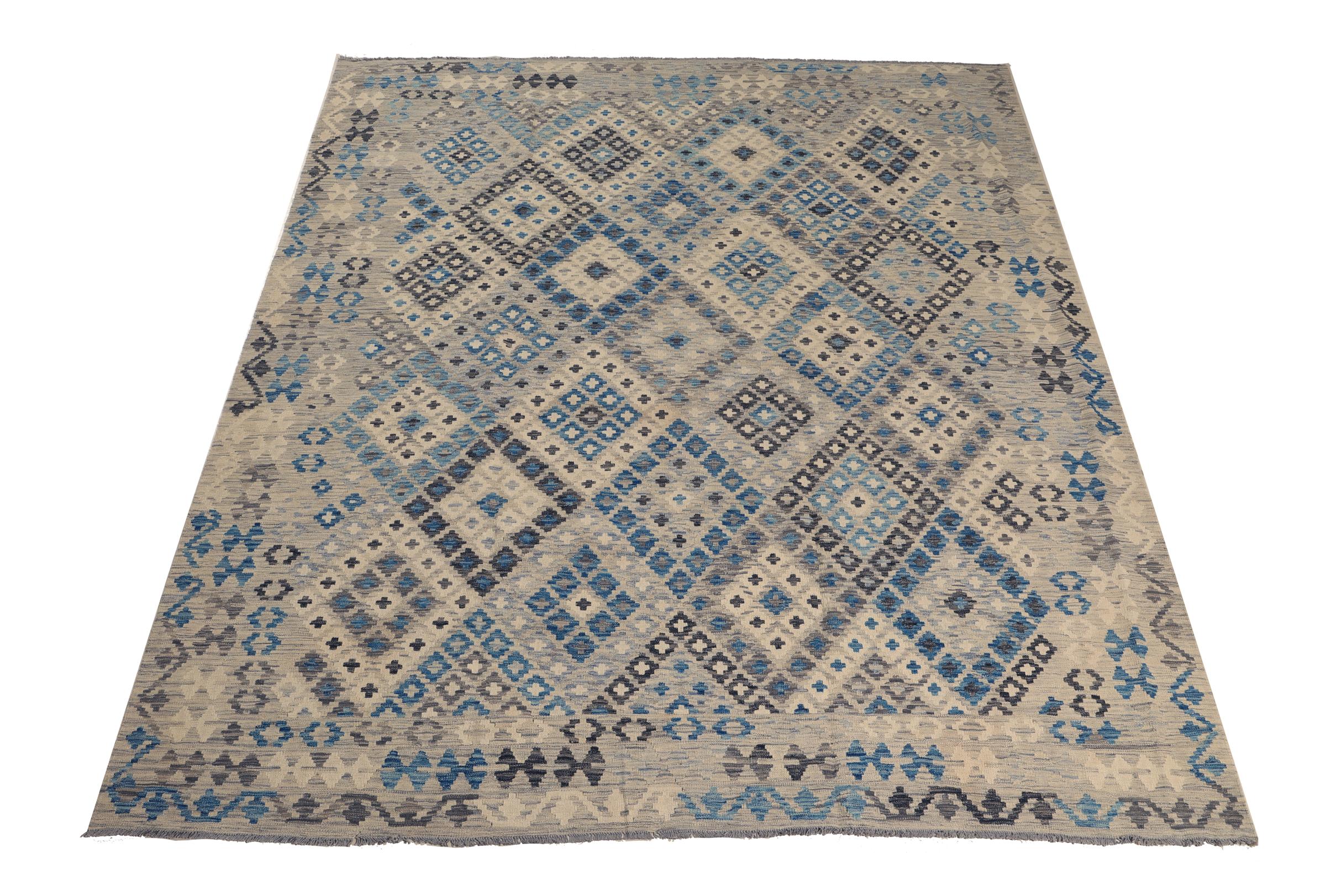
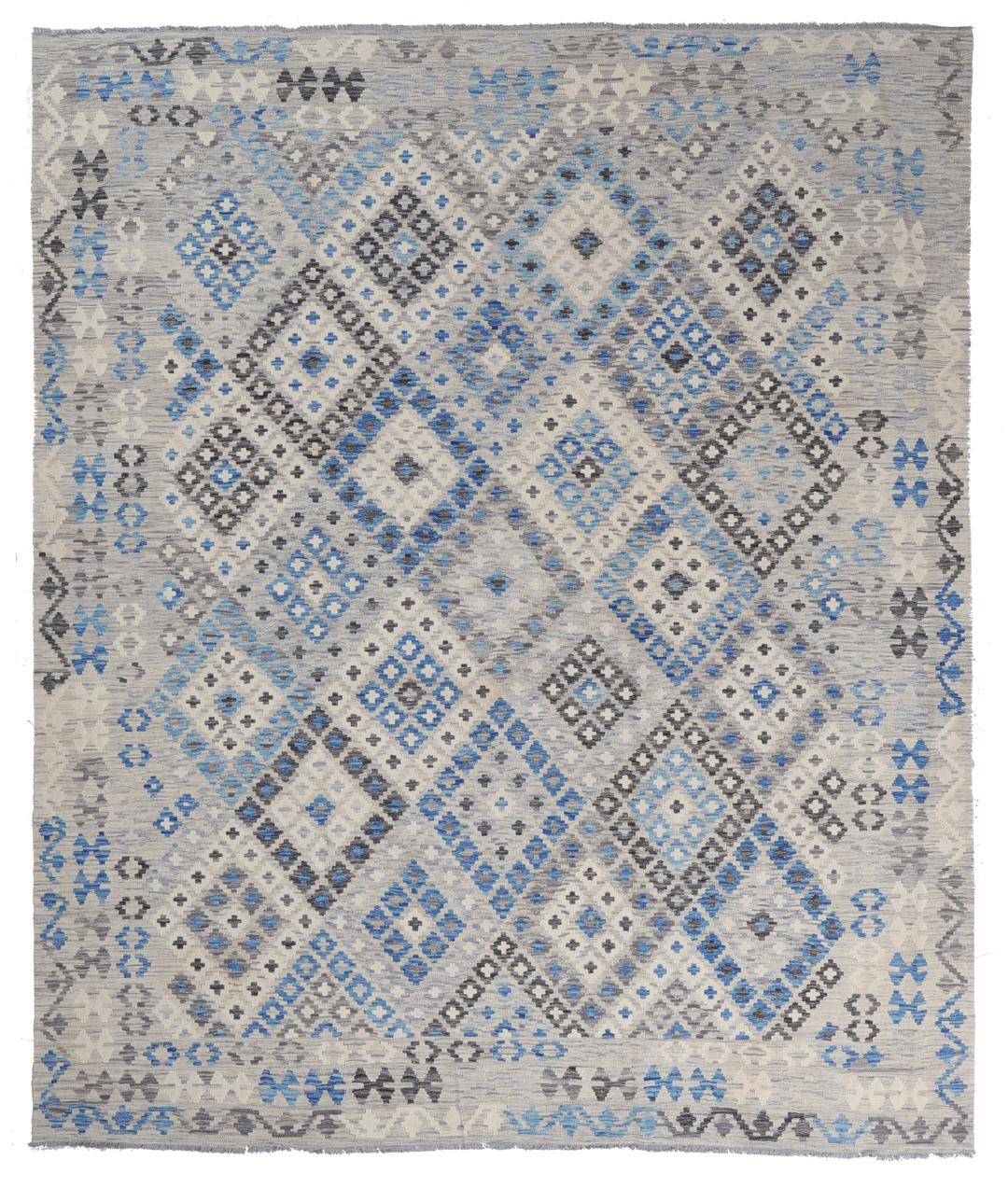
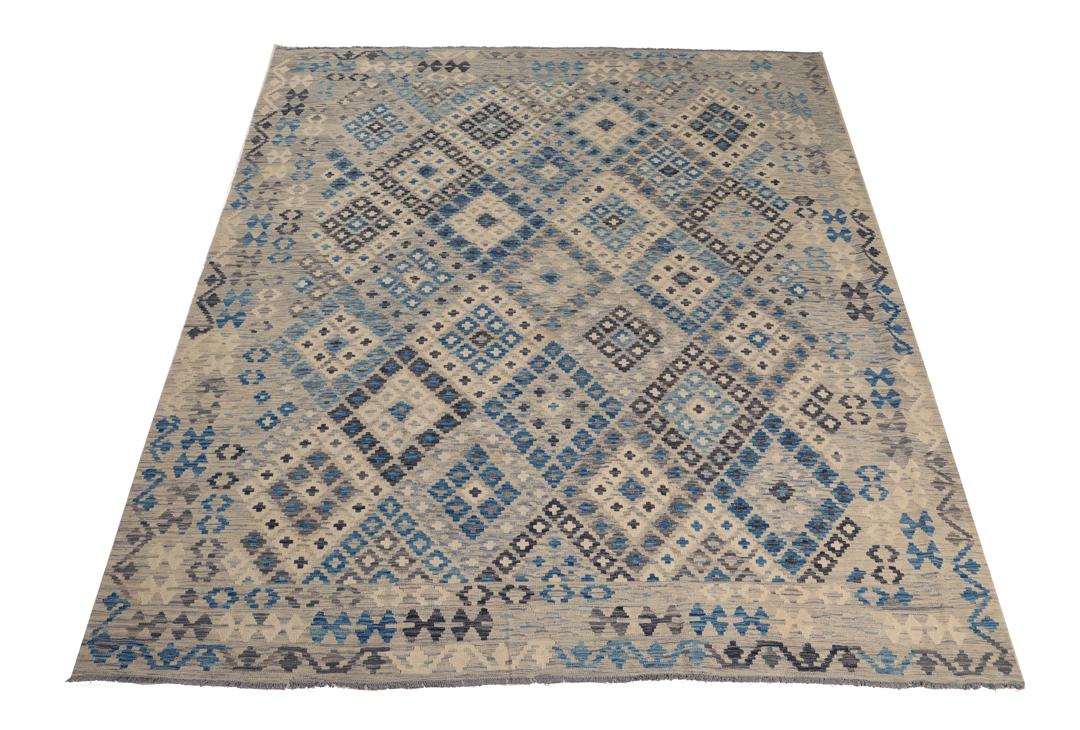
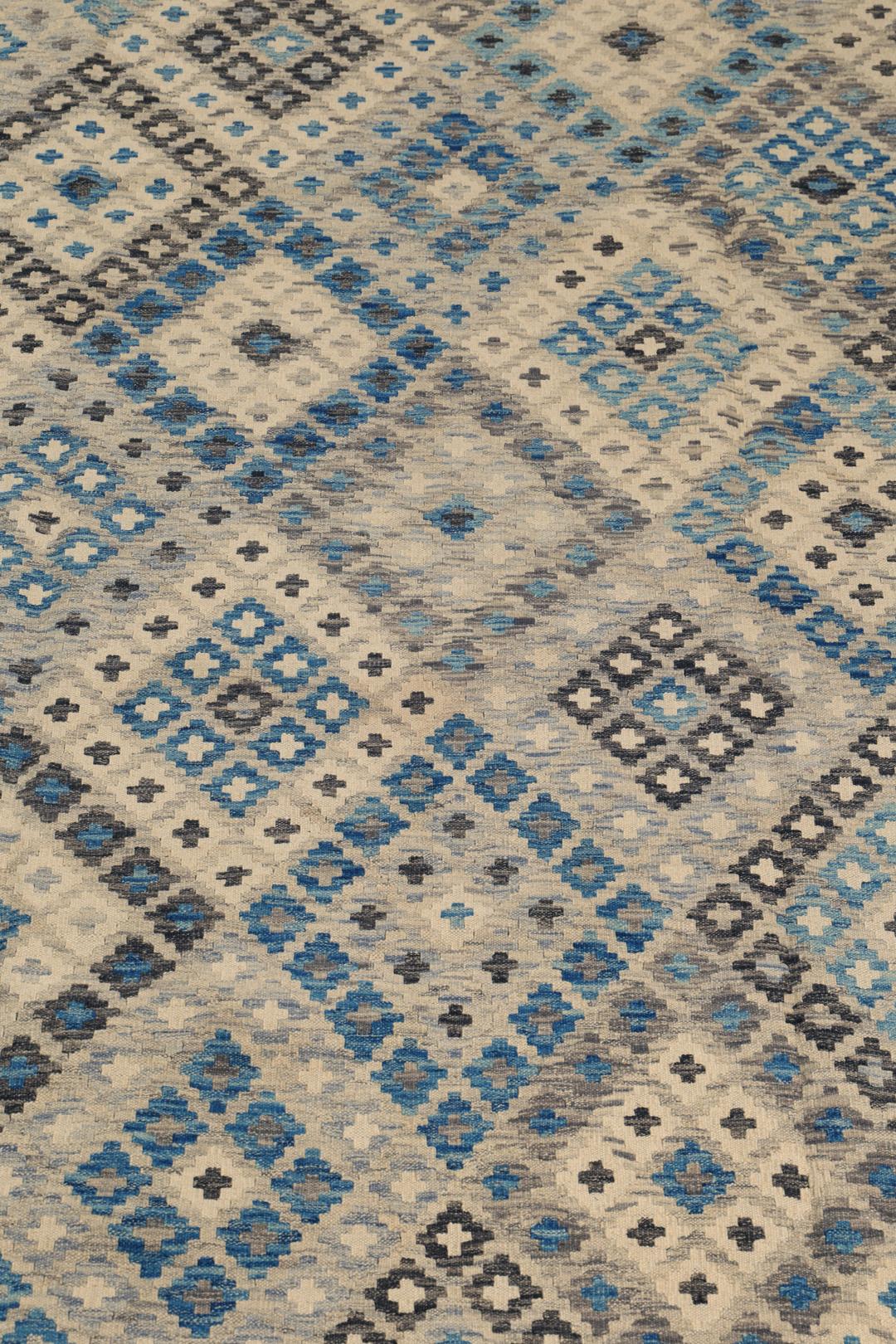
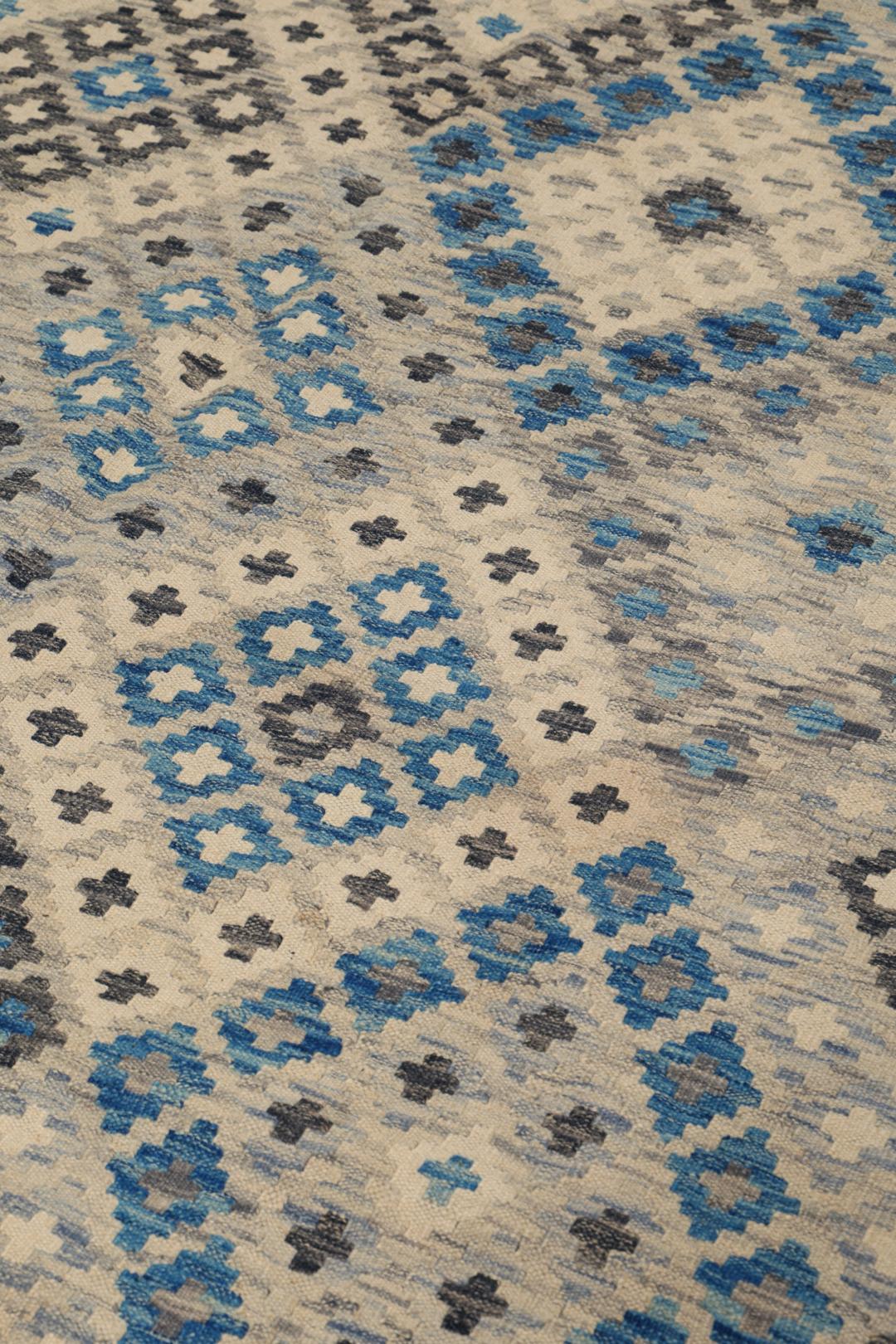
Visually, these rugs are defined by their geometric language. Traditional Afghan kilims often utilise diamonds, triangles, and stylized motifs that have been passed down through generations. The use of blue and grey in this specific piece offers a refined, modern interpretation of these ancient design codes, proving how well these historical motifs adapt to contemporary interior aesthetics.
Owning a hand-woven Afghan kilim is an investment in human skill and cultural continuity. Each piece is a testament to the artisan's ability to interpret traditional patterns while creating something uniquely suited to their personal expression. They are highly valued by collectors for their authenticity, their natural materials, and the way they bridge the gap between ancient nomadic utility and modern home comfort.