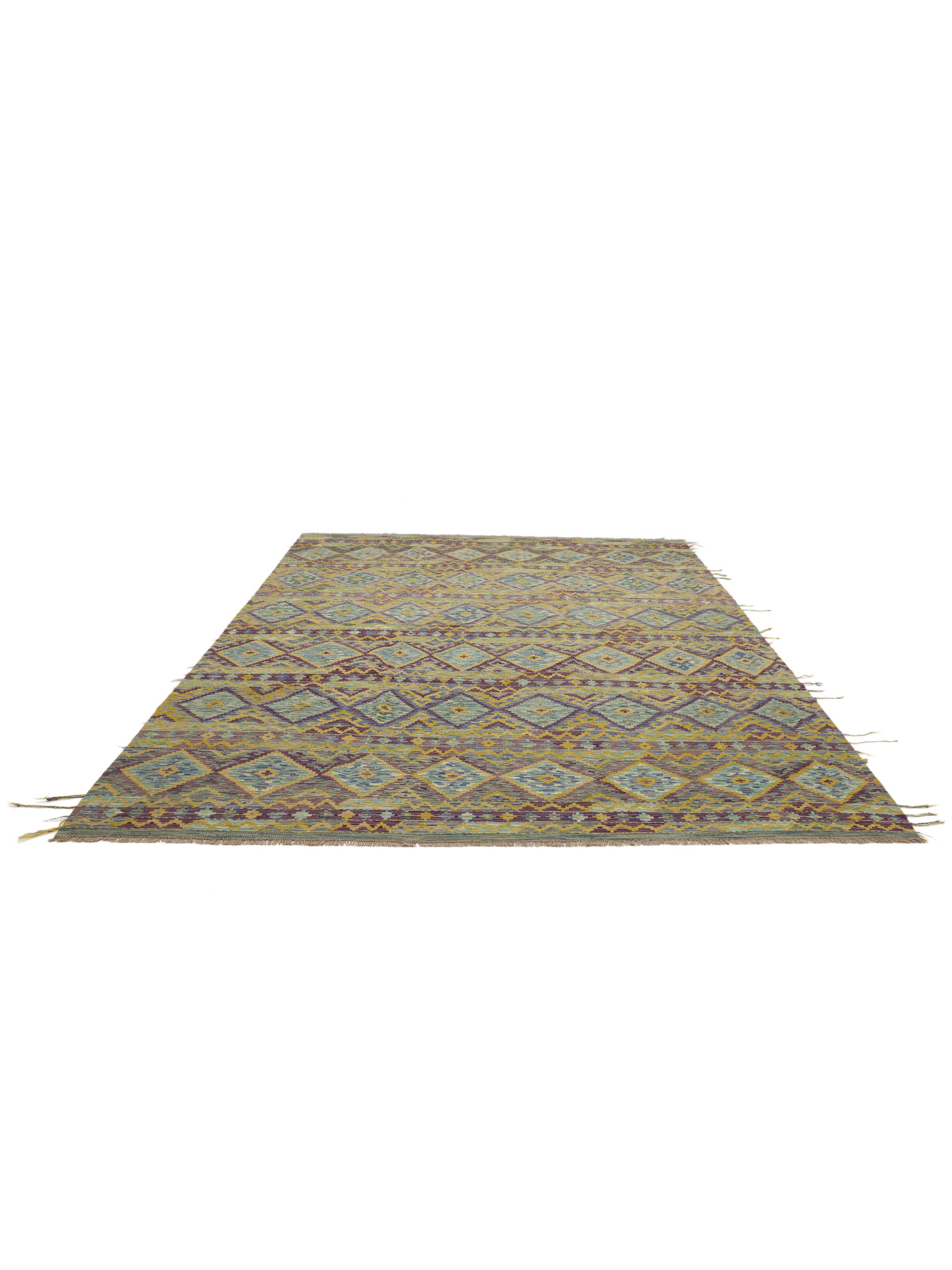
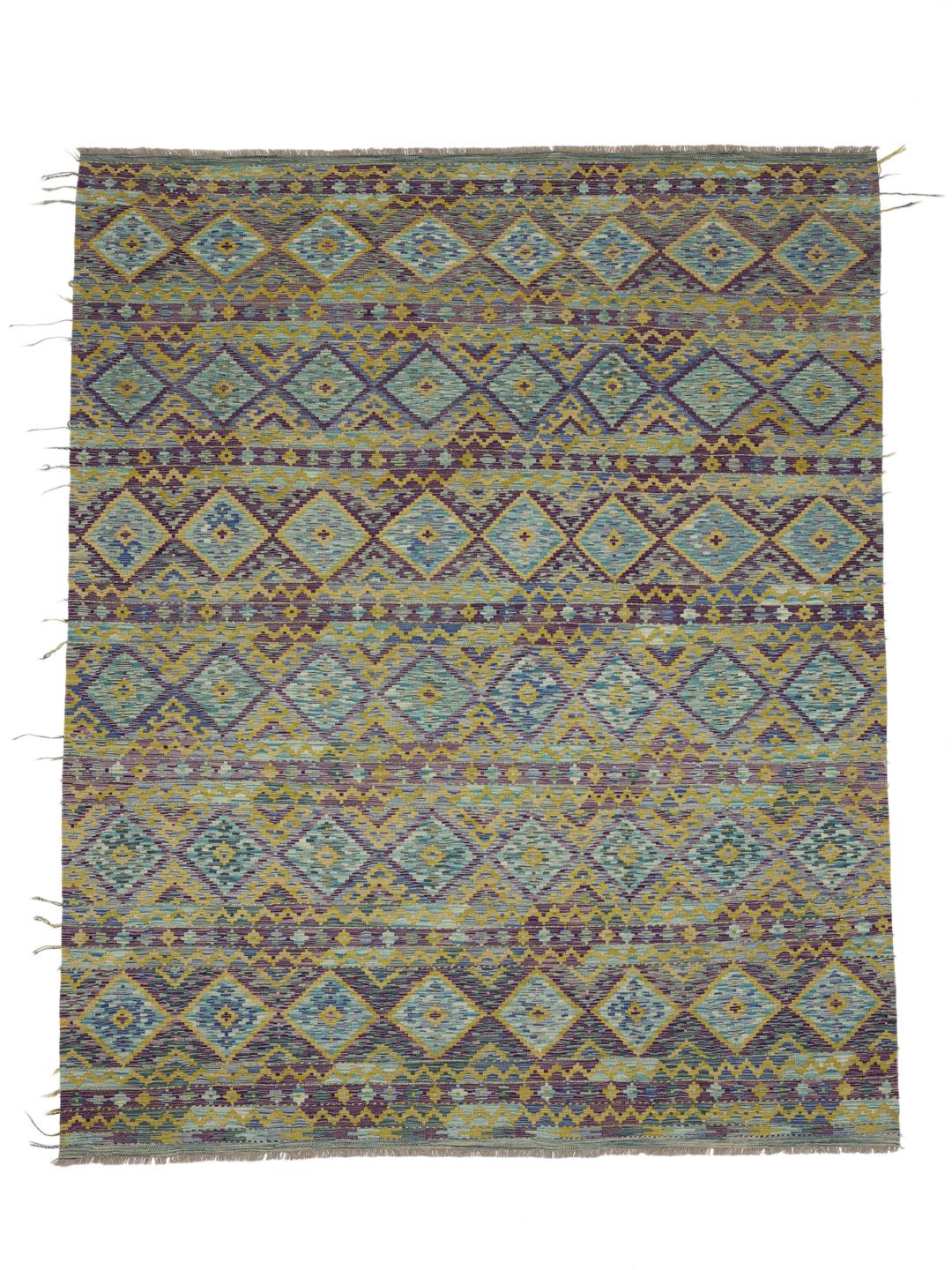
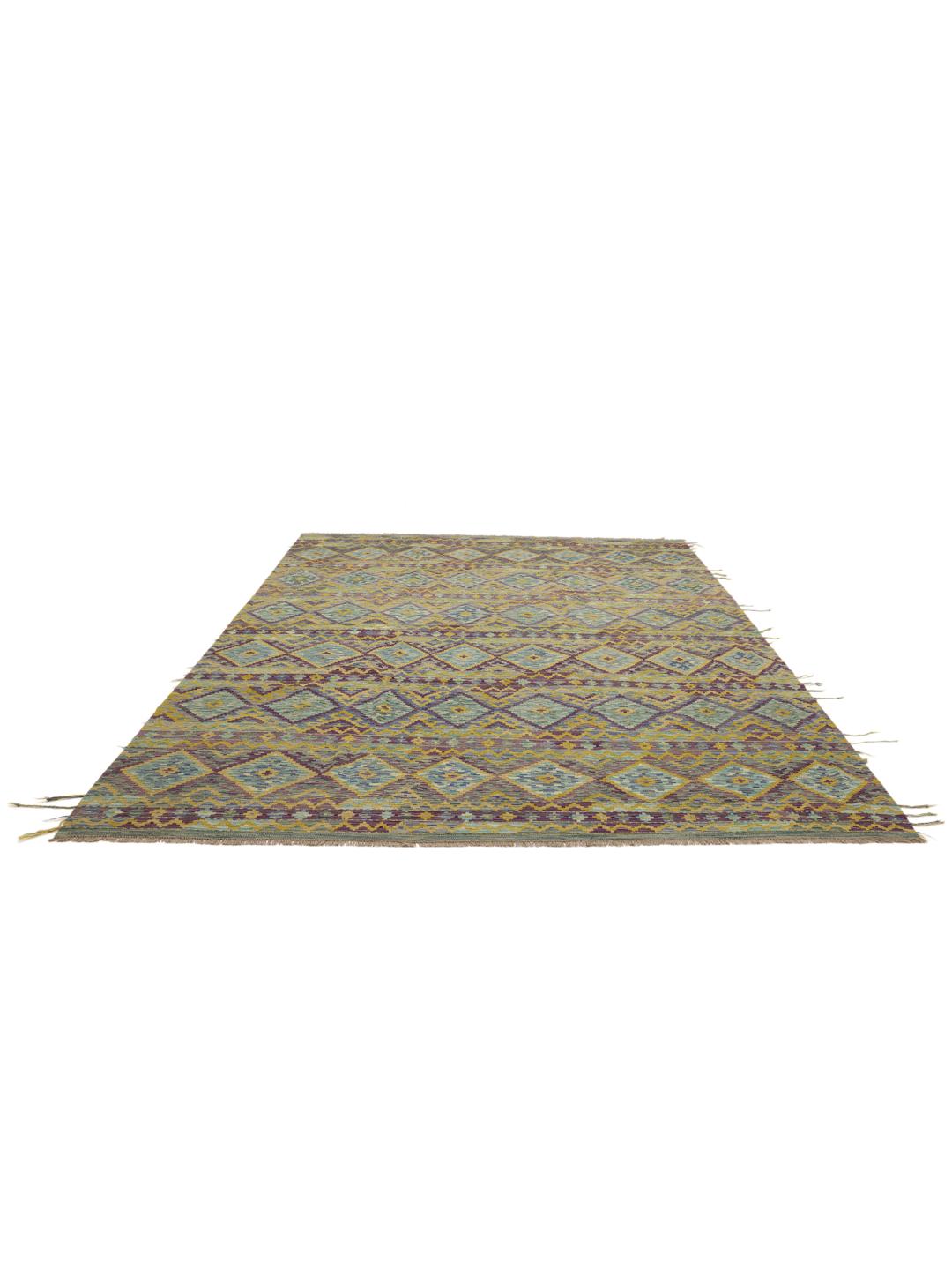
The Kelim tradition in Afghanistan is deeply rooted in the nomadic and semi-nomadic lifestyles of the region's diverse tribal groups. These flat-woven rugs have been a staple of Middle Eastern life for centuries, originally serving as functional items such as tent floor coverings, saddlebags, and storage sacks for migrating families.
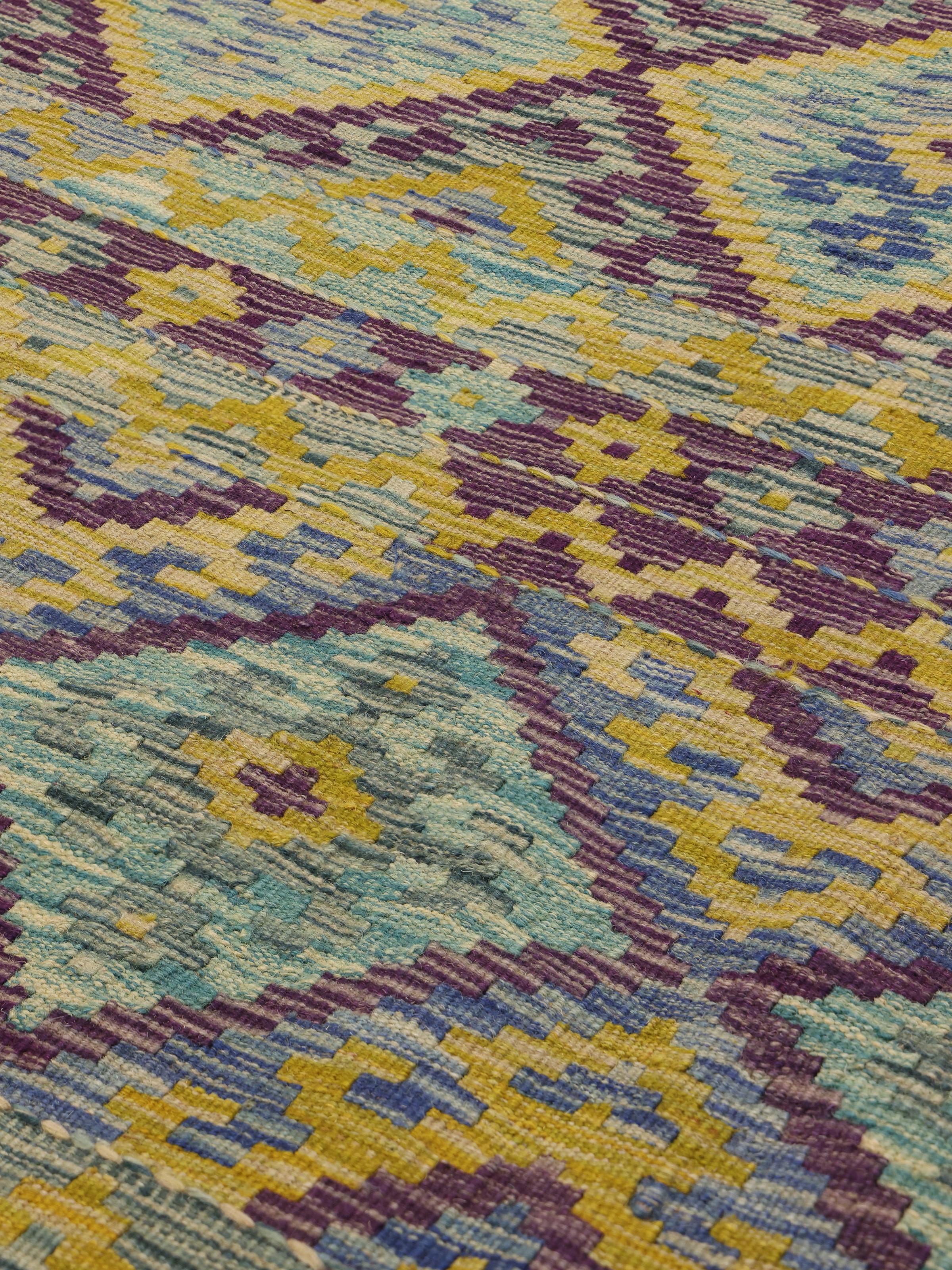
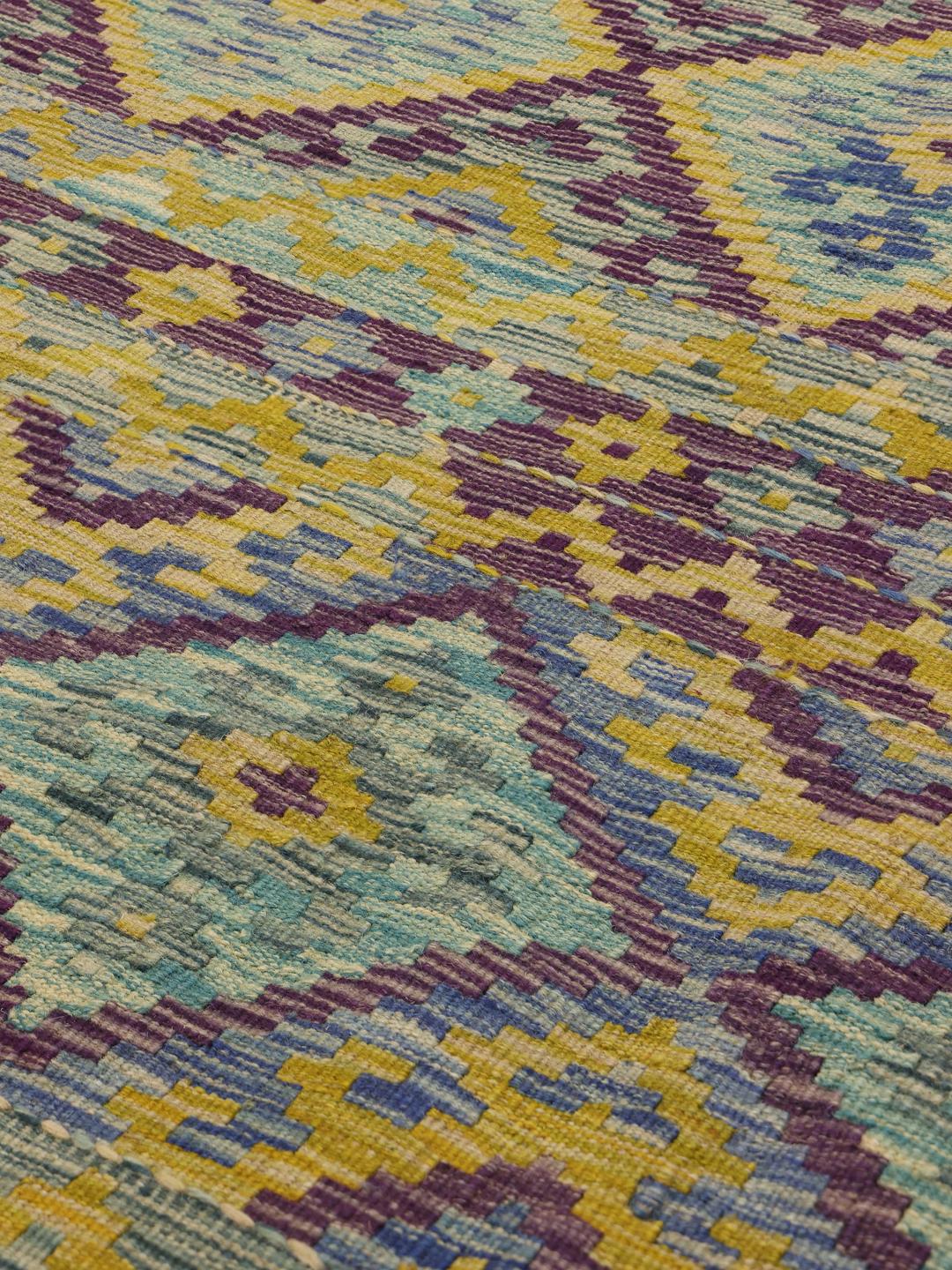
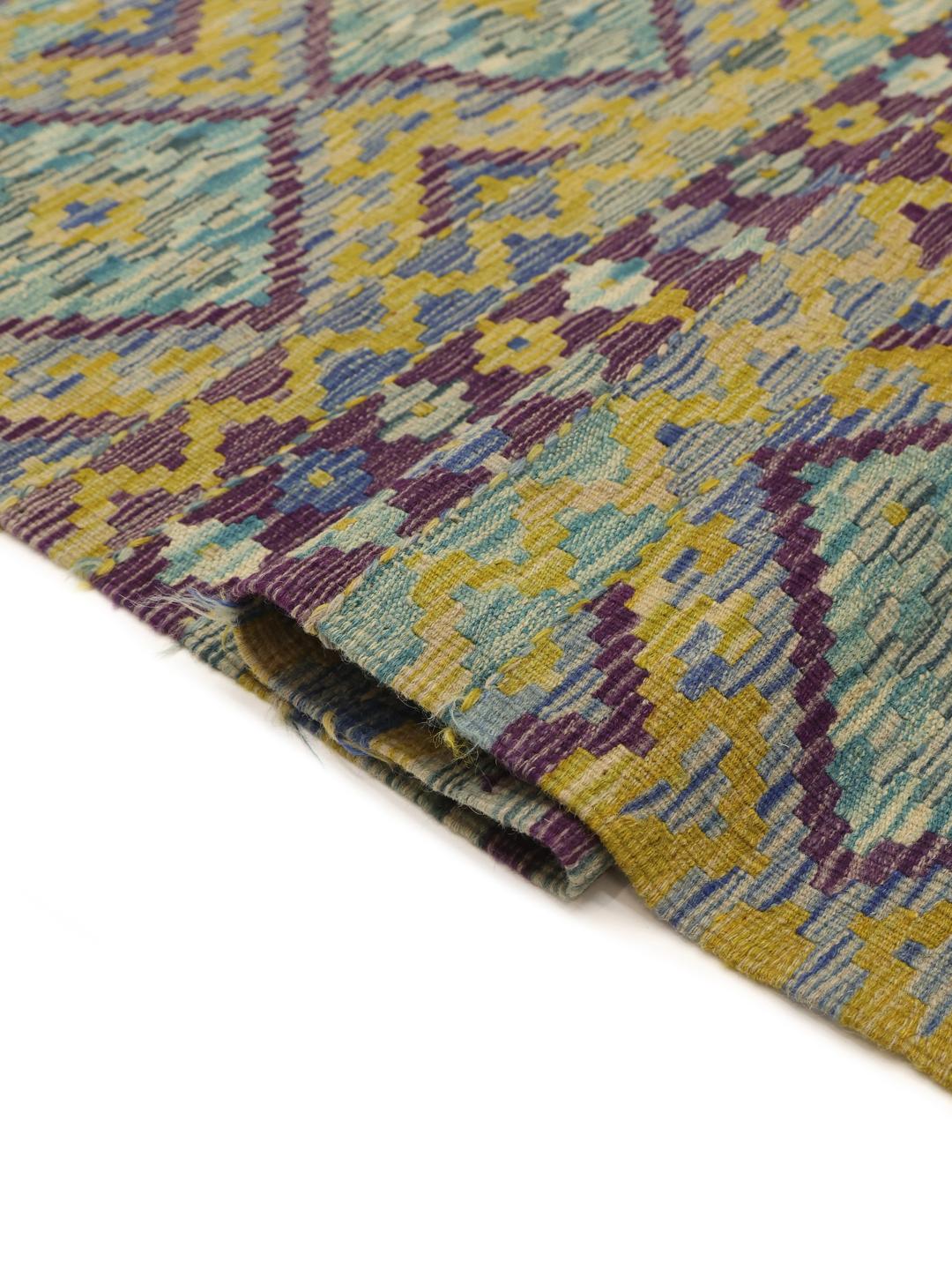
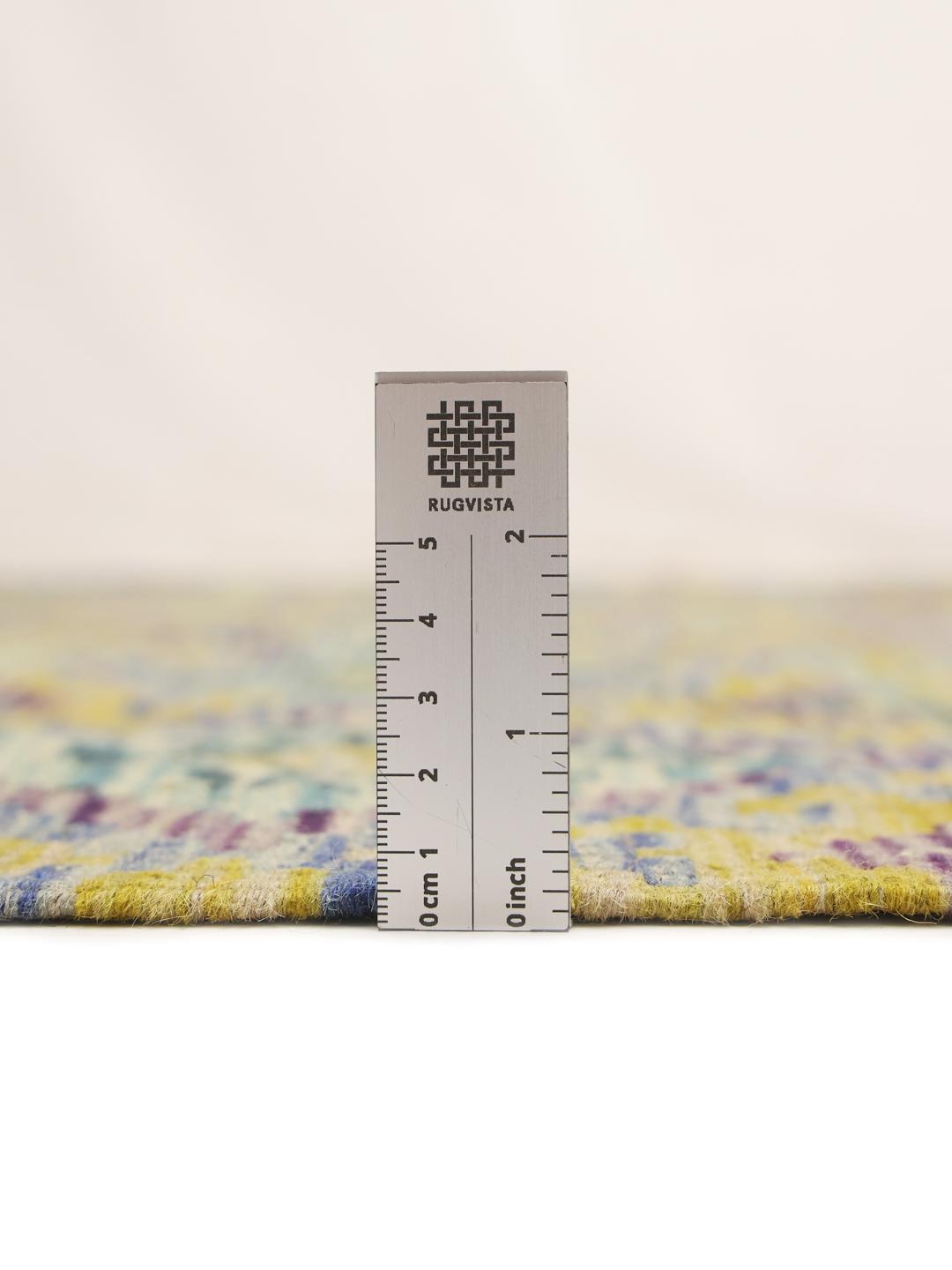
Technically, the term Kelim refers to a tapestry-weave construction where the weft threads are passed over and under the warp threads to create the design. This method is distinct because it lacks a pile, resulting in a lightweight yet incredibly sturdy fabric. The lack of pile emphasises the clarity of the geometric motifs, as the pattern is built directly into the structure of the weave itself.
The visual language of these rugs is defined by bold, geometric forms, often featuring diamonds, triangles, and intricate borders. These motifs are not merely decorative but are deeply symbolic, often reflecting the natural environment or the spiritual beliefs of the weaving community. The use of vibrant, natural-inspired hues is a hallmark of this tradition, designed to bring life and character into the often-harsh environments of the high plateaus.
Collecting these rugs is an investment in cultural history. Each piece acts as a vessel for traditional knowledge passed down through generations of artisans. To own an Afghan Kelim is to appreciate the resilience and creativity of the people who maintain these ancient practices, ensuring that this legacy of hand-woven artistry continues to thrive in modern homes.