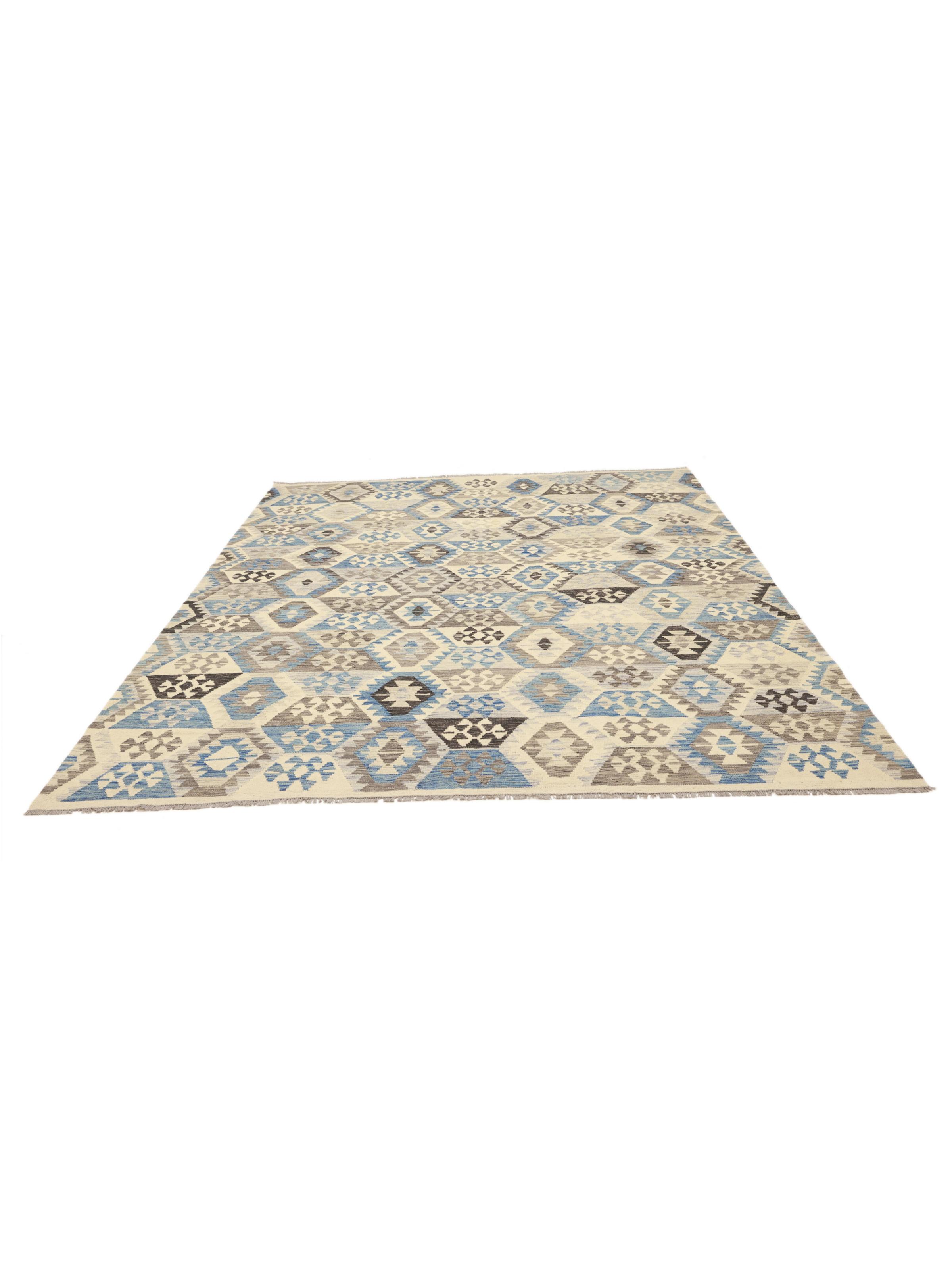
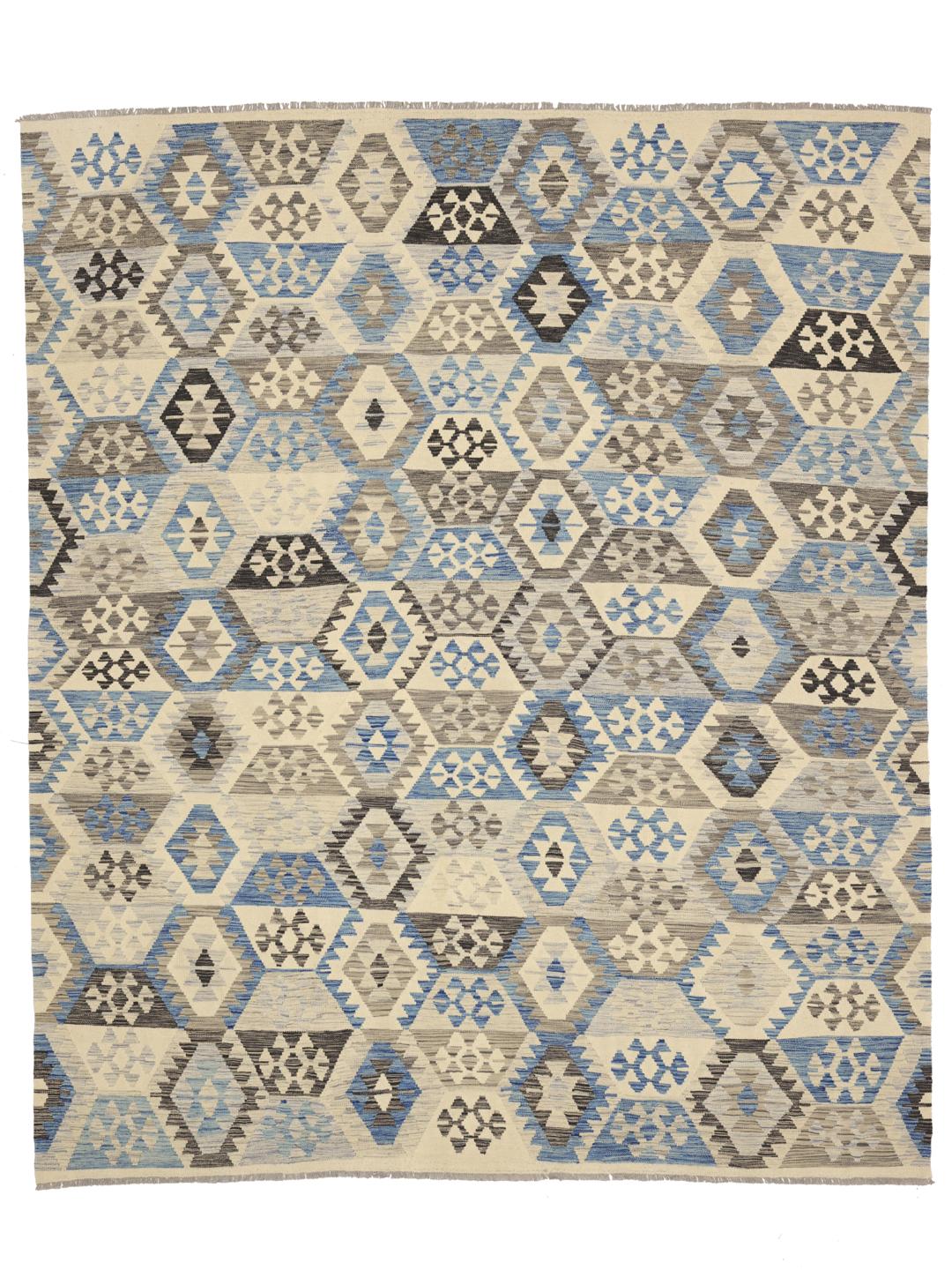
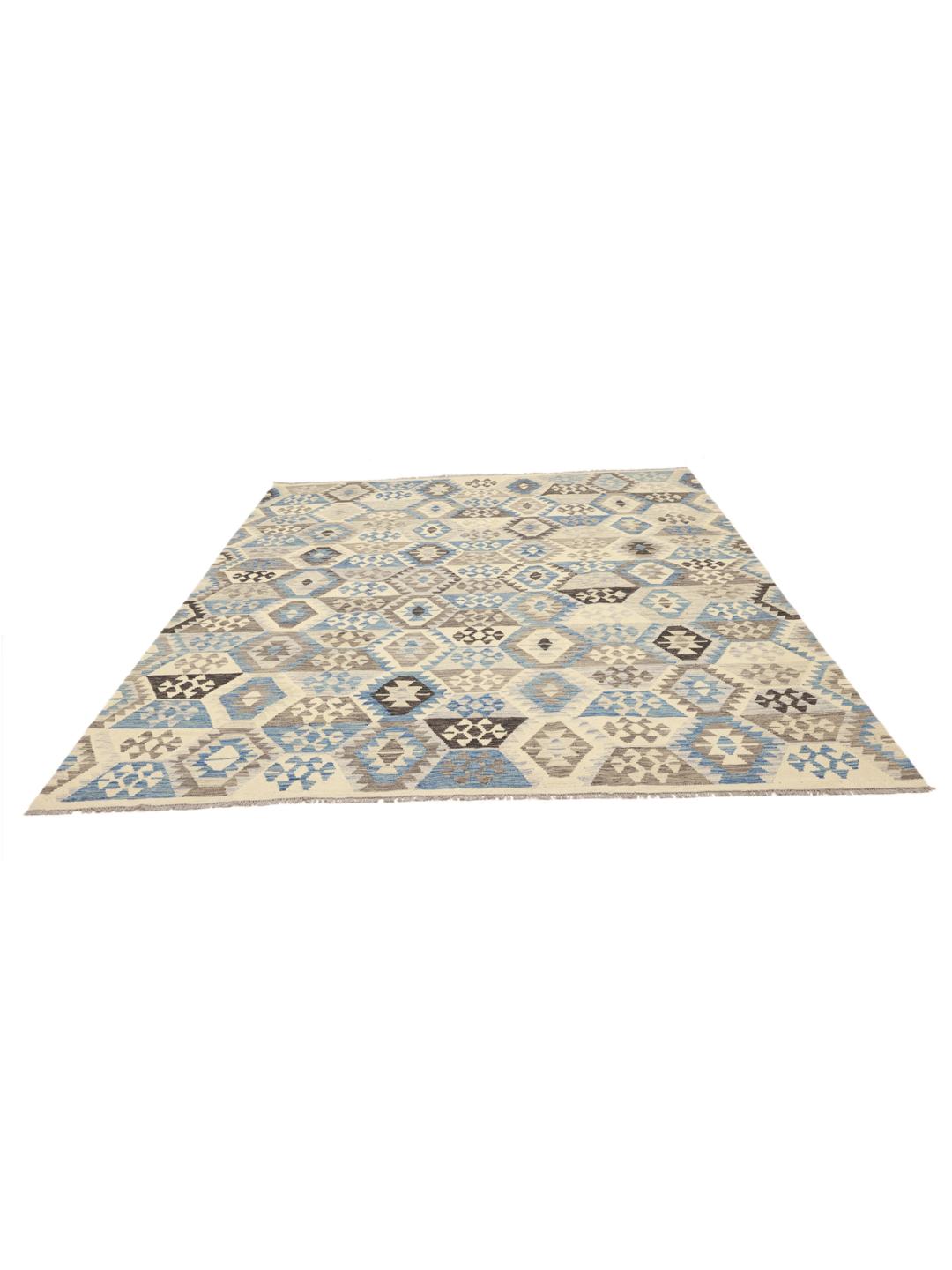
The Kelim tradition is deeply rooted in the nomadic cultures of the Middle East and Central Asia. These flat-woven textiles were originally created by tribal groups for practical use as floor coverings, blankets, or wall hangings, serving as essential elements of daily life that were easily portable during seasonal migrations.
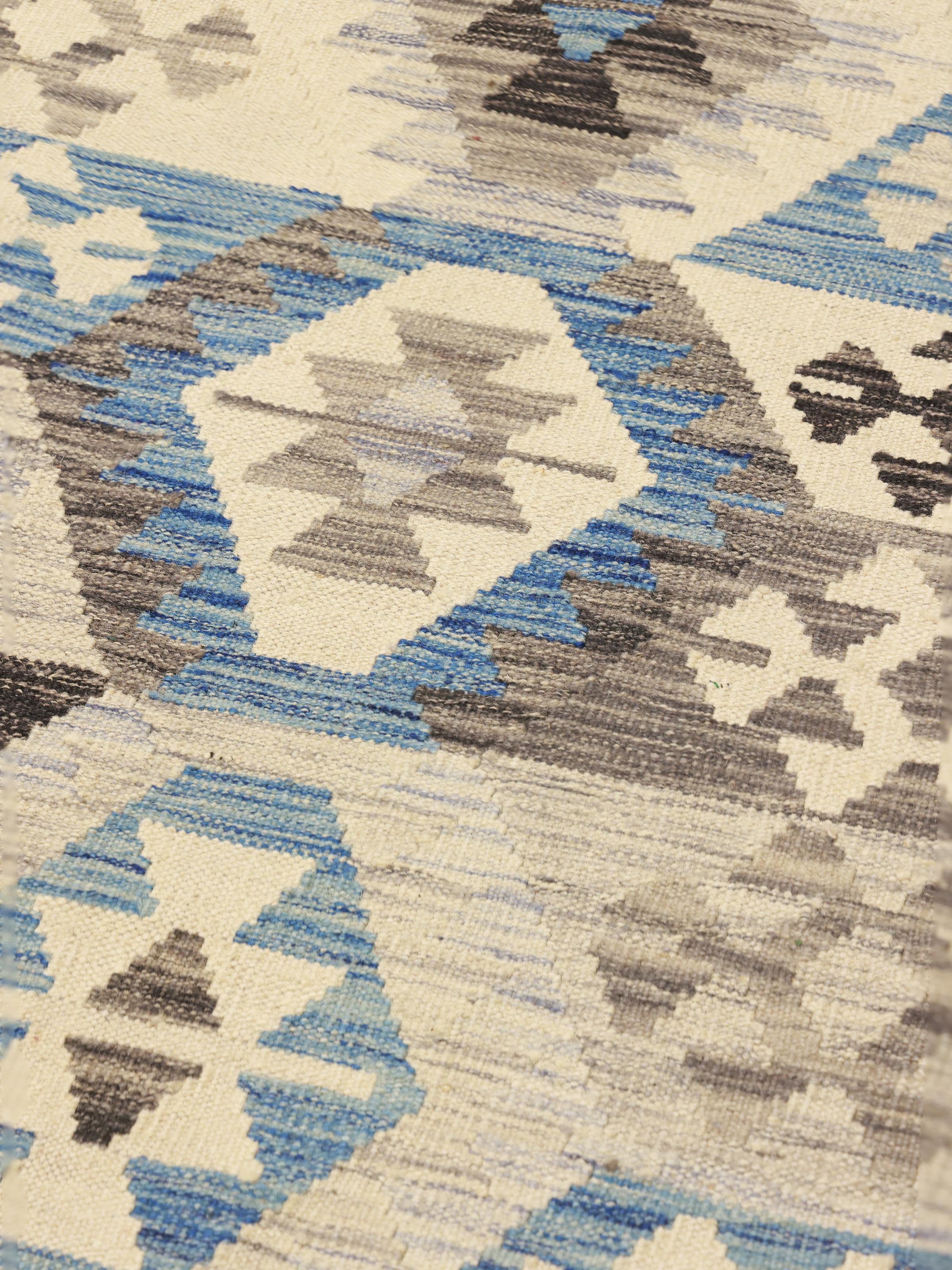
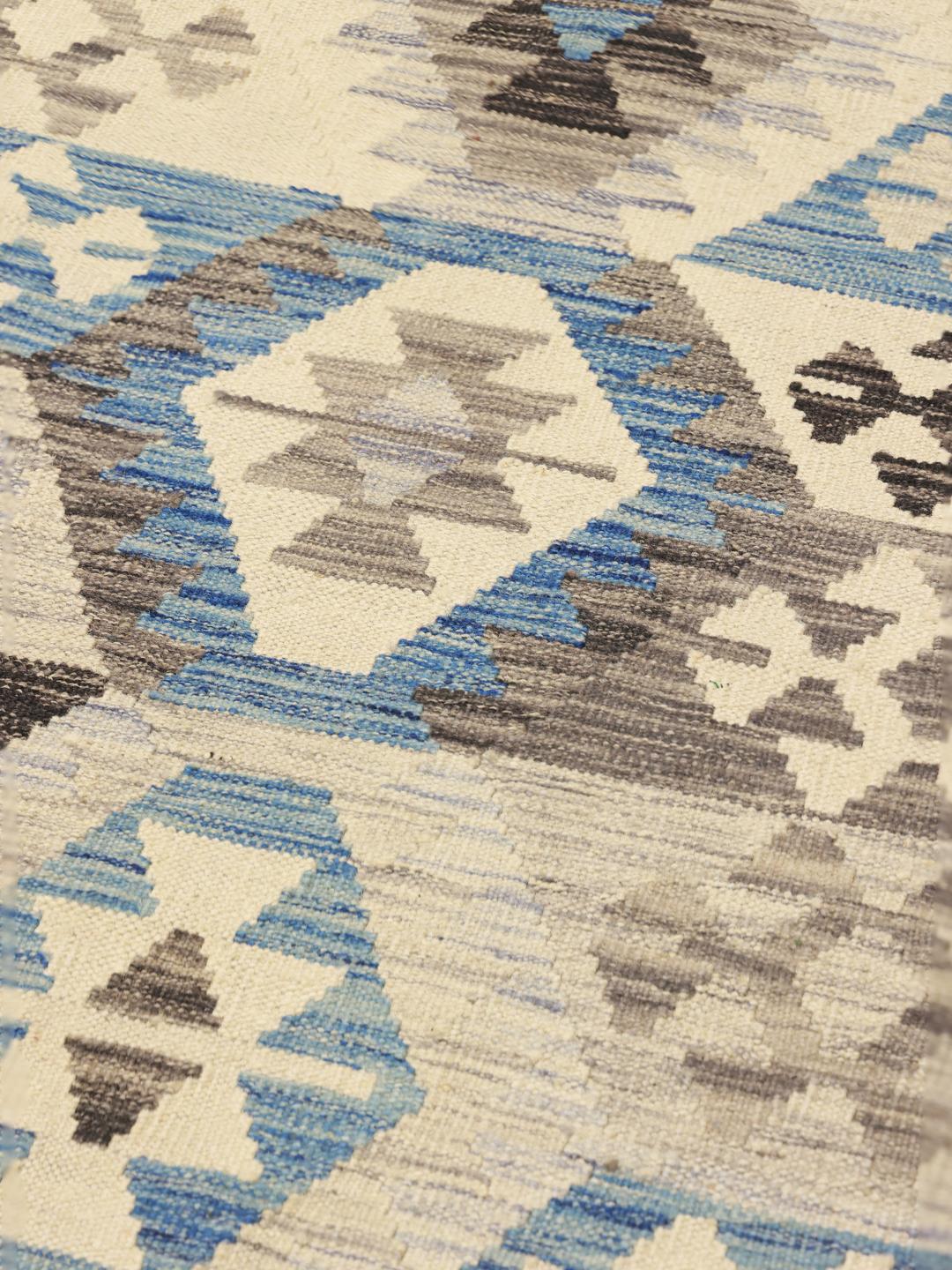
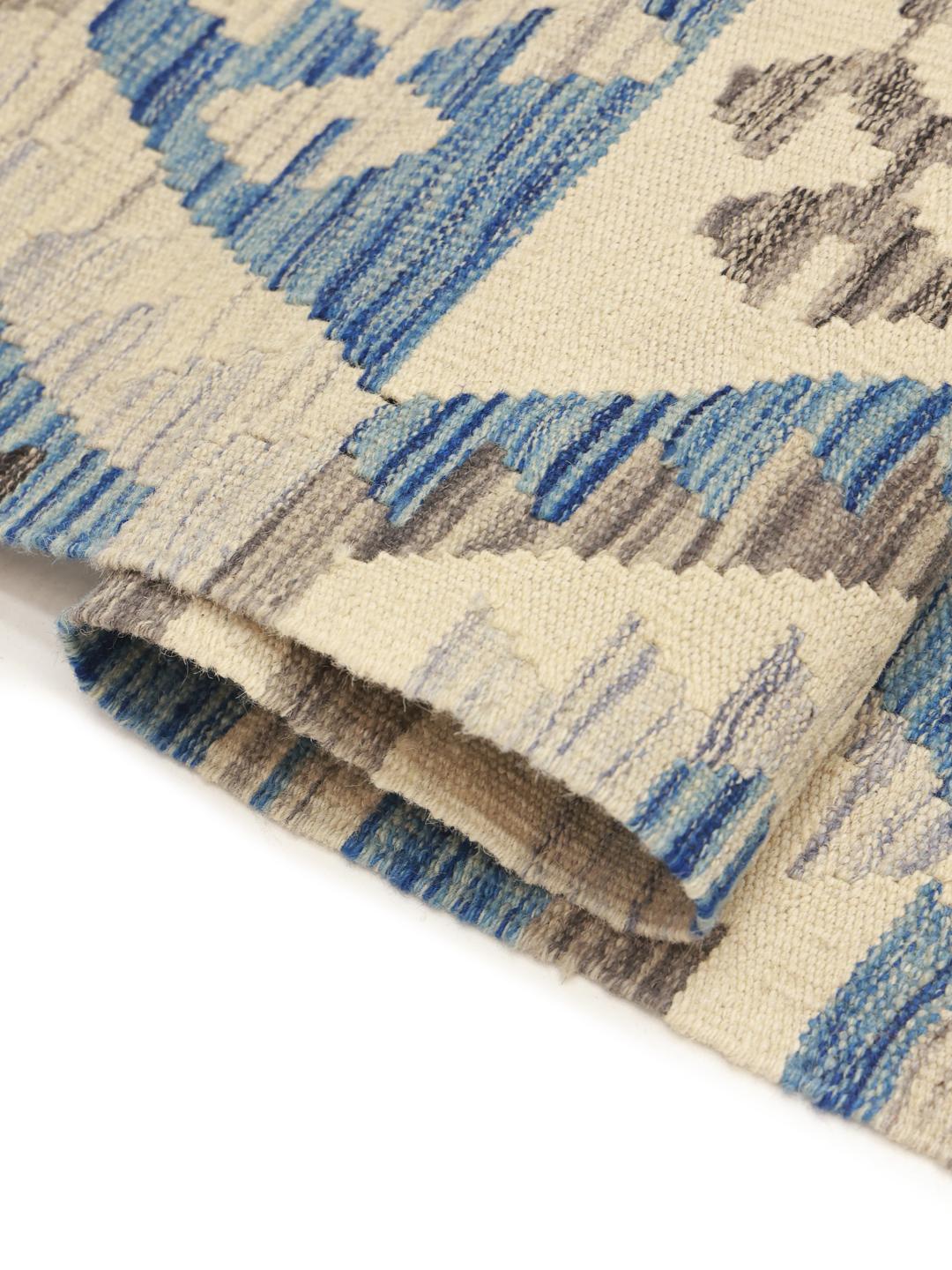
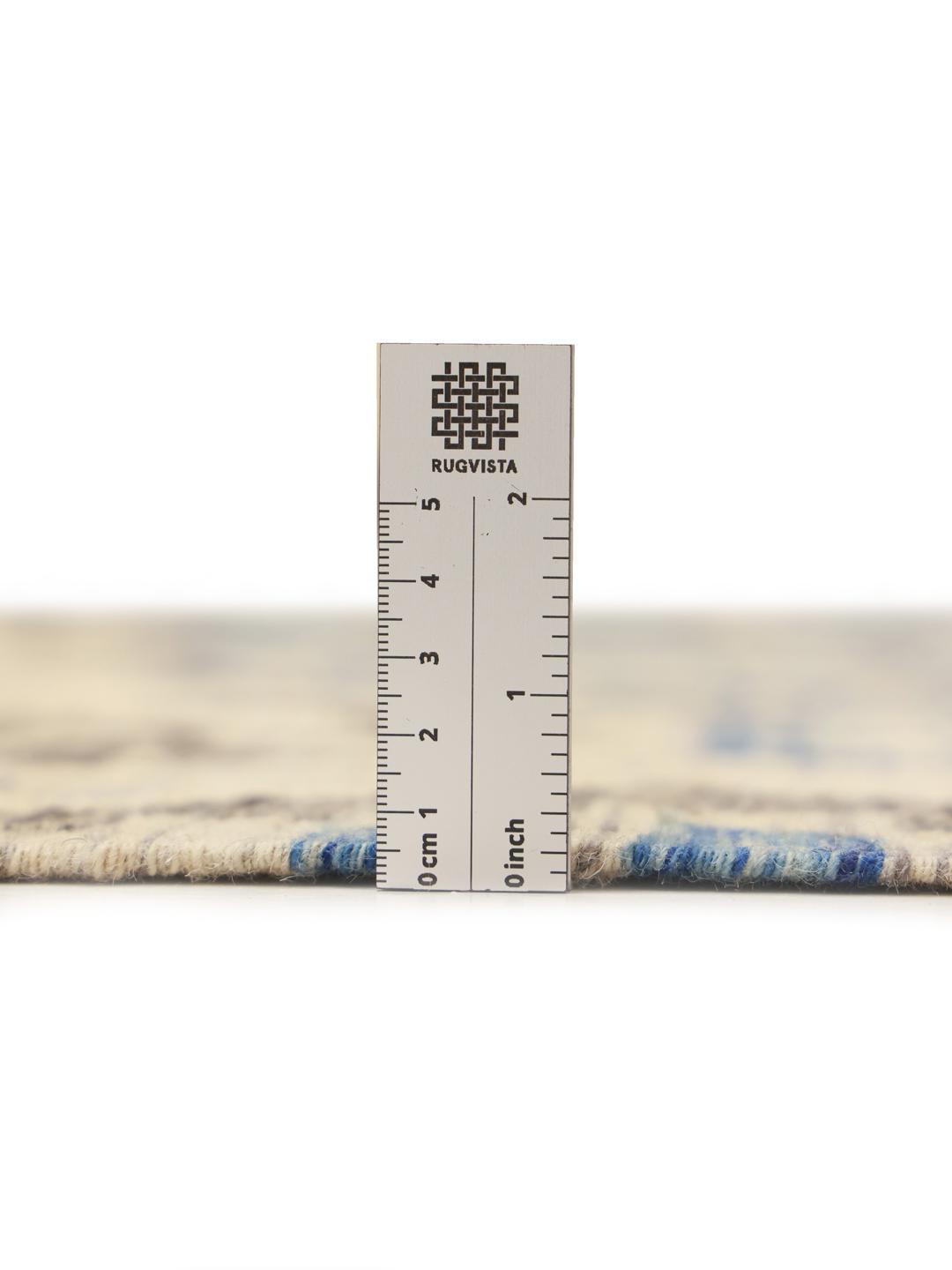
The term 'Kelim' refers specifically to the tapestry-weave technique where the weft threads are pulled tightly to cover the warp threads entirely. This method produces a thin, durable, and reversible textile without a pile, which is highly valued for its clean lines and the sharpness of its geometric motifs.
Signature design elements in Afghan Kelims often feature bold, repeating geometric shapes, diamonds, and tribal symbols that hold deep cultural significance. The colour palettes are traditionally derived from natural dyes, reflecting the landscape and materials available to the weavers in their specific regions.
Owning an Afghan Kelim is more than just acquiring a rug; it is a way to preserve a piece of living history. These rugs are highly sought after by collectors for their authenticity, the skill required to maintain tension and pattern symmetry by hand, and their ability to bridge the gap between ancient nomadic art and contemporary home design.