Afghan Kelims are deeply rooted in the nomadic traditions of the Middle East, where weaving was a fundamental life skill passed down through generations. These rugs were historically created by tribal groups for practical use in tents, serving as floor coverings, blankets, and storage bags. The migration of these weaving techniques across the region has led to the distinct aesthetic we see today, where ancient motifs are preserved in contemporary, high-quality wool pieces.
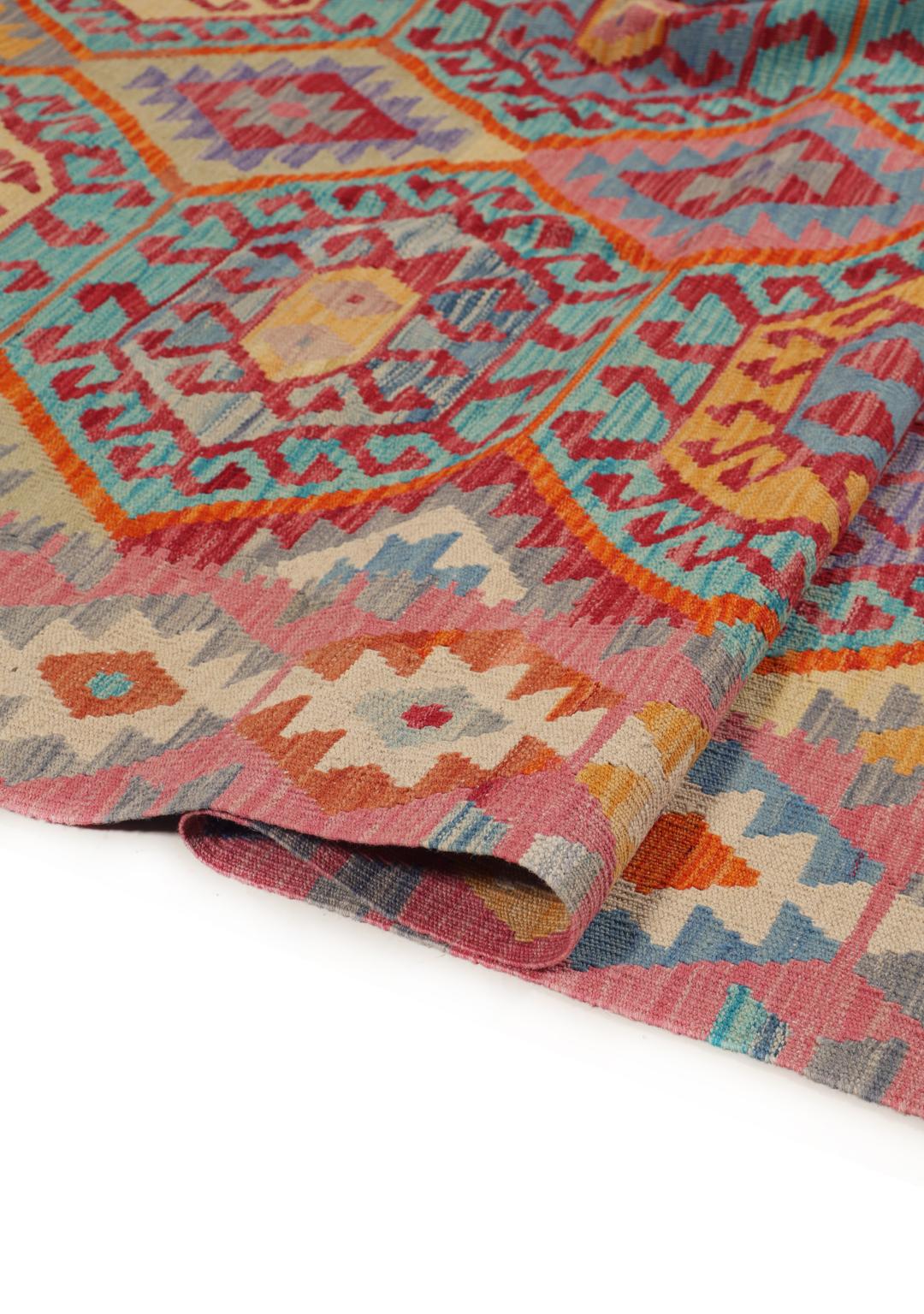
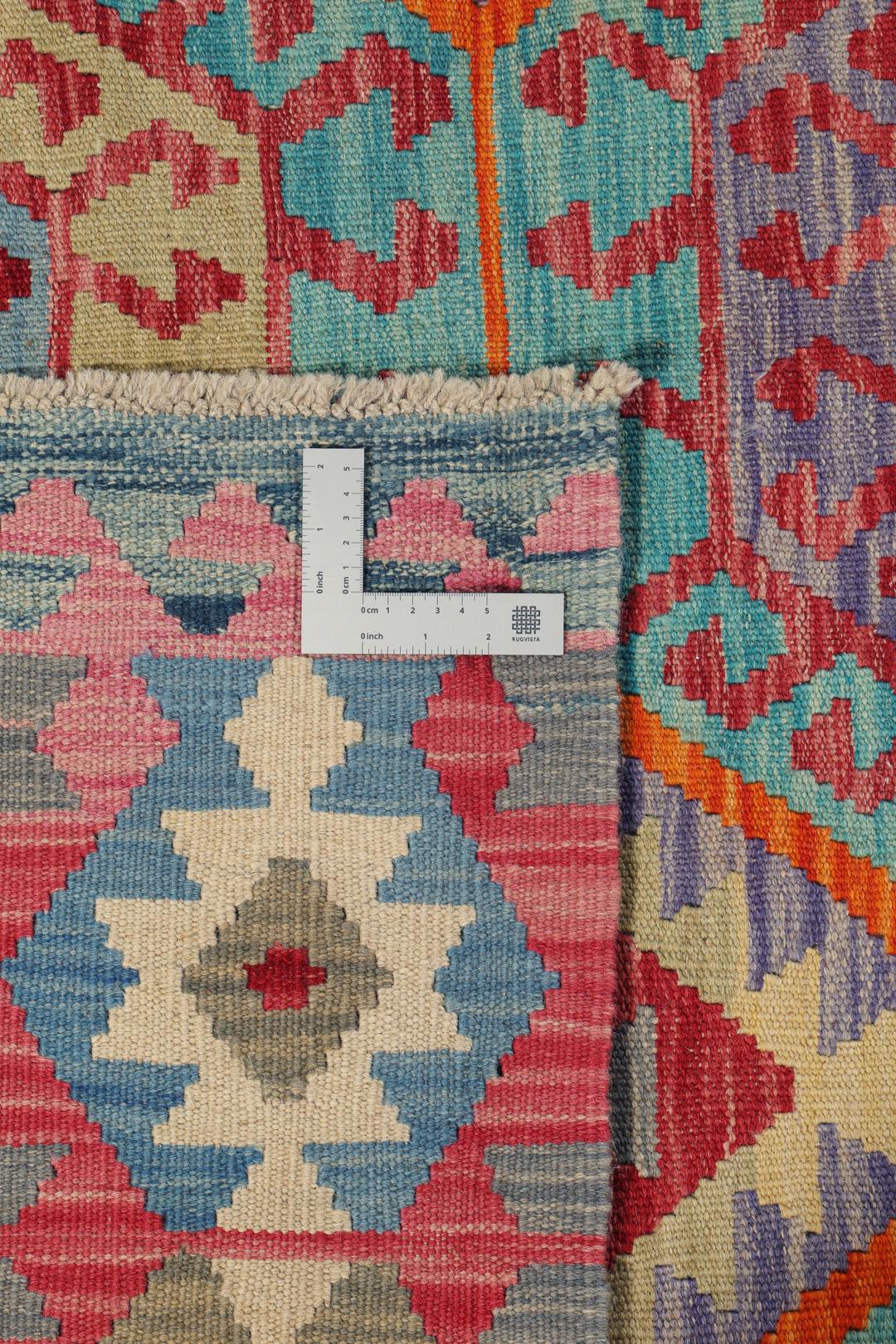
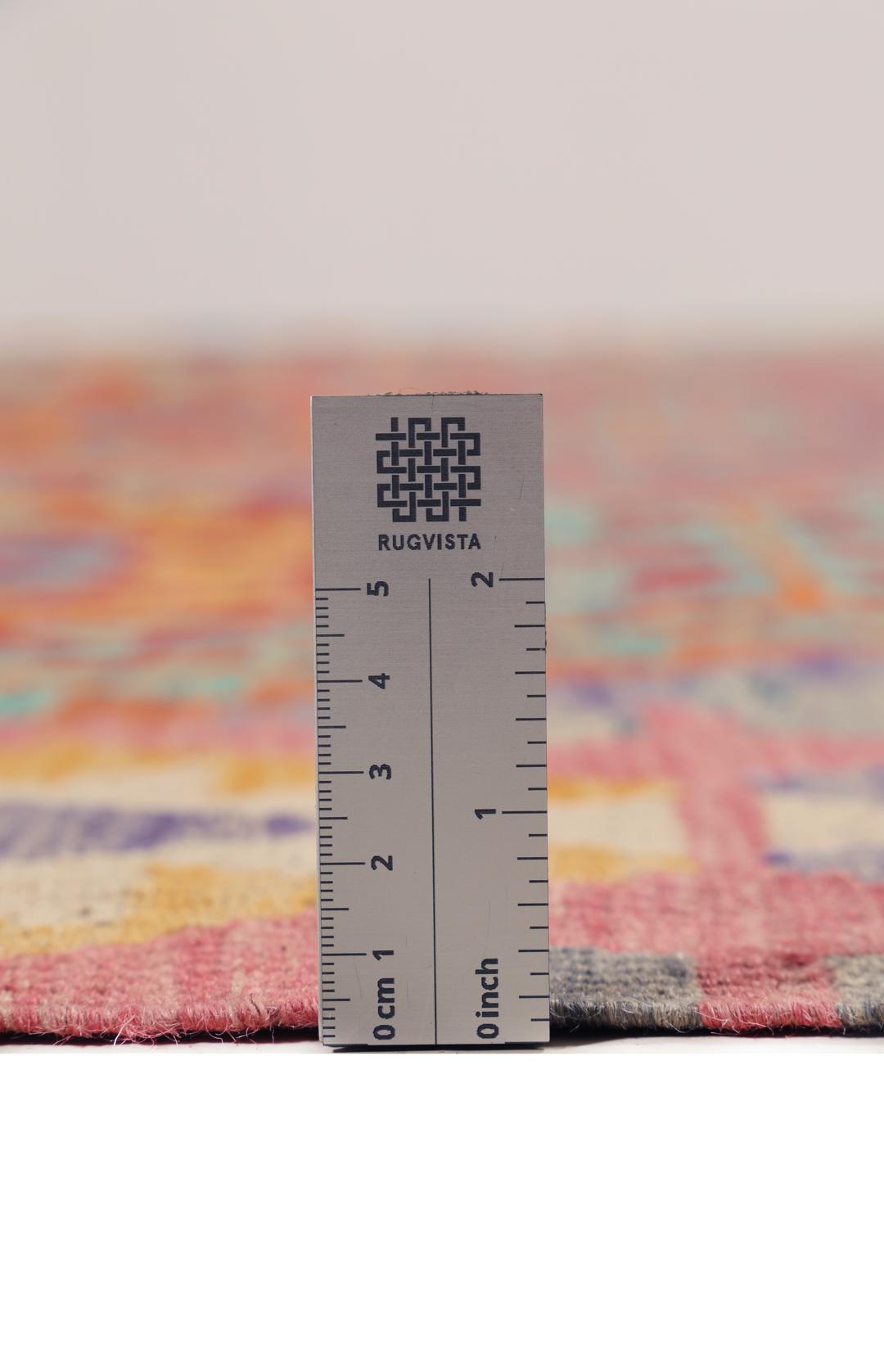
The term 'Kelim' refers to the flat-weaving technique where there is no pile. This method is technically demanding, as the weaver must manage the tension of the warp and weft threads perfectly to create a durable, reversible fabric. This construction results in a thinner, lighter rug that is incredibly versatile and renowned for its tight, clean finish and longevity.
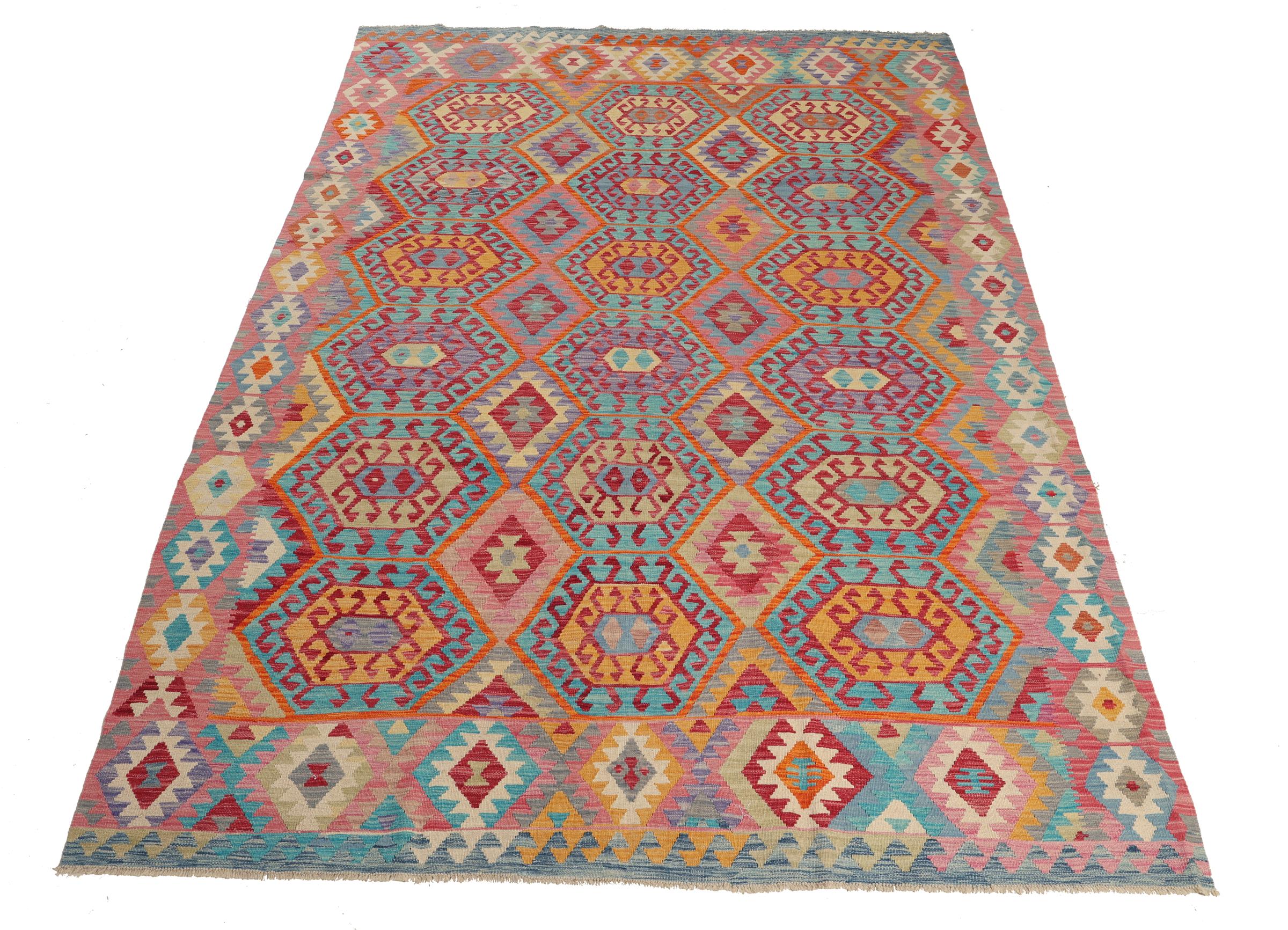
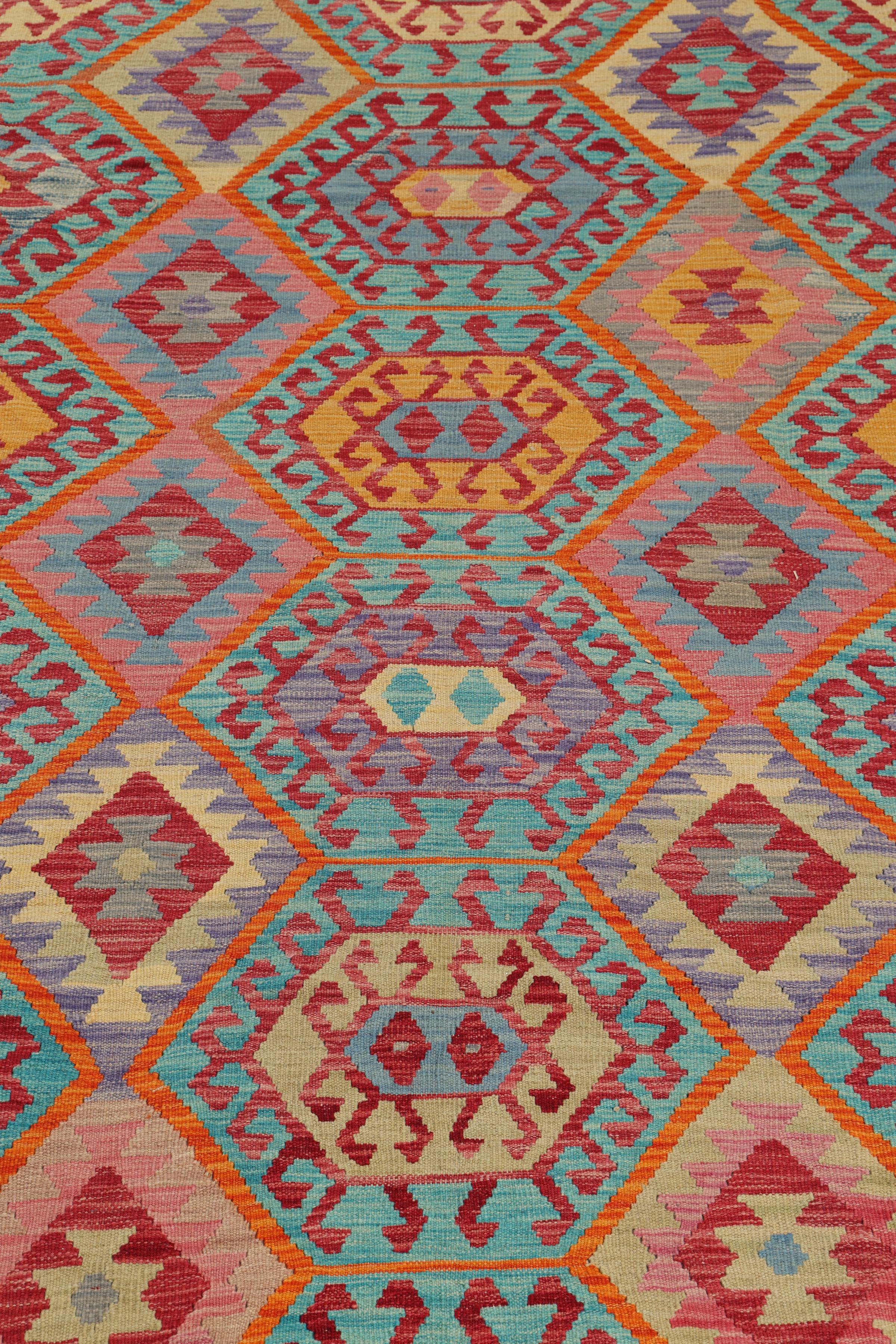
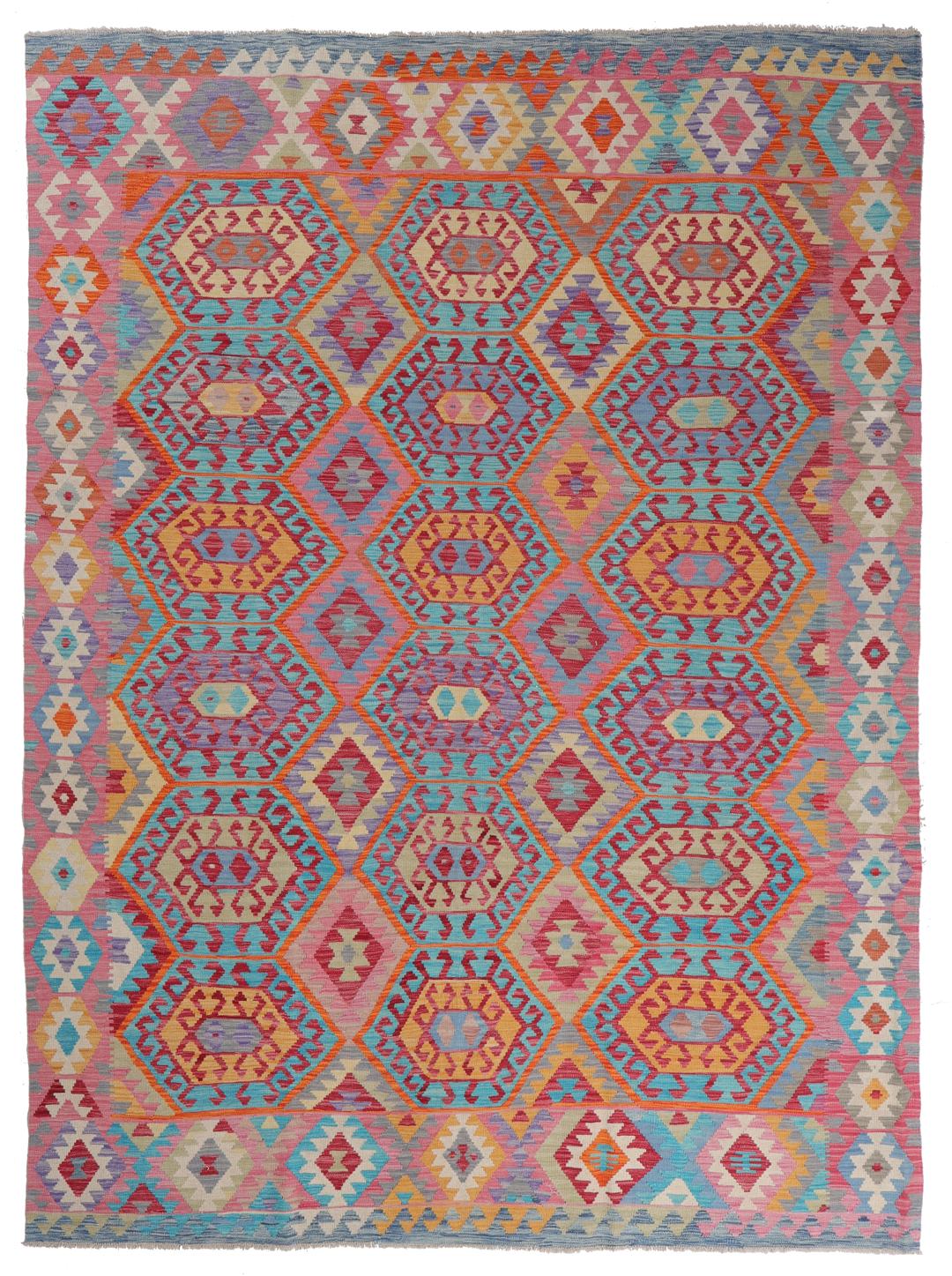
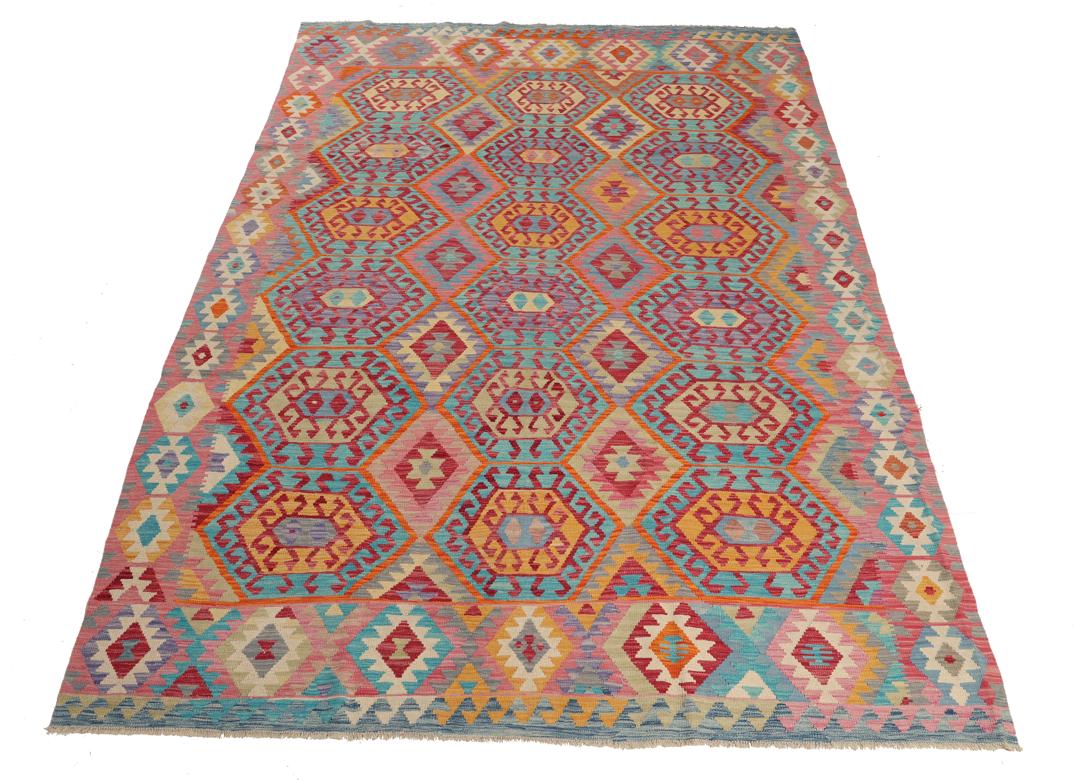
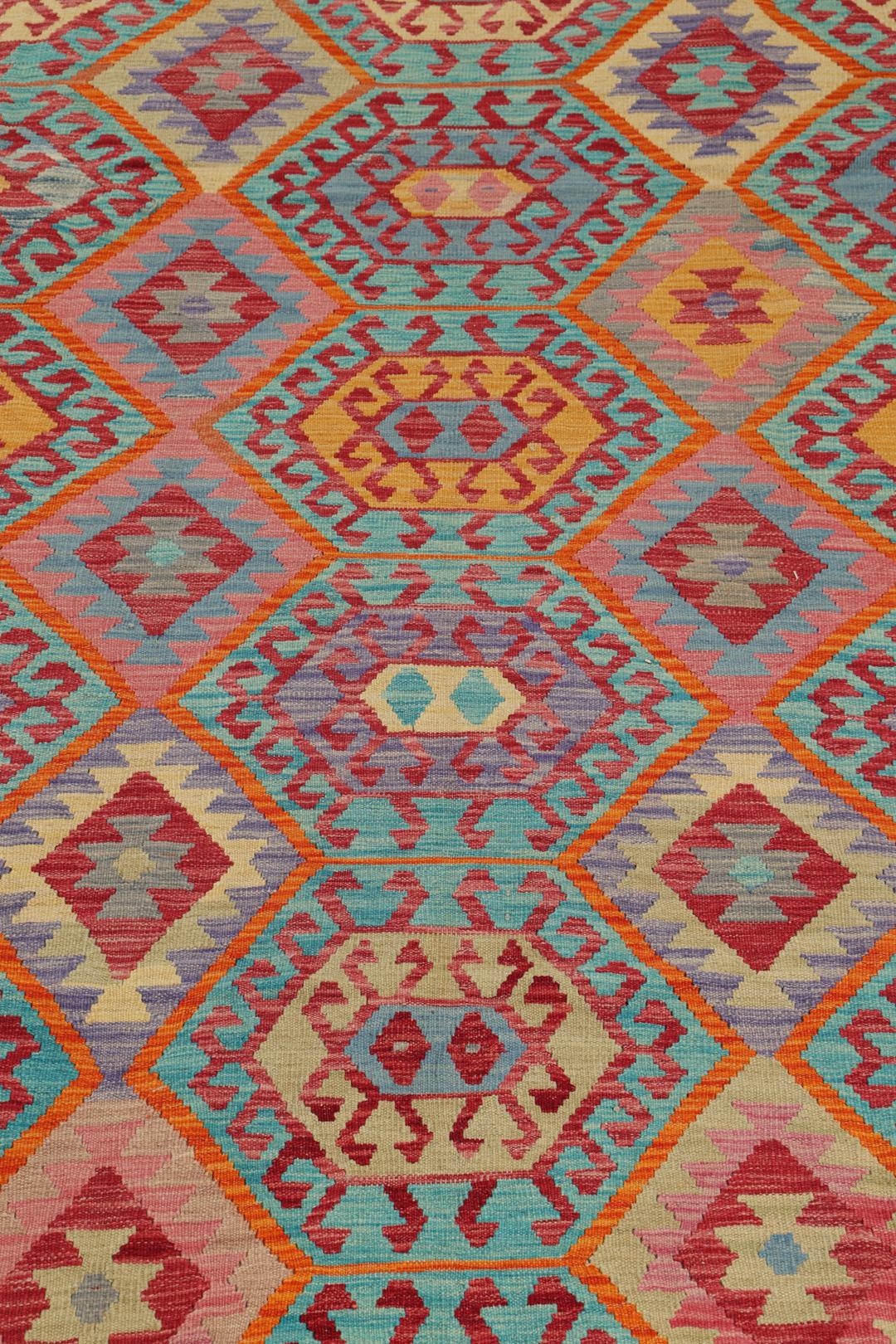
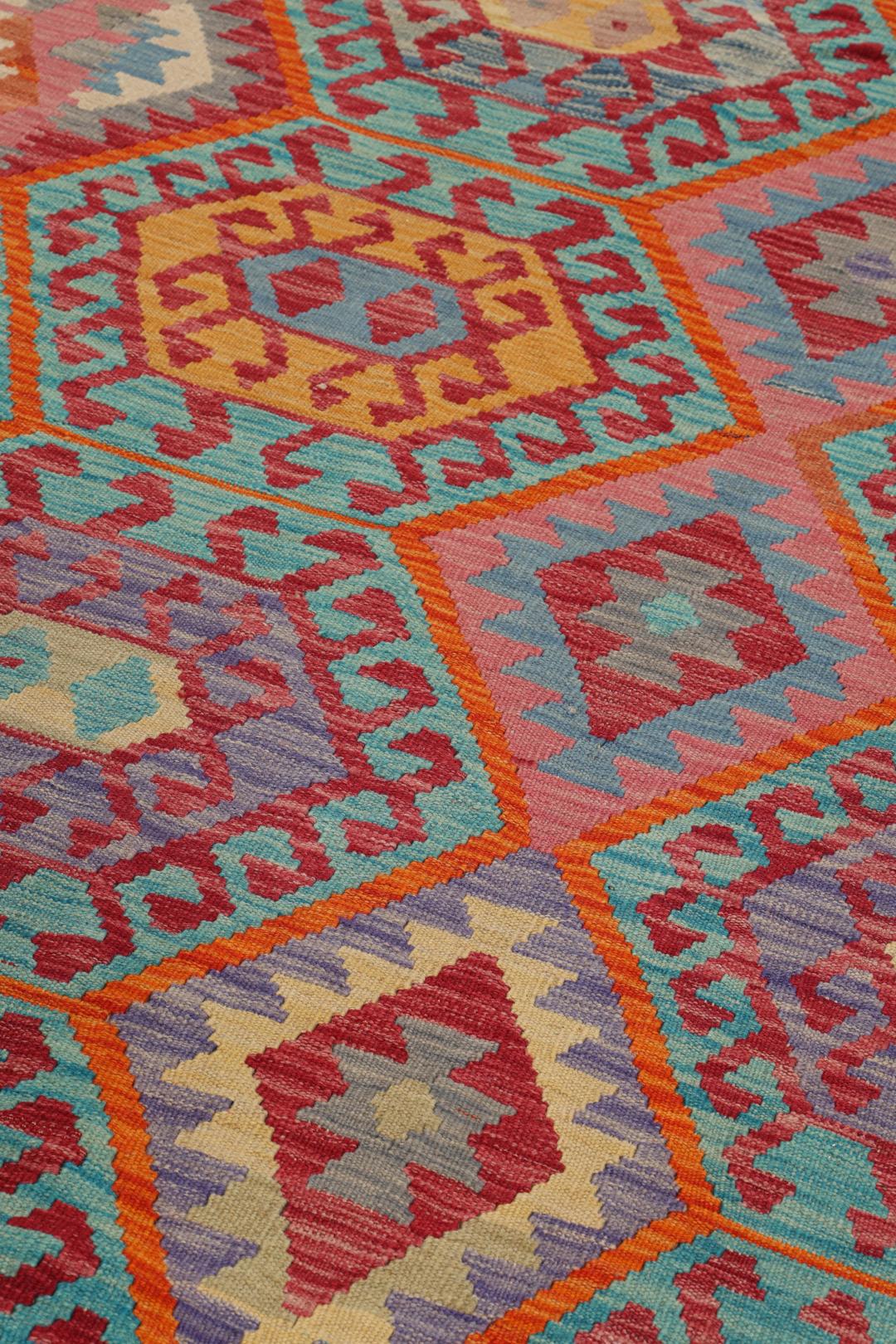
Visually, these rugs are defined by their bold geometric language. You will often see repeating diamond and hexagonal motifs that symbolise protection and cultural identity. The use of vibrant, saturated colours is a hallmark of the Afghan tradition, often derived from natural dyes that age beautifully over time. This particular piece showcases a masterful layout of these classic symbols, creating a rhythm that is both structured and energetic.
Collecting an authentic Afghan Kelim is more than just purchasing a floor covering; it is an investment in cultural heritage. Each rug tells a story of the person who wove it and the region from which it originates. Because they are handmade, they hold a value that mass-produced items cannot match, offering a sense of connection to a global craft tradition that continues to thrive in homes around the world.