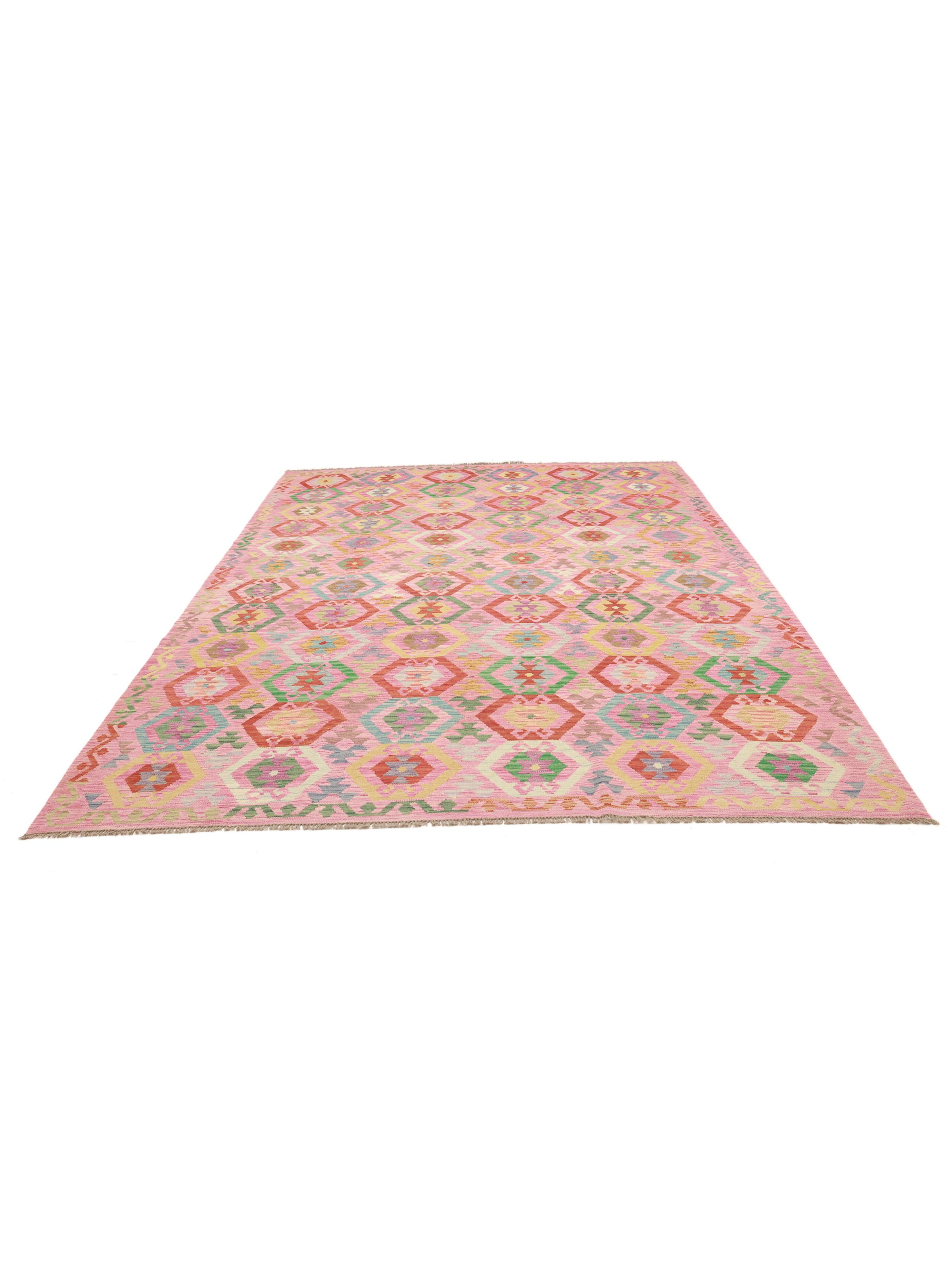
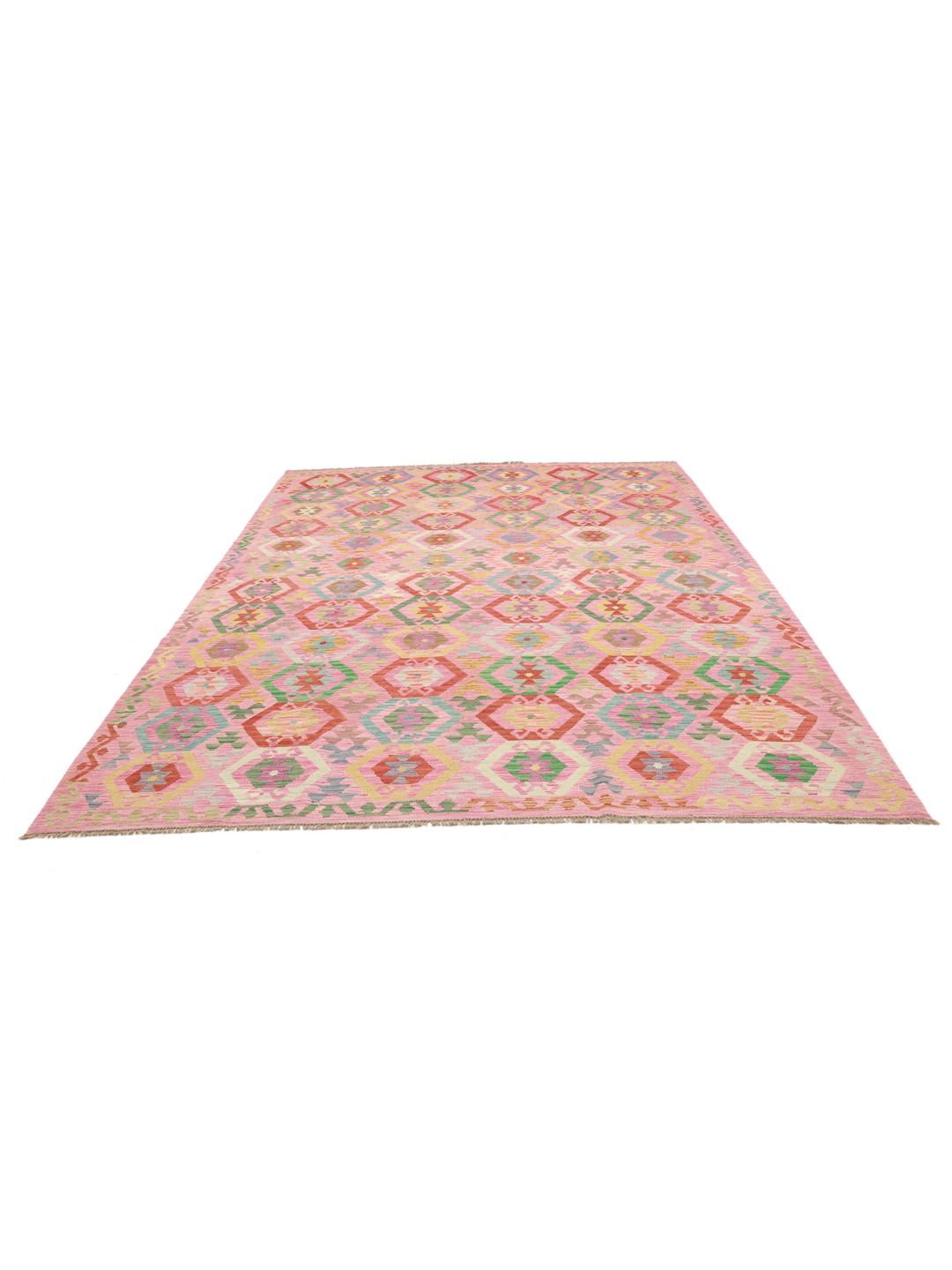
The Kelim tradition is deeply rooted in the nomadic and village cultures of the Middle East and Central Asia. These rugs were historically woven by women for domestic use, serving as floor coverings, blankets, and storage bags, which necessitated a construction that was both practical and portable.
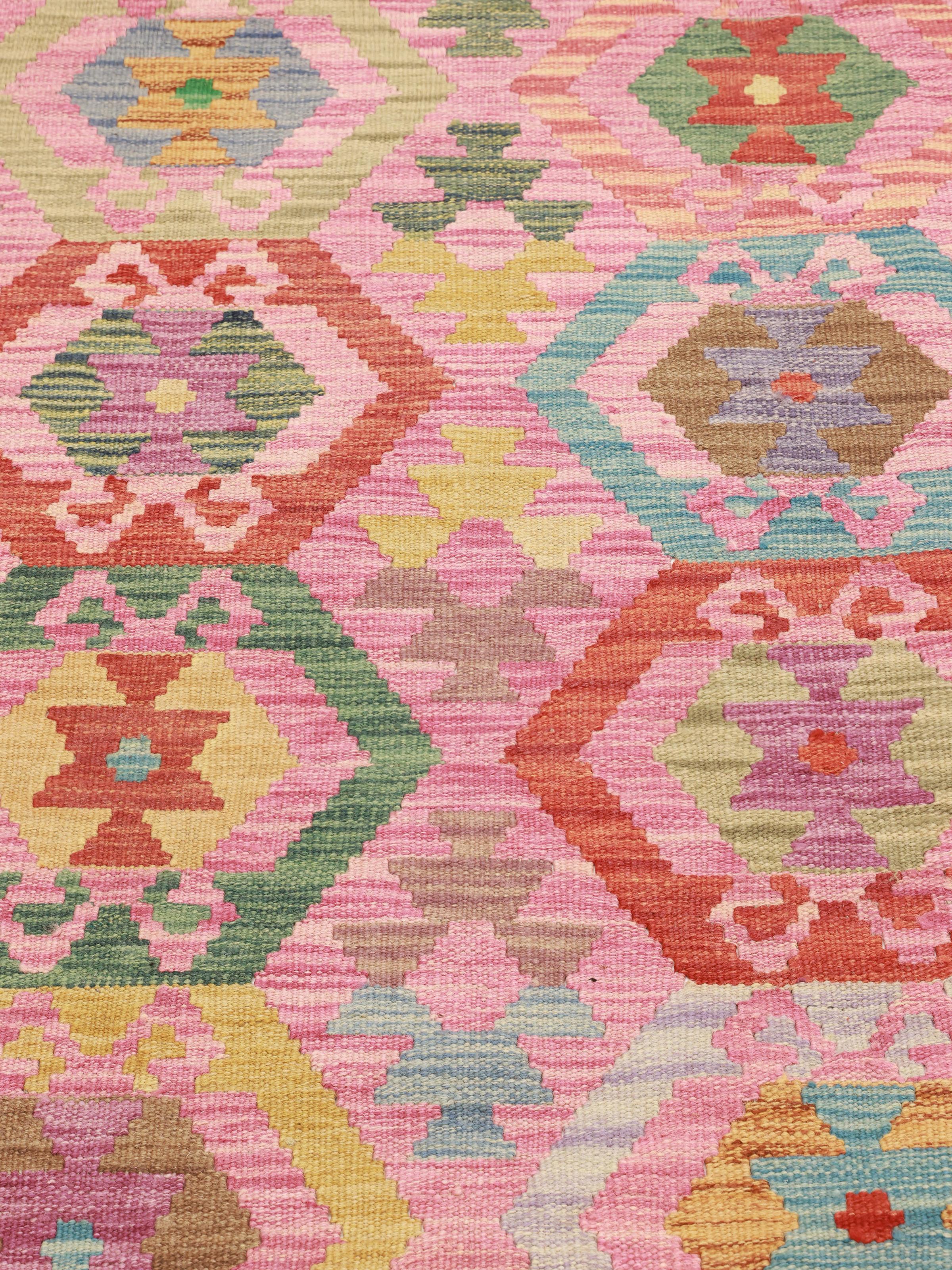
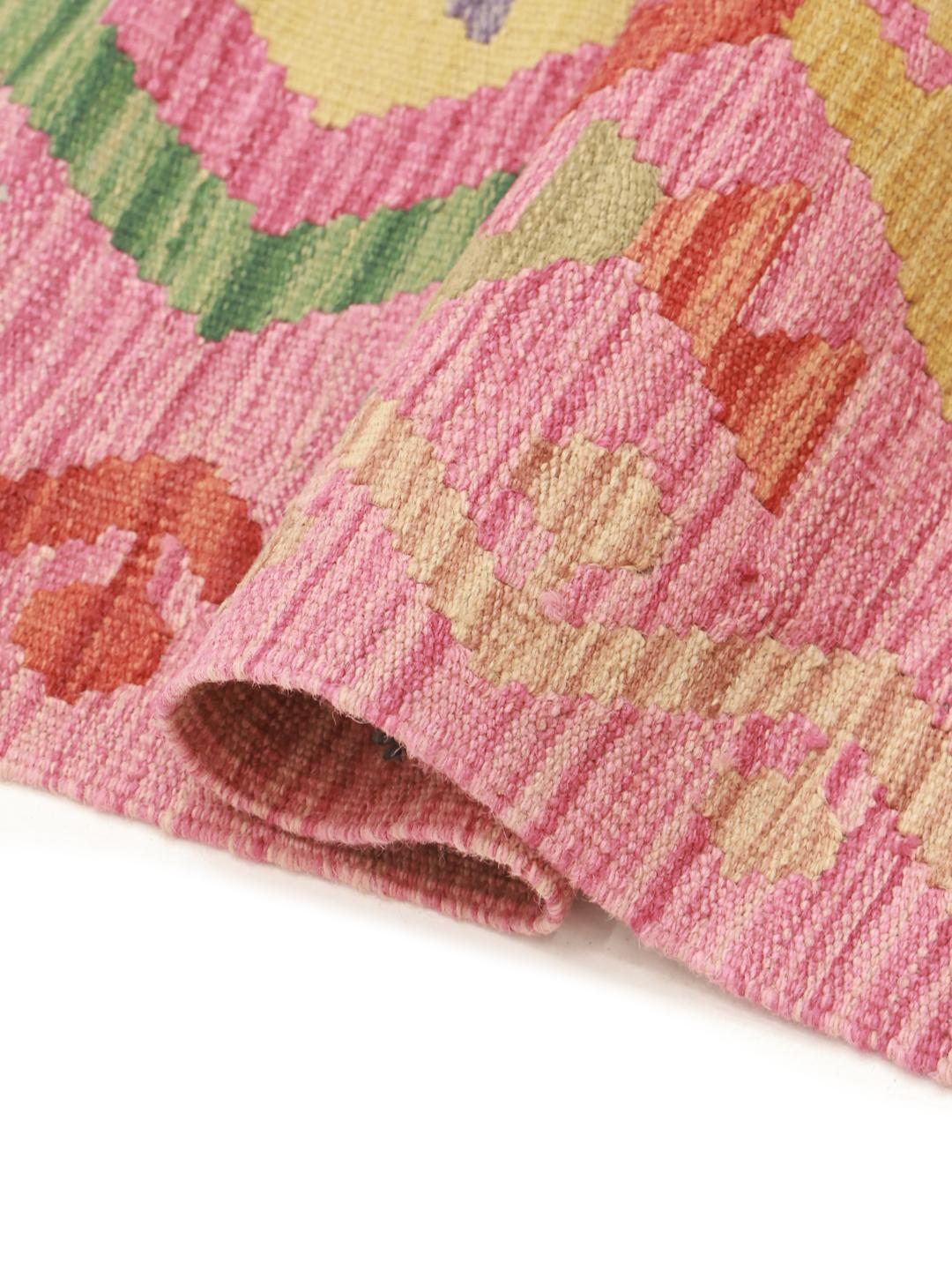
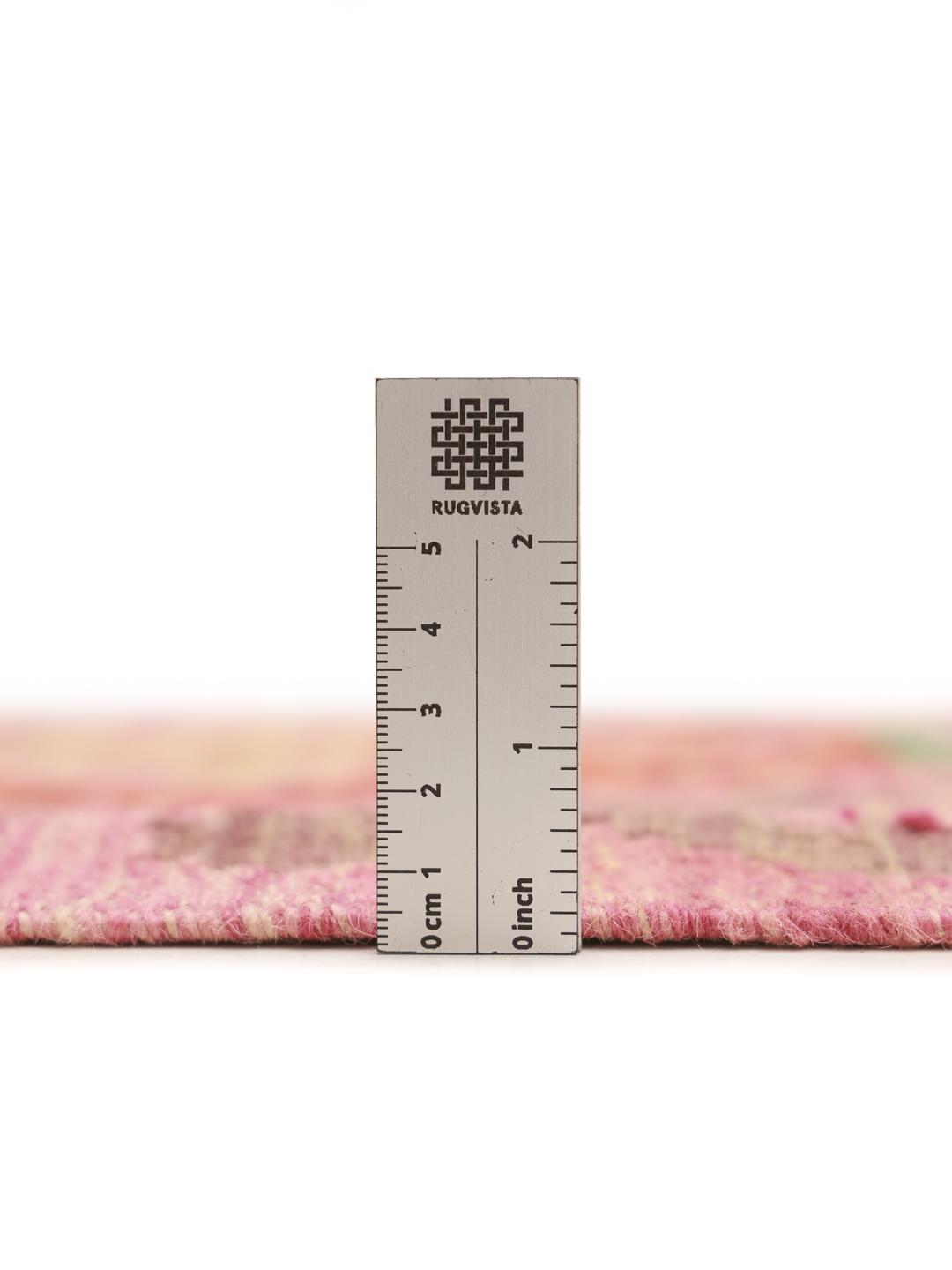
The term 'Kelim' refers to the flat-weaving technique where the weft threads are passed through the warp threads, creating a surface without pile. This method is fundamental to the category and allows for the crisp, clean lines of the geometric motifs that define the style, as the design is integrated directly into the weave itself.
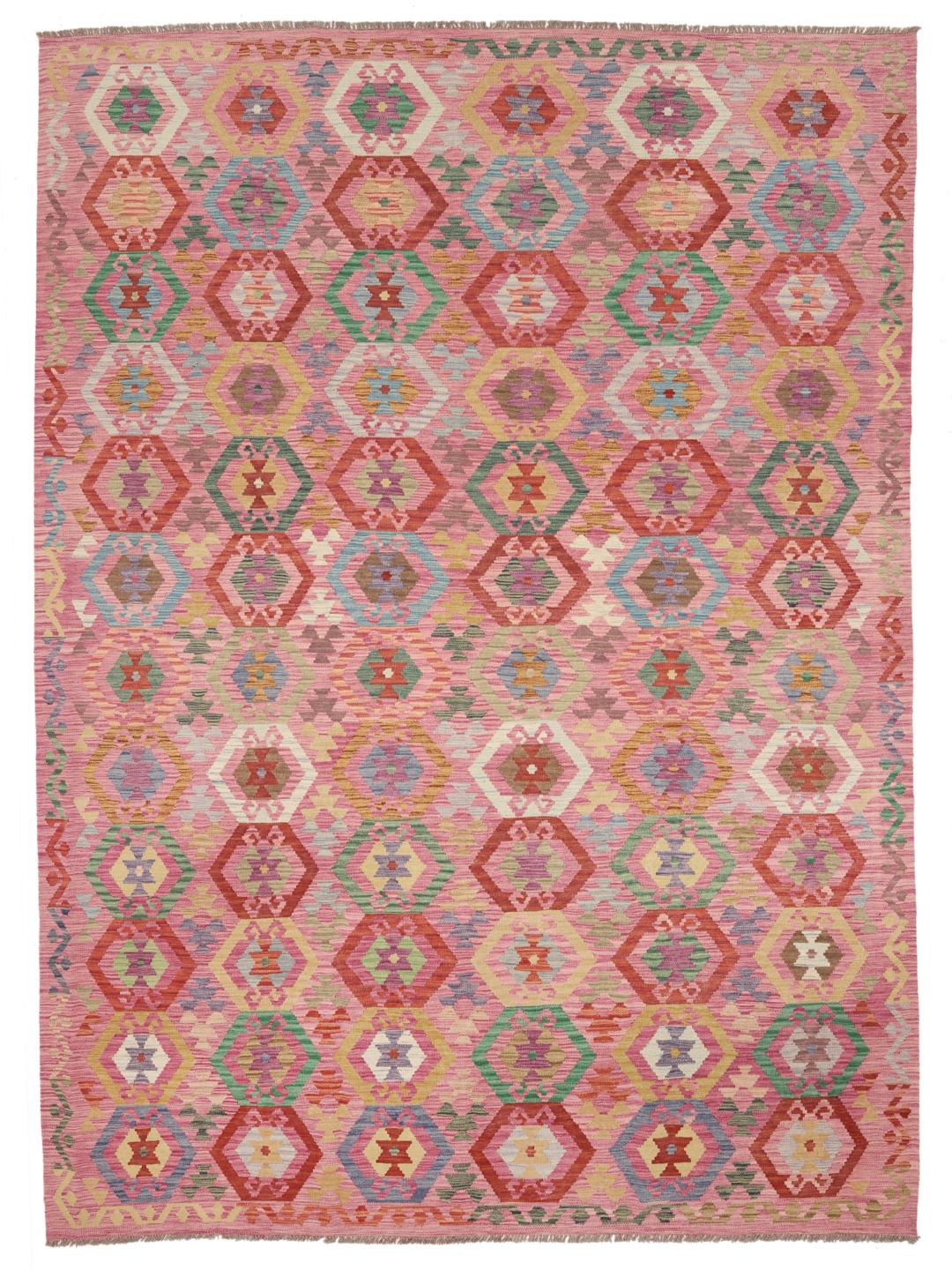
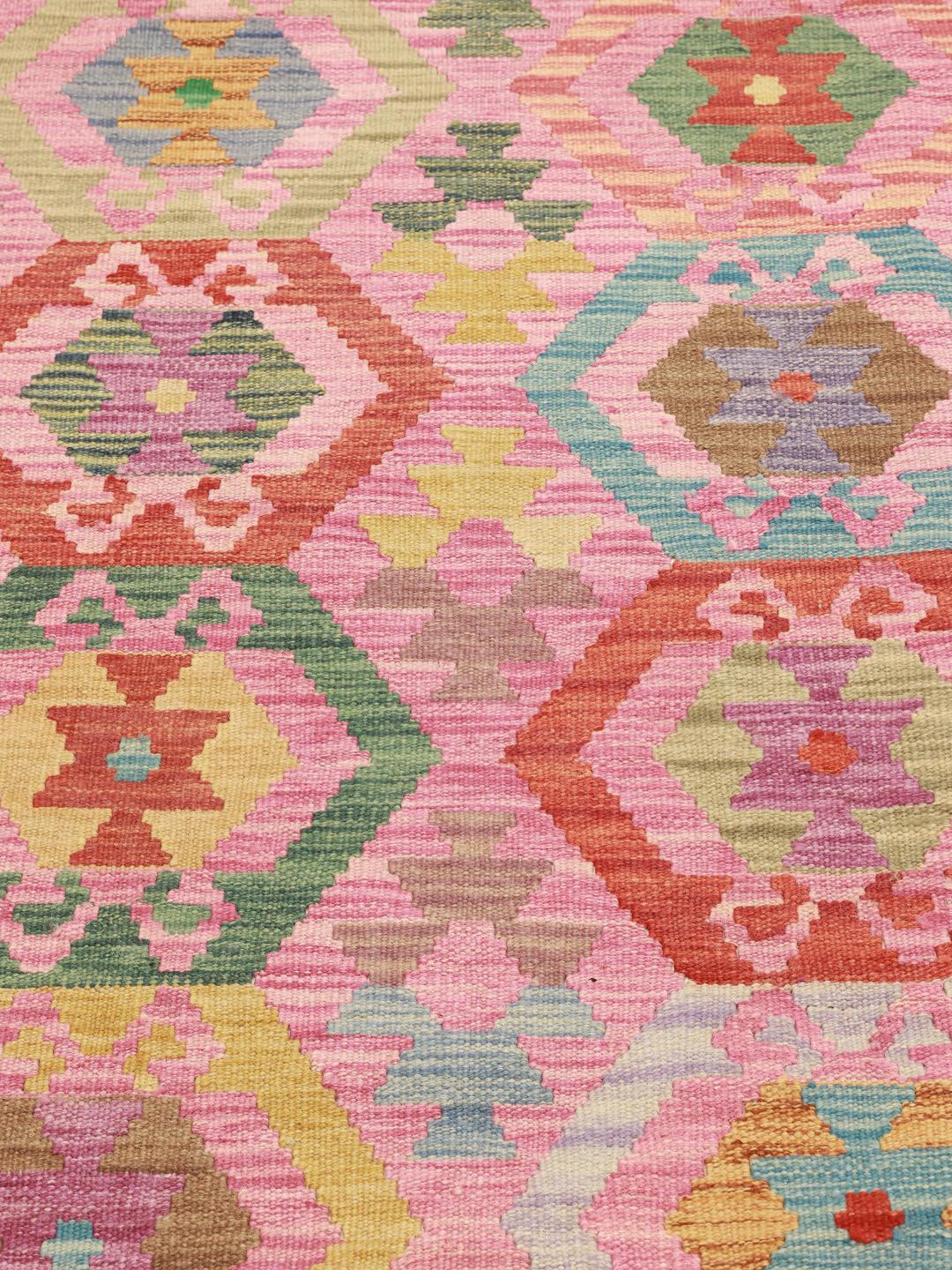
Signature design elements often include repeating medallions, diamonds, and tribal symbols, each carrying cultural significance. In this Afghan style, the use of vivid, traditional dyes results in a palette that is both bold and harmonious. The geometric layout provides a rhythm to the design, making it a classic example of how utilitarian objects are transformed into artistic expressions.
Collecting these rugs is an act of preserving a rich heritage of craft. They are valued not just for their visual appeal, but for the story they tell of the people and regions that produced them. Owning a piece like this connects your home to a long lineage of creativity and skill that continues to resonate in modern interiors.