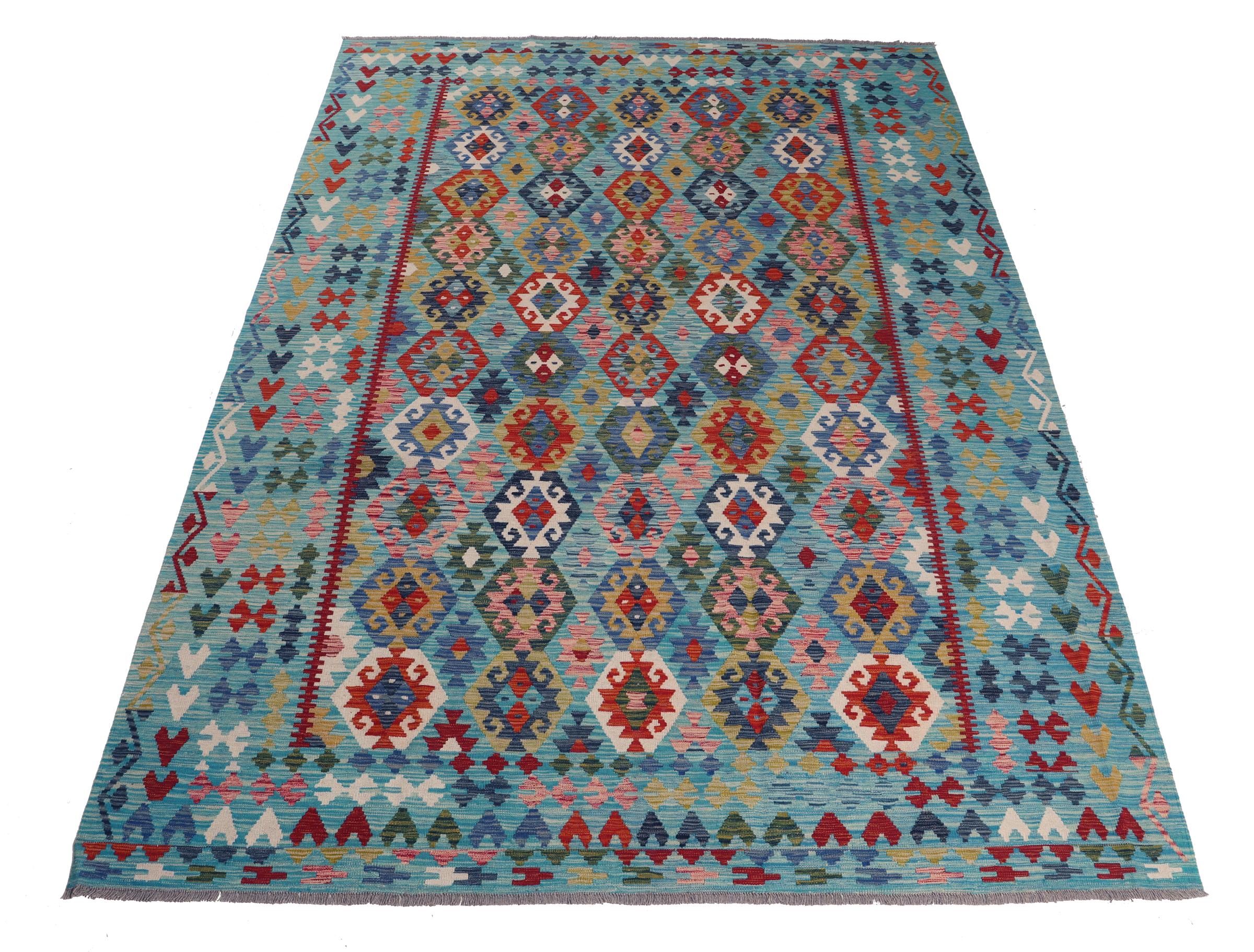
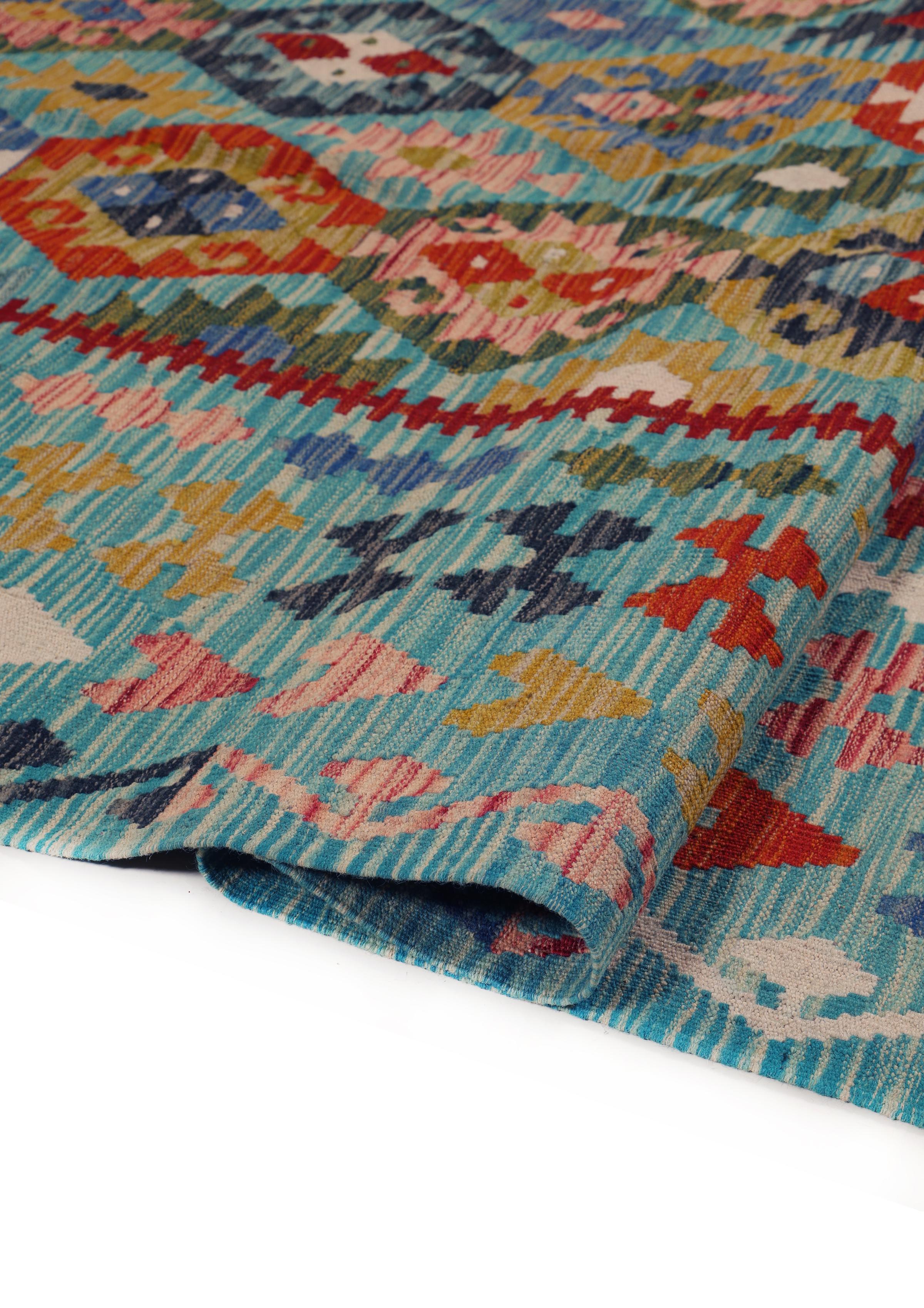
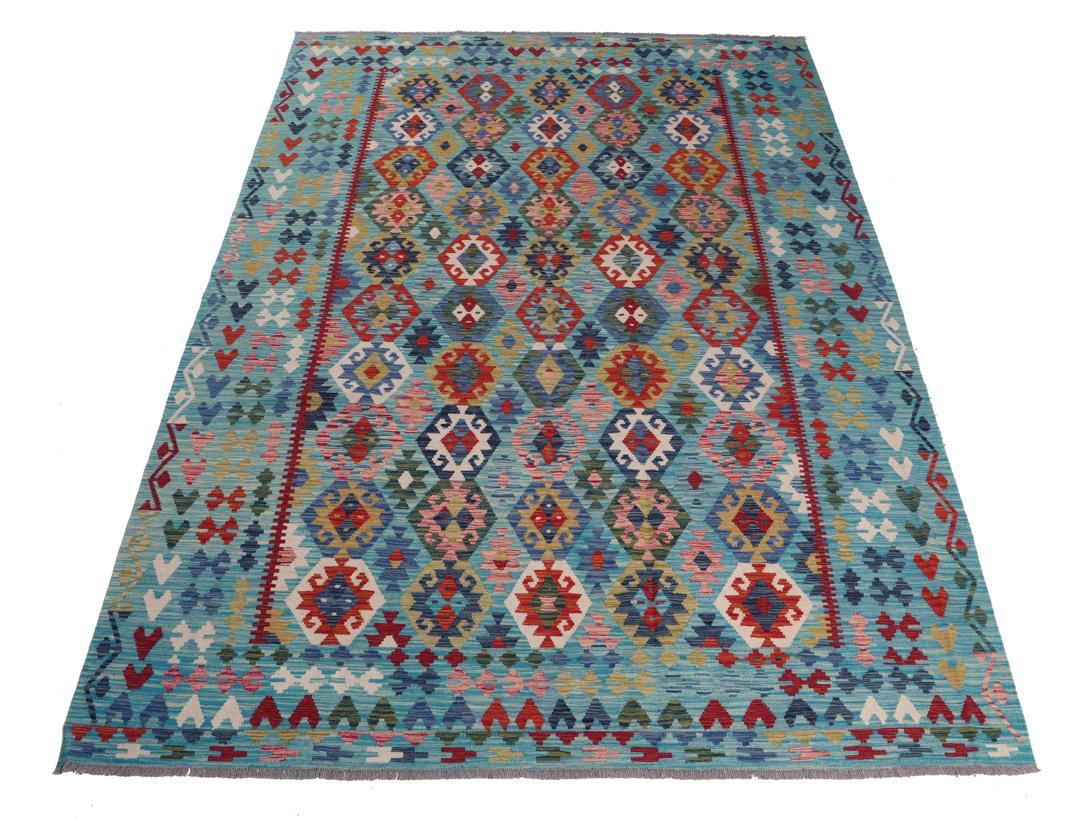
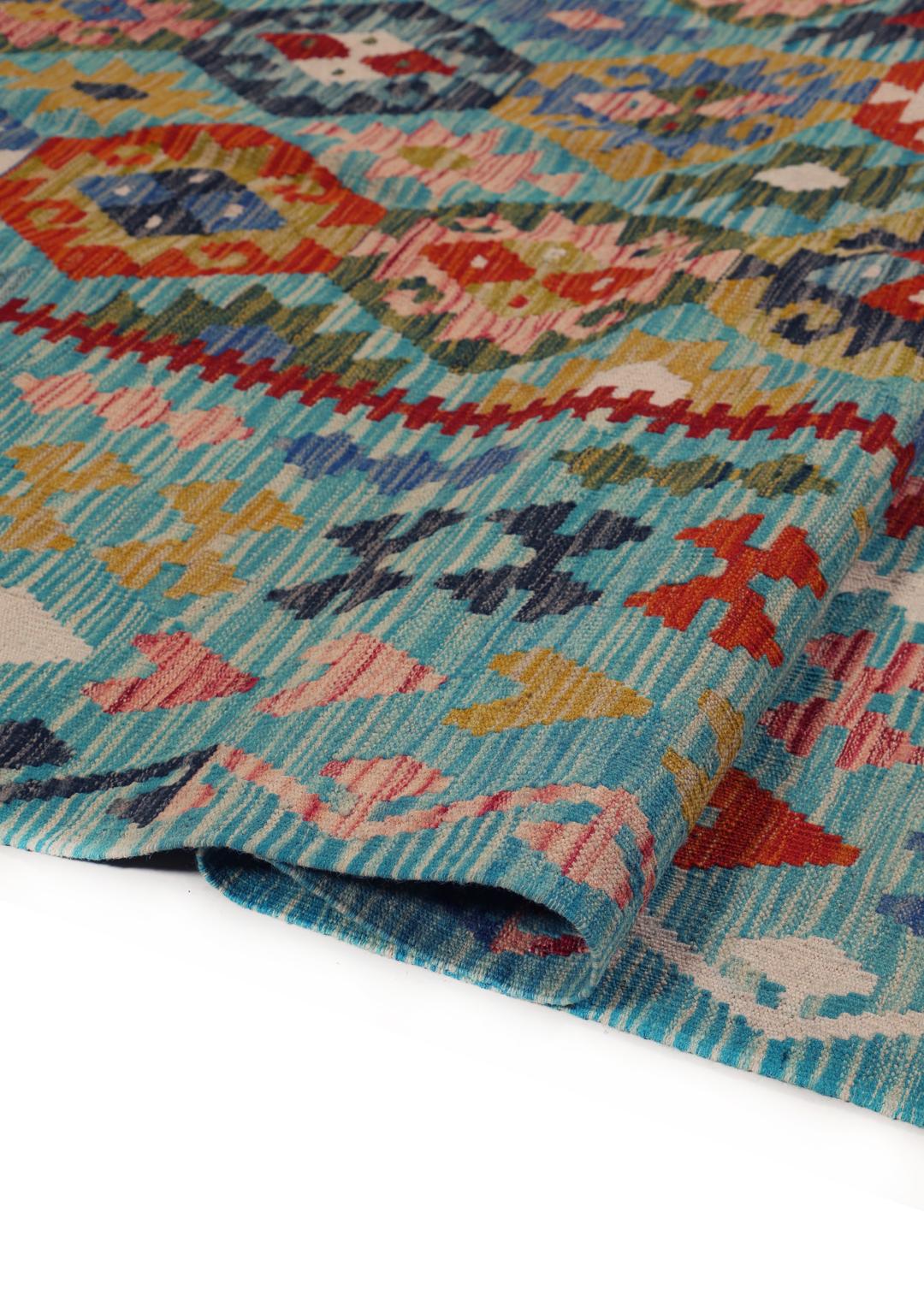
The Kelim tradition is deeply rooted in the nomadic history of the Middle East and Central Asia. Originally created by tribal groups, these rugs served as functional, portable items for daily life, often used as floor coverings, blankets, or even wall hangings. The term Kelim refers to the specific flat-weave technique where the weft threads are woven tightly over the warp, creating a smooth surface without a pile.
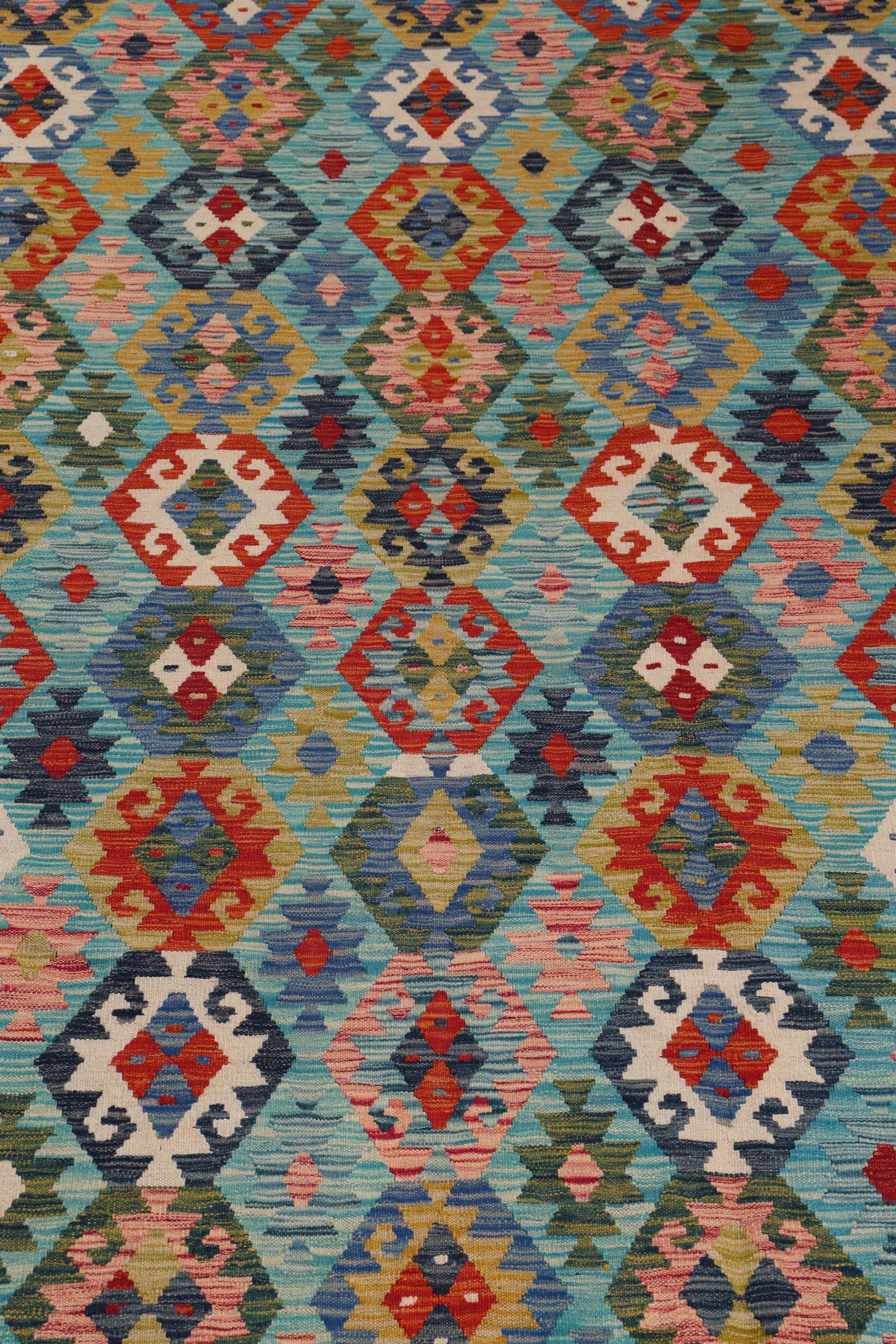
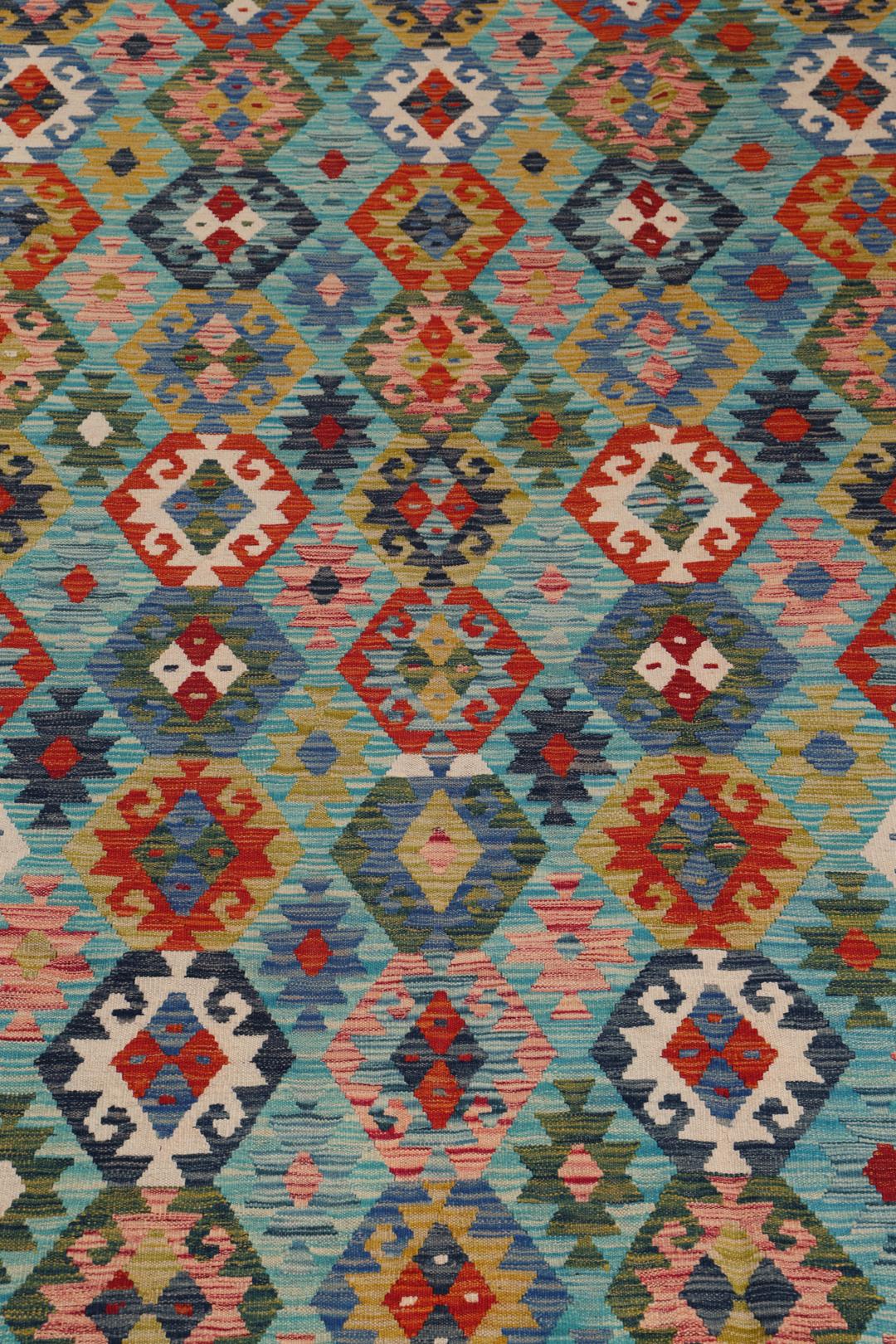
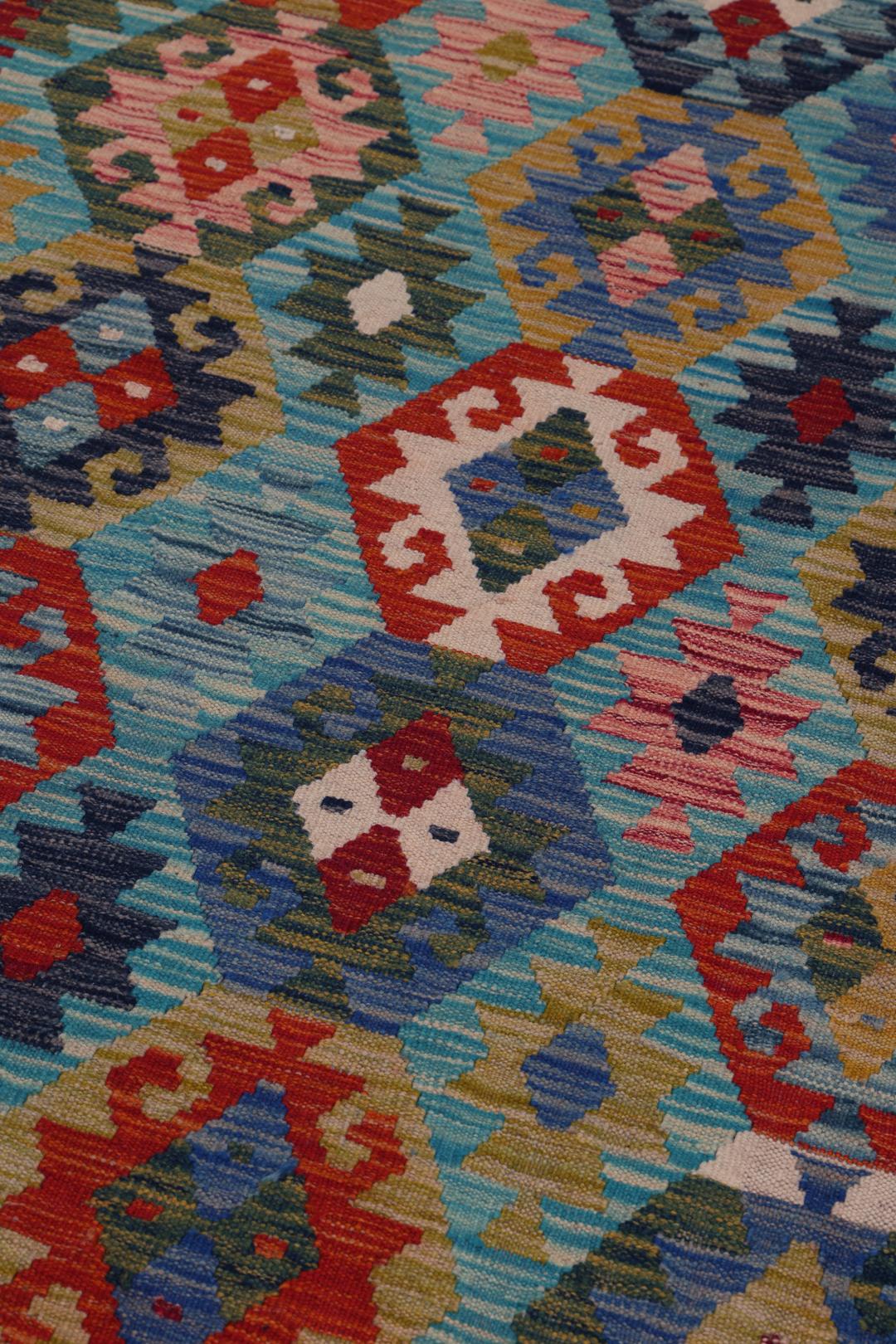
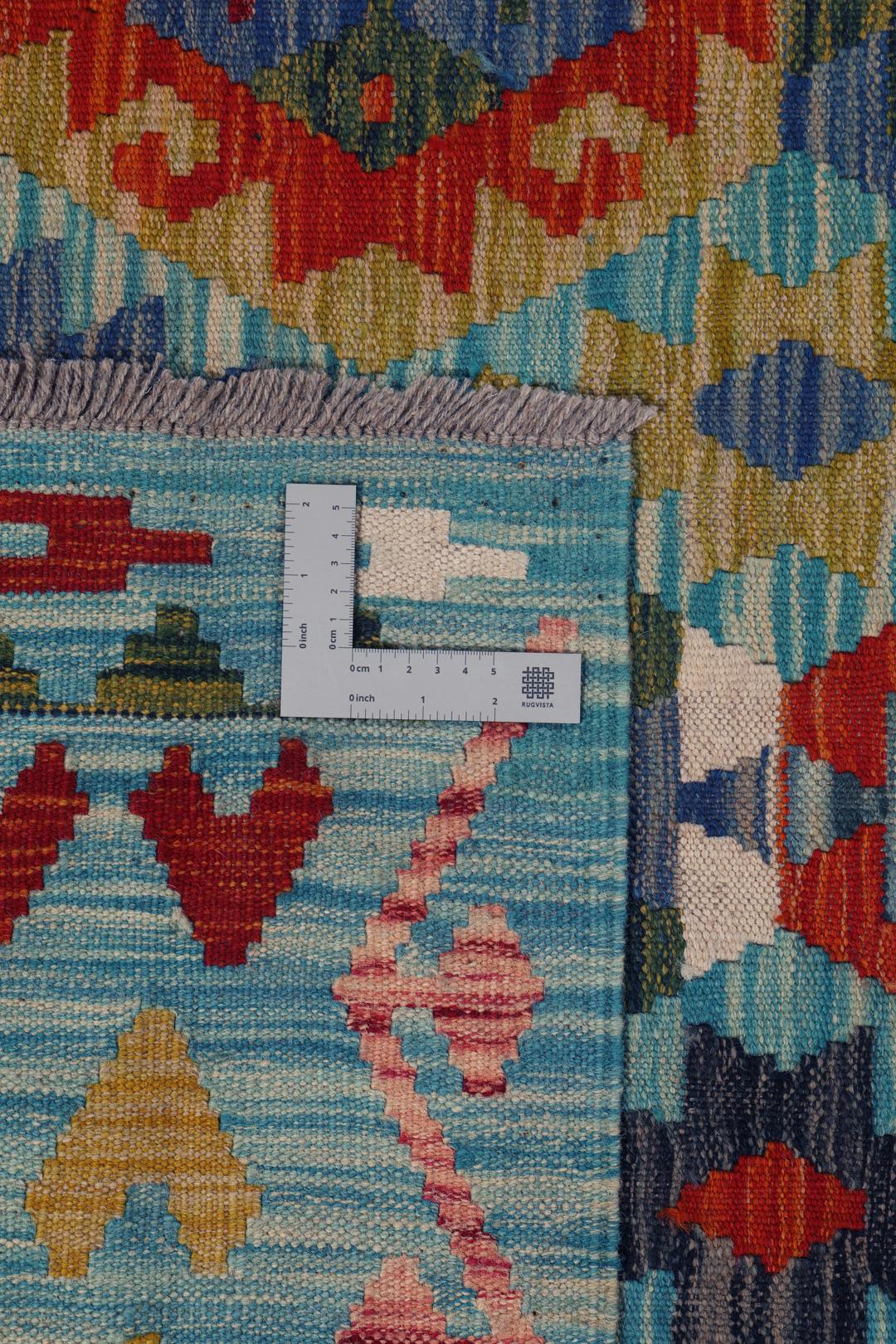
The beauty of this construction lies in its simplicity and strength. Because the design is woven directly into the foundation rather than knotted onto it, the patterns appear sharp and distinct on both sides of the rug. This technique requires the weaver to have a complete mental map of the design before they begin, as corrections are difficult to make once the weaving process is underway.
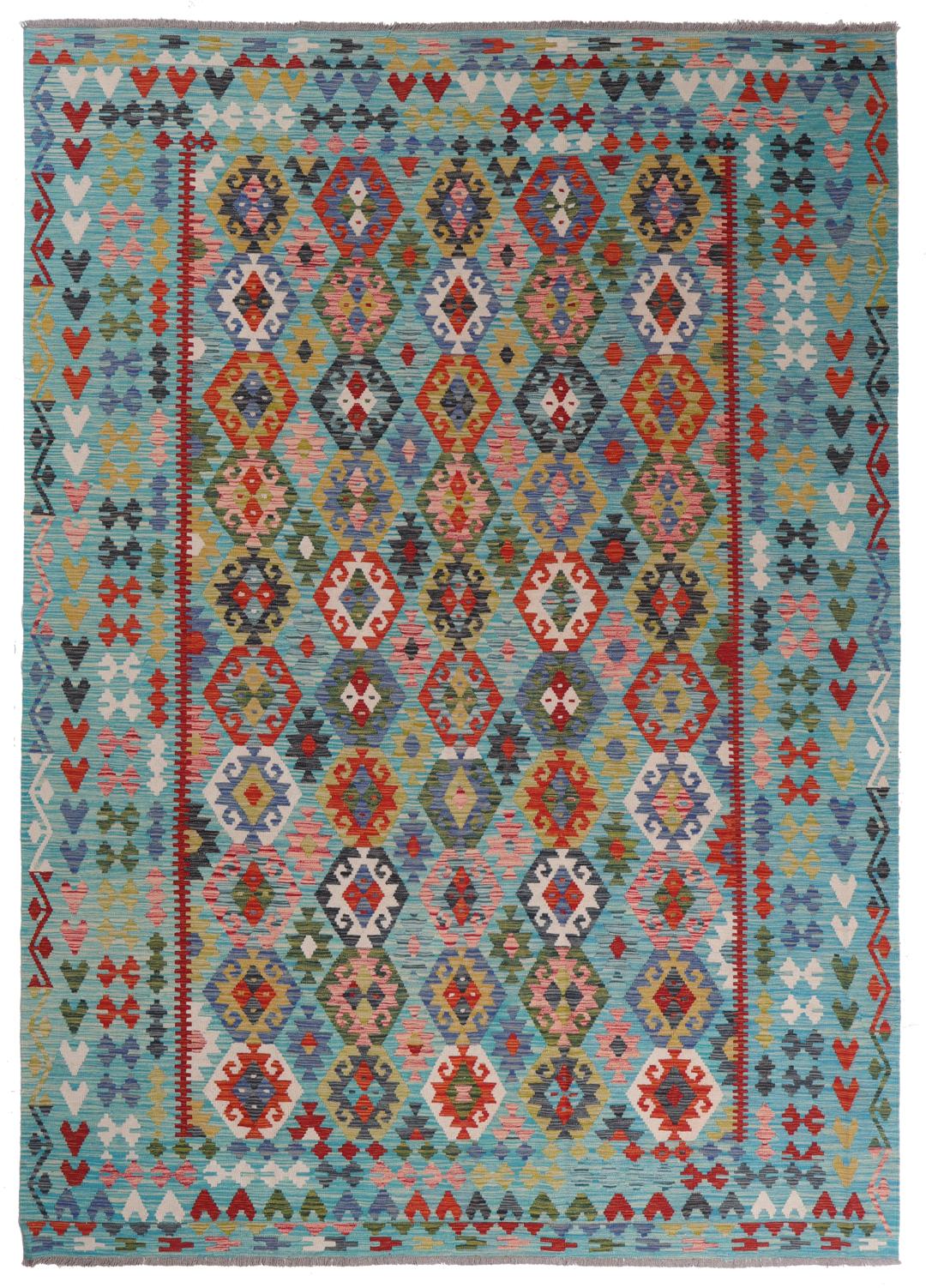
Visually, these rugs are defined by bold geometric motifs, such as the diamonds and repeating tribal symbols seen here. These patterns are often symbolic, representing protection, fertility, or the natural landscape of the region. The use of vibrant, contrasting colours is a hallmark of the Afghan style, which embraces a fearless approach to palette and composition, making each piece a standout addition to any interior.
Today, these rugs are highly valued by collectors and enthusiasts who appreciate the blend of utilitarian function and artistic expression. Owning a Kelim is a way to connect with a centuries-old heritage of craftsmanship. It represents a commitment to supporting traditional skills that have been passed down through generations, ensuring that these artistic legacies continue to flourish in contemporary homes.