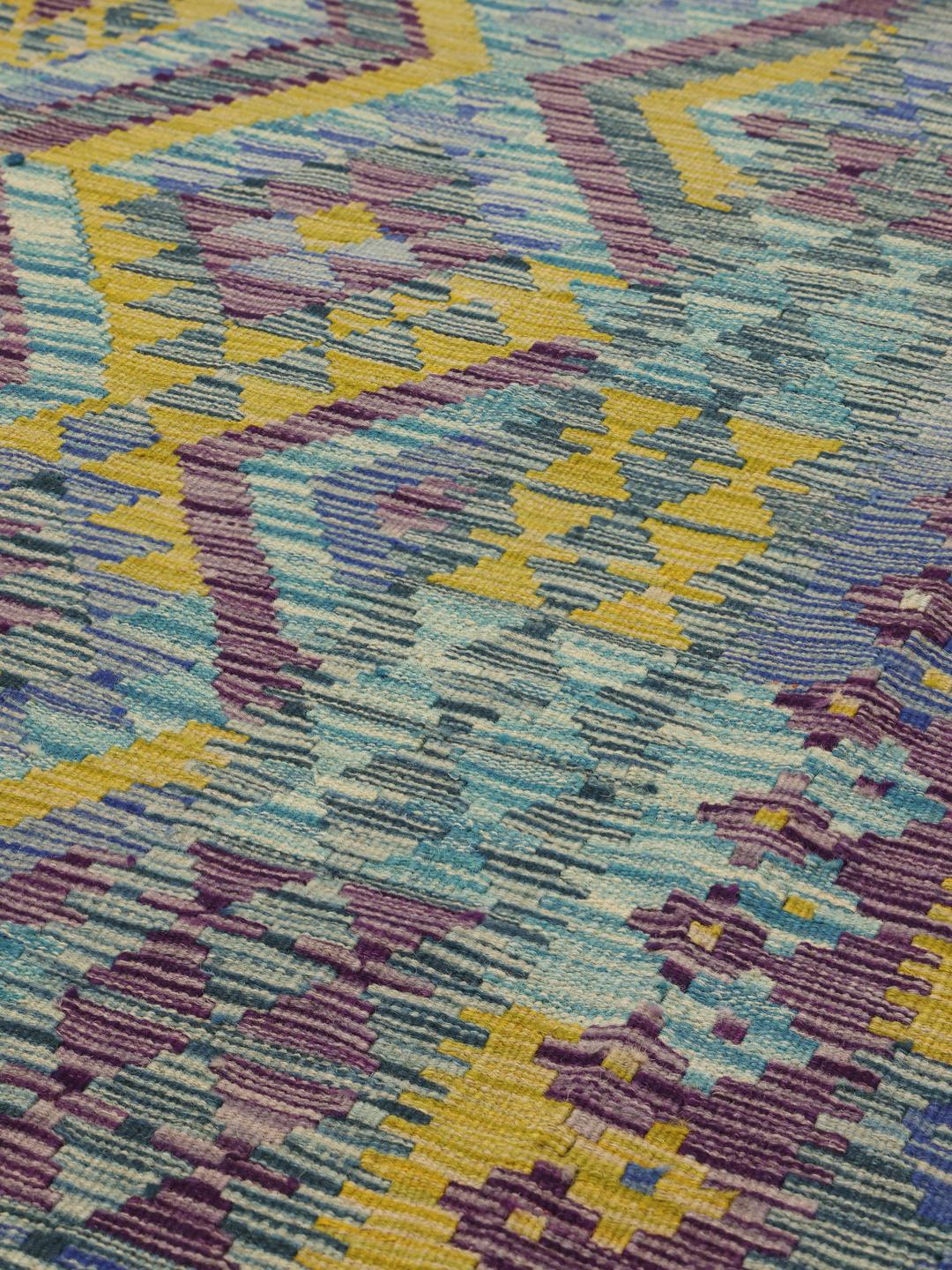
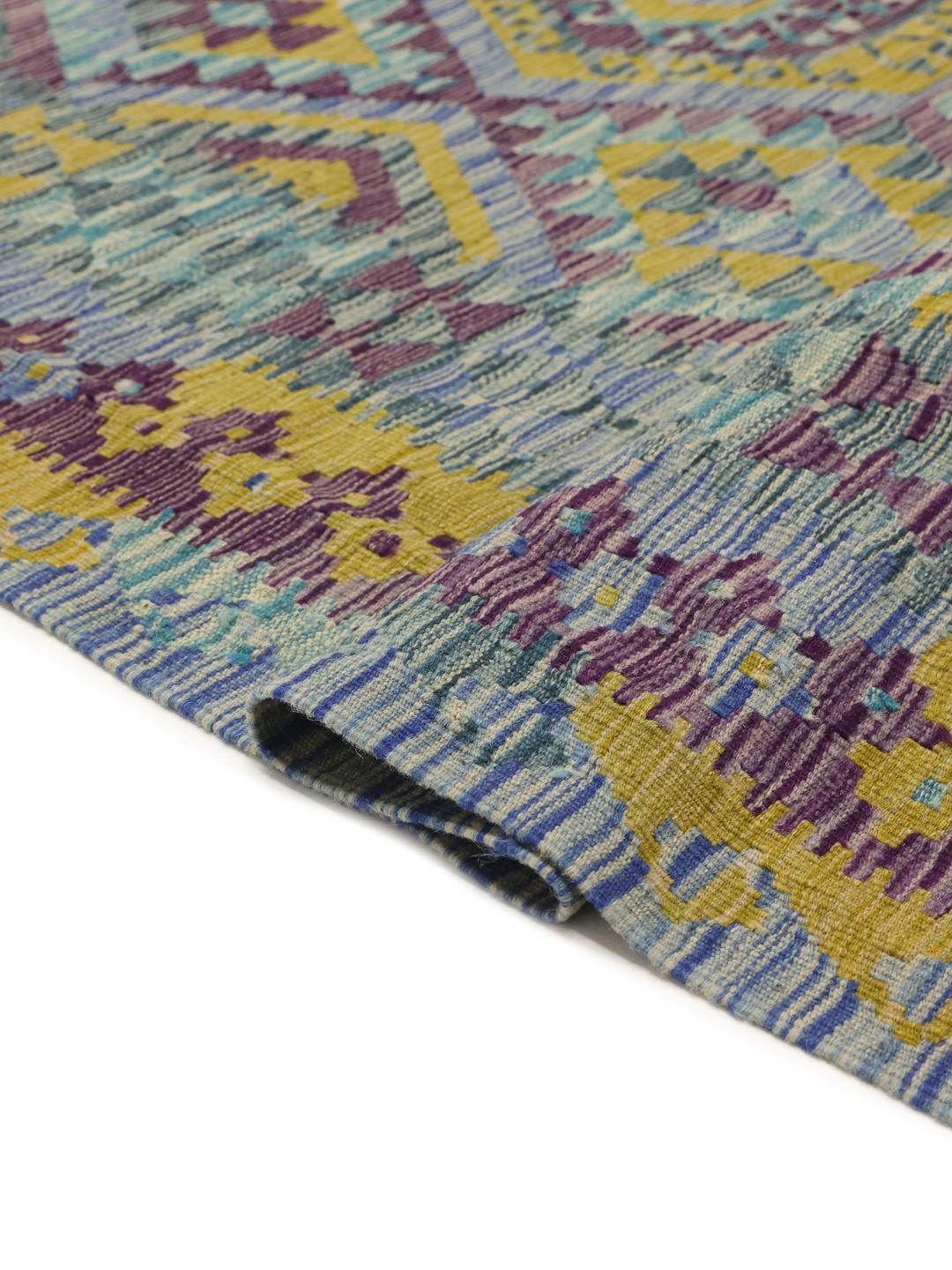
The Afghan Kelim is rooted in the rich textile traditions of Central Asia, where weaving has served as a central pillar of cultural identity for centuries. These flat-weave rugs were historically created by nomadic tribes, designed to be both portable and highly durable, serving as floor coverings, wall hangings, or even saddlebags during seasonal migrations across the rugged landscapes of the region.
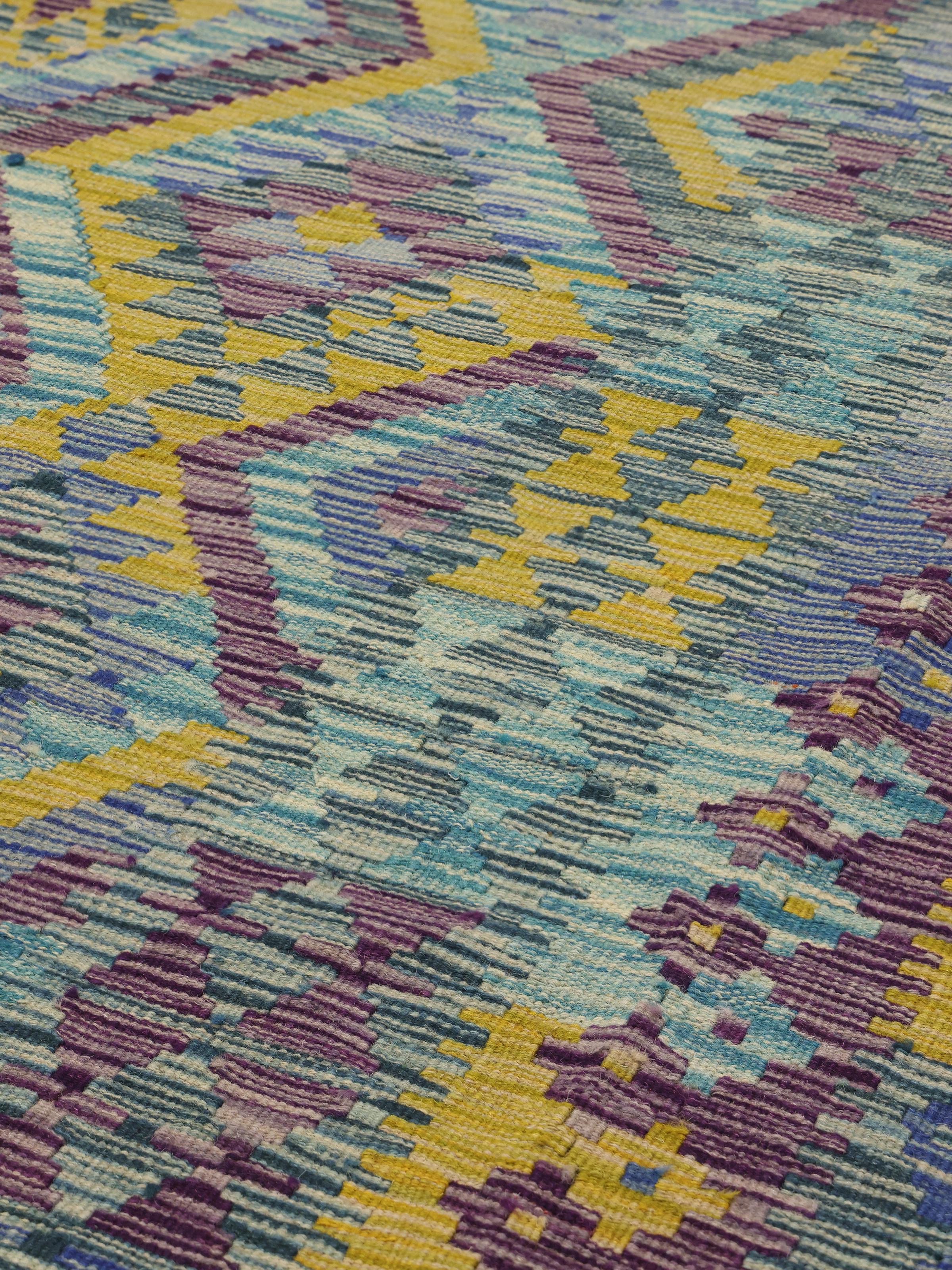
The term 'Kelim' refers to the specific flat-weave technique where no pile is created, resulting in a smooth, reversible surface. This method requires the weaver to interlock the coloured weft threads tightly around the warp threads, a process that demands high precision to ensure the geometric patterns remain sharp and consistent throughout the length of the rug.
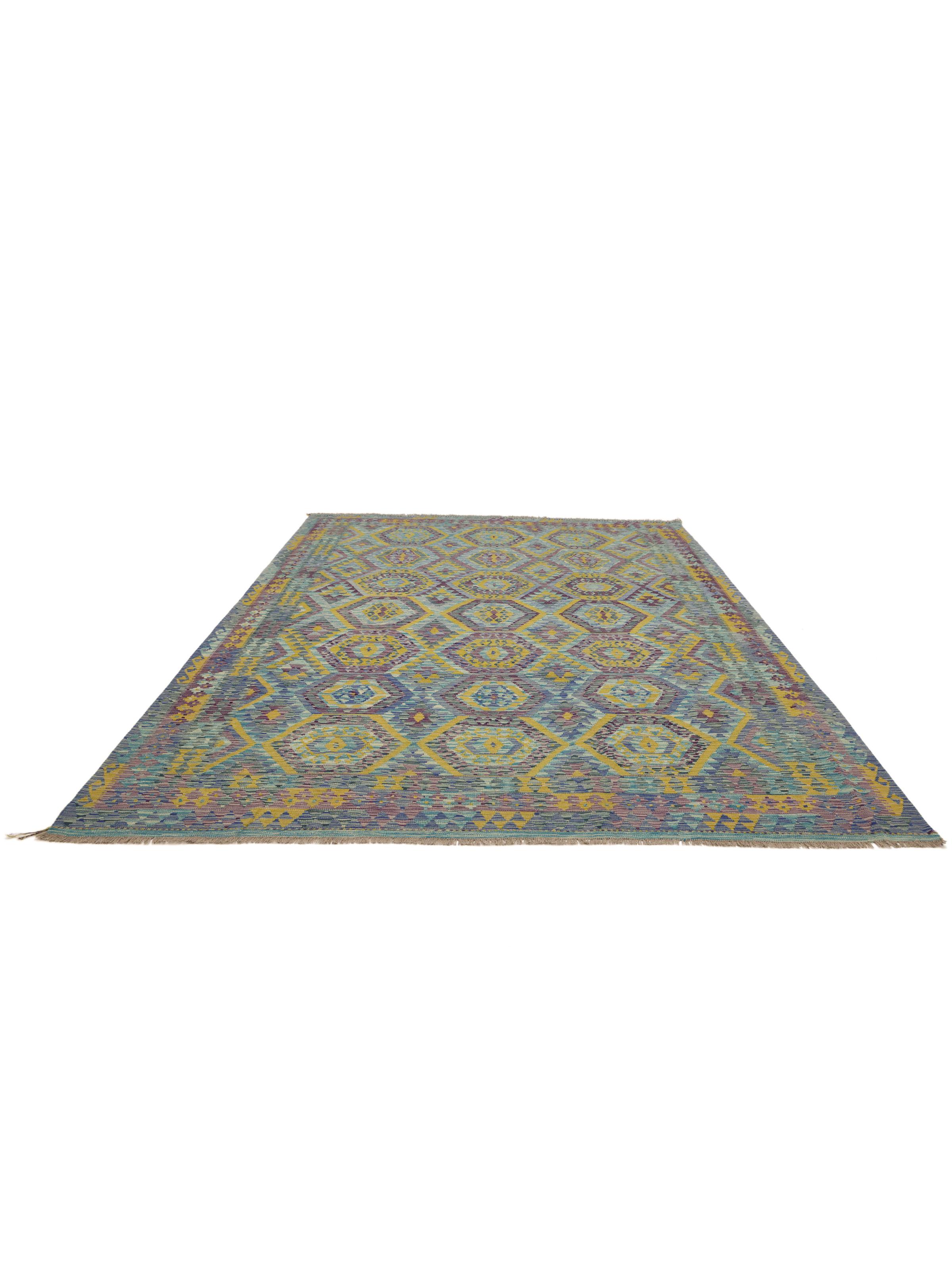
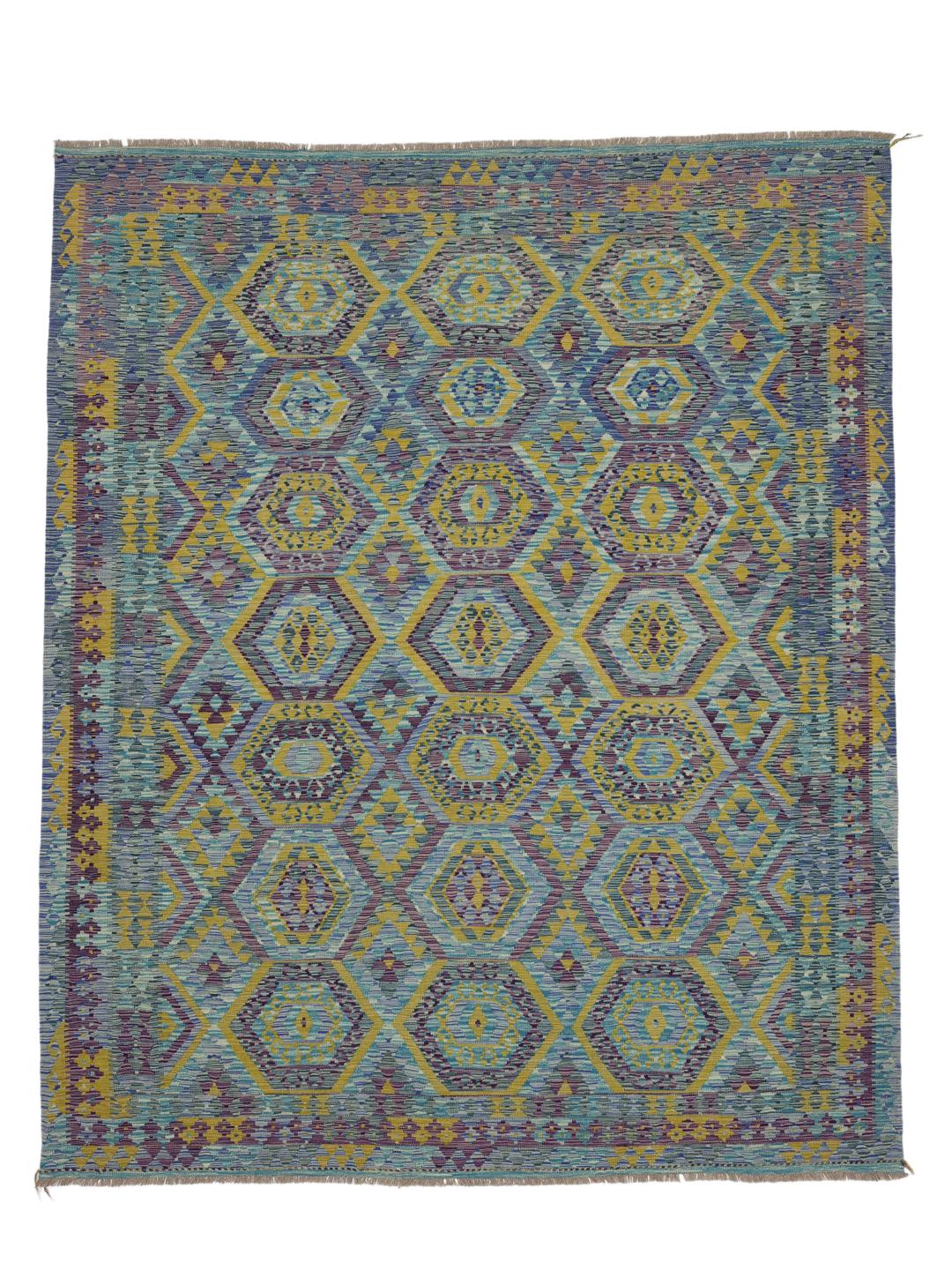
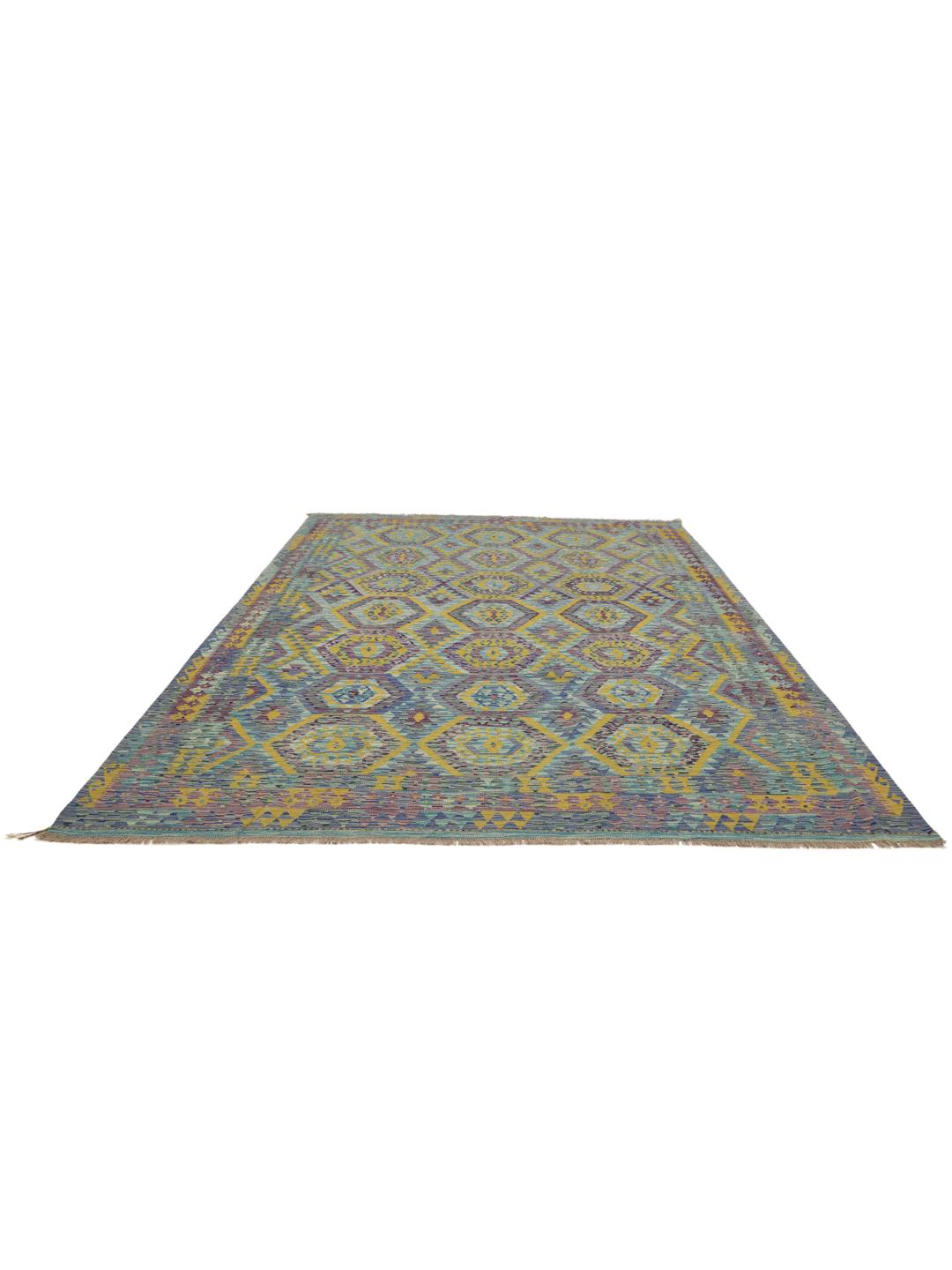
Signature design elements of these rugs include bold geometric motifs, such as diamonds, triangles, and hexagons, which are often arranged in repeating patterns across the field. The palette is traditionally derived from natural dyes, producing earthy or vibrant tones that have become synonymous with the Afghan weaving aesthetic. This specific piece showcases a sophisticated use of contrasting colours that highlights its intricate geometric layout.
Collecting Afghan Kelims is a way of preserving a vital piece of artisanal heritage. Because they are not mass-produced, each rug represents the individual vision of the weaver, making them highly prized by those who seek authentic, storied pieces for their homes. Owning one is an opportunity to enjoy a legacy of skill that has remained largely unchanged for generations.