Kelim rugs have been a cornerstone of Middle Eastern weaving traditions for centuries, serving as both functional floor coverings and essential household textiles. Originating from the nomadic and semi-nomadic tribes of the region, these rugs were designed to be portable, durable, and deeply symbolic. The migration of these weaving techniques across the Silk Road has resulted in a beautiful evolution of styles, with Afghan weavers today becoming renowned for maintaining these ancient, authentic methods.
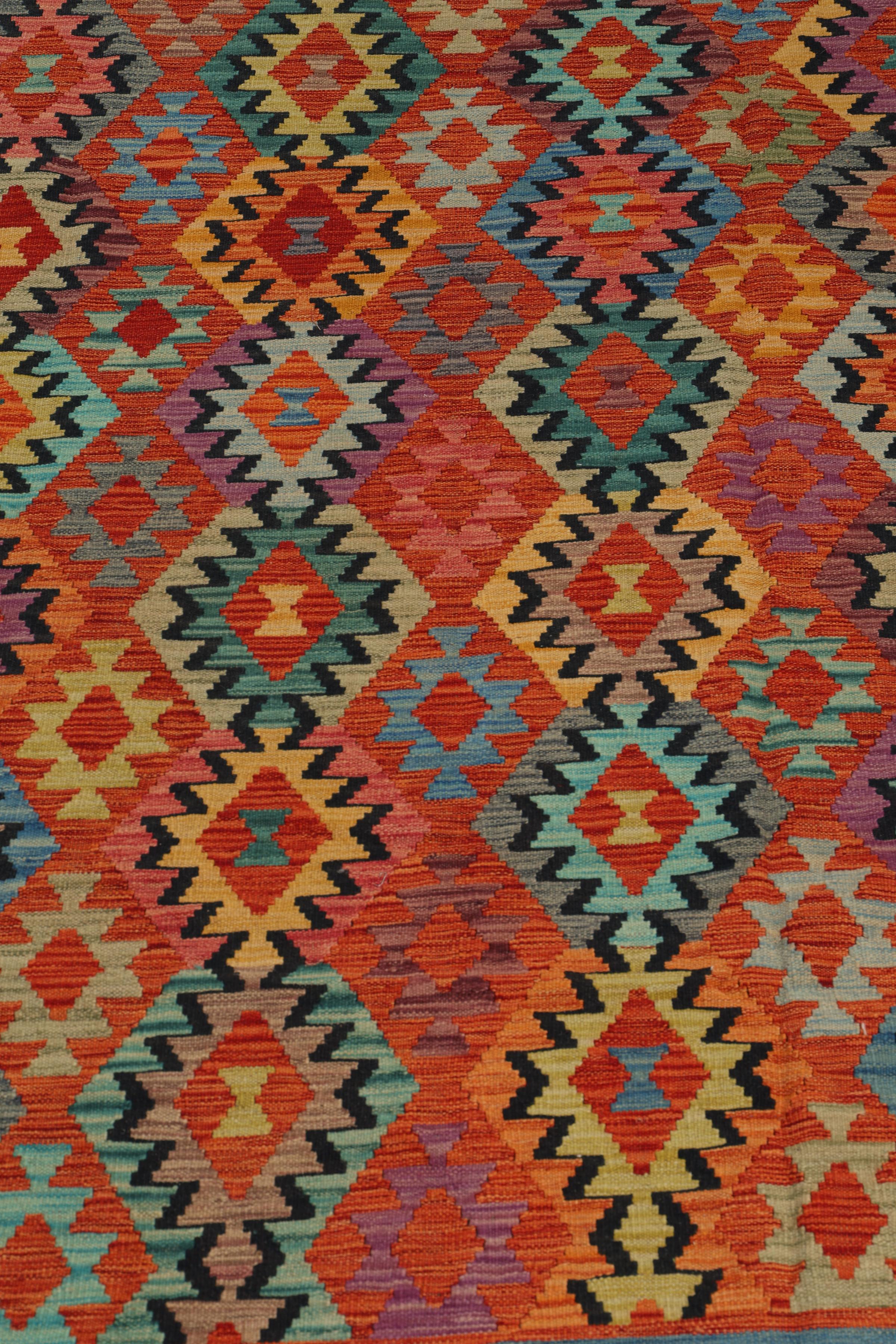
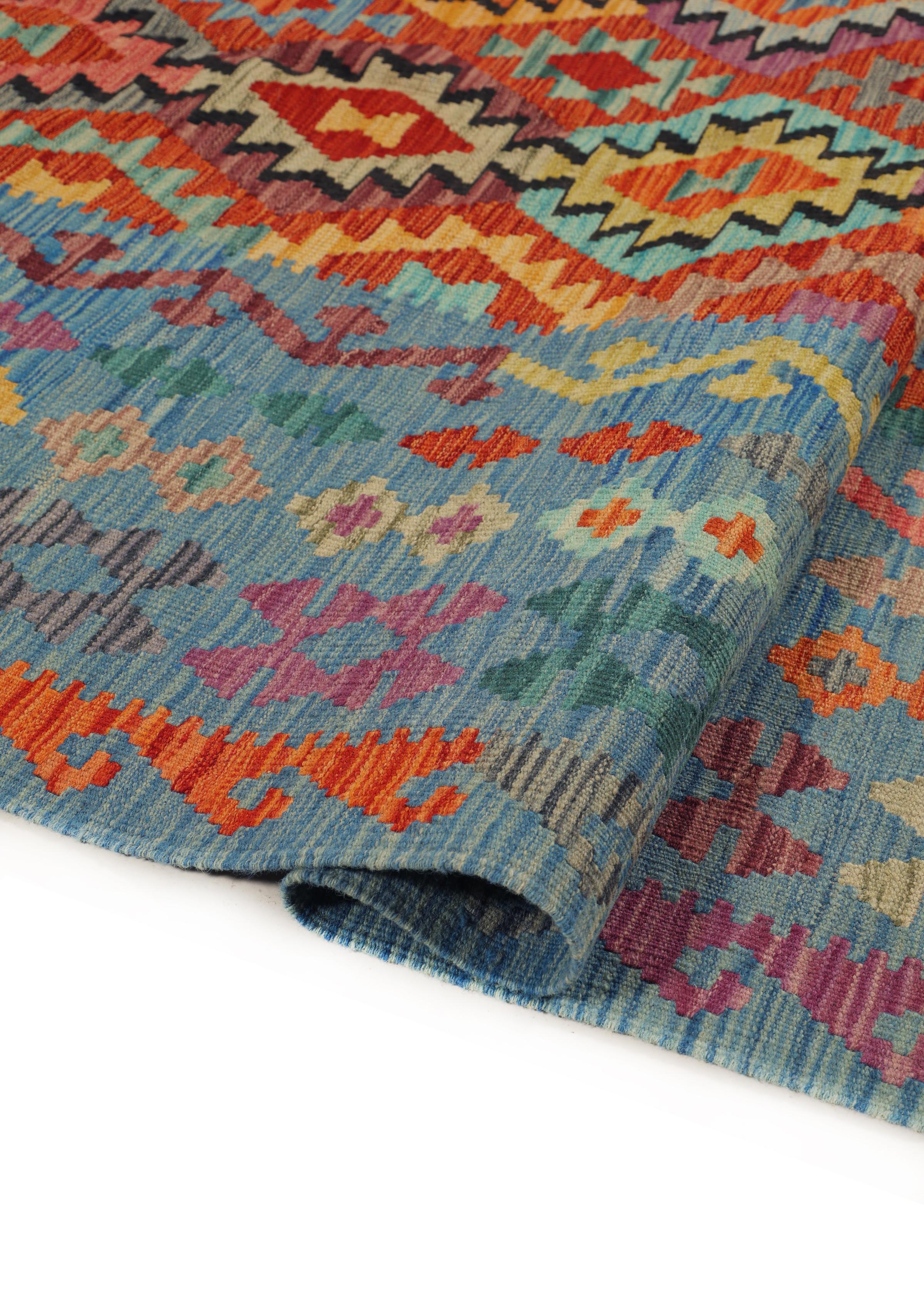
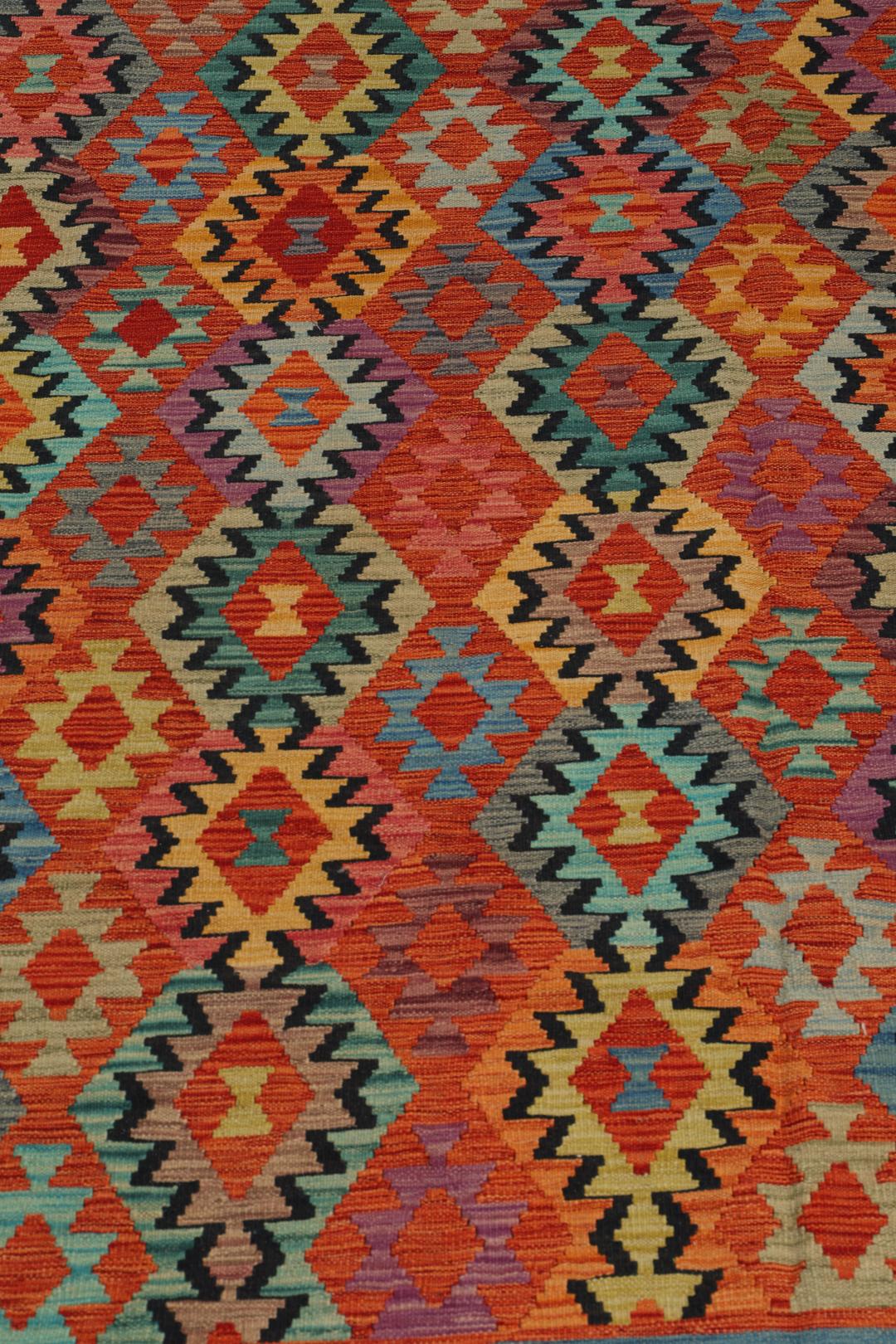
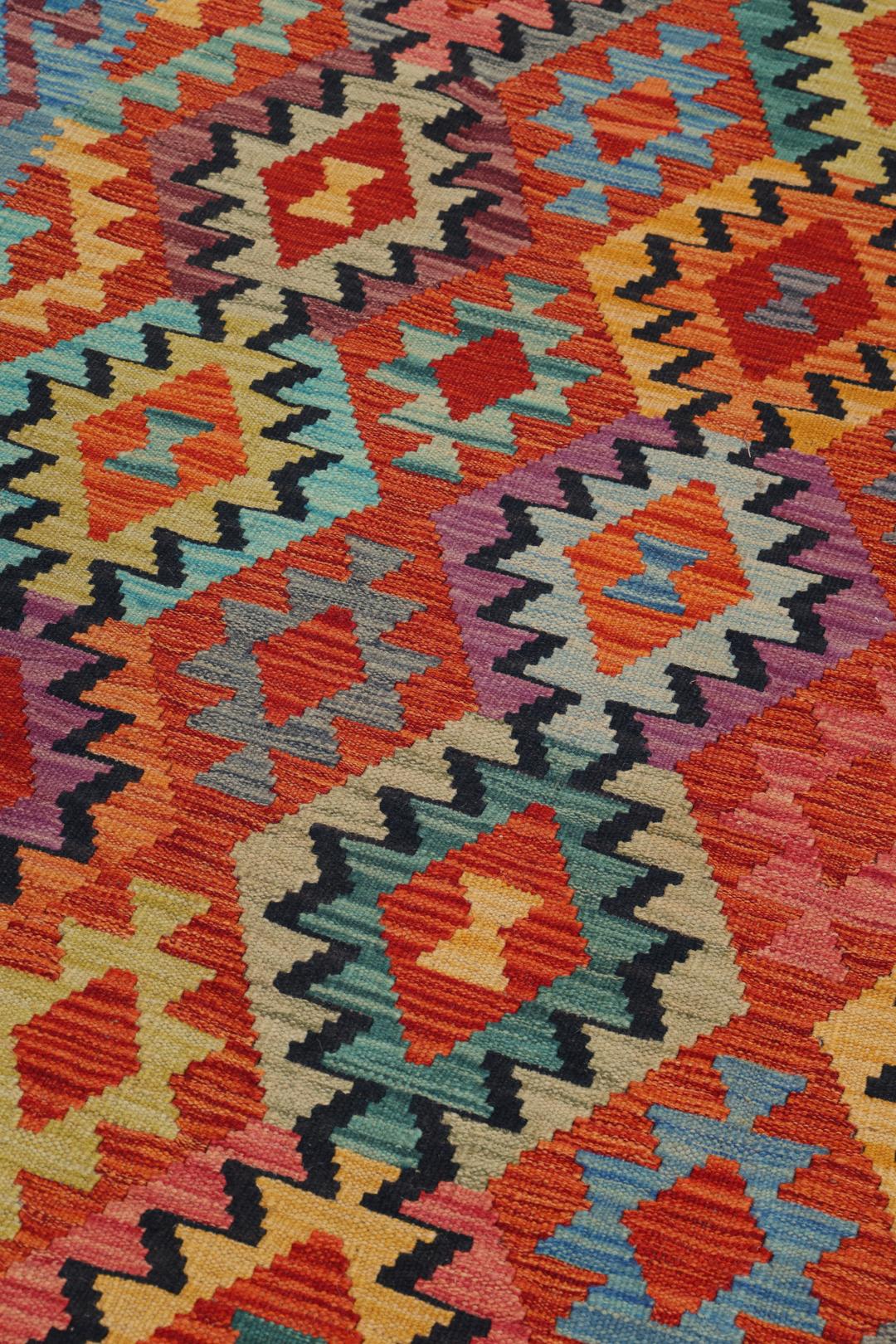
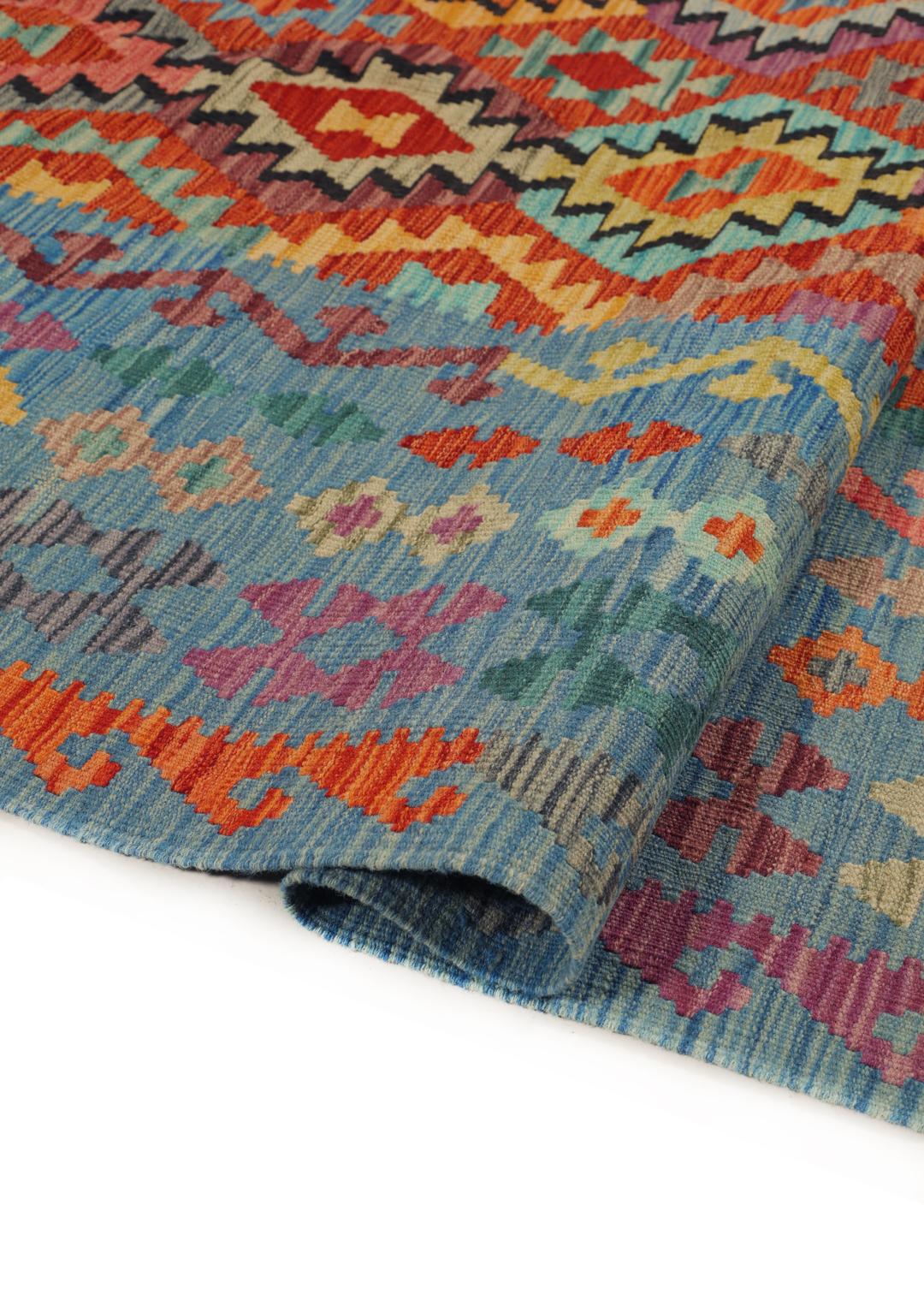
The term Kelim refers to the flat-weave technique where the weft and warp yarns are interlaced to create a smooth, pileless surface. This is fundamentally different from knotted rugs, as the design is created directly through the weaving process itself. This technique allows for remarkably sharp, clean lines in the geometric patterns, which is why Kelims are so highly regarded for their intricate, graphic visual appeal.
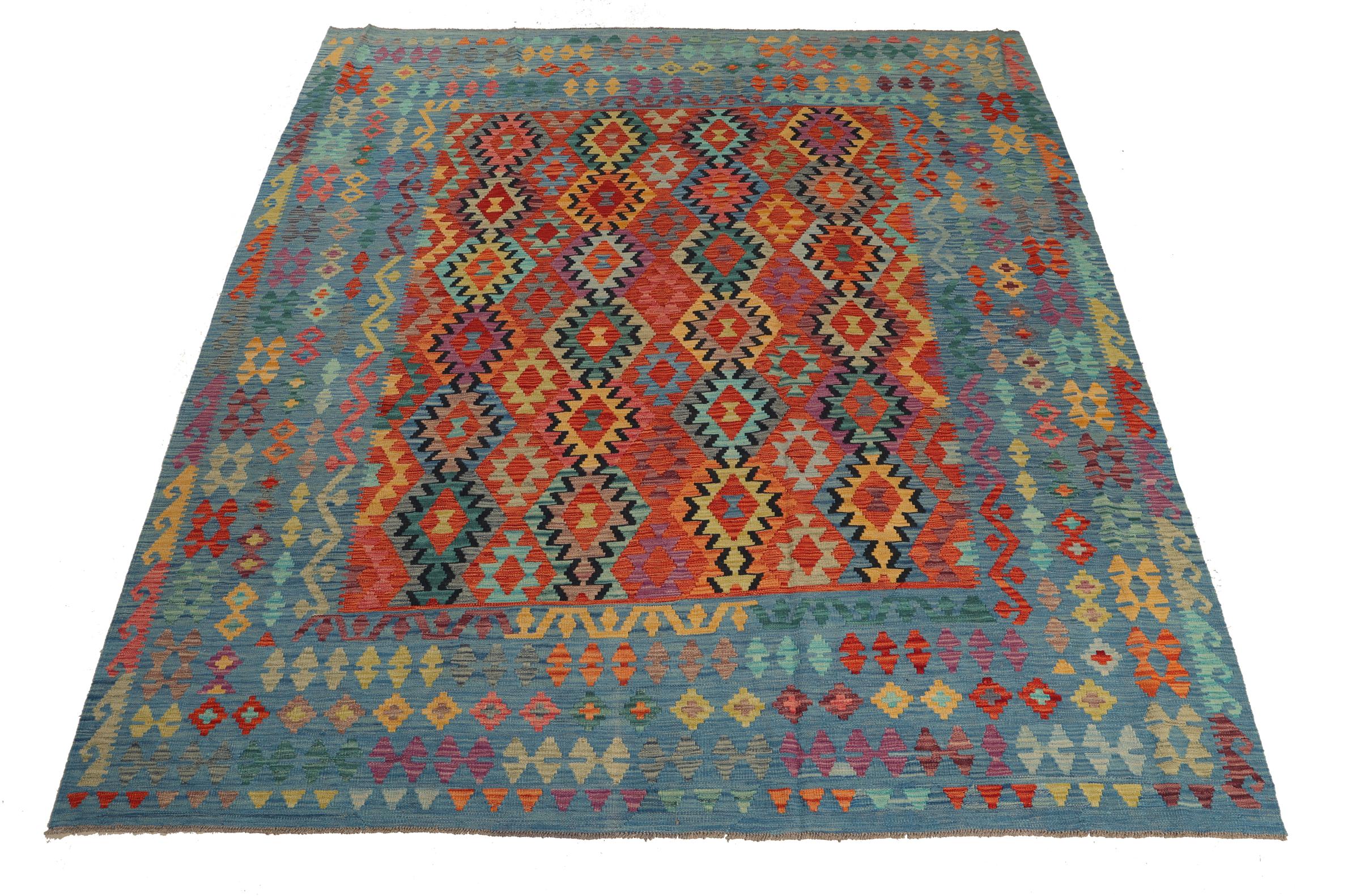
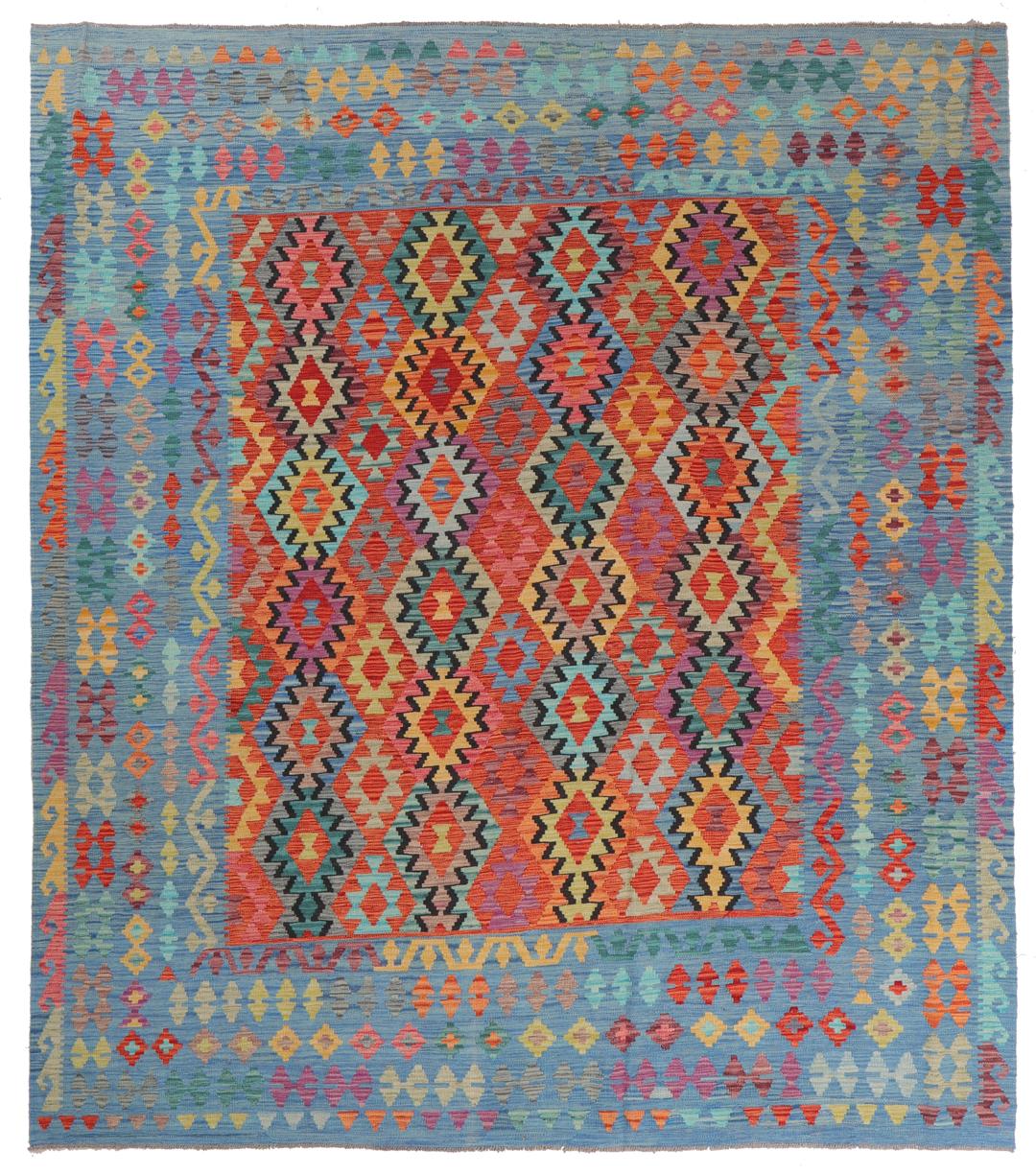
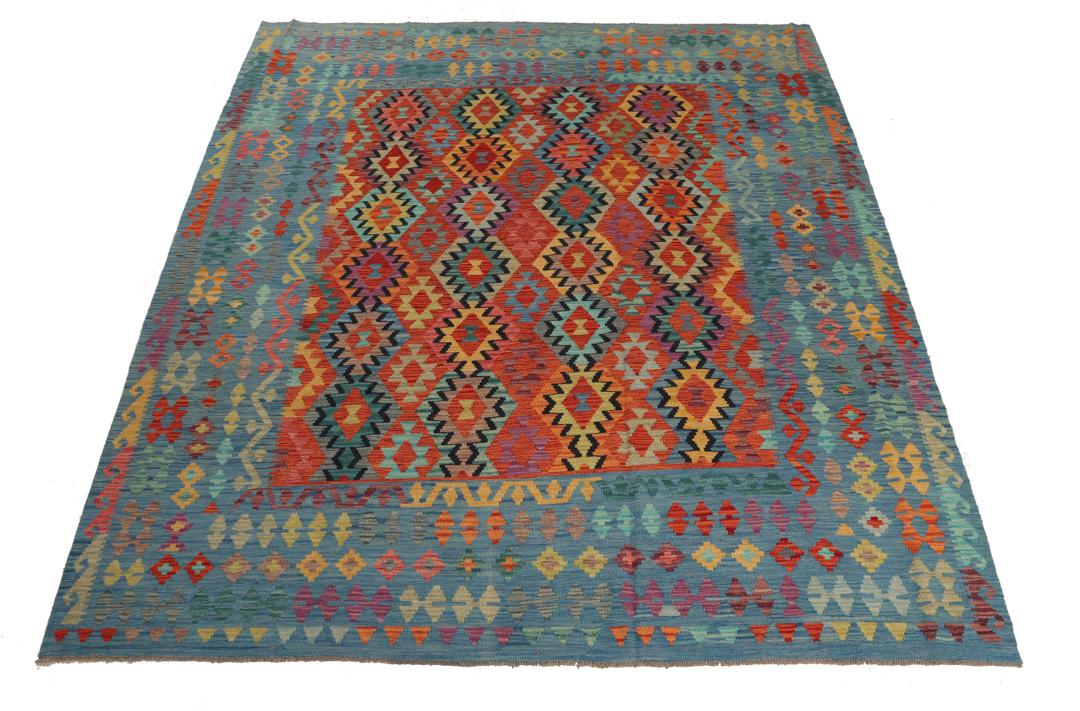
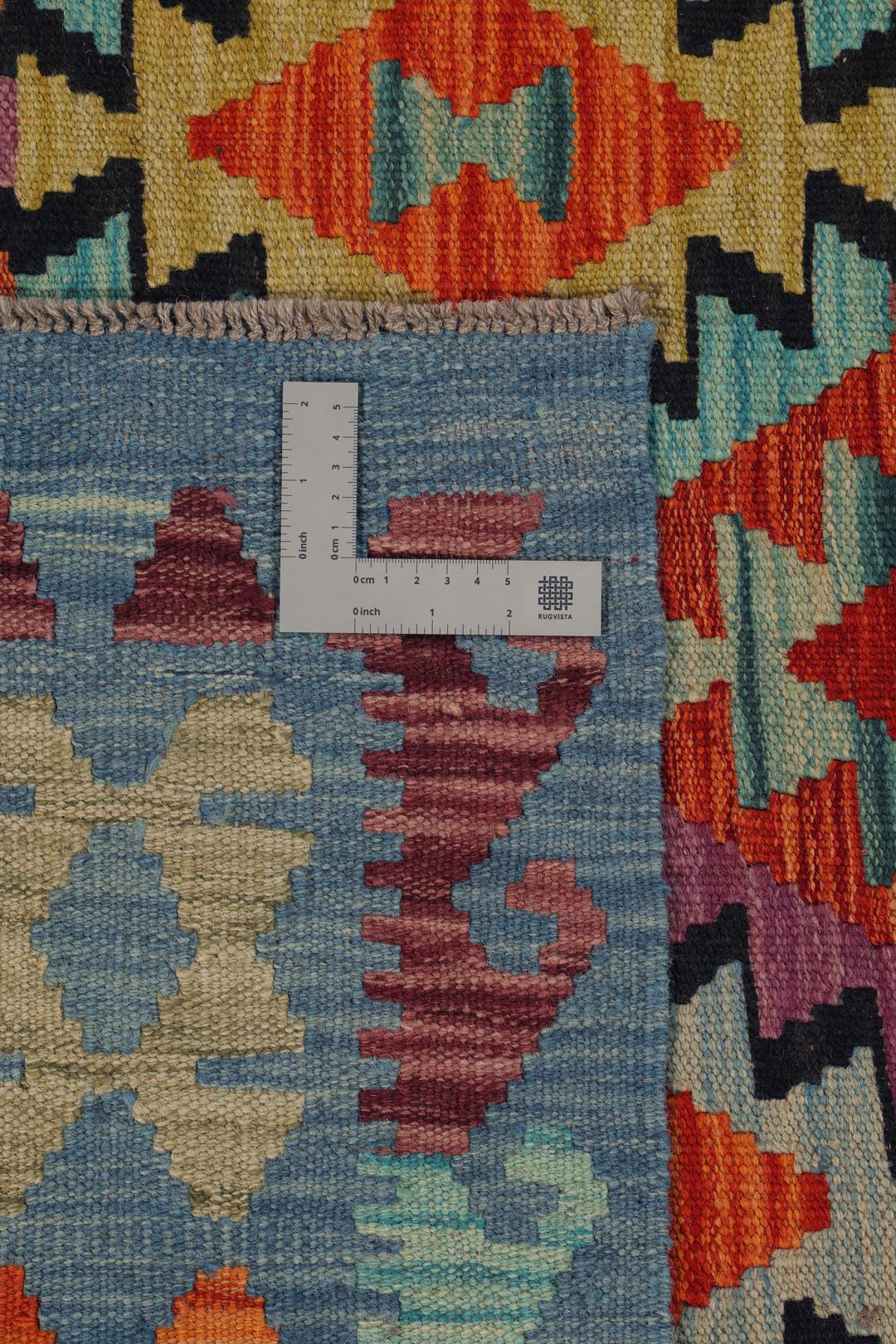
Signature design elements in these rugs often include bold geometric shapes, such as the diamond motifs seen here, which are frequently inspired by tribal symbolism and the natural world. The use of vibrant, contrasting colours is a hallmark of the Afghan style, often achieved through traditional dyeing methods that produce rich, deep tones. The border work on this rug acts as a frame, containing the central energy of the field while showcasing the weaver's mastery of symmetry and pattern balance.
Today, these rugs are prized by collectors and homeowners alike for their cultural weight and lasting quality. Owning a traditional Afghan Kelim is an investment in a living history; it represents a bridge between the ancient craft of the loom and the contemporary home. Because each piece is woven by hand, it carries the unique perspective and skill of the artisan, making it a truly meaningful addition to any collection.