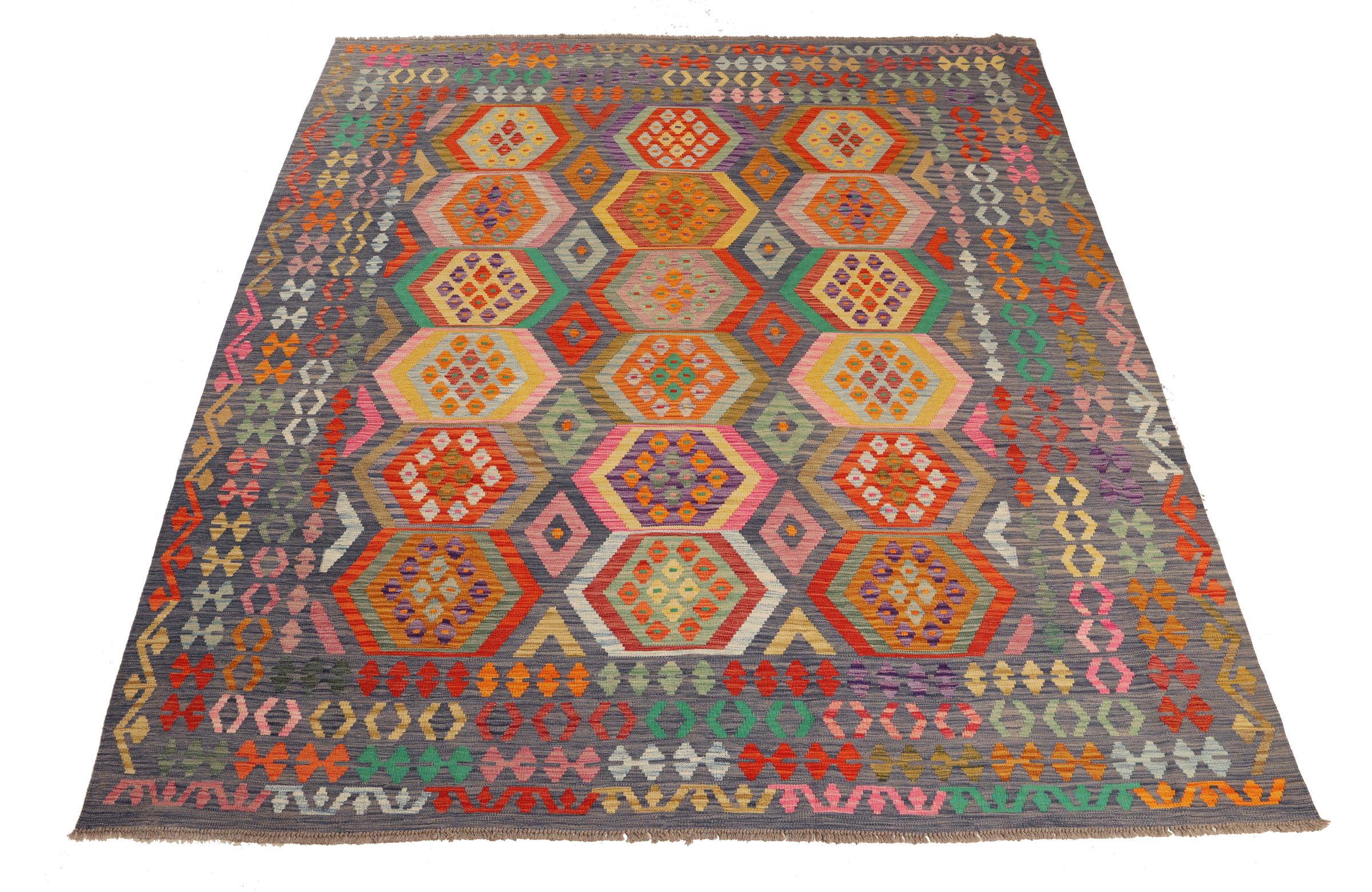
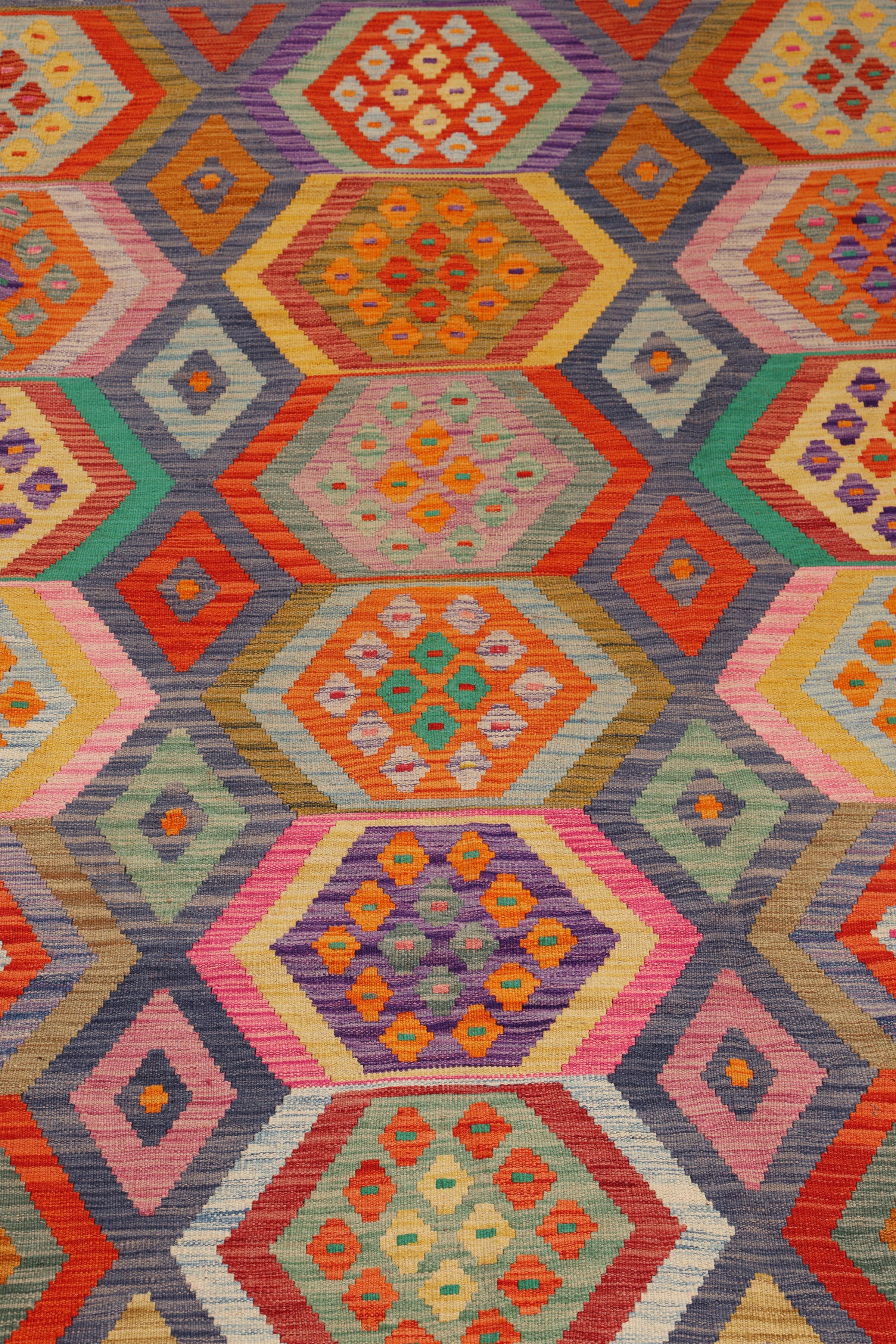
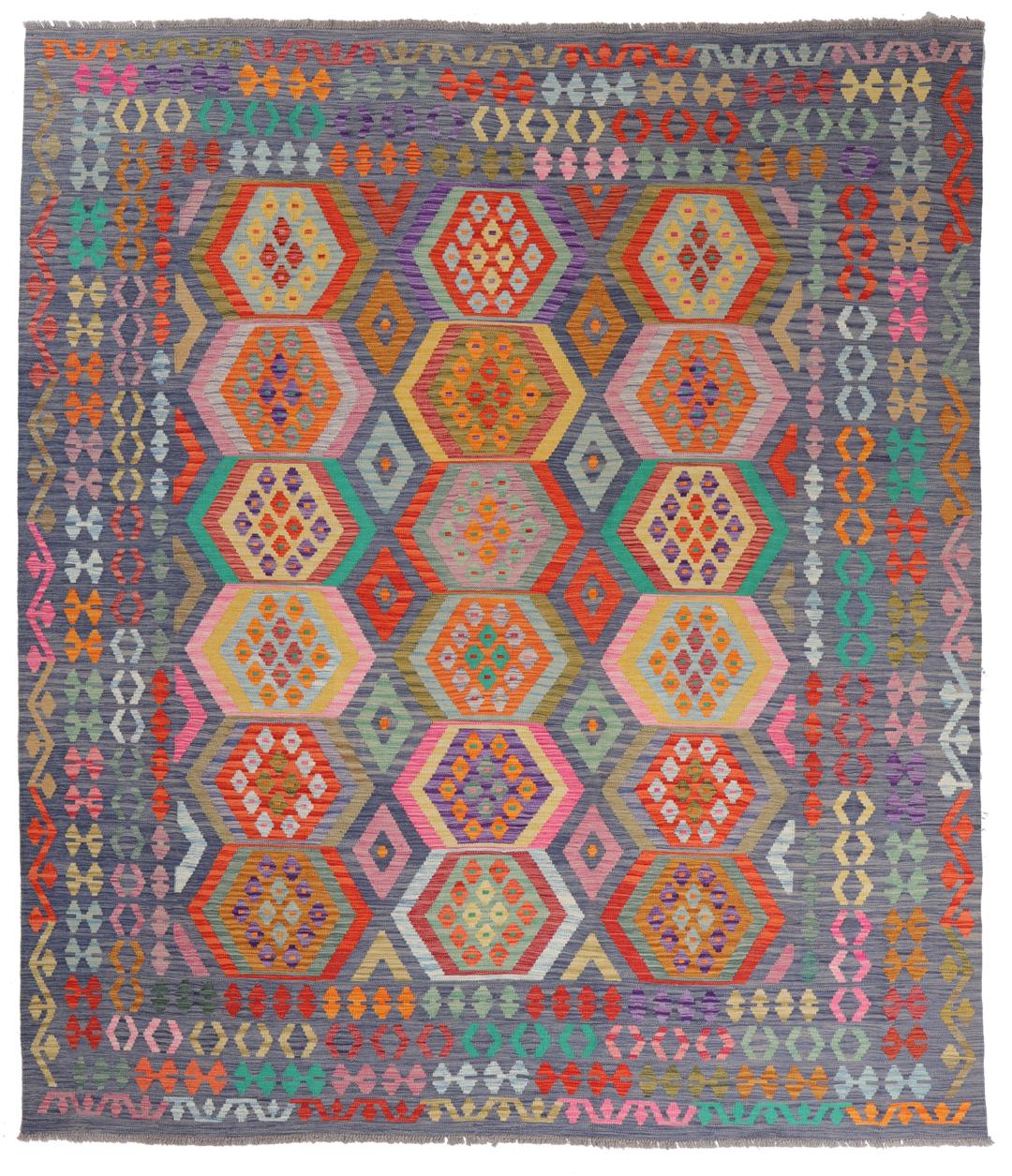
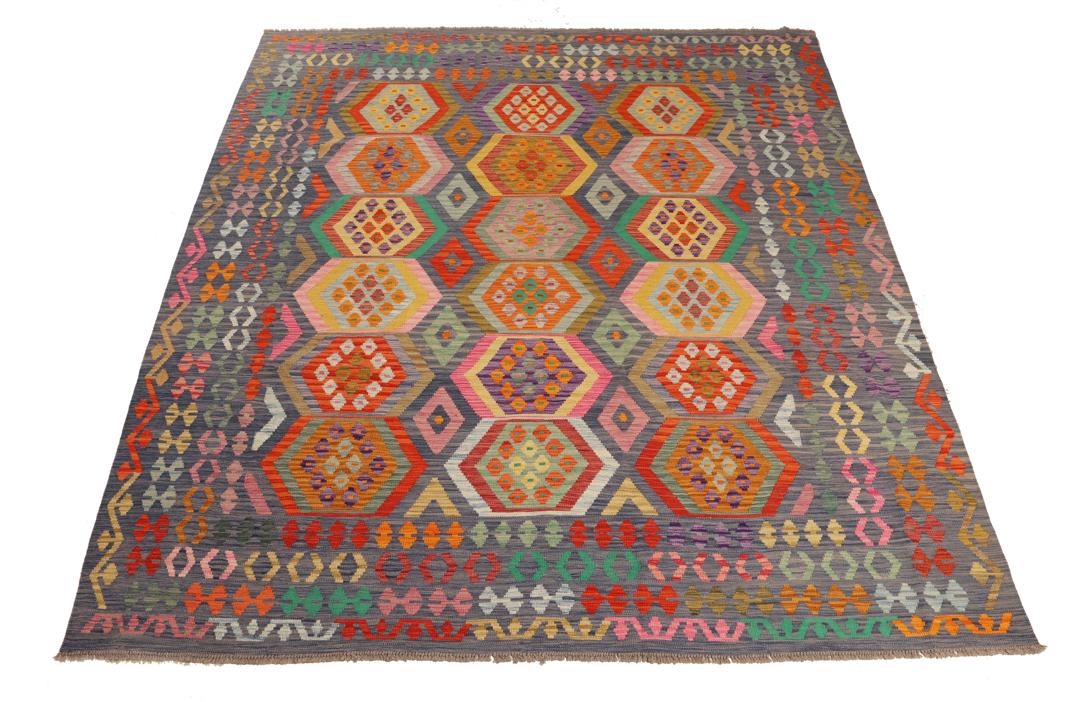
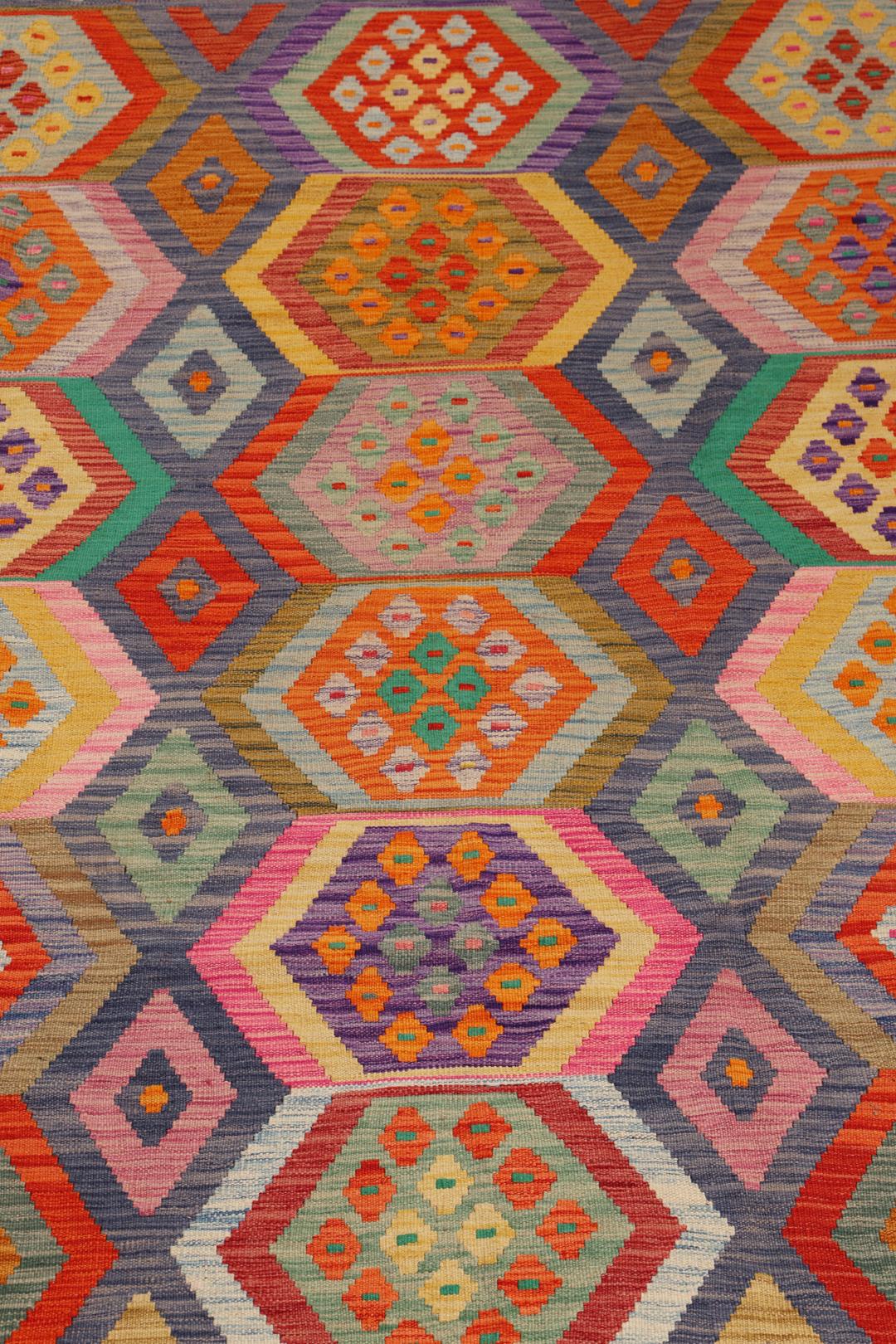
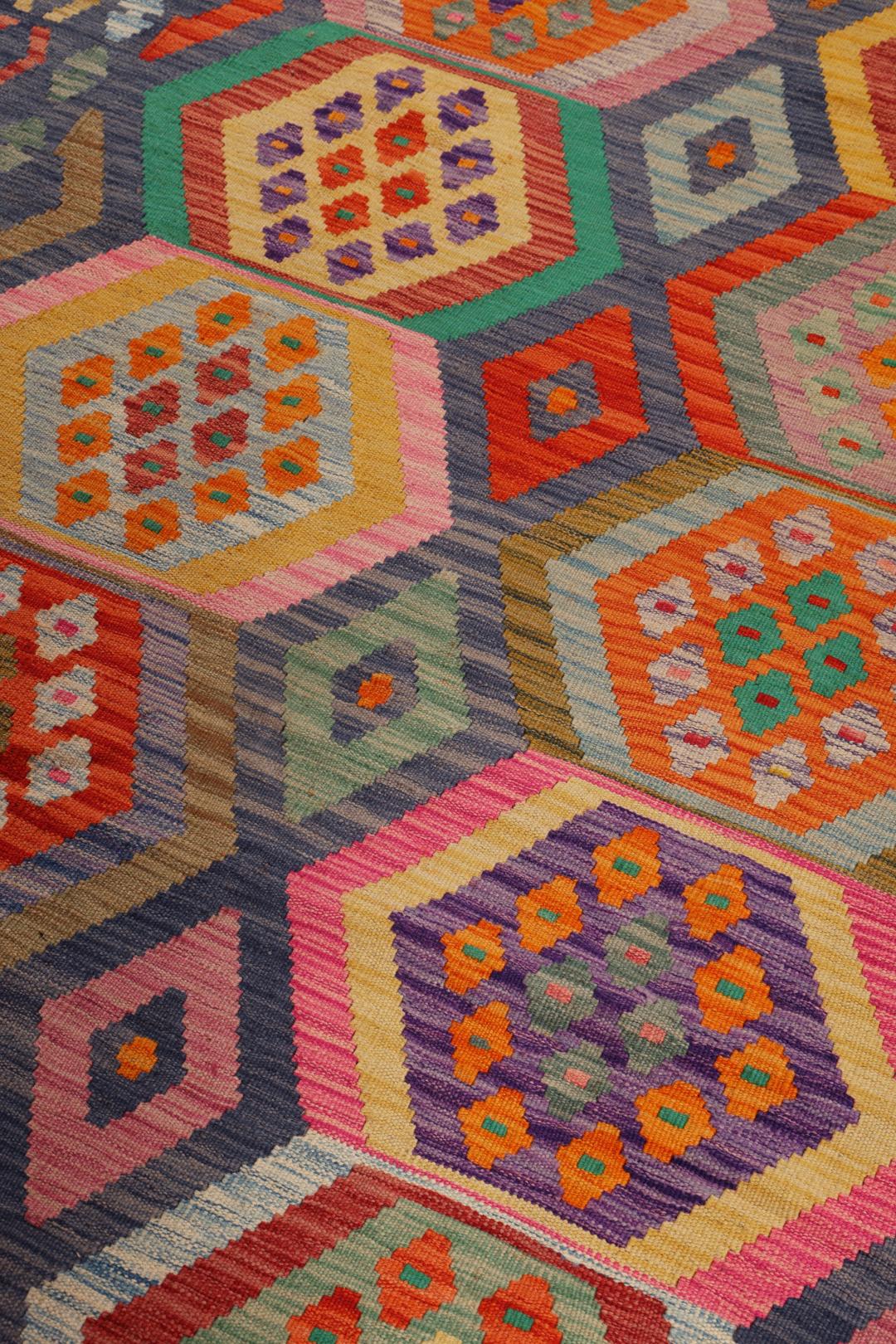
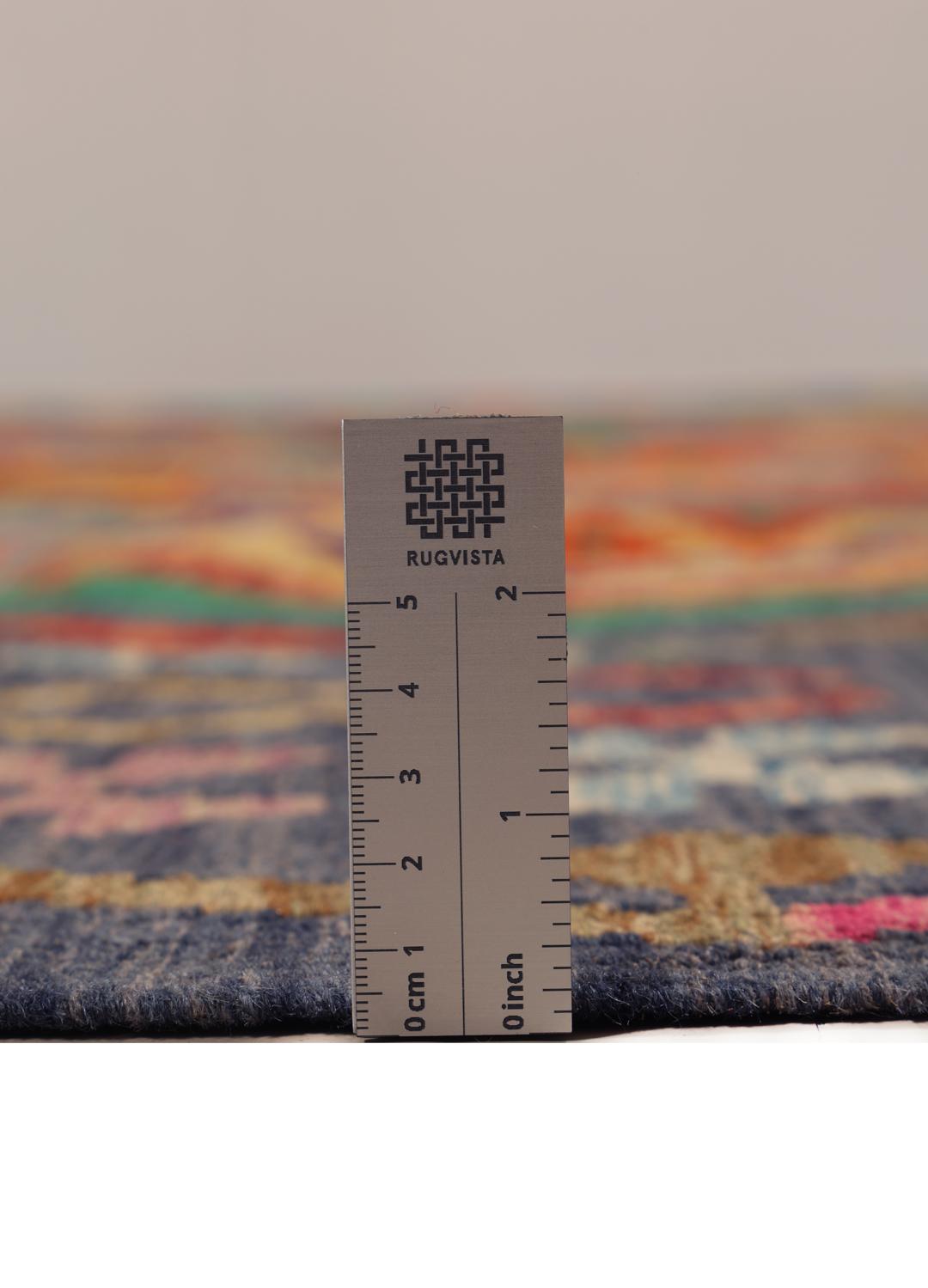
Kelim rugs are rooted in the ancient weaving traditions of the Middle East and Central Asia. Historically, these flat-woven pieces were essential to nomadic life, used as floor coverings, blankets, and storage bags due to their durability and ease of transport. The Afghan Kelim tradition is particularly celebrated for its bold use of colour and geometric storytelling, reflecting the landscape and cultural identity of the region.
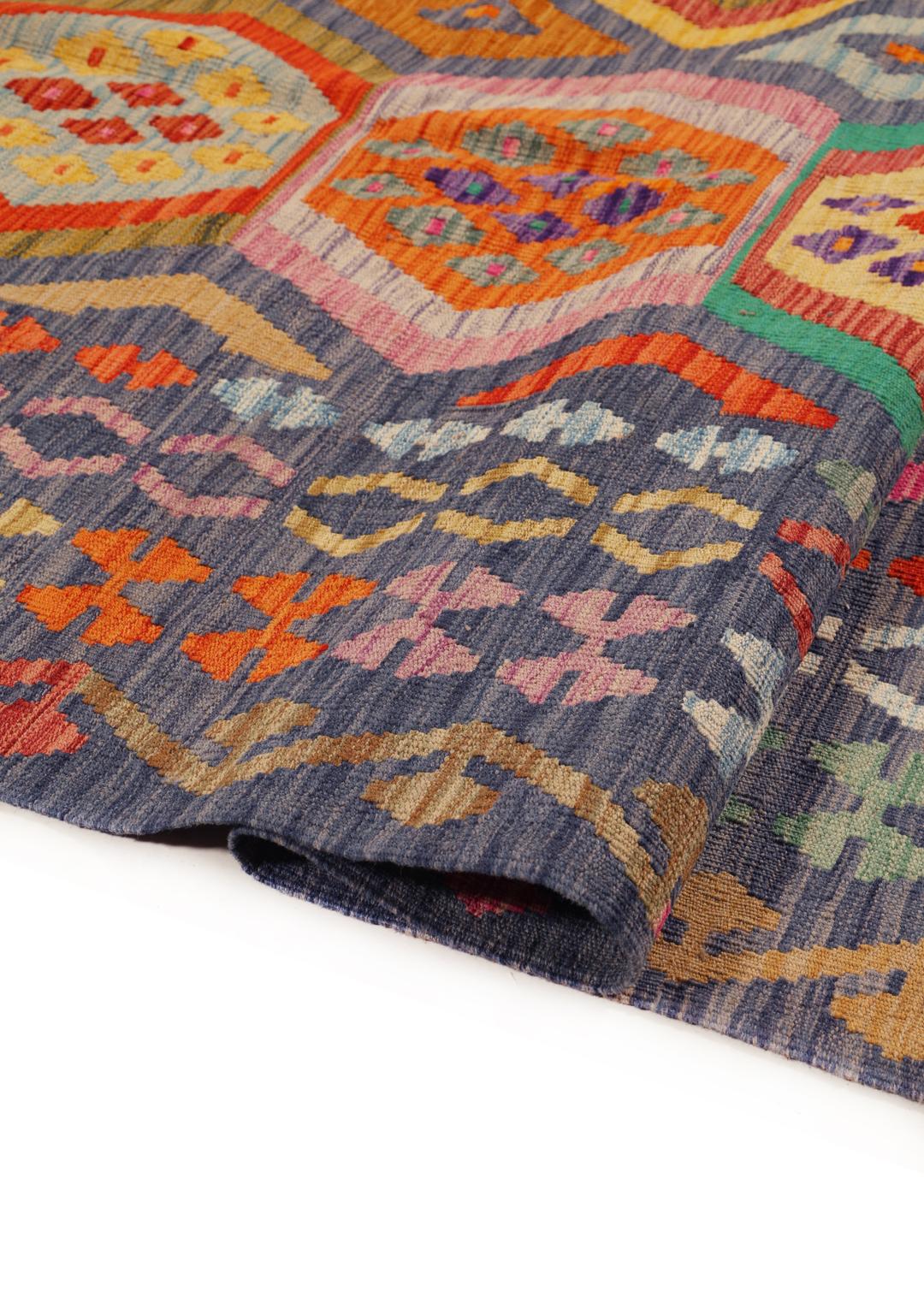
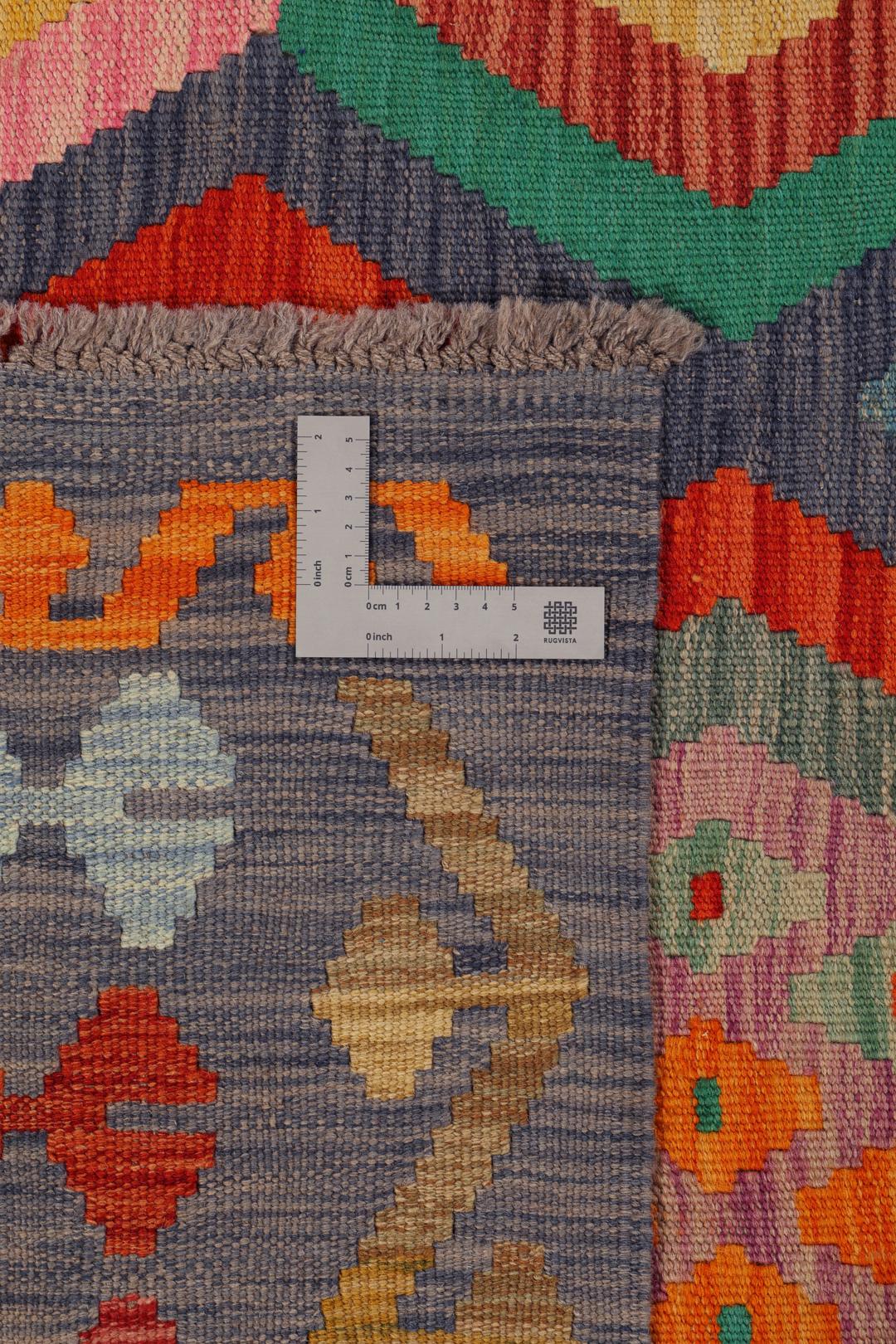
The term 'Kelim' refers to the specific slit-weave technique where the weft threads are passed back and forth through the warp. This method creates a rug without a pile, resulting in a thin, reversible textile that is prized for its longevity and clean, graphic aesthetic. The lack of pile allows the weaver to create sharp, angular designs that are the hallmark of this style.
Signature design elements in Afghan Kelims often include repeating medallions, diamonds, and tribal symbols that have been passed down through generations. These motifs are not merely decorative; they often carry symbolic meanings related to protection, fertility, or family history. The use of vibrant, contrasting colours set against a more muted or earthy field is a classic choice, designed to ensure the patterns stand out clearly.
Owning an authentic Afghan Kelim is an investment in cultural heritage and artisanal skill. These pieces are highly valued by collectors for their individuality and the way they bridge the gap between ancient nomadic art and modern interior design. By bringing a piece like this into your home, you are preserving a legacy of craft that has remained largely unchanged for centuries.